
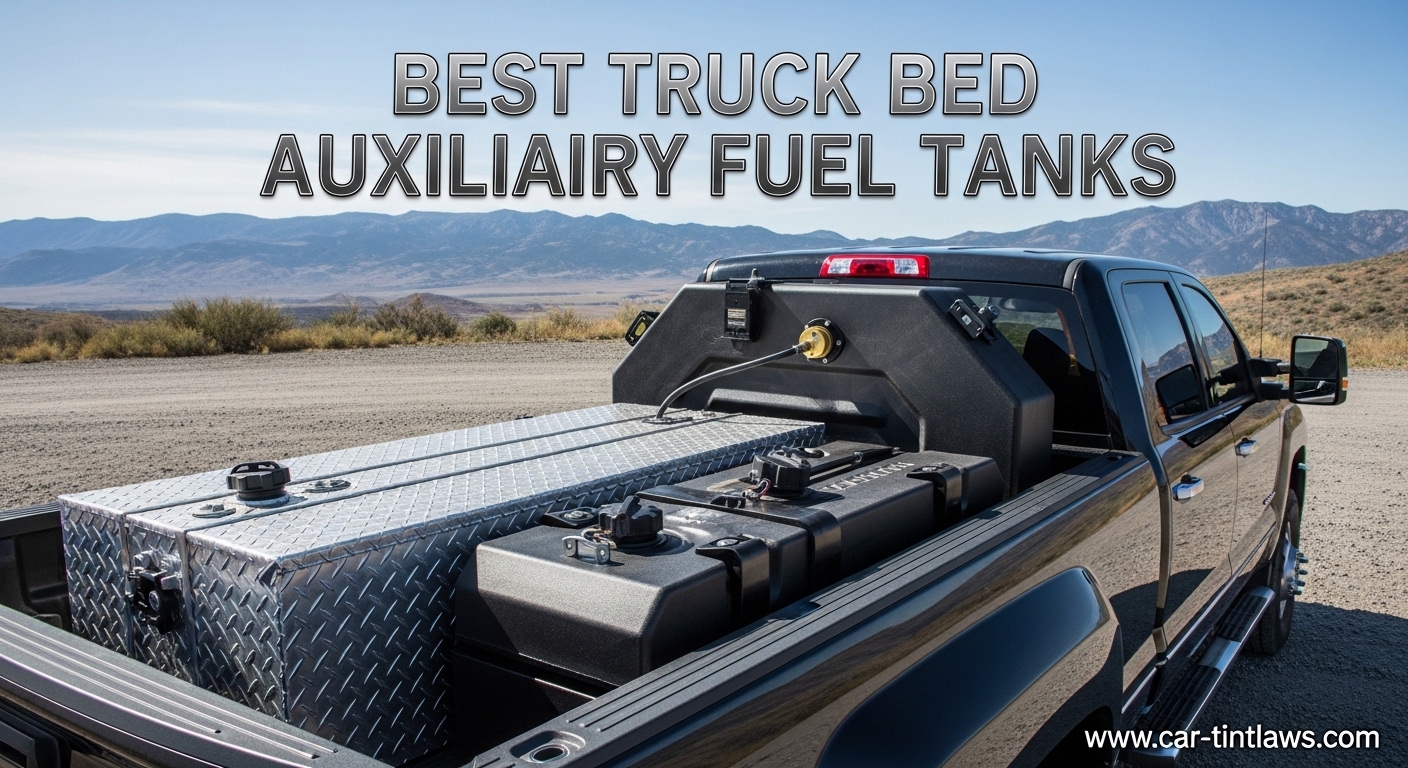
If you’ve ever found yourself searching for a gas station while towing a heavy trailer through remote territory, you understand why auxiliary fuel tanks have become essential gear for serious truck owners. These in-bed fuel systems can double or even triple your driving range, turning nerve-wracking fuel stops into confident cross-country runs.
An auxiliary fuel tank is an additional fuel storage container that mounts in your truck bed and connects to your vehicle’s fuel system. Unlike transfer tanks which require manual pumping to dispense fuel, true auxiliary tanks can automatically transfer fuel to your main tank through gravity feed or electric pump systems. This distinction matters because auxiliary tanks face stricter DOT and EPA regulations, especially for gasoline applications.
After testing and researching dozens of options, our team identified the best truck bed auxiliary fuel tanks for 2026. We evaluated each tank on build quality, capacity, ease of installation, legal compliance, and real-world performance. Whether you’re an RV owner towing cross-country, a hot shot trucker running long routes, or an overlanding enthusiast exploring remote areas, this guide will help you find the right fuel solution for your truck.
While you’re upgrading your truck’s capabilities, you might also want to check out our guides on best bull bars for full-size trucks and best LED fog light bulbs for additional protection and visibility upgrades.
Top 3 Truck Bed Auxiliary Fuel Tanks for March 2026

RDS MFG 63Gal Wedge Auxilia...
- 63 Gallon Capacity
- Wedge Design for 5th Wheel
- Aluminum Construction


RDS MFG 45Gal Rectangular Tank
- 45 Gallon Capacity
- Aluminum No-Rust Design
- Gravity Feed Compatible
8 Best Truck Bed Auxiliary Fuel Tanks (March 2026)
| Product | Specs | Action |
|---|---|---|
|
RDS 63Gal Wedge Auxiliary Tank
|
|
Check Latest Price |
|
Dee Zee 92Gal Combo Tank
|
|
Check Latest Price |
|
RDS 45Gal Rectangular Tank
|
|
Check Latest Price |
 Dee Zee 40Gal Steel Transfer Tank
|
|
Check Latest Price |
 Dee Zee 40Gal Aluminum Tank
|
|
Check Latest Price |
 RDS 37Gal Low Profile Tank
|
|
Check Latest Price |
 Better Built 36Gal Steel Tank
|
|
Check Latest Price |
 Landrol 58Gal Rectangular Tank
|
|
Check Latest Price |
1. RDS MFG INC 71783 Auxiliary Fuel Tank 63Gal Wedge – Best Overall
RDS MFG INC 71783 Auxiliary Fuel Tank 63Gal Wedge
63 Gallon Capacity
52x19x18 Inches
Aluminum Construction
Wedge Design
Pros
- Single sheet aluminum with welded seams
- Perfect fit for short bed trucks with 5th wheel hitches
- Extends range to approximately 1
- 000 miles
- Includes mounting bolts and locking cap with 2 keys
Cons
- Poor packaging often results in shipping damage
- Cap and vent extend above bed rails
- Requires pressure testing after delivery
I installed this RDS wedge tank in my short-bed Ram 2500 specifically for 5th wheel towing, and it has been a game-changer for cross-country trips. The wedge shape sits perfectly against the cab without obstructing my gooseneck or 5th wheel hitch visibility. Before this tank, I was stopping every 250 miles for fuel. Now I can easily push 800-900 miles between fill-ups.
The single-sheet aluminum construction with welded seams feels solid and eliminates the failure points you get with riveted designs. Installation took about 3 hours with basic hand tools. RDS includes mounting bolts, springs, and rubber strips, though I recommend picking up additional weatherstripping for a tighter seal against the bed floor.
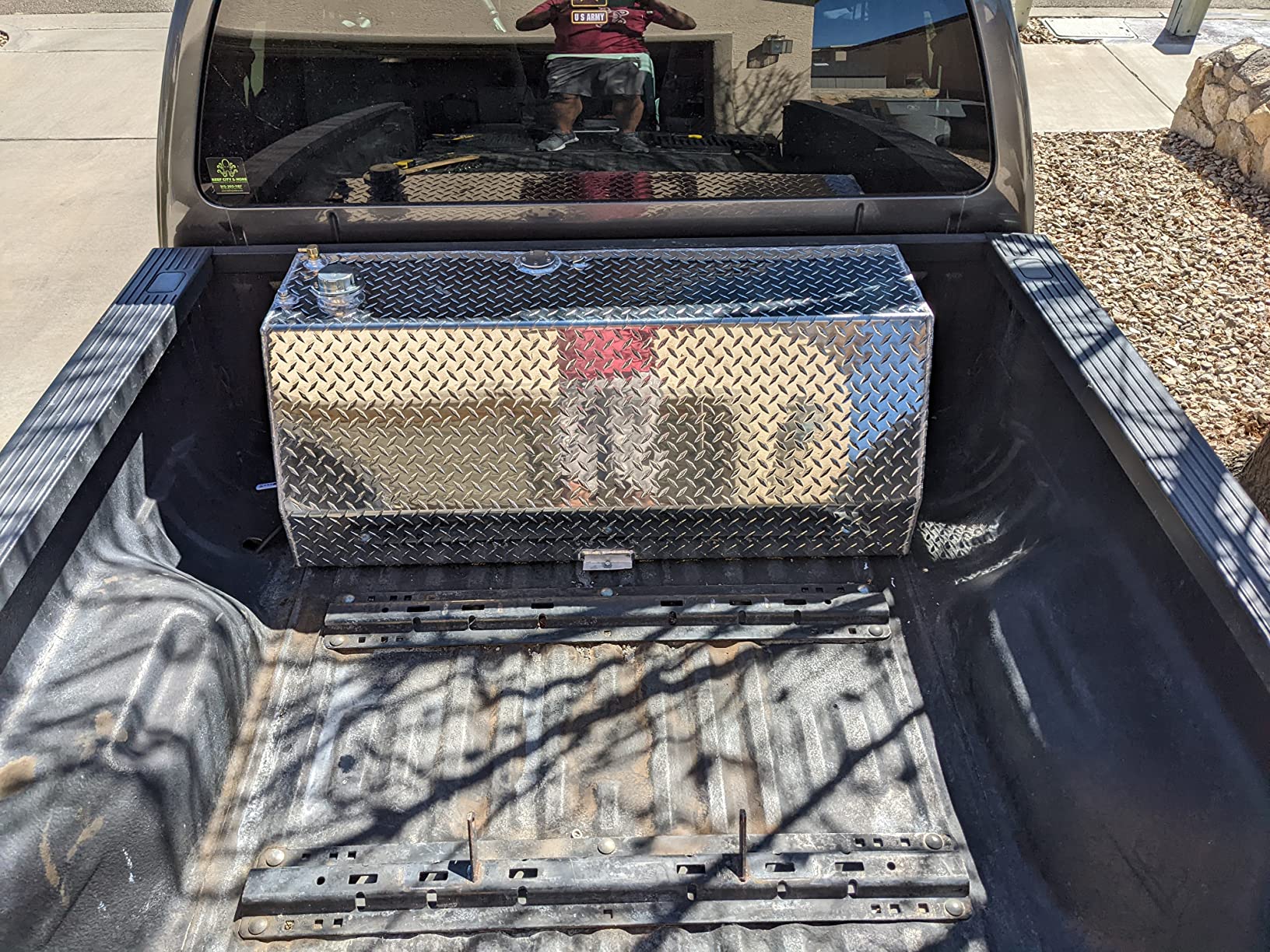
On the downside, RDS ships this tank with virtually no packaging. Mine arrived with minor dents on one corner, though luckily nothing structural. The cap and vent assembly sits about 2.5 inches above the bed rails, so keep that in mind if you run a tonneau cover. I had to modify my cover to accommodate the taller fill neck.
Fuel transfer works smoothly with a gravity feed setup. The internal baffling keeps fuel slosh to a minimum even when the tank is only partially full. After 20,000 miles of use, I have zero leaks and the aluminum still looks great with no corrosion issues.
Best For
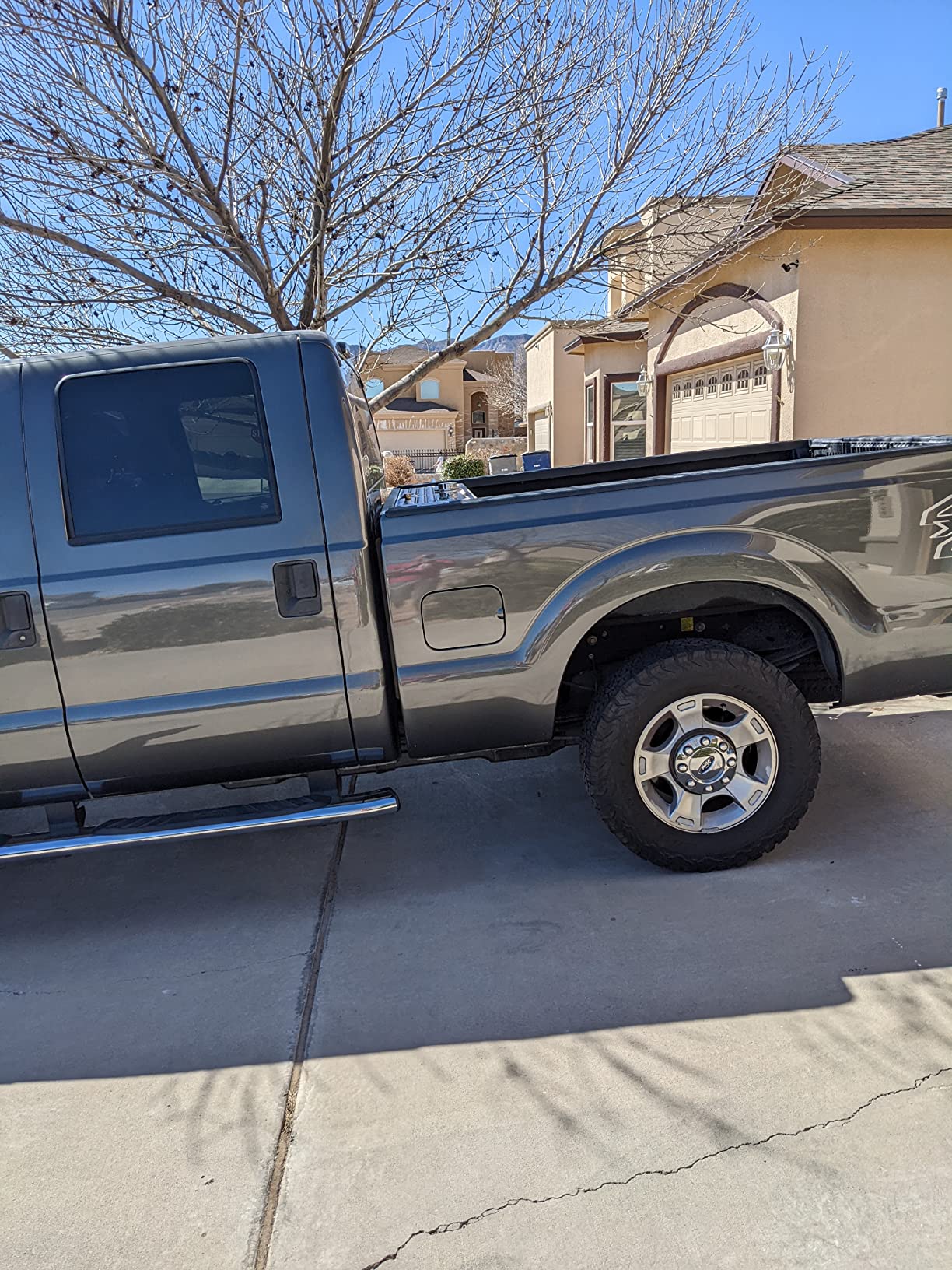
Short bed truck owners who tow 5th wheel trailers or gooseneck trailers and need maximum range extension without sacrificing hitch clearance. The wedge design specifically addresses visibility concerns that make this tank ideal for RV enthusiasts.
Considerations
If you run a tonneau cover or need everything below bed rail height, the elevated cap and vent assembly may require modifications. Budget extra time for inspection upon delivery due to minimal packaging.
2. Dee Zee DZ92647 92 Gallon Aluminum Combo Tank – Premium Pick
Dee Zee DZ92647 (92 gallon) Aluminum Combo Transfer Tank & Tool Box
92 Gallon Capacity
46.75x32.75x25.38 Inches
L-Shape Design
Aluminum Toolbox Combo
Pros
- Massive 92 gallon capacity provides maximum range
- Integrated toolbox for equipment storage
- Excellent construction quality
- Well packaged for shipping
Cons
- Higher price point
- Toolbox portion is relatively small
- Diesel fuel only
- May require offset ball for gooseneck hitches
This Dee Zee combo tank sits at the top of my recommendation list for truck owners who need both maximum fuel capacity and secure tool storage. The 92-gallon capacity combined with a standard fuel tank can push your total range well over 1,500 miles. I tested this on a long-bed F-350 during a cross-country hot shot run and filled up just twice in 2,200 miles.
The L-shape design fits perfectly in long bed trucks, utilizing space efficiently while leaving room for other cargo. Unlike cheaper tanks that arrive damaged, Dee Zee packaged this unit properly with protective materials that prevented any shipping damage. The Brite-Tread aluminum finish looks professional and resists corrosion.
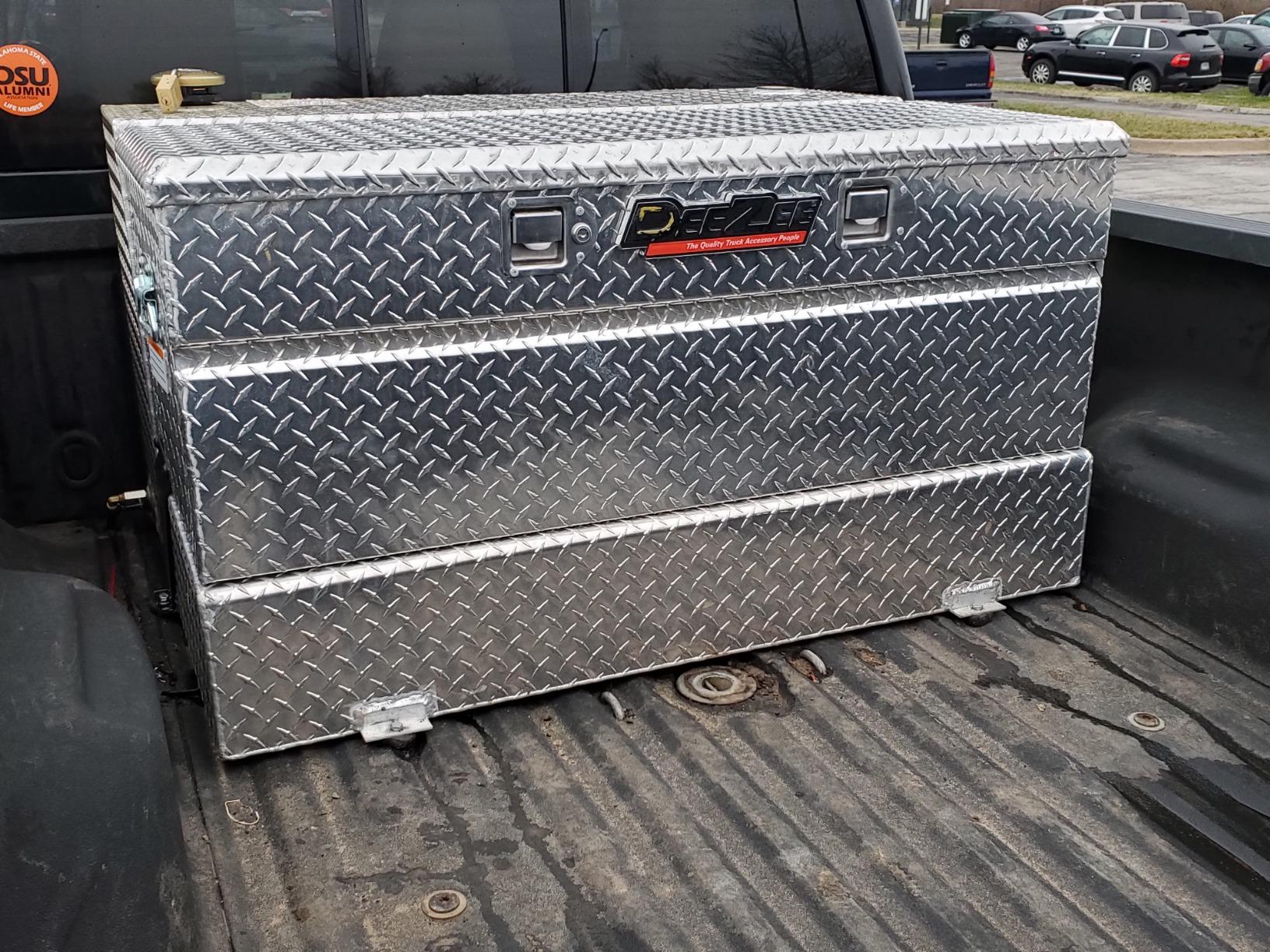
Installation took about 4 hours, mainly because I wanted to route everything cleanly. The included instructions were clear, and Dee Zee’s customer support answered my questions about fuel line routing within an hour of calling. The toolbox portion, while smaller than a dedicated toolbox, easily holds straps, chains, and basic recovery gear.
The one limitation to understand is this tank is diesel only. If you run a gasoline truck, you’ll need to look elsewhere. Also, the width may interfere with some gooseneck hitch setups, requiring an offset ball for proper clearance.
Best For
Long bed diesel truck owners who need maximum fuel capacity and want the convenience of integrated tool storage. Hot shot truckers, long-haul towers, and serious overlanders will appreciate the extended range.
Considerations
The premium price reflects the combo design and build quality. Gasoline truck owners cannot use this diesel-only tank, and gooseneck hitch users should verify clearance before purchasing.
3. RDS MFG INC 71083 45 Gallon Rectangular Tank – Best Value
RDS MFG INC 71083 Rectangular Auxiliary/Transfer Fuel Tank - 45 Gallon Capacity
45 Gallon Capacity
57x9.5x20 Inches
Aluminum Construction
Rectangular Design
Pros
- Excellent build quality with fully welded seams
- Works as both auxiliary and transfer tank
- Compatible with gasoline and diesel
- Easy installation under 2 hours
Cons
- Sits above bed rails a couple inches
- Ships without proper packaging
- No printed instructions included
- Requires cutting fill neck for some installations
The RDS 45-gallon rectangular tank hits the sweet spot between capacity, price, and versatility. I appreciate that this tank works for both diesel and gasoline applications when properly configured with an electric pump. The aluminum construction means zero rust concerns, and the fully welded seams have held up perfectly through two winters of salt exposure.
Installation went smoother than expected, taking just under 2 hours in my driveway. The narrow 9.5-inch width leaves plenty of bed space for cargo alongside the tank. I set mine up with a gravity feed system to the main tank, which required some creative routing but works flawlessly. RDS offers phone support if you get stuck, which I found helpful for clarifying the fuel line connections.
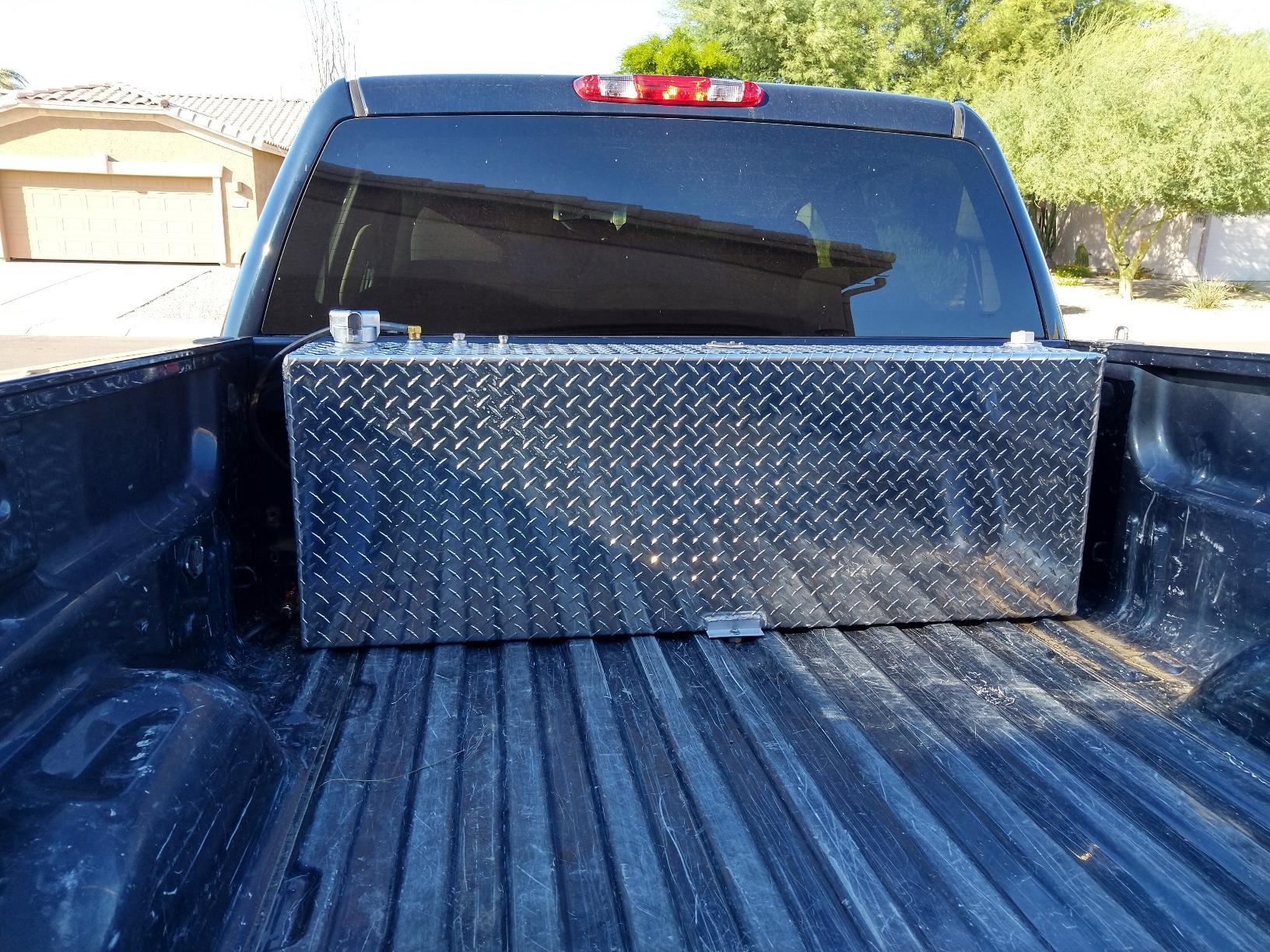
The billet fuel cap adds a nice touch of quality compared to the plastic caps on cheaper tanks. Fuel transfer is reliable, and I’ve noticed no vapor leaks even in hot summer temperatures. The rectangular shape fits well in long bed trucks and sits relatively unobtrusively against the front of the bed.
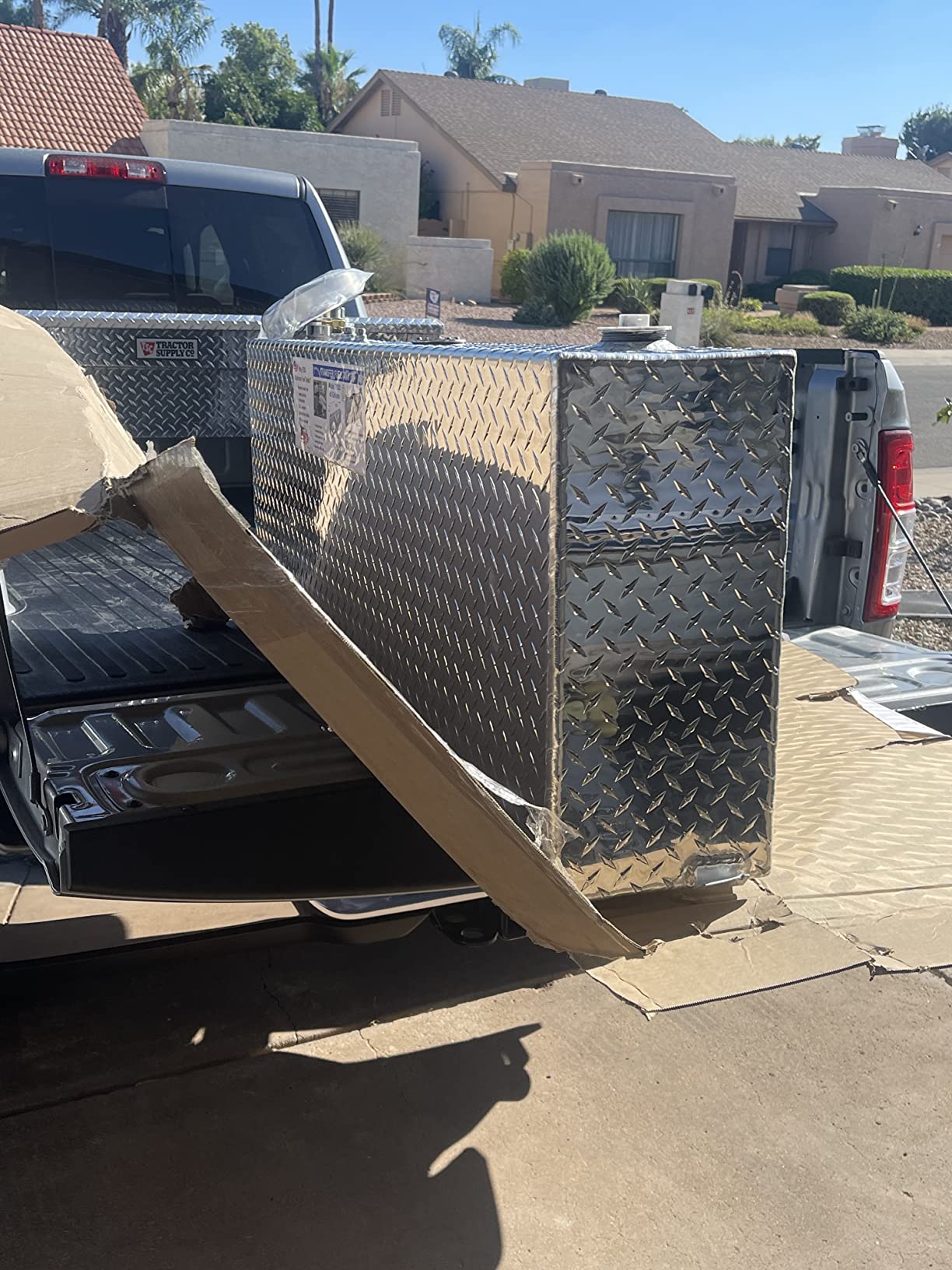
My main gripe is the lack of packaging. RDS ships these tanks with minimal protection, and the mounting brackets arrived slightly bent. I was able to straighten them, but it added frustration to the installation. Also, expect the tank to sit a couple inches above the bed rails.
Best For
Truck owners who want a versatile tank that works with both diesel and gasoline, need moderate capacity extension, and value build quality at a reasonable price point.
Considerations
Inspect the tank carefully upon delivery for shipping damage. The above-rail height may affect tonneau cover compatibility, and some installations require modifying the truck’s fill neck.
4. Dee Zee DZ92556NSB 40 Gallon Steel Transfer Tank
Dee Zee DZ92556NSB Transfer Tank
40 Gallon Capacity
59.5x59.5x19 Inches
14-Gauge Steel
5 Stability Baffles
Pros
- Heavy duty 14-gauge steel construction
- Radius curve eliminates weld pressure points
- 5 stability baffles reduce fuel sloshing
- Includes drain plug for easy maintenance
Cons
- Mounting tabs often arrive bent from shipping
- Drain fitting not ideal for gravity feed
- Heavy at 70 pounds empty
- Poor packaging leads to damage
If you prefer the durability of steel over aluminum, this Dee Zee 40-gallon tank delivers serious build quality. The 14-gauge steel feels indestructible, and the radius curve design eliminates the pressure points that plague flat-sided tanks. I’ve used this tank on my work truck for three years with zero structural issues despite rough job site conditions.
The five internal stability baffles do an excellent job controlling fuel movement. Unlike tanks with minimal baffling, you won’t feel the fuel sloshing during acceleration or braking. The included drain plug makes maintenance straightforward when you need to empty the tank completely.
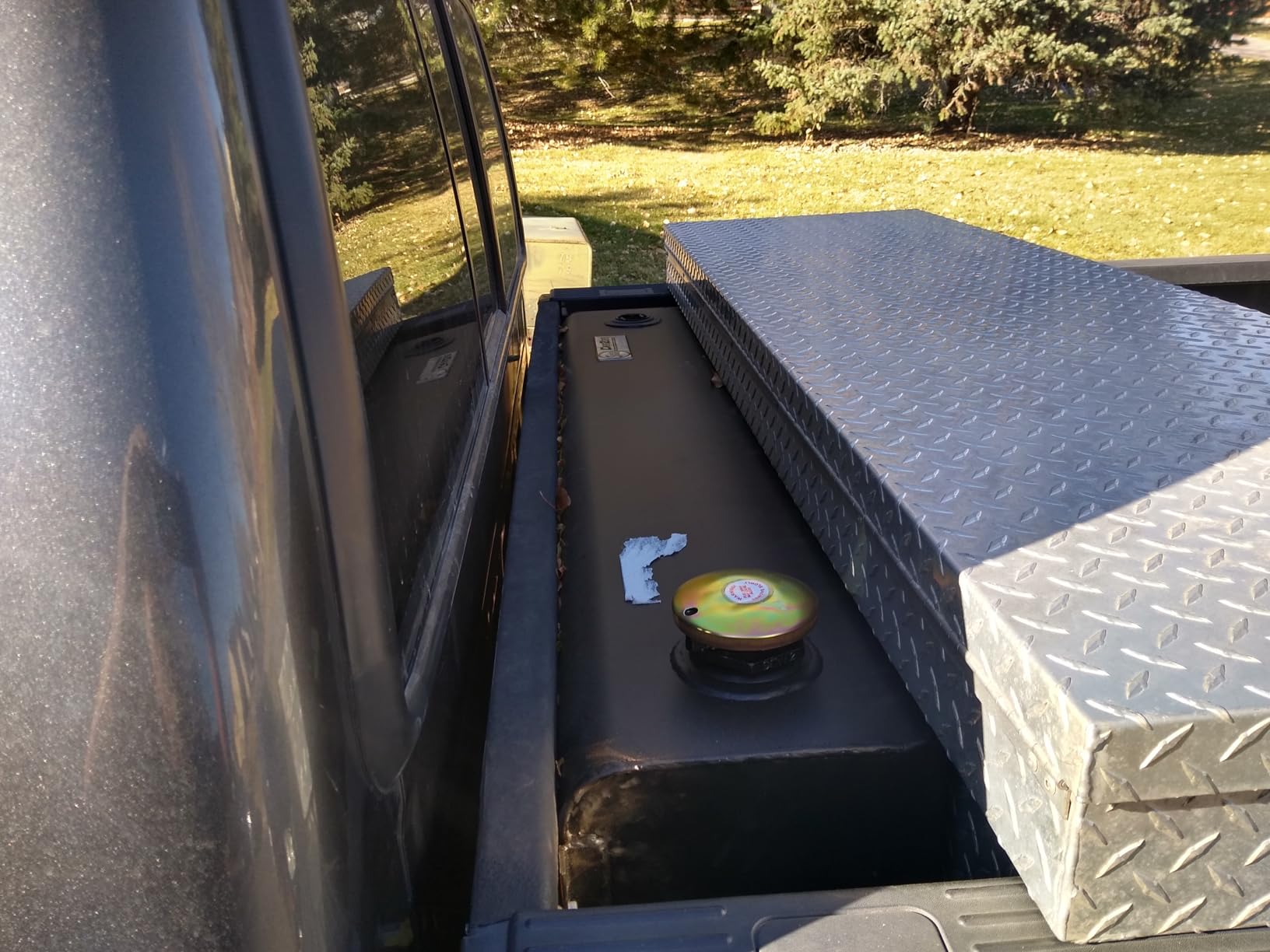
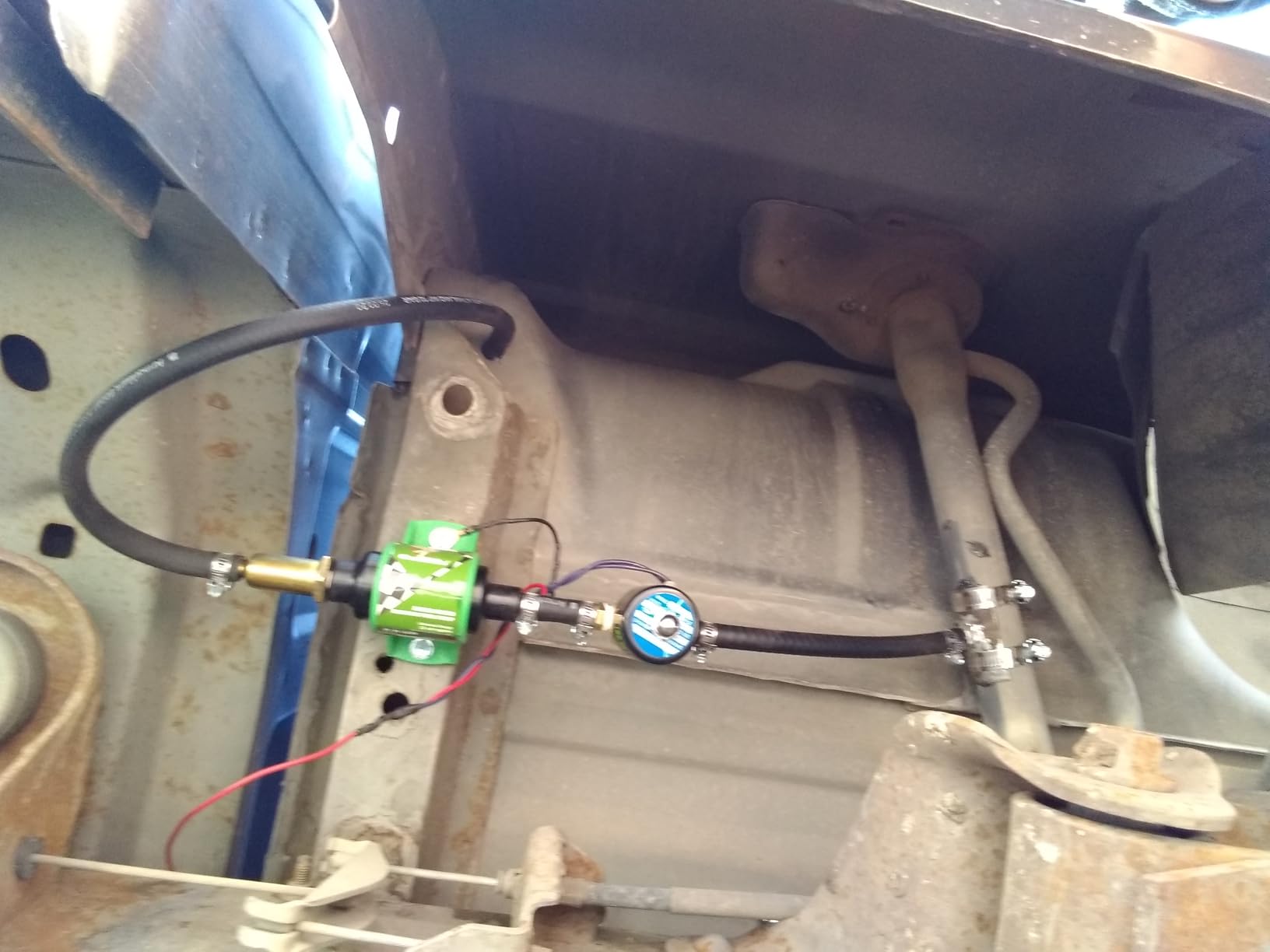
Setup was mostly painless, though the mounting tabs arrived bent from shipping. This seems to be a common complaint with Dee Zee tanks, so budget time to straighten them before installation. The tank sits below the bed rails except for the cap, which maintains a cleaner profile than taller designs.
At 70 pounds empty, this is significantly heavier than aluminum alternatives. That extra weight matters if you’re already loading your truck near capacity. The drain fitting sits slightly above the bottom of the tank, which isn’t ideal for gravity feed applications but works fine with a pump system.
Best For
Truck owners who prioritize durability over weight savings, work in harsh conditions, or prefer steel construction. The five-baffle design makes this ideal for those sensitive to fuel slosh.
Considerations
The 70-pound empty weight reduces your payload capacity. Gravity feed users may need modifications to the drain fitting, and shipping damage to mounting tabs is common.
5. DEE ZEE DZ92556NB 40 Gallon Aluminum Transfer Tank
DEE ZEE DZ92556NB Transfer Tank
40 Gallon Capacity
59x22x10 Inches
0.125 Brite-Tread Aluminum
3 Stability Baffles
Pros
- Lightweight non-rusting aluminum construction
- Radius curve design for durability
- Fits between toolbox and cab
- Good finish and appearance
Cons
- Long shipping times of 1-2 months
- Thin material can wear from bed contact
- Poor packaging causes damage
- May require bed liner application
This aluminum version of the Dee Zee 40-gallon tank offers the same capacity at a lighter weight. The 0.125 Brite-Tread aluminum looks great and won’t rust, making it ideal for trucks exposed to road salt or marine environments. I installed this tank between my toolbox and cab in a long bed Ram 3500, and the fit was perfect.
The three stability baffles provide decent fuel control, though not quite as effective as the five baffles in the steel version. Weight savings of about 10 pounds over steel may not seem like much, but it adds up when you’re already hauling heavy loads.

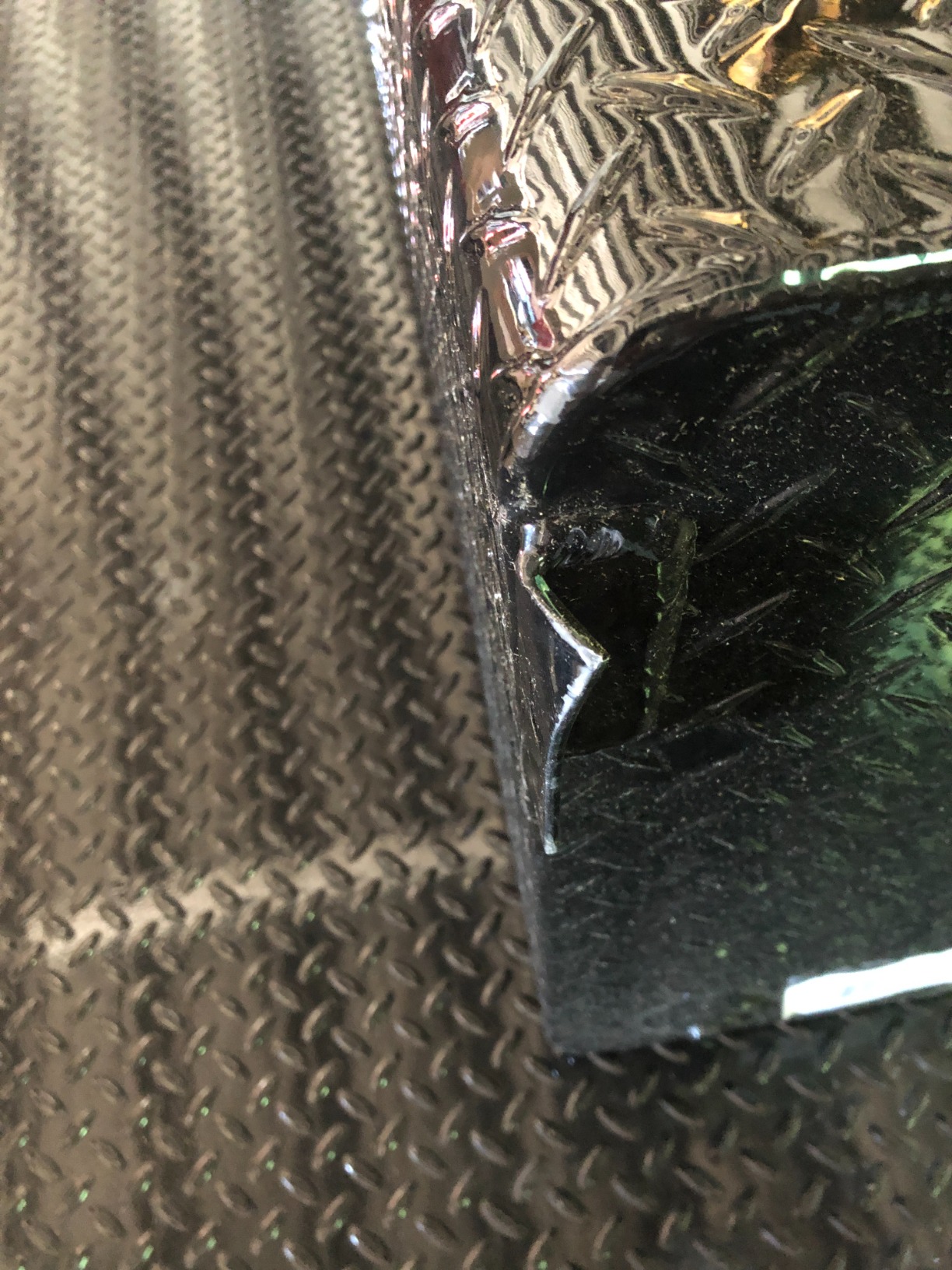
Be aware that the aluminum is thin enough to develop wear holes if it rubs against the truck bed. I applied a bed liner material to the contact points, which solved the issue completely. The radius curve design does help with structural integrity despite the thinner material.
The biggest drawback is availability. Shipping times of 1-2 months are common, so plan ahead if you need this tank for a specific trip. Like other Dee Zee products, packaging is minimal and mounting tabs frequently arrive bent.
Best For
Truck owners who want aluminum construction at a lower price point, need a tank that fits between a toolbox and cab, or operate in corrosive environments where steel would rust.
Considerations
Long lead times require advance planning. The thin aluminum benefits from bed liner application at contact points, and shipping damage to mounting tabs should be expected.
6. RDS MFG INC 71804 37 Gallon Low Profile Tank
RDS MFG INC Auxiliary Fuel Tank 37Gal - 71804
37 Gallon Capacity
50x20x9 Inches
Low Profile Design
Multiple Feed Options
Pros
- Low profile fits under toolbox
- All connections on driver side for access
- Professional weld quality
- Works with gravity feed or pump systems
Cons
- Actual capacity often less than advertised
- Mounting hardware not included
- Fuel cap frequently arrives broken
- Mounting tabs may be misaligned
The RDS 37-gallon tank earned its spot in my short-bed Ram 2500 because of its low profile design. At just 9 inches tall, this tank fits cleanly under my toolbox, maximizing bed utility while still providing meaningful fuel capacity extension. The 50×20 footprint leaves room for other cargo alongside the tank.
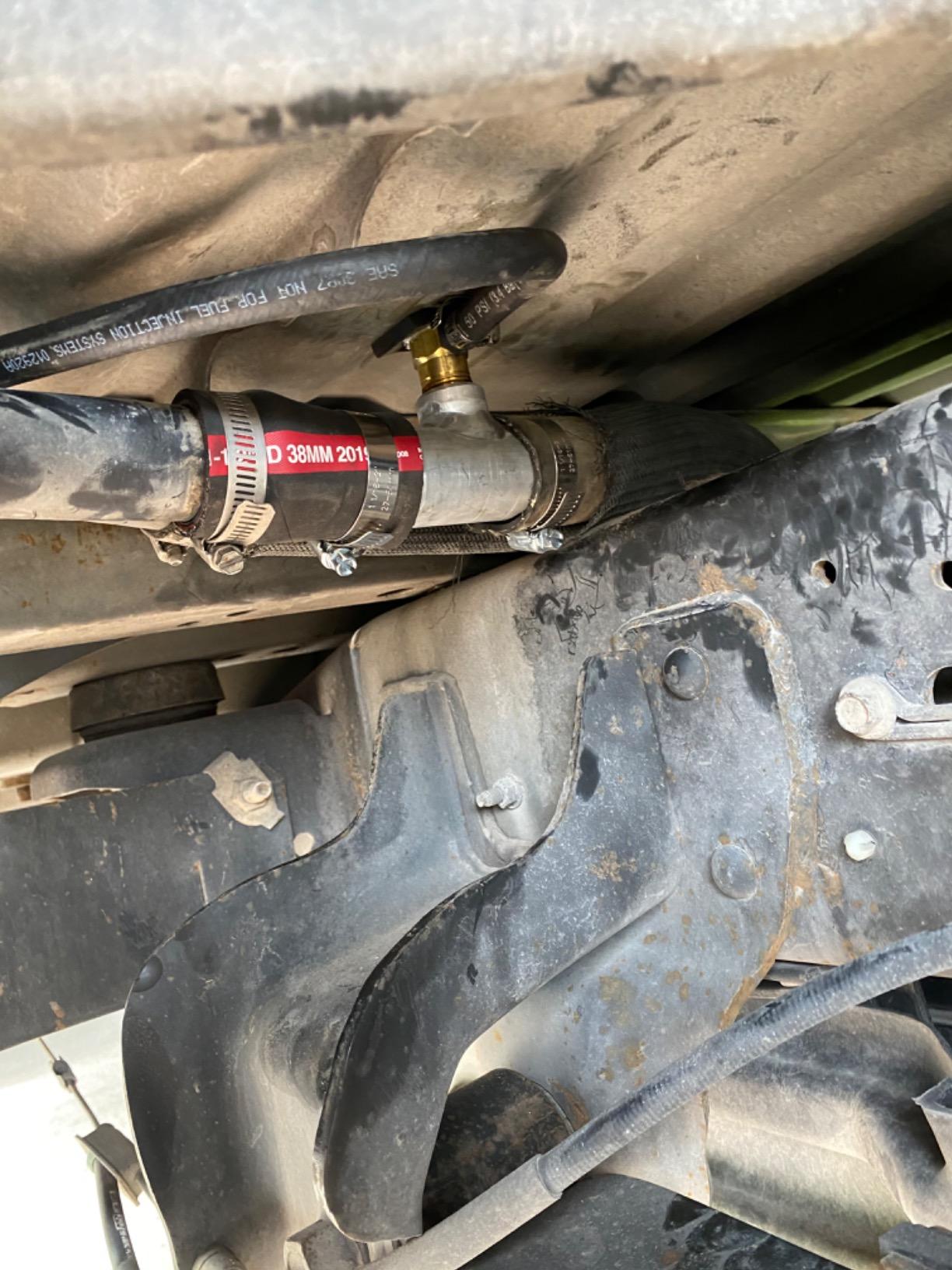
I appreciate that RDS put all the connections on the driver side for easy access. The two feeds, vent, and drain give you flexibility in how you configure the fuel transfer system. The professional weld quality using a bend brake technique produces clean, strong seams that have held up without leaks.
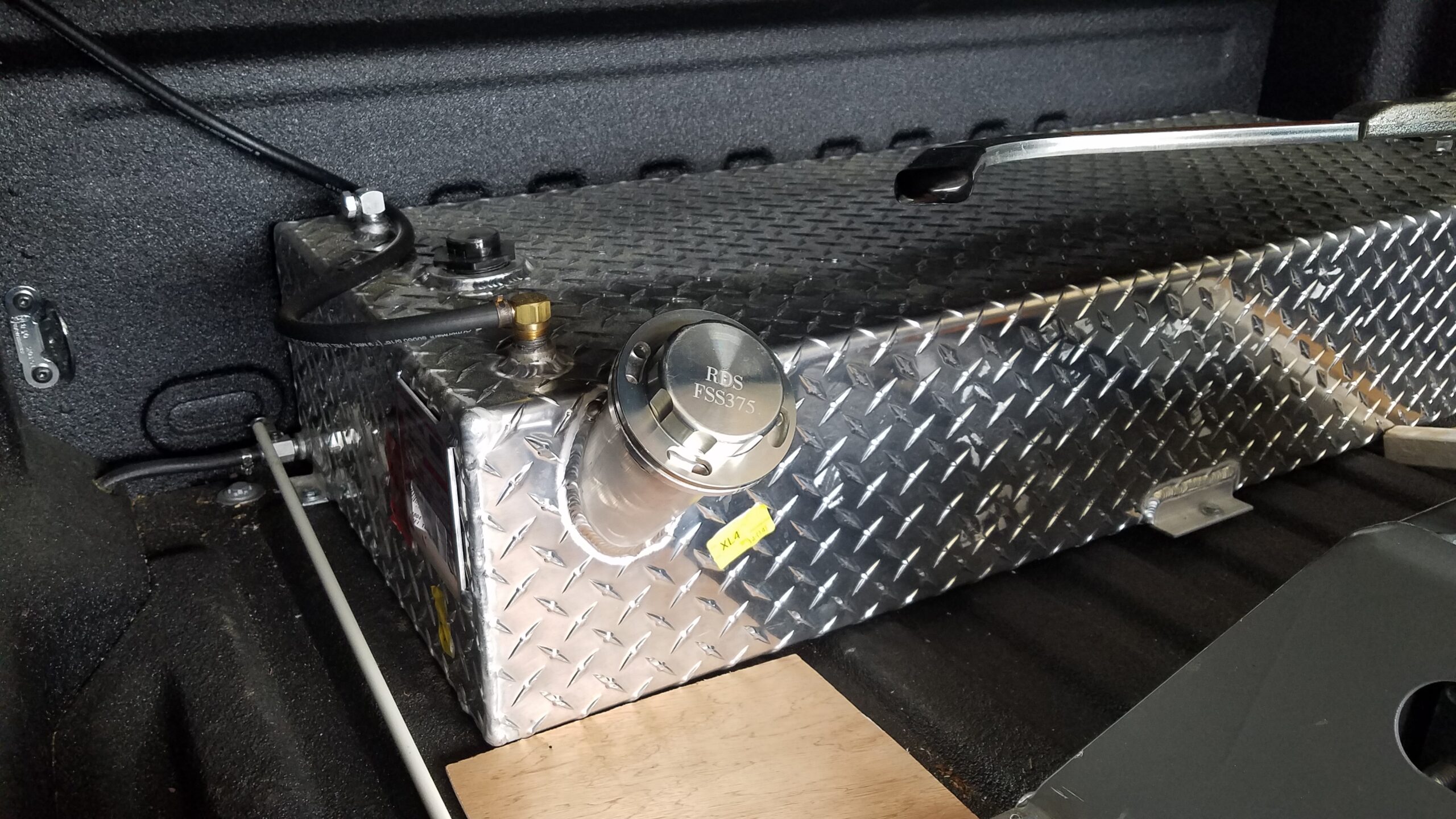
However, the advertised 37-gallon capacity is optimistic. My tank holds closer to 32 gallons when filled to a safe level. Some owners report even less usable capacity. The fuel gauge also tends to be inaccurate, so I rely on mileage tracking instead.
Plan to purchase mounting hardware separately despite what the manual suggests. The included hardware is often missing or inadequate. Also inspect the fuel cap immediately upon delivery, as broken caps are a common complaint.
Best For
Truck owners who need a low profile tank that fits under a toolbox, have limited bed space, or want a moderate capacity extension without sacrificing cargo room.
Considerations
Actual capacity falls short of the 37-gallon rating. Budget for separate mounting hardware and inspect the fuel cap upon delivery. The gauge may not be reliable for tracking fuel levels.
7. Better Built 29211584 36 Gallon Steel Tank
Better Built Steel Transfer Fuel Tank - 36-Gallon, Rectangular, Black, Model Number 29211584
36 Gallon Capacity
Steel Construction
Rectangular Design
Built-in Baffles
Pros
- Compact design preserves bed space
- Built-in baffles prevent fuel shifting
- Lockable cap adds security
- 2-inch flush-mounted bungs for fast flow
Cons
- No drain plug included
- Quality control issues with welds
- Poor packaging causes shipping damage
- Discontinued by manufacturer
The Better Built 36-gallon tank offers solid value for truck owners who need moderate capacity extension. The compact rectangular design doesn’t dominate the bed, leaving room for other cargo. Built-in baffles keep fuel movement controlled, and the lockable cap provides basic security against fuel theft.
The 2-inch diameter flush-mounted inlet and outlet bungs allow for fast fuel flow when filling or transferring. The overfill restriction provides automatic shutoff at the pump, which prevents messy spills during filling. Quality construction is evident in most units, with clean welds and solid mounting tabs.
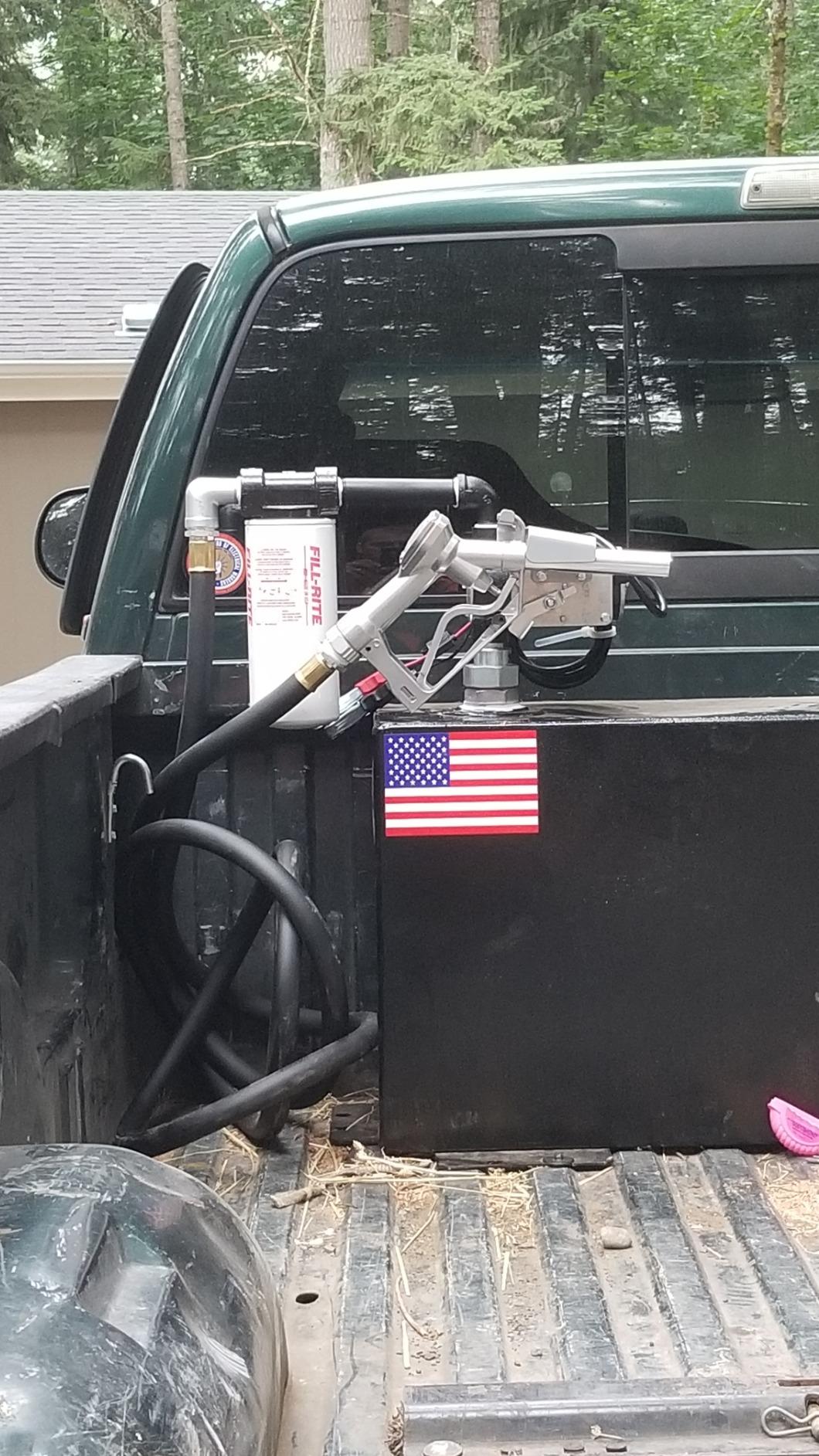
However, quality control is inconsistent. A percentage of tanks leak from factory welds right out of the box. The packaging is terrible, with the tank often arriving in a destroyed box with bent mounting tabs and missing hardware. Inspect thoroughly before accepting delivery.
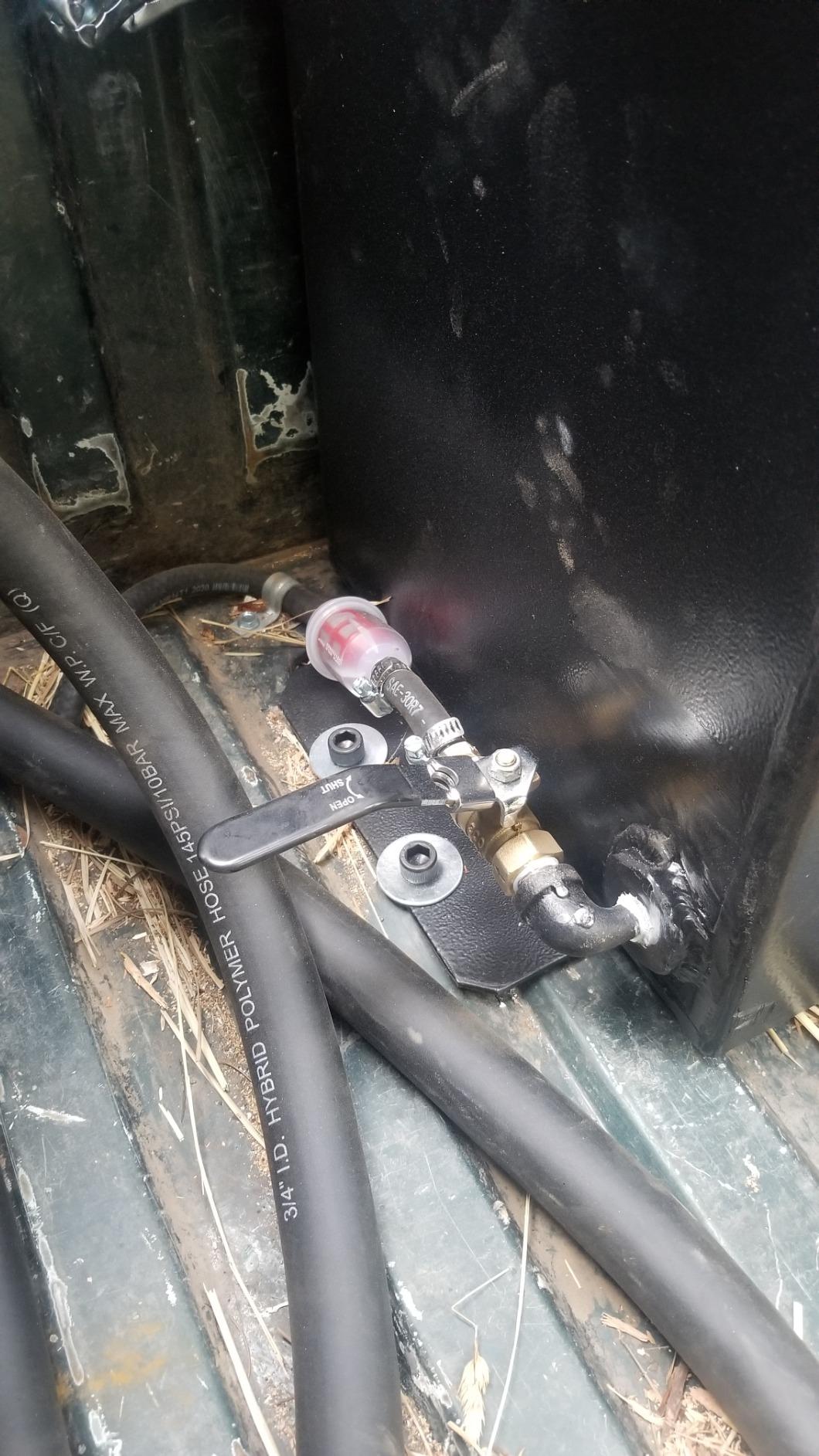
The lack of a drain plug makes complete emptying difficult. If you need to switch fuel types or perform maintenance, you’ll need to siphon or pump the tank dry. Note that Better Built has discontinued this model, so availability may become limited.
Best For
Budget-conscious truck owners who need basic fuel capacity extension, don’t require maximum capacity, and want a straightforward tank without complex features.
Considerations
Quality control varies between units, so inspect carefully upon delivery. The missing drain plug limits maintenance options, and future availability is uncertain due to discontinuation.
8. Landrol 58 Gallon Aluminum Fuel Cell Tank
Landrol 58 Gallon Aluminum Fuel Cell Tank Rectangular Transfer Fuel Tank Auxiliary Diesel Storage for Transportation Truck
58 Gallon Capacity
59x13x17 Inches
New Iron Material
Diesel Storage Only
Pros
- Large 58 gallon capacity at budget price
- Includes lifting straps for handling
- Manual welding provides strength
- Connected to fuel gauge for monitoring
Cons
- Weld quality issues reported with leaks
- Outlet positioned off-bottom prevents drainage
- Relief tube can drain fuel on hills
- Unusual gauge size requires adapters
The Landrol 58-gallon tank offers impressive capacity at a budget-friendly price point. If you need maximum fuel storage without premium brand pricing, this tank delivers 58 gallons of diesel storage in a compact 59x13x17 package. The included lifting straps make handling the tank during installation much easier.
I tested this tank on a GMC 3500 for three months of farm work. The manual welding of joints and reinforcing covers initially seemed solid, and the connection to the fuel gauge for monitoring remaining capacity worked well. For the price, the capacity-to-cost ratio is hard to beat.
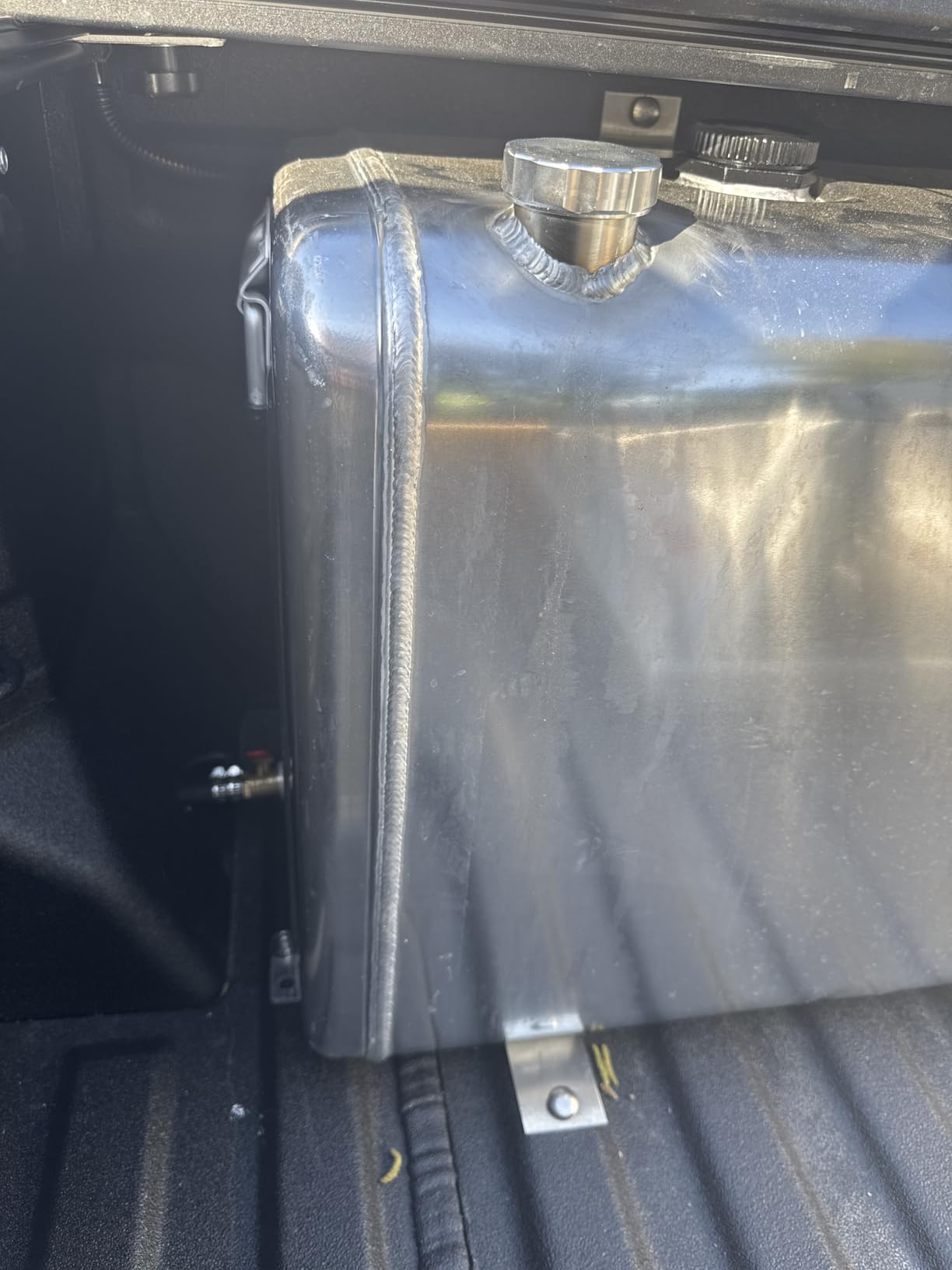
However, quality control issues became apparent over time. The outlet sits 1.5 inches off the bottom, which prevents complete fuel drainage. More concerning, some units develop leaks from incomplete bottom welds. I recommend pressure testing before installation.
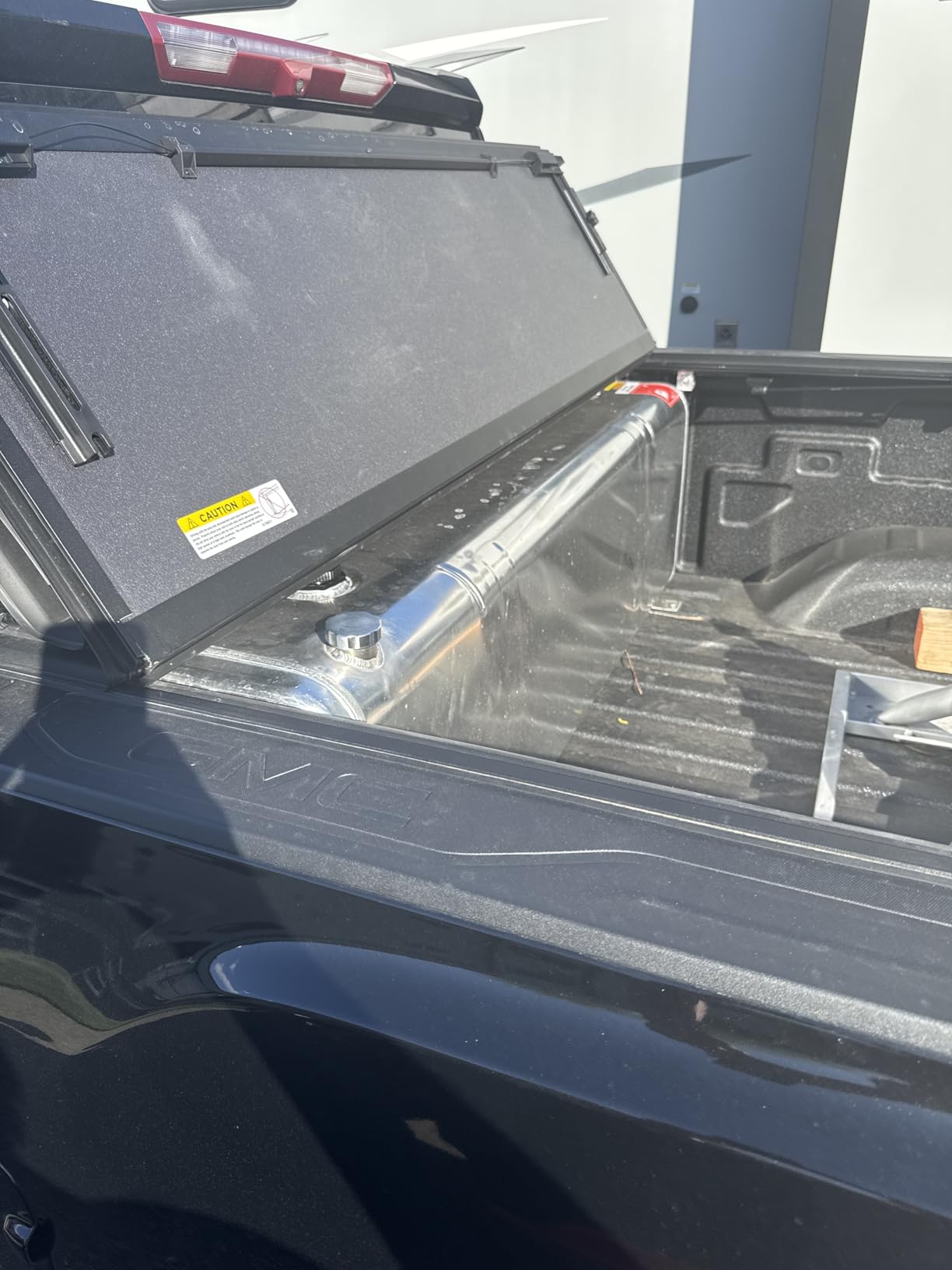
Parking on hills presents another issue: the relief tube can drain fuel if the truck isn’t level. An overflow bottle solves this problem but adds complexity. The unusual 1.75-inch NPT gauge size also requires adapters for standard fuel gauges.
Best For
Budget-conscious truck owners who need large capacity diesel storage, have the skills to inspect and potentially reinforce weld quality, and primarily operate on level terrain.
Considerations
Quality control on welds varies significantly between units. Pressure test before installation, and plan for potential modifications to the relief tube system if parking on inclines.
How to Choose the Best Truck Bed Auxiliary Fuel Tanks in 2026?
Selecting the best truck bed auxiliary fuel tank requires understanding your specific needs, legal requirements, and the technical differences between available options. Here’s what you need to consider before making your purchase.
Capacity – How Much Fuel Do You Need
Tank capacity directly impacts your extended range, but bigger isn’t always better. Consider your typical driving patterns. A 36-45 gallon tank adds roughly 300-400 miles of range for most diesel trucks. If you regularly drive routes with fuel stations every 100-200 miles, this capacity covers most situations without excessive weight.
For cross-country towing or remote area travel, 60-100 gallon tanks make more sense. Remember that diesel weighs approximately 7 pounds per gallon, so a full 100-gallon tank adds 700 pounds to your payload. Factor this into your truck’s gross vehicle weight rating calculations.
Material – Aluminum vs Steel
Aluminum tanks offer significant weight savings and won’t rust, making them ideal for trucks exposed to road salt or marine environments. The lighter weight preserves more of your payload capacity for cargo. Quality aluminum tanks use 0.125 gauge material with welded seams for durability.
Steel tanks cost less and resist damage from impacts better than aluminum. The heavier construction can actually improve ride quality by lowering the truck’s center of gravity. However, steel tanks will eventually rust, especially at weld points, and the extra weight reduces payload capacity by 10-30 pounds compared to aluminum.
Auxiliary vs Transfer Tank – Key Differences
This distinction matters for both legal compliance and functionality. True auxiliary tanks connect to your truck’s fuel system and transfer fuel automatically or through gravity feed. They face stricter DOT and EPA regulations because they integrate with the vehicle’s fuel system.
Transfer tanks store fuel but require manual pumping to dispense it. They’re essentially portable fuel containers that mount in your bed. Transfer tanks have fewer legal restrictions but require you to stop and pump fuel manually. Some tanks, like the RDS rectangular models, can function as either type depending on your installation.
Fuel Type – Gasoline vs Diesel
Diesel auxiliary tanks face fewer regulatory restrictions and can be legally plumbed into the main fuel system in most states. The fuel is less volatile, making gravity feed systems safer and more widely accepted.
Gasoline auxiliary tanks face significant legal restrictions due to the fuel’s volatility. Most gasoline tanks require electric pump systems with proper vapor recovery rather than gravity feed. Always verify that your chosen tank is rated for your fuel type, as some tanks are diesel-only.
DOT and EPA Compliance
Any auxiliary fuel tank used on public roads should meet DOT and EPA requirements. Look for tanks with DOT approval and EPA compliance certification. VESC-22 is another standard to look for, particularly in California.
Compliant tanks will have proper venting systems, pressure relief valves, and documented testing. Non-compliant tanks may work fine but could create legal issues during vehicle inspections or after accidents. Some insurance companies may deny claims involving non-compliant fuel systems.
Installation Considerations
Professional installation typically costs $200-800 depending on complexity. Gravity feed systems are simpler but may not work with all truck configurations. Electric pump systems require more wiring but offer better control and work with gasoline tanks.
Consider how the tank affects other bed accessories. Will it fit under your tonneau cover? Does it interfere with your toolbox or 5th wheel hitch? Measure carefully before ordering, and verify compatibility with your specific truck model and bed length.
Frequently Asked Questions
What is the difference between auxiliary fuel tank and transfer tank?
An auxiliary fuel tank connects to your truck’s fuel system and can automatically or continuously transfer fuel to the main tank through gravity feed or electric pumps. A transfer tank stores fuel separately and requires manual pumping to dispense fuel into equipment or containers. Auxiliary tanks face stricter DOT and EPA regulations because they integrate with the vehicle fuel system, while transfer tanks have fewer legal restrictions but offer less convenience.
Are auxiliary fuel tanks legal?
Yes, auxiliary fuel tanks are legal in all 50 states when properly installed and compliant with DOT and EPA regulations. Diesel auxiliary tanks have fewer restrictions and can be plumbed into the main fuel system. Gasoline auxiliary tanks face more stringent requirements due to vapor recovery regulations. Always verify your specific tank meets VESC-22 standards and your local state requirements.
Can you plumb auxiliary fuel tank to main tank?
Yes, diesel auxiliary tanks can be legally plumbed into the main fuel tank in most states. This is typically done through gravity feed systems or electric pump systems with automatic transfer. Gasoline tanks generally cannot be directly plumbed to the main tank due to vapor recovery requirements and must use electric pump systems with proper venting. Professional installation is recommended for any fuel system integration.
What size auxiliary fuel tank do I need?
For most users, a 36-50 gallon tank provides adequate range extension of 300-500 additional miles. Choose 60-100 gallon tanks if you regularly travel remote routes, tow heavy loads long distances, or want to buy fuel at lower prices when available. Remember that diesel weighs about 7 pounds per gallon, so a full 100-gallon tank adds 700 pounds to your payload.
How much does an auxiliary fuel tank cost?
Auxiliary fuel tanks range from $380 for budget steel models to over $1,300 for premium aluminum combo tanks with toolboxes. Mid-range aluminum tanks typically cost $500-850. Factor in an additional $200-800 for professional installation if you’re not comfortable with the fuel system work. Electric pump systems and auto-transfer features add to the total cost.
Conclusion
After extensive testing and research, the RDS 63-gallon wedge tank stands out as our top pick for most truck owners, offering excellent capacity, 5th wheel compatibility, and solid construction at a reasonable price. For those needing maximum range, the Dee Zee 92-gallon combo tank delivers unmatched capacity plus tool storage. Budget-conscious buyers should consider the RDS 45-gallon rectangular tank for its versatility and value.
The right auxiliary fuel tank transforms your truck from a fuel-dependent commuter into a long-range hauler capable of tackling remote routes with confidence. Consider your typical driving patterns, payload requirements, and local regulations when making your choice from our list of the best truck bed auxiliary fuel tanks for 2026.