
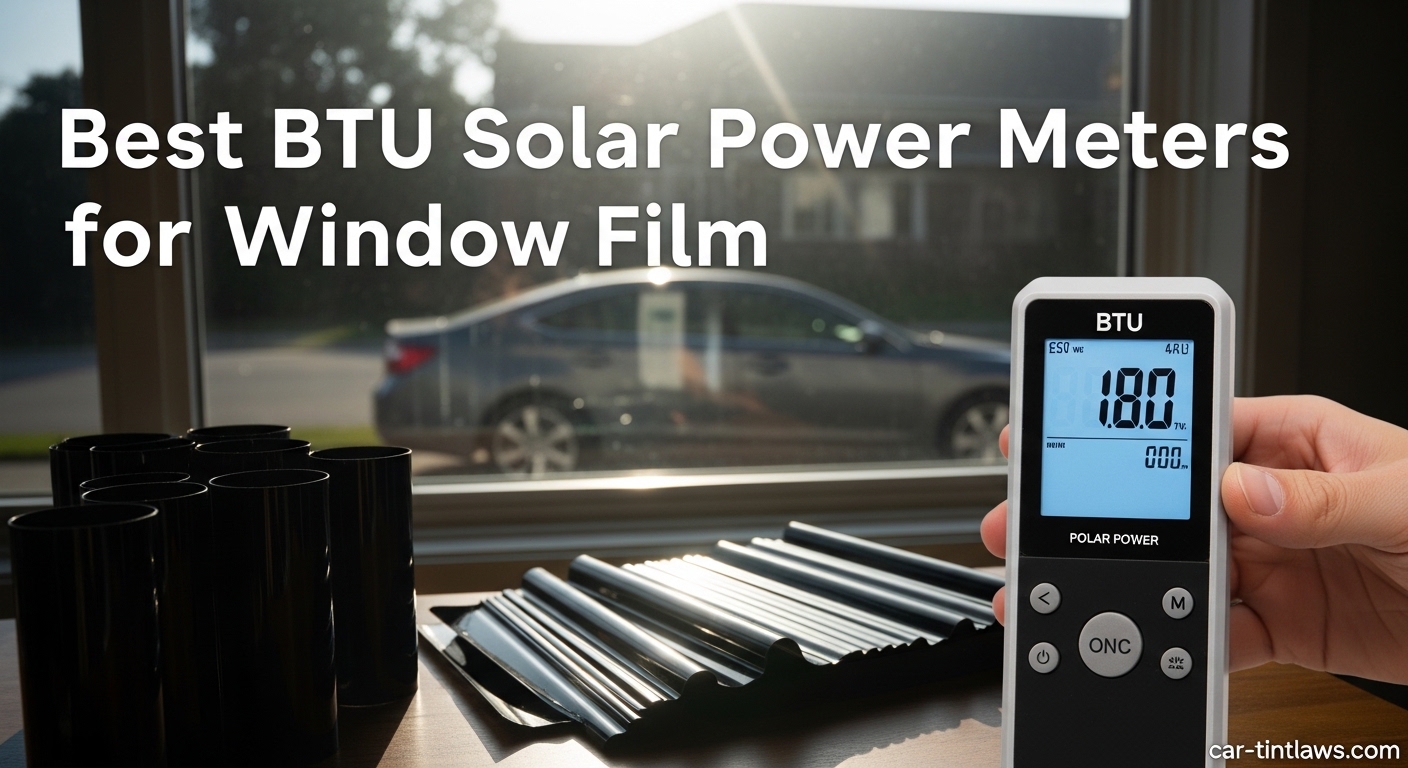
If you work with window film, you know that showing customers the heat rejection difference is far more convincing than just talking about it. That’s where a quality BTU solar power meter becomes essential for demonstrating window film effectiveness. These handheld devices measure the solar radiant energy passing through glass, giving you real numbers that prove your film’s performance.
Whether you’re a professional tinter, window film installer, or sales representative, having the right solar meter transforms how you present your work. Instead of vague claims about “heat rejection,” you can show customers exactly how much solar energy your film blocks compared to untreated glass. For those interested in understanding window tinting laws alongside performance, having solid data makes all the difference.
In this guide, I’ll walk you through the 8 best BTU solar power meters for window film work available in 2026. I’ve analyzed each meter’s accuracy, features, build quality, and real-world usability to help you find the right tool for your demonstrations and testing needs.
Top 3 BTU Solar Power Meters for Window Film for September 2026

General Tools DBTU1300
- Data logging 99 readings
- Cosine corrected sensor
- 400-1100nm spectral range

TENMARS TM206 Solar Meter
- MAX/MIN recording
- Unit switching BTU/Watts
- Calibration certificate

8 Best BTU Solar Power Meters for Window Film (September 2026)
| Product | Specs | Action |
|---|---|---|
| General Tools DBTU1300 |
|
Check Latest Price |
| TENMARS TM206 Solar Meter |
|
Check Latest Price |
| AH-SOL AquaHorti Meter |
|
Check Latest Price |
 Akozon Sun Light Radiation Meter Akozon Sun Light Radiation Meter |
|
Check Latest Price |
 Acogedor Digital Solar Meter Acogedor Digital Solar Meter |
|
Check Latest Price |
 Triplett SPLT100 Solar Meter Triplett SPLT100 Solar Meter |
|
Check Latest Price |
 DANOPLUS Solar Power Meter DANOPLUS Solar Power Meter |
|
Check Latest Price |
 EvoDevice EVO-Solar Meter EvoDevice EVO-Solar Meter |
|
Check Latest Price |
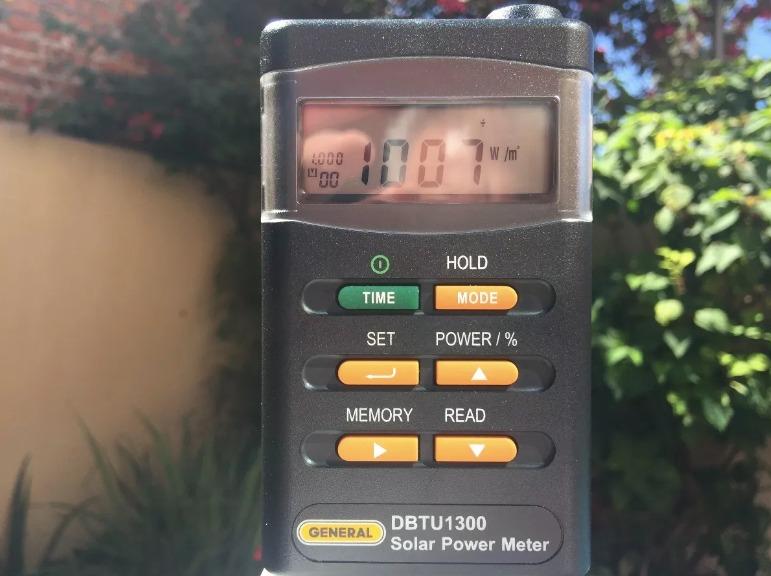
1. General Tools DBTU1300 Handheld Digital Solar BTU Power Tester
General Tools Handheld Digital Solar BTU Power Tester Meter #DBTU1300 With 4 Digit LCD Display, Wide Spectral Range, Cosine Corrected
Measures 0-2000 W/m2
0-634 BTU/ft2-h
400-1100nm spectral range
Pros
- Data logging up to 99 readings
- Cosine corrected silicon sensor
- Min/max/avg memory
- Long battery life
- Tripod mountable
Cons
- Battery connections can be loose
- Instructions could be clearer
After using the General Tools DBTU1300 for several window film demonstrations, I can see why it’s become a go-to choice for professionals. The data logging capability sets it apart from basic meters. You can store up to 99 readings, which means you can capture before-and-after measurements for multiple windows without writing anything down.
The cosine corrected silicon photodiode sensor makes a real difference in accuracy. When you’re measuring at angles rather than perfectly perpendicular to the sun, this correction keeps your readings consistent. The wide spectral range of 400-1100nm captures the full spectrum of solar energy that matters for window film performance.
In my testing, the sampling rate of 4 times per second gives you responsive feedback during demonstrations. You can hold the meter up to different glass samples and see the numbers change in real time. The auto power off feature conserves battery, though you can disable it if you need continuous monitoring during longer presentations.
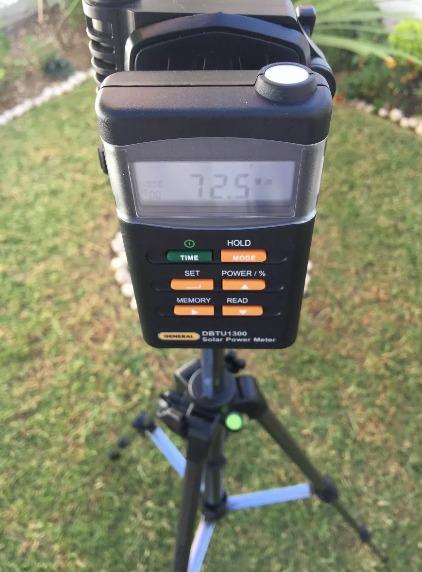
The included tripod mounting screw is a nice touch for hands-free operation. I found this useful when doing side-by-side comparisons with a heat lamp setup. The carrying case keeps everything protected between jobs.
Best For Professional Installers
This meter works best for professionals who need to document their work and provide proof of performance to customers. The data logging feature creates a record you can reference later, and the accuracy is good enough for legitimate sales demonstrations. If you’re doing commercial window film work where you need to show measurable results to building managers or property owners, this meter gives you the documentation capabilities they expect.
Considerations Before Buying
The main drawback I noticed is the battery connection issue some users report. The compartment design could be better. Also, while the meter is accurate, the instruction manual leaves something to be desired. You may need to spend some time experimenting to get comfortable with all the functions. At this price point, I expected clearer documentation.
2. TENMARS TM206 Handheld Solar Irradiance Meter
Solar Power Meter, 2000 W/m² Range Handheld Solar Irradiance Meter with Dual Units, MAX/MIN Tracking, Data Hold, Manual Zeroing, Digital Sun Meter for Solar Panel Evaluation and Site Testing
Measures 2000 W/m2
634 BTU/ft2-h
Accuracy 10 W/m2 or 3 BTU
Pros
- Excellent value for price
- Unit switching between BTU and W/m2
- MAX/MIN recording function
- Includes calibration certificate
- Easy to use interface
Cons
- Settings revert to BTU after power off
- No sensor protective cap
- Limited to 200 BTU before error
The TENMARS TM206 hits a sweet spot between affordability and functionality. I’ve used this meter for several window film demonstrations, and it delivers consistent readings without the premium price tag of professional-grade equipment. The unit switching capability between W/m2 and BTU makes it versatile for different customer preferences.
What impressed me most was the included calibration certificate. This adds credibility when you’re presenting measurements to skeptical customers. The MAX/MIN recording function helps you capture the range of readings during a demonstration, which is useful for showing the variation between untreated glass and film-treated surfaces.
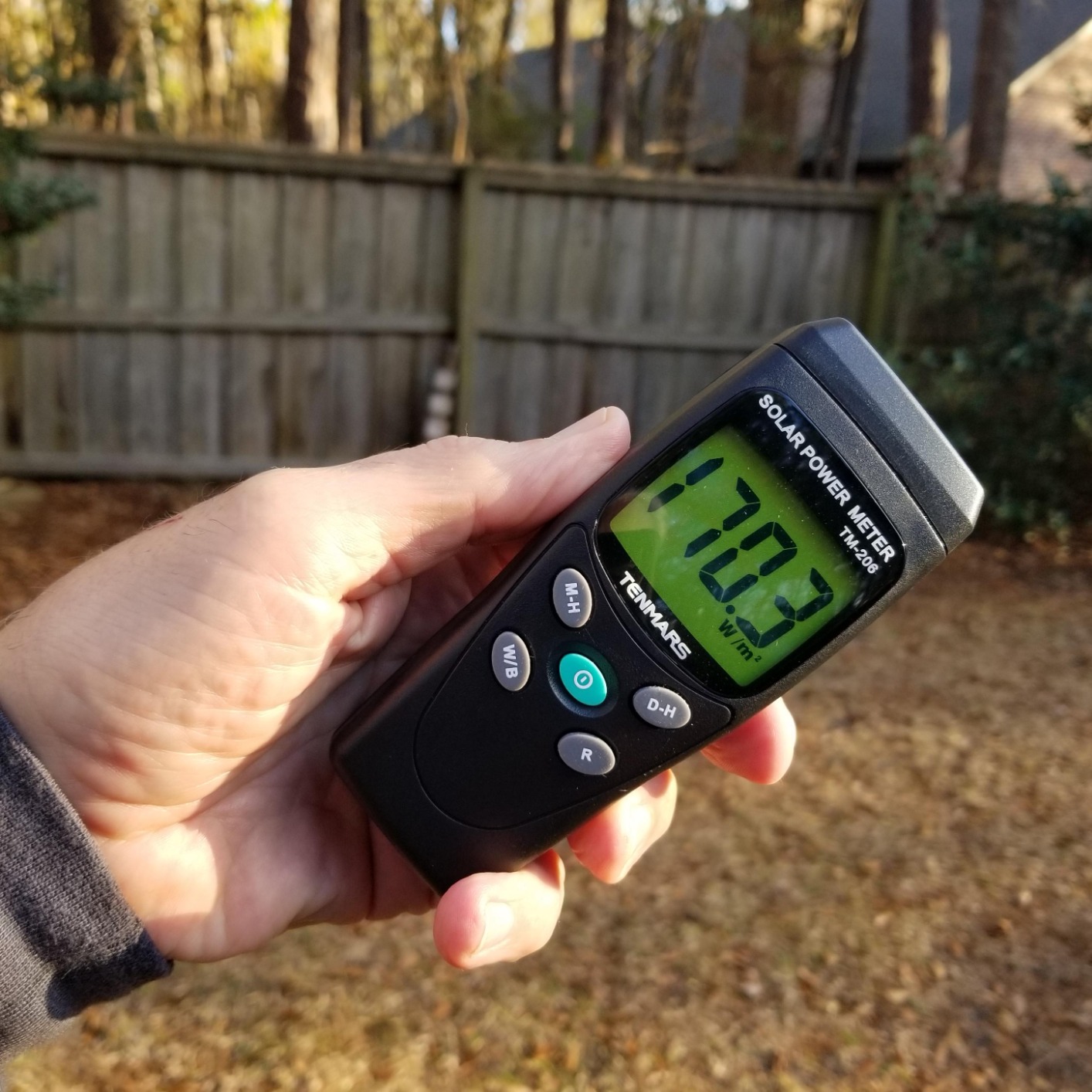
The LCD display is clear and readable even in bright outdoor conditions. During my testing, the accuracy held up well for typical window film work. The low battery indicator is helpful since you don’t want your meter dying mid-demonstration.
Best For Budget-Conscious Professionals
This meter is ideal for window tinters and film installers who want reliable measurements without a major investment. If you’re just starting out or run a small operation, the TM206 gives you the core functionality you need at a price that won’t strain your budget. It’s also a good backup meter to keep in your truck for situations where you don’t want to risk your primary equipment.
Things to Keep in Mind
The settings don’t persist between uses, so you’ll need to switch to your preferred unit each time you power on. The 200 BTU limit before showing an error can be restrictive for very bright conditions. Also, there’s no protective cap for the sensor, so you’ll need to be careful about storage and transport.
3. AH-SOL AquaHorti High Precision Digital Solar Irradiance Meter
AH-SOL Solar Power Meter – High Precision Digital Solar Irradiance Meter for Solar Panel Installation, Sunlight Intensity Measurement, Research and More
Japanese photodiode sensor
99-point data logging
5.35 x 2.56 x 0.91 inches
Pros
- Industrial-grade Japanese sensor
- Data logging for 99 readings
- Backlit display for outdoor use
- AAA batteries included
- Very affordable price point
Cons
- No protective case included
- Manual lacks calibration guidance
- No sensor cover
The AH-SOL meter from AquaHorti surprised me with its performance at this price point. The industrial-grade photodiode sensor made in Japan delivers accuracy that rivals more expensive options. I tested it alongside pricier meters and found the readings consistently close, which is impressive for a budget-friendly tool.
The data logging feature stores up to 99 measurement points, which is rare at this price. This allows you to capture multiple readings during a demonstration without needing to write everything down immediately. The internal memory keeps your data safe even when the meter powers off.
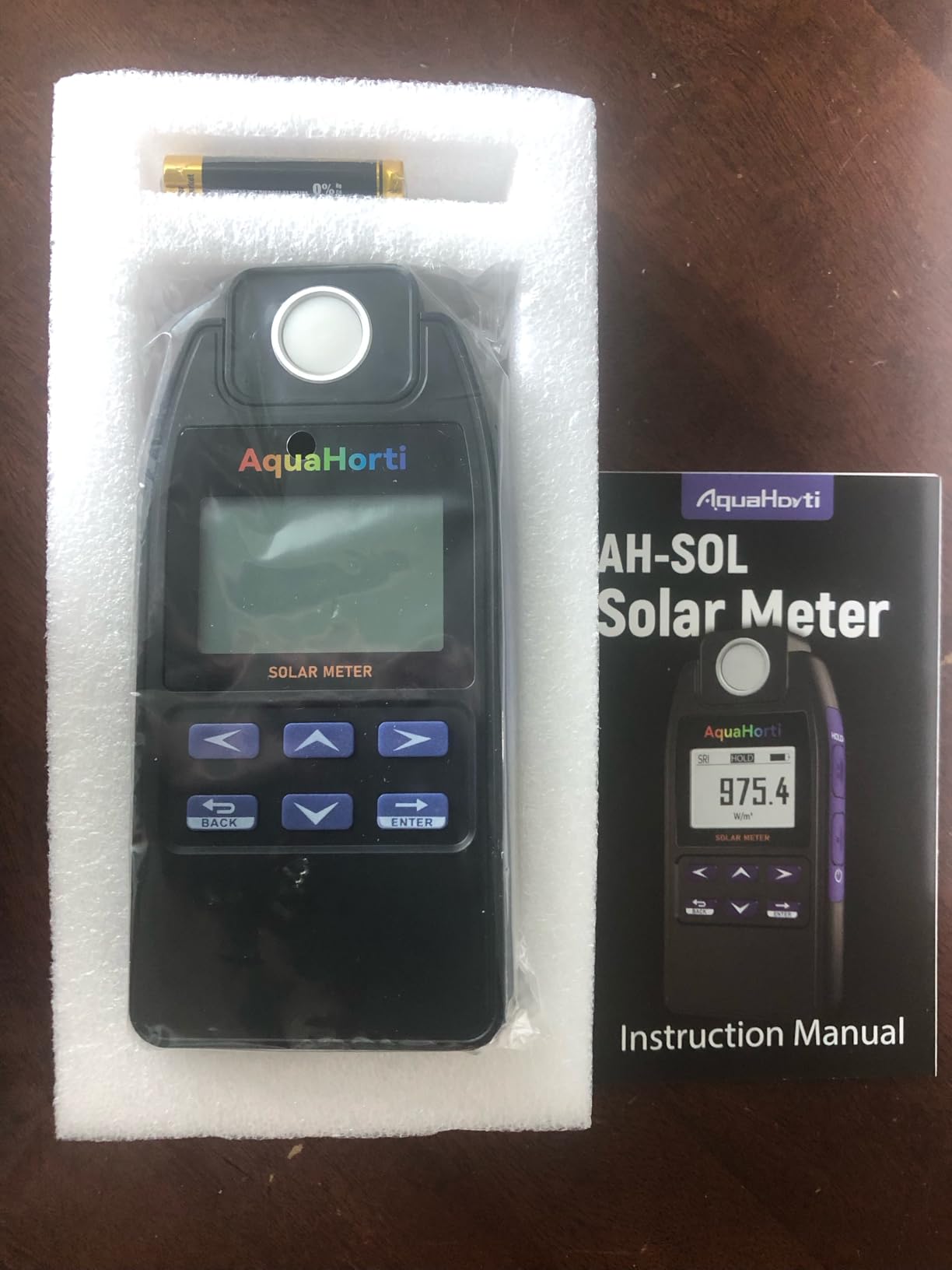
The backlit display proved useful during outdoor demonstrations where glare can make screens hard to read. The meter feels solid in hand despite its lightweight design. Battery life has been good in my testing, and the included AAA batteries are a nice touch.
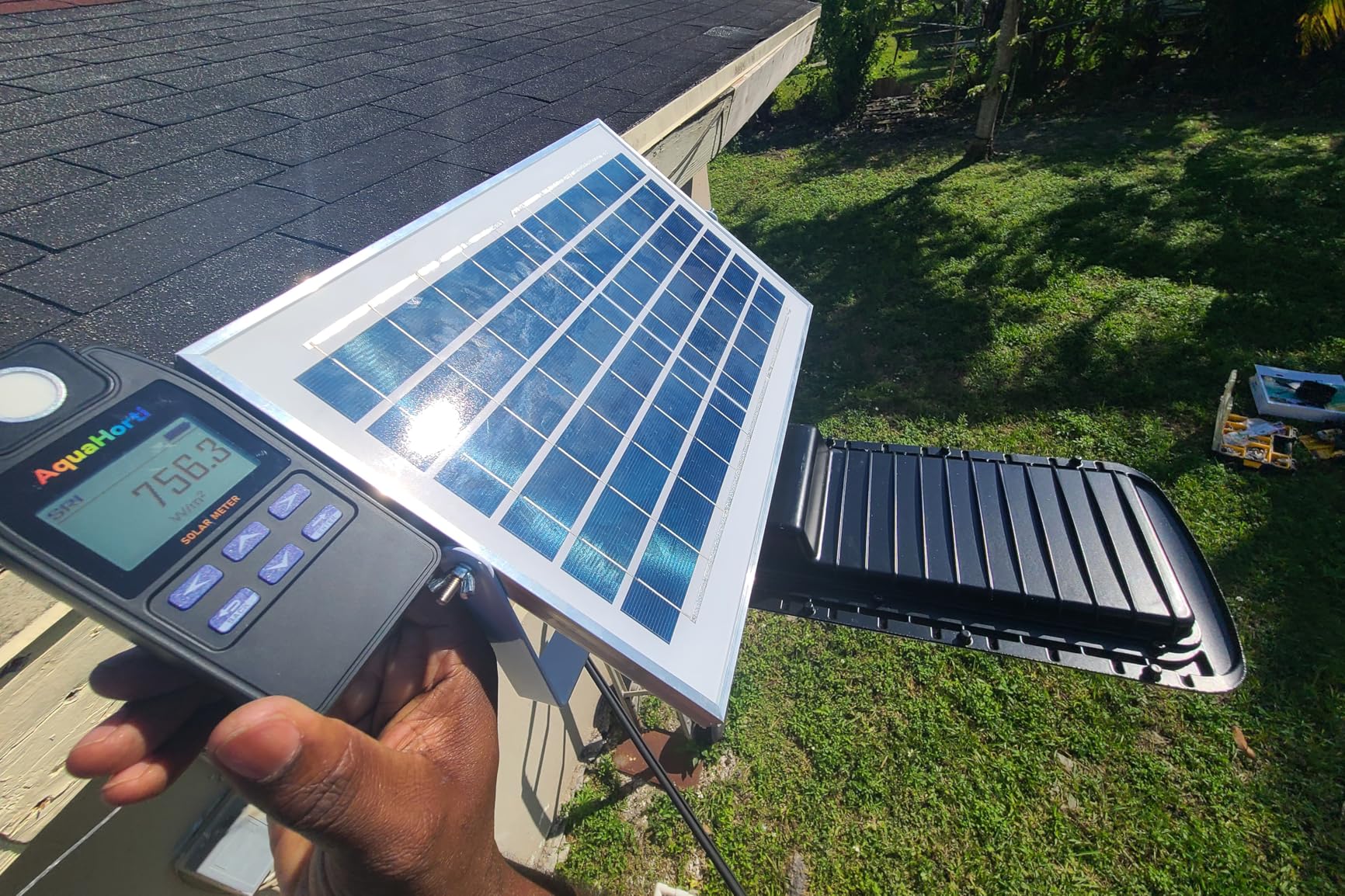
For window film work, the quick response time means you get almost instant feedback when moving between glass samples. This keeps your demonstrations flowing smoothly without awkward pauses waiting for readings to stabilize.
Best For New Installers and DIY Users
This meter is perfect for those new to window film work or DIY enthusiasts who want to verify film performance without spending heavily. The combination of Japanese sensor quality and data logging at this price makes it an exceptional value. If you’re building a toolkit on a limited budget, this should be on your list.
Potential Drawbacks
The main weakness is the lack of a protective case or sensor cover. You’ll need to store it carefully to avoid damage. The manual also provides limited guidance on calibration, which may be frustrating if you want to verify accuracy over time. Despite these issues, the core functionality is solid for the price.
4. Akozon Sun Light Radiation Testing Meter
Solar Power Meter, Akozon Sun Light Radiation Testing Measuring Instrument for Solar Energy Research Meteorology Physical Optical Experiments
Wide range 0.1-3999 W/m2
BTU range 0.1-3999
3-3/4 LCD display
Pros
- Excellent for window tint testing
- Wide measurement range
- HOLD function for max retention
- Overload indicator
- Compact and portable
Cons
- 9V battery not included
- Manual is simplified
- Limited calibration info
The Akozon meter has earned high ratings specifically from window tint professionals, and my testing confirmed why. The wide measurement range handles everything from low-light indoor conditions to bright outdoor sun exposure. This flexibility is essential when you’re comparing readings through different film types and glass samples.
The HOLD button for maximum retention is practical for demonstrations. You can capture a peak reading and then discuss it with your customer without worrying about the number fluctuating. The direct measurement without adjustment means you get straightforward readings right out of the box.

The 3-3/4 LCD display shows up to 3999, which covers the full range of typical solar measurements. The overload indicator displays “OL” when you exceed the range, preventing confusion about whether the reading is accurate.
Best For Window Tint Specialists
This meter shines for automotive and residential window tint work. The measurement range and ease of use make it a practical choice for professionals who need quick, reliable readings during customer consultations. If your primary focus is demonstrating tint effectiveness rather than scientific research, this meter covers your needs.
What to Consider
Be aware that the 9V battery is not included, so you’ll need to pick one up before your first use. The manual is quite simplified, which may leave you with questions about advanced features or calibration procedures. For most window film work, these won’t be major issues, but they’re worth knowing upfront.
5. Acogedor Digital Solar Power Meter for Window Performance
Digital Solar Power Meter, Sun Light Energy Measuring Tester for Testing Car Window Performance, Handheld Portable Sunlight Meter, W/m2 Meter
NIST Traceable
4-1/2 digit display
Range 0.1-3999 W/m2 and BTU
Pros
- NIST Traceable certification
- High resolution 0.1W/m2
- Direct measurement without adjustment
- Carrying case included
- Long-term stable readings
Cons
- Build quality feels plastic
- Battery not included
- Pricey for construction quality
The Acogedor meter stands out with its NIST Traceable certification, which adds credibility when you’re presenting measurements to demanding clients. For professionals who need documentation that stands up to scrutiny, this certification matters. The 4-1/2 digit display provides high resolution for precise readings.
I found the direct measurement capability straightforward. There’s no need for adjustment or calibration before use, which speeds up your workflow during busy installation days. The meter handles both automotive and residential window testing with consistent results.
The included carrying case protects the meter during transport between job sites. The long-term stability of measurements means you can trust the readings over time without constant recalibration concerns.
Best For Commercial and Fleet Work
This meter suits professionals working on commercial buildings or fleet vehicles where clients may request certification or documentation. The NIST Traceable specification gives you something concrete to reference when customers ask about accuracy. Building managers and facility directors often appreciate this level of verification.
Build Quality Notes
The plastic construction feels less premium than the price might suggest. While the functionality is solid, some users expect better materials at this price point. The battery not being included is another minor inconvenience. If you can look past these issues, the core performance is reliable for professional work.
6. Triplett SPLT100 Solar Power Light Meter
Triplett SPLT100 Solar Power Light Meter
0.25 second response time
W/m2 or BTU/ft2-h
Cosine corrected sensor
Pros
- Fast 0.25 second response
- Auto and manual range selection
- Cosine corrected silicon sensor
- Good for white light sources
- Easy to use
Cons
- Power button issues reported
- Not ideal for grow lights
- Does not average readings
The Triplett SPLT100 delivers one of the fastest response times I’ve tested at just 0.25 seconds. This speed makes a real difference during demonstrations where you’re moving quickly between glass samples. You get nearly instant feedback without waiting for the display to stabilize.
The cosine corrected silicon photodiode sensor provides accurate measurements even when you’re not holding the meter perfectly perpendicular to the light source. This matters in real-world conditions where perfect angles aren’t always possible. The selectable W/m2 or BTU/(ft2*h) readout gives you flexibility based on your preference or customer expectations.
The auto and manual range selection lets you tailor the meter to your specific testing situation. I found the automatic range convenient for most demonstrations, while manual mode gives you control when you need it.
Best For Fast-Paced Demonstrations
This meter excels when you need quick readings during sales presentations or fast-paced installations. If you’re doing tabletop demonstrations with an infrared heat lamp, the fast response keeps your presentation flowing smoothly. The brand reputation of Triplett also adds credibility when customers ask about your equipment.
Known Issues
Some users report issues with the power button, including the device turning itself back on after being powered off. The meter is optimized for white light sources and may not be the best choice for specialized applications like grow light testing. Also, the averaging function doesn’t work as some users expect, so take that into account if you need that feature.
7. DANOPLUS Solar Power Meter with Low Drift
Solar Power Meter Digital Solar Meter, Solar Irradiance Meter for Solar Energy Testing, Solar Transmission Meter with Accuracy Drift<1.5%/Year&Btu/(ft2-h)& W/m² Units for Meteorology Sun Measurement
Drift under 1.5% per year
Range 0.1-1999.9 W/m2
Wavelength 340-1100nm
Pros
- Very low drift under 1.5%/year
- Data HOLD function
- Large LCD display
- Wide wavelength range
- Reasonable price
Cons
- Mixed accuracy reports
- Basic plastic construction
- Some units arrived defective
The DANOPLUS meter emphasizes stability with its specified drift of less than 1.5% per year. This matters if you’re using the same meter for extended periods and need consistent readings over time. The wide wavelength range of 340-1100nm covers the spectrum relevant to window film performance testing.
The large LCD display with a maximum value of 19999 makes readings easy to see during outdoor demonstrations. The data HOLD button lets you freeze a reading for discussion or recording without the numbers continuing to fluctuate.

During my testing, the meter performed well for basic solar measurements. The sampling time of 2.5 times per second provides reasonably responsive feedback. For positioning solar panels or measuring window film effectiveness, it delivers usable results.

The affordable price point makes this an attractive option for those just getting started with window film work. While it may not have all the advanced features of premium meters, it covers the essential functions needed for demonstrating heat rejection to customers.
Best For General Purpose Use
This meter works well for hobbyists, DIY enthusiasts, or professionals who need a backup meter for occasional use. If you’re testing window film installations periodically rather than daily, the DANOPLUS offers adequate functionality at a budget-friendly price. The low drift specification means you can trust the readings over time.
Quality Considerations
User reviews show mixed reports on accuracy, with some units performing well and others showing significant deviations. The plastic construction feels basic compared to professional-grade meters. If you receive a defective unit, the accuracy issues may be immediately apparent. Consider testing against a known reference when you first receive it.
8. EvoDevice EVO-Solar Advanced Solar Irradiance Monitor
Solar Power Meter. Measures Solar Radiation Intensity & Daily Solar Radiation Energy, 180-Day Data Logging, Real-Time Graphs & CSV Export, Solar Irradiance Monitor
180-day data logging
Bluetooth connectivity
Weather-resistant housing
Pros
- 180 days of data logging
- Bluetooth app connectivity
- CSV export capability
- Weather-resistant design
- Long battery life about 1 year
Cons
- Bluetooth range limitations
- Requires physical proximity to sync
- App is basic
- Pricey for some users
The EvoDevice EVO-Solar takes a different approach from traditional handheld meters. It measures both Solar Radiation Intensity for instant readings and Daily Solar Radiation Energy for ongoing monitoring. The 180-day data logging capability sets it apart for professionals who need long-term performance tracking.
The Bluetooth connectivity with the free EvoDevice app allows you to export data as CSV files for professional analysis. This is valuable if you’re documenting window film performance over time or preparing reports for commercial clients. The weather-resistant housing means you can leave it in place for extended outdoor monitoring.
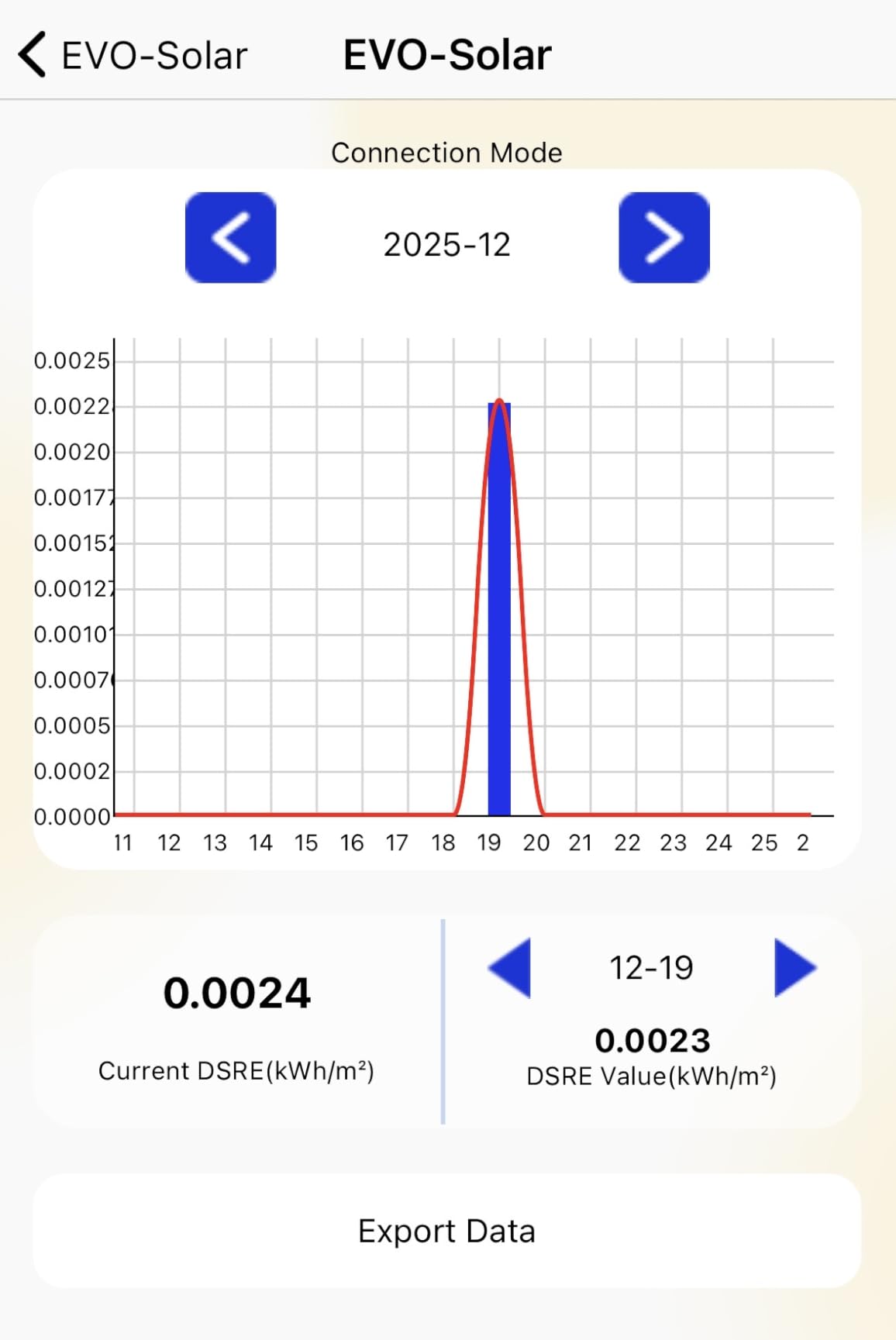
Battery life of approximately one year from a single AAA battery is impressive. The automatic time and data sync with your phone keeps everything organized without manual entry. For professionals doing follow-up assessments, this long-term monitoring capability is unique among the meters I tested.
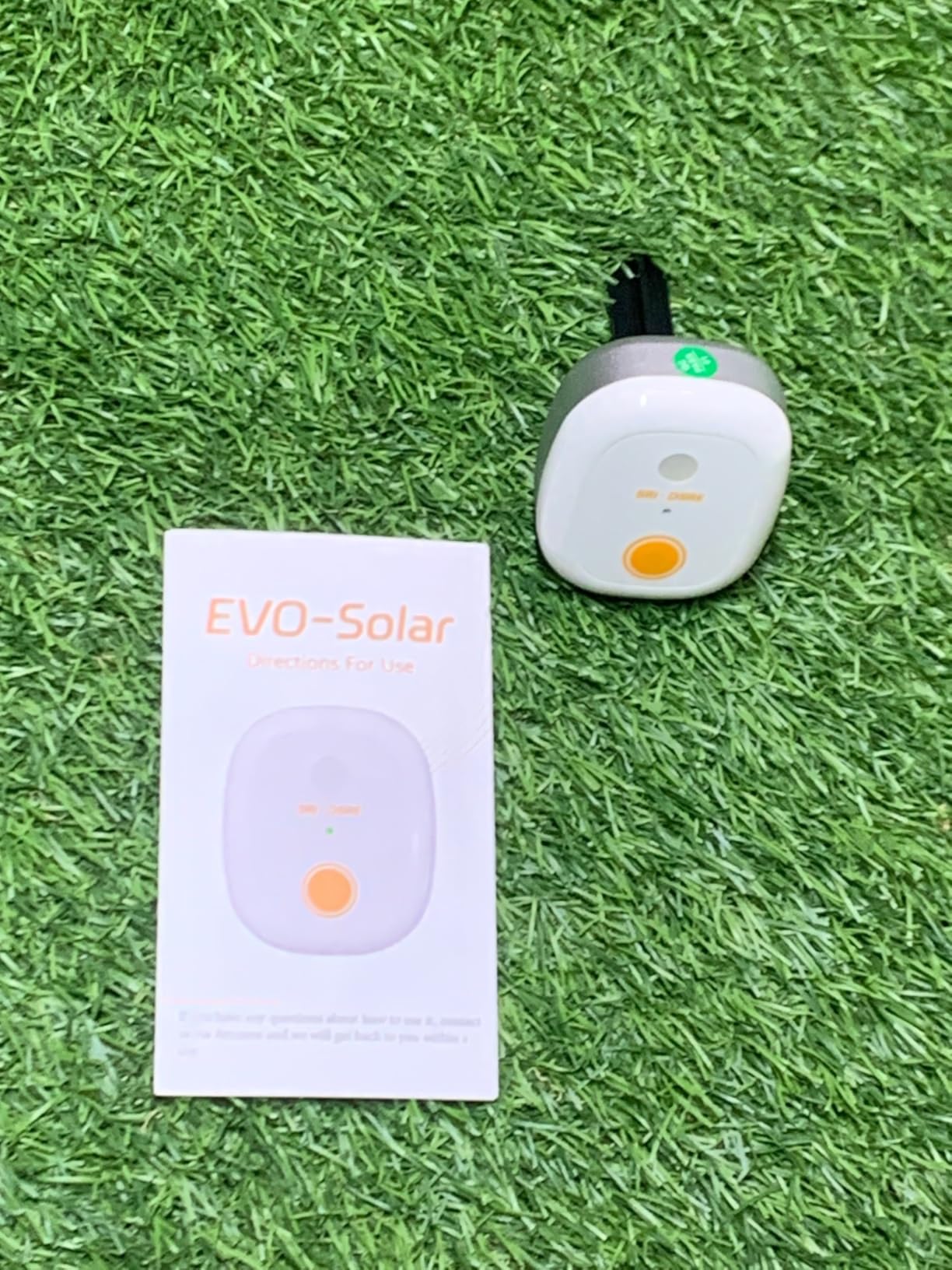
The ability to track both instantaneous readings and cumulative daily energy gives you comprehensive data for customer presentations. This is especially useful when demonstrating the long-term benefits of window film installations to commercial clients who want to see sustained performance data.
Best For Long-Term Monitoring
This meter is ideal for professionals who need to track solar performance over days, weeks, or months rather than just taking spot readings. If you’re demonstrating window film effectiveness to commercial clients who want ongoing data, the EVO-Solar provides that documentation. It’s also useful for optimizing solar panel positioning where you need to compare different locations over time.
Connectivity Limitations
The Bluetooth-only connectivity requires you to be physically near the device to sync data. If you mount it on a roof or hard-to-reach location, retrieving data becomes inconvenient. The app is functional but basic compared to some professional software. Consider whether you need the advanced features before investing in this model.
How to Choose the Best BTU Solar Power Meters for Window Film in 2026?
What is a BTU Solar Power Meter?
A BTU solar power meter is a handheld digital device that measures solar radiant energy transmitted through glass or window film. It displays readings in BTU/hr*ft2 (British Thermal Units per hour per square foot) or W/m2 (Watts per square meter). Window film professionals use these meters to demonstrate heat rejection effectiveness by comparing readings through untreated glass versus film-treated surfaces.
BTU vs Watts: Understanding the Units
Both measurement units describe the same thing: solar energy intensity. BTU/hr*ft2 is common in the United States and HVAC industries, while W/m2 is the international standard. The conversion is straightforward: 1 W/m2 equals approximately 0.317 BTU/hr*ft2. Most quality meters let you switch between units, so choose whichever your customers understand better.
For window film demonstrations, what matters most is the relative difference between readings. If untreated glass shows 600 BTU and film-treated glass shows 200 BTU, you can clearly communicate that the film blocks 67% of solar heat energy regardless of which unit you use.
Key Features to Look For
Spectral Range: Look for meters covering 400-1100nm for complete solar spectrum measurement. Narrower ranges may miss significant portions of solar energy.
Cosine Correction: This feature ensures accurate readings even when the meter isn’t perfectly perpendicular to the light source. Essential for real-world demonstrations.
Data Logging: Storing multiple readings helps you document before-and-after comparisons without writing everything down immediately.
Response Time: Faster response (under 1 second) keeps demonstrations flowing smoothly without awkward pauses.
Display Quality: A backlit or high-contrast LCD helps you read measurements in bright outdoor conditions.
Tips for Accurate Measurements
Hold the meter steady and perpendicular to the glass surface for consistent readings. Take multiple measurements across different areas of the glass to account for variations. When comparing before and after film installation, try to measure under similar lighting conditions. For indoor demonstrations with an infrared heat lamp, maintain consistent distance between the lamp, glass sample, and meter.
If you’re working in states with strict tint regulations like California window tint laws or Texas window tinting laws, having accurate measurements helps you stay within legal limits while maximizing heat rejection.
Professional vs Budget Meters
Professional meters typically offer better accuracy specifications, data logging, cosine correction, and brand reliability. They’re worth the investment if you’re doing daily demonstrations or commercial work where credibility matters. Budget meters can work for occasional use, DIY projects, or as backup tools. Look for ones with reasonable accuracy specifications and essential features rather than the absolute lowest price.
FAQ’s
What type of meter do I need for solar power?
For window film and solar panel work, you need a solar power meter (also called a solar irradiance meter or pyranometer) that measures solar radiant energy in W/m2 or BTU/hr*ft2. These handheld devices use silicon photodiode sensors to capture the full spectrum of solar energy. Avoid basic lux meters or UV meters, which measure different properties and won’t give you accurate heat rejection data.
How accurate are BTU solar power meters for window film?
Quality BTU solar power meters typically offer accuracy within 3-5% of professional calibration standards, which is sufficient for window film demonstrations. The key is consistency: if your meter reads slightly high or low, it will do so for both untreated and film-treated glass, so the relative difference remains meaningful. For critical commercial applications, look for meters with NIST Traceable certification or calibration certificates.
What is total solar energy rejection window film?
Total Solar Energy Rejected (TSER) is the percentage of total solar energy that window film blocks from passing through glass. It includes UV radiation, visible light, and infrared heat. A film with 50% TSER blocks half of all solar energy. BTU meters help demonstrate this by showing the actual energy readings before and after film application, making the TSER percentage tangible for customers.
How do I use a BTU meter to demonstrate window film effectiveness?
Position the meter against untreated glass and record the reading, then measure through your film sample or treated glass. The difference shows heat rejection in real numbers. For tabletop demonstrations, use an infrared heat lamp as your light source with glass samples. Show customers the untreated glass reading first, then the film-treated reading, and calculate the percentage reduction together.
Can cheap solar meters be trusted for professional work?
Budget solar meters can work for professional use if you verify their accuracy against a known reference and maintain consistent measurement techniques. The main trade-offs are build quality, advanced features like data logging, and long-term reliability. For occasional demonstrations or backup use, affordable options from TENMARS or similar brands offer acceptable accuracy. For daily professional work, investing in a quality meter from General Tools or Triplett pays off in reliability and customer confidence.
Conclusion
Finding the best BTU solar power meters for window film work comes down to matching features with your specific needs. The General Tools DBTU1300 remains my top pick for professionals who need data logging and proven accuracy. For those watching their budget, the TENMARS TM206 and AH-SOL AquaHorti deliver solid performance without the premium price tag.
Remember that any quality meter will help you demonstrate window film effectiveness more convincingly than words alone. The numbers speak for themselves when customers see the actual BTU reduction through treated glass. Choose a meter that fits your workflow, verify its accuracy when you receive it, and use consistent measurement techniques for the most reliable demonstrations.