
Short answer: the Tekonsha Primus IQ 90160 is the brake controller we would put in nearly every travel trailer, and it is our pick for the best brake controllers for travel trailers in 2026. It handles one to three axles, reads your towing vehicle’s deceleration through an internal inertia sensor, and carries more owner history than anything else we looked at.
A brake controller is the small box in your tow vehicle’s dash that decides how much electricity reaches your travel trailer’s electric brakes. Without one, the 7-pin plug on your bumper powers your trailer lights and nothing else. That myth trips up more new trailer owners than any other, and it is worth repeating: a connector is not a controller.
Federal rules require brakes on a trailer whose loaded weight is over 3,000 lb, and in practice almost every bumper-pull RV crosses that line. If your trailer runs 3,000 lb or less, electric brakes are optional rather than required, and a surge-braked trailer needs no controller at all. Anything above that threshold needs functioning brakes, and functioning brakes need a controller to modulate them.
We spent weeks reading spec sheets, owner reviews, and forum threads from r/Camper, r/towing, iRV2, and Forest River’s board before ranking these ten. Our criteria were axle coverage, whether the harness is included, how the unit behaves in an empty parking lot on a first calibration pass, and how it handles the dash space in a truck or an SUV. We also weighed warranty length, because a controller is a part you hope never to touch again. If you are still comparing categories, our guide to trailer brake controllers covers the electrical side, and our picks for electronic brake controllers break down the different control styles.
Top 3 Picks for Travel Trailer Brake Controllers in 2026

Tekonsha Primus IQ 90160
- Proportional inertia sensing
- 1-3 axles
- LED diagnostics
- 3-level boost
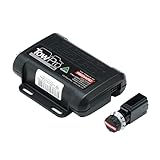

Two of the three picks here share the same remote-knob design philosophy, which tells you something about where brake controllers have gone. A small dial replaces the bulky under-dash module, and the heavy lifting moves out of sight behind the trim panel.
The 10 Best Brake Controllers for Travel Trailers in 2026
| Product | Specs | Action |
|---|---|---|
| Tekonsha Primus IQ 90160 |
|
Check Latest Price |
 CURT Echo Mobile 51180 CURT Echo Mobile 51180 |
|
Check Latest Price |
| REDARC Tow-Pro Liberty |
|
Check Latest Price |
 CURT Spectrum 51170 CURT Spectrum 51170 |
|
Check Latest Price |
| REDARC Tow-Pro Elite |
|
Check Latest Price |
 HRepair Universal 90160 HRepair Universal 90160 |
|
Check Latest Price |
 Timilge BC06 Timilge BC06 |
|
Check Latest Price |
 briidea BR-121 briidea BR-121 |
|
Check Latest Price |
 briidea BR-122 briidea BR-122 |
|
Check Latest Price |
 CURT Venturer NEXT 51116 CURT Venturer NEXT 51116 |
|
Check Latest Price |
One note before the individual reviews: only the CURT Echo Mobile in this group installs without any wiring work at all, because it plugs in between your vehicle’s 7-way and the trailer’s 7-way. Every other controller on this list needs a harness, and on most of them the harness is not in the box.
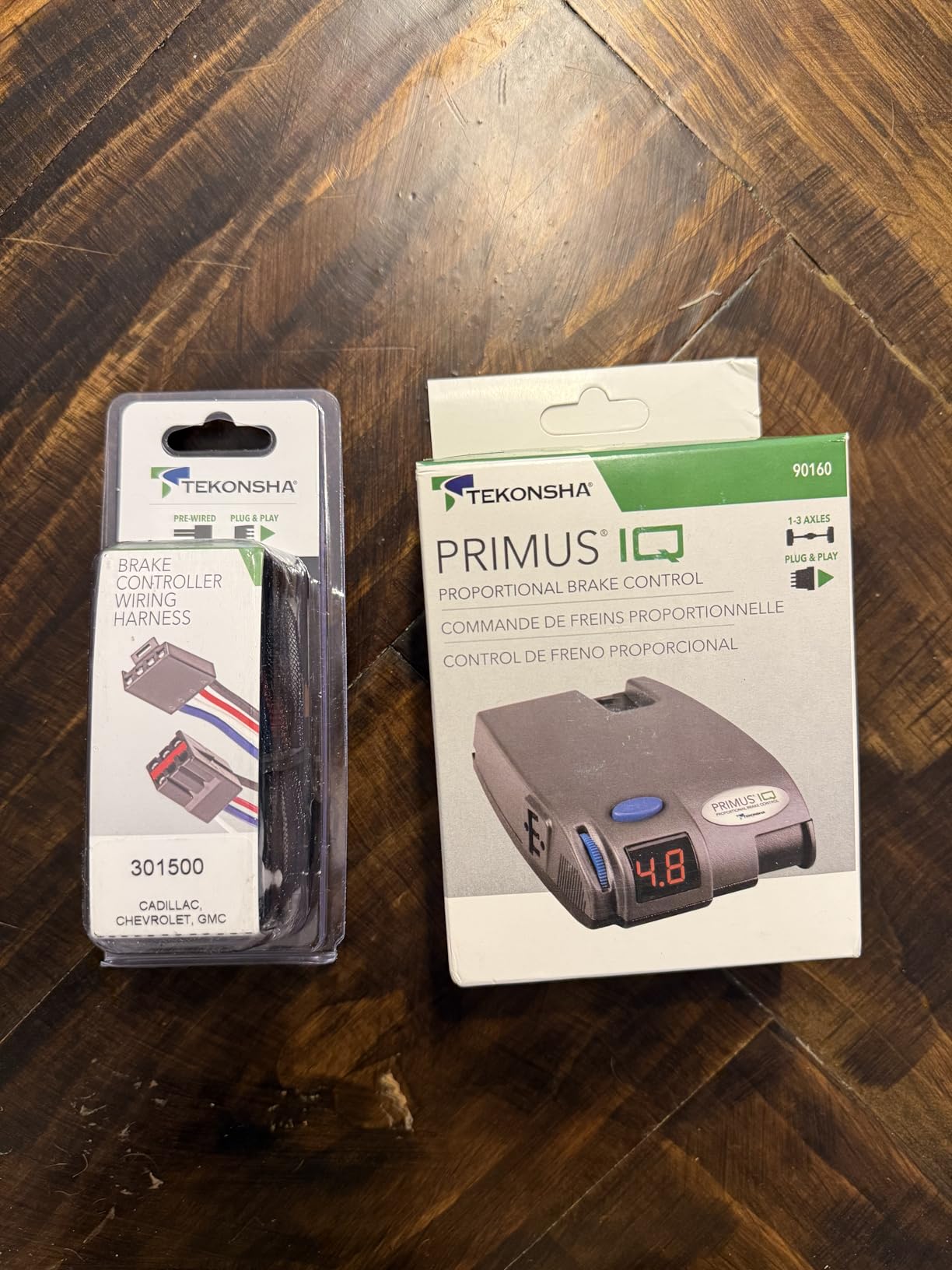
1. Tekonsha Primus IQ 90160 – The Best Brake Controller for Most Travel Trailers
Tekonsha 90160 Primus IQ, Proportional Brake Controller for Trailers with 1-3 Axles, compatible with Ford, GM, Chevy, Dodge, RAM, Toyota, Jeep. Wiring Harness Sold Separately.
Proportional control
1-3 axles
12V
4.5 x 2.5 x 8.5 inches
Pros
- Proportional inertia sensing that smooths out every stop
- Handles one to three axles
- LED display with real-time diagnostics
- Three boost levels for heavy loads
- Unplugs for stowing
Cons
- Wiring harness sold separately
- Sensitive out of the box until gain is set
- Takes up under-dash space
Owners describe the Primus IQ as the controller that made trailers feel different. The internal inertia sensor reads how hard your truck is decelerating and mirrors that pressure to the trailer brakes, so a firm stop produces a firm trailer stop instead of the grabby shove a time-delay unit delivers. That single change is the reason people who upgrade from an old delay controller describe the trailer as transformed.
The 90160 is a 12-volt unit rated for one to three axles, which covers a tandem-axle travel trailer and most triple-axle rigs without stretching. It measures 4.5 by 2.5 by 8.5 inches and weighs about a pound, so it is a standard in-cab box rather than a low-profile unit. On iRV2, owners running the IQ, P2, and P3 line all note they handle any trailer with two axles or fewer without issue.
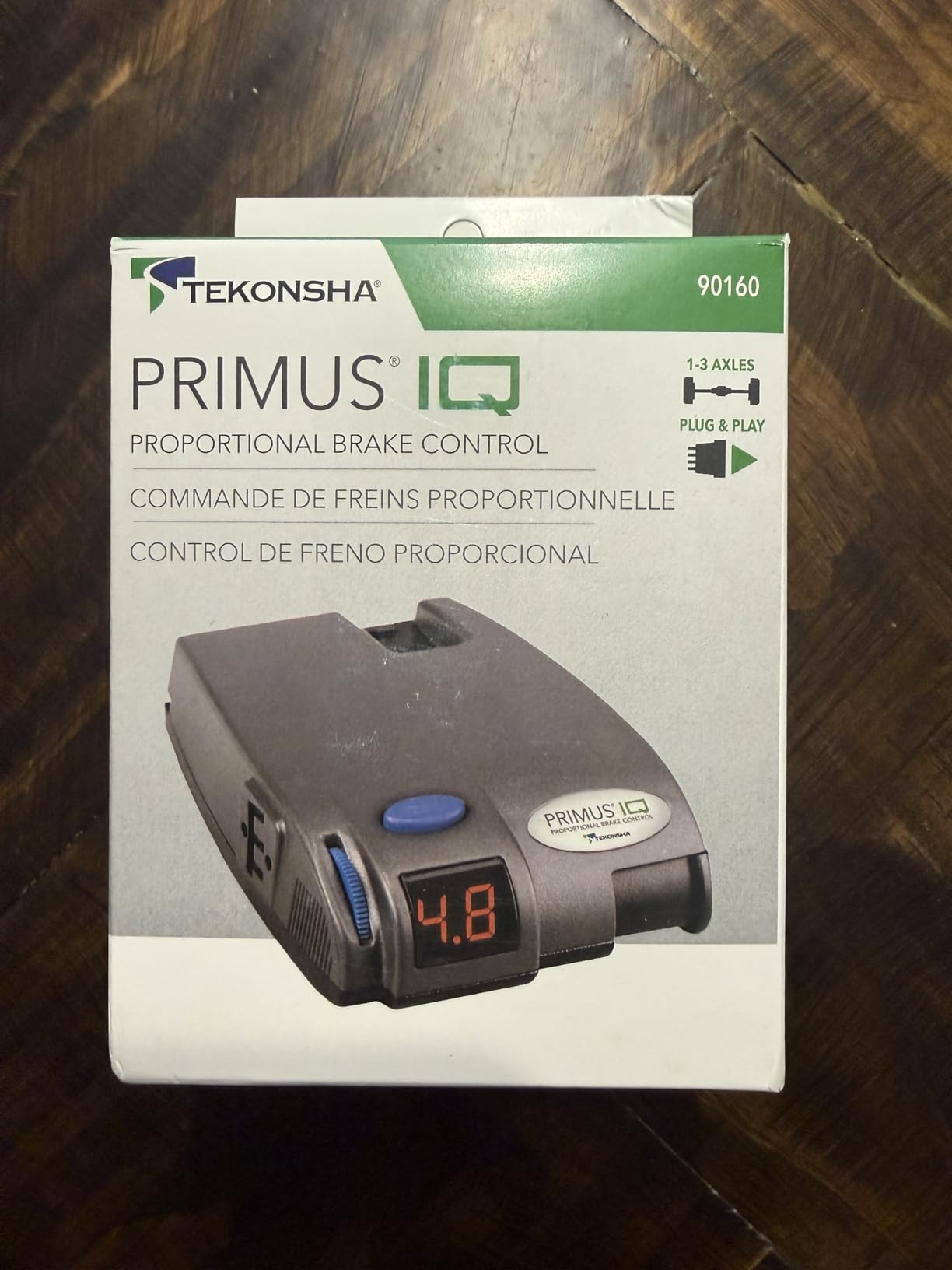
The LED display is the reason this unit has stayed relevant for nearly two decades. It shows the gain setting, flags faults in plain terms, and lets you confirm connection status before you pull out of the driveway. Three boost levels add stopping power for a loaded trailer or a mountain grade, and the manual override lever is reachable without taking your eyes far off the road.
Two things to plan around. The wiring harness is sold separately, and you need the one that matches your tow vehicle, not a generic pigtail, unless you enjoy splicing. The second is that several owners describe it as sensitive straight out of the box, which is a tuning issue rather than a defect, and it settles down once you run the parking lot procedure in the buying guide below.
Who the Primus IQ suits
This is the controller for a full-time RV owner towing 25 to 35 ft regularly, on a truck with an existing brake controller wiring port. It handles enough axles that you are not shopping around later if you trade up to a triple-axle trailer, and the diagnostics readout tells you when something is wrong instead of leaving you guessing.
If you tow with two different vehicles or want the ability to unplug and stow the box on weekends, the snap-in dash clip and removable electrical connector make that painless. A trailer that never leaves the truck in the driveway is a different use case, and a portable unit suits it better.
Who should skip it
Skip it if your trailer uses surge or hydraulic brakes rather than electric brakes, since a controller has nothing to modulate. It is also a poor match for a thick under-dash area where a full-size box interferes with your knees, a problem the remote-knob designs were built to solve.
Skip it if you tow a very small trailer once or twice a year and want the simplest possible setup. The diagnostic depth and adjustability that make this unit excellent for heavy use are simply features you will never open.
2. CURT Echo Mobile 51180 – The Best Controller for Households With More Than One Tow Vehicle
CURT 51180 Echo Mobile Bluetooth Trailer Brake Controller, 7-Way, 1-2 Axles
Portable 7-way install
Bluetooth app
1-2 axles
6.63 x 1.63 x 2.88 inches
Pros
- No dash installation at all
- Smooth braking that survives a dropped Bluetooth link
- App stores multiple vehicle and trailer profiles
- Easy to move to a rental truck
- Potted board handles weather
Cons
- Rubber retention strap is weak
- Hangs low near the 7-way and needs clearance planning
- App pairing issues on some phones
- Handles one to two axles only
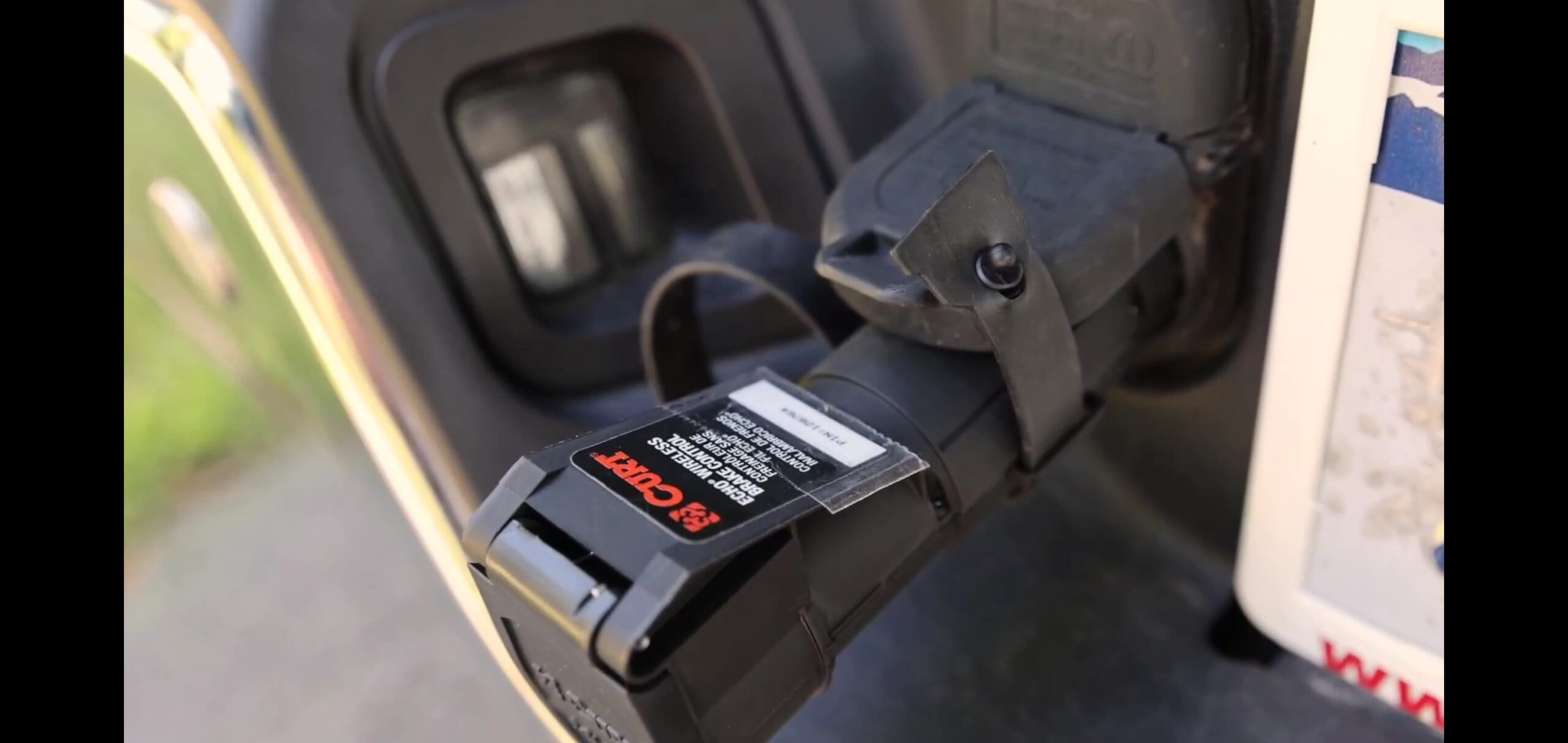
The Echo Mobile does something none of the cab-mounted units here can. It lives between your tow vehicle’s 7-way connector and your trailer’s 7-way connector, held in place by a locking tab, and it needs no dash mounting and no wiring harness. You grab it, unplug it from one rig, plug it into the other, and go. For households that tow the same trailer with two vehicles, that convenience is worth more than a nicer display.
Under the hood it is a proportional controller with a triple-axis accelerometer, which is why it keeps braking smoothly even when your phone disconnects. The Smart Control app stores multiple vehicle and trailer profiles, shows brake status, and lets you set gain from the driver’s seat before you move.
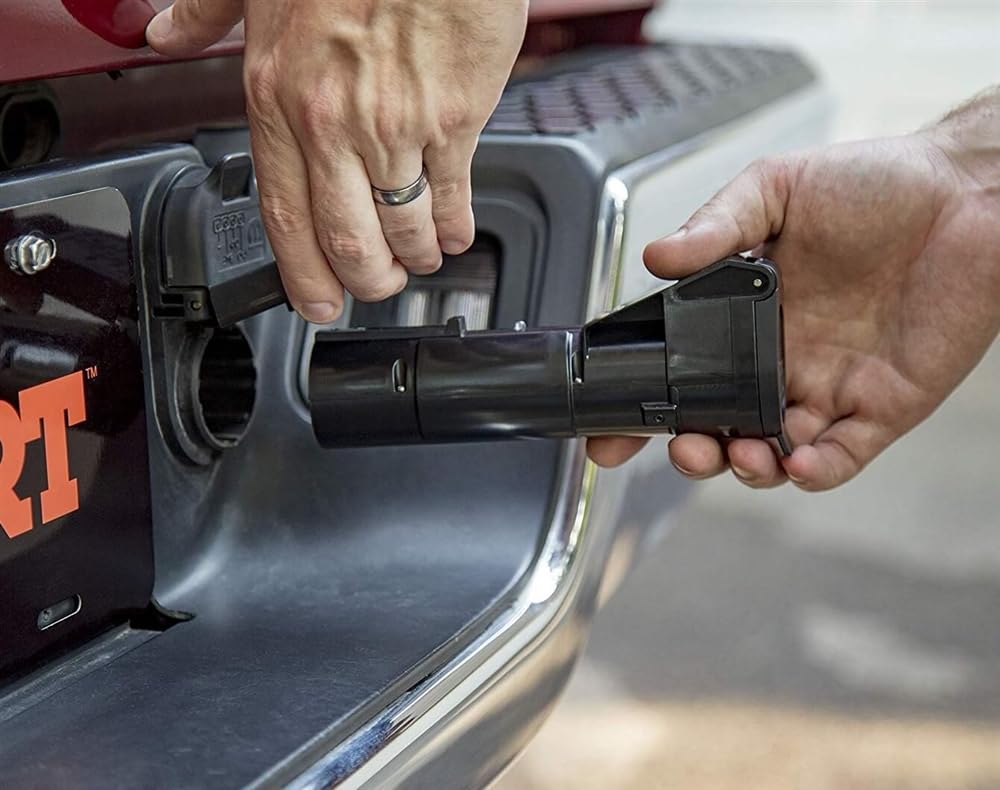
It is rated for one to two axles, which covers most travel trailers but stops short of a triple-axle setup. It weighs 8.8 ounces and measures 6.63 by 1.63 by 2.88 inches, small enough to live in a glove box between trips.
Two practical issues come up repeatedly. The supplied rubber retention strap loosens on rough roads, and plenty of owners substitute a bungee cord or a strip of hook-and-loop tape. The body is also long enough to hang low near the connector, so you need to make sure it clears your bumper and hitch rather than letting it drag.
Who the Echo Mobile suits
It suits anyone who already has a working brake controller on the primary vehicle and wants one controller to share, rather than paying to have a second vehicle wired. It is also the answer for a rental or borrowed tow vehicle, where drilling a dash hole is not an option you have.
For a single trailer on a single truck that you own outright, the wiring is simple enough that a cab-mounted unit is the better long-term buy. This one is a lifestyle fit, not a performance fit.
Who should skip it
Skip it if you tow a triple-axle travel trailer, since the two-axle ceiling rules it out. Skip it if you camp in areas with no cell coverage and you want the phone to be the control surface rather than an accessory, since the accelerometer keeps braking proportional but adjusting anything mid-trip is harder.
Its owner rating sits below the rest of this group, and the complaints cluster on hardware rather than braking behavior. If the strap and the connector clearance sound like dealbreakers, a fixed-mount unit removes both concerns.
3. REDARC Tow-Pro Liberty – The Best Pick for a Crowded Dash
REDARC Tow-Pro Liberty Electric Trailer Brake Controller, Universal Fit for 1 to 2 Axle Cars, Trucks, SUVs, Proportional Braking, 12V Compatible to Tow RV, Camper, Trailer, Boat
Remote knob mount
1-2 axles
12V
6.7 x 6.3 x 2.2 inches
Pros
- Frees up the under-dash space an inline box occupies
- Proportional braking that stays set once tuned
- Active calibration and sway control
- Looks factory-installed in a blank switch slot
Cons
- Wiring harness sold separately
- Button assembly is deeper than it looks
- Supports one to two axles
The Liberty exists to solve one problem well: under-dash boxes that hit your knee on every brake pedal stroke. You get a small remote dial that mounts in a switch slot or on the dash surface, and the main unit tucks behind the trim or under a seat. Owners upgrading from an inline controller describe the freed legroom as the most immediately noticeable change of any feature on their list.
Braking is proportional and, once calibrated, largely set-and-forget. Active Calibration and the built-in sway control work with or without a trailer connected, which matters if you share the vehicle day to day. The knob also looks like it came from the factory, which matters more than it sounds to people who hate modding their dash.
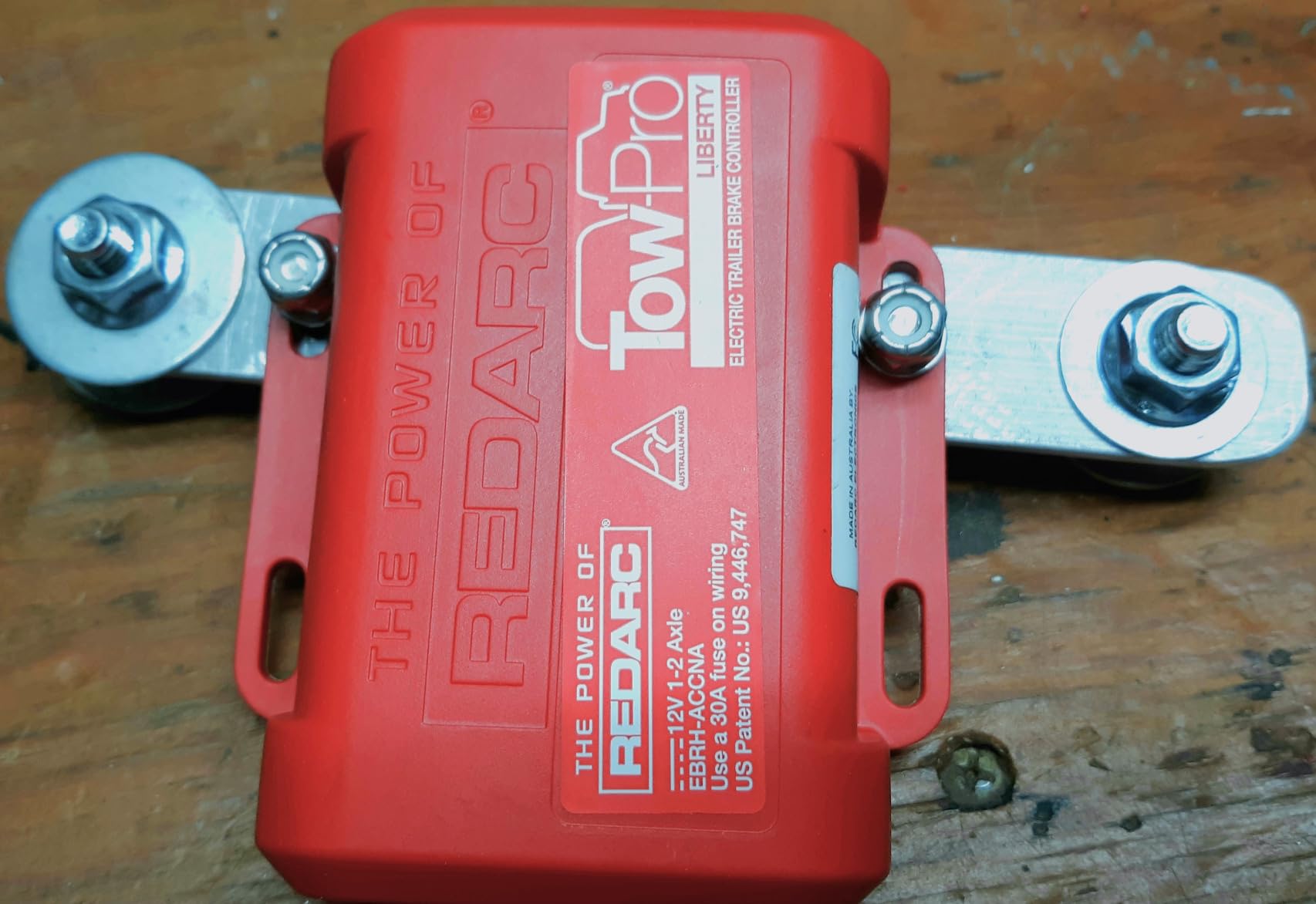
It covers one to two axles on a 12-volt system, so a tandem-axle travel trailer is comfortable and a triple-axle is not. At 8.8 ounces and 6.7 by 6.3 by 2.2 inches, this is a small box that is easy to hide.
Two caveats. The wiring harness is not included, and the correct one depends on your vehicle. And the button assembly is deeper than most people expect, so if you plan to drill a custom location in a thin dash panel, measure before you commit.
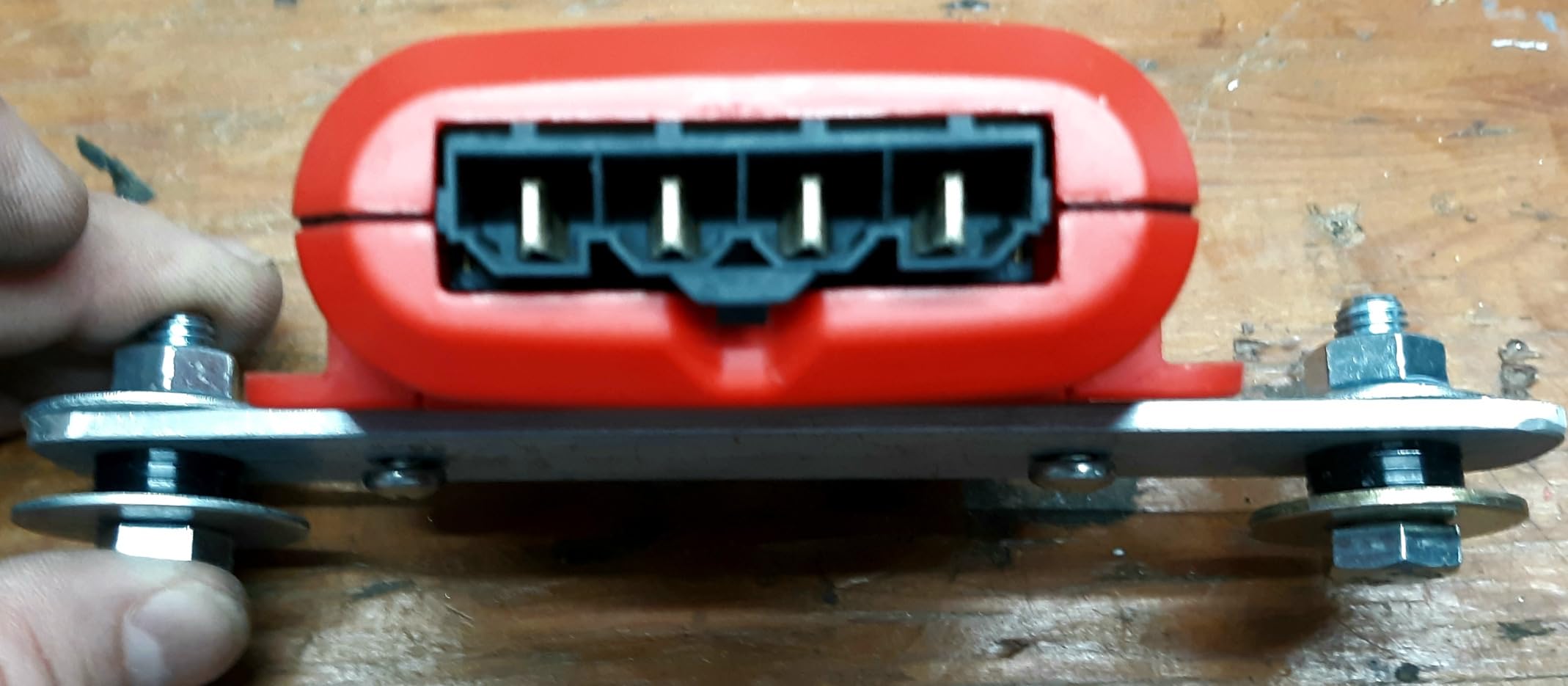
Who the Tow-Pro Liberty suits
It suits SUV, crossover, and minivan owners who already have a brake controller port and hate what the factory box did to their knee room. It also suits anyone who wants a controller that looks original rather than obviously aftermarket.
If you tow a light tandem trailer and mostly drive on flat highway, this is a good match. The set-and-forget behavior means you calibrate it once and stop thinking about it.
Who should skip it
Skip it for a triple-axle travel trailer or any setup with more than two axles. If you tow a 35 ft rig loaded with gear over mountain grades every month, the Elite in slot five has the axle headroom you want.
Skip it if you want Bluetooth control from your phone. This unit has no app, and the only adjustment is the physical dial in your dash.
4. CURT Spectrum 51170 – The Most Flexible Axle Coverage on This List
CURT 51170 Spectrum Proportional Trailer Brake Controller, Dash-Mount Knob
Dash knob
1-4 axles
2-8 brakes
10.4 ounces
Pros
- Handles one through four axles and two to eight brakes
- Limited lifetime manufacturer warranty
- Main module mounts out of sight
- Easy manual override via a button press
Cons
- Harness sold separately
- LEDs flash with no trailer connected and confuse some owners
- No integration with factory infotainment
The Spectrum is the most capable unit here on paper. It controls one to four axles and two to eight brakes, so it is the one on this list that covers a triple-axle travel trailer and a gooseneck fifth wheel with the same hardware. The dash interface is a rotary push-button knob with ten tri-color LEDs, and the main module hides under the dash rather than in the driver’s footwell.
Its warranty is the standout detail: a limited lifetime manufacturer warranty, which removes the longevity question that hangs over every other unit in this group. CURT also handles phone support, and owners mention that as a genuine plus when a setting is behaving oddly.
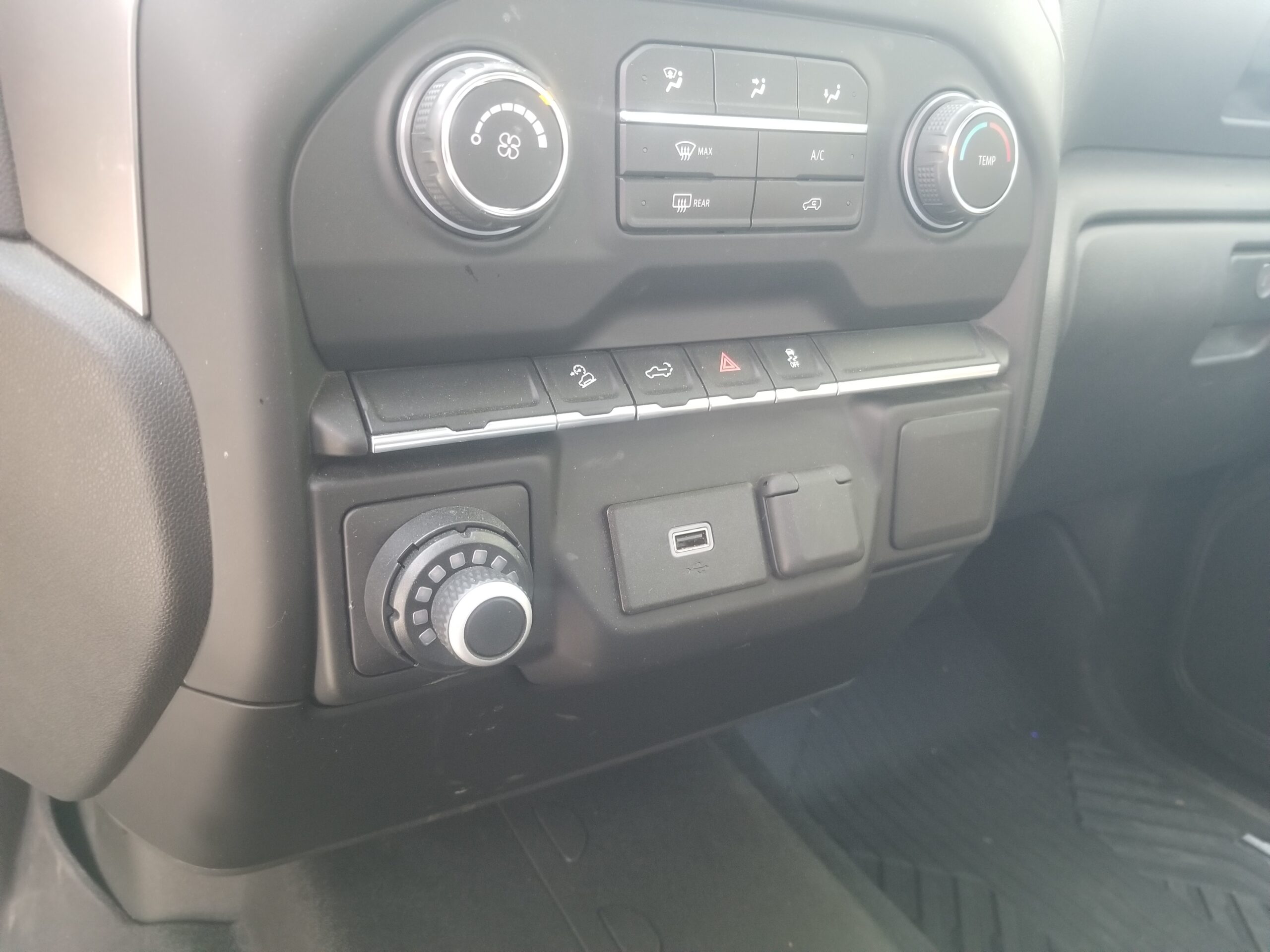
The triple-axis accelerometer delivers smooth stops, and once you have tuned the gain, most owners report the controller stays consistent without further adjustment. Manual override is a button press on the knob itself, which is faster to reach than a separate lever when you need to steady a swaying trailer.
The complaint that comes up most is the LED behavior. With no trailer connected, the indicators can flash or show patterns that look like a fault. Once you know what an idle controller looks like, it stops being a problem, but it does spook people who have not read the manual.

Who the Spectrum suits
It suits owners who might outgrow their current trailer, and owners with a heavy multi-axle rig already. The axle ceiling is genuinely useful insurance if you plan to trade up rather than choosing a unit that exactly matches today’s trailer.
It also suits people who care most about warranty length and phone-based support. A limited lifetime warranty is unusual in a category where two to five years is normal.
Who should skip it
Skip it if you want your gain readout on the truck’s factory screen. The Spectrum is a standalone unit with no integration with the vehicle’s infotainment display, so you are looking at a separate knob.
It also runs heavier than most of the portable options here, and the harness is a separate purchase. Budget for that before you start.
5. REDARC Tow-Pro Elite – The Best Controller for Triple-Axle Travel Trailers
REDARC Tow-Pro Elite Electric Trailer Brake Controller, Universal Fit for 1 to 3 Axle Trucks, SUVs, Dual Braking Modes, Plug and Play Install, 12V/24V Compatible to Tow RV, Camper, Trailer, Boat
Dual braking modes
1-3 axles
12V/24V
7 x 7 x 3 inches
Pros
- Handles one to three axles for tandem and triple-axle trailers
- Proportional and user-controlled off-road modes
- Self-calibrates in almost any mounting orientation
- Module hides anywhere behind trim
- 12V and 24V compatibility
Cons
- Vehicle-specific harness not included
- Switch insert plate does not fit every dashboard
- Small dial is fiddly to adjust
The Elite is the REDARC unit to buy if your trailer has three axles or if you drive a heavy rig that spends time off pavement. It supports one to three axles, so tandem and triple-axle travel trailers are covered, and it works on both 12-volt and 24-volt electrical systems for anyone towing with a commercial truck.
What separates it from the Liberty is the second braking mode. Proportional Mode handles on-road driving, while a user-controlled mode gives you direct, staged braking input for loose surfaces and descents where you want to feather the trailer manually. Self-calibration means the unit works out its own orientation, so mounting it upside down or at an angle does not require a reset.
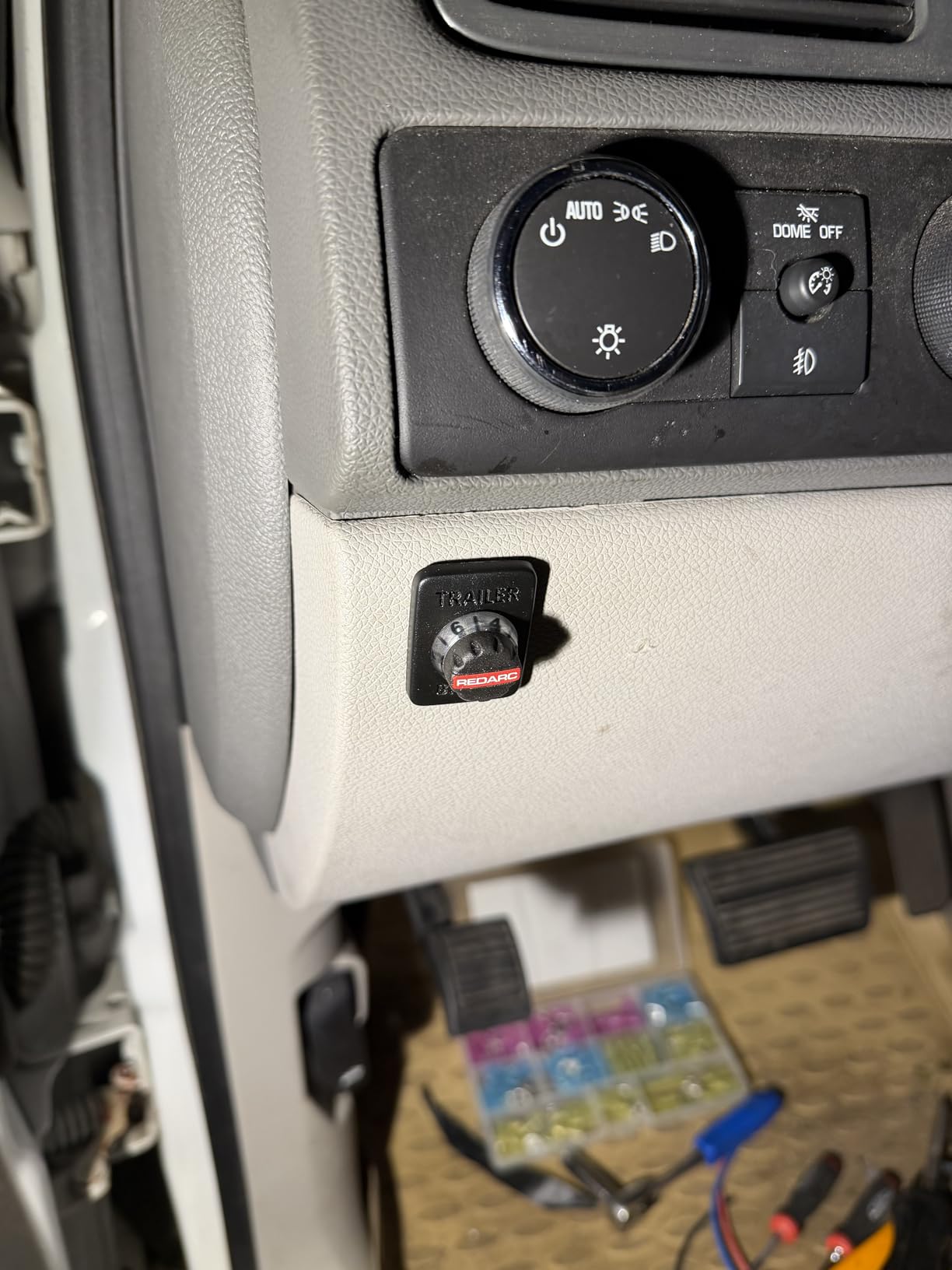
The build quality comes through in owner reports, with consistent set-and-forget braking once installed. The small dial mounts in the dash and the main unit goes behind trim anywhere you can reach the wire, which leaves the cab uncluttered.
It comes with a universal switch insert panel, a remote head assembly, a nut, knob, bezel, and roughly a meter of cable. The switch insert is the piece most likely to disappoint, because it does not match every dashboard and you may need to trim or omit it. The dial is also smaller and stiffer than a squeeze-tab knob, which is fiddly to adjust while wearing gloves.
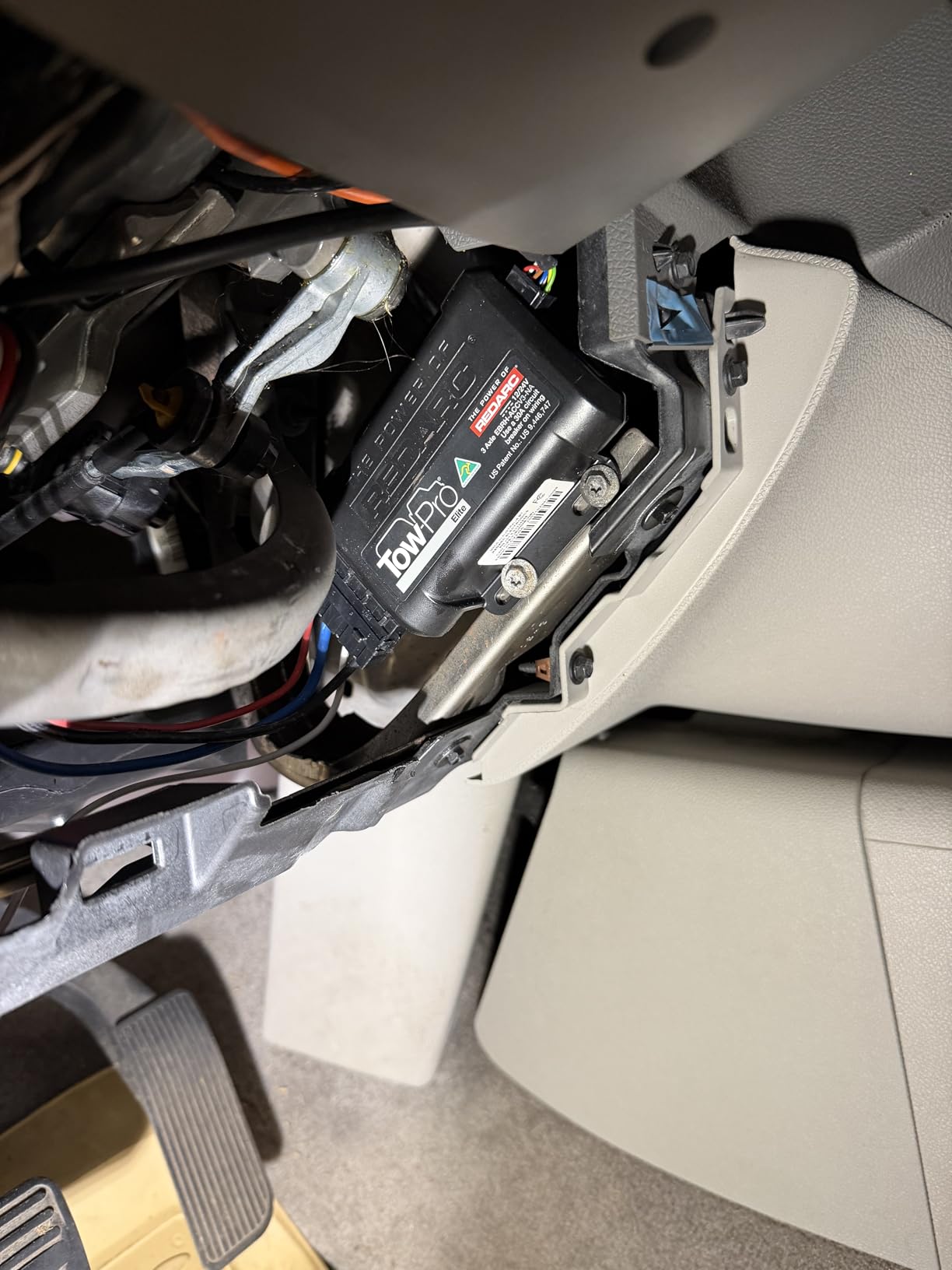
Who the Tow-Pro Elite suits
It suits owners of triple-axle travel trailers, and anyone who tows on forest roads, gravel, or grades where a user-controlled mode is genuinely useful. If you have ever wished for a manual trailer brake button while descending, this is the closest thing to one in the category.
It also suits 24-volt tow vehicles, which no other unit in this group supports.
Who should skip it
Skip it for a tandem-axle trailer on a vehicle where dash space is tight and you will never use the off-road mode. The Liberty covers most of that use case for less money, and it has a larger knob.
Skip it if you want Bluetooth. The Elite is a physical dial with no app, and the harness is still a separate purchase either way.
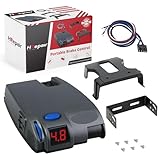
6. HRepair Universal 90160 – The Best Drop-In If You Already Have Primus IQ Wiring
HRepair Universal Trailer Brake Controller for Trailers with 1-3 Axles Compatible with Ford GM Chevy Dodge RAM Toyota Jeep etc. Replacement 90160 Primus IQ Brake Controller
Proportional control
1-3 axles
Self-leveling
1.08 pounds
Pros
- Drops into existing factory brake controller wiring
- Self-leveling removes mounting orientation concerns
- Manual override lever and three boost levels
- Digital display with connection status
Cons
- Display is small and hard to read in daylight
- Menu navigation pulls your eyes off the road
- Some reports of units failing within a year or two
This one is a different proposition. It uses the same 90160 model number as the Tekonsha Primus IQ and is designed to work with the same factory brake controller wiring, so replacing a failed OEM unit is close to a swap rather than a rewire. That single fact makes it the fastest fix for a tow vehicle that already has a controller port and a dead box.
Braking is proportional, and the unit adds a manual override lever with three boost levels. Self-leveling means the mounting angle does not matter, which is convenient when you are working in a cramped space under a dash. Both 1-3 axle and 1-4 axle variants exist depending on the version you pick.
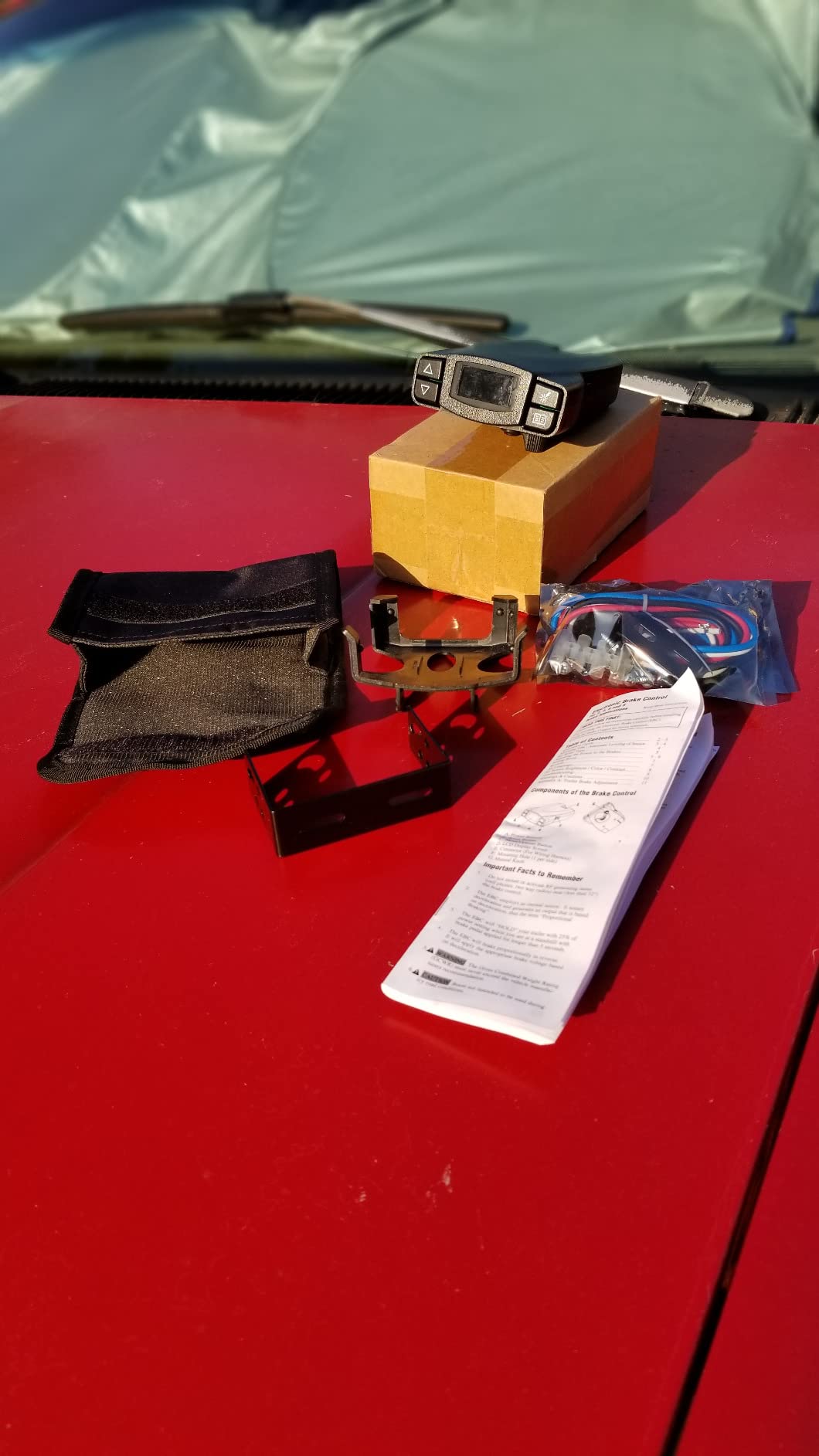
Owners mostly treat it as a budget stand-in for a name-brand 90160, and they report that it installs quickly and brakes smoothly once configured. The diagnostic display shows connection status and settings, which is more feedback than most budget units provide.
The screen is the weak point. It is small and dim enough to be difficult to read in direct daylight, and the menu navigation requires looking down for longer than it should. Several reviewers also report units losing braking or failing the display within a year or two, and the lead wires are short relative to a typical under-dash run.
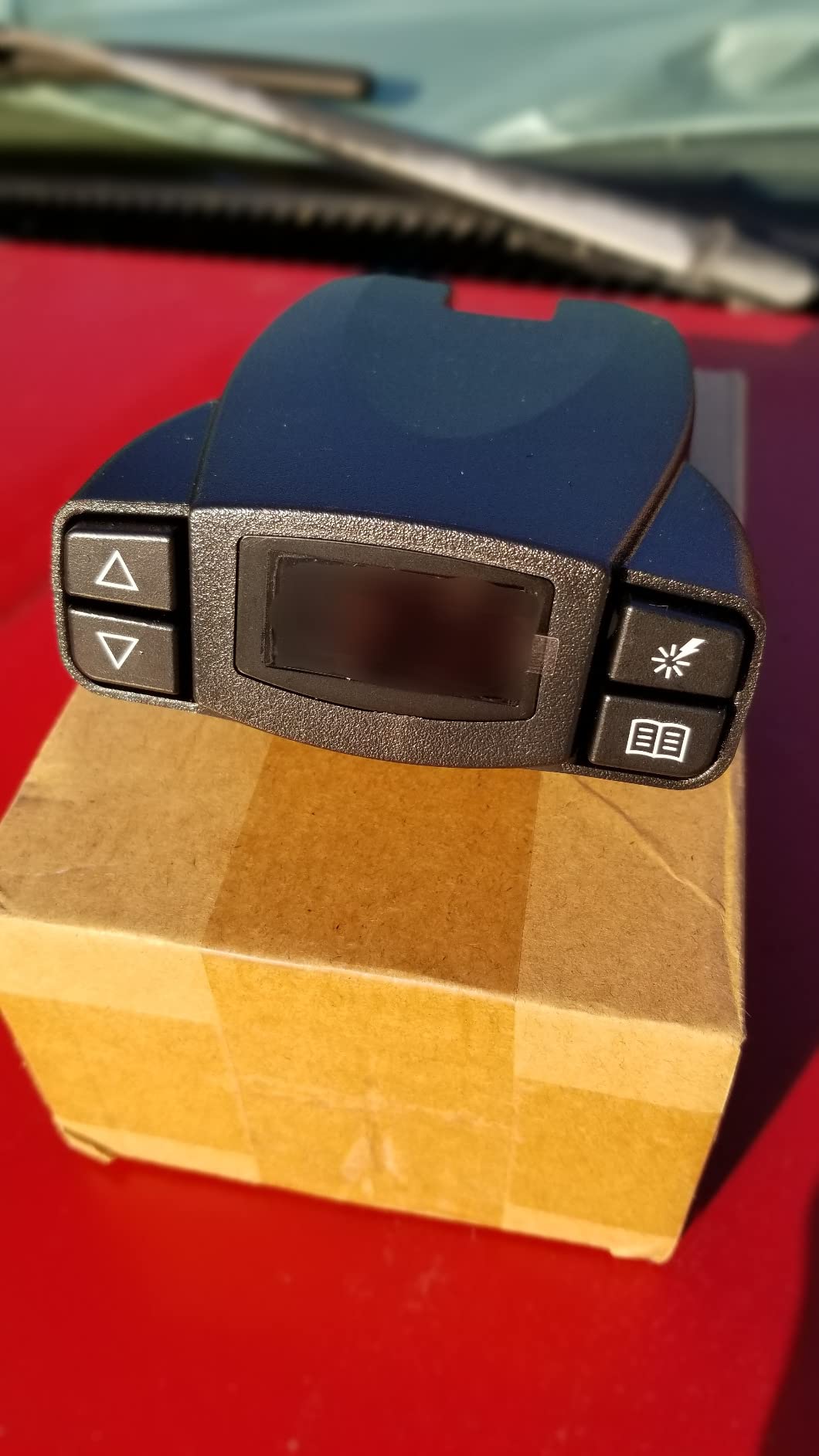
Who the HRepair 90160 suits
It suits someone replacing a failed factory controller on a vehicle that already has the wiring in place and wants to avoid a shop visit. It also suits a first trailer owner who wants proportional braking and diagnostics without a large brand-name invoice.
If your tow vehicle has a brake controller port, this is one of the few installs here that is genuinely a same-afternoon job.
Who should skip it
Skip it if you read your brake controller settings while stopped at a red light in full sun, or if you want a five-year track record behind the part. Its owner rating reflects that some units did not last.
It is a sensible replacement, not a first-choice recommendation for a rig you depend on. For a long-term daily tow, the Primus IQ or a REDARC unit is the safer bet.
7. Timilge BC06 – The Best Low-Cost Proportional With Axle Headroom
Proportional Trailer Brake Controller 8508211 Digital Electric LED Display
Proportional control
1-4 axles
2-8 brakes
8.4 ounces
Pros
- Proportional braking that mirrors truck braking intensity
- LED screen shows delivered voltage in real time
- Covers one to four axles with no leveling
- Quick-connect harness ports
- Compact enough for a tight dash space
Cons
- Some units arrive defective and may hold brakes on
- Color-coded wiring is confusing on first install
- Needs careful gain calibration before the first tow
The BC06 is unusual in the budget tier because it is proportional rather than time-delay, and because it covers one to four axles and two to eight brakes. That combination means you are not giving up smooth braking or multi-axle capability to hit a lower price, which is not something the other low-cost units here can say.
The LED screen displays voltage delivery in real time, which is more diagnostic depth than most units in this bracket offer and genuinely useful when a trailer brake stops responding. Quick-connect ports let you plug and unplug a vehicle-specific harness without rewiring. It measures 4.33 by 2.76 by 1.1 inches and weighs 8.4 ounces, so it fits tight dash spaces where a full-size box will not.
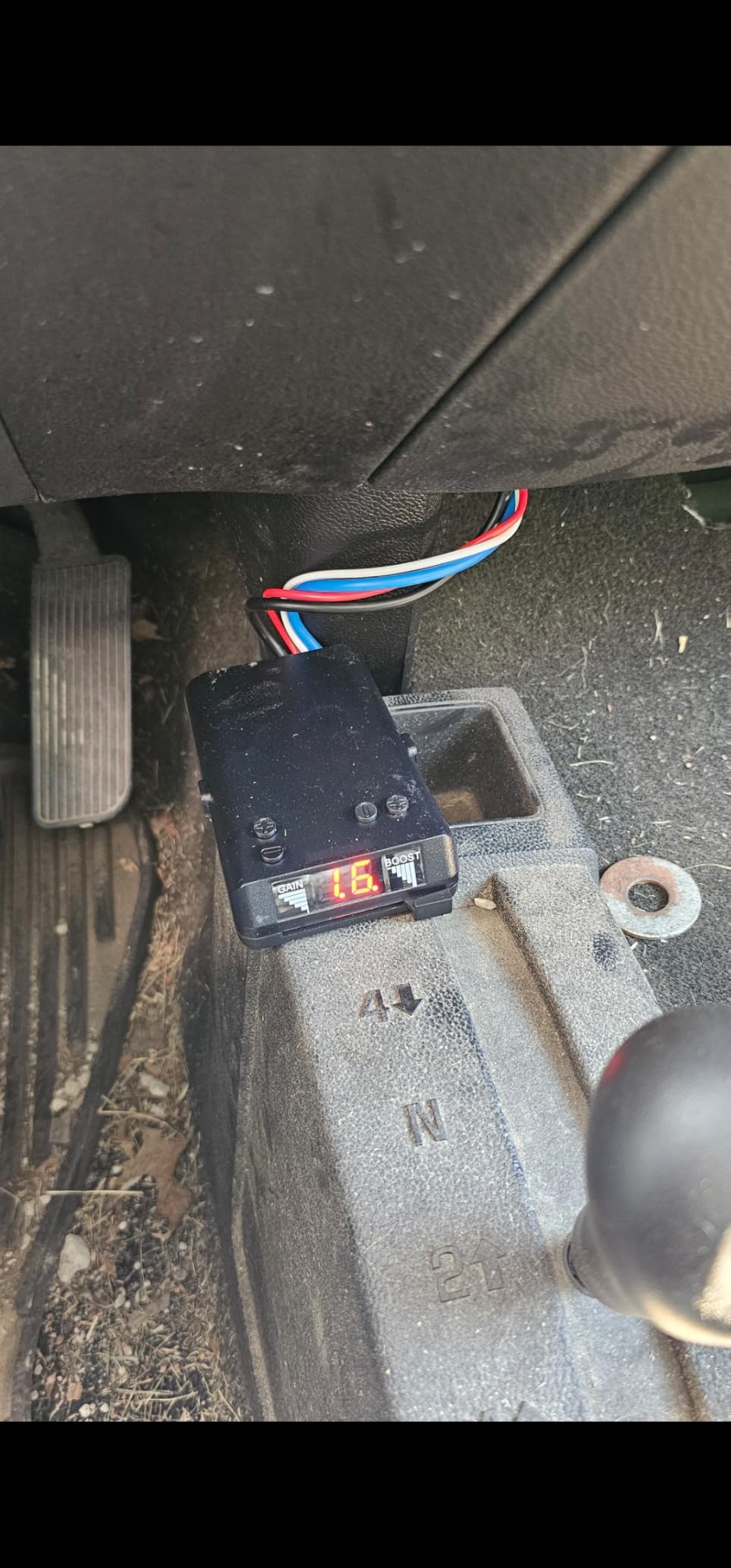
Owners report installing it in minutes and finding that it brakes smoothly once tuned. Several mention switching to it after a pricier unit malfunctioned, which tells you where it sits in their hierarchy of concerns.
Build consistency is the issue. Reviews mention a defective unit that applied brakes continuously, and others report units that would not power on. The four-wire color coding, black for power, red for stop light, white for ground, blue for trailer brakes, is also called out as slightly confusing if you have never wired one. Plan a careful calibration pass before the first tow.
Who the BC06 suits
It suits an owner with a multi-axle trailer who wants proportional behavior on a tight budget, and anyone whose dashboard lacks room for a full-size controller. The voltage readout gives you a real diagnostic tool in a segment that usually offers none.
It also suits a person replacing a failed controller quickly and wanting a working box today rather than a week from now.
Who should skip it
Skip it if you tow a heavy rig where a defect means a safety problem, or if you want a warranty that covers a long ownership horizon. Test it thoroughly in a parking lot before trusting it with a loaded trailer on a grade.
It is a good value buy, not a place to put your confidence for a full season of mountain towing without a backup plan.
8. briidea BR-121 – The Best Budget Pick for a Light or Occasional Trailer
briidea Trailer Brake Controller, Time-Delay Brake Controller for 1-4 Axle Trailers, Safety Protection with Overload/Short-Circuit Alerts for Light-Duty & Occasional Towing
Time-delay control
1-4 axles
2-8 brakes
11.6 ounces
Pros
- Lowest-cost entry in this group
- Overcurrent and short-circuit fault detection built in
- LED display shows settings plus output voltage and faults
- Mounting bracket installs at any angle
- Operates one to four braked axles
Cons
- Time-delay braking is less smooth than proportional control
- Not suited to heavy or frequent towing
- Harness sold separately
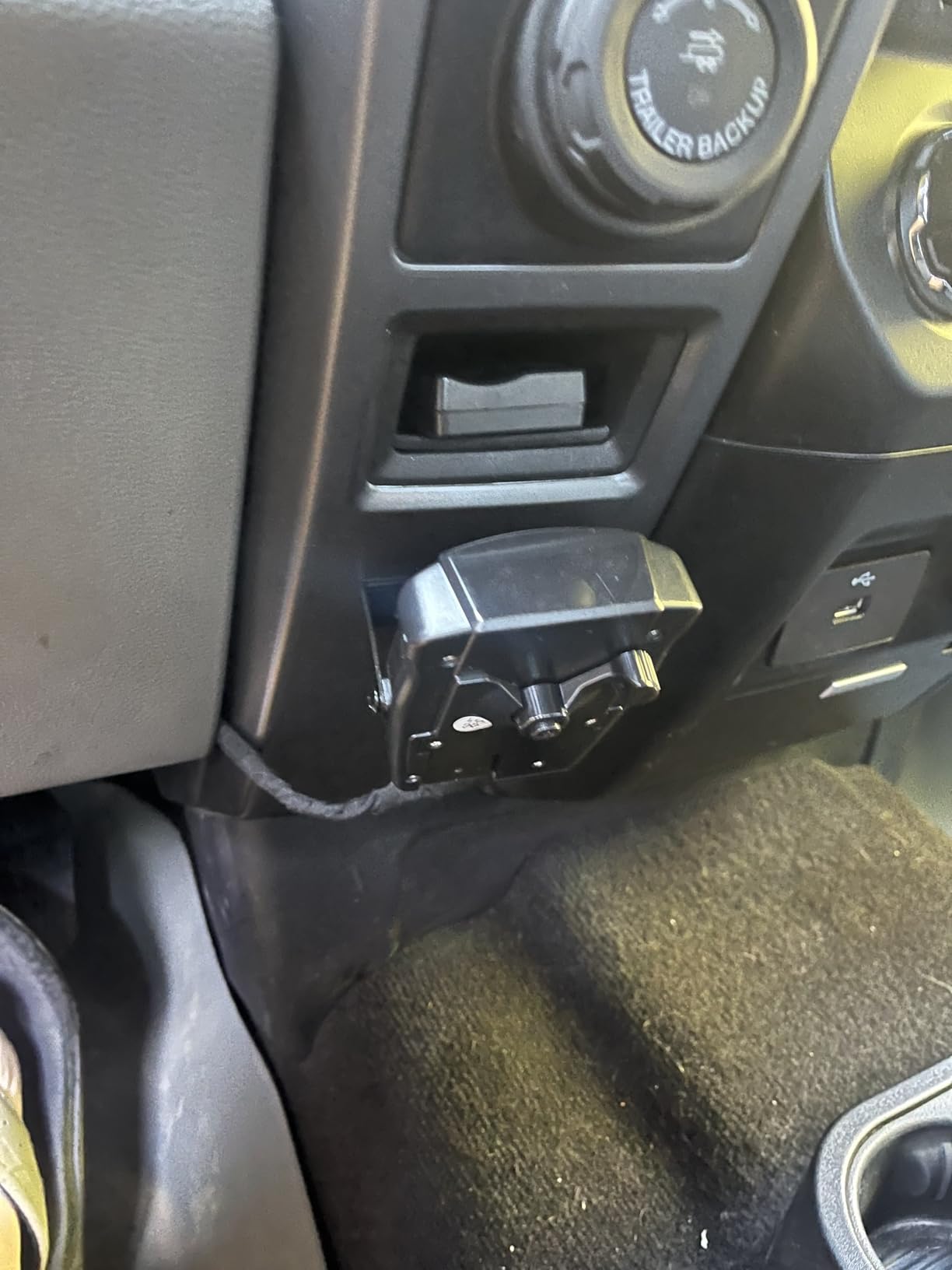
This is the entry point, and it is priced as one. It is a time-delay controller with an adjustable power ramp, an LED readout for settings and output voltage, and built-in overcurrent and short-circuit detection. For a small trailer towed occasionally on flat roads, it does the job without a learning curve.
It operates one to four braked axles, or two to eight brakes, so axle count is not a limitation. The mounting bracket installs at any position or angle, which removes the leveling worry entirely. At 11.6 ounces and 5.43 by 3.5 by 2.99 inches, it is compact.
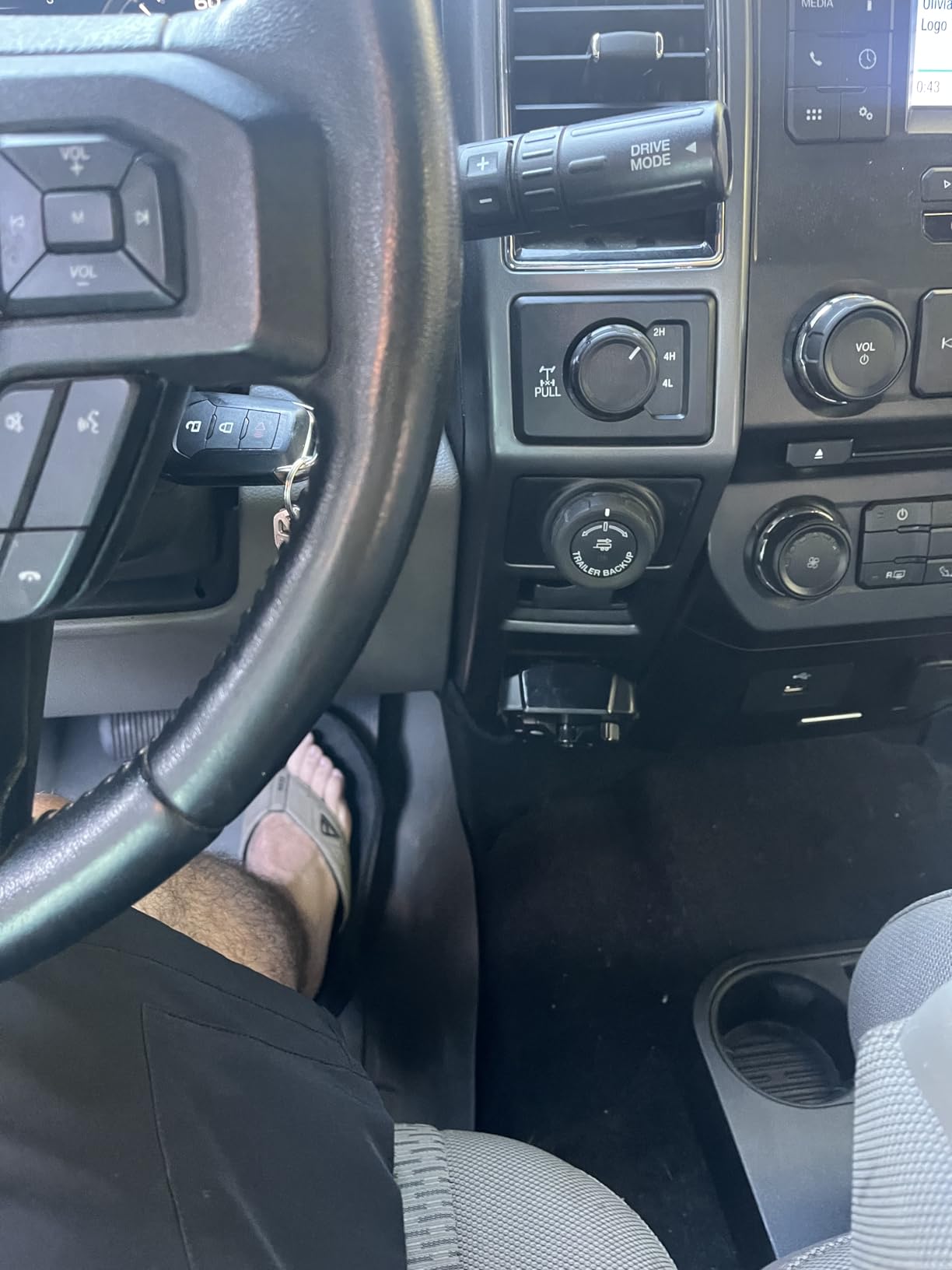
The fault detection is the part that makes it feel less like a bare-bones unit than the price suggests. Knowing whether a problem is an overload or a short before you start tracing wires is worth more than a fancier display would be.
The tradeoff is inherent to the design rather than a flaw in the build. A time-delay controller applies a fixed amount of power after a pause, so it does not mirror your foot the way a proportional unit does. Reviewers consistently describe it as simple and reliable but noticeably less smooth, and it needs gain adjustment as your trailer load changes.
Who the briidea BR-121 suits
It suits someone with a small or light travel trailer, a pop-up, or a first trailer where the budget matters more than the driving feel. It suits owners who want brake lights and basic braking on a short trip without a large investment.
It is also a reasonable backup controller to keep in a storage bin, since it costs little and covers up to four axles.
Who should skip it
Skip it if you tow long mountain descents, run a heavy load, or spend weeks on the road each season. The rough, grabby response that owners upgrading from proportional units complain about is exactly what you would be installing.
Skip it if your tow vehicle already has a factory controller. Replacing a functional integrated unit with a time-delay box is a downgrade in every measurable way.
9. briidea BR-122 – The Best Starter Proportional on a Small Budget
briidea Proportional Trailer Brake Controller, Digital Electric Brake Control for 1-4 Axle Trailers, Smooth Stop Technology with Boost Mode, Compatible with Ford/GM/Chevy/Dodge/RAM/Toyota
Proportional control
1-4 axles
Boost mode
11.6 ounces
Pros
- Proportional braking via high-precision motion sensors
- Boost mode adjusts for weight distribution
- Overcurrent and short-circuit protection with fault detection
- LED display of settings plus voltage and boost level
Cons
- Build quality feels inexpensive
- Connector will not fit a standard 4-prong adapter
- Harness not included for most vehicles
- Some units arrive defective
The BR-122 is the same money class as the time-delay unit above, with proportional braking instead. If you are buying a new controller on a small budget and your trailer is anything other than a very light pop-up, this is the one to get. Owners describe it as a clear upgrade over what they had before, with smooth proportional response and useful short-circuit and battery-drain warnings that cheaper units skip.
It handles one to four braked axles, so two to eight brakes, and the mounting bracket works at any position or angle. Boost mode lets you fine-tune braking based on how the trailer is loaded, which is a genuinely useful feature at this price and something most competitors in the bracket do not offer.
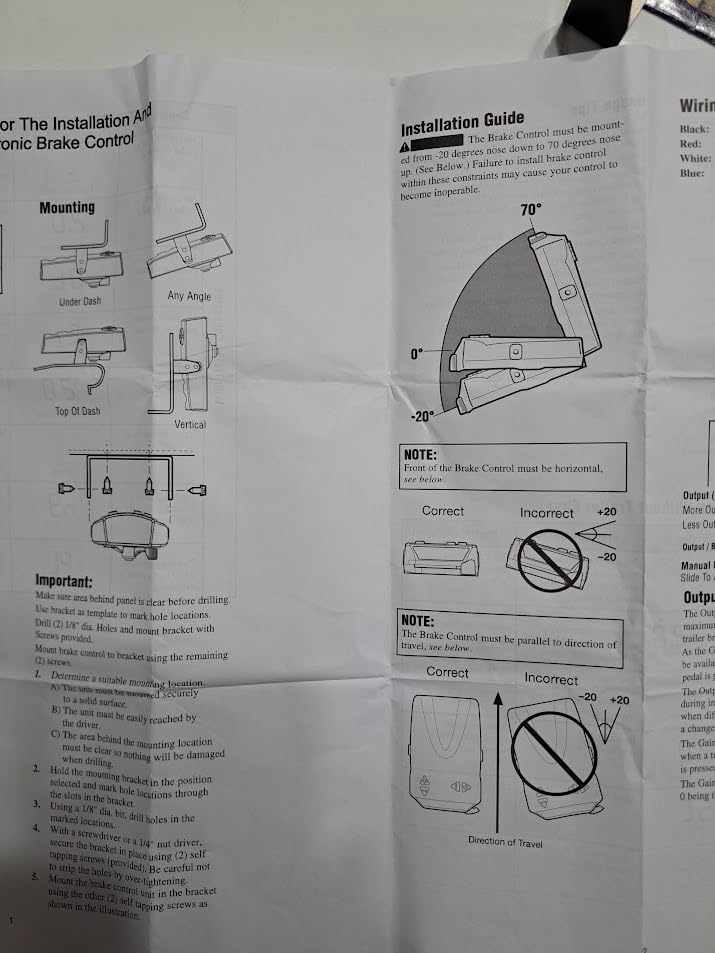
Installation is generally quick, and the LED display shows settings, output voltage, and boost level in real time.
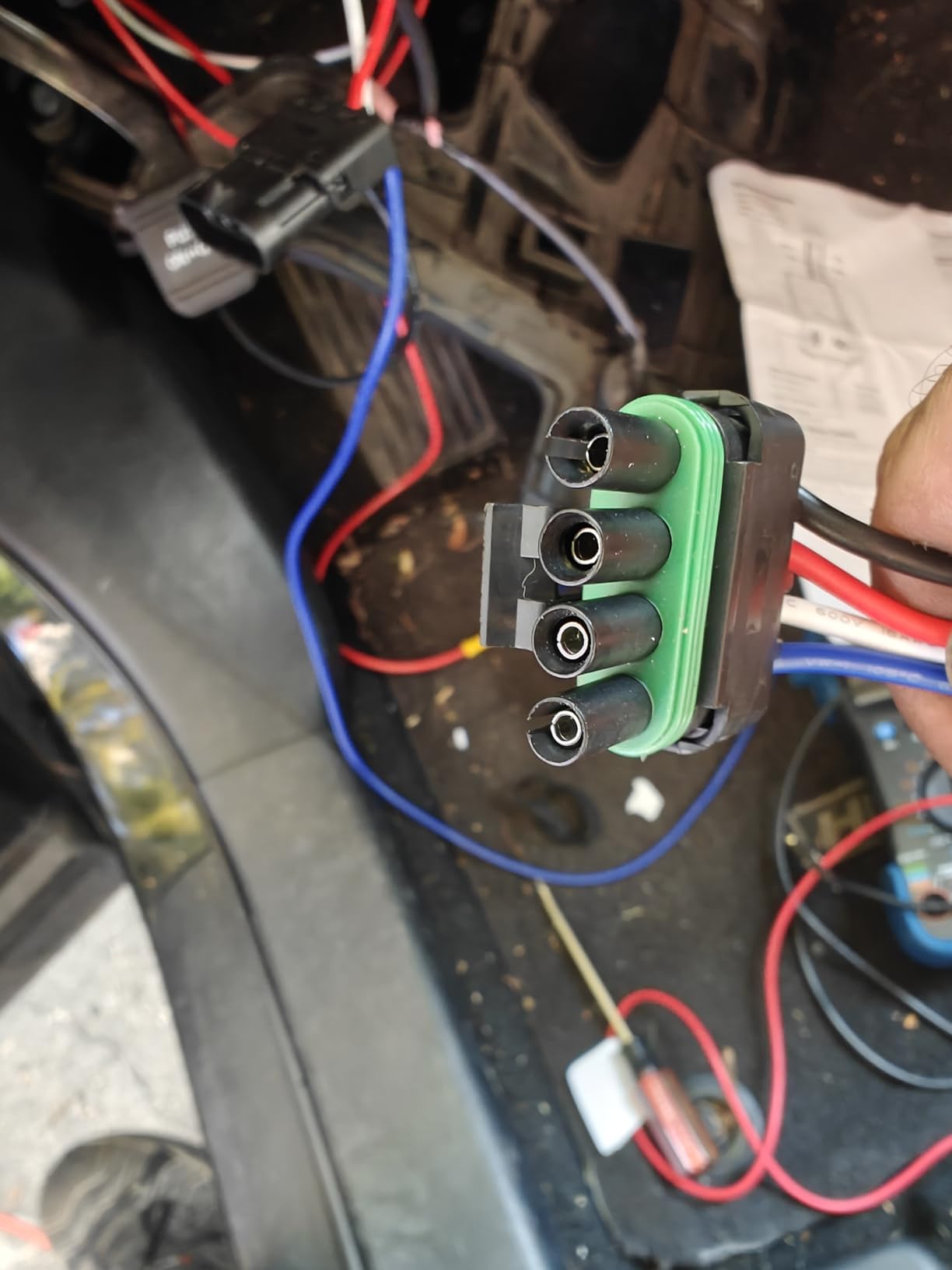
Three things hold it back. The housing feels inexpensive to the touch. The included plug does not adapt to a standard 4-prong adapter, so you need the supplied connector block rather than the adapter you probably already own. And a handful of owners received units that powered on without braking, so testing matters.
Who the briidea BR-122 suits
It suits a first-time trailer owner who wants the smooth feel of proportional control without a large purchase. It suits anyone with a mid-size tandem trailer on a limited budget who has decided against spending more.
It also suits a two-vehicle household that wants a second controller without a wiring project, as long as you source the right harness for the second vehicle.
Who should skip it
Skip it if connector compatibility matters to you, since the non-standard plug rules out a 4-prong adapter. Skip it if you want a warranty that covers a multi-year ownership horizon or a support line when something goes wrong.
For daily towing, step up to the Primus IQ or a REDARC unit. This is a starting point, not an endpoint.
10. CURT Venturer NEXT 51116 – The Best Value Time-Delay With a Low-Profile Body
CURT 51116 Venturer Next Electric Trailer Brake Controller, Time-Delay, Fully Adjustable, Low Profile, 1-3 Axles, Plug-and-Play
Time-delay control
1-3 axles
2-6 brakes
9.6 ounces
Pros
- Slim low-profile body with a bracket that improves knee clearance
- Fully adjustable power and ramp time
- No internal moving parts and no leveling required
- Handles one to three axles
- Plug-and-play setup
Cons
- Time-delay response is coarser than proportional units
- Harness usually sold separately
- Fewer adjustments than proportional controllers
The Venturer NEXT is the one time-delay unit on this list that solves a real physical problem. Its slim, low-profile body and bracket system are designed specifically to keep the controller clear of the driver’s knees, which is the single most common complaint about under-dash boxes. Power and ramp time are both fully adjustable, and there are no internal moving parts and no leveling step to worry about.
It operates two to six trailer brakes at a time, covering one to three axles, so a tandem or triple-axle travel trailer is within range. At 9.6 ounces and 8.13 by 5.38 by 2.75 inches, it is a compact box with a plug-and-play install.
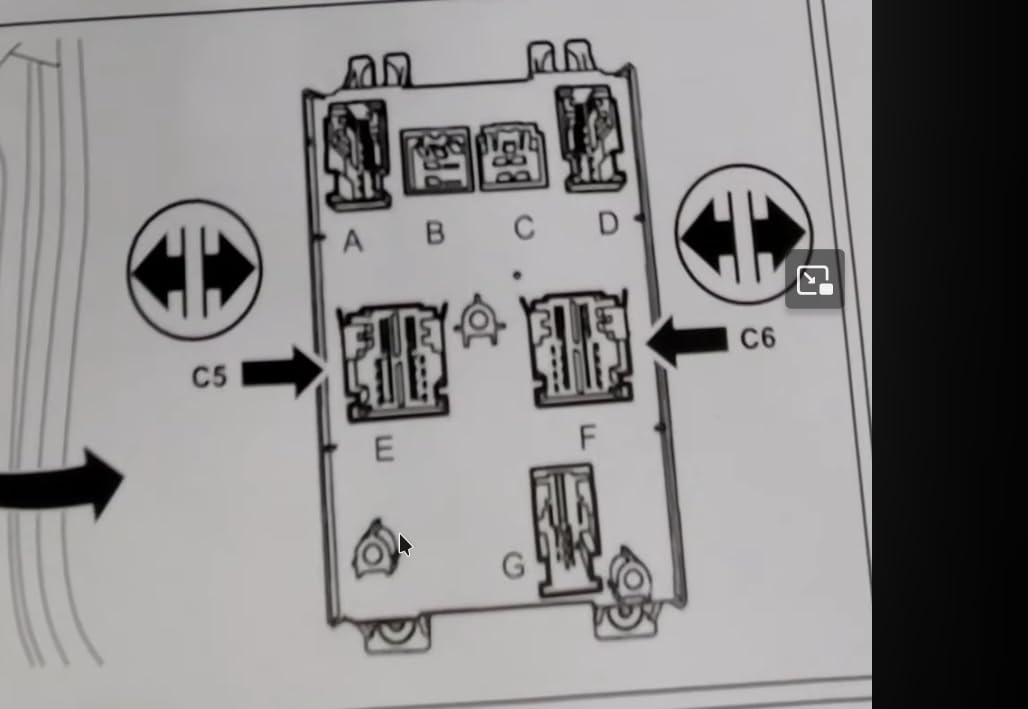
Owner sentiment is generally positive, and the 4.5 rating reflects a unit that does its stated job without drama. For a moderate trailer on mostly flat routes, the simpler ramp behavior is a perfectly reasonable trade.
The limitation is the one that comes with the design. Under light pedal pressure the response is coarser than a proportional unit, because a fixed amount of power is applied after a pause rather than matching your foot. There are also fewer adjustment points overall, and the vehicle-specific harness is usually a separate purchase.
Who the Venturer NEXT suits
It suits owners with a tandem or triple-axle trailer who want a three-axle-capable unit in a slim body and who drive on flat or gently rolling terrain. The low-profile bracket is the reason to choose it over another time-delay box.
It also suits anyone replacing a failed controller on a vehicle that already has the brake controller port, since the plug-and-play setup keeps the job short.
Who should skip it
Skip it if you tow frequent mountain grades or a heavily loaded trailer, where proportional response is not a nicety. Owners moving up from a time-delay unit describe that jump as transformative, which tells you what you would be giving up.
Skip it if you want the finest control over trailer braking. At that point, spending more on a proportional unit is money well spent.
How to Choose a Brake Controller for Your Travel Trailer
Do you even need one?
You need a brake controller if your travel trailer has electric brakes and no other means of controlling them. Federal requirements kick in above 3,000 lb of loaded trailer weight, and most travel trailers exceed that. Below the threshold, brakes are a good idea but not required by law.
Three things remove the requirement entirely. A surge-braked trailer uses hydraulic brakes actuated by the hitch itself, so no controller is involved. Some very light trailers ship without electric brakes at all. And if your trailer carries weight forward of the axle enough to handle braking on its own, the physics take over from the controller.
Do you need a brake controller if you have a 7-pin trailer plug? The plug powers your lights, your 12-volt accessory circuit, and the brake command line. Without a controller on the other end, the electric brakes on the trailer typically do nothing. The connector and the controller are separate jobs, and owning one does not mean you have the other.
If your tow vehicle already has a factory controller, the decision is whether to keep it. Integrated systems on trucks are proportional and generally adequate for a tandem trailer within the vehicle’s tow rating. Replace one only if it lacks the axle coverage you need, if it does not self-level well in your mounting position, or if you want a remote knob to recover under-dash space. If you tow with an SUV, crossover, or minivan, there is usually no factory controller at all, which is why so many owners in that group are searching for their first unit.
Proportional versus time-delay
Proportional braking is better for essentially every travel trailer application. It feels smoother, shortens stopping distances in a panic stop, and reduces the chance of a jackknife because the trailer reacts as soon as you do. Time-delay controllers apply a fixed preset power after a short pause, which is coarser, easier to trigger accidentally, and less capable on a downgrade. The only case where time-delay is defensible is a very light trailer towed rarely on flat roads.
PopUpPortal forum members capture the sentiment well, noting that proportional controllers are worth the extra money because they are safer and feel smoother. On r/Camper, the consensus in the top-ranking thread is the same: buy proportional, then choose among brands by ease of use and cost.
One important note on braking physics. A proportional controller reading your truck’s deceleration slightly before the trailer reacts is exactly what you want in an emergency. A reader on rvliving described a highway incident where locking all four wheels while avoiding a cut-in, and reported that because the controller engaged slightly ahead of the truck, they stopped straight with no jackknife. That is the entire argument for proportional control in one paragraph.
Matching the controller to your axles and brake assemblies
Count your axles with brakes, then multiply by two. A tandem-axle travel trailer has four brake assemblies. A triple-axle rig has six. Then count the total axles the controller can drive, not the number you have today, if you might trade up later.
For a tandem travel trailer, almost anything on this list works, since one to two axles covers four brakes. For a triple-axle trailer, you need a unit rated for three axles or six brakes, which rules out the REDARC Liberty, the CURT Echo Mobile, and the time-delay units that stop at four brakes. For a fifth wheel or gooseneck with four axles, the CURT Spectrum is the only unit here that reaches that ceiling.
Also check whether your brakes are electric or electric-over-hydraulic. Electric-over-hydraulic assemblies, often used on heavier trailers, respond differently and need a controller with a higher continuous output rating. Check the controller’s output spec against the total current draw of your brake assemblies before you commit.
What gain and boost actually do
Gain is your maximum brake output setting. It is not a constant drag applied to the trailer brakes, which is the most common misunderstanding on these forums. A proportional controller with gain set to 6 does not always apply 60 percent braking; it applies up to that ceiling, and only in proportion to how hard you are pressing your brake pedal.
Boost is a separate setting that adds extra pressure on demand, usually in three levels. It exists for a specific situation: a heavy trailer, a steep grade, or a passing maneuver where the trailer is pushing your truck. You press the boost control and the controller pushes past its normal ceiling, then releases when you let go.
Manual override is the third control worth understanding. It is usually a lever or button that applies full trailer braking independent of your foot. When a trailer starts to sway, grabbing manual override and easing off is the first correction you make, and it works on every controller in this group.
Step-by-step gain calibration in an empty parking lot
Do this before your first loaded tow, not on the highway. The procedure is the same on every proportional unit, and it takes about fifteen minutes.
First, park level in an empty lot with the trailer attached and the tow vehicle loaded roughly as it will be on a real trip. Weight distribution changes braking, so calibrate with something in the cargo bay.
Second, set gain to the lowest setting. On most units that is 0 or 1.
Third, turn on the brake pedal apply switch. You can usually do this by pressing and holding the foot pedal, or with a pedal-to-controller switch on a pedal that is already dead. The controller should show a green or solid indication that it is receiving the command.
Fourth, raise gain one step at a time while applying the pedal. Watch the output indicator. When you reach a number where the controller’s maximum output registers, usually shown on the display or a light bar, you have found the ceiling for your current gain setting.
Fifth, perform the pull test. With the gain at its maximum, drive forward slowly and press the manual override lever. The trailer should resist and follow your tow vehicle immediately. If it pushes back or feels laggy, the brakes are not being fully energized and you have a connection or wiring problem, not a gain problem.
Sixth, back down to a working setting. A common starting point that owners on rvliving describe is around gain 5 for flat highway running, moving to 7 or 8 for grades. Then drive to a safe speed, apply the brake pedal gently, and confirm the trailer stops smoothly without locking its wheels. If it locks, back the gain down one step.
Seventh, and this is the one people skip, run the same test again with a different load. A gain setting tuned empty can be light once the garage is full of gear.
Installation types and wiring harnesses
There are three installation approaches. A snap-in or plug-in mount uses a pre-drilled hole in the dash trim, the quickest and cleanest option. A bracket mount attaches the controller to a panel or an under-dash bracket, more common on vehicles without a factory hole. A portable unit plugs in between your vehicle’s 7-way and the trailer’s 7-way with no permanent modification at all.
Every approach except the portable one needs a wiring harness, and on most of the units in this roundup the harness is sold separately. That is the most common surprise at the register. A vehicle-specific harness, sometimes called a pigtail, plugs into the factory brake controller port and provides the power, ground, stop lamp, and brake output wires in the correct order. A universal pigtail requires you to identify and connect each wire yourself.
Use the vehicle-specific kit if you can. It removes the wiring errors that cause brake lights that do not work, controllers that show fault codes with nothing wrong, and brake output that never reaches the trailer. Our other guides cover wireless brake controller options for people who want to avoid a dash hole entirely.
If you are not comfortable with the wiring, this is one job where a shop visit is worth it. The electrical side of a brake controller is where a small mistake becomes a safety problem.
Truck versus SUV versus minivan
Most pickup trucks from the last two decades ship with a factory integrated brake controller, so the question is whether to keep or replace it. Factory units on trucks are proportional and fine for a tandem trailer inside the vehicle’s tow rating. Replace one if you need a remote knob for legroom, if you want a unit that self-levels reliably in your mounting angle, or if you want stronger diagnostics than the factory display gives you.
Most SUVs, crossovers, and minivans have no factory controller. If your vehicle has a 7-pin connector and a brake controller port in the console, an aftermarket install is a weekend job. If it only has a 7-pin with no port, you are drilling a hole, running a harness to the battery, and grounding it properly. Owners on jaycoowners.com and r/LexusGX550 threads are working through exactly this, and the short version is that it is very doable but not a first-time-project job for some people.
Dash space is the second big difference by vehicle type. Pickup trucks with a wide, flat dash tolerate an inline under-dash box comfortably. Crossovers and minivans often have deep, curved trim where an inline controller will hit your knee, which is the entire reason the REDARC and CURT remote-knob designs exist. If your vehicle is a minivan or a small SUV, skip straight past the inline boxes.
Troubleshooting common brake controller problems
If nothing happens when you press the pedal, work through the chain in order: the 7-way connectors fully seated, the brake pedal apply switch or brake light switch working, the harness connector snapped in, and the controller showing a green indication. A blown brake light bulb will stop some controllers from receiving the command signal.
If the controller shows an OL fault code intermittently, that is an open or overloaded circuit, and the most common cause is a wire that has rubbed through on the trailer. A commenter on r/towing traced a short back to a wire that had chafed against a propane tank cover, and a strip of tape fixed it. Inspect the full wire run along the trailer frame and under the floor before you blame the controller.
If your trailer brake lights do not work but the brakes do, the problem is usually the stop lamp connection at the controller, not the brake output. A vehicle-specific harness is far more likely to have that wire correct than a universal pigtail you spliced yourself.
If the controller will not self-level or seems unresponsive, it often needs a full power cycle: disconnect the trailer, hold the brake pedal, and let the unit reset. If it persists, the internal accelerometer is not getting a clean reference and the unit may need re-calibration in a level position.
If the trailer wheels lock up under light braking, your gain is set too high for the current load, or the load distribution has changed. Back the gain down one step and retest. If the trailer pushes back when you brake hard, gain is too low or boost needs to be added.
One last habit: check the fluid in your tow vehicle’s brake system on the same schedule. A brake fluid refractometer takes a minute to use and tells you in seconds whether the fluid has absorbed water, which softens pedal feel long before anything else warns you.
Frequently Asked Questions
What is the best brake controller for a travel trailer?
The Tekonsha Primus IQ 90160 is the most widely trusted choice for most travel trailers. It uses proportional inertia-based braking, covers one to three axles, and shows diagnostics on an LED display. For a triple-axle trailer with frequent mountain towing, the REDARC Tow-Pro Elite adds a user-controlled off-road mode.
Is a proportional or time-delay brake controller better?
Proportional is better for nearly every travel trailer. It matches trailer braking to your own deceleration, so stops are smooth and emergency stops are shorter. A time-delay controller applies a fixed preset power after a pause, which feels grabby and reacts late. Time-delay is only defensible on a very light trailer towed rarely on flat roads.
Do I need a brake controller for a 3000 lb trailer?
Federal rules require trailer brakes above 3,000 lb of loaded weight, and in practice most travel trailers exceed that. Above the threshold you need working electric brakes, and electric brakes need a controller to modulate them. A 7-pin plug alone does not control braking; it is a connector, not a controller. Below 3,000 lb, brakes are optional.
What number should my brake controller be set at?
There is no single correct number, which is why most controllers start low. Many owners run around 5 for flat highway driving and 7 or 8 for grades. Calibrate in an empty parking lot with the trailer loaded as it will be in real use, raise gain one step at a time, then perform a pull test with manual override to confirm the brakes fully engage.
Which trailer brake controller is better, REDARC or Tekonsha?
Both are strong proportional brands, and the choice comes down to axle coverage and dash layout. Tekonsha offers broader axle support in its main models and a longer warranty history, while REDARC concentrates on remote-knob designs that free up under-dash space and add a user-controlled off-road mode. For a triple-axle trailer or off-road use, REDARC has the edge.
How to reduce sway when towing a travel trailer?
Start with the manual override lever or button. When sway begins, apply it gradually and hold it, then release as the trailer straightens. Keeping gain correctly set matters too, because a gain that is too high causes abrupt lock-ups that start sway in the first place. Weight distribution over the axle and an equipped sway control unit address the cause rather than the symptom.
If you want to see how the rest of your towing kit holds up, we have also tested RV backup camera systems for travel trailers, which matters just as much when you are backing a bumper-pull into a site at dusk.
Our Final Recommendation
For most travel trailer owners, the Tekonsha Primus IQ 90160 is the right buy. It is proportional, it covers up to three axles, its diagnostics tell you what is wrong instead of leaving you to guess, and it has the deepest owner history of any controller in this roundup. Budget for the vehicle-specific wiring harness, which is a separate purchase on nearly every controller we covered.
If your tow vehicle has a cramped dash, move up to a remote-knob design. The REDARC Tow-Pro Liberty covers one to two axles in a compact, factory-looking package, and the REDARC Tow-Pro Elite is the one to take if you have a triple-axle trailer, a 24-volt tow vehicle, or a habit of driving off pavement.
If you tow with more than one vehicle, the CURT Echo Mobile skips the wiring entirely and travels with the trailer. If you are on a tight budget, the briidea BR-122 gives you proportional braking for a small outlay, and the CURT Venturer NEXT is the time-delay option worth considering only for a light trailer on flat roads.
Whatever you choose, calibrate it in an empty parking lot with a realistic load before your first trip, and run the pre-trip brake and breakaway check every time you leave. That fifteen minutes will do more for your safety than the model name on the box. If you are still working out the electrical side of your tow vehicle, our full trailer brake controller guide goes deeper on the wiring.