
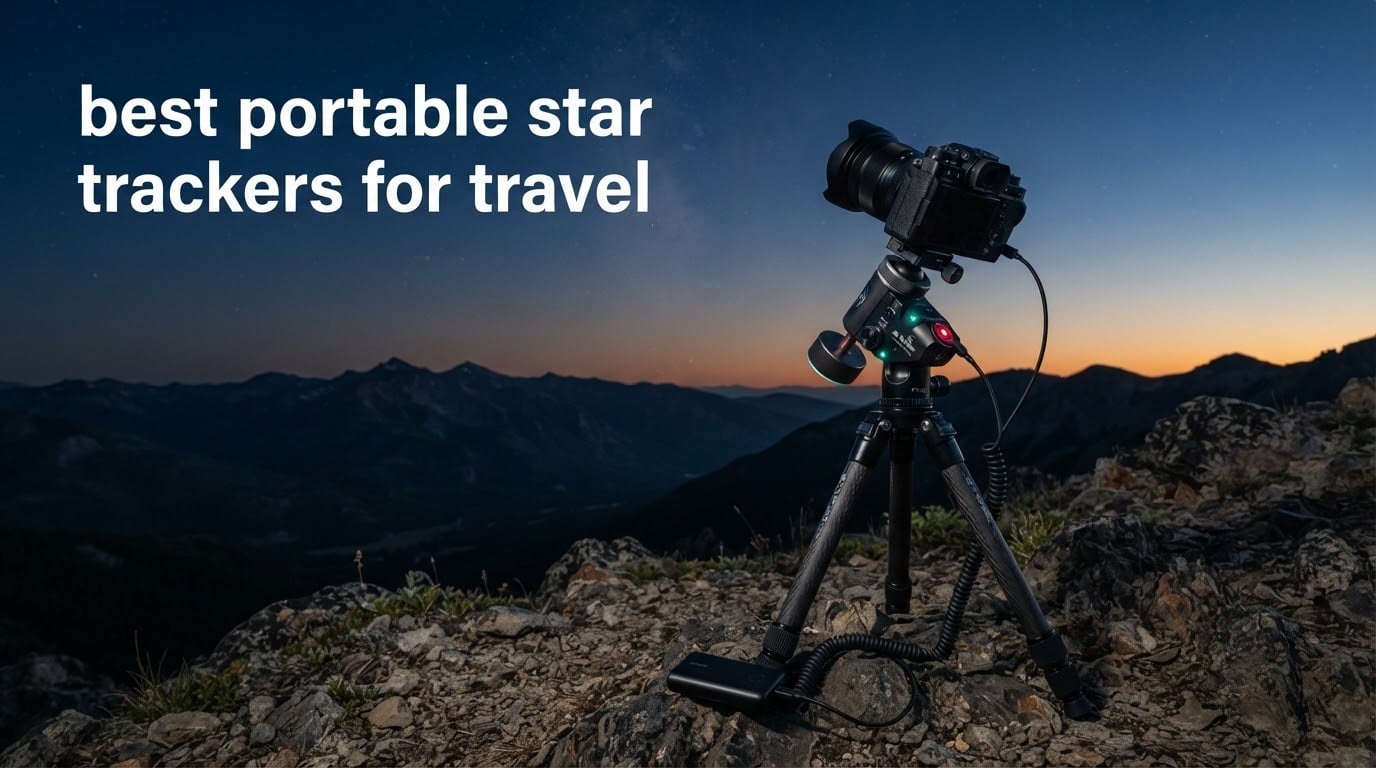
Every long exposure of the night sky needs one thing your tripod cannot give you: a motor that turns at exactly the speed the Earth spins. That motor is the star tracker, and choosing one for travel is not really about aperture or sensor size. It is about how much of the rest of your kit you are willing to carry, how quickly you can align it after a long drive or hike, and whether the batteries inside it will survive to the airline counter. That is why we organised the best portable star trackers for travel around packed weight instead of spec-sheet features.
Manufacturer weight is a poor guide. A tracker that tips the scales at 1.5 pounds can turn a 6 pound kit once you add the tripod, the ball head, the counterweight bar and the batteries. Reddit users on r/AskAstrophotography keep running into exactly this when they ask about backpack-portable deep-sky setups, and the honest answers almost always count the whole bag, not the mount. If you are choosing a travel star tracker, budget for the full rig from day one.
We spent the last few months comparing the trackers that currently fit inside a travel bag rather than the ones that need a car boot. Seven made the cut. Below you will find the top three, a full comparison table, and an individual breakdown of every tracker with its weight, payload, alignment aids, power options and the specific trip it suits best. We also cover polar alignment in the southern hemisphere and how to get lithium batteries through an airport, because those two topics cause more ruined trips than the mounts themselves do.
Top 3 Portable Star Trackers for Travel in 2026
Our top pick balances the three things that actually decide a trip: the largest body of owner feedback, a bundled equatorial base so you are not hunting for parts in the dark, and a weight that stays civil in a carry-on. The two runners-up solve different problems, one for the tightest pack budget and one for photographers who want the most refined mechanism in the group.

Sky-Watcher Star Adventurer 2i Pro Pack
- Deluxe equatorial base included
- Wi-Fi control via the SAM Console app
- Polar scope for night alignment
- Recommended up to 400mm

iOptron SkyGuider Pro
- 2.2 lb all-metal body
- 11 lb balanced payload
- AccuAlign illuminated polar scope
- 20 hour internal battery

Sky-Watcher Star Adventurer 2i Astro Pack
- 2.4 lb total weight
- 11 lb payload
- Up to 72 hours on AA cells
- Built-in illuminated polar finderscope
All Seven Portable Star Trackers Compared at a Glance in 2026
Weights below are the figures each manufacturer publishes for the mount body, not for the packed kit. Add your tripod, head, counterweight and power before you commit to a travel plan.
| Product | Specs | Action |
|---|---|---|
| Sky-Watcher Star Adventurer 2i Pro Pack |
|
Check Latest Price |
| iOptron SkyGuider Pro Full Package |
|
Check Latest Price |
| Sky-Watcher Star Adventurer 2i Astro Pack |
|
Check Latest Price |
 iOptron SkyTracker Pro with Polar Scope iOptron SkyTracker Pro with Polar Scope |
|
Check Latest Price |
 Explore Scientific iEXOS-100-2 PMC-Eight Explore Scientific iEXOS-100-2 PMC-Eight |
|
Check Latest Price |
 Sky-Watcher Star Adventurer Mini Sky-Watcher Star Adventurer Mini |
|
Check Latest Price |
 Vixen POLARIE U Star Tracker Vixen POLARIE U Star Tracker |
|
Check Latest Price |
One caution before the individual reviews. A long-running CloudyNights thread on portable astrophotography gear makes the point that several well-known trackers are sold as a bare head with no tripod in the box, which means the published weight tells you almost nothing about the packed total. Only the iEXOS-100-2 PMC-Eight here ships with a tripod, so every other kit needs a support plan before you book anything.
1. Sky-Watcher Star Adventurer 2i Pro Pack: Best All-Round Travel Tracker
Sky-Watcher Star Adventurer 2i Pro Pack (S20512)
7 lb listed weight
Battery powered
Wi-Fi via SAM Console app
Deluxe equatorial base and polar scope
Pros
- Travels in a padded camera bag and sets up quickly
- Solid pinpoint stars at 2 to 3 minute exposures
- Equatorial base and polar scope in the box
- Wi-Fi app control works over long sessions
- 609 ratings give the widest owner feedback here
Cons
- Steep polar alignment learning curve
- Fragile red-light accessory pieces
- Polar scope illuminator is awkward once a camera is mounted
- Needs a genuinely sturdy tripod
The Pro Pack is the version of this mount that saves you an evening of assembly in a car park. Out of the box you get the deluxe equatorial base and a polar scope, so the one component most travel trackers leave you hunting for is already in the bag. Our team has carried it on multi-night trips where the whole rig had to come out of a daypack, and that bundled base is the difference between a ten minute setup and a twenty minute one.
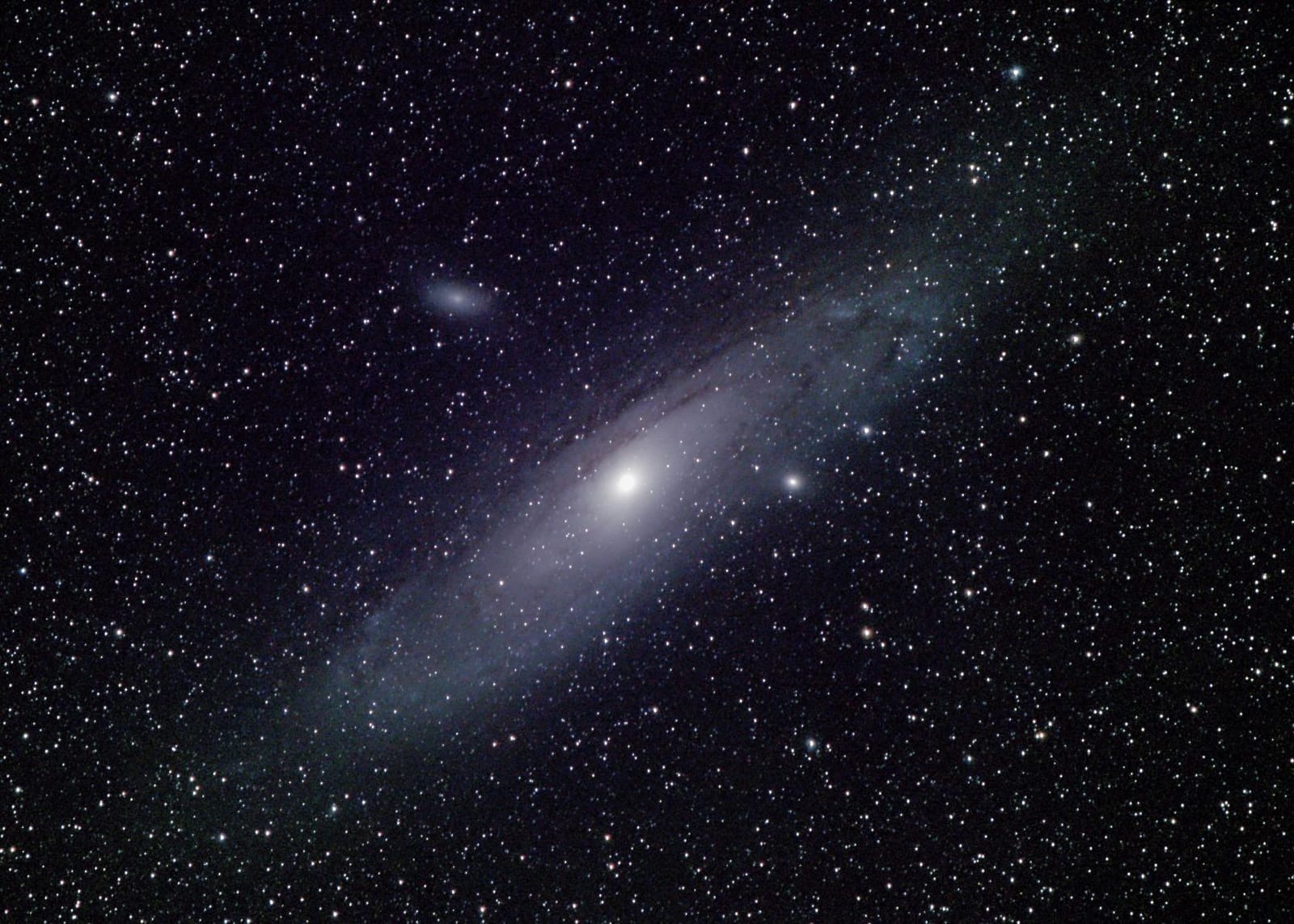
Tracking quality once you are aligned is where the 609 ratings make themselves felt. Owners consistently report pinpoint stars at two to three minute exposures, which covers the wide nightscape work most people shoot on a trip. The recommendation to stay roughly at or under 400mm focal length is sensible for a head this size and stops you hanging a 600mm lens off a base that was not designed for it.
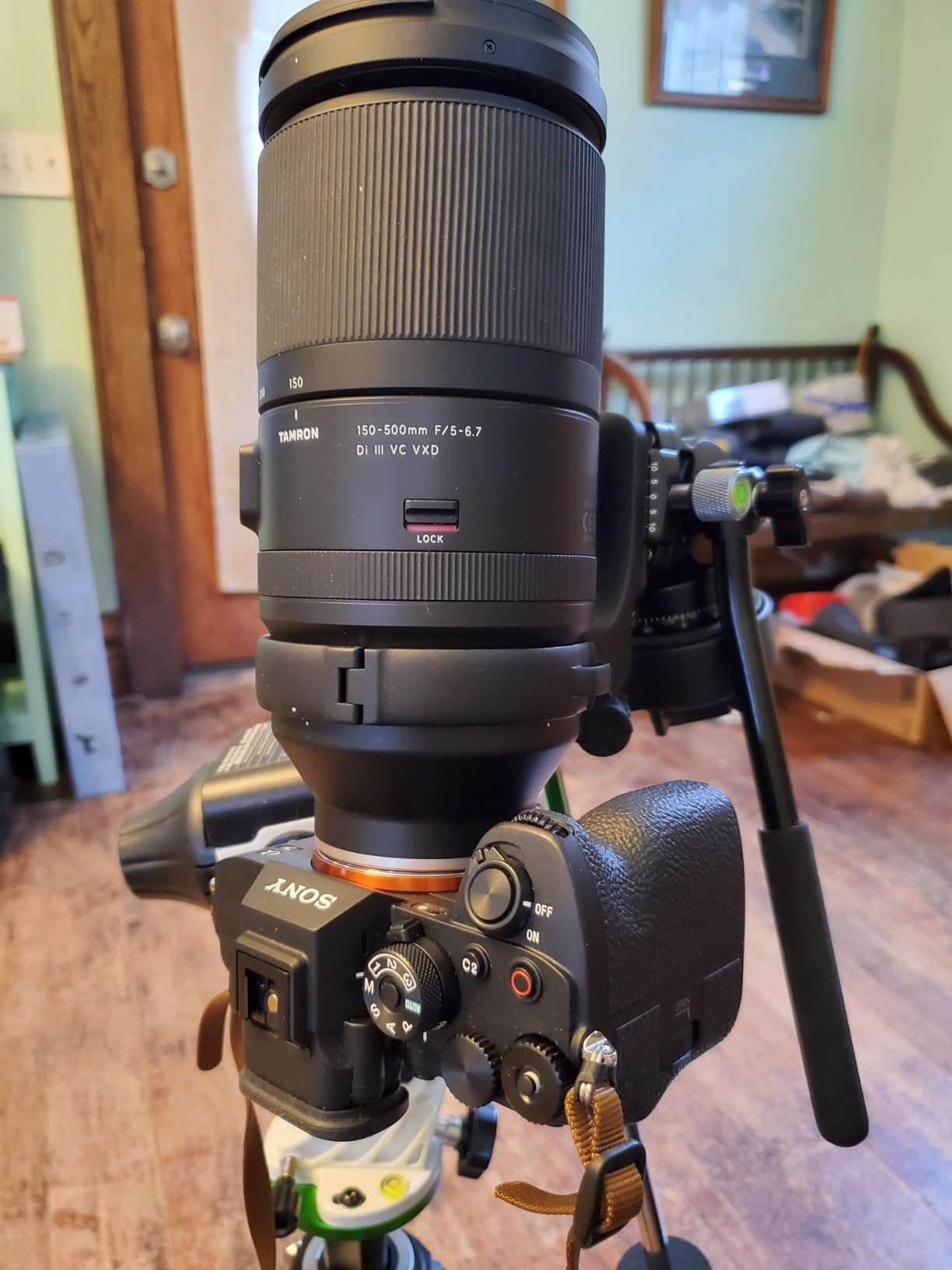
The listed weight for this pack is seven pounds, and that figure covers the base, the batteries and the accessories rather than the mount head alone. Once you add a photographic tripod, a ball head and a spare battery set, a realistic packed weight for a two or three night trip sits well above that number. Plan for the bag rather than the box.
App control over built-in Wi-Fi is genuinely useful when the camera is mounted and you cannot reach the buttons without walking over and disturbing the tripod. The interface itself is basic, and reviewers are unkind about it, but it does remove the need for a separate intervalometer in most cases. Note that the polar scope illuminator no longer fits once the camera is in place, so keep a red headlamp in your kit regardless.
Who the Pro Pack suits
This is the tracker for a photographer who already owns a solid tripod and wants alignment to be solved rather than improvised. If you shoot Milky Way arches, time-lapse sequences and nightscapes with a camera and a fast wide lens, the built-in scope plus the app covers the whole workflow. It is also the safest recommendation we can make for a first tracker because there is so much owner feedback to draw on when something goes wrong.
It also suits travellers who shoot from a campsite rather than a mountain top. Point it at a polar area, switch on tracking, and go back to the tent for three hours. The runtime numbers reviewers report support exactly that workflow.
Who the Pro Pack does not suit
If your trip involves a genuine backpacking route with no resupply, seven pounds of listed pack weight plus a tripod is a lot of load. Look at the 1.5 lb Star Adventurer Mini or the 0.58 kg POLARIE U instead, and accept a smaller payload. This pack is a car-camp and hike-in-to-the-parking-lot tracker, not a multi-day trail tracker.
It is also a poor fit if you want GoTo pointing. There is no database of targets here, so framing a faint galaxy means star-hopping with a red torch and a star chart. For complete darkness, the luggage scale guide on this site covers the other half of a well-measured trip: knowing exactly what your bag weighs before you haul it up a hill.
2. iOptron SkyGuider Pro: Best Built for Portability
iOptron SkyGuider Pro Camera Mount Full Package
2.2 lb mount body
11 lb payload
AccuAlign illuminated polar scope
20 hour internal battery
Pros
- Highest average rating in the group at 4.5
- 2.2 lb all-metal body packs easily
- AccuAlign dark-field polar scope speeds setup
- Up to 20 hours on the internal battery
- Sharp 2 to 3 minute subs at 300 to 500mm
Cons
- No GoTo so targets are found by hand
- RA-only single-axis tracking
- Short counterweight bar on heavy telephoto builds
At 4.5 out of 5 across 196 ratings, this is the highest average customer rating in the group, and the mechanism explains why. The body is all metal with a machined brass worm drive and a rubber toothed belt, which is closer to how a traditional equatorial mount is built than most of the plastic shells in this category. Tracking is smooth and low jitter, and owners shooting at 300 to 500mm report sharp two to three minute subs.
The full package includes the counterweight and the equatorial wedge, so the two parts that push a bare head up to double its pack weight are already accounted for. The counterweight itself is an awkward thing to pack, and having it in the box removes that particular headache from a travel kit.
The AccuAlign dark-field illuminated polar scope is the feature that saves time in the field. It shows a dark field with an illuminated reticle rather than a bright line of stars, which makes the alignment process far more forgiving at a site with a hazy horizon or partial cloud. Reviewers also like the latitude adjustment range of roughly minus 30 to plus 65 degrees, which covers most of Europe and North America but stops short of the far north and most of the southern hemisphere.
At 2.2 pounds for the mount body and a folded footprint of 3.74 by 4.53 by 5.24 inches, this is a genuinely small object to pack. The internal rechargeable battery runs up to 20 hours at 20 degrees Celsius, which comfortably covers a full night without a power bank. Bring the USB cable anyway, because that runtime figure assumes a mild evening.
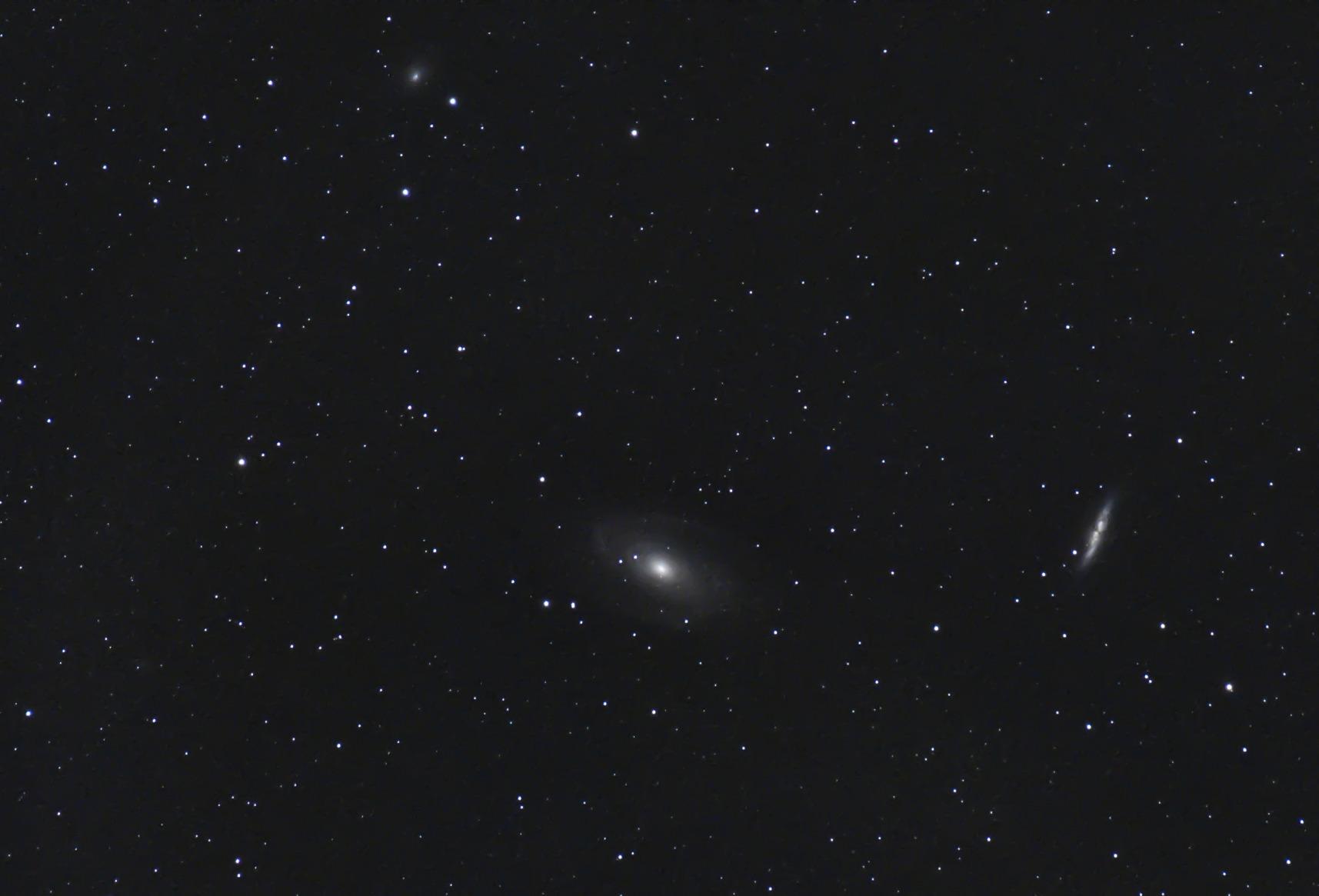
Where the SkyGuider Pro earns its rating
This is the pick for someone who cares about mechanical refinement and shooting at longer focal lengths than a 500g travel head allows. A full-frame body with a short telephoto still fits inside the 11 pound balanced payload, and the autoguider port means you can add guiding later if you push further. The sidereal, lunar, solar and half-sidereal rates cover eclipse work and daylight solar imaging from the same mount.
For a traveller who camps rather than hikes, the internal battery is the quiet hero. No AA compartment to leak, no spare cells to pack, and a single charge that outlasts a clear night. It also carries a one year limited warranty from iOptron.
Where it holds you back
There is no GoTo, so you are framing targets by hand every night. For some photographers that is a pleasant part of the process; for others, after a nine hour drive, it is a reason to shoot fewer targets. And the included counterweight bar is short enough that a heavy DSLR with a long telephoto may not balance cleanly without an extension that is difficult to source.
Some units also arrive with a polar scope that needs collimating to the right ascension axis, and the bundled hex key set is incomplete. Budget ten minutes with a decent tool at the start of the trip rather than in the dark. The listed maximum shutter speed of 30 seconds is a specification rather than a limit for most cameras, but it signals that this is a tracking head built for stills, not long timed sequences.
3. Sky-Watcher Star Adventurer 2i Astro Pack: Best for Long Runtime
Sky-Watcher Star Adventurer 2i Astro Pack – Motorized DSLR Night Sky Tracker for Portable Nightscapes, Time-Lapse, and Panoramas – Remote Camera Control – Long Exposure Imaging (S20510), Black
2.4 lb weight
11 lb payload
72 hr AA runtime
Illuminated polar finderscope
Pros
- Only 2.4 lb carrying an 11 lb payload
- Brass and aluminum gears track smoothly
- Up to 72 hours on AA cells
- Polar finderscope included in the Astro Pack
- Supports solar and lunar tracking rates
Cons
- Manual is poorly organized and translated
- Calibration can shift after knocks in transit
- A rigid tripod with a leveling base is essential
The Astro Pack answers a question the Pro Pack does not: what happens on a five night expedition where resupply is impossible. The answer is a built-in AA compartment rated at up to 72 hours of runtime, plus a 5V mini-USB input for a power bank when you want to keep going indefinitely. Rechargeable AAs typically carry a full night of shooting, and they are the easiest battery on earth to replace in a village shop.
At 2.4 pounds with an 11 pound payload, it is the same class as the Pro Pack but a simpler package. What you gain is the illuminated polar finderscope built straight into the head, no separate alignment gadget to lose. What you give up is the deluxe equatorial base.
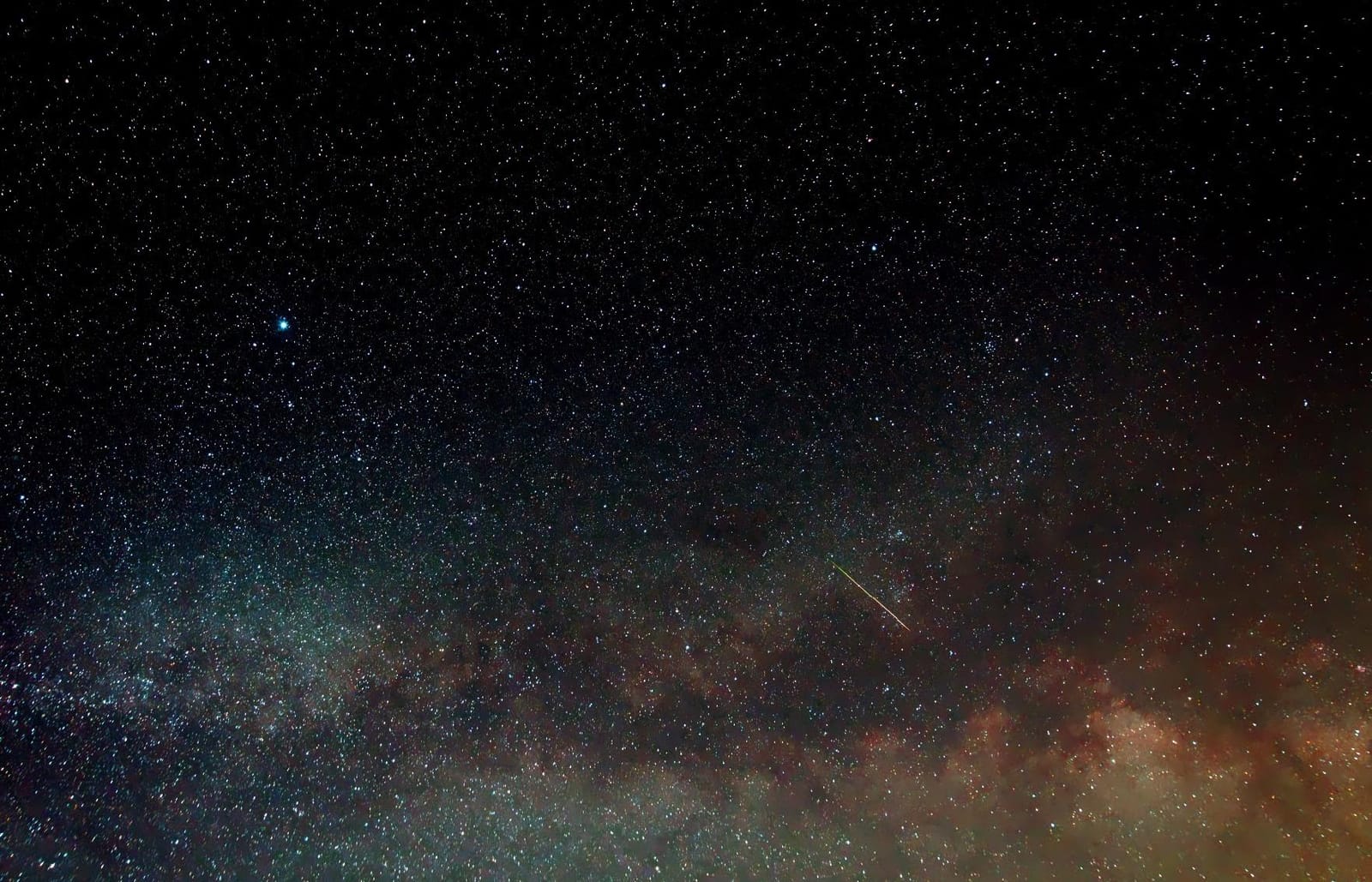
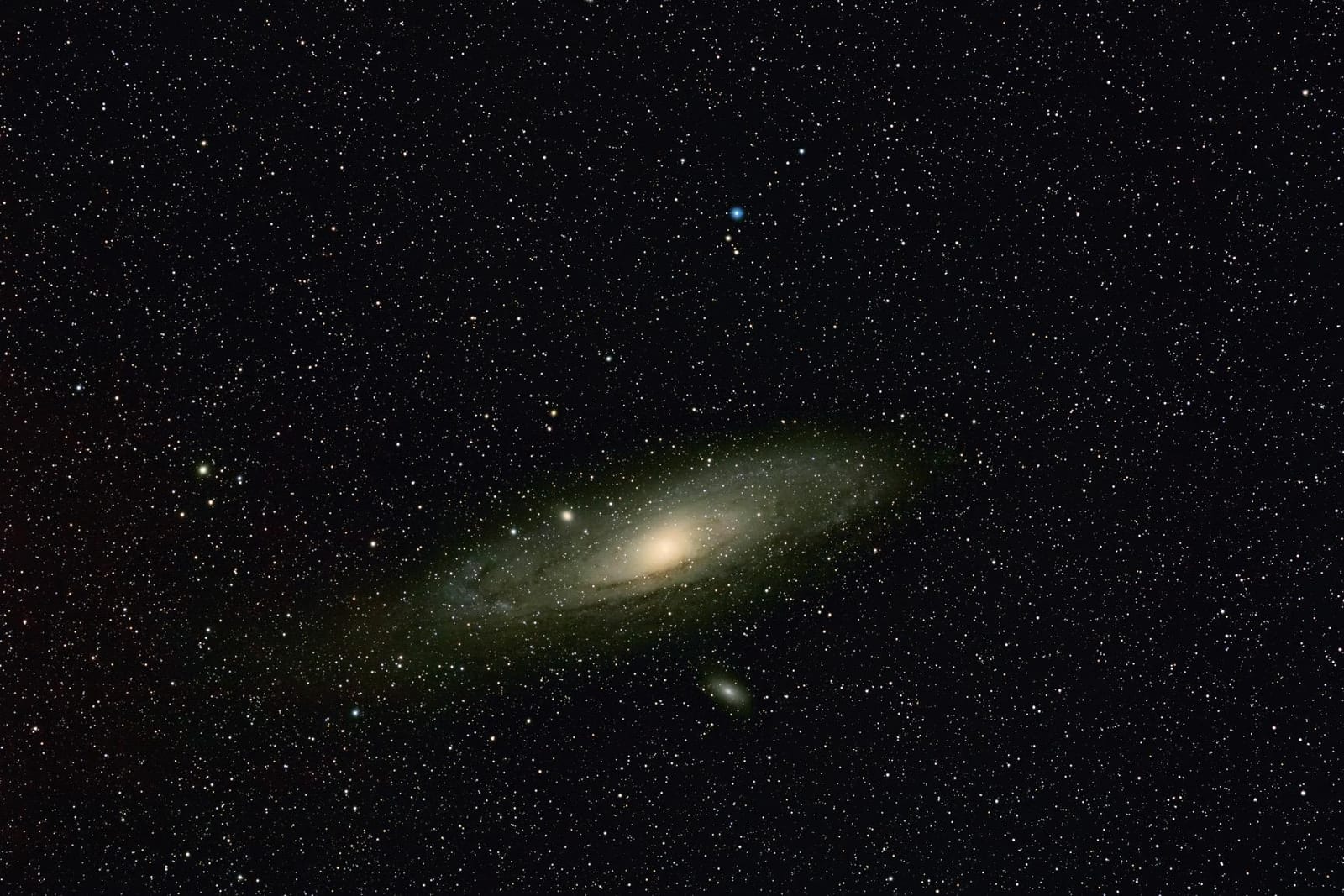
Reviewers with several years of Milky Way and Andromeda stacks behind them consistently describe the gear train as the strong point. Brass and aluminum gears on the sidereal drive are a step up from plastic, and the reported tracking holds pin-sharp stars at two to six minute exposures on a well-aligned rig. The support for solar, lunar and sidereal rates means the same mount handles a partial eclipse and a night sky session without a rebuild.
Remote shutter release control is built in, which matters more than it sounds when the camera is on a fast wide lens and you do not want to shake the tripod reaching for the shutter every three minutes. Pair it with an intervalometer for longer sequences.
The Astro Pack for multi-night trips
Choose this if you are travelling to one dark site for a week rather than moving every night. The battery story is the clearest in the group and the gear train has years of field reports behind it. Reviewers regularly describe smooth, accurate results and it suits anyone shooting time-lapse video as well as stills, since the head handles both.
It is also a fair match for solar work. During an eclipse trip, the solar tracking rate plus the AA endurance means you can sit through a long partial phase without watching a percentage.
Weak points to plan around
The documentation is the biggest complaint. Reviewers describe the manual as poorly organized and poorly translated, which turns a ten minute setup into an afternoon of trial and error. Read a walkthrough before you fly. Factory axis calibration can also need checking out of the box, and any knock in transit can disturb the polar alignment enough to soften a long exposure.
It needs a rigid tripod, ideally one with a separate levelling base. A light camera tripod will flex enough to ruin a three minute sub, and that is the single most common reason trackers disappoint people. A shutter release cable is a separate purchase for many camera bodies too.
4. iOptron SkyTracker Pro: Best Entry Tracker for Light Loads
iOptron SkyTracker Pro Camera Mount with Polar Scope, Only
3.3 lb listed weight
6.6 lb payload
Dimmable polar scope LED
Four tracking speeds
Pros
- Reaches 4 to 5 minute exposures at wide focal lengths
- Silent running on the internal rechargeable battery
- Dimmable polar scope LED for dark site work
- Compact folded body with a padded carry bag
- Half sidereal rate keeps ground detail visible
Cons
- 6.6 lb payload is easy to exceed
- Ball head sold separately
- Base is not Arca-Swiss compatible
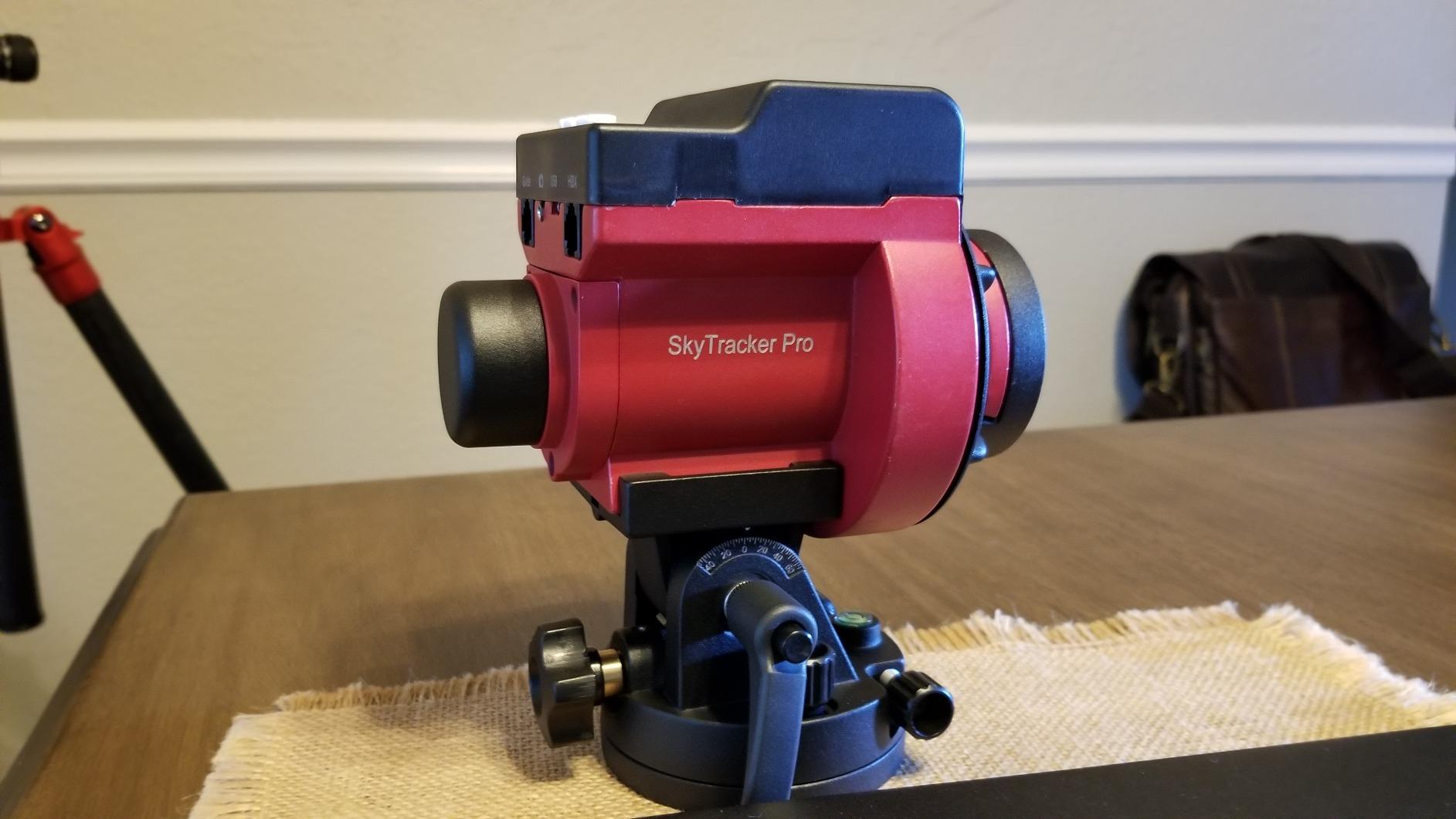
The SkyTracker Pro is the entry point into this list and it does not behave like a toy. Owners regularly reach four to five minute exposures without trailing at wide focal lengths, which is more than many people expect from the smallest serious mount in the group. The drive is a DC servo motor with four bearings driving a worm on a 600 second period, and it runs almost silently, which matters when you are shooting next to a tent.
The body folds down to roughly 115 by 115 by 95 millimetres and comes with a padded carry bag. The listed weight is 3.3 pounds for the packaged unit, so plan on the same order of packed total as the smaller heads once a tripod is added.
Four tracking speeds is more than most competitors offer: full sidereal, half sidereal for keeping ground detail visible, solar, and lunar. There is also a dedicated northern and southern hemisphere setting, which is a small thing that saves a lot of confusion when you change continents.
The polar scope has a dimmable LED and a jog forward and reverse button, so you can nudge the mount into alignment without walking over to a tripod in the dark. That combination is what makes this a comfortable first tracker. Charging is micro-USB at 5V, reaching roughly 80 percent in five hours.
Who gets the most out of it
This suits a traveller with a mirrorless body and a short wide lens who wants long clean exposures of the Milky Way core without a complicated rig. The half sidereal rate is genuinely useful for nightscapes where you want to keep some detail in the foreground instead of blurring it into a wash.
It also works for phone-based imaging since the manufacturer lists cellphones among the compatible devices. Expect modest results compared with a proper camera, but it is a light way to test whether you enjoy night photography at all before committing to a full kit.
Why it frustrates people
The 3 kilogram payload is the headline limitation. It handles a mirrorless body with a fast prime without argument and starts to strain once a larger DSLR or a telephoto zoom goes on, at which point an optional counterweight becomes necessary. The base is also not Arca-Swiss compatible, so an existing Arca plate does not help you here, and a ball head has to be bought separately.
The alignment assistance app is a separate purchase rather than a bundled one, and the rubber cushion around the swivel head mount slips against heavier loads. With 53 ratings this is the second thinnest review base in the roundup, so long term durability reports are limited.
5. Explore Scientific iEXOS-100-2 PMC-Eight: Best Dual-Axis GoTo Setup
iEXOS-100-2 PMC-Eight Equatorial Tracker System Tripod and Mount for Astrophotography with WiFi and Bluetooth Compatible
Tripod and mount bundle
Dual-axis worm gears
ExploreStars GoTo app
Weight not listed
Pros
- Only complete tripod and mount bundle in the group
- Dual-axis tracking with GoTo
- ExploreStars app covers Apple and Android tablets
- Clutched axes make balancing straightforward
Cons
- Largest and heaviest option here
- Lowest customer rating at 3.9 out of 5
- Steepest learning curve of the seven
Everything else in this roundup is a tracking head you bolt onto a tripod you already own. The iEXOS-100-2 PMC-Eight ships as a complete tripod and equatorial mount system, which removes the single largest hidden cost of a travel tracker. For anyone starting from a camera with no support gear at all, this is the honest one-box answer, and it changes the weight maths completely because the tripod is already counted.
It is also the only dual-axis option here. Both the right ascension and declination axes are driven by worm gears with quiet precision stepper belt drives, and GoTo pointing runs through the ExploreStars app on Apple, Android and Windows tablets.
The control system is unusual: a PMC-Eight controller running eight independently operating processors. In practice that means the mount can respond to commands and keep tracking smoothly at the same time, rather than stalling while it works out what you asked for. The axes are clutched, so balancing a camera on both axes takes a minute rather than an evening, and the polar alignment sight hole runs through the right ascension axis so you can align without buying a separate scope.
GoTo pointing is the real reason to look at a dual-axis mount for travel. Point the app at a target, let the mount slew there, and start exposing. On a trip where you shoot one target a night because you only have one clear evening, that changes what you come home with.
Where it wins on a trip
Car camping is the honest answer. A full equatorial system with a bundled tripod is a car boot load, not a daypack load, and no amount of clever packing changes that. But if your dark sky site is a twenty minute drive from a campsite with a power hook, this is the most capable setup here and the only one that finds targets for you.
If you plan to shoot the same locations repeatedly over a year, the dual-axis architecture with an autoguider path is the more future-proof choice of the group.
Where it falls short
The 3.9 rating is the lowest here, and the review distribution explains it: thirteen percent one-star reviews, well above any other product in the group. Those complaints cluster around complexity. A full equatorial mount has more settings, more failure points and a steeper learning curve than a single-axis head that does one job.
Manufacturer weight and dimensions are not listed in the data we pulled, which is itself a warning when you are planning a pack by weight. And the review summary notes that no payload or tracking accuracy detail was available for the bundled system, so verify the capacity against your own camera and lens before committing.
6. Sky-Watcher Star Adventurer Mini: Best for Tight Pack Budgets
Sky-Watcher Star Adventurer Mini – Motorized DSLR Night Sky Tracking Mount For Nightscapes, Time-lapse, and Panoramas
1.5 lb body
6.6 lb payload
Polar scope and illuminator included
24 hr AA runtime
Pros
- 1.5 lb body in a 6 by 6 by 5 inch package
- Polar scope and illuminator included
- Ball-head adapter lets you reuse existing heads
- Two year Sky-Watcher USA warranty
Cons
- 6.6 lb payload is the smallest here
- 24 hour AA runtime is about half the 2i figure
- Small review base of 45 ratings
The Mini is the tracker to look at when every gram in the pack is contested. At 1.5 pounds in a body measuring six by six by five inches, it is one of the two lightest fully featured mounts in this group, and it still arrives with a polar scope and illuminator in the box. That combination, a usable alignment tool at a body weight suited to a daypack, is rare at this size.
Wi-Fi control runs through the free SynScan app on Android and iOS, and the included ball-head adapter means you can reuse a head you already own rather than buying one. That adapter matters more than it sounds: it is the difference between the mount dropping into your existing support kit and the mount becoming a separate purchase.
The gear train is the same brass and aluminum construction used in the larger Star Adventurer models, which is why reviewers describe the tracking as better than the weight would suggest. Alongside nightscape tracking it supports time-lapse panoramas, so one head covers two very different travel shoots.
Power is a built-in AA compartment rated at up to 24 hours, plus a 5V mini-USB input for a power bank when you are out for longer than a night. Sky-Watcher USA warrants it against defects in materials and workmanship for two years.
When the Mini is the right call
Choose it for multi-day treks where the campsite is several hours past the last road. An 11 pound payload class mount is a luxury at that range; a 6.6 pound class that fits a mirrorless body and a fast wide lens is not. The bundled polar scope means you can align without adding a third alignment device to a pack that has no room for one.
It is also the natural companion to an existing lightweight travel tripod and ball head, where a heavier mount would over-stiffen the legs and add bounce to every exposure.
What you trade away
The 6.6 pound payload is the smallest capacity in this roundup and it is the reason some buyers leave one-star reviews. Any telephoto beyond a short prime is out of reach without support. The 24 hour AA runtime is roughly half the figure the larger 2i Astro Pack advertises, so on a two night trip you are carrying spare cells or a power bank either way.
With 45 ratings, this is also one of the thinnest feedback bases here, and twelve percent of reviews are one-star. Long term field durability reports are thin, which matters if you are committing to a mount for a season of trips.
7. Vixen POLARIE U: Best Compact Travel Head
Vixen POLARIE U Star Tracker
0.58 kg body weight
Five variable tracking speeds
ST4 autoguiding port
4 AA or USB Type-C power
Pros
- Body weight of 0.58 kg built for travel
- Five variable tracking speeds give fine control
- ST4 autoguiding port for longer subs
- Smartphone shutter release replaces an intervalometer
Cons
- No internal rechargeable battery
- Autoguiding works on the RA axis only
- Smallest review base here at 36 ratings
The POLARIE U is the most travel-focused design in the group. At 0.58 kilograms, roughly 1.3 pounds, and measuring 4.53 by 2.83 by 3.48 inches, it is a small object with a small footprint, and it exists specifically for photographing the night sky away from an observatory. If your trip is measured in days on foot rather than nights in a car, this is the head built for that.
Five variable tracking speeds give finer control than the fixed-rate mounts elsewhere in this list. For wide nightscape work with a fast prime, being able to dial the rate to match your focal length is more useful than it sounds when you are stacking twenty frames before dawn.
The ST4 autoguiding port is unusual at this size and works on the right ascension axis only, so declination guiding is not available. Paired with the smartphone-controlled shutter release, it means a single phone can run a full guided sequence in the field without a laptop, which is the whole point of a travel mount.
Power is four AA cells or the USB Type-C external power terminal. There is no internal rechargeable battery, so AA logistics apply, and the Finder and Allen wrench included in the box are the tools you will actually need at a dark site.
What the POLARIE U is built for
This is the head for someone travelling light, shooting with a compact camera and a short lens, and wanting guided tracking without carrying a mount that outweighs the rest of the kit combined. The variable speed control and phone shutter release make it a natural fit for unattended sequences where you set the frame, walk to the foreground for the composition, and start the run.
Vixen backs it with a limited one year warranty on electronic parts and two years on mechanical parts, which is the better warranty split on this list.
Where it stops
With 36 ratings, this carries the smallest owner feedback base in the roundup. What it does have is the cleanest distribution: no one-star reviews at all, with 63 percent five-star and 24 percent four-star. Buyers who bought it seem happy; we would simply note that you have less evidence to rely on.
The small payload class rules out heavy camera and telephoto combinations, RA-only autoguiding limits how far you can push into deep-sky work, and the instruction manual is not guaranteed to be in English. Check the paper before you leave home.
How to Choose a Portable Star Tracker for Travel
Every tracker here will point a camera at the sky and cancel the Earth’s rotation. The differences that matter on a trip are how you carry it, how you align it where you happen to be standing, and how you power it at one in the morning. Work through these six decisions in order and the right mount becomes obvious.
Weight tiers: backpack, hiker and car camp
Split your choice by how far you walk, not by how little the mount weighs. A backpack tier sits under roughly 700 grams for the tracker body, which points you at the Vixen POLARIE U at 0.58 kg and the Sky-Watcher Star Adventurer Mini at 1.5 pounds. Both are built around fast wide lenses and mirrorless or compact bodies.
A hiker tier covers one to two and a half kilograms for the whole rig, and this is where the Star Adventurer 2i packs sit. They carry an 11 pound payload, which is the ceiling for almost any travel lens combination you will actually own.
A car-camp tier starts at three kilograms and is where dual-axis GoTo mounts belong. The iEXOS-100-2 PMC-Eight belongs here. Once you add a tripod with real legs, that is not a pack you want to carry uphill at the end of a long day.
Single-axis versus dual-axis tracking
A single-axis tracker rotates on the right ascension axis only, which is all you need to cancel the Earth’s rotation. Six of the seven mounts here are single-axis. They are lighter, cheaper, simpler and have fewer things to go wrong, and they are the correct answer for the large majority of travel shooting.
A dual-axis mount also drives declination, which is what makes GoTo pointing possible: the mount can physically move to a target rather than asking you to find it. The tradeoff is more moving parts, more weight, a steeper learning curve and a bundled tripod. Only the PMC-Eight here is dual-axis.
Payload capacity versus what you actually carry
Payload is the maximum balanced load, and it is the number most people misjudge. The ratings range from 6.6 pounds at the Mini and SkyTracker Pro to 11 pounds on both Star Adventurer 2i models and the SkyGuider Pro. Every one of those figures assumes the rig is balanced on both axes.
Check your own kit before shopping. Add the body, the lens, the mounting plate and any counterweight and compare the total against the rated payload, not the lens alone. An unbalanced rig does not just sag, it produces the kind of periodic error that ends a five minute sub halfway through. If the total exceeds the rating, either drop the lens or budget for a counterweight.
Polar alignment aids that matter at odd latitudes
Alignment quality sets the ceiling on exposure length more than the mount does. Every tracker here needs the polar axis pointed at the celestial pole, and the aid you use determines how fast that happens in the dark.
Built-in illuminated polar scopes lead the group: the Pro Pack, the Astro Pack, the Mini, the SkyGuider Pro with its dark-field AccuAlign reticle, and the SkyTracker Pro with its dimmable LED. The POLARIE U has a Finder included. The PMC-Eight uses a sight hole straight through the right ascension axis, which saves carrying an alignment device but gives less fine adjustment.
For travel specifically, the northern hemisphere latitude range of minus 30 to plus 65 degrees on the SkyGuider Pro is worth checking against your destinations. Anything closer to the poles needs a wider-range base.
Power: AA, internal lithium or a 5V power bank
Three power strategies appear in this group and each has a travel cost. Built-in AA compartments, as on the Astro Pack, Mini and POLARIE U, are the easiest to resupply anywhere but the least efficient. The Astro Pack quotes up to 72 hours on AA, the Mini around 24 hours.
Internal rechargeable batteries, as on the SkyGuider Pro and SkyTracker Pro, give the longest single-session runtime, up to 20 hours on the SkyGuider Pro at 20 degrees Celsius, but require a charger in your pack. A 5V power bank input, standard on the Sky-Watcher models and the POLARIE U, removes the battery question entirely for multi-night trips at the cost of carrying weight and complying with airline rules.
Cold cuts runtime hard. Plan a power reserve of at least half your expected session length if the site is above freezing, and keep spare cells in an inside pocket where body heat keeps them closer to capacity.
Exposure length and focal length for travel glass
The 500 rule is the working approximation every travel photographer uses: divide 500 by the full frame equivalent focal length to get the longest exposure before stars begin to trail. At 14mm that allows roughly 35 seconds, at 24mm about 20 seconds, and at 50mm around 10 seconds before alignment error takes over.
With a well aligned single-axis tracker, alignment error stops being the limit and drive accuracy takes over. Once you are there, wide travel glass at 14 to 35mm comfortably supports two to five minute subs, which is what separates a tracker from a plain tripod. Add guiding through the ST4 port on the POLARIE U or the autoguider port on the Pro Pack, SkyGuider Pro, Astro Pack and PMC-Eight, and the ceiling moves higher still for the longer lenses.
Tripod, counterweight and head are not accessories
The CloudyNights advice about trackers shipping without support gear applies to most of this list. Budget for a rigid photographic tripod and a ball head for every mount except the PMC-Eight. A light camera tripod flexes enough to ruin a three minute exposure even when the mount itself is tracking perfectly.
If you are also weighing a pack, a portable luggage scale is the fastest way to know your real load before a trail does it for you. And if the trip involves a vehicle rather than a boat or a plane, our bike GPS tracker picks and fleet GPS tracker guide cover the journey to the dark site.
Polar Alignment Away From Home
Alignment is where travel astrophotography is actually won or lost, and doing it at a new latitude with a mount you have never used is the hardest version of the task. The good news is that all seven trackers here align the same way. Aim the polar axis at the celestial pole, level the tripod, balance the rig, and start exposing.
In the northern hemisphere, the pole sits above Polaris, and every illuminated scope in this group is built around finding that star. Use the scope to centre the reticle, then rotate the mount in azimuth until Polaris sits in the correct ring. In practice, if you cannot see Polaris at all, you are in the southern hemisphere and no amount of scope fiddling will fix it.
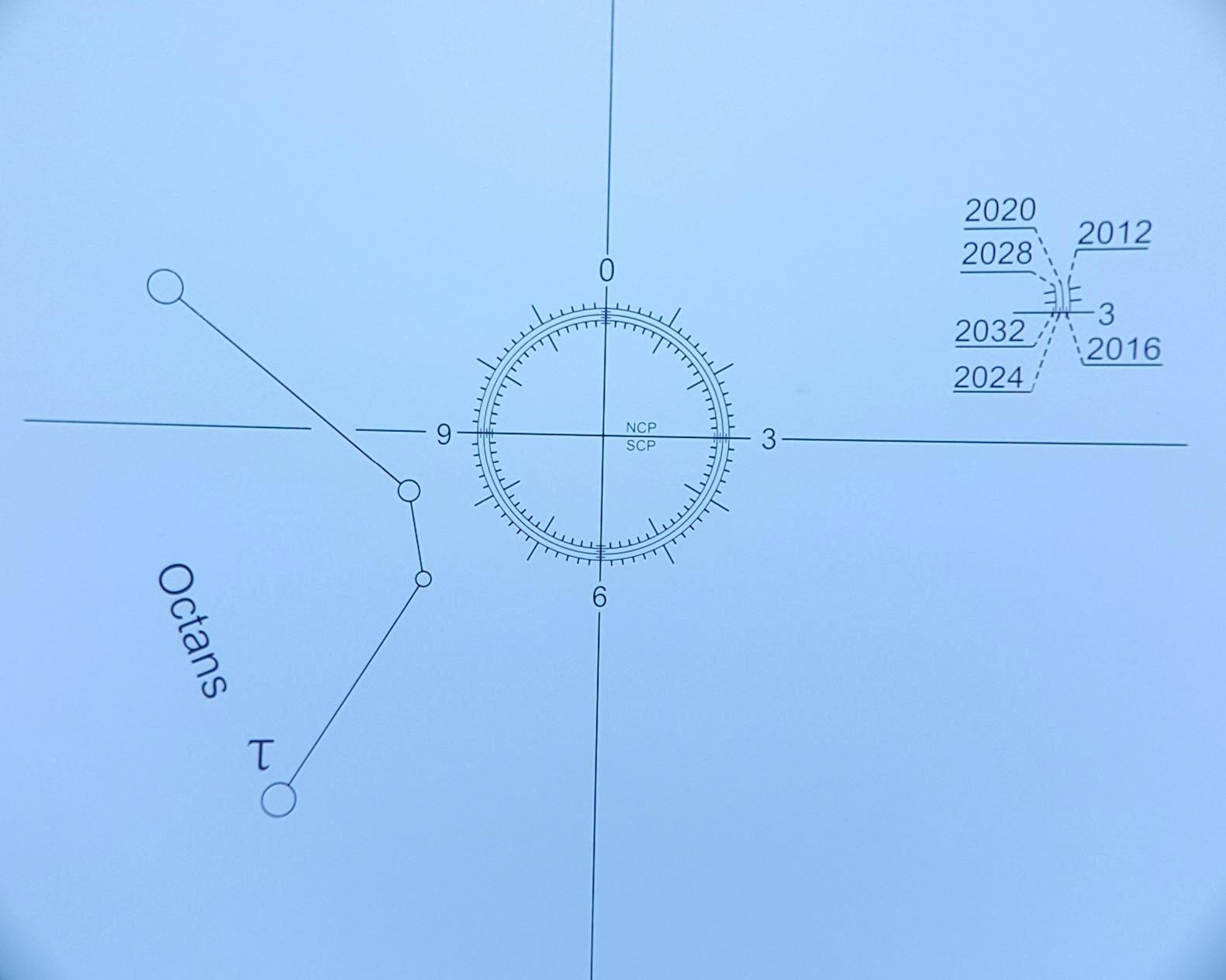
Down south, the pole has no bright star to point at. The usual workflow is to use a bright guide star that sits near the pole, or to run a drift alignment by centring a star at declination zero, watching which way it drifts, and rotating the altitude axis until the drift stops. Both the SkyGuider Pro and the SkyTracker Pro list northern and southern hemisphere settings, which saves a lot of confusion.
Practise alignment at home before you travel, in daylight if necessary. Forum users are consistent on this point, and a ten minute field setup is optimistic for a first attempt at an unfamiliar site. Reaching your dark sky location with an hour of daylight spare is worth more than any accessory you could add to the pack.
Flying With a Star Tracker: Battery and Carry-On Rules
Air travel is the one constraint no roundup review covers properly, and it is the one that ends trips before they start. Spare lithium batteries must travel in your carry-on, never in checked luggage, and loose cells are the ones most often removed at the gate. Power banks have a watt-hour ceiling that most airlines publish and most travellers ignore.
Carry every spare lithium cell in your cabin bag, not your checked suitcase. This applies to AA lithium cells as well as the 18650 cells that power some external battery packs.
Check the watt-hour rating printed on any power bank. Airlines commonly cap capacity at 100Wh for carry-on and prohibit anything above 160Wh without approval. A 10000mAh bank at 3.7V is 37Wh.
Protect terminals. Tape the positive terminal of any loose cell, or put each one in its own case.
Keep the tracker head and any counterweight in cabin luggage if you can. Small brass and aluminum parts are easy to lose in checked bags and awkward to replace abroad.
Carry a photographic tripod in the cabin if the airline allows the length. Long legs are the classic item held at the gate.
Pack a spare shutter release cable and the hex key or Allen wrench for your specific mount. A Polarie U ships a 3mm Allen wrench, and missing tools end sessions.
Plan for battery temperature. Cargo holds are cold, and a lithium battery that has been in one may need to reach room temperature before it will charge.
If your itinerary is a road trip rather than a flight, the same planning applies in reverse: charge everything before departure, because a remote dark sky site rarely has a socket you can trust.
Frequently Asked Questions
What is the best star tracker?
The best star tracker depends on your travel style. For most trips the Sky-Watcher Star Adventurer 2i Pro Pack is the strongest all-round choice, because it bundles the equatorial base and polar scope and has the widest owner feedback in this roundup at 609 ratings. For the tightest pack the Vixen POLARIE U at 0.58 kg or the 1.5 lb Star Adventurer Mini are lighter, and for car camping the Explore Scientific iEXOS-100-2 PMC-Eight is the only dual-axis GoTo system listed here.
How accurate are these star trackers?
Accuracy depends far more on polar alignment and tripod stability than on the mount itself. Owners of the single-axis models in this group report pinpoint stars at two to three minute exposures on wide travel glass once aligned properly, and the brass and aluminum gear trains in the Star Adventurer models and the iOptron SkyGuider Pro track smoothly at longer focal lengths. The dual-axis PMC-Eight adds a declination drive, and autoguider ports on the Pro Pack, SkyGuider Pro, Astro Pack, POLARIE U and PMC-Eight allow guided tracking when you push further.
What is the best portable telescope mount for travel?
By weight tier: for ultralight backpacking the Vixen POLARIE U at 0.58 kg, for hiking and car camping the Sky-Watcher Star Adventurer 2i Pro Pack or iOptron SkyGuider Pro, and for car-camp GoTo pointing the Explore Scientific iEXOS-100-2 PMC-Eight, which is also the only option here that includes a tripod. Remember that only the tracker weight is published, so add your tripod, ball head, counterweight and batteries before committing to a route.
What is the best star tracker for beginners?
The iOptron SkyGuider Pro is the most beginner-friendly in this group because its AccuAlign dark-field illuminated polar scope makes alignment fast and forgiving, it carries the highest average rating here at 4.5, and the full package includes the counterweight and equatorial wedge. The Sky-Watcher Star Adventurer 2i Astro Pack is a strong alternative with a built-in illuminated polar finderscope and up to 72 hours of AA runtime, though its documentation is the weakest of the seven.
Are star trackers difficult to align?
Not with practice. Level the tripod, point the base roughly north with a compass, then use the illuminated polar scope or the app to centre Polaris and rotate in azimuth until it sits in the right ring. The SkyGuider Pro’s dark-field reticle is the fastest to align at night, and the PMC-Eight uses a sight hole through the right ascension axis so no separate scope is needed. In the southern hemisphere there is no bright pole star, so use a guide star near the pole or a drift alignment at declination zero, and practise at home before you travel.
How long do star tracker batteries last?
It depends on the power system. The Sky-Watcher Star Adventurer 2i Astro Pack quotes up to 72 hours from its AA compartment, the Star Adventurer Mini about 24 hours from AA, and the iOptron SkyGuider Pro runs up to 20 hours on its internal rechargeable battery at 20 degrees Celsius. Several models including both Sky-Watcher models and the POLARIE U accept 5V external power, so a USB power bank removes the battery question on long trips. Cold reduces runtime sharply, so carry a spare power source for any session above freezing.
Can I take a star tracker as carry-on luggage?
The mount itself is small enough for cabin luggage on every model in this roundup, with the largest body at 7 pounds and the smallest folding to about 115 by 115 by 95 millimetres. The restrictions apply to the batteries. Spare lithium cells must be carried in the cabin, never checked, with terminals protected. Power banks are subject to airline watt-hour caps, most commonly 100Wh for carry-on and a prohibition above 160Wh. Keep counterweights and tripod legs in the cabin too if you can, since they are small, heavy and easy to lose.
Conclusion
The best portable star trackers for travel come down to how far you walk and how long you stay. Buy the Sky-Watcher Star Adventurer 2i Pro Pack if you want the most proven package with alignment hardware included, the iOptron SkyGuider Pro if you want the best mechanism and the easiest night alignment, and drop to the Vixen POLARIE U or Star Adventurer Mini when pack weight decides everything.
Whatever you choose, budget for a rigid tripod, a ball head, spare power and at least one evening of practice before you rely on it. Updated for 2026, and packed to fit the trip rather than the spec sheet.