
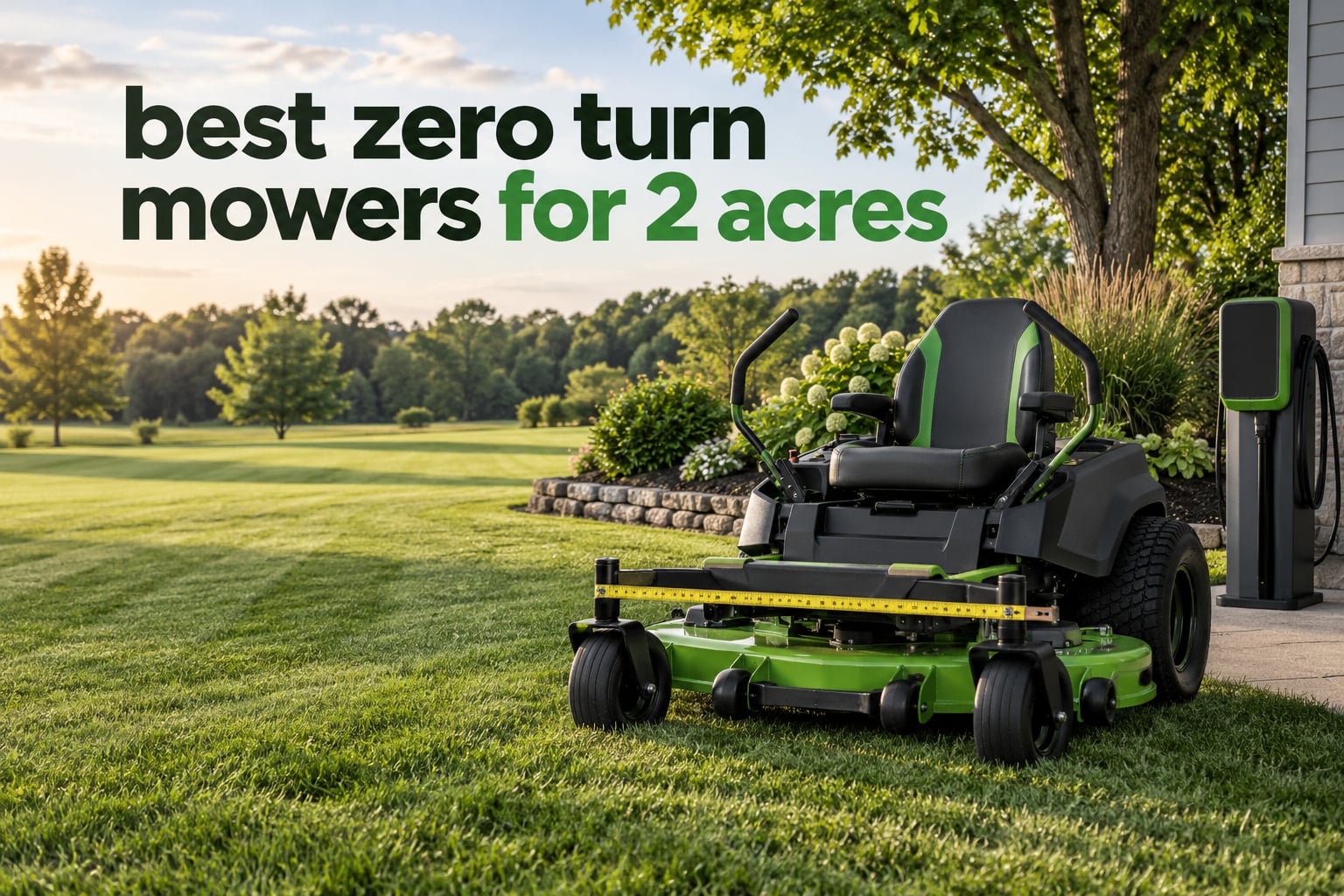
Two acres is the sweet spot for a zero-turn mower. It is big enough that a walk-behind stops making sense and small enough that you do not need 60 inches of deck or a commercial frame to finish before dinner. The right machine is a 42, 48, or 52 inch deck with enough power to push it through slightly wet spring grass without bogging down.
I have been picking through zero-turn listings, spec sheets, and owner reports for weeks, and the pattern is consistent: the best zero turn mowers for 2 acres are decided by three things, deck width, how the machine behaves on slope, and whether you want to pull fuel or plug in overnight. Everything else is comfort and price tier.
This roundup covers six zero-turns that a 2-acre owner can realistically own, from a 42 inch battery platform that mows the whole property on one charge to a 60 inch gas machine built for open ground. I also cover the math on how long a 2-acre mow actually takes, what to measure before you order, and where owners report problems. If your acreage is larger than this or you are sizing up a commercial frame, start with our zero-turn mower guide for large properties first.
Top 3 Picks for a 2-Acre Yard in 2026

EGO Power+ Z6 42-inch ZT4204L
- Mows up to 2 acres on one charge
- 22 HP equivalent
- 10 cutting heights
- LCD drive modes

EGO Power+ Z6 52-inch ZT5207L
- Mows up to 4 acres per charge
- 25 HP equivalent
- 52 inch deck
- 8 MPH Sport mode

EGO Power+ Z6 42-inch ZT4214L
- Wide frame and deck suspension
- 24 HP equivalent
- Color display with app
- 5-year warranty
Best Zero-Turn Mowers for 2 Acres in 2026
| Product | Specs | Action |
|---|---|---|
| EGO Power+ Z6 42-inch ZT4204L |
|
Check Latest Price |
| EGO Power+ Z6 52-inch ZT5207L |
|
Check Latest Price |
| EGO Power+ Z6 42-inch ZT4214L |
|
Check Latest Price |
 Ariens Zenith 60-inch Ariens Zenith 60-inch |
|
Check Latest Price |
 Greenworks 60V 54-inch MaximusZ Greenworks 60V 54-inch MaximusZ |
|
Check Latest Price |
 PRORUN 60V 42-inch PRORUN 60V 42-inch |
|
Check Latest Price |
1. EGO Power+ Z6 ZT4204L 42-Inch – the Best Zero-Turn Mower for 2 Acres Overall
EGO Power+ Electric Riding Lawn Mower, 42″ Deck with Zero Turn Radius, Includes (4) 56V 10.0Ah Batteries and Charger – ZT4204L
42 inch deck
Up to 2 acres per charge
22 HP equivalent
620 pounds
Pros
- Cuts up to 2 acres on a single charge from four 10.0Ah batteries
- 22 HP equivalent power with Standard Control and Sport modes
- 10 cutting heights from 1.5 to 4.5 inches on a 3-in-1 stamped steel deck
- Two hour recharge on the included Z6 wall charger
- Batteries share the EGO 56V platform with the rest of the tool line
Cons
- Heavy steel crate has to be uncrated before first use
- Deck height numbers are hard to read from the seat
- Some owners report firmware and quality control issues
- Warranty work goes through a service center
The spec that decides this argument is simple: EGO rates this machine at cutting up to 2 acres on a single charge with the four 56V 10.0Ah batteries in the box. That is the whole yard, no mid-mow recharge, no fuel stop. For someone mowing two acres on a Saturday morning, that is the difference between finishing before the kids wake up and finishing after lunch.
Power is the second reason it leads. EGO calls it the equivalent of a 22 HP gas engine, and the drive modes let you trade speed for grip. Sport mode runs to 8 MPH for the open lanes between tree lines. Control mode slows the response down, which is what you want on the first few passes while you are still learning lap-bar steering.
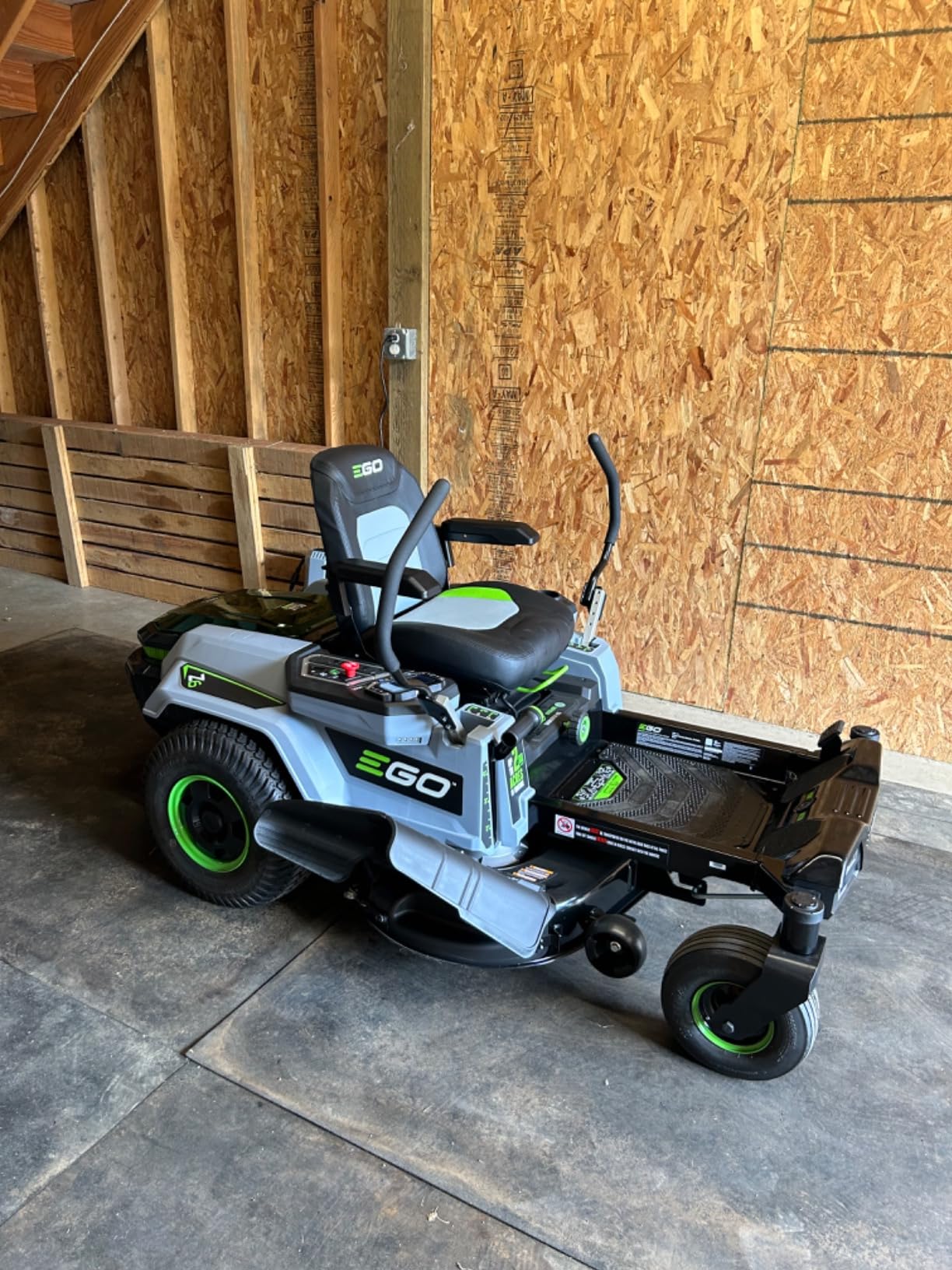
There is no fuel, no oil, no spark plugs, and no exhaust fumes in the garage. That removes an entire maintenance category. You rinse the stamped steel deck, blow out the clippings, and plug it in. The included charger refills the four packs in about two hours, which lines up nicely with an evening charge for the weekend cut.
Cutting performance is adjustable across 10 positions from 1.5 to 4.5 inches, and the same deck mulches, bags, or side discharges. The 3-in-1 setup means you can bag the first spring cut, then switch to mulching once the lawn is growing fast enough to feed itself.
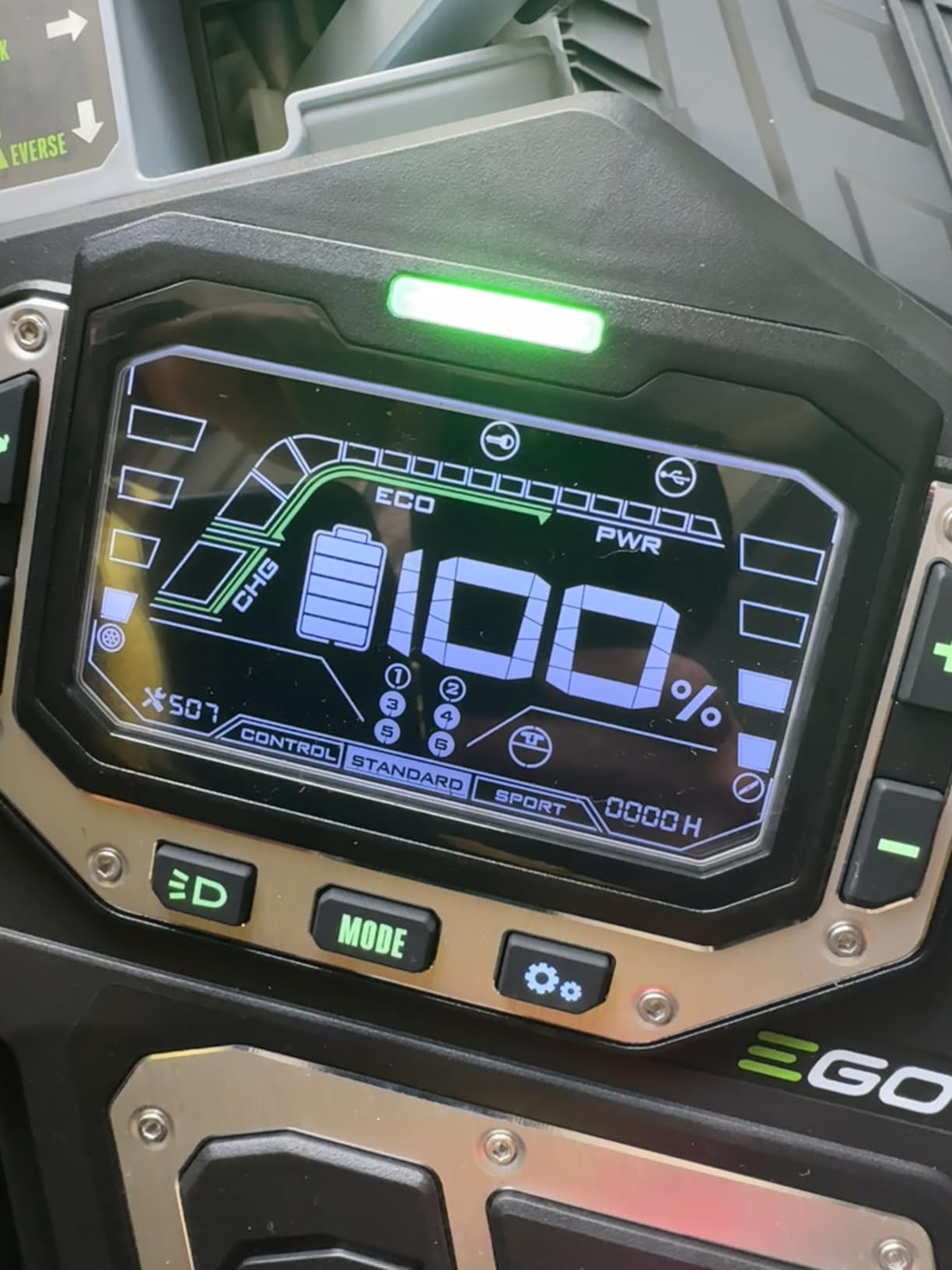
How it handles a 2-acre layout
A 42 inch deck is the width many 2-acre owners settle on, and this one behaves well around beds and trees because the zero-radius steering lets you pivot in place instead of swinging the whole rear end around. Owners running 42 inch setups on 2 to 3 acres in mower forums frequently describe that width as the sweet spot, with larger decks called more than the property needs.
The compromise is hills. A 42 inch deck overlaps more on uneven ground than a 48 or 52 inch deck does, and owners switching up from a 42 inch model often cite visible strip marks running up and down slopes. If your property rolls more than a gentle grade, look at the wider deck or the suspension-equipped model in section 3.
Where it falls short
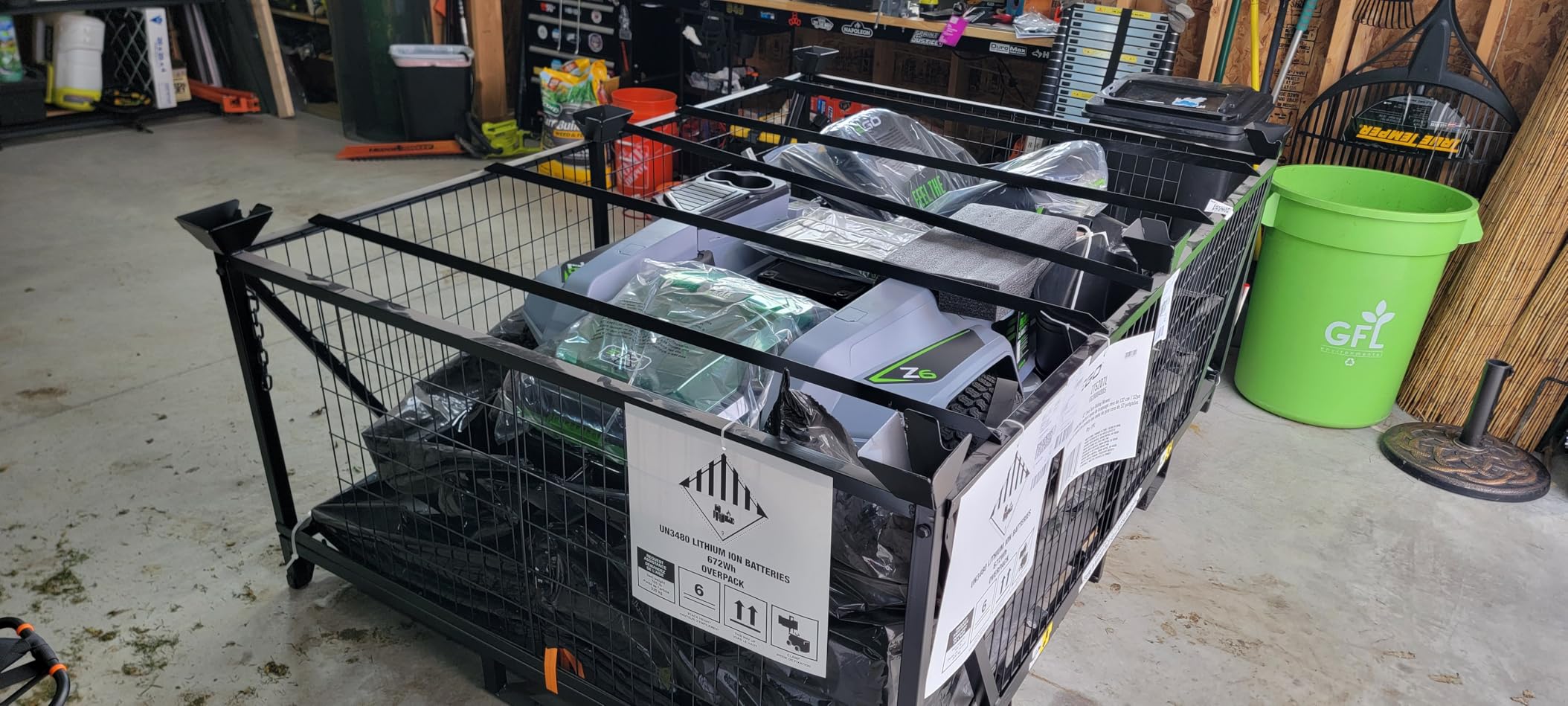
Assembly is the unfun part. The unit arrives in a steel crate weighing about 850 pounds, so you need two people and a plan before the box reaches your driveway. Once it is free and rolling, the batteries are the easiest part of ownership in this entire roundup.
Two smaller gripes: the deck height reference numbers sit low on the console and are tough to read without leaning forward, and a small number of owners report firmware or fit-and-finish issues that needed a service center visit. Neither is a dealbreaker on a machine with this much owner feedback behind it.
2. EGO Power+ Z6 ZT5207L 52-Inch – Best for Open Yards
EGO Power+ Electric Riding Lawn Mower, 52″ Deck with Zero Turn Radius, Includes (6) 56V 12.0Ah Batteries and Charger – ZT5207L
52 inch deck
Up to 4 acres per charge
25 HP equivalent
527 pounds
Pros
- Cuts up to 4 acres per charge with six 12.0Ah batteries
- 25 HP equivalent power with Sport mode to 8 MPH
- 52 inch deck shortens the mow on straight open runs
- Deck wash port plus a phone charging port on the console
- EGO app handles firmware updates over the air
Cons
- Deck overhangs a chassis built around the 42 inch platform
- Heavy crate with 20 plus bolts and a disposal problem
- Some owners report spring grass clogging the deck
- Occasional frame machining quality control complaints
Where the 42 inch machine covers your acreage exactly, the ZT5207L covers it twice over. EGO rates it at cutting up to 4 acres on a single charge with six 56V 12.0Ah batteries, which means a 2-acre owner is mowing with a large reserve, or mowing half the property and charging while you walk inside.
The 52 inch deck is the reason to choose it. Wider cuts mean fewer passes, and fewer passes mean less time spent overlapping on uneven ground, which is exactly the striping problem that 42 inch owners complain about on hills. If your 2 acres includes a long open front field with a fence line at the far end, this is the machine that finishes that field fastest.
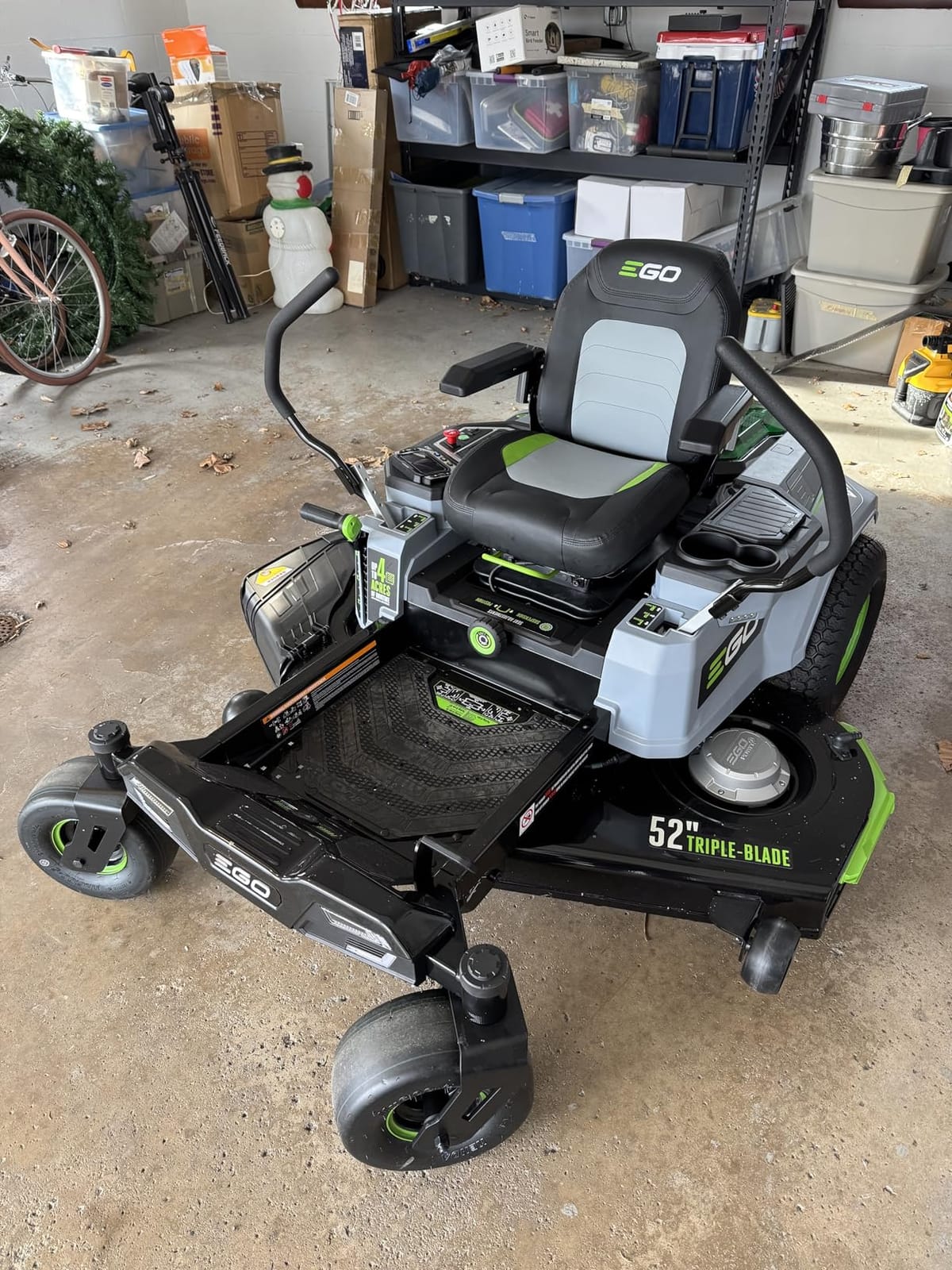
Power is rated at a 25 HP gas equivalent and top speed is 8 MPH in Sport mode. That sits below the Greenworks motor figure covered in section 5, but the 52 inch deck is the narrower of the two wide options, which makes it easier to maneuver and easier to fit through a standard residential gate. The drive modes carry over from the 42 inch platform, so the transition between them is familiar if you have driven the smaller deck.
Comfort and convenience details are a step up on this chassis. There is a deck wash port for rinsing clippings after wet spring mows, a phone charging port on the console, and EGO app integration that pushes firmware updates rather than requiring a dealer visit.
When the extra width pays off and when it does not
The 52 inch deck needs room to work. Around clustered trees, tight beds, and narrow gates, a wider deck means more maneuvering and more time than the width saves. Owners who moved up from a 48 inch to a 52 inch zero-turn report cutting their mowing time roughly in half, but that gain comes almost entirely from open, straight ground.
There is also a fit question. Measure the gate before ordering, and check the width of your storage doorway. Wide-deck zero-turns are a common reason buyers in the 2-acre range end up back on a 42 inch deck, because the deck overhang alone can exceed the opening they have to get through.
Where it falls short
The most repeated complaint is chassis geometry. Some owners note that the deck overhangs a frame built around the 42 inch configuration, which shows up as extra weight on the front axle in soft ground. Spring grass clogging is the second most common report, particularly when the blade speed is not adjusted for wet conditions.
Uncrating is harder here than on the 42, with a metal cage carrying more than 20 bolts and a disposal problem once you are done with it. If the front of your property is soft or your route is narrow, weigh those two points against the time savings.
3. EGO Power+ Z6 ZT4214L 42-Inch – Best for Hilly Yards
EGO Power+ Z6 Zero Turn Electric Riding Lawn Mower, 42″ Deck – ZT4214L
42 inch deck
Wide frame and deck suspension
24 HP equivalent
610 pounds
Pros
- Wide frame design and deck suspension help it hold balance on slopes
- 24 HP equivalent from up to six 56V ARC Lithium batteries
- Color digital screen shows speed mode blade speed and battery status
- Adjustable blade speed from 2300 to 3200 RPM
- Five year warranty on mower battery and charger
Cons
- Six 6.0Ah batteries cover about 1.5 acres per charge
- Newer model with a shorter owner review history
- Smaller battery packs mean extra charge time on a 2-acre yard
This is the one to look at if your 2 acres is not flat. EGO calls out a wide frame design for balance on slopes and adds a deck suspension system that keeps the cut quiet and even as the ground moves under the machine. That is the direct answer to the striping complaints that come with narrower decks on rolling property.
Its 4.4 stars is the strongest owner rating of any battery platform in this roundup, though the review count of 23 is much shorter than the 42 inch ZT4204L. The power figure sits at a 24 HP gas equivalent from up to six 56V ARC Lithium batteries, and top speed is 8 MPH with the same three drive modes.
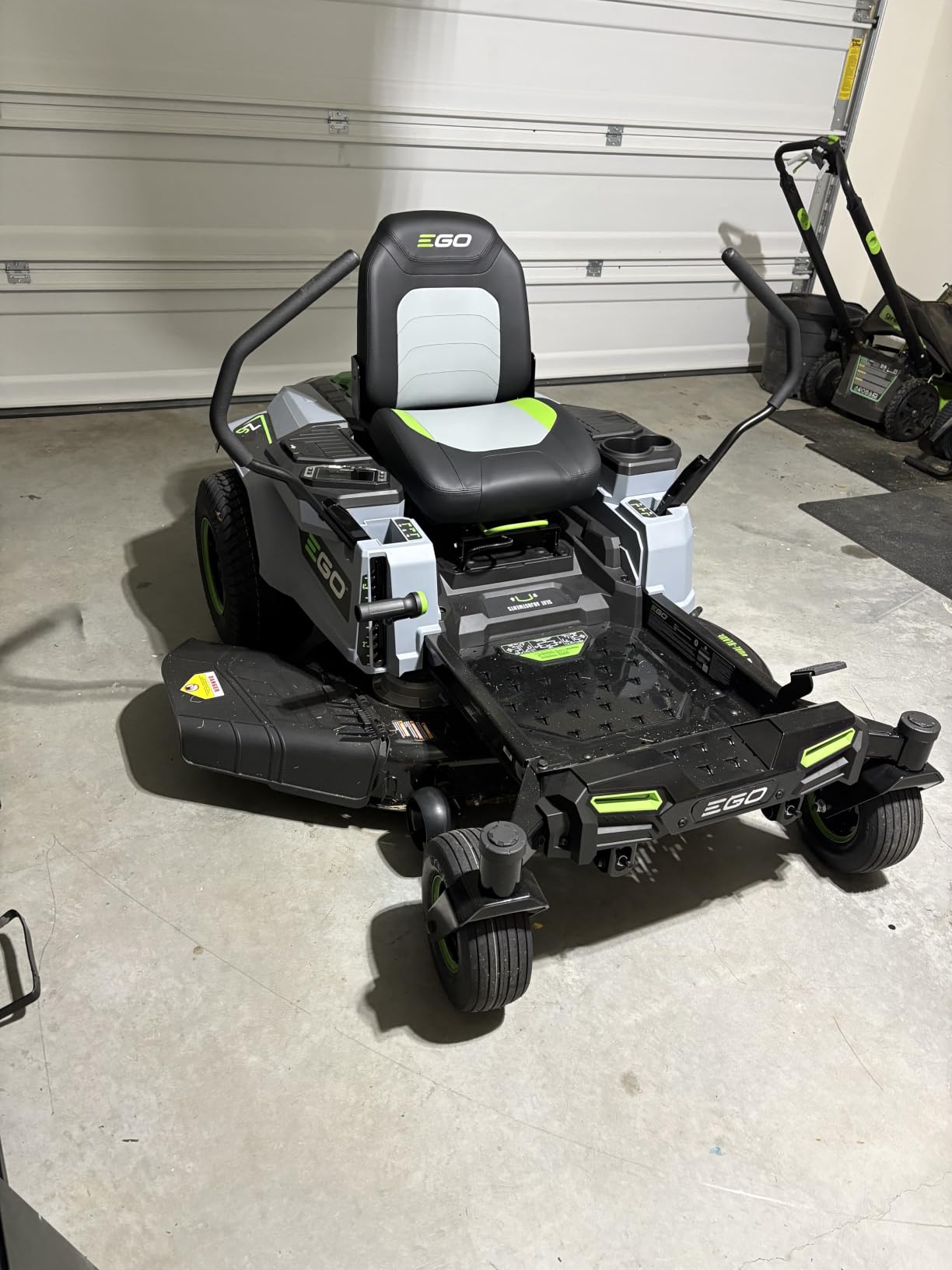
Two details stand out for daily use. Blade speed is adjustable from 2300 to 3200 RPM, so you can back it off when the grass is wet and push it up when the lawn is thick, and the warranty runs five years on the mower, battery, and charger with the battery portion tied to registration. That coverage matters most for a first-time owner who would rather not budget for a major repair in year three.
Why slope handling matters at 2 acres
Hills change the math on a property this size. On an incline the deck overlaps unevenly, so a narrow deck leaves visible stripes running up and down the slope, and the drive wheels can lose grip on wet grass, particularly on the trailing wheel during a turn. A wider frame and a suspended deck reduce the first problem; they do not fix the second.
Keep the speed down on slopes, mow across the face of a hill rather than straight up it, and avoid steering with a single lever forward. Mower forums repeat this advice constantly, and it applies to every machine in this roundup including the gas one.
Where it falls short
The battery pack is the limitation. Six 6.0Ah batteries are rated at cutting up to 1.5 acres per charge, which is short of a 2-acre property. You will either top up mid-mow or accept a slightly slower pace to stay inside the charge, and that is the trade for the chassis and warranty improvements.
With 23 reviews, long term durability data is thinner than the other two EGO machines here. The owner feedback so far is strongly positive, but you are buying less history with this one.
4. Ariens Zenith 60-Inch – Best for Gas Power and Open Ground
Ariens Zenith 60 (60″) 23.5HP Kawasaki Zero Turn Lawn Mower
60 inch fabricated deck
23.5 HP Kawasaki V-Twin
Hydrostatic transmission
930 pounds
Pros
- 23.5 HP Kawasaki FX730 V-Twin engine with plenty of reserve
- 60 inch commercial grade fabricated steel deck
- Hydrostatic transmission gives smooth speed control
- Gas platform means no charging downtime mid-mow
Cons
- Only three cutting height positions on this deck
- 930 pound machine is heavy to maneuver and store
- Just two customer reviews so the rating is thin
- Gas upkeep means oil changes plugs and filters
The Zenith 60 is the gas answer, and the engine is the reason to want one. A 23.5 HP Kawasaki FX730 V-Twin gives you the kind of reserve that electric platforms cannot match when the grass is a month past mowing and still wet from morning dew. Kawasaki FX and FR691V engines are the most frequently named reliability picks across owner forums, and this is that engine in a mower.
The 60 inch deck is a commercial grade fabricated steel unit, one of only two machines here built on fabricated plate rather than stamped steel. Fabricated decks are welded and plate-steel rather than stamped in one pressing, and owners consistently treat that difference as the durability divide between a mower that lasts and a mower that warps.
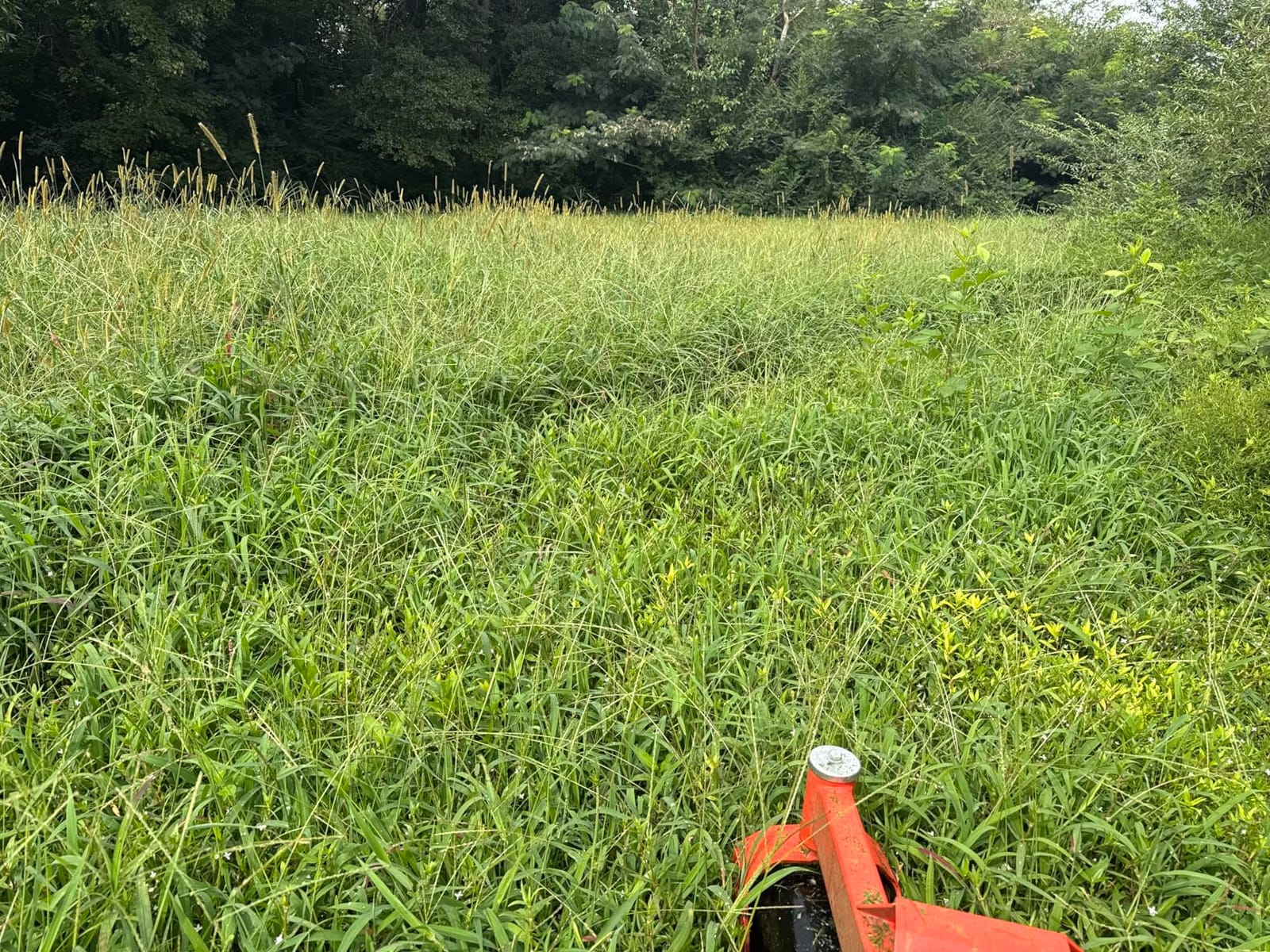
Hydrostatic transmission gives smooth, continuous speed control without shifting, which is the mechanical equivalent of the electric drive modes and the reason a zero-turn feels precise around obstacles.
Its 5.0 star rating comes from just two reviews, so treat it as a data point rather than a consensus. What is not in doubt is the hardware: a V-Twin, a fabricated deck, and a hydrostatic drivetrain are the parts that decide how a gas zero-turn ages.
Whether a 60 inch deck fits 2 acres
For straight, open property, a 60 inch deck has the fewest passes of anything here, and fabricated construction shrugs off the stick strikes and root hits that snap deck belts on thinner decks. It is a real advantage if your acreage is mostly uninterrupted.
For a 2-acre yard with trees, beds, and a gate, it is often too much machine. Owners with 2 to 3 acres repeatedly describe 60 inches as commercial overkill, and the maneuvering penalty in tight spaces eats the time the width saved. At 930 pounds, storage and trailer capacity also become real constraints.
Where it falls short
Cutting height adjustment on this deck has only three positions, which is thin for a mower this wide. Fine-tuning a cut across a slope usually needs more range than that, and it is the spec most owners notice first when moving up from a home-center machine with a multi-position lever.
Ownership means gas maintenance: oil, spark plugs, air filter, and fuel stabilization if it sits over winter. Budget for that time even though the machine itself is straightforward.
5. Greenworks 60V 54-Inch MaximusZ – Best Wide-Deck Electric
Greenworks 60V 54″ MaximusZ Zero Turn Mower, (2)20Ah+(4)8Ah Batts + Fast Chgr
54 inch 10-gauge deck
Up to 3.5 acres per charge
31 HP equivalent
1091 pounds
Pros
- 31 HP equivalent brushless motor system
- 10-gauge fabricated steel 54 inch deck
- Cuts up to 3.5 acres on two 20.0Ah and four 8.0Ah batteries
- 13 cutting height positions from 1.5 to 4.5 inches
- 300 pound towing capacity with front and rear hitch mounts
Cons
- No customer reviews yet so long term reliability is unproven
- 1091 pound unit is the heaviest in this group
- Six battery packs with mixed capacities complicate rotation
- Greenworks has a shorter riding mower track record than EGO
On paper this is the most capable electric zero-turn in the group. Greenworks rates the motor system at a 31 HP gas equivalent, and it is the only electric model here paired with a 10-gauge fabricated steel deck, the same construction category as the Ariens gas machine rather than the stamped decks used on the other battery platforms.
Three brushless hub motors hold a constant 17900 FPM blade speed under SmartCut technology, which means the cut stays steady in taller grass instead of bogging down as clippings load up. Six batteries, two 20.0Ah suitcase packs and four 8.0Ah packs, total up to 3.5 acres of runtime, which covers a 2-acre property with plenty of margin.
The feature list is long for a homeowner machine: 13 cutting height positions, 4-in-1 deck that mulches, bags, and discharges to the rear or side, dual LED headlights, an LCD display, a suspension seat with lumbar support and foldable armrests, and a 4-year warranty.
Who this mower suits
A 2-acre owner with long open runs, tall grass, and a preference for a thick deck over a well-reviewed one. The 54 inch width is the widest of the battery models listed here, so the same rule applies: it pays off in straight lines and costs you maneuvering room everywhere else.
The 300 pound towing capacity and hitch mounts are the sleeper detail. If you already own a small trailer, that turns the mower into a yard maintenance rig rather than a single-purpose machine.
Where it falls short
There are no customer reviews, so every reliability claim above comes from the manufacturer rather than from owners. That is a meaningful gap on a 1091 pound machine with a complicated power system, and it is the main reason this mower sits lower in the ranking than its specifications would suggest.
Rotating two 20.0Ah suitcase batteries and four 8.0Ah packs is more to manage than four matching packs, and the 1091 pound weight is the highest here by a wide margin. Measure your storage opening and trailer capacity before committing.
6. PRORUN 60V 42-Inch – the Lightest Option for Small Storage Spaces
PRORUN 60V Zero Turn Riding Lawn Mower
42 inch stamped steel deck
Up to 2 acres or 70 minutes
20 HP equivalent
374 pounds
Pros
- Lightest zero turn in this group at 374 pounds
- 20 HP equivalent from four brushless motors
- Runs up to 2 acres or 70 minutes on three 10.0Ah batteries
- Six battery ports accept every PRORUN 60V size with auto switchover
- Mulch kit and towing kit are included in the box
Cons
- Lowest rated model here at 2.7 stars
- Only five reviews leave very little real world data
- 14-gauge stamped steel deck is thinner than a fabricated deck
- Seven cutting height positions is the second fewest here
The PRORUN is the outlier in this roundup, and the only one I would call a conditional recommendation. At 374 pounds it is by far the lightest zero-turn here, well under half the weight of either wide-deck gas or electric model, which matters if you have a small storage shed, a low trailer bed, or a path to your mower that involves steps.
Underneath, it is a straightforward machine. Four brushless motors are rated at a 20 HP gas equivalent, the 42 inch twin-blade deck is 14-gauge stamped steel with a washout port, and three 10.0Ah batteries give up to 2 acres or 70 minutes of runtime. Six battery ports accept every 60V pack size with automatic switchover, which is more flexible than a fixed battery bay.
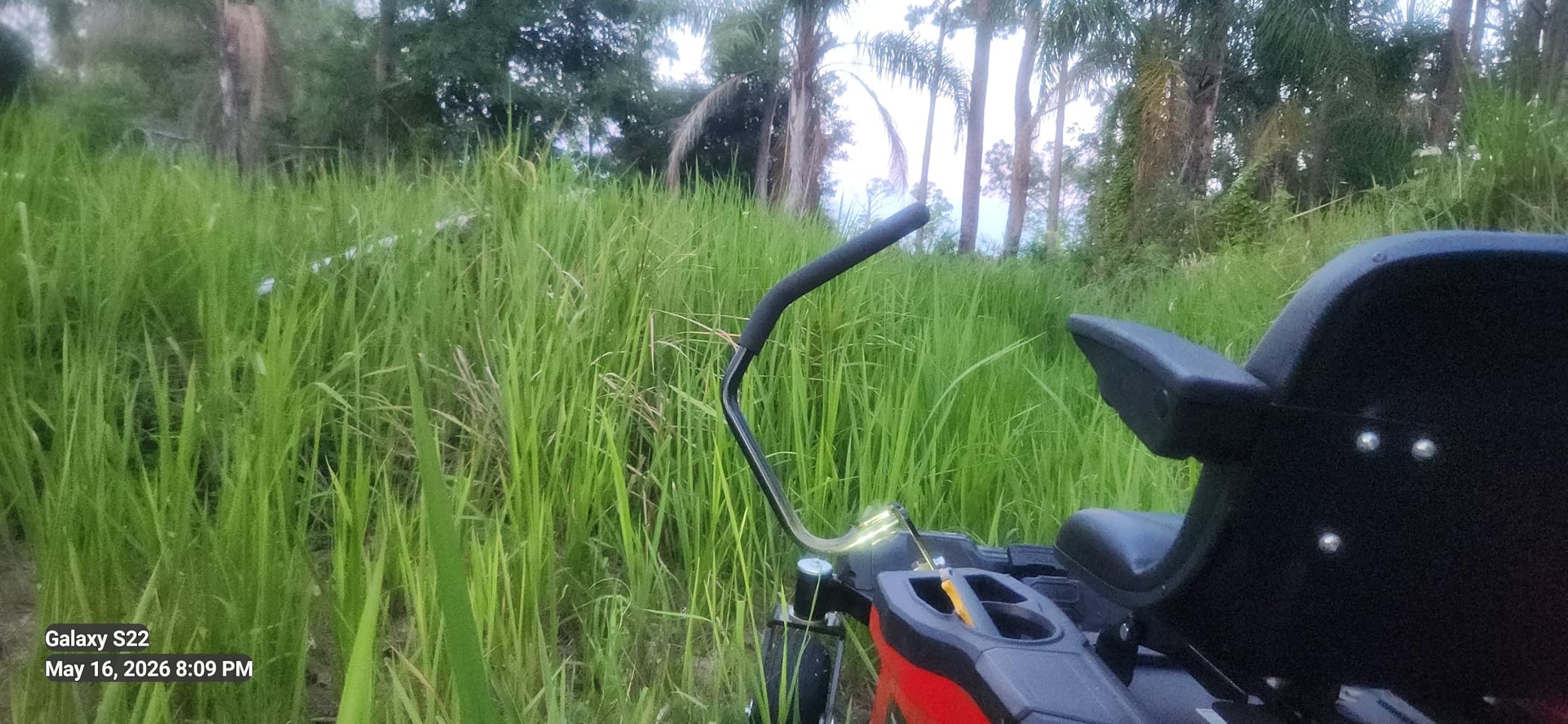
The box also includes a mulch kit and a towing kit, and the warranty is 3-year residential, 2-year commercial.
What you gain and what you give up
The gain is weight and simplicity of storage. If your main constraint is getting a mower through a narrow opening or lifting it over a lip, this is the machine that addresses that most directly.
What you give up is deck thickness and control resolution. A 14-gauge stamped deck is thinner plate than any fabricated deck here, and owners of budget zero-turns most often report cracks forming around the deck belt and pulley mounts over time. Seven cutting height positions across a 1 to 4 inch range is only one step up from the gas Zenith and is still the narrowest adjustment range in this group, which limits how precisely you can set a cut on a slope.
Where it falls short
At 2.7 stars from five reviews, the sample is too small to draw a firm conclusion, and that is exactly the problem. A rating that low with that little feedback usually reflects early build issues rather than a settled reputation, but I would not want you to be the test case on a purchase this size.
My advice is to treat this one as a storage-constrained fallback. If weight is not a problem for you, any of the other five is a safer bet on documented owner experience.
How to Choose a Zero-Turn for 2 Acres
Deck size is the first decision and everything else follows from it. The coverage math is straightforward: a 42 inch deck working at a realistic ground speed covers roughly half an acre every 15 to 18 minutes once you allow for turning and overlaps. A 52 inch deck cuts that by about a fifth, not by half, so the time savings are real but rarely the reason a purchase succeeds.
Engine or battery voltage is the second decision. Gas V-twins in the 20 to 24 HP range, particularly Kawasaki FX and FR691V units, are the most frequently named reliability picks in owner discussions. Battery platforms are rated in HP equivalent, which is not directly comparable, so judge them on acres per charge and speed modes instead.
Fabricated versus stamped deck is the third, and owners treat this as the durability dividing line. A fabricated deck is welded from plate steel and tolerates stick strikes and root hits. A stamped deck is pressed from thinner steel and is more likely to crack or warp around the belt mounts over a decade of use.
Controls matter more than buyers expect. Lap bars mean an adjustment period, and the most repeated piece of advice in mower forums is to practice in the driveway before touching grass. Three driving modes on a battery machine make that learning period shorter because the top speed is capped until you ask for more.
Access is where 2-acre owners get caught. Measure the narrowest gate, the storage doorway, and the trailer capacity before ordering. A 54 or 60 inch deck overhang will not clear many residential side gates, and a 930 to 1091 pound machine needs a trailer rated for it. If you are working out the math for a bigger property instead, our zero-turn mower guide for large properties walks through the same steps at a larger scale.
First-season maintenance on a battery zero-turn is short: keep the deck clean, confirm blade height positions, and check tire pressure. On a gas machine, add an oil change, a spark plug check, and an air filter clean, plus fuel stabilizer if it sits through winter.
Gas vs Electric for 2 Acres
For a flat 2-acre yard, the electric platforms in this roundup are the stronger daily choice. They start instantly, run quietly enough for early morning work, and need no fuel or oil service. The catch is capacity: the runtime figures range from 1.5 acres on the ZT4214L to 4 acres on the 52 inch ZT5207L, so most of these machines cover a full 2-acre mow in one pass but not all of them do.
Gas wins when grass is tall, wet, or neglected. A 23.5 HP Kawasaki V-Twin pushes through a month of growth without bogging, and there is no recharge to plan around. The costs are noise, exhaust, and a maintenance schedule that electric removes entirely.
A five year view favors electric for a typical 2-acre property: fuel and oil for a gas machine add up every season, while battery packs on these platforms are warrantied for three to five years. Gas comes out ahead only if you routinely mow in conditions that drain a battery pack quickly.
Zero-Turn vs Riding Mower for 2 Acres
A conventional riding mower handles 2 acres. It is cheaper to store and simpler to learn, but it steers with a wheel, so it cannot pivot in place. Around trees, beds, and narrow paths you end up doing a lot of three-point turns, and that maneuvering time is the main reason mowing feels slower than the deck width suggests.
A zero-turn trades that for a learning curve on the lap bars. In exchange you get a zero-radius turn, better traction control on slopes, and a measurable cut in mowing time. Owners in mower forums upgrading from a wide-deck rider to a zero-turn frequently report cutting their mowing time roughly in half, which is the clearest practical argument for the switch at 2 acres.
Skip the zero-turn if your property is under half an acre, if storage is genuinely tight, or if you will not use the lap bars. Otherwise, 2 acres is the size where the upgrade pays for itself in saved weekends.
Zero-Turn Brands and Models to Watch Out For
Owners on mower forums consistently name the same failure modes, and it is worth knowing them before you buy rather than after:
Deck belts on stamped decks: striking a stick or branch is the number one reported cause of belt failure. Fabricated decks and blades kept clear of debris are the mitigation.
Hydro pump wear on high-hour machines: if you buy used, a slow or unresponsive steering lever is a hydro symptom, not a control problem.
Damage in transit and missing parts: big-box zero-turns arrive heavy and crated, and damage to levers, decks, or hardware is a repeated complaint. Inspect everything before the first cut.
Dealer-only service routing: a small part on a machine serviced exclusively through a dealer can mean weeks of downtime. This matters most for gas brands with thin online parts channels.
Wide decks in tight layouts: 52 inches and up is frequently oversold to 2-acre owners who then find the mower awkward around beds and gates.
For a used zero-turn, check the meter hours and ask for a documented service history. Documented maintenance beats low hours, and a machine with a hydro leak or a cracked deck mount is usually better walked away from than repaired.
Frequently Asked Questions
What size zero-turn mower do I need for 2 acres?
A 42 to 54 inch cutting deck covers a 2-acre yard well. A 42 inch model finishes the property in roughly 55 to 70 minutes and handles tight layouts, trees, and narrow gates. A 48 to 52 inch deck cuts that to about 45 to 55 minutes and smooths out uneven cuts on hills. Anything wider is usually more machine than a 2-acre property needs.
How long does it take to mow 2 acres with a 42 inch deck?
Plan on 55 to 70 minutes for a 42 inch deck at a working ground speed, assuming dry ground and a reasonably open layout. Obstacles, slopes, and overlaps add time, and tall or wet grass can stretch that further. A 52 inch deck on the same property usually lands closer to 45 to 55 minutes.
What is the best deck size for a zero-turn mower?
Match the deck to the layout rather than to the acreage number alone. Choose 42 inches for many obstacles, narrow gates, or storage limits. Choose 48 to 52 inches for open ground or rolling terrain where overlapping causes visible striping. Go wider only when you have clear straight runs and confirmed gate and storage clearance.
Are electric zero-turn mowers powerful enough for 2 acres?
Yes, for most 2-acre yards. The battery platforms in this roundup are rated from 1.5 up to 4 acres per charge, and several cover a full 2-acre mow in a single pass. The limits are tall wet grass and steep slopes, where a gas V-Twin has more reserve. Check the acres-per-charge figure against your property size before you order.
What is the most reliable zero-turn mower brand?
Owners most often point to the engine rather than the badge. Kawasaki FX and FR691V V-twins, Briggs and Stratton Vanguard, and Kohler Command Pro are the engines named most often as dependable. On the electric side, EGO has the deepest owner feedback and the longest warranty of the platforms reviewed here.
Can a zero-turn mower handle hills?
Yes, within limits. Keep your speed down, mow across the face of a slope rather than straight up it, and avoid turning with a single drive lever pushed forward. Lap-bar machines can lose traction on wet grass, so avoid mowing slopes that are damp. A wide frame and deck suspension help with balance but do not replace careful technique.
The Bottom Line for 2 Acres
For most 2-acre yards, the EGO Power+ Z6 ZT4204L is the best zero turn mower for 2 acres because it covers the whole property on one charge, has the deepest owner feedback of any machine here, and needs no fuel service. Pick the 52 inch ZT5207L if your property is open and you want a smoother cut across hills, and pick the ZT4214L if slope stability matters more than mowing the full property in a single pass.
Buy the Ariens Zenith 60 if you want a Kawasaki V-Twin and a fabricated deck and have the storage and trailer capacity for a 930 pound gas machine. Look at the Greenworks MaximusZ for its fabricated 54 inch electric deck, but treat it as a spec-driven choice with little owner history behind it.
Whatever you order, measure the gate first, practice the lap bars in the driveway, and keep the deck clean. Those three habits do more for a zero-turn mower over ten years than any spec on the list.