
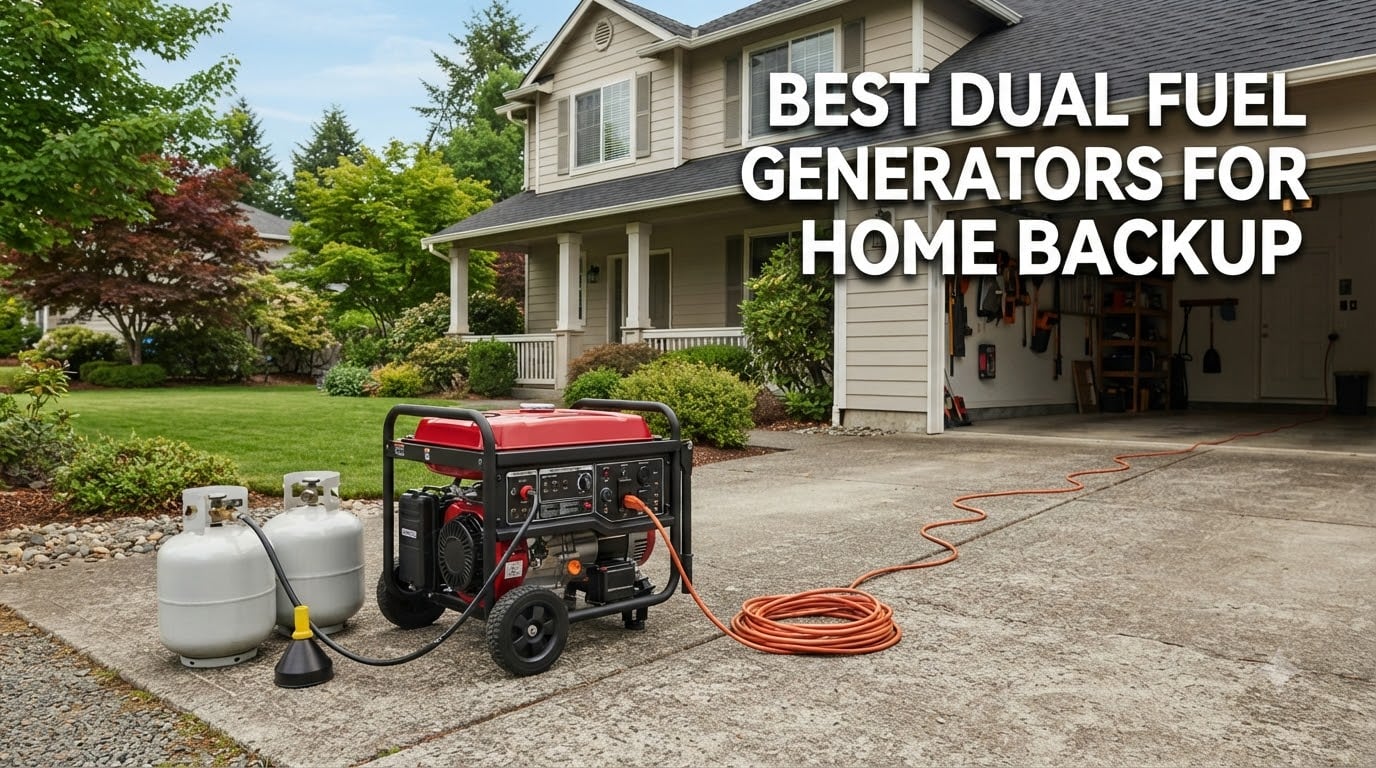
A dual fuel generator burns either gasoline or propane, and a selector dial switches between them without draining the carburetor. That flexibility matters during a real outage because gasoline stations empty out within hours while propane keeps for years, so you always have a workable fuel source. The best dual fuel generators for home backup cover three wattage tiers, from a 3,800-watt inverter for essential circuits up to a 13,000-watt open frame unit that can carry a whole house through a transfer switch.
We spent weeks working through eight of the strongest dual fuel units on the market, reading the spec sheets against the complaint patterns that show up in buyer reviews. The list deliberately spans three size classes, because a household keeping a refrigerator and a furnace blower alive needs a completely different machine than one trying to run central air, a well pump and a water heater at the same time.
Two ideas drive most of the recommendations below. First, output on propane is slightly lower than on gasoline on every dual fuel engine, so a unit sized only for its propane rating will disappoint you. Second, setup friction, not reliability, is what generates most one-star reviews: disconnected battery leads, missing oil and vague manuals are far more common complaints than engine failure.
For more options outside the portable dual fuel category, we cover solar generators for home backup and home standby generators in separate guides, and our broader dual fuel generator roundup covers more units than this one.
Top 3 Picks for Home Backup Right Now in 2026
The three units below are the ones we would put in a garage first. Each one earns its spot for a different reason: raw output, outlet flexibility, or the lowest entry cost in the group.
DuroMax XP12000EH
- 9500 running watts on gas
- 12000 starting watts
- 8.3 gallon tank
- CO sensor and 50A transfer switch outlet

Pulsar G12KBN
- 9500 rated watts on gas and 8550 on LPG
- 8 gallon tank
- seven outlets including a 50A
WEN DF475T
- 3800 running watts on gas
- 3500 on propane
- switchable 120V or 240V
- 11 hour half load runtime
Best Dual Fuel Generators for Home Backup (October 2026)
The table below lists every generator in this roundup with the figures that actually drive the buying decision. Note the running watt gap between gasoline and propane on the four units where the manufacturer publishes both numbers.
| Product | Specs | Action |
|---|---|---|
| DuroMax XP12000EH |
|
Check Latest Price |
| WEN DF475T |
|
Check Latest Price |
 DuroMax XP5500EH DuroMax XP5500EH |
|
Check Latest Price |
| Pulsar G12KBN |
|
Check Latest Price |
 PowerSmart 3800W Inverter PowerSmart 3800W Inverter |
|
Check Latest Price |
 DuroMax XP13000HX DuroMax XP13000HX |
|
Check Latest Price |
 Champion 4000W Dual Fuel Inverter Champion 4000W Dual Fuel Inverter |
|
Check Latest Price |
 Champion 4250W Open Frame Champion 4250W Open Frame |
|
Check Latest Price |
1. DuroMax XP12000EH – Best All-Rounder for Whole-Home Backup
DuroMax XP12000EH 12,000-Watt Dual Fuel Portable Generator – Gas & Propane, Electric Start, Whole Home Backup Power, Transfer Switch Ready, RV & Emergency Ready
9500 running watts on gas
12000 starting watts
8.3 gal tank
224 lb
457cc 4-stroke
Pros
- 9500 running watts covers central air
- well pumps and water heaters
- Transfer switch ready 50A outlet plus MX2 Power Boost for extra 120V current
- All-metal frame and power panel with 100% copper windings
- CO sensor with low oil shutdown and electric start
Cons
- No engine oil in the box so first start needs about 1.5 quarts
- Negative battery lead arrives disconnected and the manual does not say so
- Foam-filled wheels develop a flat spot
Owners consistently treat this machine as a stand-in for an installed standby system, and the numbers back that up. The 457cc four-stroke delivers 9,500 running watts on gasoline and 12,000 starting watts, which is enough headroom for a compressor-heavy load like central air or a well pump.
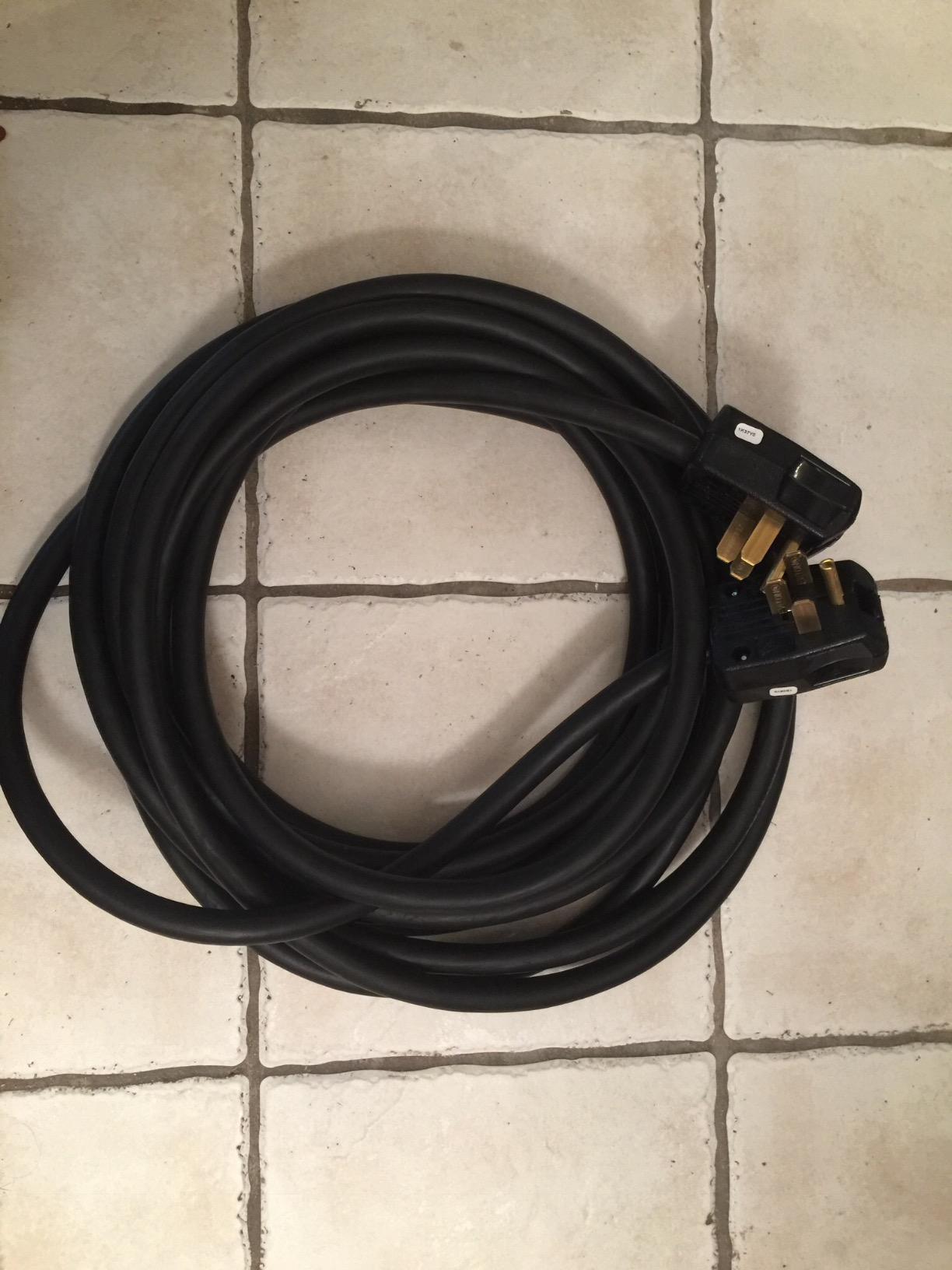
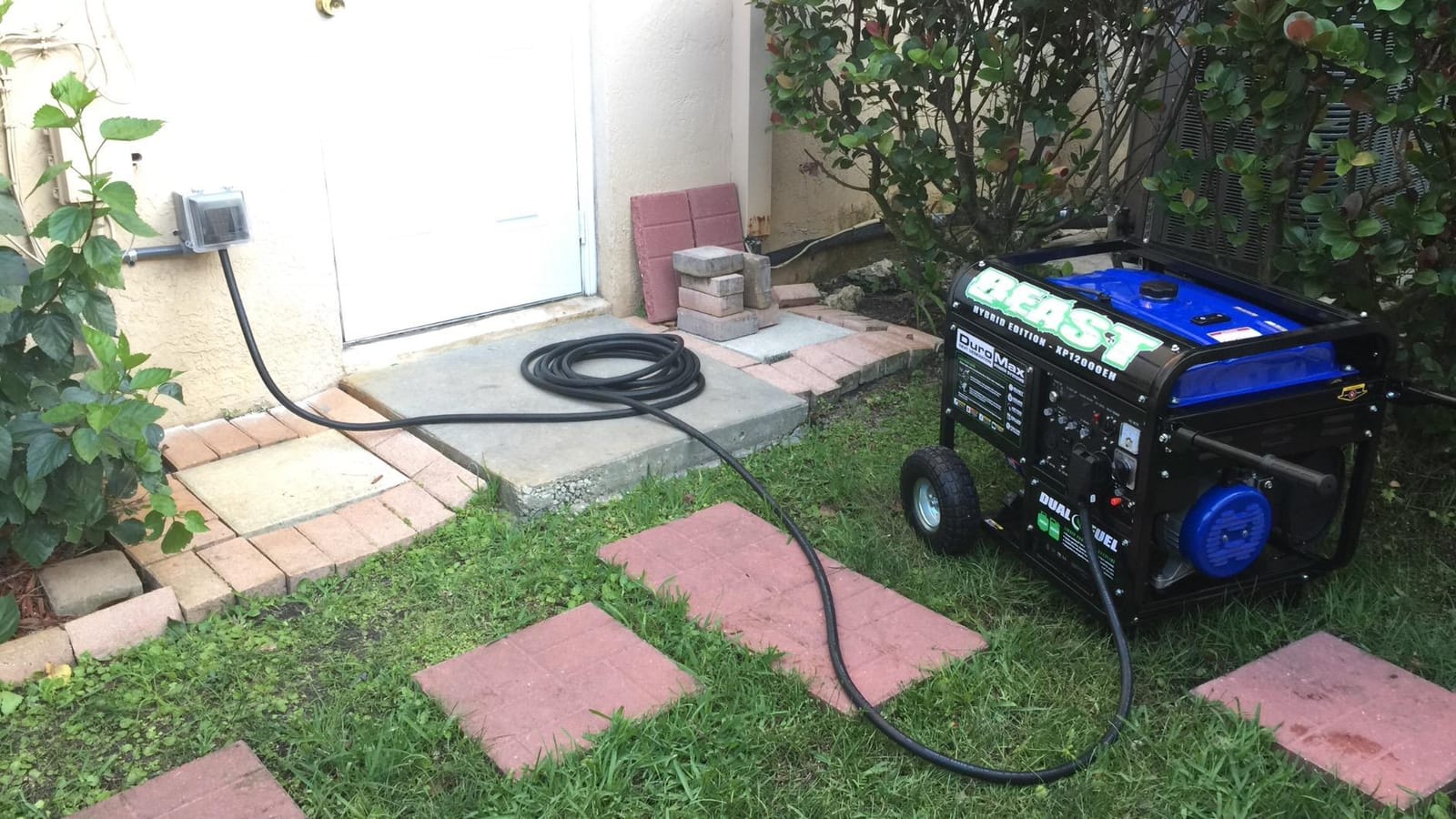
We like the outlet panel for this reason. The 50-amp transfer switch-ready socket means you can wire it into a manual transfer switch without an adapter, and MX2 Power Boost roughly doubles the 120V current available for RVs and household appliances.
The dual fuel switch is the reason to buy it over a gas-only unit of the same size. Because you can move to propane after a few hours without dealing with a gummy carburetor, storage between outages becomes a non-issue and a week-long grid event stops being a fuel problem.
What surprised us most was how little the reviews complain about the engine itself. Setup is where the complaints cluster: oil is not in the box, the negative battery lead arrives disconnected, and the manual is out of date on choke position and the self-priming propane regulator. Budget an hour for the first start.
Two real limits are worth planning around. At 224 pounds this is a two-person move, and the foam-filled factory wheels develop a flat spot that makes the unit bump along a driveway. The 3-year warranty covers parts rather than labor or freight, so check where the nearest service center sits relative to you.
What it handles well and what it does not
It handles homes with several large appliances running at once, provided you are on gasoline for the highest output. Central air, a water heater, a well pump and a refrigerator can all run together without the engine bogging down.
It does not handle sensitive electronics as gracefully as an inverter model. Several owners report a rough power curve that upsets televisions, computers and audio gear, so keep those on a separate circuit if you can.
Small 20-pound propane cylinders can also starve the engine under sustained heavy load. A 40-pound cylinder or larger keeps the pressure steady during a long high-draw period.
Why it sits at the top of our list
It has the highest combination of rating and review volume in this group, with 4.5 stars across nearly 4,000 reviews. More owners means more real outages logged against it, and the failure pattern is setup-related rather than mechanical.
For most households that want to power a meaningful portion of the house rather than a handful of outlets, this is the unit we would buy first.
2. WEN DF475T – Best Value Dual Fuel Generator for Essential Loads
WEN 4,750-Watt 120V/240V Dual Fuel Portable Generator with Wheel Kit and Electric Start (DF475T)
3800 running watts on gas
3500 on propane
4 gal tank
105.8 lb
224cc 4-stroke
Pros
- Switchable 120V and 240V output works with a transfer switch
- 4 gallon tank gives up to 11 hours at half load
- Bundled wheel kit
- LPG hose and oil
- Electric start on a 224cc four-stroke OHV engine
Cons
- Propane output drops to 3500 running watts
- Open frame design is louder than enclosed inverter models
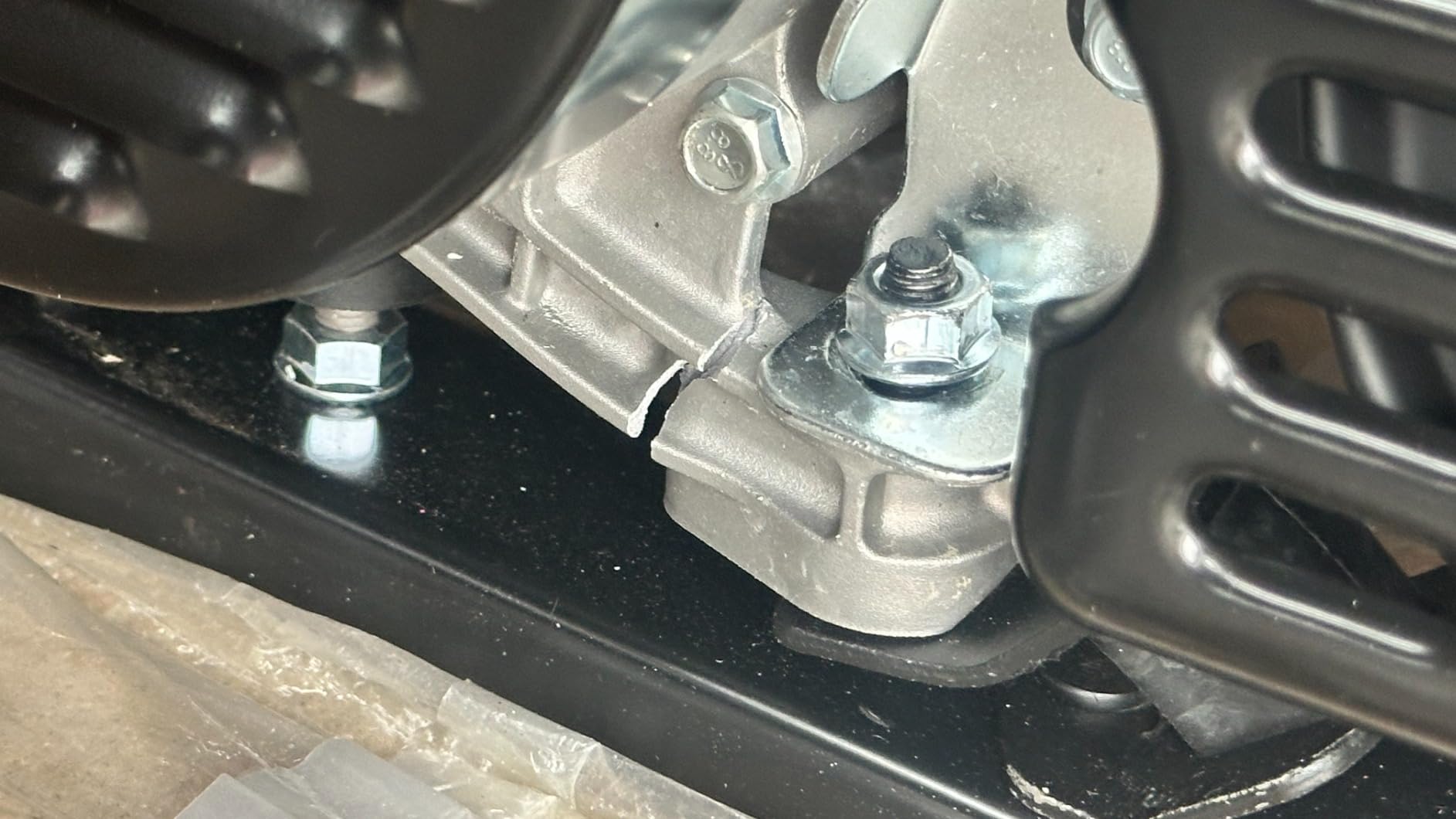
- Manual is terse on setup and fuel switching
This is the lowest-cost way into genuine dual fuel capability, and it is the unit most occasional-outage households should start with. Buyers respond to the electric start and the switchable 120V and 240V output, which lets it feed a transfer switch for essential circuits.
The 224cc four-stroke engine produces 3,800 running watts on gasoline and 3,500 on propane. That is roughly a refrigerator, a furnace blower, several lamp circuits and a router, which is what most people mean by backup power.
Runtime is where this one separates itself from cheaper single-fuel units. The 4-gallon tank delivers up to 11 hours at half load, so a typical evening outage does not require a midnight fuel run.
Reviewers pair it with heavy-duty extension cords and a transfer switch for essential-load backup, and that is the sensible way to deploy it. Keep it well away from the house, run outdoor-rated cords through a transfer switch and treat it as a circuit not a whole-home system.
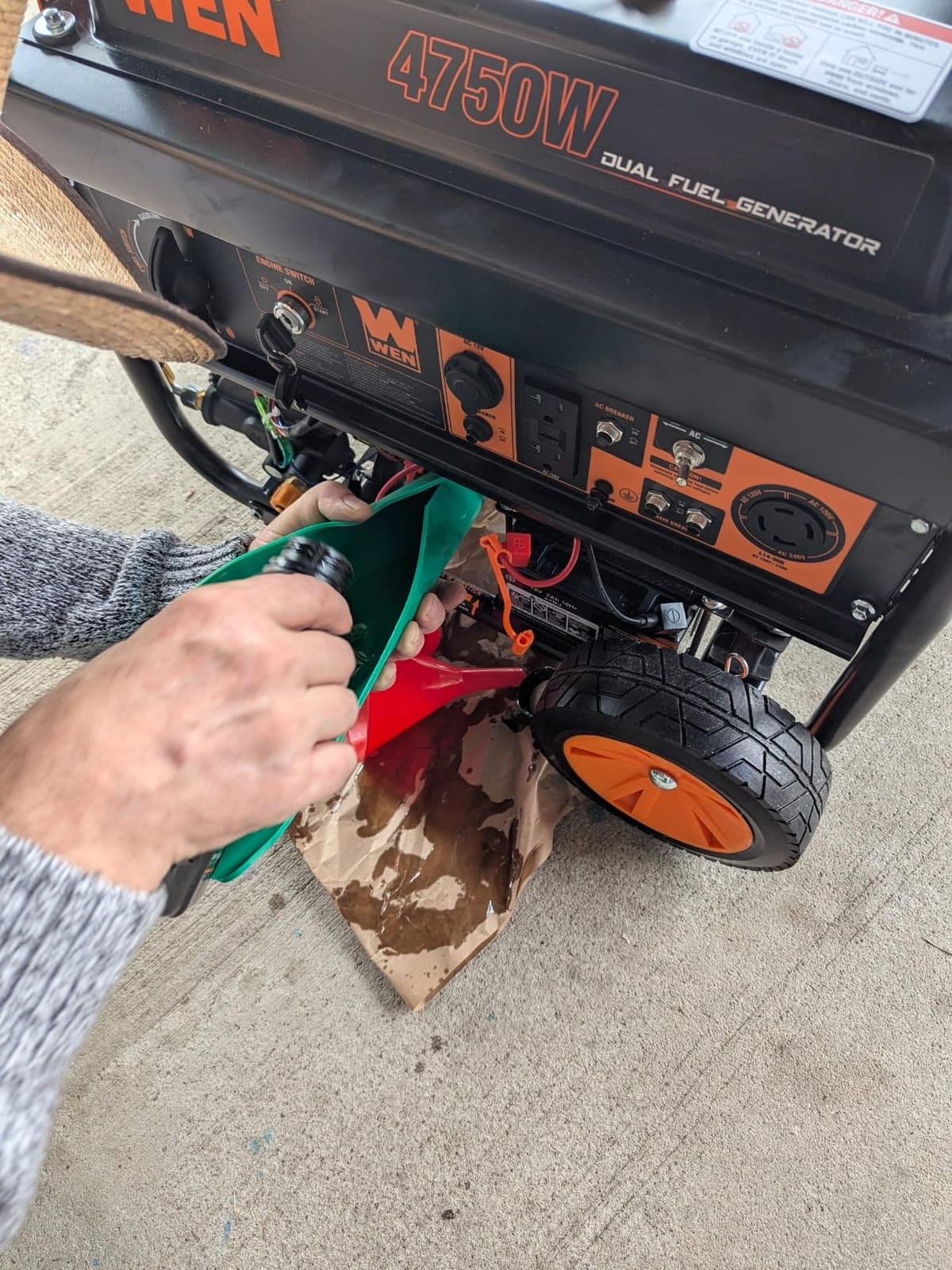
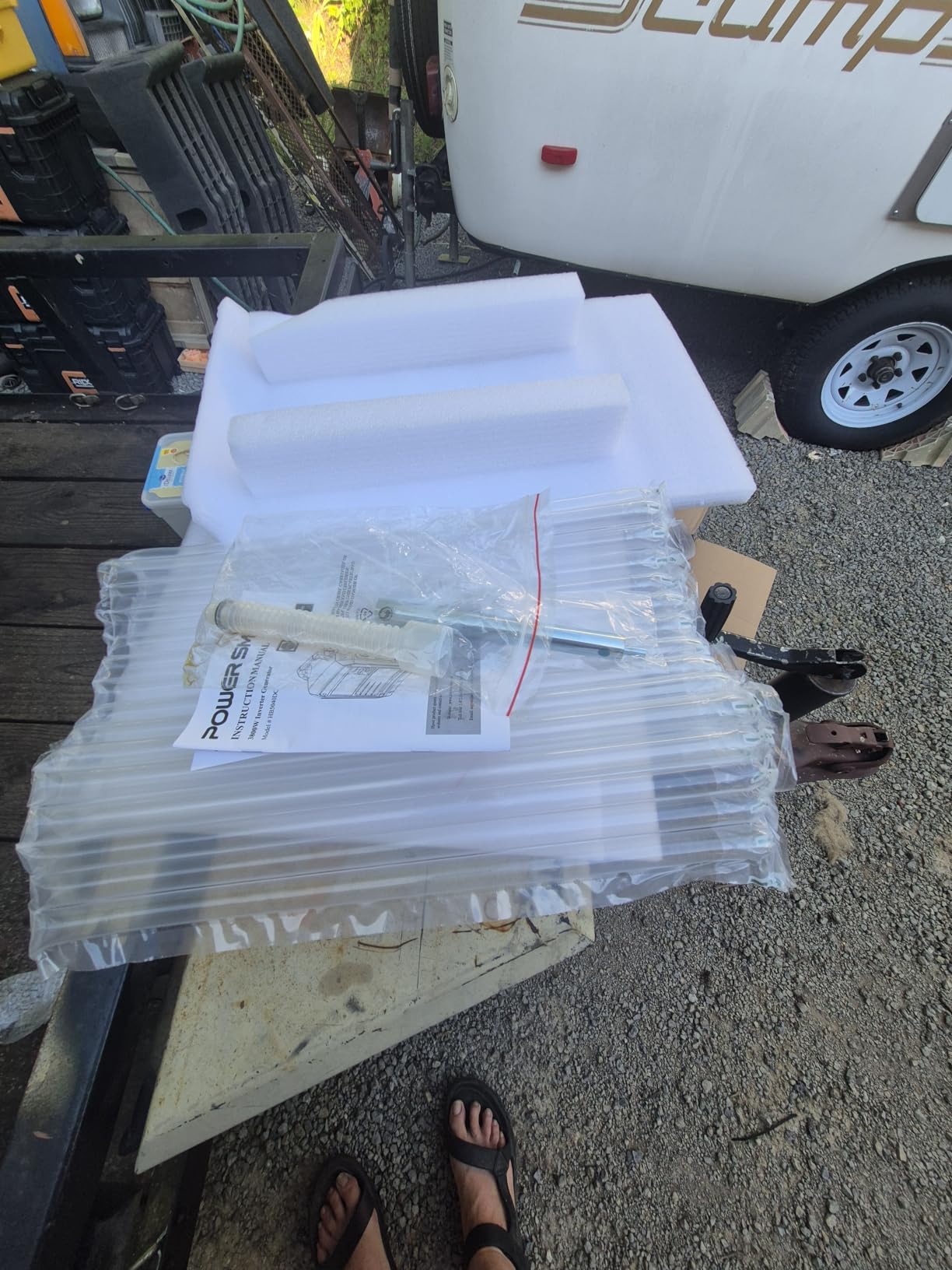
The packaging is generous for the money: wheel and handle kit, a 47-inch LPG connection hose, oil and a 2-year warranty all arrive in the box. Watch the accessories though, because owners report the propane hose and some electrical pieces being easy to miss in the packaging.
When this size is the right one
It is right for apartments, condos, homes that mostly need the refrigerator and furnace blower, and for anyone who wants a machine two people can move without a lift gate. At 105.8 pounds it is the lightest open-frame unit here.
It is also the sensible first dual fuel purchase for a household in a region with occasional multi-hour outages rather than week-long grid failures.
Where you will feel the limits
Propane mode costs you 300 watts of running output, which is the trade every dual fuel engine makes. Size your circuits on the propane figure if propane is your primary outage fuel.
The open frame leaves the engine exposed, so it runs louder than a fully enclosed inverter and cannot be operated in rain. Sensitive electronics will also see a rougher waveform than an inverter unit delivers.
3. DuroMax XP5500EH – Best Mid-Size Dual Fuel for Medium Loads
DuroMax XP5500EH 5,500-Watt Dual Fuel Portable Generator – Gas & Propane, Electric Start, RV & Emergency Ready
4500 running watts
5500 starting watts
3.96 gal tank
124 lb
224cc OHV
Pros
- 5500 starting and 4500 running watts handle portable air conditioning
- MX2 technology runs 120V and 240V together or at full 120V power
- Electric start with included battery and key
- Owners report units still running after three years of weekly use
Cons
- Battery negative lead arrives disconnected so electric start fails first
- Wheel
- handle and foot assembly takes 30 to 45 minutes
- Solid-fill tires flatten on the resting side
This is the middle of the lineup and the pick we recommend for a home that needs more than essentials but not a full whole-home system. Buyers who do the wattage math find it surprisingly capable, powering portable air conditioners alongside multiple refrigerators without bogging down.
The 224cc OHV DuroMax engine makes 5,500 starting watts and 4,500 running watts, and MX2 technology lets you run 120V and 240V together or push the full output to 120V. That flexibility is genuinely useful for RV use and for reaching a transfer switch.
Reliability is the standout theme in the reviews. Multiple owners report units that started instantly after long storage and thousands of hours, which is exactly the behavior you want from a machine that sits idle for months between emergencies.
Runtime is split by fuel: about 9 hours on gasoline and 8 hours on propane at half load from the 3.96-gallon tank. Dual fuel selection lets you leave it on propane through storage seasons without fuel stabilizer and without a carburetor problem in spring.
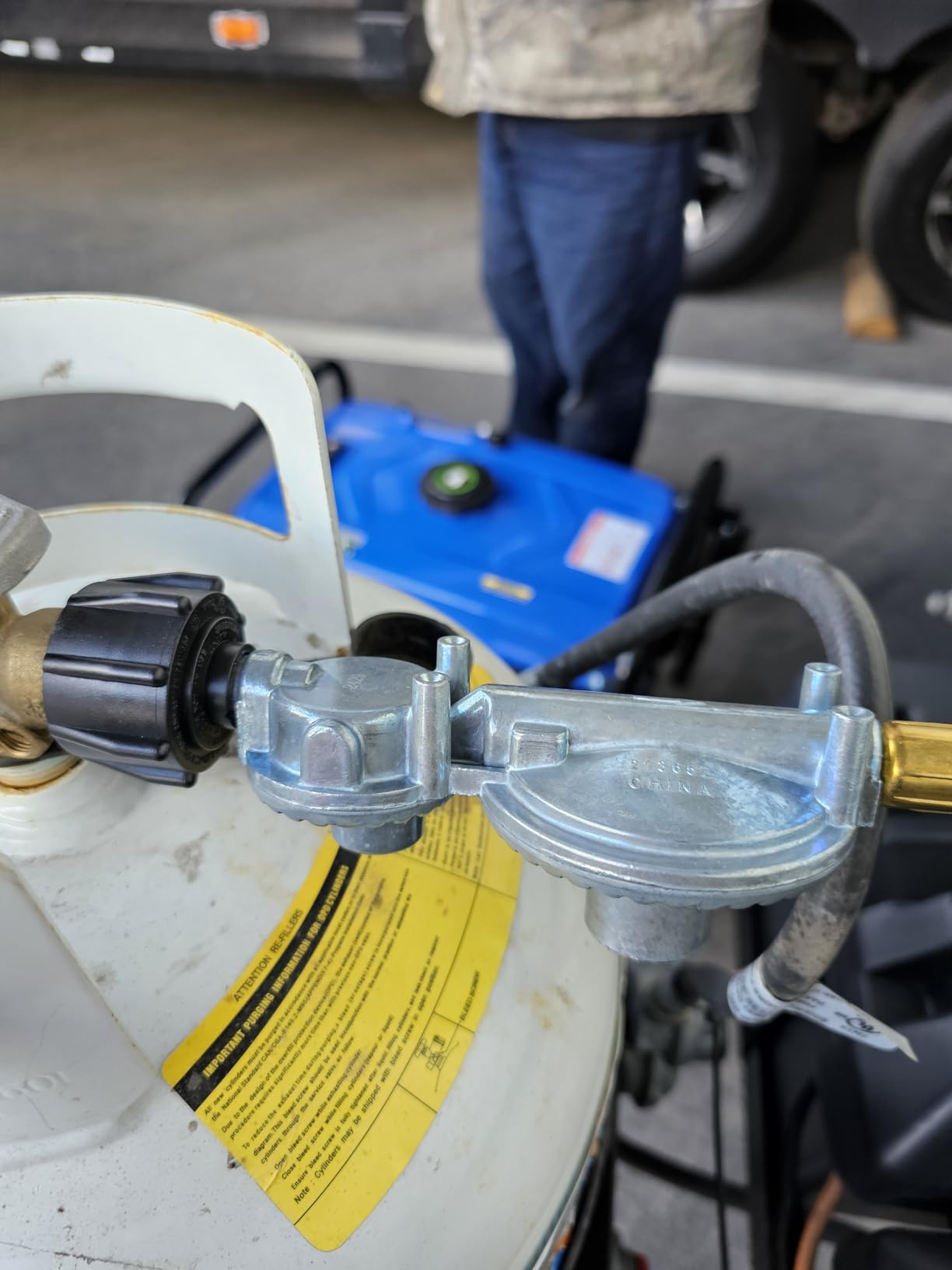
The setup hurdles are the same ones seen across this class. The battery negative lead ships disconnected, so electric start does nothing until you attach it, and the wheel, handle and foot assembly takes 30 to 45 minutes. Small engines of this size can also be fussy about choke position before break-in.
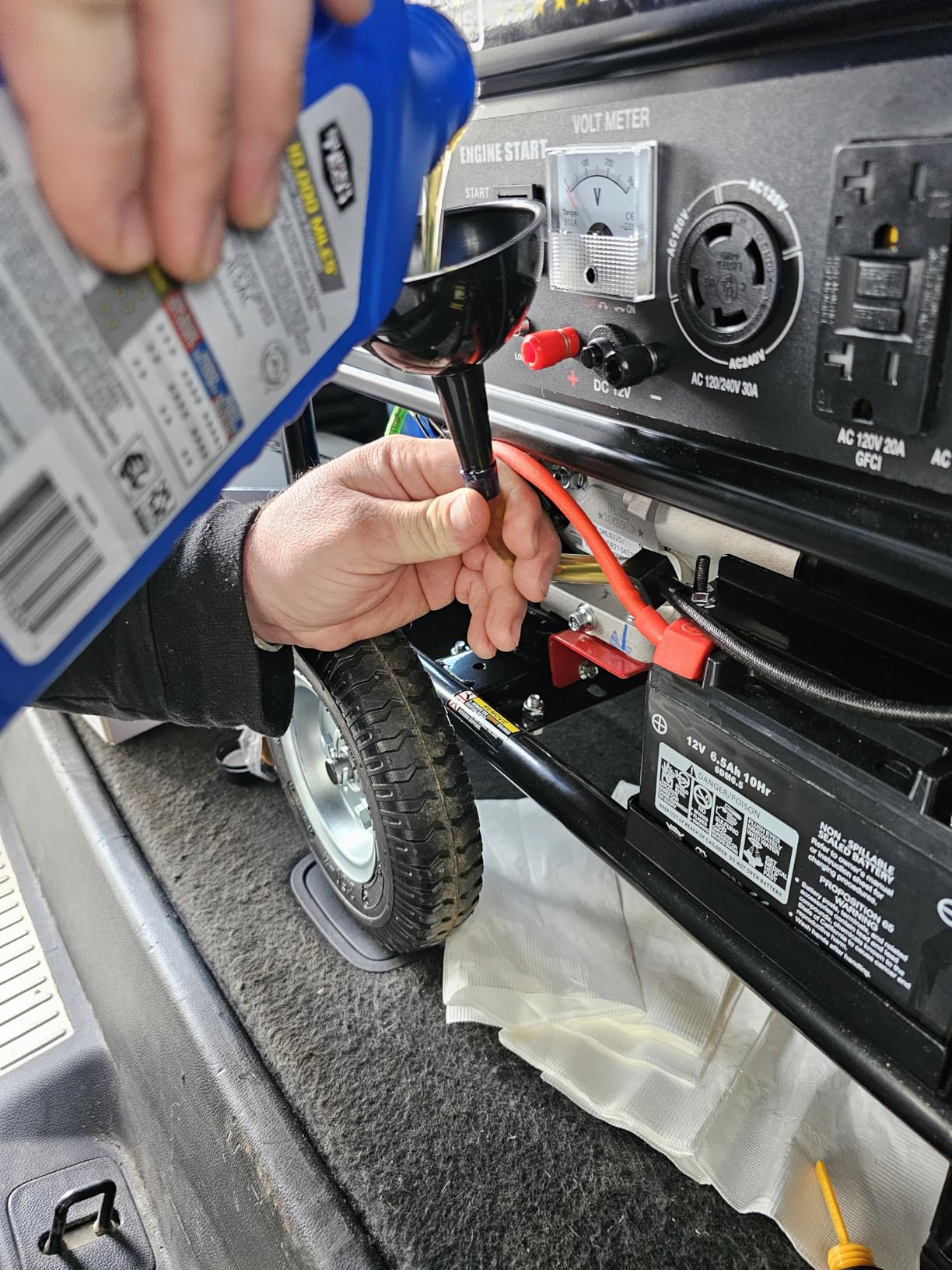
The factory solid-fill tires flatten on the side that rests on the ground and eventually need replacing, and the included oil funnel is short enough to spill during a fill.
How it handles a real house backup scenario
On a moderate load it will carry a refrigerator, a freezer, a furnace blower, a dehumidifier and lights without strain. A portable or window air conditioner fits inside the envelope as long as you watch the starting surge.
Running it on propane for overnight coverage costs you output but buys far longer storage life and no fuel line hassle. The 30A twist lock on the panel is the outlet to use for anything 240V.
What to check before you rely on it
Connect the battery lead and confirm electric start works before you need it. Read the manual on choke and idle control rather than guessing, since that confusion is the single most common setup complaint on this model.
Upgrade the tires if you plan to move it regularly, and budget for an oil change kit early on because the supplied funnel is not generous.
4. Pulsar G12KBN – Top Rated for Outlet Flexibility
Pulsar G12KBN Heavy Duty Portable Dual Fuel Generator – 9500 Rated Watts & 12000 Peak Watts – Gas & LPG – Electric Start – Transfer Switch & RV Ready – CARB Compliant
9500 rated watts on gas
8550 on LPG
8 gal tank
457cc engine
seven outlets
Pros
- 4.6 stars
- the highest average rating in this group
- Four 20A household outlets plus a 30A twist lock and a 50A outlet
- 8 gallon tank gives up to 12 hours at half load
- 3-in-1 digital meter with automatic voltage regulation
Cons
- Only a 1 year limited warranty
- the shortest term in this roundup
- 457cc single cylinder engine is loud under load
- Output drops noticeably on LPG
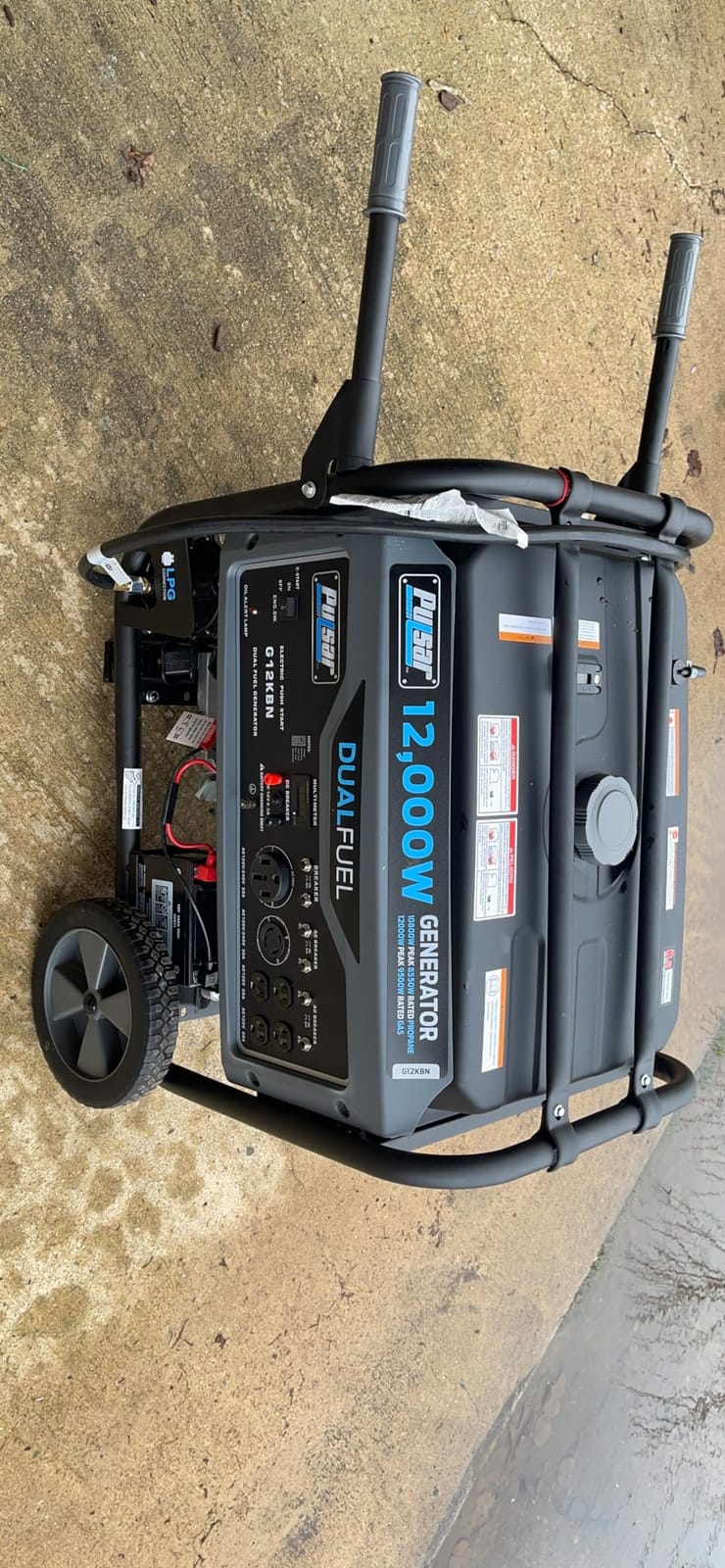
This unit earns its rating through output and outlet density rather than any single headline feature. It publishes both fuel figures, which makes it unusually easy to size: 12,000 peak and 9,500 rated watts on gasoline, 10,800 peak and 8,550 rated watts on LPG.
Seven outlets is the best count in this group. You get four 20-amp 120V household outlets, a 30-amp twist lock, a 50-amp outlet and 12V DC, so you can connect several essential circuits without stacking a power distribution box in the rain.
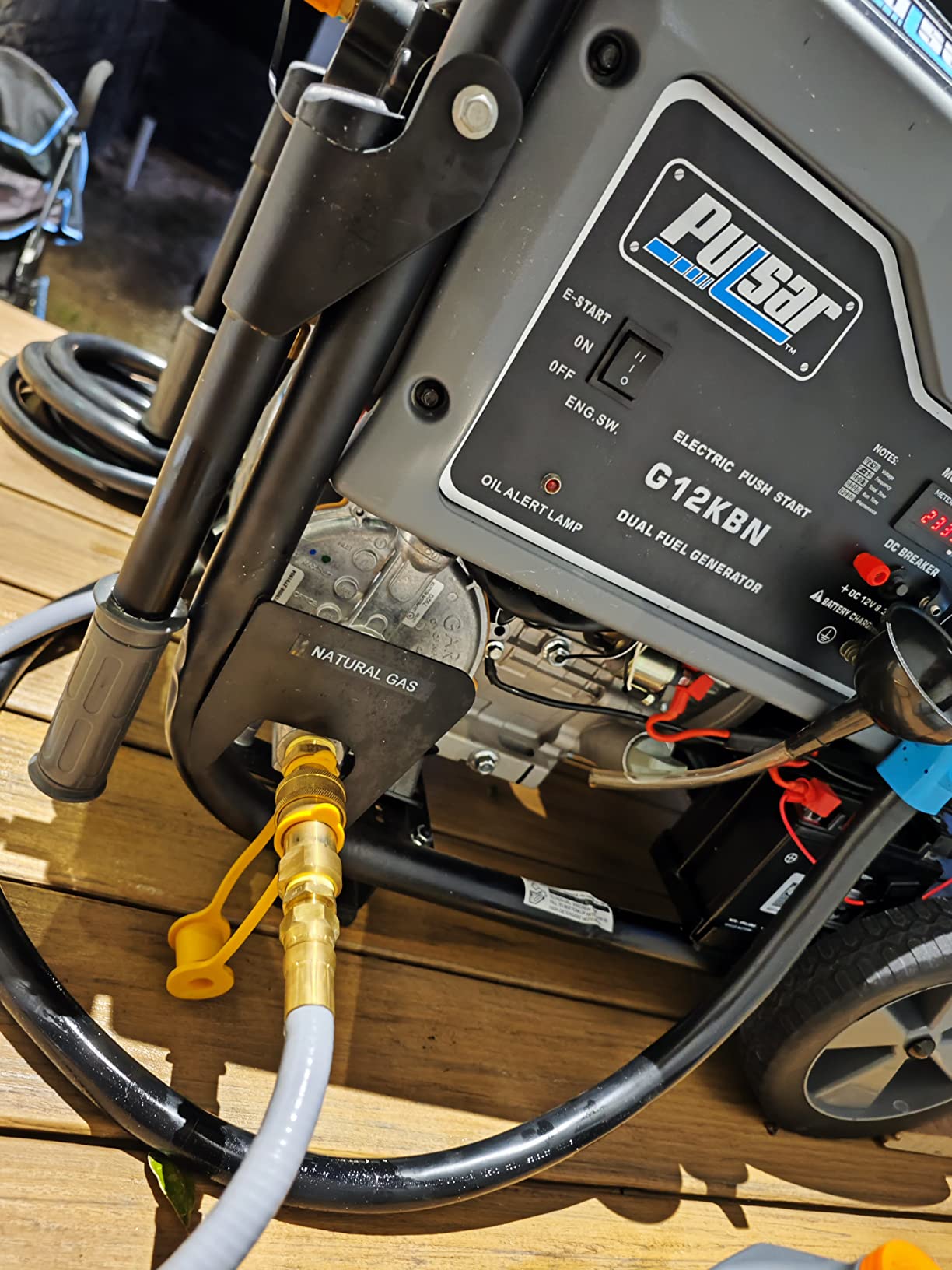
The 8-gallon tank delivers up to 12 hours at half load on gasoline, which means a long overnight outage without a fuel interruption. A 3-in-1 digital meter shows volts, frequency and running hours, and automatic voltage regulation takes some of the guesswork out of load management.
Drop-down handles and 10-inch never-flat wheels make storage and repositioning less of a chore than the foam-filled wheels on some competitors.
The warranty is where this one gives ground. A one-year limited term is the shortest of the eight products here, against three years on several DuroMax models and five on the XP13000HX, so treat it as a consumable purchase.
One more caveat: the manufacturer listing shows an item weight entry of 0.27 g, so treat the shipping weight on the product page as unreliable for this model.
Why owners rate it so highly
The 81 percent five-star share in the reviews tracks with a design that anticipates real use. The 50-amp outlet supports a transfer switch, and the digital meter means you can watch load without dragging out a separate clamp meter.
For whole-home work on an essential subset of circuits, having every outlet type on one panel reduces the number of extension cords and adapters you depend on during bad weather.
What gives us pause
The short warranty means you should expect to service the unit more often over a decade than you would with a three or five-year term. Register it and keep the receipt.
The 457cc single-cylinder engine is loud under load compared with smaller inverter units, so plan the location carefully if the unit will run overnight near a sleeping area or a neighbor wall.
5. PowerSmart 3800W Inverter – Best for Quiet Operation and Clean Power
PowerSmart 3800 Watt Dual Fuel Inverter Generator for Camping or Home Use
3300 running watts on gas
3100 on propane
59 dBA
50.7 lb
149cc four-stroke
Pros
- 59 dBA in Eco Mode at 25% load
- Under 3% total harmonic distortion for sensitive electronics
- Up to 24 hours on a 20 lb propane tank
- Live wattage display on the control panel
- Parallel ready for double output
Cons
- Small 1.3 gallon tank needs refills for long overnight gasoline runs
- Propane output drops to 3100 running watts
- Access panels and the oil change door need a Phillips screwdriver
This is the quiet one. At 59 dBA in Eco Mode at 25% load it is far below the open-frame units in this list, which makes it the only unit here we would comfortably run beside an open bedroom window on a summer night.
The inverter output measures under 3% total harmonic distortion, which is the number that matters for laptops, monitors, routers and medical equipment. Certified to ANSI/PGMA G300 and ANSI/UL2201, it produces the smoothest waveform in this group.
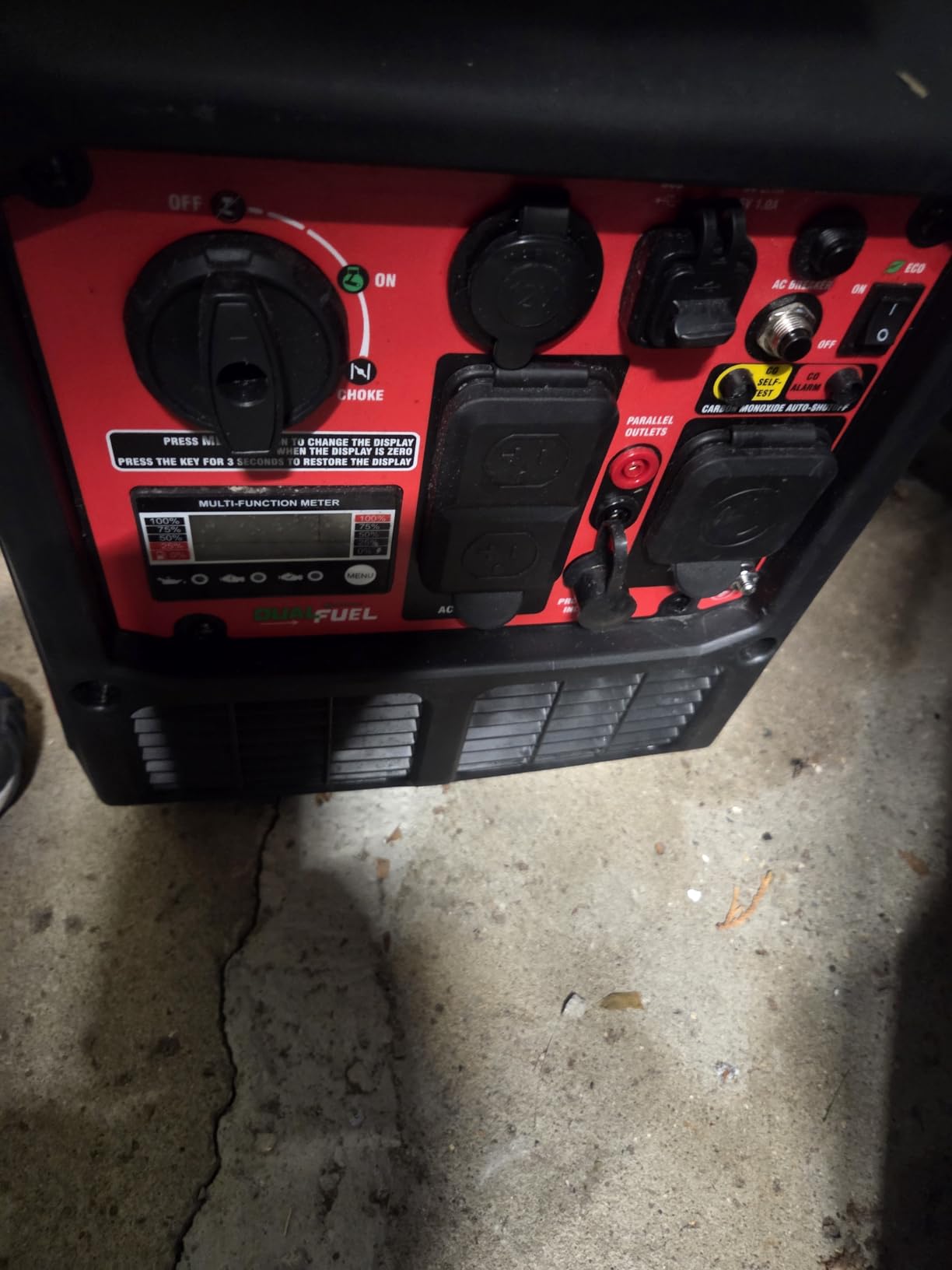
Runtime data is genuinely dual fuel here: about 8 hours at 25% load on the 1.3-gallon gasoline tank, or up to 24 hours on a standard 20-pound propane tank. If your outage plan leans on propane, this unit goes far longer between refills than anything else here.
Recoil start means there is no battery to maintain or recharge, and at 50.7 pounds it fits in a pickup bed or a camper compartment. The control panel display reports live wattage, which several owners single out as a pleasant surprise at this size.
The tradeoffs are honest ones. The small gasoline tank means refills during a long overnight run on gas, and the access panels and oil change door require a Phillips screwdriver, which is an odd choice for field service.
Noise climbs noticeably as load increases even with Eco Mode engaged, so the 59 dBA figure is a 25% load number rather than a full-throttle one. Poor display documentation in the manual is also a repeated complaint.
Who this unit is built for
It suits a home office, a home with medical equipment such as a CPAP or oxygen concentrator, or anyone who genuinely cannot tolerate a rough power curve on computers and audio gear. The under 3% THD figure is the reason to choose it.
It also works well as a secondary unit. Because it is parallel ready, two can be paired for roughly double the output if your panel supports the connection.
Where it will frustrate you
A household expecting to run a window air conditioner or a small pump should step up to the mid-size open frame instead. The derate to 3,100 watts on propane leaves little headroom for motor startup surge.
And plan on owning a Phillips screwdriver, because the tool requirement on the service points is not something you want to discover during an outage.
6. DuroMax XP13000HX – Best for Maximum Output
DuroMax XP13000HX 13,000-Watt Dual Fuel Portable Generator – Gas & Propane, Electric Start, Whole Home Power Backup, Transfer Switch Ready, RV & Emergency Ready
10500 running watts
13000 starting watts
500cc OHV
245 lb
5 year warranty
Pros
- Highest output in this group at 13000 starting watts
- CO Alert carbon monoxide protection
- Push button start with a front facing fuel selector
- All-copper windings and a 5 year manufacturer warranty
- Transfer switch ready with a 50A outlet
Cons
- 245 pounds makes it the heaviest unit here and a two person move
- Loud under sustained full load near living spaces
- Propane output is materially lower than gasoline
- Tank capacity data in the listing conflicts with the stated runtime
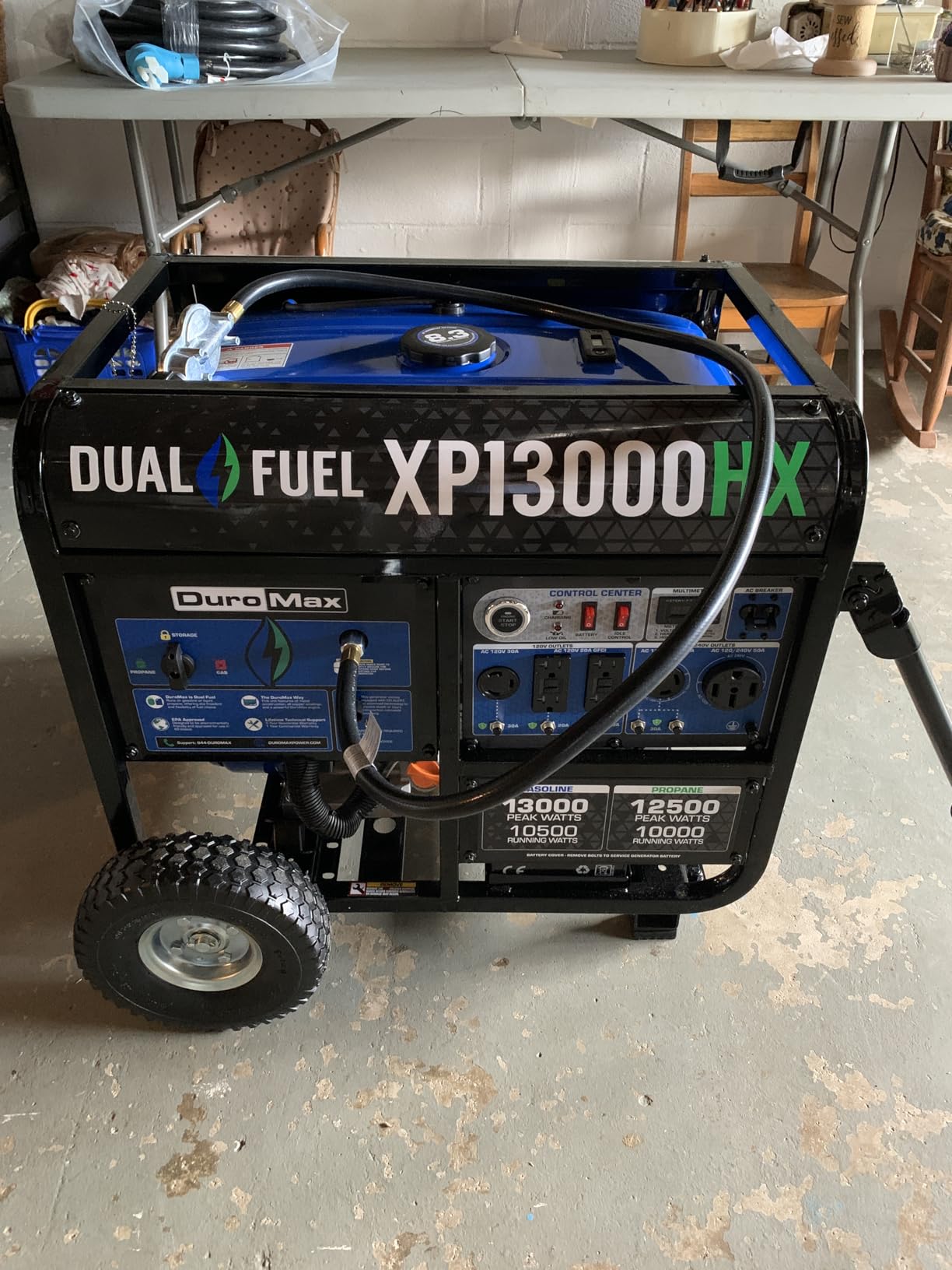
When the answer is simply the most power available in a portable package, this is it. The 500cc OHV DuroMax engine produces 13,000 starting watts and 10,500 running watts, and nothing else in this roundup comes close.
That headroom exists for a reason: 4 to 5 ton central air, a well pump, an electric water heater and the rest of the house at once. Owners cite whole-home and small commercial backup as the use case, which is where the 50-amp transfer switch ready outlet earns its place.
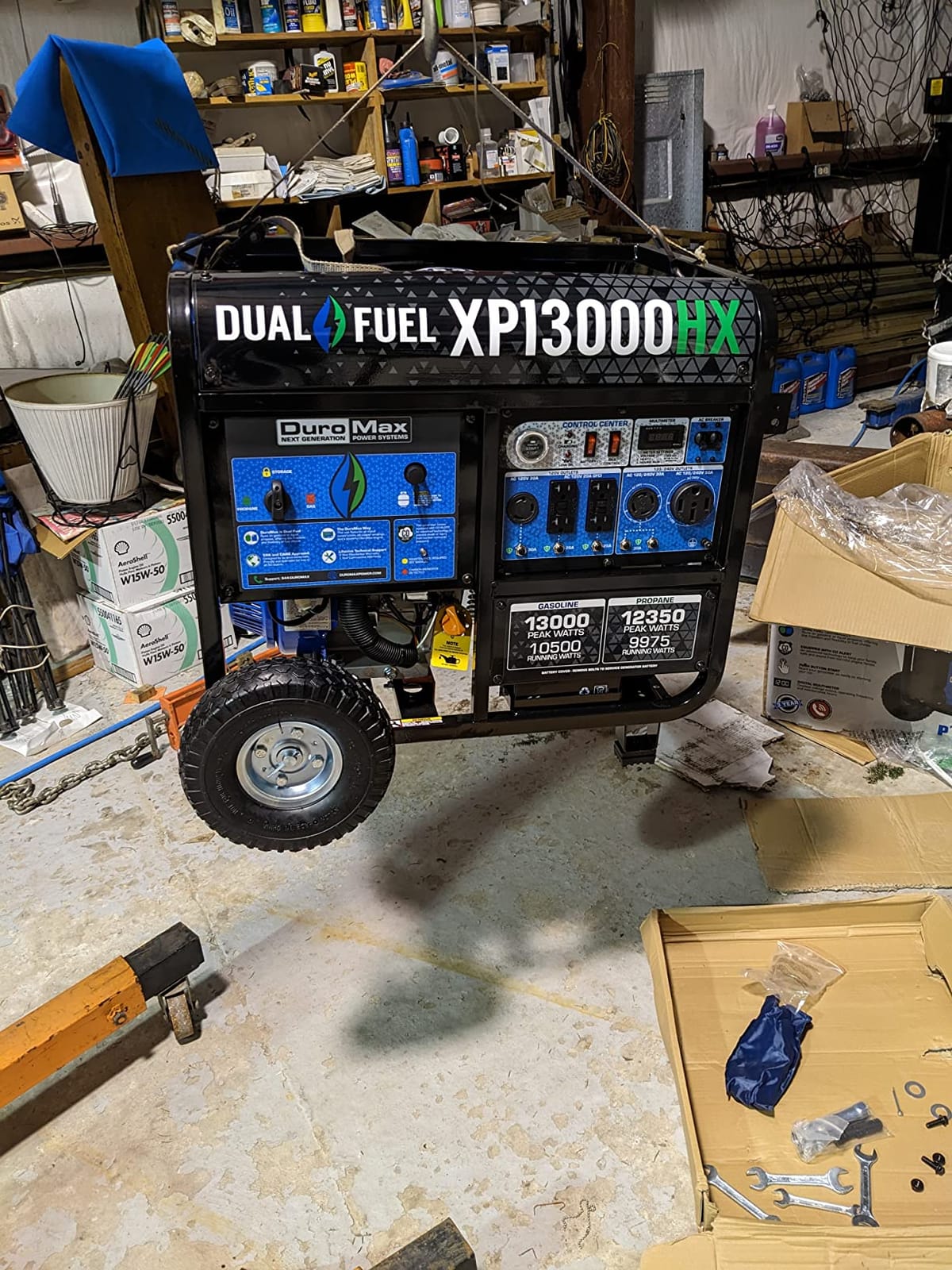
CO Alert protection shuts the unit down if carbon monoxide rises in an enclosed space, and the push-button electric start with a front-facing fuel selector lets you change fuel type in seconds rather than fiddling with a choke and primer.
The five-year manufacturer warranty is the longest in this group, which matters most on a unit this size. Fully copper windings are specified for long service life rather than the copper-clad aluminum found in cheaper machines.
At 245 pounds it is the heaviest unit here, and repositioning needs a wheel kit or two people. Owners accept that as part of the size class, but it does make the decision permanent in practice.
It is also loud under sustained full load, which matters for overnight running near living spaces. And the manufacturer tank volume entry conflicts with the stated runtime figure, so treat the published capacity as unreliable here.
When the extra capacity is actually needed
You need it when your load includes an electric HVAC system, a well pump, or an electric water heater. Motors with high startup surge are exactly what the 2,500 watts of headroom above running output is for.
If your backup list is a refrigerator, a freezer, some lights and a furnace blower, this unit is far more machine than the job requires, and you should look at the 4,500-watt class instead.
The ownership realities
Plan the location and the fuel storage before the first run. A 245-pound machine that has to cross a garage floor at 3 a.m. is a worse experience than the extra wattage is worth if you never need it.
Propane output is materially lower than gasoline output at the same setting, so check your propane rating before wiring the critical loads to it during a long event.
7. Champion 4000W Dual Fuel Inverter – Best for RVs and Light Duty Backup
Champion 4000-Watt Dual Fuel RV Ready Portable Inverter Generator
3000 running watts on gas
2700 on propane
64 dBA
51.8 lb
149cc four-stroke
Pros
- Clean inverter output under 3% total harmonic distortion
- Lightest unit here at 51.8 pounds with a tool-free oil door
- Up to 10 hours on gasoline and up to 25 hours on propane
- 30A TT-30R RV outlet plus a household duplex and 12V outlet
- CO Shield auto shutoff with a 3 year warranty
Cons
- Largest propane derate in this group at 2700 running watts
- Some units refused to start on propane until broken in on gasoline
- Overload recovery needs a manual button press
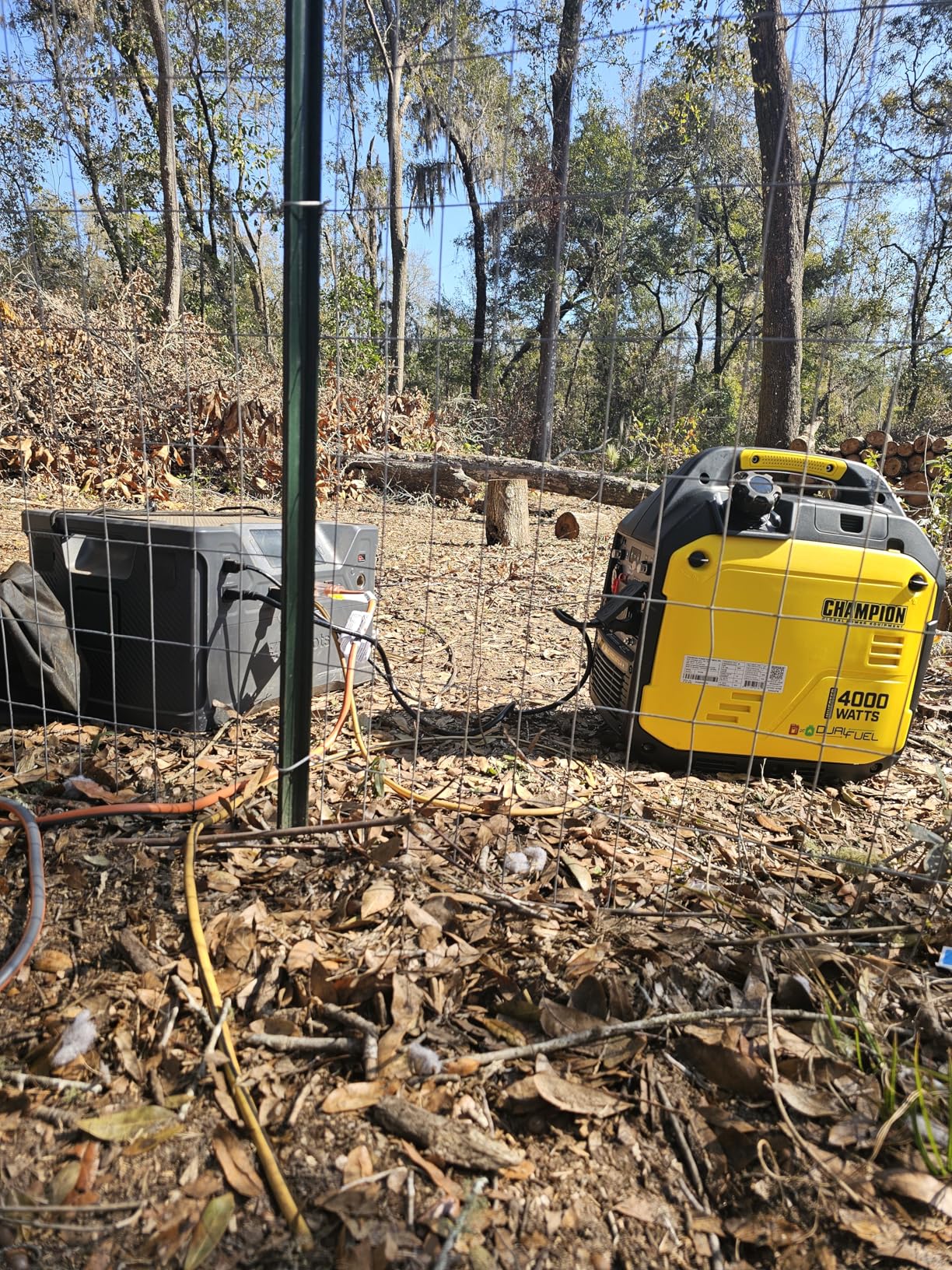
This is the portable pick for anyone who moves the generator rather than bolting it into a garage corner. At 51.8 pounds with a folding handle and a tool-free quarter-turn oil access door, it is the easiest unit here to load into a truck bed.
The inverter output measures under 3% total harmonic distortion, and owners run televisions, computers, monitors, routers and even HVAC circulating fans off it without complaint. CO Shield provides automatic carbon monoxide shutdown, and the warranty runs three years.
Runtime numbers are strong on both fuels: up to 10 hours on the 1.54-gallon tank on gasoline, and up to 25 hours on propane. The outlet set includes a 30A TT-30R RV socket, a 20A household duplex and a 12V automotive outlet.
Overload protection resets with a simple red button rather than shutting the engine down, which is convenient when you briefly overshoot while switching loads on.
The propane story has a wrinkle that several reviewers hit. Running wattage drops to 2,700 on propane, the largest derate in this group, and some units refused to start on propane until they had been broken in on gasoline first. Run it on gas for an hour or two before you depend on the propane side.
At 64 dBA it is a step louder than Champion’s own smaller dual fuel models, and overload recovery being manual rather than automatic is a minor annoyance in the dark.
Best used as travel and tailgating backup
It earns its spot for RVs, travel trailers, work trailers and tailgating, where owners have run it for extended periods. The TT-30R outlet is the right connector for most camp trailers, and parallel readiness lets two units be linked with the optional kit.
As a home unit it is a light-load machine. A refrigerator, a phone charger, a laptop and a lamp circuit is a comfortable day for it. A window air conditioner is not.
What to watch before an outage
Break it in on gasoline before you rely on the propane side, which is the single most common complaint on this model. That removes most of the start-on-propane problems before they matter.
Keep it away from the living area of an RV or tent. It is quiet enough to be tempting and light enough to be moved, and both of those make indoor placement more likely than with a 224-pound open frame unit.
8. Champion 4250W Dual Fuel Open Frame – Best for Long Runtime
Champion 4250-Watt Dual Fuel Portable Open Frame Inverter Generator, CARB
3500 running watts
4250 starting watts
4 gal tank
79 lb
64 dBA
Pros
- 22 hour half load runtime on a 4 gallon tank
- the longest in this roundup
- Economy Mode saves fuel and extends engine life
- Parallel ready with the optional ParaLINK kit
- Includes a USB adapter and CARB compliant
Cons
- Open frame means the engine is exposed and cannot run in rain
- 79 pounds is heavier than the smaller Champion inverter units
- Output drops on propane and the selector requires the engine off
- Fewer outlets than the higher capacity units
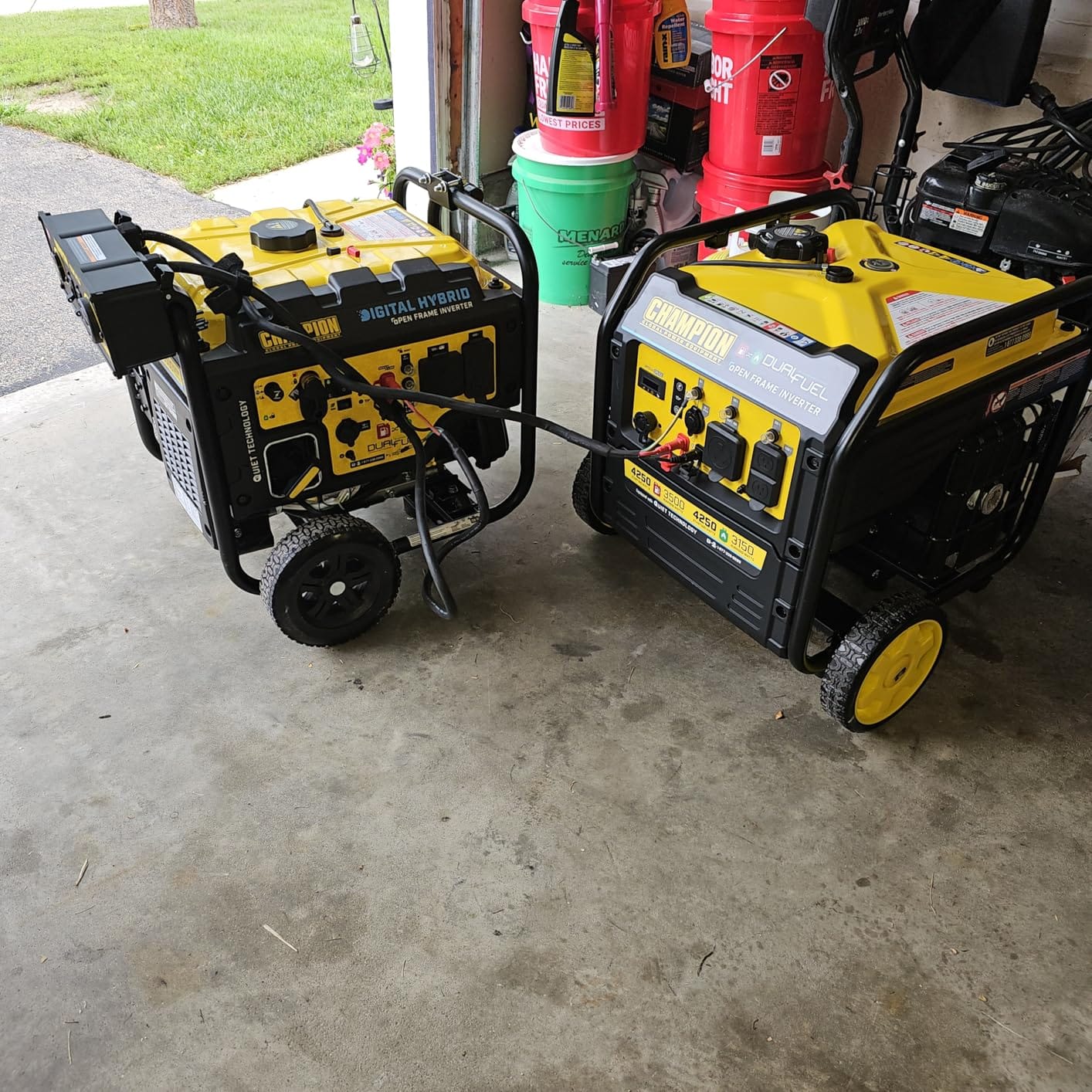
Runtime is the reason to choose this one. The 4-gallon tank delivers up to 22 hours at half load, which is the best fuel endurance of any dual fuel unit in this group and roughly double what most competitors of this size offer.
The 224cc four-stroke makes 4,250 starting watts and 3,500 running watts, and the digital hybrid design is 50 percent quieter and 20 percent lighter than a traditional Champion generator of the same class.
Economy Mode is standard rather than a premium feature here, which reduces fuel burn and extends engine life on long unattended runs. Parallel Ready lets you double the output with a second unit and the optional ParaLINK kit when one machine is not enough.
The outlet set is a 30A RV outlet, two 20A household outlets, a 12V DC outlet and a bundled USB adapter. That covers an RV trip or a tailgate setup without extra adapters.
The accepted tradeoffs are clear. Open frame construction leaves the engine exposed, so it cannot run in rain and it is louder than a fully enclosed inverter. Output drops on propane, and the fuel selector requires the engine to be off before you switch.
At 79 pounds it is heavier than the smaller Champion inverter models, and it carries fewer total outlets than the higher-capacity units in this roundup.
How the fuel endurance changes your planning
Twenty-two hours at half load means a single tank covers an overnight storm or most of a working day without a fuel run. That removes the biggest source of stress in a multi-day outage for households that already have gasoline on hand.
Combined with CARB compliance, it is the pick for buyers in California who need a compliant unit with a long runtime, and for anyone whose outages tend to be overnight rather than week-long.
What it costs you to get there
Noise is the honest drawback at 64 dBA, which is a step above the 53 dBA smaller Champions. If the unit will run beside a sleeping area, the enclosed inverter options are a better fit.
And the exposed frame means you need a covered spot that is still outdoors and well ventilated. Plan that location before the outage rather than during it.
What Is a Dual Fuel Generator?
A dual fuel generator is a portable generator that runs on either gasoline or propane, selected with a single dial. A fuel valve routes one fuel or the other into the same engine, and the same alternator produces the electricity either way.
The defining trait is that output is slightly lower on propane than on gasoline. Every model in this roundup loses running watts on propane, and the four units that publish both figures show gaps from 200 watts on the PowerSmart 3800W up to 950 watts on the Pulsar G12KBN.
The practical reason to care is fuel availability and storage life. Gasoline degrades in storage and is hard to find once pumps start running dry, while propane stores indefinitely and is often still available. Dual fuel capability means one of the two is almost always workable.
A tri fuel generator adds natural gas as a third option, which we cover separately below. For most households a dual fuel unit is the sweet spot between capability and complexity.
How Much Power Do You Need?
You need enough running watts to cover everything you want on at once, and enough starting watts to cover the single largest motor surge on that list. Running watts are what the unit sustains; starting watts are the short burst a compressor or pump motor needs to get moving.
Add up your running loads, then check that your largest single starting load does not exceed the starting wattage of your chosen unit. A household with a refrigerator and a furnace blower typically needs somewhere in the 3,500 to 5,000 running watt range, while adding central air or a well pump pushes you toward 9,500 or above.
Typical running figures for the appliances that show up in outage planning look like this. Use your own numbers rather than these, since modern efficient appliances vary widely.
Refrigerator: roughly 100 to 400 running watts, with a starting surge in the 1200 watt range
Chest or upright freezer: roughly 100 to 300 running watts, similar surge behavior
Electric furnace blower: roughly 200 to 1,000 running watts depending on the motor
Sump pump: roughly 300 to 1,100 running watts with a surge that can reach 3x running
Well pump: roughly 1,000 to 3,000 running watts with a high starting surge
Window air conditioner: roughly 900 to 1,500 running watts with a startup surge well above it
Microwave: roughly 1,000 to 1,500 running watts
Wi-Fi router, modem and network gear: under 50 running watts
Lamp circuit with several LED bulbs: roughly 10 to 60 running watts per bulb
Electric water heater: roughly 3,000 to 4,500 running watts
Yes, a 5,000-watt generator can run parts of a house. It cannot run a whole house, and the honest framing is that a 5,000-watt unit covers a refrigerator, a freezer, a furnace blower, a sump pump, some lights and a router without central air. Anything above that belongs in the 9,500-watt class.
Three size tiers cover most homes. The 3,000 to 3,800 running watt inverter tier suits apartments and essential loads. The 4,500 watt tier adds a portable air conditioner or a dehumidifier. The 9,500 to 10,500 watt tier covers most of a house on essential circuits through a transfer switch.
Reserve 20 to 25 percent headroom above your calculated running load. Motors degrade with age, and a sump pump that draws more in its third year than in its first will trip an overloaded unit.
The Disadvantages of Dual Fuel Generators
Dual fuel capability is genuinely useful, but it is not free. These are the real drawbacks you are accepting when you buy one, and they apply to every model in this roundup.
Output drops on propane. Every engine in this group makes less power on LPG than on gasoline, ranging from about 300 watts to roughly 950 watts. Size your circuits on the propane number if propane is your primary fuel.
You pay more than a gas-only unit. Dual fuel capability adds a second fuel system, a regulator and a selector mechanism, and none of the roundup’s eight units is cheaper than a comparable single-fuel model.
More components mean more maintenance. The gasoline side needs carburetor care and fuel stabilizer discipline that a propane-only or a gas-only unit in the same price band does not demand.
Switching carries a procedure. Most units require the engine off before you change fuel and restart on the new source, which is one more thing to remember in the dark.
The runtime advantage cuts both ways. Propane gives much longer storage life but consumes noticeably more fuel per hour, so a propane tank covers far fewer runtime hours than the same money of gasoline would.
None of these are dealbreakers, but they are the reasons a gas-only unit remains a reasonable choice for occasional short outages and a dual fuel unit pays for itself in multi-day or fuel-scarce events.
Propane vs Gasoline: Runtime and Fuel Planning
Propane costs less per runtime hour in most regions, but it buys fewer runtime hours per gallon of liquid. Gasoline gives more runtime per unit of volume and is far more compact to store, while propane stores indefinitely and will still flow after months on a shelf.
Here is the fuel endurance picture from the published runtime figures in this roundup, without the noise of a per-hour rate comparison.
DuroMax XP5500EH: about 9 hours on gasoline and 8 hours on propane at half load
WEN DF475T: up to 11 hours at half load on gasoline
Champion 4250W: up to 22 hours at half load on gasoline
Champion 4000W inverter: up to 10 hours on gasoline and up to 25 hours on propane
PowerSmart 3800W inverter: about 8 hours at 25% load on gasoline, or up to 24 hours on a 20 lb propane tank
Pulsar G12KBN: up to 12 hours at half load on gasoline
DuroMax XP12000EH: about 8 hours runtime
DuroMax XP13000HX: up to 17 hours runtime
For propane cylinder planning, the figures that matter come from the inverter units. A 20-pound propane tank can carry one of the smaller dual fuel inverters for roughly a day of continuous low-load operation, while a large open frame machine will consume a comparable cylinder far faster under load.
For a multi-day outage, buy cylinders before you need them. Gas stations and hardware stores sell out early in a regional event, and an exchange program only helps if there is stock on the shelf.
Whichever fuel you lean on, running a modern unit on a 25 to 50 percent load is more efficient than running it near full output. Several of the models here include Economy Mode or smart throttling for exactly this reason.
If you store gasoline for months at a time, keep it in an approved container with stabilizer and never in the living space of a home. Our guide to in-tank fuel filters covers the maintenance side for larger fuel systems.
Dual Fuel vs Tri Fuel
Dual fuel means gasoline and propane. Tri fuel adds natural gas as a third option, which only matters if your home already has a natural gas supply line you can reach.
For a household without a gas line, tri fuel buys you nothing you can use. For a household with one, natural gas is the most stable of the three fuels, since it never goes stale and runs far more cleanly, but it is the least portable option and the conversion hardware adds cost.
An owner in one prepper forum thread described running a Predator with a tri-fuel conversion kit on natural gas alone as extremely solid. That is a common pattern, and it is why conversion kits show up so often in that conversation: they add a fuel option without replacing the generator.
The short version for most buyers is that dual fuel is the right default, and tri fuel is worth considering only if a tapped natural gas line is already within reach of where the generator would sit.
How to Choose a Dual Fuel Generator
Start with the load, not the brand. Calculate your running watts from the appliances you would actually run, add 20 to 25 percent headroom, and confirm the largest starting load fits inside the starting wattage.
Then pick the form factor. Inverter units under about 4,000 watts give cleaner power and lower noise, which matters for electronics and for neighbors. Open frame units above about 8,000 watts give the capacity needed for air conditioning and pumps, and they are louder.
Check the outlet panel before you buy. You want GFCI protection on household receptacles, a 30-amp twist lock for heavier loads, and a 50-amp outlet if you plan a transfer switch. Only the XP12000EH, G12KBN and XP13000HX in this group provide that 50-amp connection.
Look for a carbon monoxide shutdown system. DuroMax calls it CO Alert, Champion calls it CO Shield, and PowerSmart lists a CO sensor, but the function is the same and it matters for any garage or enclosed-adjacent placement.
Weigh the unit against your own willingness to move it. Anything above 200 pounds is a two-person job, and a generator you will not deploy because moving it is a hassle is a generator with poor return.
Read the warranty term as part of the price. One year on the Pulsar G12KBN against five years on the DuroMax XP13000HX changes the ownership economics of a machine you expect to run for a decade.
Finally, confirm your fuel plan. A dual fuel unit is only as resilient as the fuel you have on hand, so decide now whether you are stocking gasoline with stabilizer, propane cylinders, or both.
Generator Safety Rules
Never operate a portable generator indoors. Not in a garage, not in a basement, not with the tailgate open on a vehicle in an enclosed space. Carbon monoxide is odorless and colorless, and deaths in outage conditions are overwhelmingly caused by running a generator inside or partially inside.
Keep the generator at least 20 feet from the house, with the exhaust pointed away from doors, windows and vents. That distance applies even when you are running an electric heater, because airflow through the house is enough to pull exhaust indoors.
Never backfeed the generator into a wall outlet. Backfeeding sends current back up utility lines where lineworkers work, and it is illegal. Use a transfer switch or a factory-installed interlock kit instead, installed by a licensed electrician.
Only use outdoor-rated extension cords of the correct gauge, and connect them before starting the engine. Unplug everything before shutdown and let the engine cool before refueling, because gasoline vapor and a hot exhaust head is a fire combination.
Ground the unit properly if the manufacturer specifies a grounding wire and your setup calls for it. Never operate in rain with an open frame, since several units in this roundup have exposed engines.
Test your generator monthly with a 20 to 30 minute run at about half load. That keeps the fuel system live, verifies the oil level and confirms the electric start still holds a charge before you need it during an actual outage.
Store gasoline and propane in approved containers outside the home, away from ignition sources and out of reach of children. Keep a working carbon monoxide alarm on every level of the house as a second layer of protection.
Frequently Asked Questions
What is the disadvantage of a dual fuel generator?
Dual fuel generators cost more than gas-only units, lose running watts when switched to propane (from about 300 to 950 watts in this roundup), add a second fuel system that needs maintenance, and require the engine to be off before changing fuel. Propane also consumes more fuel per runtime hour than gasoline.
Is it worth it to buy a dual fuel generator?
It is worth it if your outages are multi-day, if gas stations are likely to run dry in your area, or if you have a refrigerator, freezer, sump pump or medical equipment to protect. For short, occasional outages a gas-only unit is cheaper and simpler.
Is it cheaper to run a dual fuel generator on gas or propane?
Propane generally costs less per runtime hour, but it burns faster, so a propane tank covers fewer runtime hours than the same volume of gasoline. Gasoline gives more runtime per gallon of liquid and is easier to store compactly; propane stores indefinitely.
Can a 5000W generator run a house?
A 5,000-watt generator can run parts of a house, not the whole thing. That covers a refrigerator, a freezer, a furnace blower, a sump pump, some lights and a router, but not central air, a well pump or an electric water heater.
What size generator do I need to power a refrigerator and furnace?
A 3,500 to 4,000 running watt unit handles a refrigerator, a freezer and an electric furnace blower with room to spare, as long as you leave 20 to 25 percent headroom. Check the furnace blower motor size, since larger units draw close to 1,000 watts.
How long can a dual fuel generator run on propane?
It depends on load and tank size. The Champion 4000W inverter runs up to 25 hours on propane and the PowerSmart 3800W up to 24 hours on a 20 lb tank, while large open frame units consume a comparable cylinder far faster under load.
Is dual fuel or tri fuel better for home use?
Dual fuel is the better default because gasoline and propane are both widely available and portable. Tri fuel is worth the extra cost only if your home already has a natural gas supply line within reach of where the generator would sit.
Do I need a transfer switch for a portable generator?
Yes, if you plan to power your home rather than a few appliances with extension cords. A transfer switch or a factory-installed interlock kit, fitted by a licensed electrician, is the only safe and legal way to connect a portable generator to house wiring.
Are portable generators safe to use indoors?
No. Running a portable generator indoors or partially indoors is the leading cause of carbon monoxide deaths during outages. Keep it at least 20 feet from the house with the exhaust pointed away from doors and windows, and use a carbon monoxide alarm on every level.
Final Recommendations
The DuroMax XP12000EH takes the top spot for home backup, with the strongest combination of output, review volume and outlet flexibility in this group. Pick the Pulsar G12KBN if outlet variety and a digital meter matter more to you, and the DuroMax XP5500EH if you need a mid-size unit that handles a portable air conditioner without the weight of a whole-home machine.
For essential loads only, the WEN DF475T and Champion 4250W cover the essentials at the most accessible weight and runtime. The PowerSmart and Champion inverter units are the right call when electronics, noise or a medical device are the deciding factor, and the DuroMax XP13000HX is the answer when central air is genuinely in the backup plan.
Whichever you choose, stock fuel before you need it, connect it through a transfer switch, and run it monthly so the first real start is not the first start in eight months. That is still the advice we would give for any of the best dual fuel generators for home backup in 2026.