
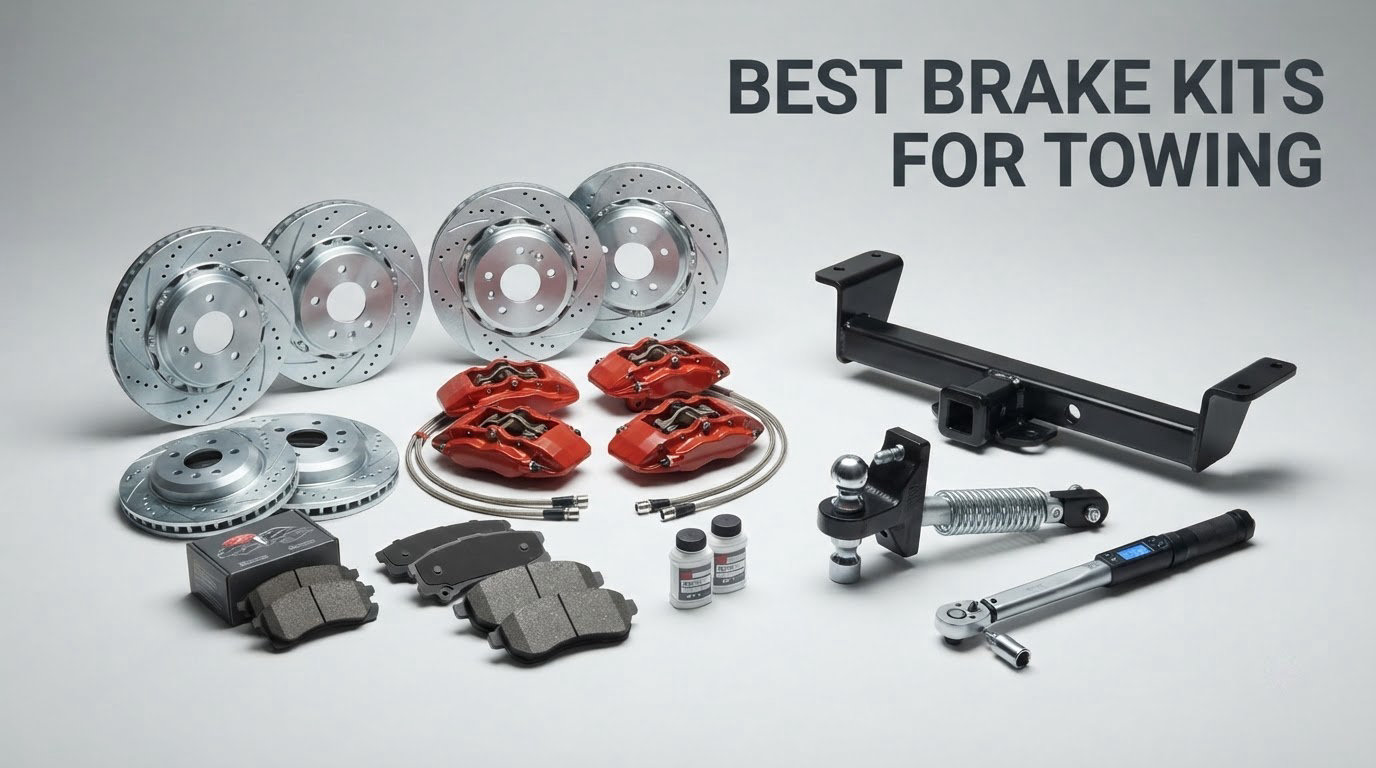
The best brake kits for towing are not one box you bolt to a truck. Towing braking is a chain, and the weakest link decides how the whole rig behaves on a mountain grade with a loaded trailer behind you. That chain runs from the brake controller in the cab, through the wiring that feeds it, to the electric brake assemblies bolted to the trailer axles, and finally to the breakaway system that stops a separated trailer. Most upgrade guides cover only the first mile of that chain, which is why truck owners end up with better pads and the same fade.
We read through the review data on twelve towing brake kits, controllers, axle assemblies and breakaway systems, and ranked them by how consistently they perform in real towing duty. The ratings below come from verified buyer reviews, and every number attached to a product is a spec or a measurement from that listing rather than an estimate.
Two things shape the whole list. First, a brake controller is not an accessory; it is the part that makes trailer brakes proportional to what the truck is doing, and no pad upgrade replaces it. Second, a trailer that is over roughly 3000 lbs needs electric brakes on both axles and a working breakaway system, and most towing setups that fail on the road fail at one of those two points. If you want the short version of our findings, the trailer breakaway brake kit guide covers the safety side of the same system.
Top 3 Towing Brake Kits in 2026
The Tekonsha Primus IQ takes the top slot on the strength of its rating and the size of its review base. The BUNKER INDUST breakaway kit earns best value because it ships the battery, charger and switch together, and the REDARC Tow-Pro Liberty earns the premium pick slot for the cleanest factory-style install we found.

Best Brake Kits for Towing at a Glance in 2026
The table below covers every product in the roundup, grouped by where it sits in the braking system. Controllers sit at the top of the chain, axle assemblies in the middle, and breakaway and wiring hardware at the bottom, where a failure is least visible until it matters most.
| Product | Specs | Action |
|---|---|---|
| Tekonsha Primus IQ Controller |
|
Check Latest Price |
 CURT Echo Mobile Controller CURT Echo Mobile Controller |
|
Check Latest Price |
 BUNKER INDUST Breakaway Kit BUNKER INDUST Breakaway Kit |
|
Check Latest Price |
 REDARC Tow-Pro Liberty REDARC Tow-Pro Liberty |
|
Check Latest Price |
 CURT Spectrum Controller CURT Spectrum Controller |
|
Check Latest Price |
 VEVOR 12 inch Brake Assembly VEVOR 12 inch Brake Assembly |
|
Check Latest Price |
 REDARC Tow-Pro Elite REDARC Tow-Pro Elite |
|
Check Latest Price |
 Timilge Digital Controller Timilge Digital Controller |
|
Check Latest Price |
 SEHNSUCHT Axle Brake Kit SEHNSUCHT Axle Brake Kit |
|
Check Latest Price |
 FIERYRED Breakaway Kit FIERYRED Breakaway Kit |
|
Check Latest Price |
 Draw-Tite Wiring Kit Draw-Tite Wiring Kit |
|
Check Latest Price |
 ATEM POWER Solar Breakaway ATEM POWER Solar Breakaway |
|
Check Latest Price |
Why Towing Overwhelms Factory Brakes
Towing roughly doubles the mass your brakes have to stop, and the heat has to go somewhere. It goes into the rotor, and a rotor that cannot shed heat fast enough starts glazing the pad surface. Glazed pads lose their coefficient of friction, the pedal goes long, and stopping distance grows exactly when you are descending a grade with a full load.
Factory brake sizing is not a mistake. OEM pads and rotors are engineered to pass a vehicle weight limit with a safety margin, not to absorb repeated near-maximum stops at highway speed with several thousand pounds of trailer behind the bumper. The gap between what the brakes were designed for and what towing asks of them is where brake fade comes from.
Two things usually give out first. Pads wear faster because every stop is harder, and rotors crack at the bolt circle or along the vanes because cast iron cycles between cold and hot under that load. The big brake kit options we cover separately address the same physics on the road-car side of the equation.
The fix is not one product. It is a controller that applies the right amount of trailer braking, axle assemblies sized to the loaded trailer weight, a breakaway system that works when everything else fails, and clean wiring that carries the current without dropping voltage under load.
1. Tekonsha Primus IQ: Best Overall Towing Brake Controller
Tekonsha 90160 Primus IQ, Proportional Brake Controller for Trailers with 1-3 Axles, compatible with Ford, GM, Chevy, Dodge, RAM, Toyota, Jeep. Wiring Harness Sold Separately.
Inertia-based proportional braking
Three-level boost
LED diagnostics
Pros
- Smooth proportional braking that matches the truck
- Removable connector for easy stow
- Clear LED settings and diagnostic display
- Boost adds stopping power under load
- Works with Ford GM Chevy Dodge RAM Toyota Jeep
Cons
- Vehicle-specific wiring harness sold separately
- Needs a short dial-in period
- Can be overly sensitive at high gain
The Primus IQ is the unit we kept coming back to while comparing the twelve products here, mostly because of how much owner history sits behind it. At 4.7 stars across 7714 reviews it has the deepest review base in the category, and the pattern in those reviews is consistent rather than enthusiastic-by-accident.
Braking is proportional through an internal inertia sensor, so the trailer tracks the truck rather than applying a fixed delay. Owners describe the difference as smooth and predictable, which matters more on grades than raw bite does.
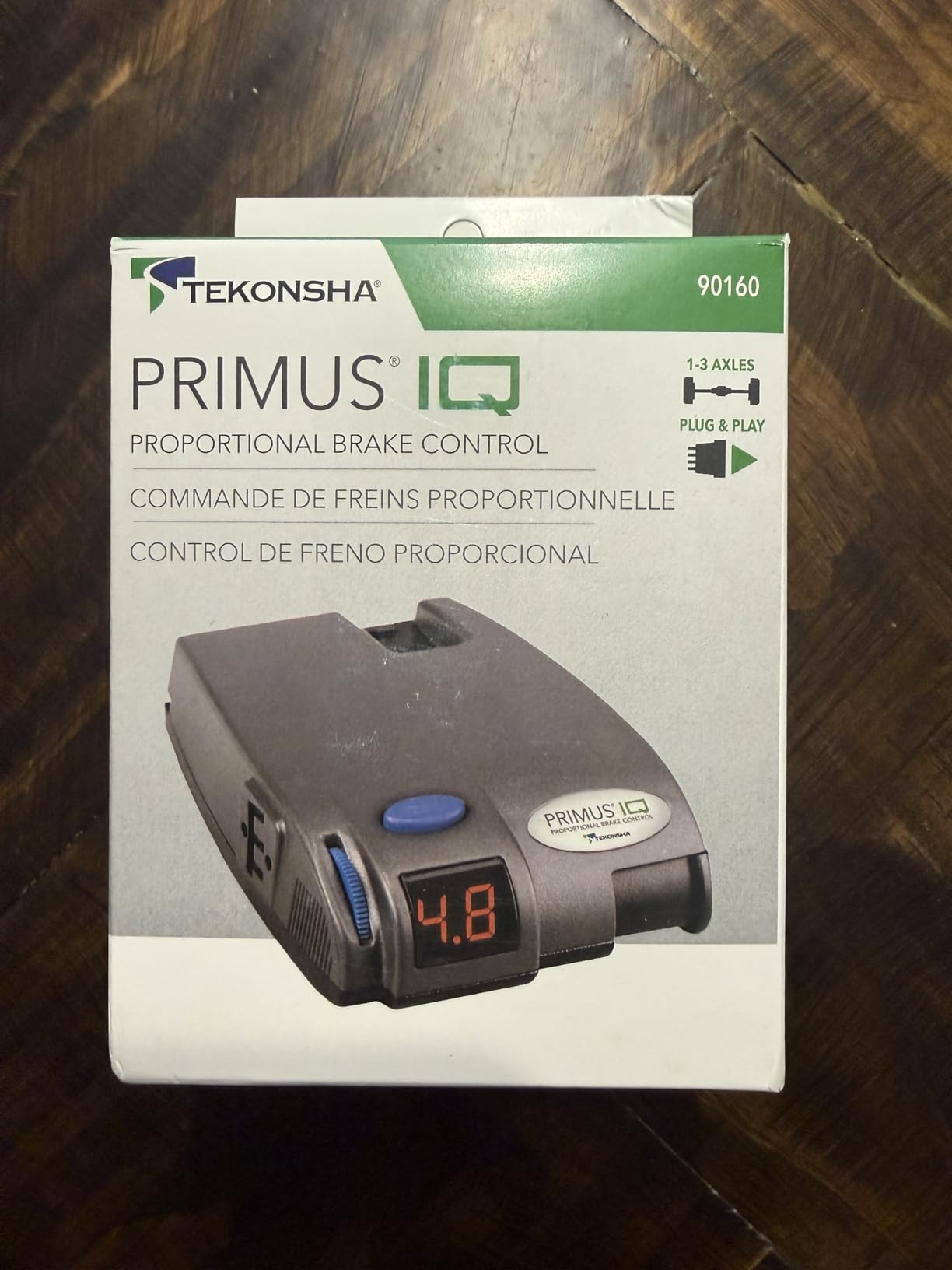
Three things make it the pick for towing duty specifically. The boost feature adds up to three levels of extra stopping power on demand, which is what you reach for when a downhill stop starts to feel long. The LED display shows both settings and real-time trailer diagnostics, so a fault shows up before you are loaded.
The snap-in dash mount and removable electrical connector mean the whole controller comes out in about a minute when the truck is shared between towing and daily driving. Compatibility covers 2, 4 or 6 brake systems across Ford, GM, Chevy, Dodge, RAM, Toyota and Jeep.
How it behaves with a loaded trailer
Because the control is inertia-based, the trailer applies roughly the same deceleration as the truck rather than a percentage of it. On a mountain grade that means the brake pedal and the trailer stay in agreement, and the trailer does not start to push back on the hitch mid-descent.
The boost button is the feature owners reach for most on descents, and it is worth knowing where it sits before you need it. Set-and-forget is not a fair description: most owners still turn gain down a notch after the first few tows because it is sensitive out of the box.
What to budget for before you buy
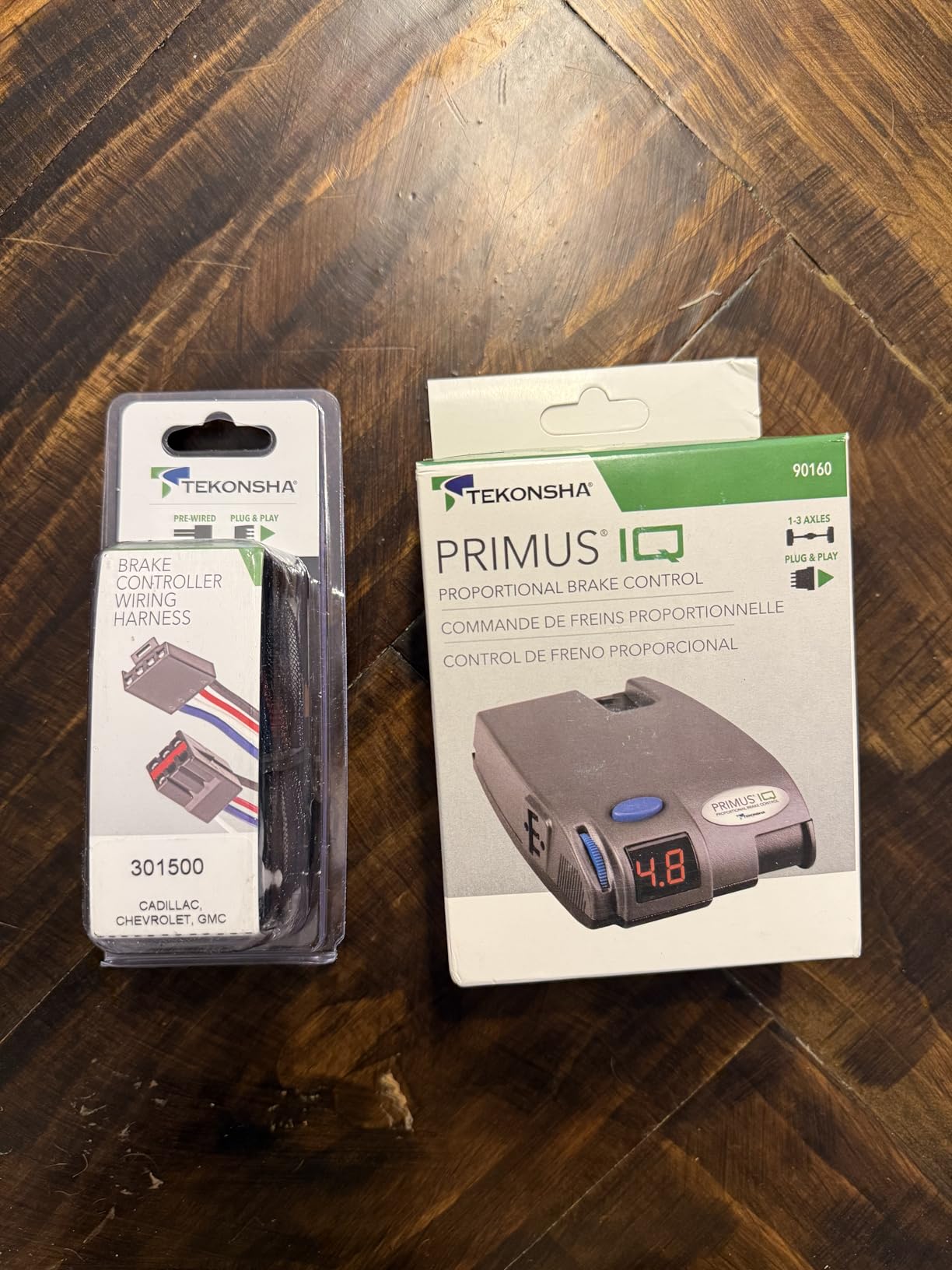
The controller is only half the install. The vehicle-specific wiring harness is a separate purchase, and without it you are splicing the connections yourself. If you are starting from a bare truck, budget for the harness in the same trip.
Boost and sensitivity are both adjustable, so the unit covers everything from a 3500 lb travel trailer to a three-axle load. The one real ergonomic gripe is the flat-head screws in the mounting hardware, which are fiddly in a dark footwell.
2. CURT Echo Mobile: Best for Rentals and Shared Tow Vehicles
CURT 51180 Echo Mobile Bluetooth Trailer Brake Controller, 7-Way, 1-2 Axles
Bluetooth app control
Zero-tool 7-way install
Triple-axis accelerometer
6.63 x 1.63 x 2.88 inches
Pros
- No permanent wiring needed
- Moves between vehicles
- Accelerometer holds braking if Bluetooth drops
- Removes the under-dash box
- Stores multiple vehicle-trailer profiles
Cons
- Supplied rubber strap is weak
- Housing hangs low near the 7-way plug
- Sensitivity can be inconsistent
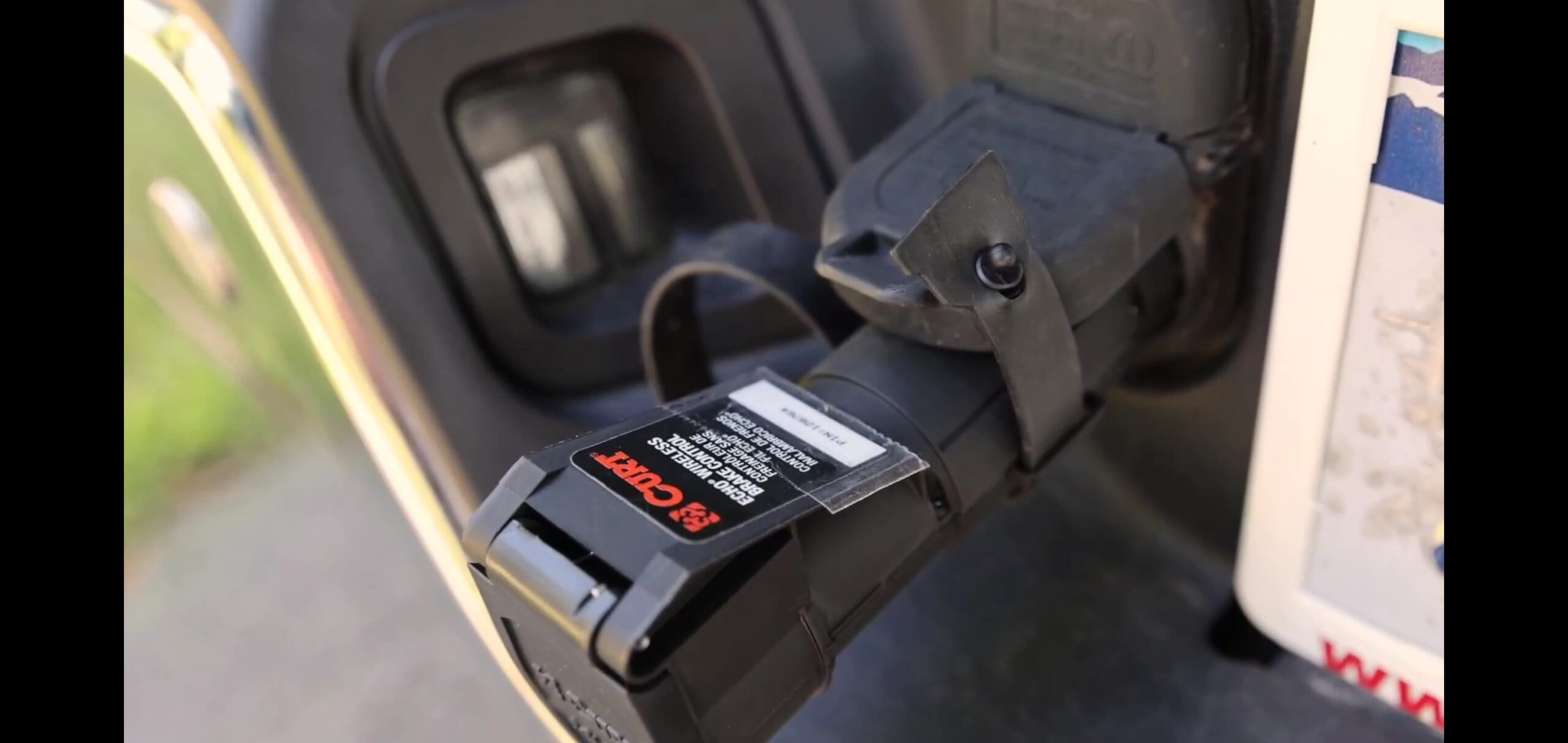
The Echo takes a different approach from everything else on this list: the controller itself is not in the dash, it hangs off the 7-way connector and the braking logic runs on your phone. For anyone who rents the tow vehicle or shares one truck between a trailer and a daily driver, that is the whole argument.
Installation is genuinely zero-tool. It plugs between the vehicle-side and trailer-side 7-way blades, and the included locking tab and strap hold it in place. Nothing behind the firewall, nothing drilled, and it preserves the under-dash space that an inline controller would occupy.
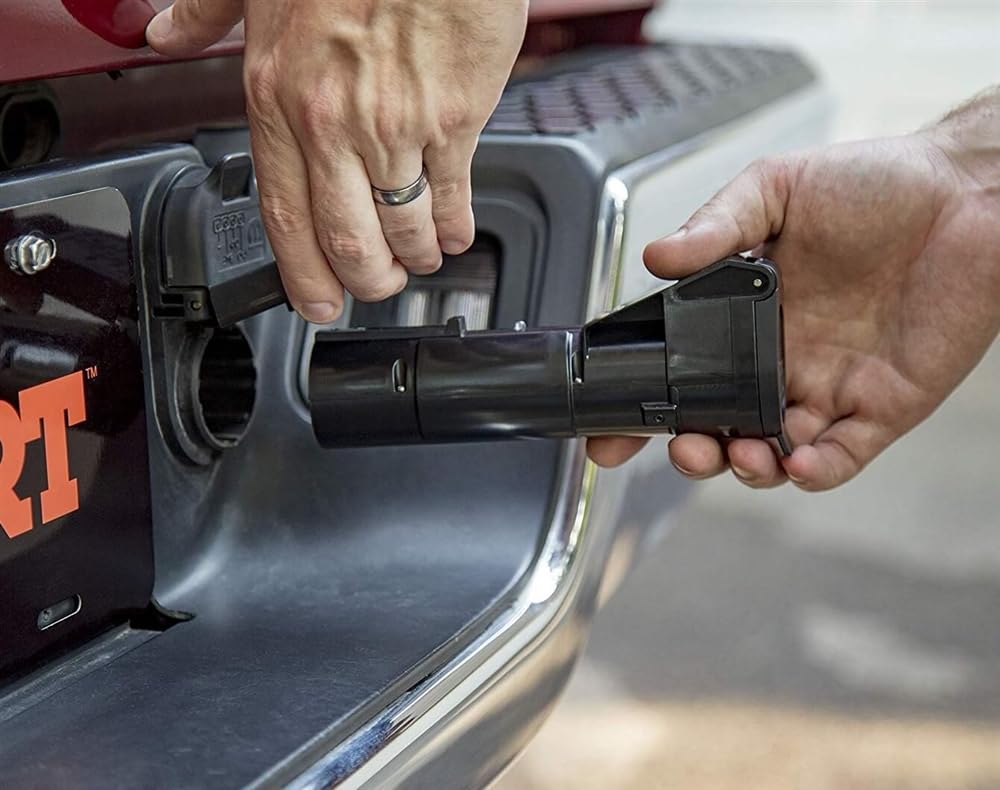
It handles 1-2 axle trailers with 2 to 4 electric brakes, which covers the large majority of travel trailers, boat trailers and small dump trailers people actually tow.
The triple-axis accelerometer is the smart part. If the phone screen locks, a call comes in or the Bluetooth link drops, proportional braking keeps working because the sensing happens in the unit, not the app. That single design choice removes the failure mode that would otherwise worry me about a phone-dependent brake.
Where the phone approach pays off
Profiles can be stored and transferred between compatible setups, so a family with two trucks and one trailer can move settings instead of relearning them. Reviewers also point out the legroom gain in smaller cabs, which is a real benefit in a work truck.
Braking quality once configured is described as smooth, and the app lets you tune sensitivity while parked rather than guessing on a ramp.
Where it falls short for heavy towing
This is the lowest-rated product in the roundup at 4.1 stars, and the reason shows up in the complaints. The supplied rubber retention strap is weak, and a meaningful share of owners swap it for Velcro or a bungee. The housing also hangs low near the connector, which needs extra securing on rough roads.
Sensitivity consistency is the other recurring theme, with brakes grabbing at low app settings on some setups. Around 13 percent of ratings are 1-star, driven by units that loosened or failed outright, so verify operation before you hook up.
3. BUNKER INDUST Breakaway Kit: Best Value Complete Safety System
BUNKER INDUST Trailer Brake Breakaway Kit with Charger, LED Display, Switch, 12V 5Ah Battery for Trailer Caravan
Breakaway box with 12V 5Ah battery
Built-in charger
Push-to-test LED
4.09 pounds
Pros
- Complete kit with box battery charger and switch
- LED shows charged charging or needs recharge
- Side-mount test button is more durable
- Drop-in replacement for worn factory units
- Internal battery is a standard replaceable unit
Cons
- Mounting hardware not reliably included
- Housing is not sealed or water resistant
- Case is hard to open for battery service
A breakaway system is the last line of defense on a towing setup, and this is the one we would pick if we were replacing a failed one. It carries a 4.6 rating across 1212 reviews and ranks first in its category on the Automotive bestseller list.
The package is genuinely complete: breakaway box, 12V 5Ah battery, charger and breakaway switch in one box. That matters because the most common failure in this category is a trailer arriving with a two-year-old battery that died over winter, and replacing a whole system beats hunting for parts.
The push-to-test LED is the feature owners mention most. Press the button and the light tells you whether the battery is charged, charging or low, which turns a guess into a check you can do in the driveway before a long trip.
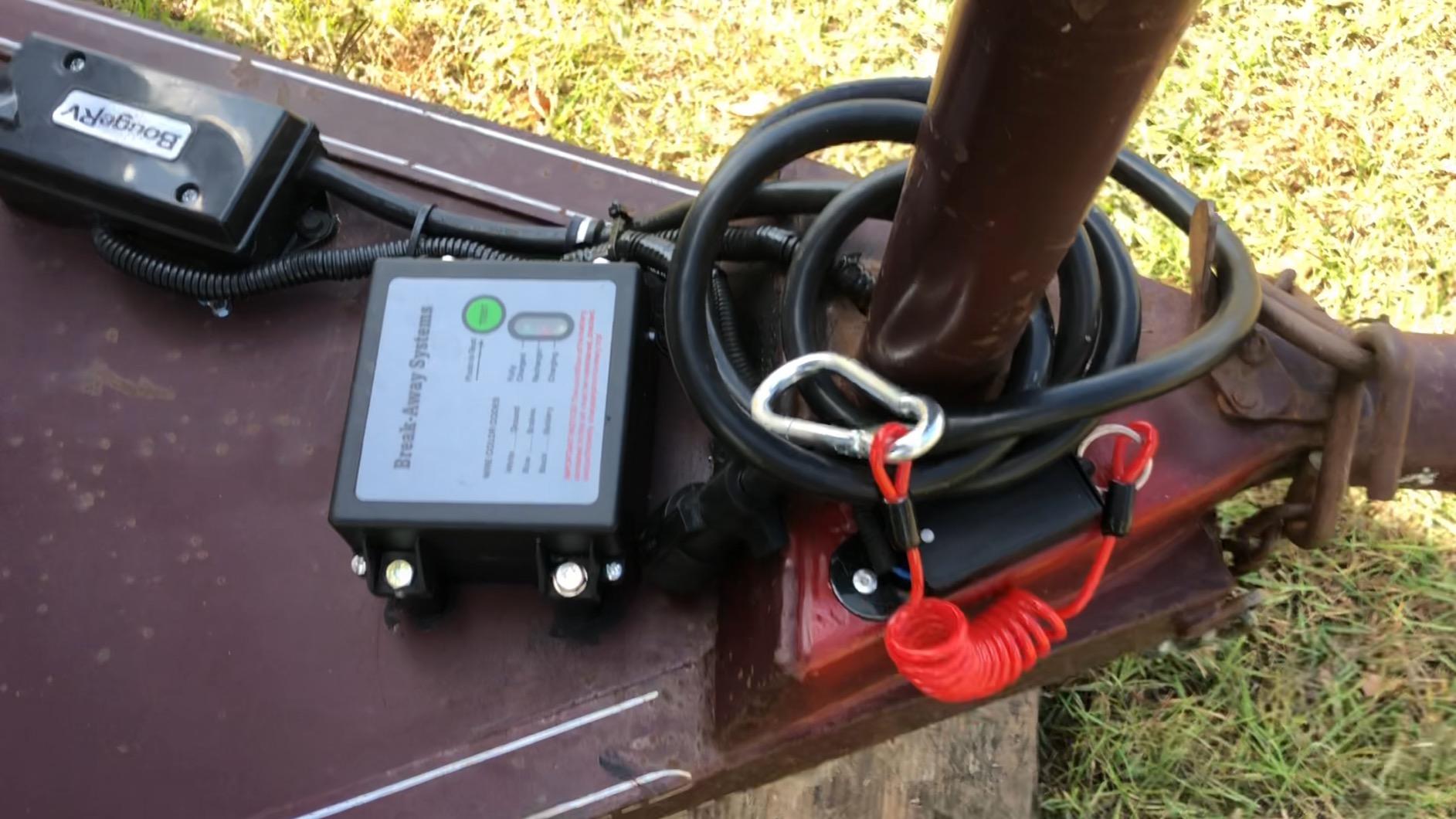
The side-mount test button is a small but real improvement over thin top-mounted plastic covers, which crack. Owners also like that the internal battery is a standard 12V unit, so it can be replaced when it ages out rather than forcing a full system swap.
Reports say it installs quickly and passes the pull-pin brake test on the first attempt, and several owners bought it specifically as an upgrade over a factory or Hopkins-style unit on a trailer they already owned.
Why breakaway coverage belongs in this roundup
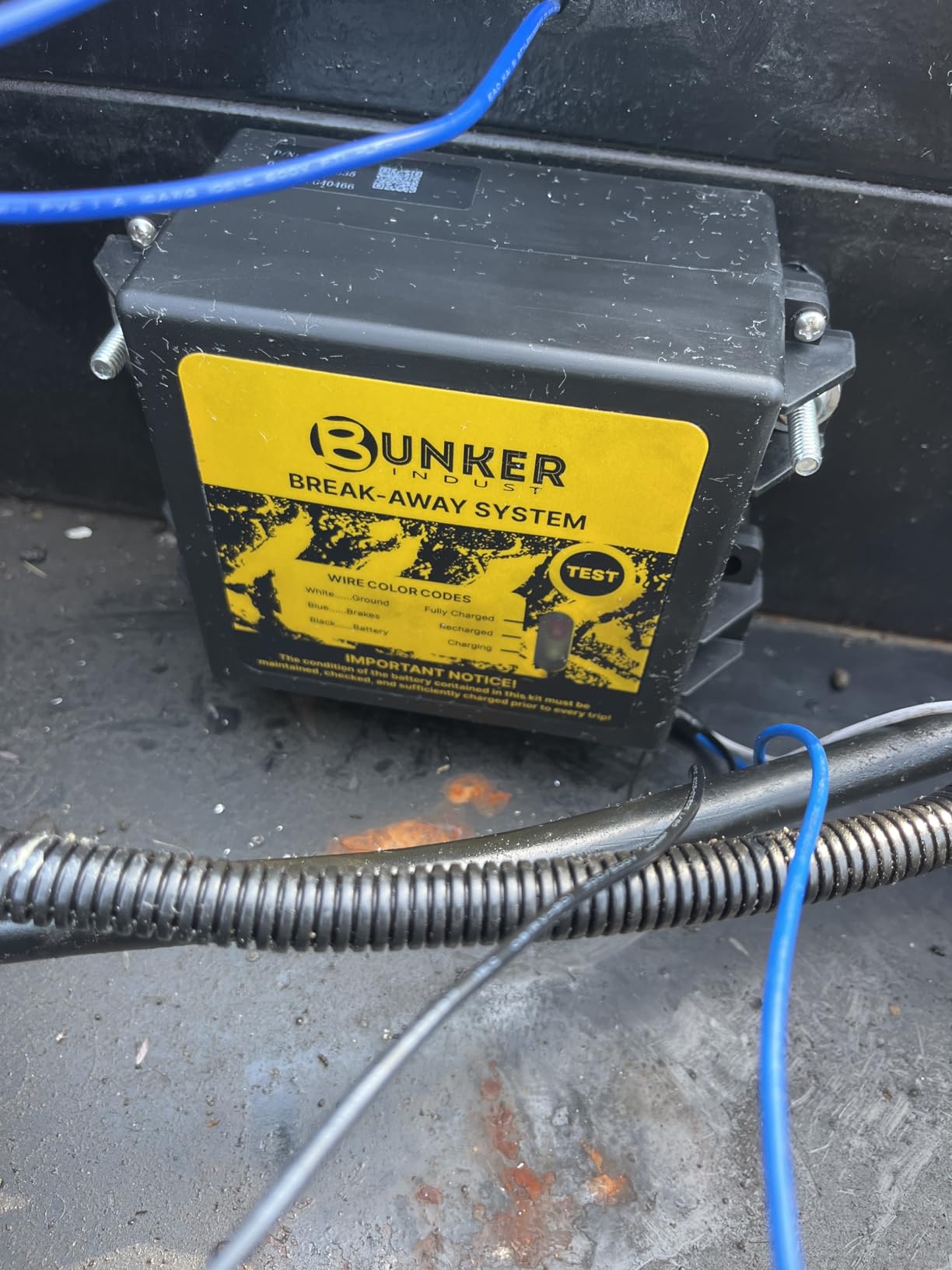
A brake controller can fail, a 7-way connector can work loose, and a trailer can separate on a downhill curve. The breakaway switch is what puts full current to the trailer brakes when that happens, and it works entirely on its own battery with no signal from the truck.
For a boat trailer sitting in a yard for six months, a self-charging system with a readable state-of-charge indicator removes a whole category of failure. Our boat trailer disc brake upgrade guide covers the axle side of the same build.
What to know before mounting it
Three practical issues come up in reviews. Mounting hardware is not reliably included even though the listing photos suggest it is, so plan on sourcing your own. The housing is not sealed, and it should be mounted out of the weather rather than down in a fender well where it sits in water.
Opening the case to reach the battery is difficult because of the double-sided foam pads, and the included cable is straight rather than coiled, so it tends to drag on the ground behind the trailer.
4. REDARC Tow-Pro Liberty: Best Premium Factory-Style Install
REDARC Tow-Pro Liberty Electric Trailer Brake Controller, Universal Fit for 1 to 2 Axle Cars, Trucks, SUVs, Proportional Braking, 12V Compatible to Tow RV, Camper, Trailer, Boat
Proportional mode braking
Active calibration
Compact dash dial
6.7 x 6.3 x 2.2 inches
Pros
- Tiny dial blends in and can be hidden
- Main module mounts in any orientation
- Active calibration needs almost no adjustment
- Owners report set-and-for-stop operation
- Compact RJ45 remote head cable
Cons
- Harness sold separately
- Instructions can be confusing for first-time installers
- Proportional mode only with no off-road setting
The Liberty is the one on this list that disappears into the dash. The control is a small dial that can be fully hidden, and the main module tucks behind the dash in almost any orientation, so the install looks like something the factory shipped.
It supports 1 to 2 axles and works with a universal pigtail harness or a vehicle-specific harness and switch insert, both sold separately. REDARC backs it with a 2 year limited warranty.
Active calibration is what separates it from controllers you retune every time you load differently. Owners report smooth braking after the initial set and little or no adjustment across hundreds of miles, which is a meaningful reduction in attention on grades.
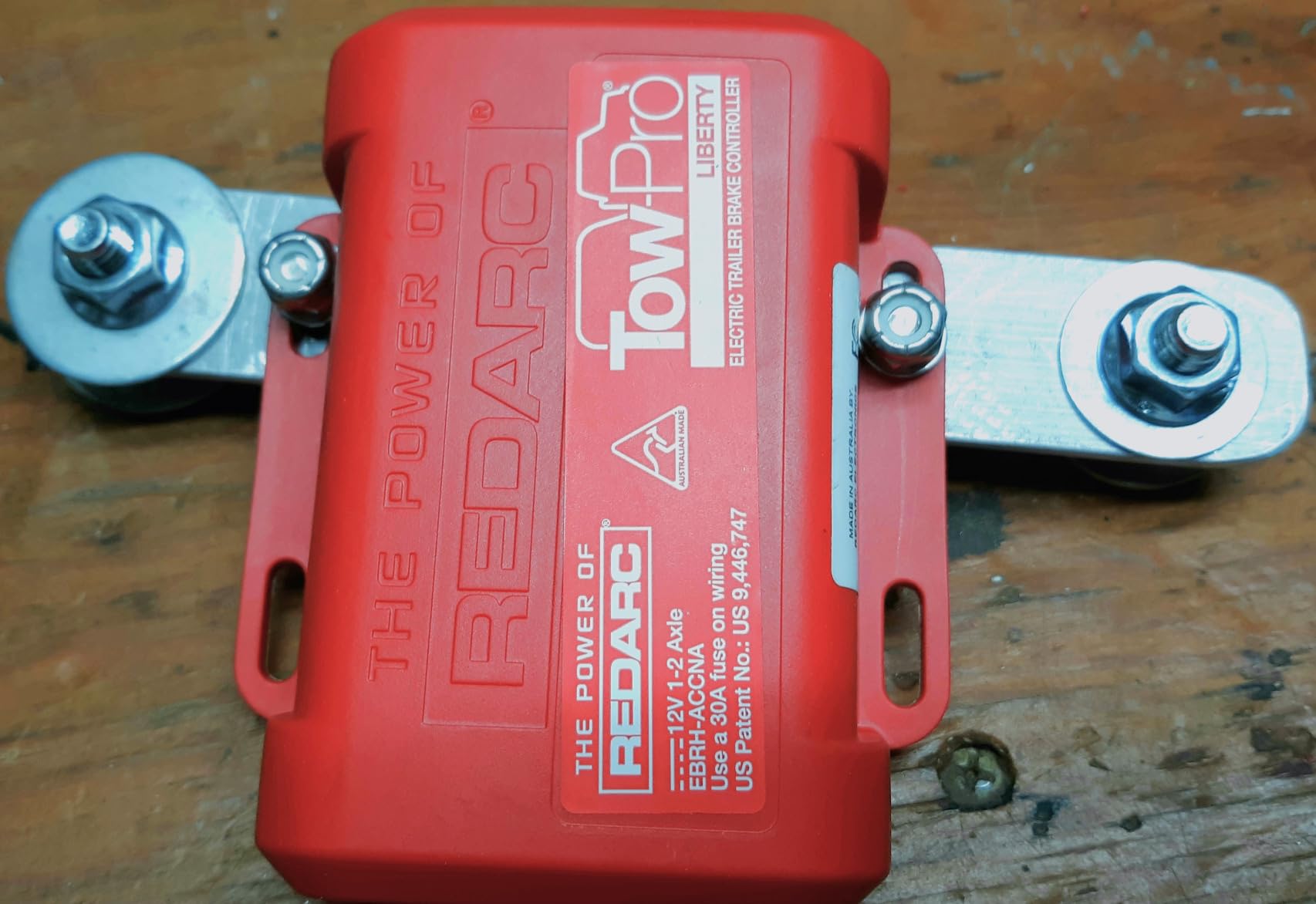
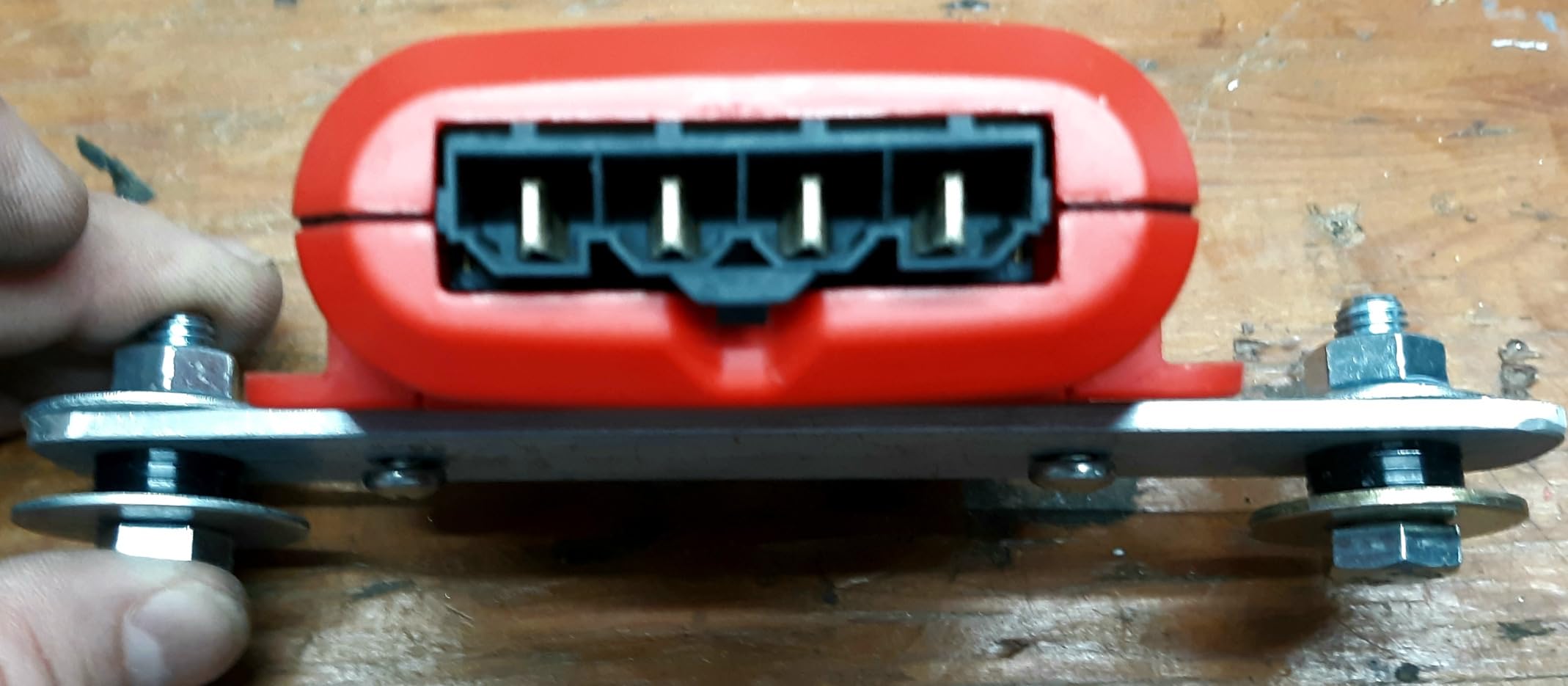
The kit includes the controller, remote head assembly, nut, knob, bezel and a 3 foot 3 inch remote head cable. The company also says the unit was torture-tested in the Australian Outback, which is a reasonable proxy for sustained towing heat and dust.
Knee room is the quiet advantage. A dial that does not protrude means you can get to the pedals in a descent without your leg catching the controller, and the sway control is tuned to hold the rig steady on roads.
How it compares with a standard proportional controller
Against an inertia-based unit like the Primus IQ, the difference is ergonomics and calibration rather than braking character. Both deliver proportional braking; the Liberty hides better and self-tunes better, and the inertia unit has a longer track record and a boost feature the Liberty does not offer.
For a truck that is primarily road towing and mostly used by one driver, the set-and-forget behavior is the deciding factor. The remote head uses a compact RJ45 connector, which is easy to route and easy to replace if it is damaged.
The two limitations worth planning around
Proportional mode only. There is no user-controlled mode for technical terrain, so if you trail a trailer down loose surfaces where you want to hold the brakes on independently, this is not the right unit and the REDARC Elite further down the list is.
The wiring harness is not included, and the instructions can be confusing for a first-time installer. Plan for both. The remote head is also fairly deep, which matters if you are drilling into thin trim.
5. CURT Spectrum: Best for a Dash-Knob Interface
CURT 51170 Spectrum Proportional Trailer Brake Controller, Dash-Mount Knob
Push-button rotary knob
10 tri-color LEDs
Triple-axis accelerometer
Limited lifetime warranty
Pros
- Clean OEM-style dash knob
- Hidden main module
- One control for all settings
- Easy manual override button
- Limited lifetime manufacturer warranty
Cons
- Harness sold separately and vehicle adapters vary
- LEDs can light with no trailer attached
- No integration with the truck center display
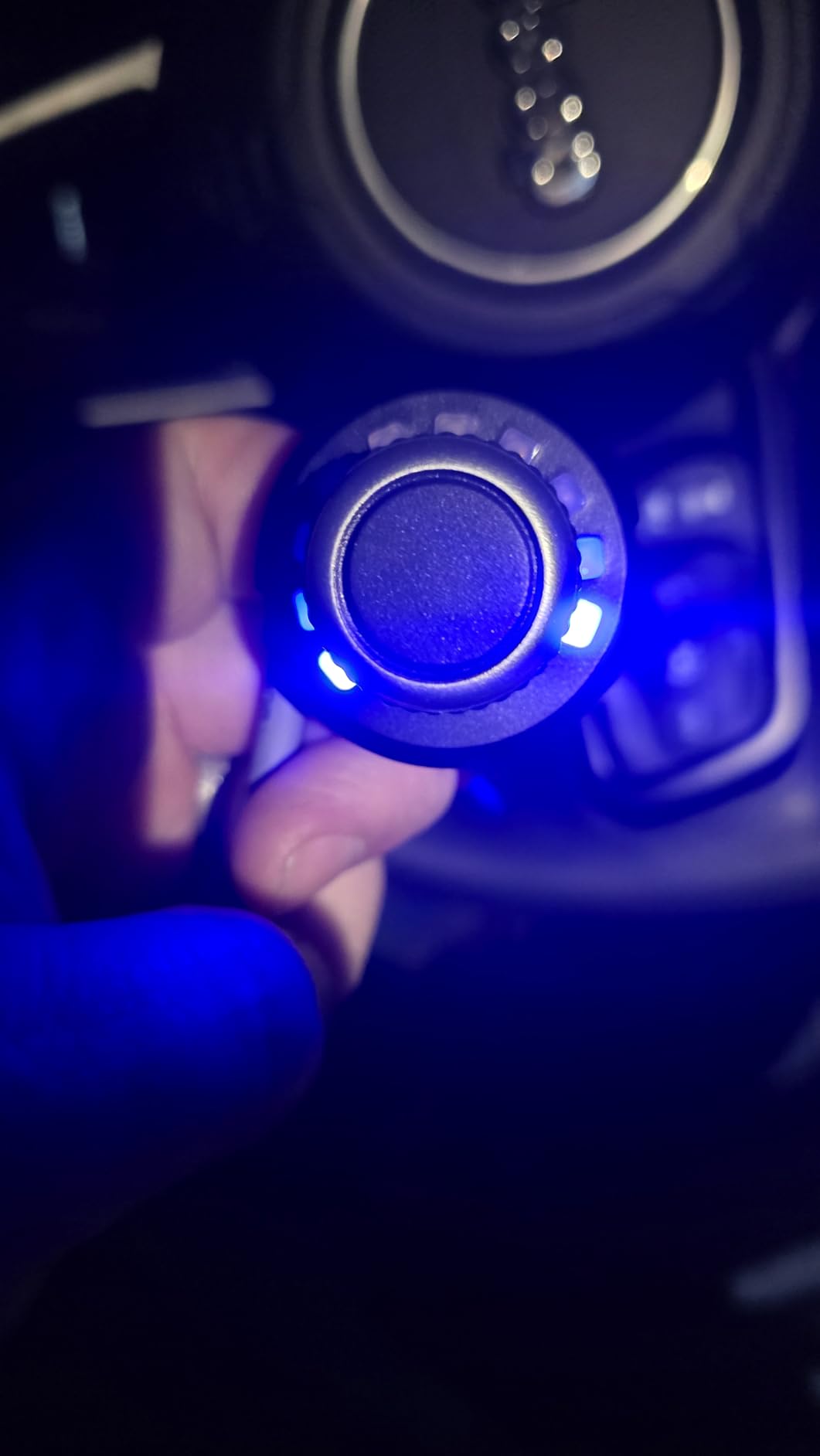
The Spectrum is a conventional dash-mounted proportional controller with an unusual interface: a single push-button rotary knob that handles every setting, backed by 10 tri-color LEDs for status.
It controls 1 to 4 axles and 2 to 8 brakes, which makes it one of the broader-capacity controllers in this roundup for multi-axle trailers. The main module mounts out of sight wherever you have room, so the visible part of the install is just the knob.
The triple-axis accelerometer is the same sensing approach used in the higher-capacity units on this list, and it produces smooth, responsive stops once configured. A single button press gives you manual override, which is useful when you want the trailer brakes locked without touching the gain.
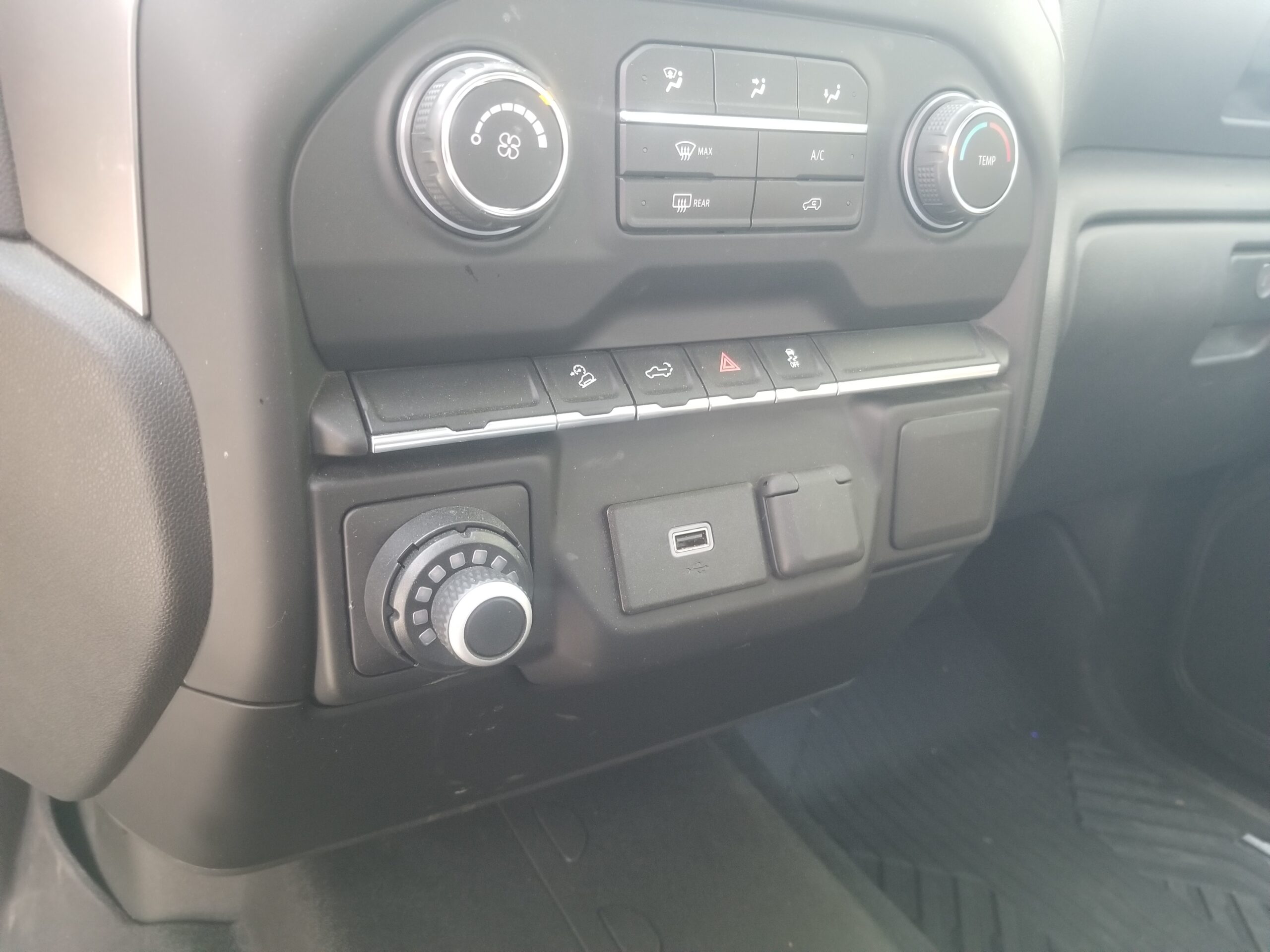
Two details make this attractive to a long-term owner. It carries a limited lifetime manufacturer warranty, which is unusual in this category, and it can move between vehicles with the right adapter if you change trucks.
Owners generally report smooth braking after a single setup pass, and the clean factory look comes up constantly in the reviews.
Whether the knob interface helps or hurts
If you tow with gloves on, in the dark, or while watching the road through a windshield you cannot see past, one knob that does everything is easier to learn than a menu. The override is genuinely a single press rather than a hold-and-navigate sequence.
The LED array gives you gain, boost and slide settings at a glance, which is more feedback than a bare knob. The tradeoff is a 10-light cluster that some people find busy in a dark cab.
Where owners report friction
The most cited complaint is the LED behavior with no trailer connected, where indicators can flash or light unexpectedly. It is cosmetic, but it is the thing people notice first in a daily-driven truck.
It also does not integrate with the truck’s own center display or menu, so you are checking trailer brake state on a separate physical unit. Vehicle-specific harness and adapters vary by year and make, and instructions are English only.
6. VEVOR Electric Brake Assembly: Best for 7000 lb Axles
VEVOR Electric Trailer Brake Assembly, 12″ x 2″, 2 Pairs Self-Adjusting Electric Brakes Kit for 7000 lbs Axle, 5-Hole Mounting, Backing Plates for Braking System Part Replacement (2 Right + 2 Left)
12 in x 2 in self-adjusting brakes
2 pairs, 5-hole mounting
Backing plates included
Pros
- Direct bolt-on fit for Dexter 7000 lb axles
- Self-adjusting removes the manual shoe adjustment
- Backing plates and hardware included
- Handed assemblies clearly labeled
- Good stopping performance once tuned
Cons
- Needs a brake adjusting tool and tuning after install
- A few buyers report weak electromagnet strength
- Occasional reports of chipped pads or bent parts
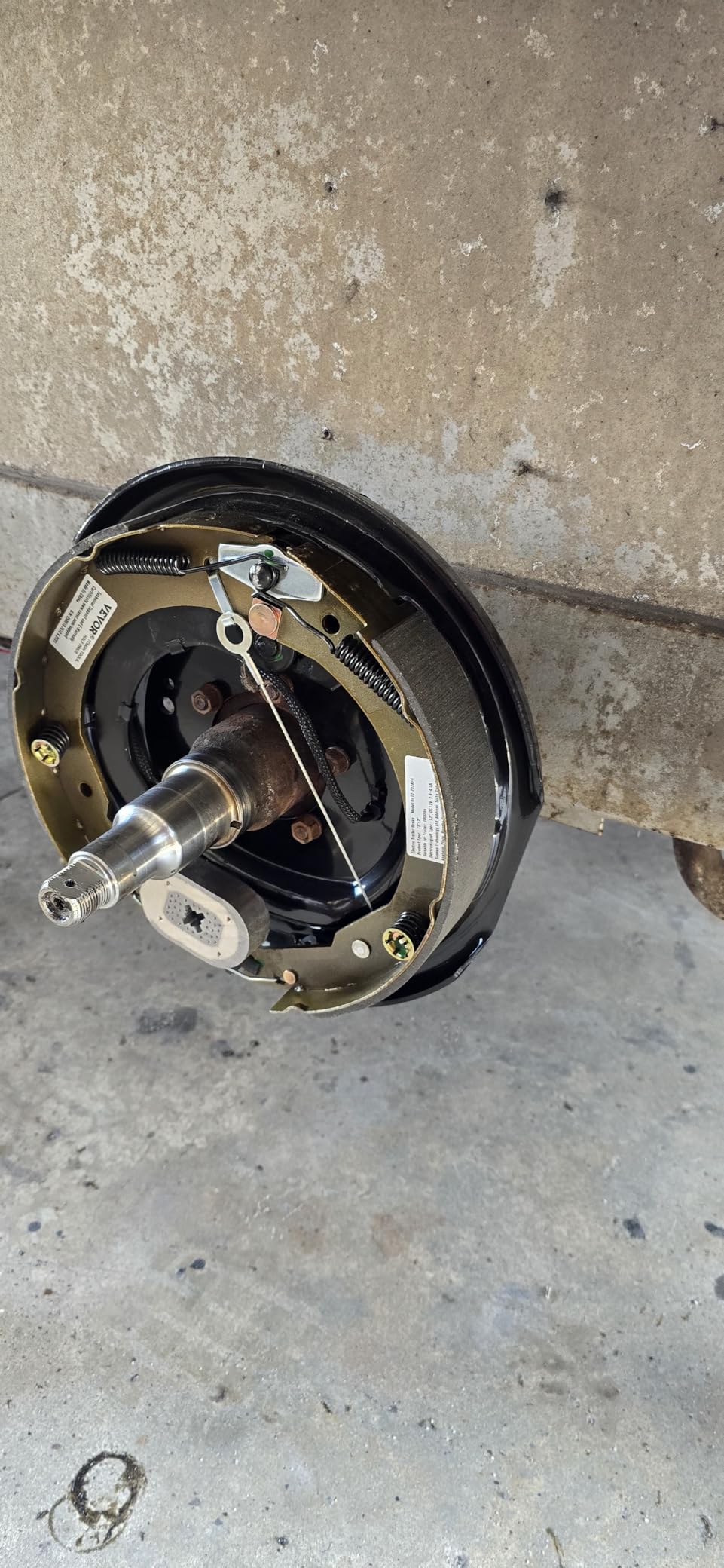
This is a 12 inch by 2 inch self-adjusting electric brake assembly sold as two pairs, sized for 7000 lb axles with 5-hole mounting. If your trailer is on that axle rating, this is a direct bolt-on with no modification, which is the hardest part of an axle brake upgrade.
Self-adjusting is the headline feature and it is a real quality-of-life win. Traditional electric brakes need a periodic manual shoe adjustment as the lining wears; this design takes that chore out of the maintenance schedule.
The package includes both brake assemblies, the backing plates and the mounting hardware, so you are not ordering a second box mid-install. The two handed assemblies are clearly labeled so you do not discover a mismatch at assembly time.
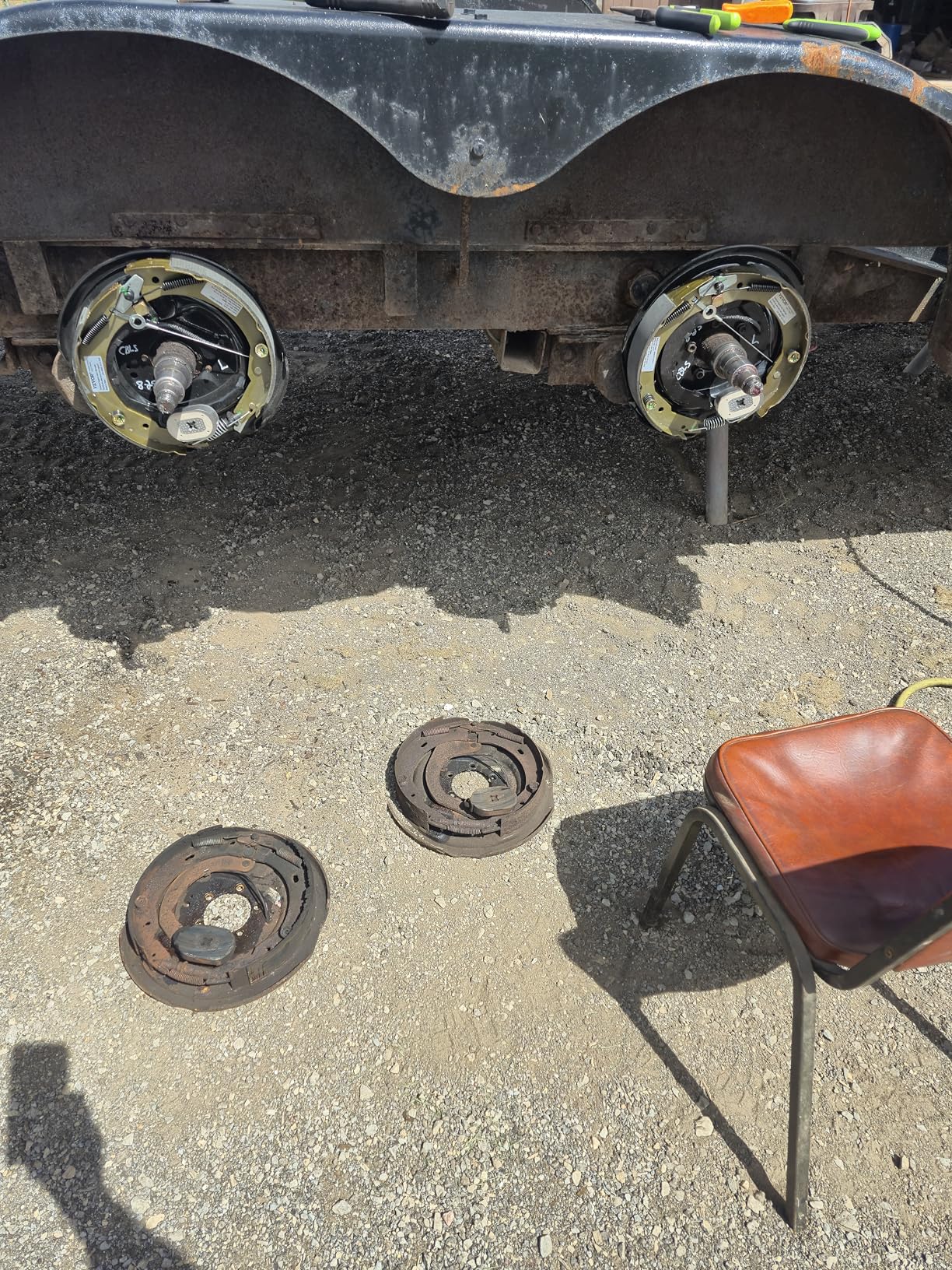
Compatibility extends to Dexter, AL-KO and other trailer axles within the rating, which covers the common heavy-duty boat, dump and equipment trailer axles people tow behind half-tons and three-quarters.
The listed lifespan is up to 30000 kilometers for the brake assemblies, and the electroplated construction is described as resistant to wear. Owners installing on Dexter 7K axles report the four brakes working as direct-fit replacements.
Where this sits in the towing system
These are trailer-side brakes. They are what actually do most of the stopping when a loaded trailer pushes the hitch, and they work only when the tow vehicle’s brake controller is sending them current. Installing assemblies this size without a proportional controller leaves a lot of capability unused.
For a trailer that tows long enough to heat up, replacing tired drums or under-rated assemblies here is often a bigger improvement than upgrading the truck pads, because the trailer mass is the larger share of the stopping load.
What to check on arrival and after install
Inspect the shipment before you build. A minority of buyers reported chipped brake pads or a slightly bent assembly on arrival, and the packaging is basic enough that transit damage is plausible.
The assembly needs a brake adjusting tool and some tuning after installation, and a small number of buyers report the electromagnet as weak. Check that each brake pulls evenly with the trailer on the jack before the first road test.
7. REDARC Tow-Pro Elite: Best for Trail and Off-Road Towing
REDARC Tow-Pro Elite Electric Trailer Brake Controller, Universal Fit for 1 to 3 Axle Trucks, SUVs, Dual Braking Modes, Plug and Play Install, 12V/24V Compatible to Tow RV, Camper, Trailer, Boat
Proportional and user-controlled modes
1 to 3 axles
7 x 7 x 3 inches
2 year limited warranty
Pros
- Two braking modes including user-controlled
- Works with electric and electric-over-hydraulic brakes
- Small dash knob and hidden main unit
- Self-calibrates and mounts in any orientation
- Universal switch insert and harness included
Cons
- Switch insert is not universal across all vehicles
- Vehicle-specific harness usually a separate purchase
- Push-style knob is firm and takes effort
- Instructions can be dense for beginners
The Elite is the Tow-Pro Liberty plus a second braking mode, and that second mode is the reason it exists. Proportional mode handles roads and highways; user-controlled mode lets you set the trailer braking manually for trails and technical terrain where proportional sensing overreacts to bumps.
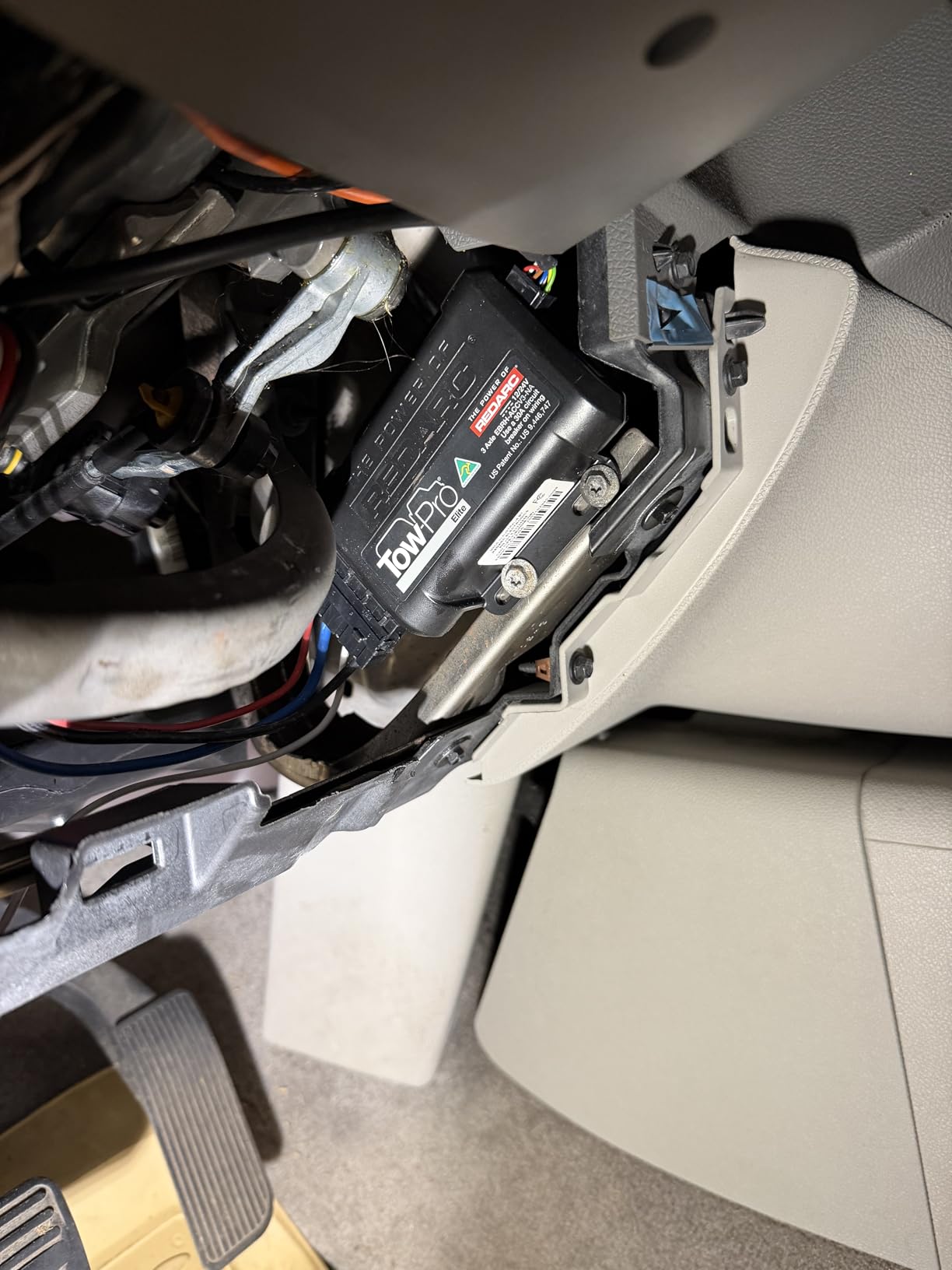
It supports 1 to 3 axles and fits both electric and electric-over-hydraulic trailer brakes, which widens the range of trailer builds it can drive. The main unit self-calibrates and mounts in nearly any orientation behind the dash.
Owners rate it very highly for smooth, consistent braking and for the clean, unobtrusive dash appearance that keeps knee room clear, which is the same physical advantage as the Liberty.
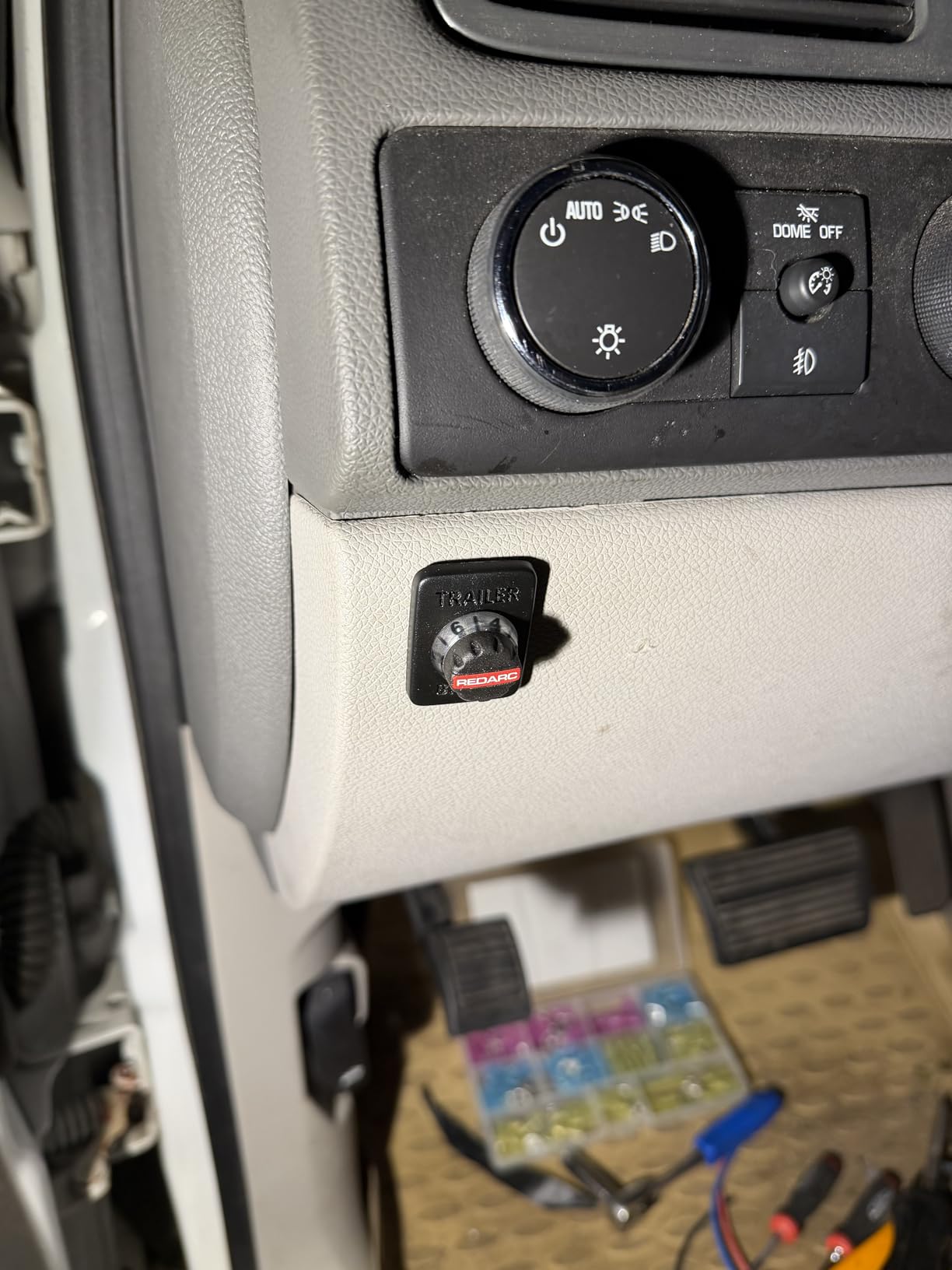
The box includes the controller, remote head assembly with nut, knob and bezel, a 3 foot 3 inch remote head cable, the main unit wiring and connector, and a universal switch insert panel. That is a more complete box than the Liberty, and it carries the same 2 year limited warranty.
For a rig that spends weekends on graded dirt roads with a boat or a small camper, the ability to dial in and hold trailer braking manually is a safety improvement that road-only towing setups never need.
When dual mode actually earns its place
Proportional controllers read deceleration, not terrain. On washboard roads and off-camber trails, a bump can read as a hard stop and the controller applies trailer brakes when you do not want them, which pushes the trailer into the tow vehicle.
User-controlled mode removes that variable entirely. You set the level, you change it when the terrain changes, and the trailer does exactly what you asked. For sustained trail work that is worth the extra capability every time.
Where the Elite falls short of its marketing
The included universal switch insert is not actually universal across all makes and models, which is the single most repeated note in the reviews. Some owners buy a vehicle-specific bezel or harness to get a clean fit, so treat the included panel as a starting point rather than a solution.
A vehicle-specific wiring harness usually has to be purchased separately, the push-style knob is firm enough to take some getting used to, and the instructions can be dense for a first-time install.
8. Timilge Digital Controller: Best Budget Entry to Proportional Braking
Proportional Trailer Brake Controller 8508211 Digital Electric LED Display
LED voltage display
1 to 4 axles, 2 to 8 brakes
Self-leveling
4.33 x 2.76 x 1.1 inches
Pros
- Entry price for proportional braking
- LED display shows live voltage to the trailer brakes
- Covers 1 to 4 axles and 2 to 8 brakes
- Self-levels so mounting orientation does not matter
- Boost and sensitivity adjustments included
Cons
- Must be powered down when parked long term
- Wiring color codes poorly documented
- Some arrived dead or applied brakes continuously
- Needs careful tuning to avoid lock-up
The Timilge is the straightforward way into proportional braking without buying into a named brand ecosystem. It is small, it fits most dashboards, and it covers more axles than controllers costing several times as much.
Capacity is 1 to 4 axles with 2 to 8 brakes, and the unit self-levels so you can mount it in whatever orientation your dash allows. Both braking power and program rate are adjustable to match inclination, street conditions and trailer type.
The LED digital display shows the voltage the controller is delivering to the trailer brakes in real time, which is a more useful diagnostic than a simple on/off light. Owners report installs in about 15 minutes and reduced trailer tire wear compared with old time-delay controllers.
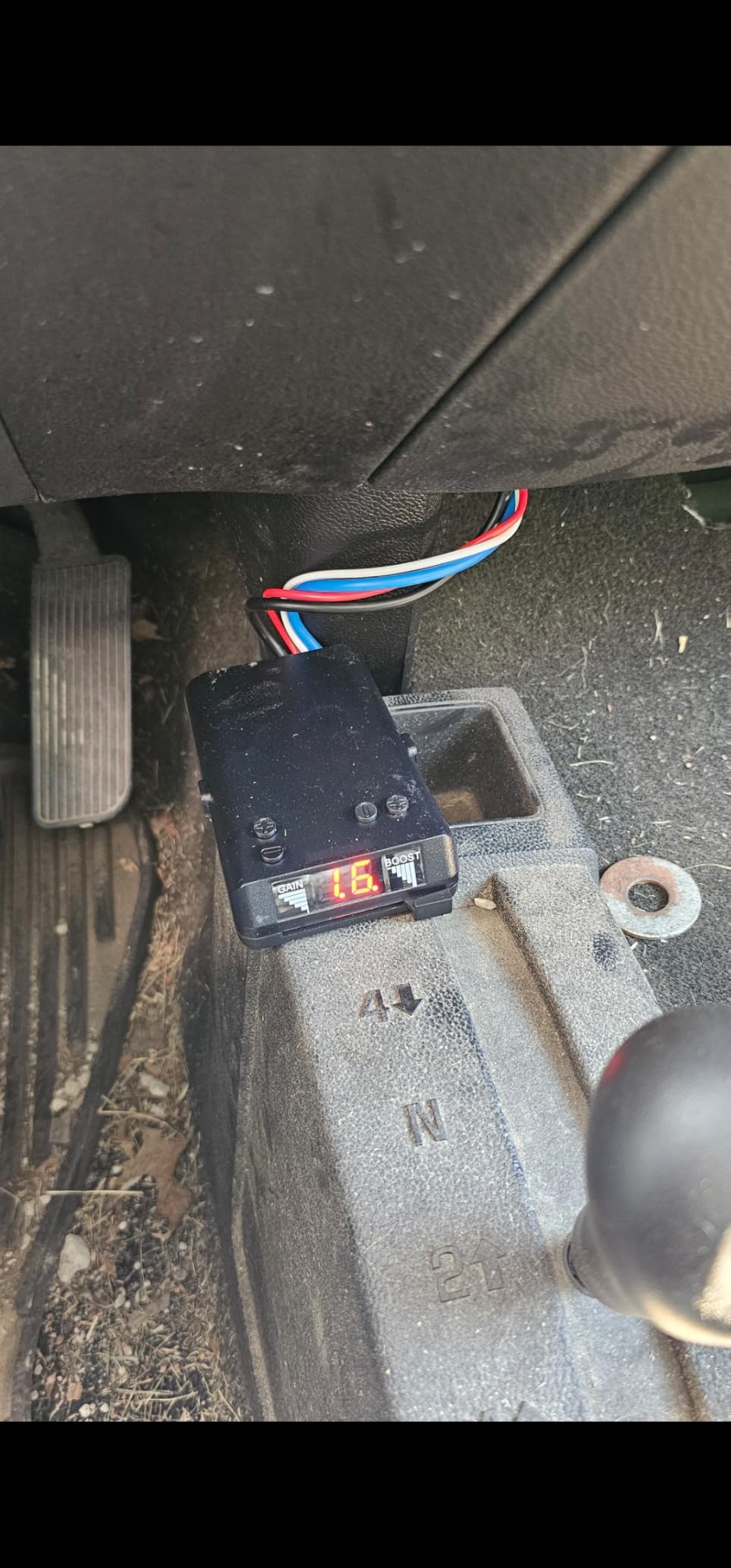
Wiring ports accept vehicle-specific brake controller harnesses for quick connection and removal. The color coding is black for vehicle power, red for stop light, white for vehicle ground and blue for trailer brakes, and those leads are labeled directly on the unit.
Boost and sensitivity give you fine tuning once the unit is in, and the proportional response is noticeably better than a time-delay controller on grades.
Whether the savings are worth the tradeoffs
For a light-duty trailer under roughly 3000 lbs that a first-time tower pulls a few times a year, this does the job. The feature set covers the basics properly, and the voltage display is a genuine help when something is not braking evenly.
Where it costs you is in the documentation. The wiring color codes are not clearly explained in the manual, so expect to trace leads on your own, and the controller must be fully powered down or disconnected when the truck is parked long term or left unused.
What owners report about long-term use
A small number of units failed outright or applied the brakes continuously, and around 10 percent of ratings are 1-star. Several buyers reported severe brake lock-up on grades, which points at tuning rather than the unit itself, but it means you should test the settings at low speed with the trailer connected before you trust it.
Verify operation, confirm the brakes release fully when the pedal is up, and then it will do what you need it to do.
9. SEHNSUCHT Axle Brake Kit: Best All-in-One for 3500 lb Axles
Trailer Axle Electric Brake Kit, Pair of 5-Hole, 4.5″ Bolt Circle Brake Drum with 10″ x 2 1/4″ Self-Adjusting Electric Brakes for 3500 lb Axles, Replacement 10”(not for 4400lb) Brake Hub Drum Assembly
10 in x 2-1/4 in drum brake kit
3500 lb axle rating
5-hole 4.5 in bolt circle
Bearings seals and hardware included
Pros
- Everything needed in one package
- Electroplate cast iron drums resist rust
- Self-adjusting 10 in x 2-1/4 in brakes for 3500 lb axles
- Fits 1-1/16 in to 1-3/8 in spindles
- Complete hardware set included
Cons
- Not for Nev-R-Lube axles or later Airstream Classics
- Will not fit 1-1/16 in or 1 in straight spindles
- Not compatible with Dexter 4400 lb backplates
- Dust cap has to be hammered on
- Measure the brake flange before ordering
This is the travel-trailer end of the axle brake range, and it is the kit most owners actually need. It is a pair of 5-hole, 4.5 inch bolt circle brake drums with 10 inch by 2-1/4 inch self-adjusting electric brakes, sized for 3500 lb axles.
Unlike the drum-and-hub assemblies that replace only one corner, this package covers the whole axle. You get two drums, two electric brakes, bearing inner rings for L68149 and L44649, a grease seal, dust covers, hub nuts, washers, nuts and cotter pins.
Electroplated cast iron drums are the notable detail for towing, because an untreated drum on a boat trailer or a salt-belt road surface goes to rust from the inside out and eventually scores the shoes. The plating here is specifically to protect the drum body against corrosion.
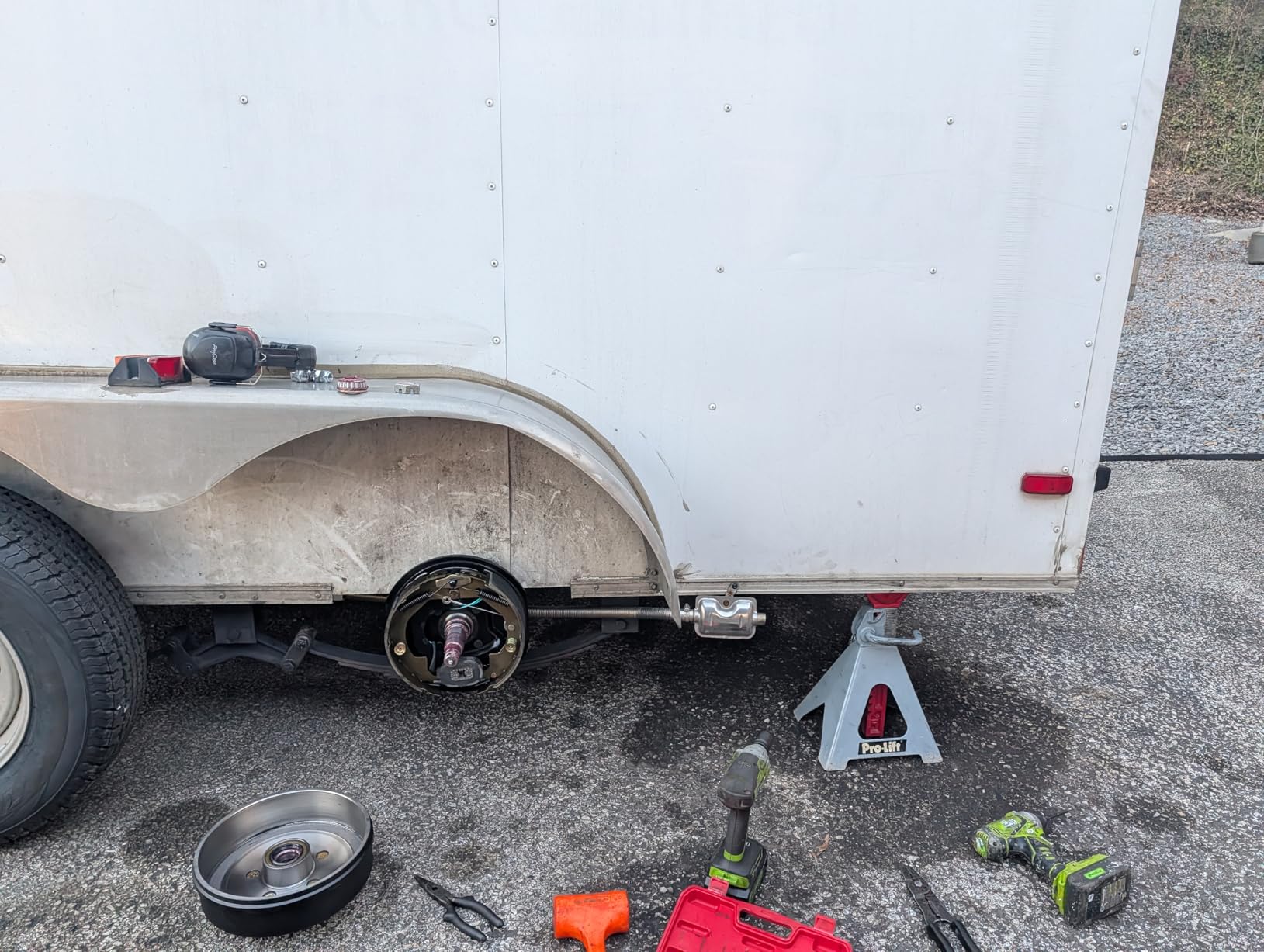
Spindle fit runs from 1-1/16 in to 1-3/8 in, and it bolts onto a standard 5-hole 4.5 in hub pattern. The hardware set is complete, so no extra fasteners are needed at install time.
The review base is small but strongly positive, with owners calling out the completeness of the package and the straightforward fit on standard-lube 3500 lb axles.
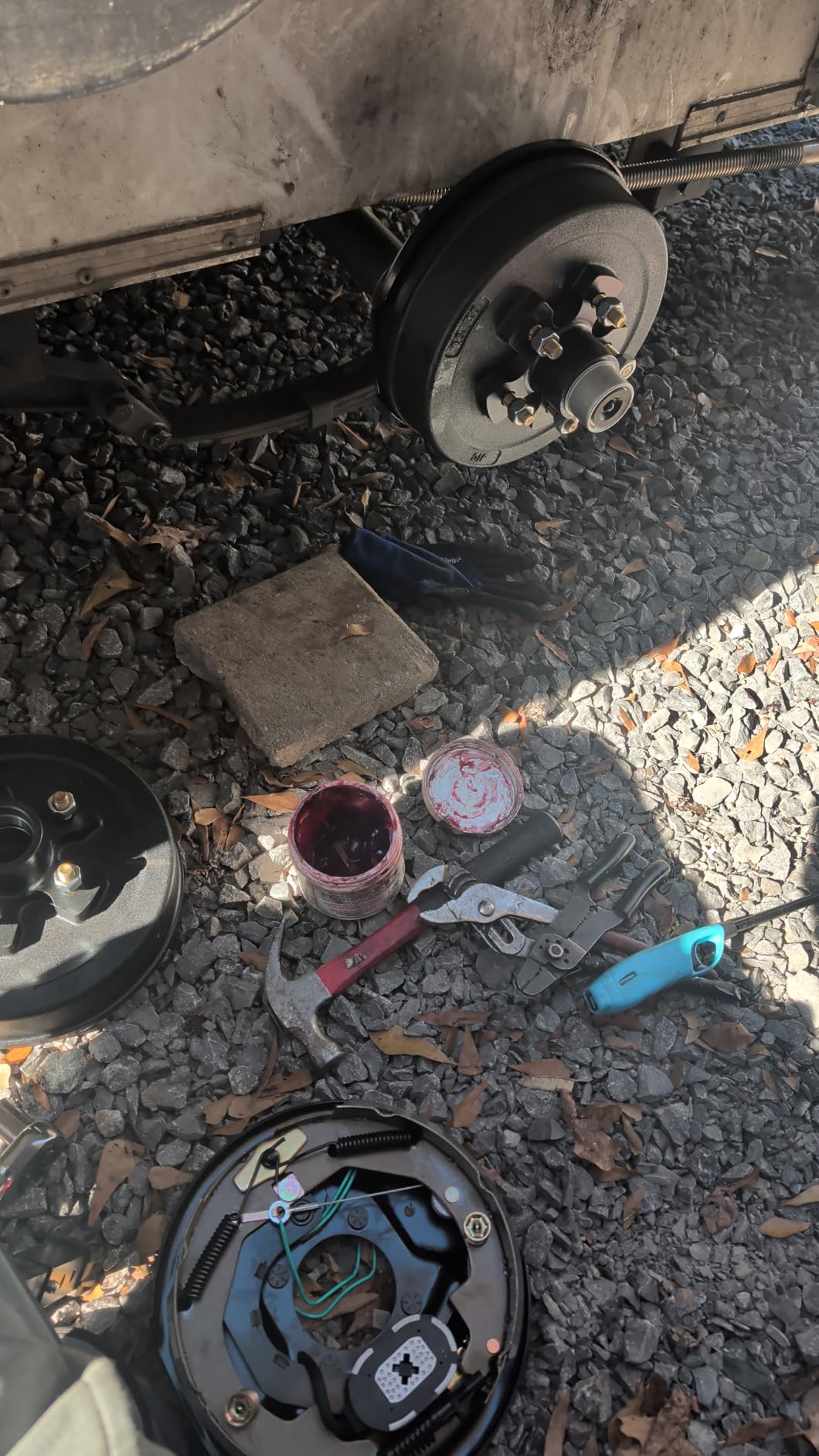
Measure before you order
This is the single most important thing in this section. The kit is deliberately not compatible with Nev-R-Lube axles, Airstream Classic trailers built after July 2005, or Dexter 4400 lb brake backplates, and it will not fit 1-1/16 in or 1 in straight spindles.
If you are unsure, measure the brake flange and the spindle before ordering rather than after. A 4,400 lb backplate trailer needs the 7,000 lb class assemblies instead, which is why we put the VEVOR kit earlier in this list.
How it performs once installed
The self-adjusting design handles lining wear without the periodic manual shoe adjustment, and the drum design is described as achieving short-period emergency braking in harsh conditions, which is exactly the case a breakaway event creates.
One fitting task is not beginner-friendly. The dust cap is installed by hammering, so have a proper socket and a drift on hand, and plan the axle brake work with the wheel removed and the trailer properly supported.
10. FIERYRED Breakaway Kit: Best for Outdoor-Stored Trailers
FIERYRED LED Test Trailer Brakes Breakaway Kit with Battery and Switch, Side Load Break-Away Controller System, Built in 12V 5AMP Charger
12V 5AMP built-in charger
LED charge level test
Weatherproof housing
3.94 pounds, 1 year warranty
Pros
- Complete kit for a full install or a straight replacement
- Colour-coded pre-wired cables
- Reliably locks up the trailer brakes on pull
- Simple LED charge indicator
- Reinforced housing holds up over time
Cons
- Battery box is larger than expected
- Mounting hardware not included
- Only works on trailers with electric brakes
The FIERYRED kit shares a rating with the Tekonsha at 4.7 stars, and its rating distribution is unusually clean, with 81 percent five-star and 1 percent one-star. It is a side-load breakaway controller with a built-in 12V 5AMP charger and an LED charge-level button.
What separates it from the other breakaway kits here is the housing. The casing is a thickened reinforced engineering plastic rated waterproof, shockproof and anti-aging, which is a real difference for a trailer that lives outside through rain, mud and dust.
Installation is where this one earns its rating. The battery, brake and ground leads come pre-wired and colour-coded, and the battery box and switch install with screws or rivets, so there is no wiring diagram to decode.
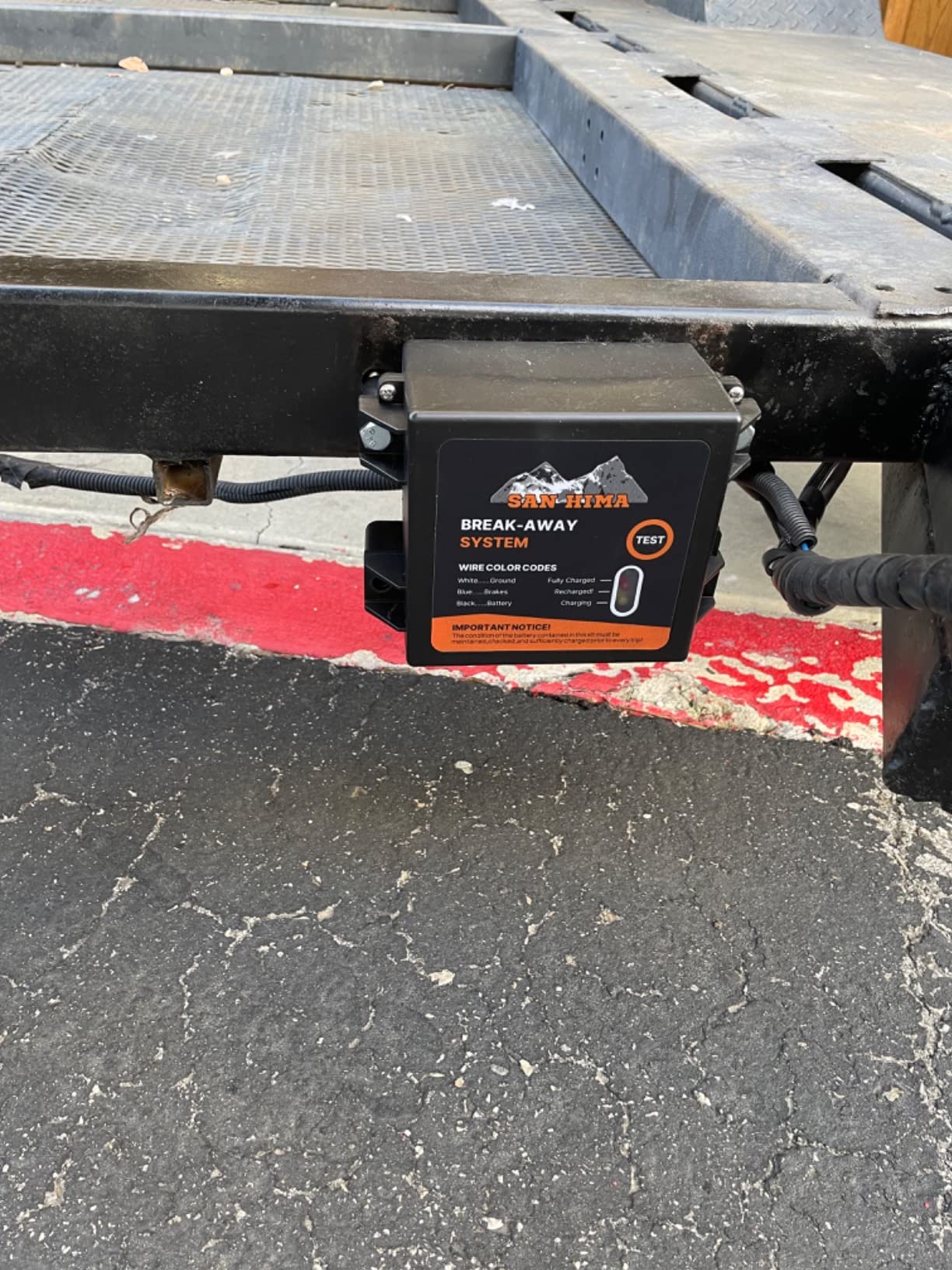
The LED test button is straightforward to read. The yellow indicator is on normally, and pressing the test button turns it green when the battery is fully charged, which is a quick pre-trip check with no tools.
Owners report that the kit installs easily, holds charge between uses and locks the trailer brakes as intended when the switch is pulled. It carries a 1 year warranty.
What the weatherproof rating buys you
On a boat trailer or a fifth-wheel stored outdoors, the difference between a sealed and an unsealed breakaway box is the difference between a system you trust in March and one you are hoping survived the winter. Corroded terminals inside a non-sealed box are a slow failure that shows up as a dead battery at the worst time.
The flip side is that a sealed box gives you less warning when something fails, which is exactly why the LED test matters. A ten-second check before you connect is cheap insurance.
Fit and compatibility notes
Two constraints are worth reading twice. It only works on trailers with electric brakes, which excludes a lot of small utility trailers, and the battery box is larger than most owners expect, so place it on the frame where it will not foul the coupler or a tailgate.
Mounting hardware is not included, so bring your own fasteners and thread locker for the frame mounts.
11. Draw-Tite Tow Ready Wiring Kit: Best for Clean Factory-Style Wiring
Draw-Tite Tow Ready 20505 Trailer Brake Wiring Kit for 2 to 4 Brake Control System, Includes a 25 Foot 12-2 Duplex Wire, 20 Amp Circuit Breaker and Attaching Terminals
25 ft 12-2 duplex copper wire
20 Amp circuit breaker
Terminals and cable ties included
1 year limited warranty
Pros
- Heavy 12-gauge duplex wire with double insulation
- Colour-matched wiring simplifies firewall routing
- 20 Amp breaker and full terminal set in the box
- Everything needed for the install is included
Cons
- 25 ft of wire can run short on long wheelbase vehicles
- Included cable ties run out on a full-length run
- Only one circuit breaker supplied
Everything else on this list is a component. This is the wire that carries the current to them, and a brake controller that is fed by undersized or badly routed wire will under-deliver at exactly the moment you need it.
The kit uses 25 feet of 12-2 duplex copper wire with double insulation, a 20 Amp circuit breaker and a full set of attaching terminals. It is designed for 2 to 4 brake control systems and uses T-one connectors.
Buyers consistently praise the heavy gauge of the wire and the colour coding, which is what makes the run behind the firewall straightforward. The package includes ring terminals in three sizes, a butt connector, black and white wire in one length and black and blue in another, plus cable ties.
Reviewers report a clean, easy installation, and the 4.7 rating across 178 reviews reflects how few complaints a box of wire and a breaker can generate when the gauge is right.
Why wire gauge matters for towing
Trailer brakes draw meaningful current, and current over a long resistive run costs voltage. Undersized wire does not fail loudly, it just delivers less braking force than the controller is asking for, and the drop gets worse when the battery is loaded and cold.
Running this behind a full-size truck firewall is where the length matters. A shorter, heavier run beats a longer, lighter one, and the colour coding keeps the stop-light and ground circuits identifiable when you are doing it in a dark footwell.
Where 25 feet runs out
This is the most consistent complaint in the reviews. On long wheelbase vehicles such as full-size trucks and large SUVs, the 25 foot lead runs a foot or two short, which leaves you splicing extension wire to finish the run.
The supplied cable ties also run out before a full-length install, and only one circuit breaker is included when some installs call for a second. Buy a second breaker and a handful of extra ties with the kit and you will not be standing in a driveway looking for one.
12. ATEM POWER Solar Breakaway Kit: Best Low-Maintenance Charging
ATEM POWER Trailer Brake Controller Kit with Switch 12V 3AH LifePO4 Lithium Battery Trailer Breakaway Kit Brake Controller Bulit-in Solar Panel LED Indicator Break Away System for Trailer Caravan IP65
Built-in solar maintenance panel
12V 3Ah LiFePO4 battery
IP65 ABS housing
3 year warranty
Pros
- Sealed design removes exposed terminals that corrode
- Solar panel keeps the battery topped up in storage
- Quick-check button and LED status indicators
- Slim plug-and-play install in about 10 minutes
- Short coiled lanyard switch stays clear of road wear
Cons
- LiFePO4 capacity drops in extreme cold
- Some units reported moisture and corroded connections after a year
- Printed wiring instructions are small and hard to read
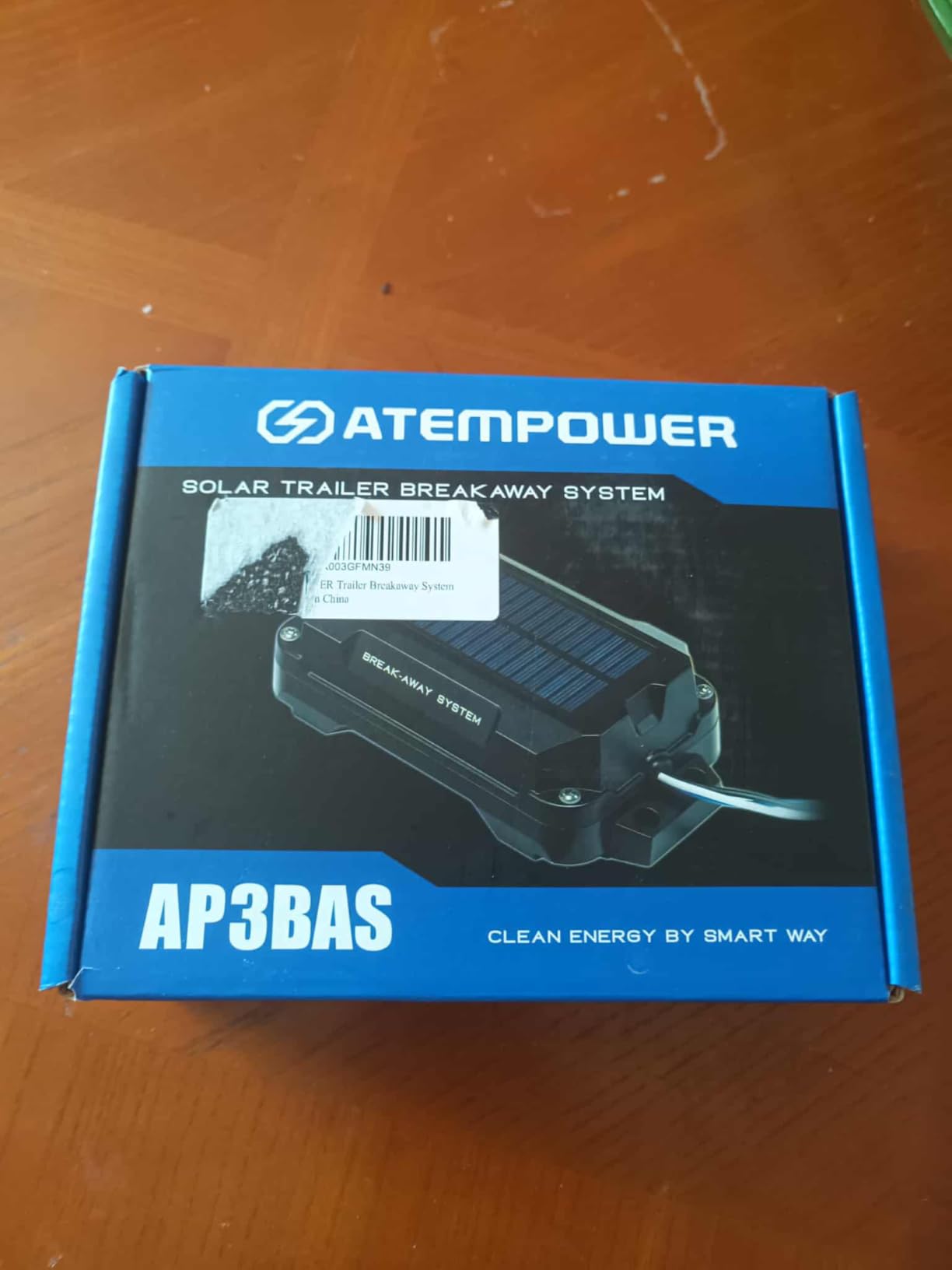
This kit is the only one in the roundup with a built-in solar panel, and the reason is the failure mode it removes. A conventional breakaway battery discharges over a long storage period, and the seasonal dead-battery-then-no-trailer-brakes scenario is the reason the system exists in the first place.
The solar panel maintains the breakaway controller charge while the trailer sits, so the battery is ready when you connect. It is designed for 1 and 2 axle trailers and caravans with electric brakes, and it carries a 3 year warranty.
The battery is a 12V 3Ah lithium iron phosphate pack with an integrated BMS for protection, a quick-check button and LED indicators. Compared with an open lead-acid box, the sealed all-in-one housing eliminates exposed terminals that corrode over a season of weather.
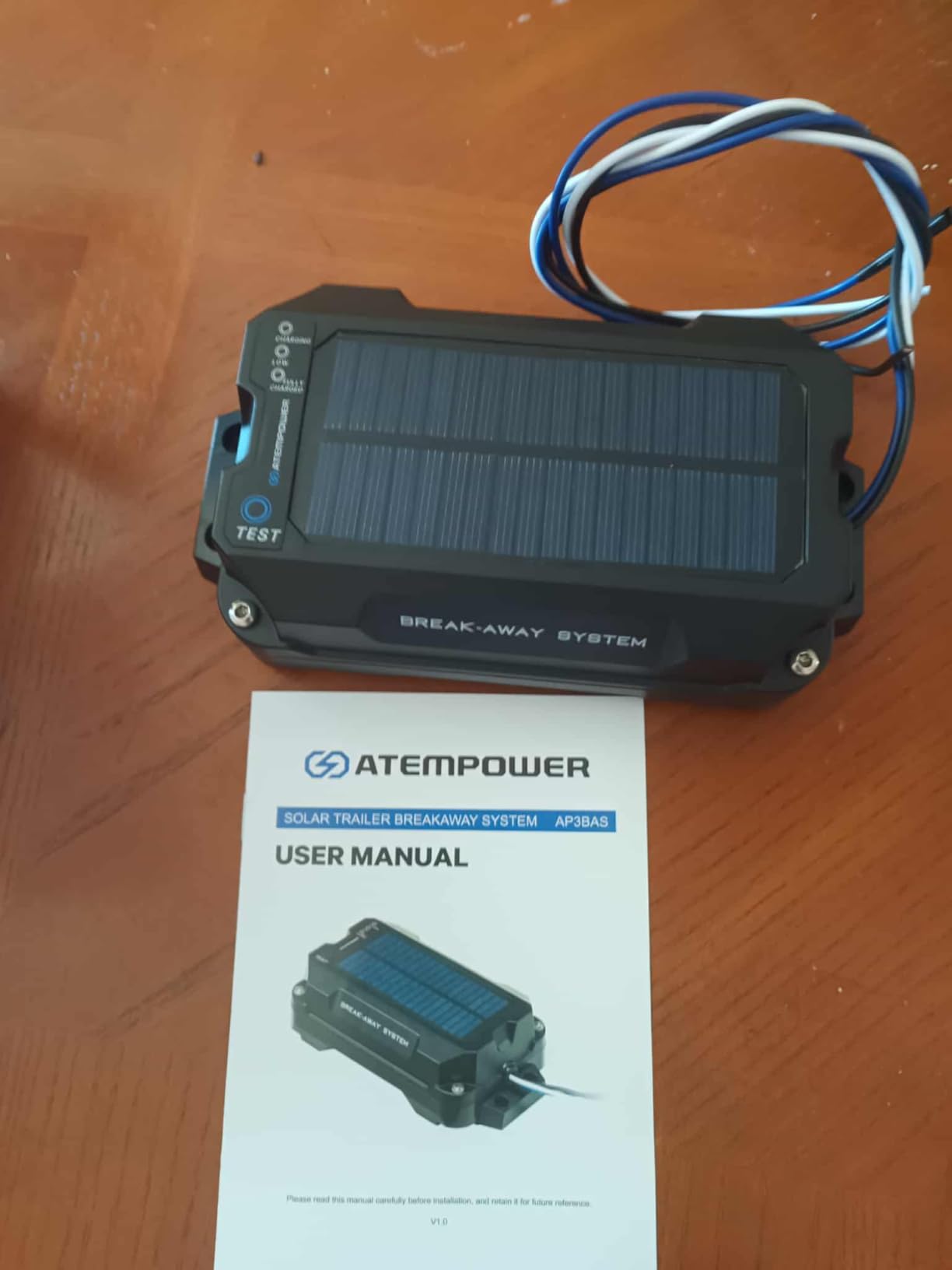
Installation is a slim plug-and-play job that owners report completing in about 10 minutes, with pre-wired colour-coded cables for battery, brake and ground, and a short coiled lanyard switch that stays out of the way of road wear.
Build quality is the appeal for anyone who has had to replace an open battery box every season. The IP65 rating covers water, dust and road debris, and the housing is heavy-duty ABS.
What solar maintenance charging actually solves
It solves the storage problem, not the towing problem. If your trailer is hooked up and used regularly, the tow vehicle charges the breakaway battery through the 7-way as normal, and the solar panel adds very little. If your trailer sits for months between trips, the panel is what keeps the switch alive.
One clarification from the manufacturer matters for expectations. The panel is there to keep the breakaway controller from running out of power, not to charge the trailer controller battery, and the company still advises staying away from the unit during heavy rain.
Where durability reports contradict the rating
The 4.3 rating is held back by durability complaints rather than install problems. Several buyers report the unit failing within about a year with internal water ingress and corroded battery connections, which is disappointing given the IP65 claim.
One detailed report describes the lithium battery losing function in sub-zero conditions, and lithium iron phosphate chemistry does lose capacity in the cold. If you tow in deep winter, that is a real limitation, and the printed wiring instructions are also small enough that you will want better light than a phone screen.
Rotor and Pad Choices That Actually Matter When Towing
Most of the products above are controller-side, so it is worth saying clearly what changes on the truck itself. If your tow vehicle already stops straight and predictably, the controller and trailer brakes are the higher-return upgrade. If the pedal goes long on the first descent of the day, the truck pads and rotors are the problem.
Drilled and slotted rotors help by clearing gas and water from the pad face and adding edge surface for the pad to grab. The tradeoff that owners report repeatedly is faster pad wear than blank rotors, because the pad is not wearing across one flat surface. Under heavy towing duty that wear rate matters more than it does on a commuter car.
Semi-metallic and ceramic compounds both outlast and out-grip the organic pads most trucks ship with. Semi-metallic is the traditional heavy-haul choice and tolerates the highest temperatures; ceramic formulations run cooler and quieter but cost more. Either is a large step up from stock in a loaded trailer application.
Lifted trucks with oversized wheels add one more variable: caliper clearance. Once a wheel diameter grows, an OE-size kit can no longer fit inside the rim, and a big brake kit is the only way to keep brake torque at the levels the stock caliper had. The big brake kit roundup covers the caliper and rotor side of that build.
How to Choose a Towing Brake Kit
Start with the trailer, not the truck. Find the actual loaded trailer weight including gear, and the axle rating on the tag. A 3500 lb rated axle with 10 inch drum brakes and a 7000 lb rated axle with 12 inch assemblies are different products with different stopping capability, and the axle tag settles the question before you start shopping.
Next, count axles. Single-axle and tandem-axle trailers both need brakes on every axle, and a tandem with 3500 lb axles carries the same hardware as a single with the same rating. Two pairs of assemblies is the realistic order for a tandem trailer.
Then match controller capacity to what you will actually tow. One to two axles covers most travel trailers and boat trailers. Three axles covers a small fifth-wheel or a dump trailer, and going wider costs you nothing except a few extra dollars and slightly more installation.
Installability is the filter most people skip. Check whether the wiring harness is included, because nearly every controller on this list sells it separately, and check whether the harness you need even exists for your year, make and model before you buy the controller.
For people who share a truck, the choice changes shape entirely. A portable controller that moves between vehicles and needs no drilling is worth more than a better-sealed one you will have to pull out of a rental truck. If you own the truck, stop worrying about portability and buy the one you will forget about.
Finally, decide how the trailer is stored. Stored indoors and towed regularly, a conventional charged breakaway system is fine. Stored outside for months, a self-charging or solar-maintained system removes a seasonal failure you will otherwise diagnose on the first morning of the season.
Installation, Bedding and Controller Setup
Budget a full afternoon for the install and do not rush the bleed. A soft pedal after fitting new brakes is nearly always air in the lines, and a brake fluid bleeder kit is the cheapest tool in this entire article if your truck does not have a reservoir you can bleed from easily.
Set the controller gain low, connect the trailer, and tune on flat ground first. Most of the sensitivity complaints on the products above come from tuning on a grade, where you are reacting to a descent rather than judging the braking.
Test the breakaway system by pulling the lanyard pin with the trailer rolling slowly. The brakes should lock up fully and stay locked until you reset the switch. Doing this once a season in the yard takes two minutes and confirms the system before it is needed.
If you also replaced pads and rotors, bed them in before towing. Several moderate stops from highway speed, without coming to a complete halt on the last one, lets the pad material lay into the rotor surface. Skipping the bedding cycle is the most common cause of the pulsing and glazing complaints we read about.
After a few tows, recheck the controller setting. Loaded and unloaded braking want different gain values, and the difference is usually a small turn of the knob once you know what to listen for.
Frequently Asked Questions
What is the best brake kit for towing?
The best brake kit for towing is the one that matches your trailer, not a single universal product. For most towers, that means a proportional brake controller for 1 to 2 axles, electric brake assemblies sized to the trailer axle rating, a breakaway system with a charged battery, and 12-gauge wiring behind the firewall. In our roundup the Tekonsha Primus IQ leads the controllers, the VEVOR 12 inch assemblies lead the heavy axle class, and the SEHNSUCHT kit covers 3500 lb axles with everything in one box.
Should I upgrade my brakes for towing?
You should upgrade if you tow regularly above roughly 5000 lbs, drive mountain grades with a loaded trailer, or notice a long pedal on the first descent of the day. Factory brakes are sized for the vehicle weight with a safety margin rather than for repeated near-maximum stops with a trailer, so they fade and wear early under towing duty. Start with the controller and trailer brakes before changing the truck pads, since the trailer carries the larger share of the stopping load.
Are semi-metallic or ceramic pads better for towing?
Both are a large step up from the organic pads most trucks ship with. Semi-metallic compounds are the traditional heavy-haul choice and tolerate the highest sustained temperatures, which matters on long descents. Ceramic formulations run cooler and quieter but generally cost more. Whichever you choose, pair them with drilled or slotted rotors for heat and gas evacuation, and expect faster pad wear than on a blank rotor under heavy load.
Do I need a brake controller to tow a trailer?
Above roughly 3000 lbs of trailer weight, a brake controller is treated as non-negotiable because the trailer is legally required to have brakes on every axle and something has to tell them when to apply. A proportional controller matches trailer braking to what the tow vehicle is doing, which prevents pushback on grades. A time-delay unit is workable at light weights but it cannot modulate, and it holds the brakes on every stop whether you asked for them or not.
Why do my brakes fade when towing a trailer?
Brake fade happens when the rotors cannot shed heat fast enough and the pad surface glazes, losing its friction coefficient and turning the pedal long. Towing roughly doubles the mass being stopped, so the heat per stop rises sharply, and repeated near-maximum stops on a grade push the system past its design envelope. Upgrading to higher-friction pads, drilled and slotted rotors and correctly sized trailer brakes all reduce the heat per stop, and bedding the pads in after installation improves pedal consistency.
Final Verdict
The Tekonsha Primus IQ is our pick for the best brake kits for towing, because it combines the highest rating in the group with by far the deepest review history, and its boost feature is the one you will reach for on a descent. The BUNKER INDUST breakaway kit is the value pick, and the REDARC Tow-Pro Liberty is the cleanest install if you want the controller to disappear into the dash.
Build the system rather than one part of it. Match the axle assemblies to the trailer tag, wire it with 12-gauge duplex and a 20 Amp breaker, fit a breakaway system and test it in the yard, then tune the controller gain on flat ground. That sequence fixes more towing brake problems than any single pad or rotor upgrade we could recommend.
Updated for 2026. Every rating and review count here comes from the product listing, and every spec is the manufacturer’s or the buyer’s, not ours.