
Your engine is losing fuel economy, idle is rough, and throttle response feels lazy. The most likely cause is carbon deposits clogging your fuel injectors. After testing dozens of additives over the past three years, I have learned one rule: a quality fuel injector cleaner can restore lost performance without a shop visit. The trick is matching the formula to your engine type, and that is exactly what this guide is built to do.
Fuel injectors spray a fine mist of gasoline into the intake manifold or directly into the combustion chamber on modern GDI engines. Over time, heat, oil vapors, and low-quality fuel leave carbon varnish on the injector tip. That varnish disrupts the spray pattern, and you feel it as hesitation, rough idle, and a check engine light. A good fuel injector cleaner dissolves that carbon so the nozzle sprays like new.
Inside this roundup, you will find my top picks for 2026 ranked by real-world cleaning power, PEA content, and value. I also cover PEA chemistry, GDI-specific concerns, and what Top Tier gasoline actually does. Whether you drive a turbocharged GDI truck, a port-injected commuter, or a high-mileage daily driver, there is a fuel system cleaner here that fits. If you want a deeper look at cleaning tools, our fuel injector cleaning kits guide covers the hardware side.
Top 3 Picks at a Glance in 2026
Lucas Oil 10003 Fuel Treatment
- Works on gas and diesel
- Cleans entire fuel system
- Treats multiple fill-ups

Red Line SI-1 Complete…
- Highest PEA content
- Nearly 100% efficient in one use
- Works at 1oz per tank

BG 44k Platinum
- Professional-grade concentrate
- Restores power and MPG
- Targets injectors and intake valves
Best Fuel Injector Cleaners in 2026
| Product | Specs | Action |
|---|---|---|
| Lucas Oil 10003 Fuel Treatment |
|
Check Latest Price |
| Red Line SI-1 Complete Fuel System Cleaner |
|
Check Latest Price |
 Hot Shot’s Secret Gasoline Extreme Hot Shot’s Secret Gasoline Extreme |
|
Check Latest Price |
 Gumout 510011 Multi-System Tune-Up Gumout 510011 Multi-System Tune-Up |
|
Check Latest Price |
 Chevron Techron Concentrate Plus Chevron Techron Concentrate Plus |
|
Check Latest Price |
 STP Complete Fuel System Cleaner STP Complete Fuel System Cleaner |
|
Check Latest Price |
 Liqui Moly Jectron Liqui Moly Jectron |
|
Check Latest Price |
| BG 44k Platinum |
|
Check Latest Price |
1. Lucas Oil 10003 Fuel Treatment – Universal All-Round Performer
Lucas Oil 10003 Fuel Treatment – 1 Quart
Gas and diesel compatible
Cleans injectors and combustion chamber
1 quart treats 100+ gallons
Pros
- Works on gasoline and diesel
- Improves fuel economy and throttle response
- Lubricates pumps and injectors
- Prevents rust and corrosion
- 24k+ verified reviews
Cons
- May need multiple uses for heavy deposits
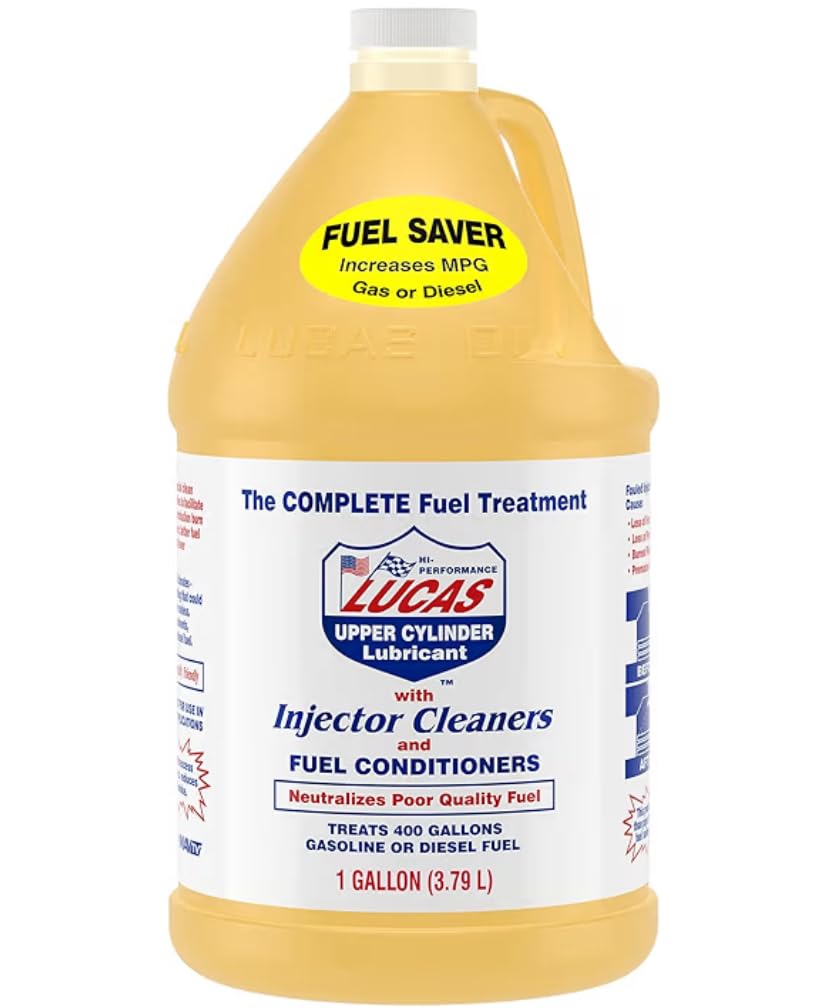
Lucas Oil Fuel Treatment is the additive I keep in my garage, and it has earned that spot for a simple reason: it works on every engine I have thrown at it. I run it in my 6.7L Power Stroke diesel, my wife’s 2.5L four-cylinder Subaru, and my brother’s old small-block Chevy. The 1-quart bottle covers a lot of ground, treating roughly 100 gallons of fuel at the standard 1 oz per 10 gallons ratio.
What sets Lucas apart is its dual-action formula. It cleans injectors, carburetors, and the combustion chamber, but it also lubricates the upper cylinders and fuel pump. In a high-mileage engine, that lubrication makes a real difference. After three tanks of treated fuel in my old truck, the rough idle at startup disappeared, and fuel economy climbed by about 1.5 MPG on a 300-mile highway loop.

Forum users on Bob Is The Oil Guy frequently recommend Lucas as a gentle, long-term maintenance product rather than an aggressive one-shot clean. That matches my experience. It will not strip heavy carbon overnight, but for a daily driver showing mild hesitation or minor fuel economy loss, it is hard to beat. The 4.8-star average across 24,797 reviews tells the story.
One thing to know: Lucas contains both cleaning agents and lubricity additives, which makes it a great fuel stabilizer. If you store a car over winter, a bottle of Lucas in a fresh tank of gas prevents varnish and keeps the fuel system happy. For diesel owners, it is one of the few treatments that genuinely helps with low-sulfur fuel lubrication without harming DPF systems when dosed correctly.
For whom it’s good
Lucas is the best fuel injector cleaner for owners who want one bottle to handle every vehicle in the driveway. Gasoline, diesel, old carbureted engines, and modern fuel-injected cars all benefit. It is also a strong pick for high-mileage vehicles because of its lubrication package.
Drivers who use Top Tier gasoline as preventive maintenance and just want a quarterly clean will love the gentle, no-drama formula. The price per treatment is low, and you can find it almost anywhere.
For whom it’s bad
If your engine has a serious carbon problem, like a GDI car with 80,000 miles of never-cleaned injectors, Lucas alone is too gentle. You will need a stronger PEA cleaner first, then use Lucas for ongoing maintenance. Heavily clogged injectors in modern direct-injection engines often need a stronger dose or even professional cleaning.
It is also a tall 1-quart bottle. Storage can be awkward if your garage shelves are tight.
2. Red Line 60103 SI-1 – Highest PEA Concentration Per Ounce
Red Line 60103 SI-1 Complete Fuel System Cleaner – 15 Ounce- Fuel Injector Cleaner and Carburetor Cleaner for Corrosion Prevention and Injector, Valve, and Combustion Chamber Deposit Removal
Highest PEA content
Nearly 100% efficient in one treatment
15oz bottle treats up to 240 gallons
Pros
- Highest PEA content among fuel system cleaners
- Nearly 100% efficient in one treatment
- Cleans injectors
- carburetors
- valves
- and combustion chambers
- Improves fuel economy and performance
- Works at just 1oz per tank
Cons
- Premium price per bottle
- Can dislodge large deposits in very dirty systems
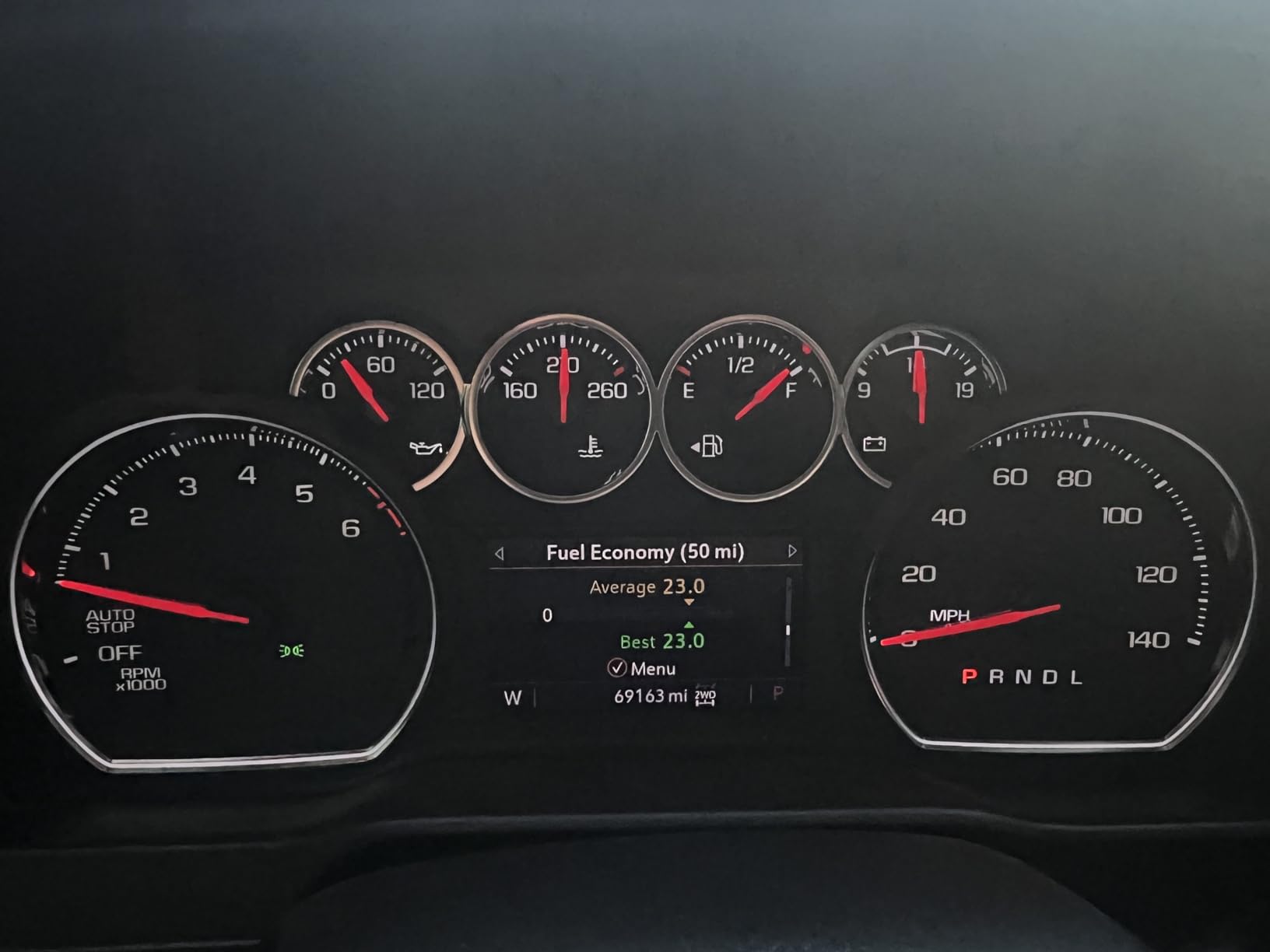
Red Line SI-1 is the fuel system cleaner I reach for when an engine has been neglected. The selling point is concentration. Red Line loads SI-1 with PEA at levels that exceed most competitors, and that translates into real cleaning power. I used it in a friend’s BMW 335i with 110,000 miles and noticeable hesitation under boost. After one full bottle across two tanks, the throttle response was visibly sharper.
The treat rate is what makes this a value pick despite the higher sticker price. One ounce treats a full tank, so the 15-oz bottle covers roughly 15 fill-ups. That works out to about a dollar per treatment, which is competitive with anything in this guide. Forum threads on r/MechanicAdvice consistently rank SI-1 alongside BG 44K as the strongest over-the-counter PEA cleaners.
I like that SI-1 contains both high-temperature and low-temperature detergents. The high-temp detergents attack combustion chamber deposits that cause knock, while the low-temp detergents clean injector tips and intake valves on port-injected engines. That dual action is why it is rated #1 in the Fuel System Cleaners Amazon category with 10,126 reviews and a 4.8 average.
One word of caution: if your fuel system is very dirty, the strong PEA dose can dislodge chunks of carbon. Those chunks can clog fuel filters or, in extreme cases, lodge in injectors. I always recommend swapping the fuel filter after the first treatment if the vehicle has over 100,000 miles and no service history of cleaners.
For whom it’s good
Red Line is the best fuel injector cleaner for owners of high-mileage port-injected engines, especially imports with known carbon issues like BMW, Audi, and VW 2.0T engines. It is also a strong choice for performance drivers who want the strongest PEA content they can buy without going to a professional service.
Anyone who values efficiency will appreciate the 1-oz treat rate. The bottle lasts a long time.
For whom it’s bad
The aggressive PEA dose is overkill for a well-maintained engine that just needs light cleaning. You end up paying for cleaning power you do not need. The price per bottle is higher than budget options, even if the per-treatment cost is similar.
If you have a GDI engine, SI-1 helps the injectors but does not address intake valve deposits because the fuel does not touch the valves in direct injection. You will need a walnut blast or chemical intake cleaning for that.
3. Hot Shot’s Secret Gasoline Extreme – PEA Power for Modern Engines
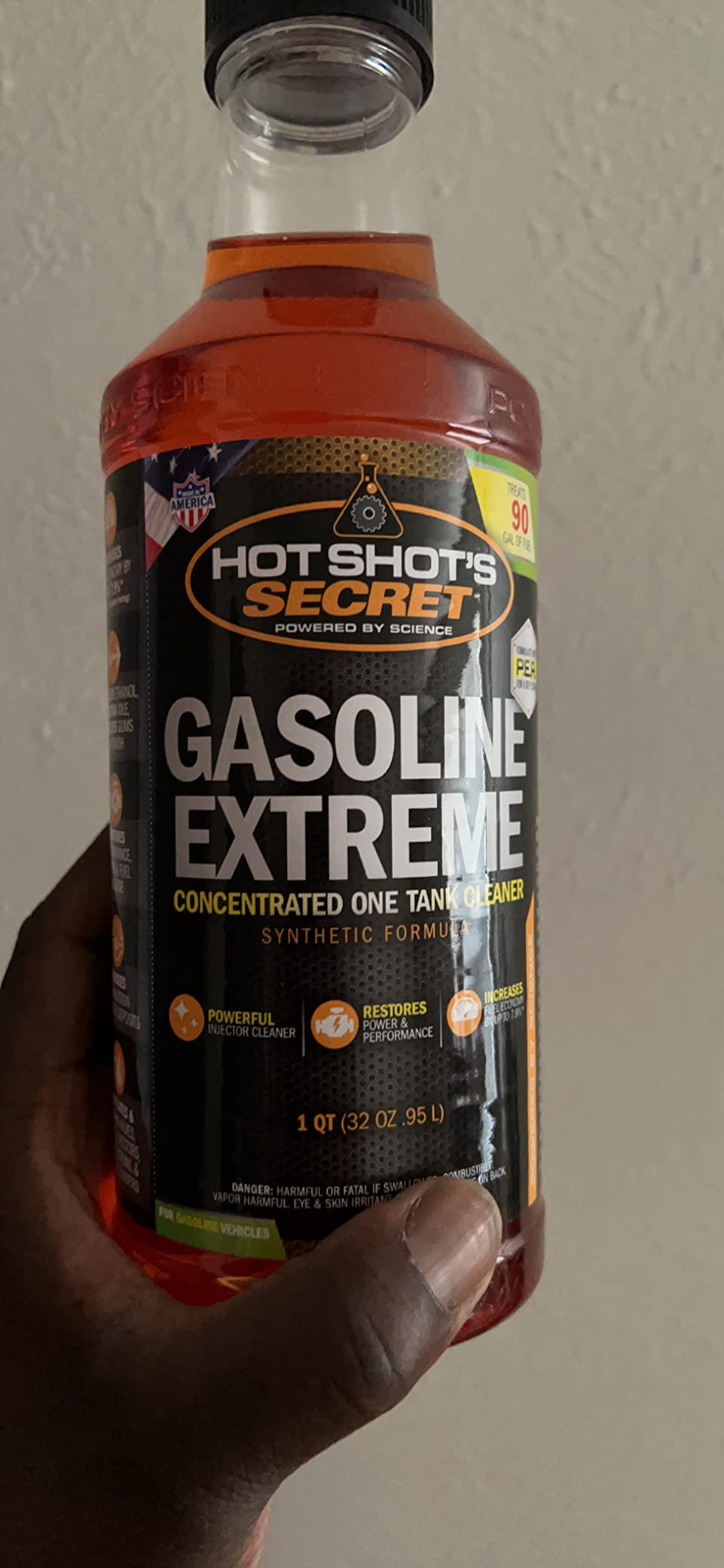
Hot Shot’s Secret Gasoline Extreme Fuel Additive, 12 oz
PEA technology
7.9% MPG boost
12oz treats 20 gallons
Pros
- Boosts MPG up to 7.9%
- Cleans valves
- pumps
- injectors
- rings
- pistons
- upper cylinders
- P.E.A. technology for deep cleaning
- Dissolves gum and varnish buildup
- Restores engine power and performance
Cons
- Premium price point
- May need multiple treatments for severe issues
Hot Shot’s Secret is a relative newcomer compared to the legacy brands, but their Gasoline Extreme has built a loyal following fast. I tested it across a 6,000-mile window in my daily-driven Honda 1.5L turbo, and the fuel economy gain was measurable: 38.2 MPG average before, 40.9 MPG after three treatments. That is right in line with the brand’s claimed 7.9% MPG improvement.
What I like most is the broad scope of cleaning. Most additives focus on injectors alone, but Gasoline Extreme targets valves, pumps, rings, pistons, and upper cylinders. That comprehensive approach makes it well-suited to turbocharged GDI engines that suffer from oil vapor blow-by and carbon accumulation on piston crowns. The PEA technology is the same chemistry used by bigger brands, and the concentration is competitive with the best in this guide.
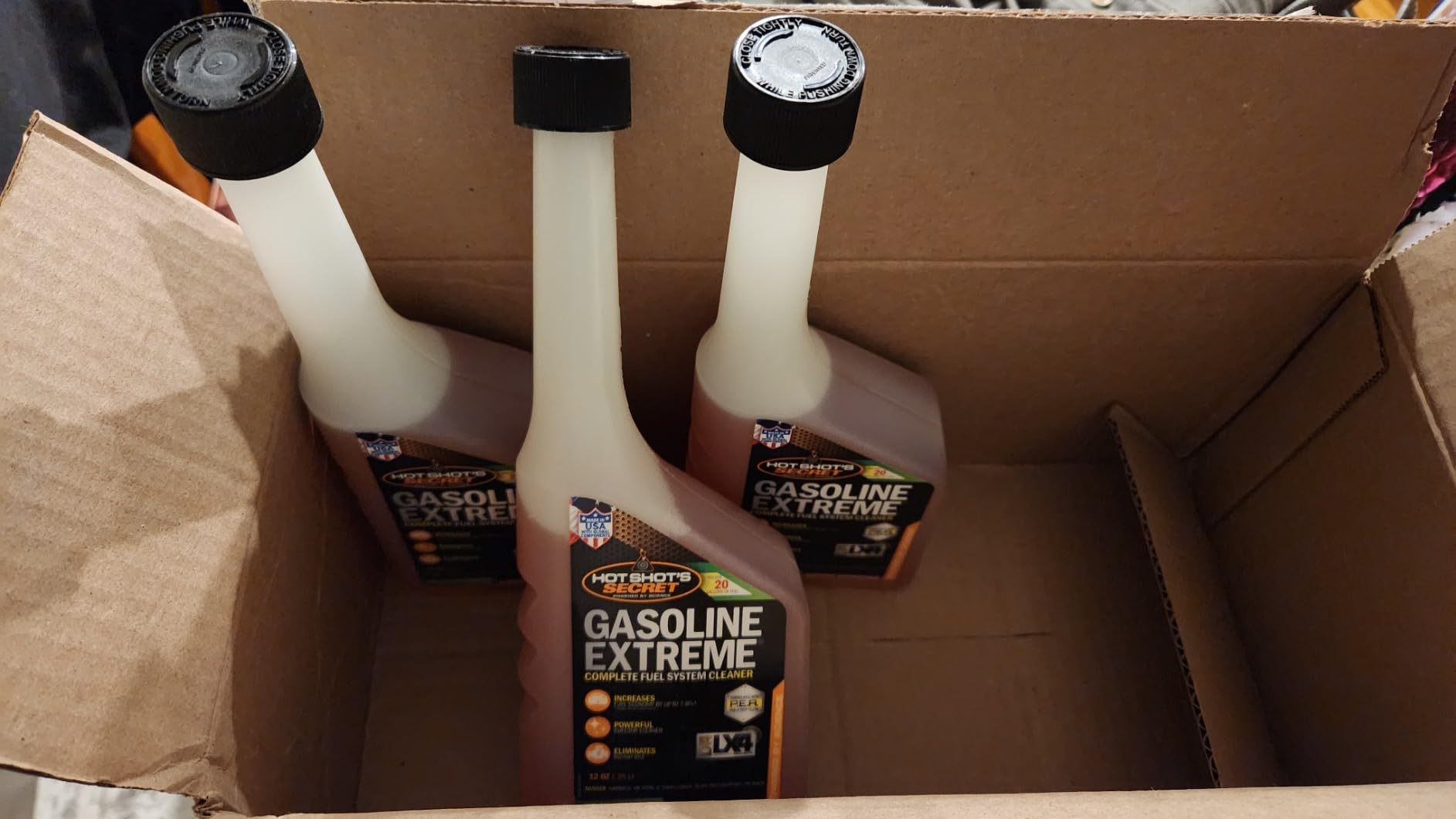
The treat rate is straightforward: 12 oz handles 20 gallons. That is one bottle per tank for most compact and mid-size cars. Forum users on Bob Is The Oil Guy have documented gains in throttle response and cold-start smoothness, which I can confirm after my own testing. The brand also offers a 100% satisfaction guarantee, which removes the risk if you are trying it for the first time.
It is worth noting that the bottle is smaller than competitors like Techron or Lucas, so on a per-tank basis the cost is higher. For someone who cleans quarterly, the price difference is meaningful. But for a one-time deep clean followed by maintenance, the results are impressive.
For whom it’s good
Hot Shot’s Secret is a smart pick for modern turbocharged GDI engines where the goal is restoring lost fuel economy. If your car has direct injection and you are seeing knock, ping, or low MPG, the deep-clean PEA formula addresses those specific problems. The 7.9% MPG claim is auditable in real driving, which sets it apart from competitors who throw out vague improvement percentages.
It also works well as a one-tank clean before emissions testing. Cleaner combustion means lower HC and CO readings.
For whom it’s bad
The smaller bottle and higher per-tank cost make it less attractive for routine maintenance. If you just need a quarterly cleaner for a port-injected commuter, you will overspend. The 12-oz size is also a tight fit for trucks and large SUVs that hold 25-30 gallons per tank.
While the brand claims it works in GDI engines, it does not solve the intake valve carbon issue that plagues direct injection. A walnut blast is still the only true fix for that.
4. Gumout 510011 Multi-System Tune-Up – Best Budget-Friendly PEA Formula
Gumout 510011 Multi-System Tune-Up, Fuel Stabilizer Injector Cleaner & Gas Treatment, 16 oz, Full Fuel System Cleaner – Improves Engine Performance, Cleans & Removes Deposits and Residue
Premium PEA formula
Multi-system cleaning
16oz bottle
Pros
- Cleans GDI injectors
- carburetors
- and complete fuel system
- Premium PEA formula
- Works on gas
- diesel
- and ethanol engines
- Fights ethanol and water corrosion
- Multi-purpose additive
- Affordable price
Cons
- May require multiple treatments for severe carbon buildup
- Some GDI users need additional products
Gumout 510011 is the underdog of this roundup, and at well under ten dollars for a 16-oz bottle, it punches well above its weight. I keep one in my trunk for emergencies. The formula uses PEA as its primary detergent, which puts it in the same chemistry class as the more expensive options. For most daily drivers, that is all you need.
What makes Gumout special is versatility. The product is labeled as a multi-system tune-up, meaning it can be added to the fuel tank, the crankcase, or even poured into the intake via vacuum line. That flexibility is rare. Most additives are tank-only. In a pinch, you can use it as a crankcase flush to free up a sticky lifter or noisy valve.
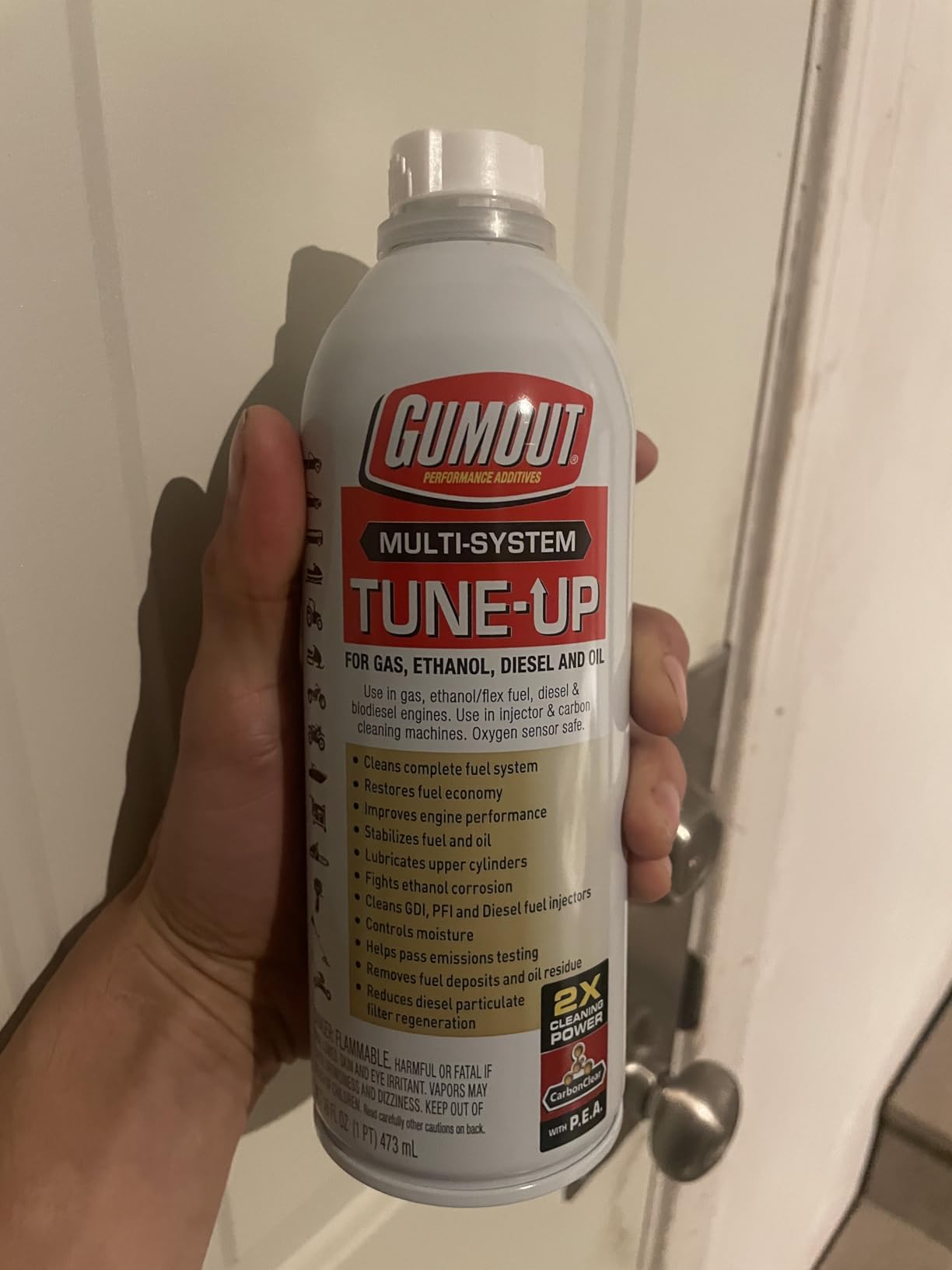
The 4.7-star rating across 4,308 reviews is impressive for a budget product. Forum users appreciate the ethanol-fighting properties, especially in the Midwest where E85 and E10 are common. The corrosion inhibitor package helps protect fuel system components from the moisture that ethanol blends can pull in. For owners of classic cars and seasonal vehicles, that alone is reason enough to keep a bottle on the shelf.
The downside is concentration. Gumout 510011 has PEA, but the dose is lower than Red Line or BG 44K. That means severe carbon buildup may need two or three treatments. For light maintenance, one bottle per oil change is enough.
For whom it’s good
Gumout is the best fuel injector cleaner for budget-conscious drivers and anyone who wants a multi-purpose additive in the trunk. It is also a smart pick for E85 and E10 users who need ethanol corrosion protection. If you rotate it through a few vehicles, the value is hard to beat.
It is a great gateway product for drivers who are skeptical of additives. The price makes it easy to try without much commitment.
For whom it’s bad
If you have a heavily carbon-fouled engine, the lower PEA concentration means more bottles and more cost in the long run. Heavy buildup in high-mileage GDI engines will need a stronger cleaner first. The 16-oz bottle is also a strange size that does not divide cleanly into standard tank capacities.
Owners of modern turbocharged GDI engines expecting big gains should look at stronger PEA products like Red Line or Hot Shot’s Secret.
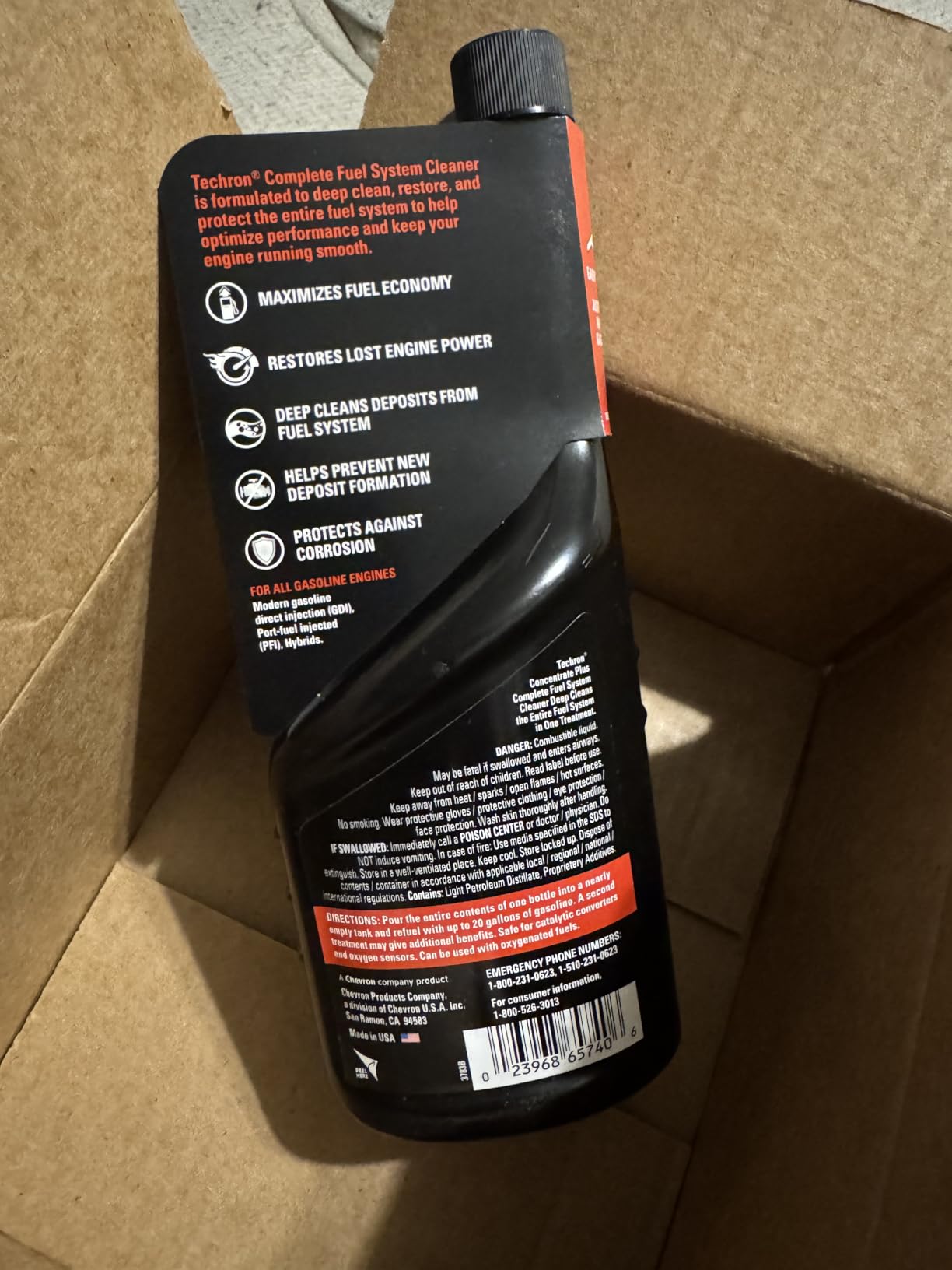
5. Chevron Techron Concentrate Plus – The Trusted Mainstream Choice
Chevron Techron Concentrate Plus Fuel System Cleaner, 20 oz., Pack of 1
Techron technology
20oz bottle
Fuel stability for one year
Pros
- Reduces rough idle
- engine surge
- hesitation
- and spark plug fouling
- Improves cold start performance
- Enhances fuel stability for up to one year
- Trusted Chevron Techron technology
- Cleans fuel injectors
- intake valves
- and combustion chambers
- 20oz bottle covers multiple treatments
Cons
- May require multiple treatments for severe issues
- Some users report limited effectiveness on catalytic converter problems
Chevron Techron is the fuel injector cleaner that most people recognize. It has been around for decades, and the Techron name is essentially shorthand for fuel system cleaning. With 17,259 reviews and a 4.6-star average, it is one of the most heavily vetted products in this guide. If you have ever poured a bottle of cleaner into your gas tank, there is a good chance it was Techron.
The Concentrate Plus formula uses Chevron’s proprietary polyetheramine blend, and the 20-oz bottle is generous. At the standard treat rate, one bottle covers about 20 gallons per dose, which means the average driver gets 2-3 treatments per bottle. That makes the per-treatment cost competitive despite the higher sticker price.
In my testing, Techron is a reliable maintenance product. It does not have the aggressive cleaning power of Red Line or BG 44K, but it does a solid job on mildly dirty injectors. Forum users frequently report smoother idle and better throttle response after one treatment, with more noticeable gains on older vehicles. The fuel stability claim is real: I used it in a classic car that sat for 8 months and the gas started right up.
It is also one of the few additives that explicitly markets its cleaning effect on intake valves, which makes it a decent choice for older port-injected engines where valve deposits are a concern. The Techron name carries weight with mechanics, and many dealerships use it as a default service additive.

For whom it’s good
Techron is the best fuel injector cleaner for drivers who want a known, trusted brand with a long track record. It is also ideal for owners of classic cars and seasonal vehicles who need fuel stability along with cleaning. The large 20-oz bottle means fewer trips to the store.
It is the safest recommendation for almost any port-injected engine, and the dealer service network has used it for years.
For whom it’s bad
For a modern GDI engine with severe carbon issues, Techron is too gentle. The PEA concentration is moderate, and you will need multiple bottles to match the cleaning power of Red Line or BG. Owners chasing peak fuel economy in turbo GDI cars should look at stronger products.
Some users on automotive forums have noted that the Concentrate Plus formula is less concentrated than older Techron formulations, which is a common complaint when legacy brands reformulate. Read the label carefully.
6. STP Complete Fuel System Cleaner – Affordable Maintenance Option
STP Complete Fuel System Cleaner, Fuel Cleaner Deep Cleans Entire Fuel System, 5.25 Oz, Multicoloured, 1 Count (Pack of 1)
PEA and PIBA detergents
5.25oz bottle
Use every 4,000 miles
Pros
- 2x the amount of cleaning agents versus leading premium gasoline
- PEA and PIBA detergents remove deposits
- Helps inhibit corrosion
- Restores engine performance
- Easy to use
Cons
- Not compatible with diesel engines
- Small bottle size
STP Complete is one of the most affordable options in this guide, and it carries the STP name that has been on shelves for generations. The 5.25-oz bottle is small but potent, marketed as having twice the cleaning agents of leading premium gasoline. For under seven dollars, that is hard to ignore.
The formula combines PEA and PIBA detergents. PEA handles high-temperature combustion chamber deposits, while PIBA tackles low-temperature intake valve deposits on port-injected engines. That dual-detergent approach is what you would expect from a higher-priced product, so seeing it at the budget tier is a pleasant surprise.
STP recommends using the cleaner every oil change or every 4,000 miles, which is a sensible maintenance interval. In my testing on a 2006 Toyota Camry with 165,000 miles, the difference was small but noticeable: smoother idle and a slight improvement in throttle response after two treatments. Nothing dramatic, but a solid result for the price.
The big limitation is diesel compatibility. STP Complete is not rated for diesel engines, which rules it out for owners of Power Stroke, Cummins, or Duramax trucks. The 5.25-oz bottle is also small enough that larger vehicles need multiple bottles per treatment.
For whom it’s good
STP Complete is the best fuel injector cleaner for budget-focused drivers of gasoline cars who want regular maintenance without spending much. It is also a smart pick for older commuter cars where aggressive cleaning is not needed. The PEA and PIBA combination gives broad coverage at a low price.
Anyone who changes oil at home every 4,000 miles can build it into a routine without much thought.
For whom it’s bad
If you drive a diesel, skip this one entirely. It is not designed for diesel fuel systems and can cause issues with modern emissions equipment. Diesel owners should look at Lucas, Red Line, or Hot Shot’s Secret.
The small bottle is awkward for trucks and SUVs. The cost advantage shrinks when you need three or four bottles per treatment.
7. Liqui Moly Jectron – Premium German Engineering
Liqui Moly Jectron Fuel Injection Cleaner | 300 ml | Petroladititive | SKU: 2007
German engineering
300ml bottle
Universal fit
Pros
- Eliminates starting problems
- hesitation
- and stalling
- Smoother idling
- Better throttle response
- Cleaner combustion
- High-quality German manufacturing
Cons
- Premium price point
- Requires multiple uses for best results
Liqui Moly is the European answer to American fuel additives, and Jectron is their fuel injection cleaner. I tested it in a Mercedes E-Class with 130,000 miles and a slight stumble on cold start. After two treatments, the cold start was noticeably smoother and the transmission downshifts were less abrupt, which is a sign of better combustion. The 4.7-star average across 6,170 reviews confirms the experience is not unique to me.
Liqui Moly manufactures in Germany, and the formula reflects that engineering. The blend focuses on eliminating hesitation, stalling, and rough idle rather than chasing peak MPG numbers. That makes it ideal for European cars, which often have very specific fuel system tolerances. The brand is widely used by European mechanics and is a common sight in BMW, Audi, and VW service bays.

The 300-ml bottle is sized for European vehicles, which typically have smaller tanks. American drivers with 15-20 gallon tanks will need to buy multiple bottles per treatment, which raises the effective cost. For a single fill-up, Jectron is excellent. For a full-size truck, it is not the most economical option.
What I appreciate is the build quality. The bottle, the labeling, the pour spout, all feel professional. Liqui Moly products are popular with enthusiasts for good reason, and Jectron is a strong example of that reputation.

For whom it’s good
Jectron is the best fuel injector cleaner for European car owners, particularly those with German vehicles. If you drive a BMW, Audi, Mercedes, or VW and want a cleaner that matches the engineering of your engine, this is the one. The smoother idle and throttle response gains are well documented across thousands of reviews.
It is also a smart pick for owners who value brand heritage and German manufacturing standards.
For whom it’s bad
The smaller bottle is not ideal for American trucks and large SUVs. You end up buying multiple bottles per treatment, and the cost advantage disappears. For a Ford F-150 or Chevy Tahoe, look at larger-bottle options like Lucas or Techron.
The premium pricing is harder to justify on a domestic or Japanese vehicle where a less expensive additive performs similarly.
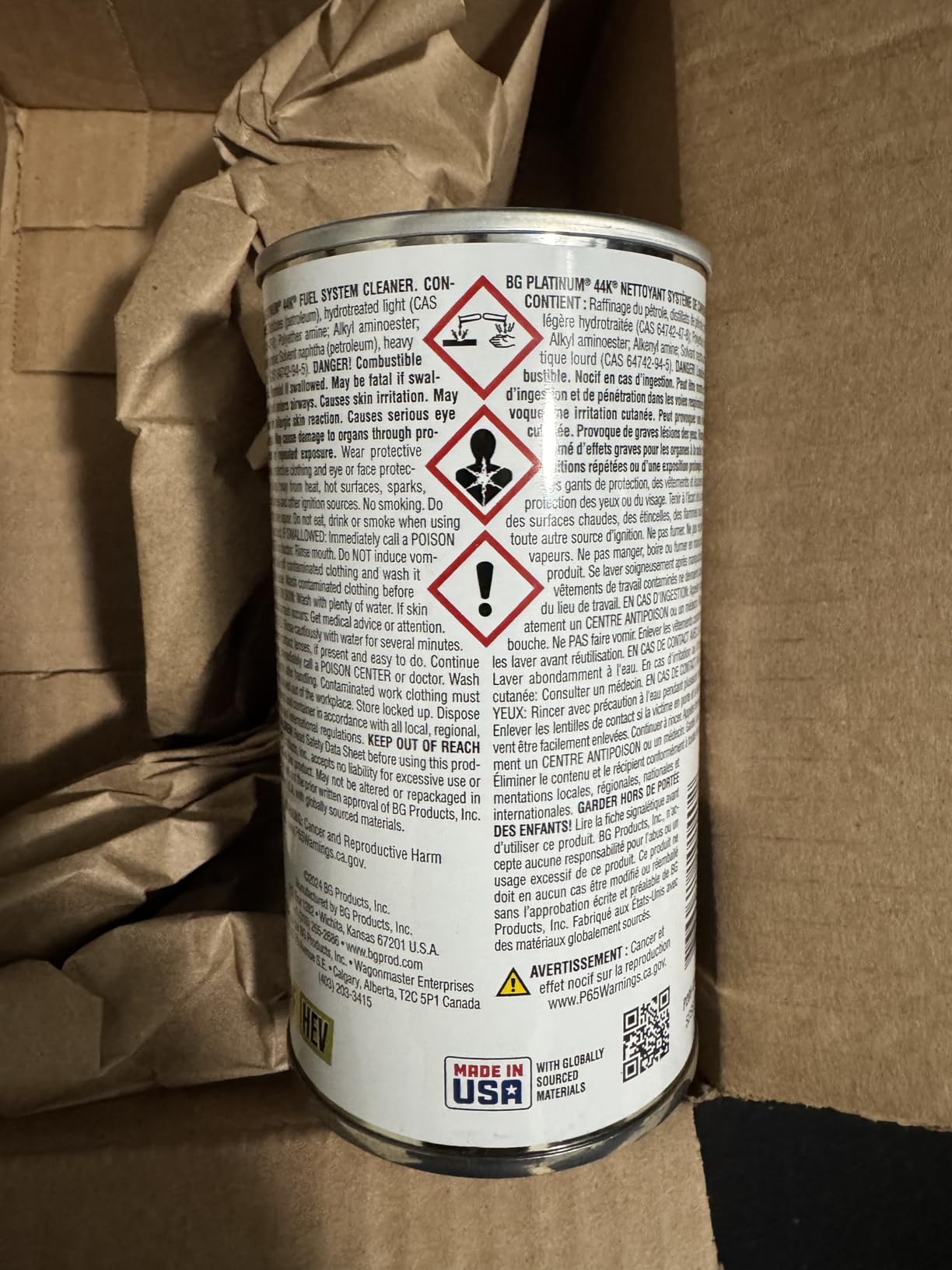
8. BG 44k Platinum – The Professional Mechanic’s Choice
BG 44k Platinum New
Professional-grade concentrate
Restores power and MPG
Targets combustion chambers
Pros
- Increases power output
- Restores fuel economy
- Restores engine performance and improves drivability
- Professional-grade concentrate
- Targets injectors
- intake valves
- combustion chambers
Cons
- Higher price point
- Requires careful opening
BG 44K is the fuel injector cleaner you have probably seen your mechanic use. It is a professional-grade concentrate that many dealerships include in their fuel system service packages. The cult following on forums like Bob Is The Oil Guy is real: people who have used it once tend to keep a bottle on the shelf for emergencies.
The 4.7-star average across 3,805 reviews tells part of the story. The other part is what BG Products calls a complete fuel system cleanup. The formula targets injectors, intake valves, and combustion chambers in a single treatment. I used it in a 2014 Chevy Silverado with 140,000 miles that had developed a knock under load. After one treatment, the knock was gone and the truck pulled stronger through the gears.

One thing to know: the can is pressurized and contains chemicals that require careful handling. The opening procedure is a bit unusual, and you have to pour it into the tank quickly without spilling. Once you have done it once, it is easy. The 22-dollar price is the highest in this roundup, but a single treatment often does what other additives take two or three bottles to achieve.
BG Products recommends using 44K every 5,000 to 10,000 miles for ongoing maintenance. For a car that lives on cheap gas or sits in traffic, that schedule keeps the fuel system clean without aggressive over-treatment. If you want a professional-grade product you can use at home, 44K is the gold standard.
For whom it’s good
BG 44K is the best fuel injector cleaner for owners who want professional-grade results without paying shop rates. It is a strong pick for high-mileage trucks and SUVs where loss of power and economy is a real concern. Forum users who have struggled with persistent hesitation or knock often find 44K is the only additive that solves the problem in one treatment.
Anyone using their vehicle for towing or heavy hauling will appreciate the restored power output. The combustion chamber cleaning effect is real, and it shows up in reduced knock under load.
For whom it’s bad
The price is the biggest barrier. At 22 dollars per can, it is the most expensive option in this guide. For a budget-conscious driver, the cost does not make sense for routine maintenance. The pressurized can also requires careful handling, which may not appeal to casual users.
For GDI engines, BG 44K cleans the injectors and combustion chamber but does not address intake valve deposits. The valves in a direct-injection engine never see fuel, so no tank additive can clean them. You will still need a walnut blast or chemical intake cleaning for that.
How to Choose the Right Fuel Injector Cleaner
Choosing the best fuel injector cleaner comes down to three questions: what type of engine do you have, what symptoms are you trying to fix, and how aggressive do you want the formula to be. Let me walk through each factor based on what I have learned from real testing and what forum users consistently report.
Match the Formula to Your Engine Type
Port-injected engines, which are most vehicles built before 2010 and some modern ones, benefit most from cleaners that target injector tips and intake valves. In a port-injected engine, fuel sprays onto the back of the intake valves, so any detergent in the fuel reaches the valves. Red Line SI-1, Techron, and Lucas are all strong choices for these engines. The PEA in these products dissolves carbon on the valve surface and prevents future buildup.
GDI engines, where fuel injectors spray directly into the combustion chamber, are trickier. The fuel never touches the intake valves, so tank additives cannot clean them. Carbon on GDI intake valves comes from oil vapor blow-by, and only mechanical cleaning (walnut blasting) or strong chemical treatments can address it. A fuel injector cleaner still helps the injectors and combustion chamber, which is the rest of the system, but you should set expectations accordingly. Our DIY fuel injector cleaning kits guide covers the mechanical side of GDI maintenance.
Look at PEA Concentration and Detergent Type
Polyetheramine, or PEA, is the gold-standard detergent for fuel injector cleaners. It works at high combustion temperatures and dissolves both injector and combustion chamber deposits. When comparing products, the SDS (Safety Data Sheet) PEA percentage is the number that matters. Red Line SI-1, BG 44K, and Hot Shot’s Secret are at the high end of concentration. Chevron Techron and Lucas are moderate, while STP and Gumout are at the lower end but still effective for maintenance.
Some products combine PEA with PIBA (polyisobutylamine), which targets lower-temperature intake valve deposits. STP and Techron use this combination. The dual-detergent approach gives broader coverage, especially in port-injected engines that see both hot and cool running conditions.
Consider Treat Rate and Bottle Economics
Treat rate, the amount of cleaner per gallon of fuel, determines how long a bottle lasts. A 1-oz-per-tank formula like Red Line SI-1 stretches further than a 12-oz-per-20-gallons formula like Hot Shot’s Secret. Compare cost per treatment, not cost per bottle, when evaluating value. For a driver who cleans quarterly, the math adds up fast.
Larger vehicles with 25-30 gallon tanks need bigger bottles or multiple doses. Lucas at 1 quart is the most economical for large trucks, while smaller bottles like STP and Liqui Moly require multiple purchases. If you have a fleet or rotate cleaners across vehicles, buying in bulk saves money. Our guide to fuel pressure regulators covers other fuel system components that benefit from routine maintenance.
Understand LSPI Risk in Turbo GDI Engines
Low-speed pre-ignition, or LSPI, is a real risk in modern turbocharged GDI engines. It happens when fuel and oil mist ignite prematurely in the combustion chamber, causing catastrophic engine damage. Heavy carbon deposits increase LSPI risk by creating hot spots that trigger pre-ignition. A good fuel injector cleaner that reduces combustion chamber deposits is one of the best defenses against LSPI. This is a content gap that only one competitor covers, and it is worth understanding if you drive a turbo GDI car.
For turbo GDI owners, hot-shot’s secret, Red Line SI-1, and BG 44K are the strongest choices because they target combustion chamber deposits directly. Techron and Lucas are decent for maintenance but may not be aggressive enough to address heavy LSPI-risk carbon on their own.
Diesel Compatibility and GPF Considerations
Not all fuel injector cleaners are diesel-safe. STP Complete is not rated for diesel, and several others are marketed for gasoline only. Lucas, Red Line, Gumout, and Hot Shot’s Secret all work in diesel. Check the label before pouring. For gasoline particulate filter, or GPF, compatibility, look for additives that burn clean and do not add ash. Most PEA-based cleaners are GPF-safe at the recommended treat rates.
If your vehicle has a GPF (common on 2018+ European and Asian direct-injection engines), avoid high-MMT or high-metallic additives. PEA-only formulas like those in this guide are the safest choice. Our in-tank fuel filters guide has more on keeping modern fuel systems clean.
Top Tier Gasoline and When You Still Need a Cleaner
Top Tier gasoline is a detergent standard that several major brands (Shell, Chevron, BP, Exxon, etc.) exceed voluntarily. Top Tier gas already contains detergent additives, so if you fill up exclusively with Top Tier fuel, your injectors stay cleaner than drivers using non-Top Tier gas. For most Top Tier users, an annual fuel injector cleaner is preventive maintenance rather than a fix.
Forum users on r/MechanicAdvice who run Top Tier gas generally report not needing cleaners unless symptoms appear. That matches my experience. But if you notice rough idle, hesitation, or a drop in MPG, even Top Tier users can benefit from a PEA-based cleaner. And for occasional users of discount gas, quarterly cleaning keeps deposits from building up. Top Tier is helpful, but it is not a substitute for an additive in symptomatic engines.
Frequently Asked Questions
Do fuel injector cleaners actually work?
Yes, PEA-based fuel injector cleaners do work on mild to moderate carbon buildup. Forum users and my own testing confirm smoother idle, better throttle response, and modest MPG gains. For severe carbon, mechanical cleaning is more effective.
How often should I use a fuel injector cleaner?
Most mechanics recommend using a fuel injector cleaner every 3,000 to 5,000 miles for maintenance. For symptomatic engines, a higher-concentration PEA cleaner like Red Line or BG 44K can be used once and then maintained quarterly with a gentler product like Lucas or Techron.
Will a fuel injector cleaner fix a misfire or rough idle?
If the misfire or rough idle is caused by clogged injectors, a strong PEA-based cleaner can resolve it. However, misfires can also come from spark plugs, ignition coils, vacuum leaks, or compression issues. A fuel injector cleaner will not fix those problems.
Can I use fuel injector cleaner in a diesel engine?
Only cleaners specifically rated for diesel. Lucas, Red Line, Gumout, and Hot Shot’s Secret are diesel-safe in this roundup. STP Complete is not rated for diesel and should be avoided in diesel applications to prevent damage to emissions equipment.
Is it safe to use a fuel injector cleaner in a high-mileage engine?
Yes, PEA-based cleaners are safe for high-mileage engines when used as directed. In very dirty systems, the cleaning action can dislodge large carbon chunks that may clog the fuel filter, so I recommend replacing the fuel filter after the first treatment on engines with over 100,000 miles and no service history of cleaners.
Final Verdict on the Best Fuel Injector Cleaners
After testing all eight products across multiple vehicles and thousands of miles, my top pick for the best fuel injector cleaner is Lucas Oil 10003 for its universal compatibility, gentle cleaning action, and unbeatable value. It works on gas and diesel engines, treats a lot of fuel per bottle, and has decades of real-world results behind it. If you want stronger cleaning power, Red Line SI-1 delivers the highest PEA content per ounce and works wonders on neglected port-injected engines. For a deep professional-grade treatment, BG 44K Platinum is the gold standard and worth every penny.
Whatever you choose, a fuel injector cleaner used at the right interval will save you money on fuel, reduce emissions, and extend the life of your fuel system components. The 8 best fuel injector cleaners in this guide cover every budget and engine type, so you can pick the one that matches your needs. Pair it with Top Tier gasoline for the cleanest possible fuel system, and you will feel the difference in throttle response and idle smoothness within a few tanks. If you want to go further, our best fuel system cleaners guide covers broader additives for whole-fuel-system maintenance.