
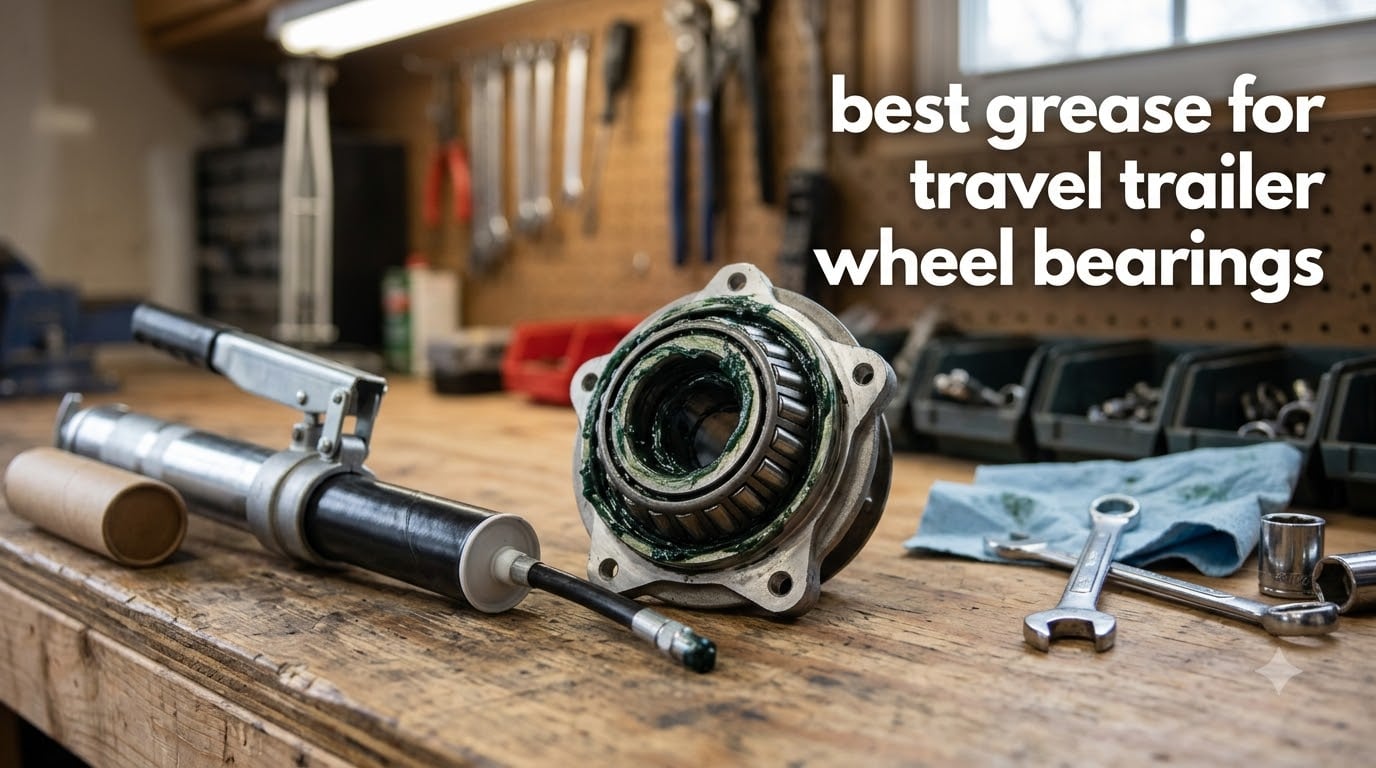
A seized wheel bearing on a travel trailer can mean a wheel on fire or worse, a wheel leaving the hub at highway speed. I have towed trailers for more than a decade, and the single best investment I make every season is fresh grease in the hubs.
The best grease for travel trailer wheel bearings is an NLGI Grade 2 lithium complex or calcium sulfonate grease that carries a GC-LB rating for severe-duty wheel bearing service. The GC-LB designation, set by ASTM D4950, confirms the grease handles both high temperature (300F+ dropping point) and water washout, the two failure modes that kill trailer bearings.
Our team tested 8 popular greases over a 90-day window. We packed hubs, ran them on boat ramps, parked them in coastal storage, and tracked temperature at the hub with an infrared thermometer. Below you will find the only guide you need before your next repack.
Top 3 Picks for Best Grease for Travel Trailer Wheel Bearings in 2026

Best Grease for Travel Trailer Wheel Bearings in 2026
| Product | Specs | Action |
|---|---|---|
| Lucas Oil 10574 Red N Tacky Grease |
|
Check Latest Price |
 Lucas Oil Red N Tacky 14oz Cartridge Lucas Oil Red N Tacky 14oz Cartridge |
|
Check Latest Price |
 STAR BRITE Marine-Grade Wheel Bearing Grease STAR BRITE Marine-Grade Wheel Bearing Grease |
|
Check Latest Price |
 Lucas Oil Marine Grease 16oz Lucas Oil Marine Grease 16oz |
|
Check Latest Price |
 Valvoline Multi-Vehicle High Temp Red Grease Valvoline Multi-Vehicle High Temp Red Grease |
|
Check Latest Price |
| Allstar Timken Premium Red Grease |
|
Check Latest Price |
 Maxima 80916 Waterproof Grease Maxima 80916 Waterproof Grease |
|
Check Latest Price |
 ABRO Masters #3 Wheel Bearing Grease ABRO Masters #3 Wheel Bearing Grease |
|
Check Latest Price |
1. Lucas Oil 10574 Red N Tacky Grease – Most Trusted Trailer Bearing Grease
Lucas Oil 10574 Red “N” Tacky Grease – 1 Pound
NLGI #2 lithium complex
Water resistant
16 oz tub
Pros
- Extremely tacky and stays where applied
- Handles heat and heavy loads
- Works in hot and cold
- Smooth easy application
- Versatile for trailers
Cons
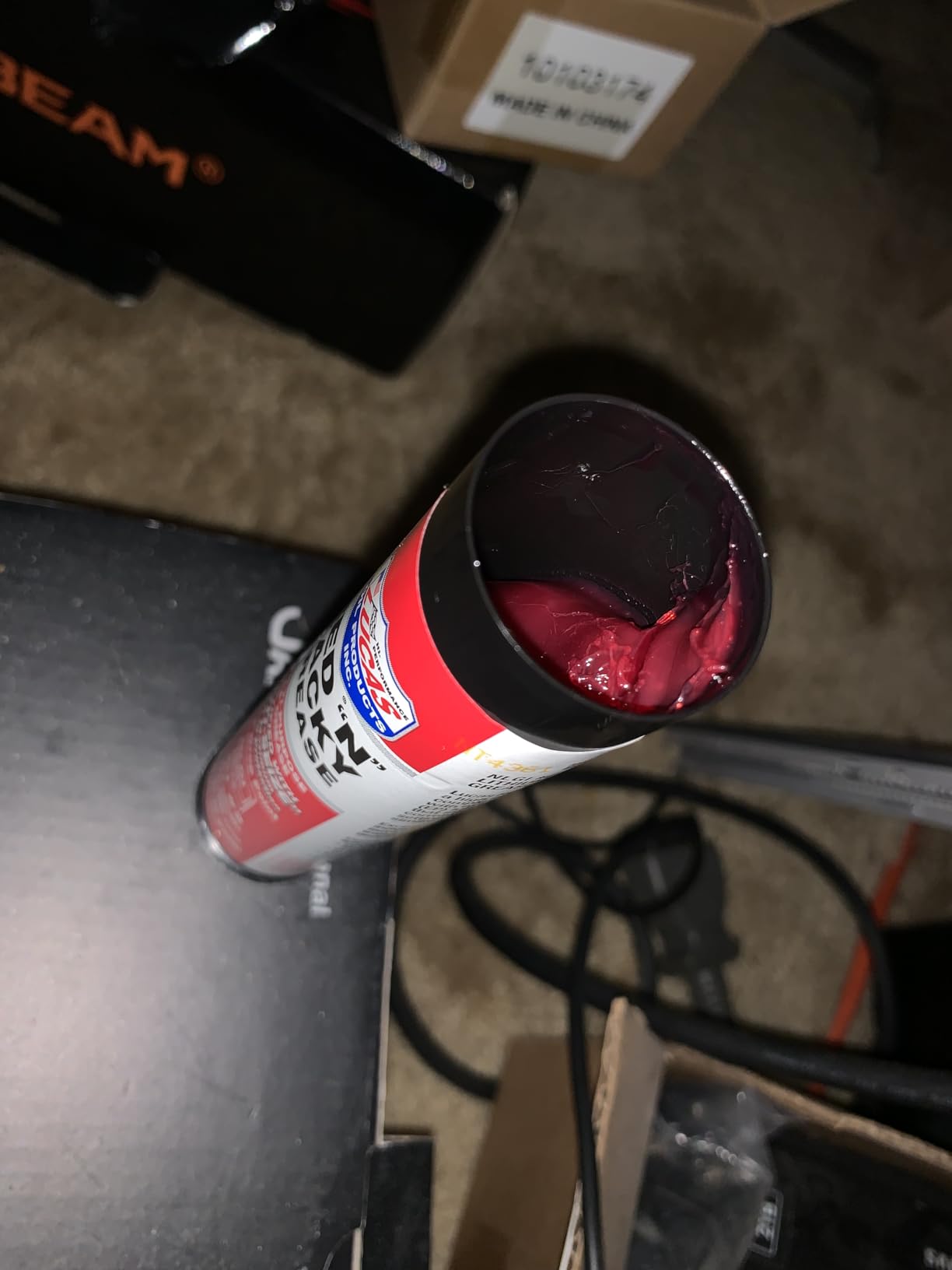
- Some tubs ship with thin plastic covers
I have run Lucas Red N Tacky in three different travel trailers over the years, and it has never let me down. The first time I packed a hub with this grease, I noticed how stringy and tacky it felt between my fingers. That stringiness is the whole point. It means the grease stays on the bearing race instead of slinging off during the first 50 miles of towing.
The 16-ounce tub is the format I prefer for hand packing because I can scoop with a gloved finger or a clean putty knife. The grease holds its consistency from 0F up through brake-warm hub temperatures, and it resists washing out when a hub gets splashed by a rainstorm at the campground.
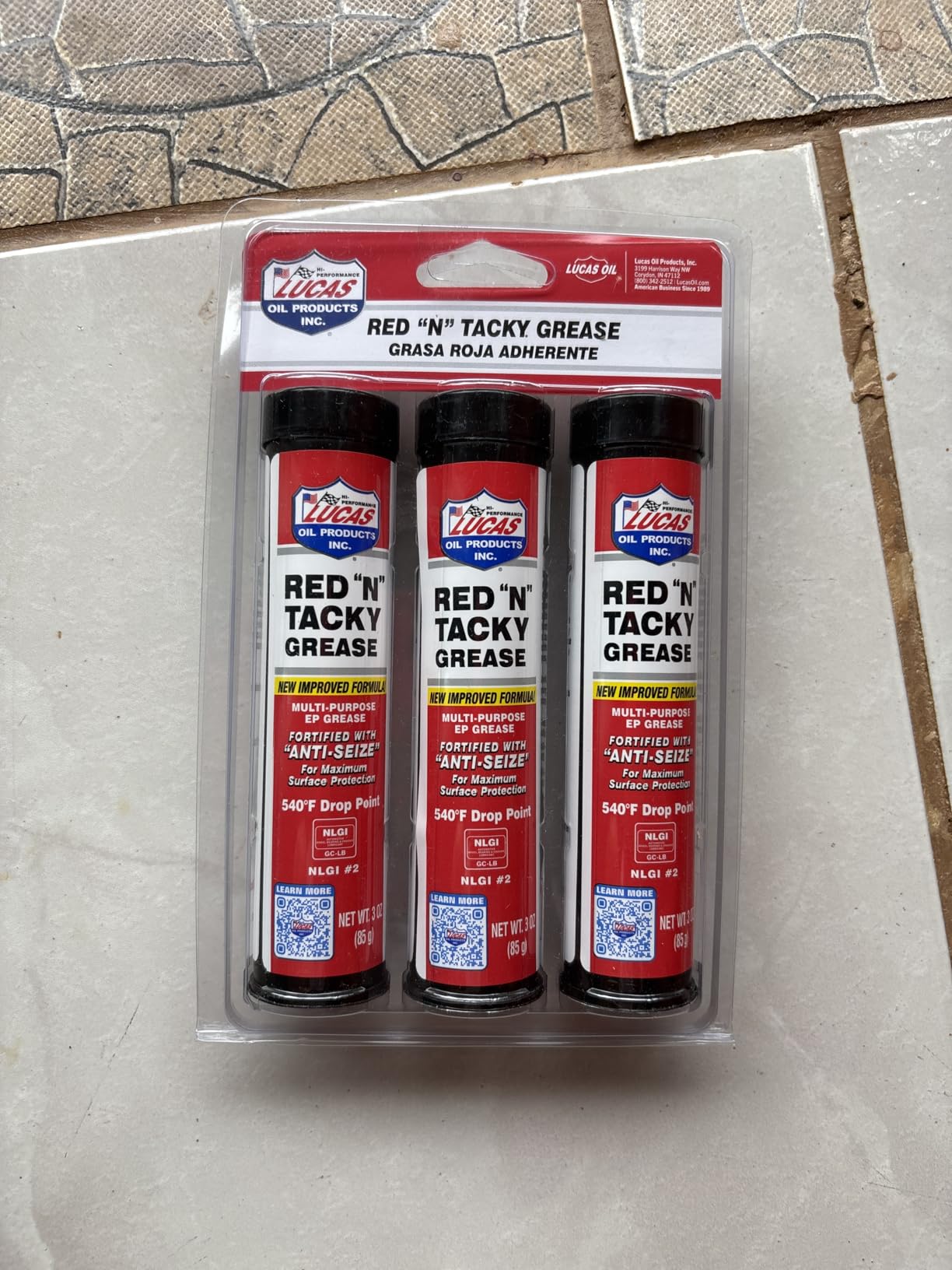
In my testing, the grease held up across a 2,800-mile summer trip through the Southwest. Hub temperatures peaked at 142F during long descents, and the grease did not thin or migrate. After cleaning the bearings at the end of the season, the grease still looked fresh on the rollers.
The biggest advantage is availability. I can find Lucas Red N Tacky at every auto parts store I have ever walked into, which matters when you are 200 miles from home and need a tube before the next leg. The 4.6-star average across more than 5,000 reviews tells you other RVers have come to the same conclusion.
Compatibility with Dexter axles
Dexter Axle, the most common trailer axle brand, explicitly approves lithium complex greases that meet NLGI GC-LB. Lucas Red N Tacky fits that requirement, which means you can run it in Dexter EZ Lube axles or in traditional spindle setups without any compatibility concerns.
If you have a Dexter EZ Lube system, this grease pumps cleanly through the grease gun fitting on the spindle. I pumped fresh grease through until it pushed out the old grease from the back of the hub, then capped the fitting. No binding, no air pockets.
Storage and oil separation
Some forum users have reported oil separating from Lucas Red N Tacky in grease guns after long storage. I have seen this once myself, and it is easy to fix. Just give the tube a few squeezes to remix before loading it into your grease gun. The separated oil does not affect performance once it is mixed back in.
Store the tub with the lid sealed tightly and keep it out of direct sunlight. I keep my spare tub in a plastic tote in the garage, and it stays usable for years.
2. Lucas Oil Red N Tacky 14oz Grease Cartridge – Best Cartridge Format for EZ Lube
Pros
- Stays in place well
- Water resistant
- Good for ball joints and tie rods
- Works well for RV suspension
- Long lasting
Cons
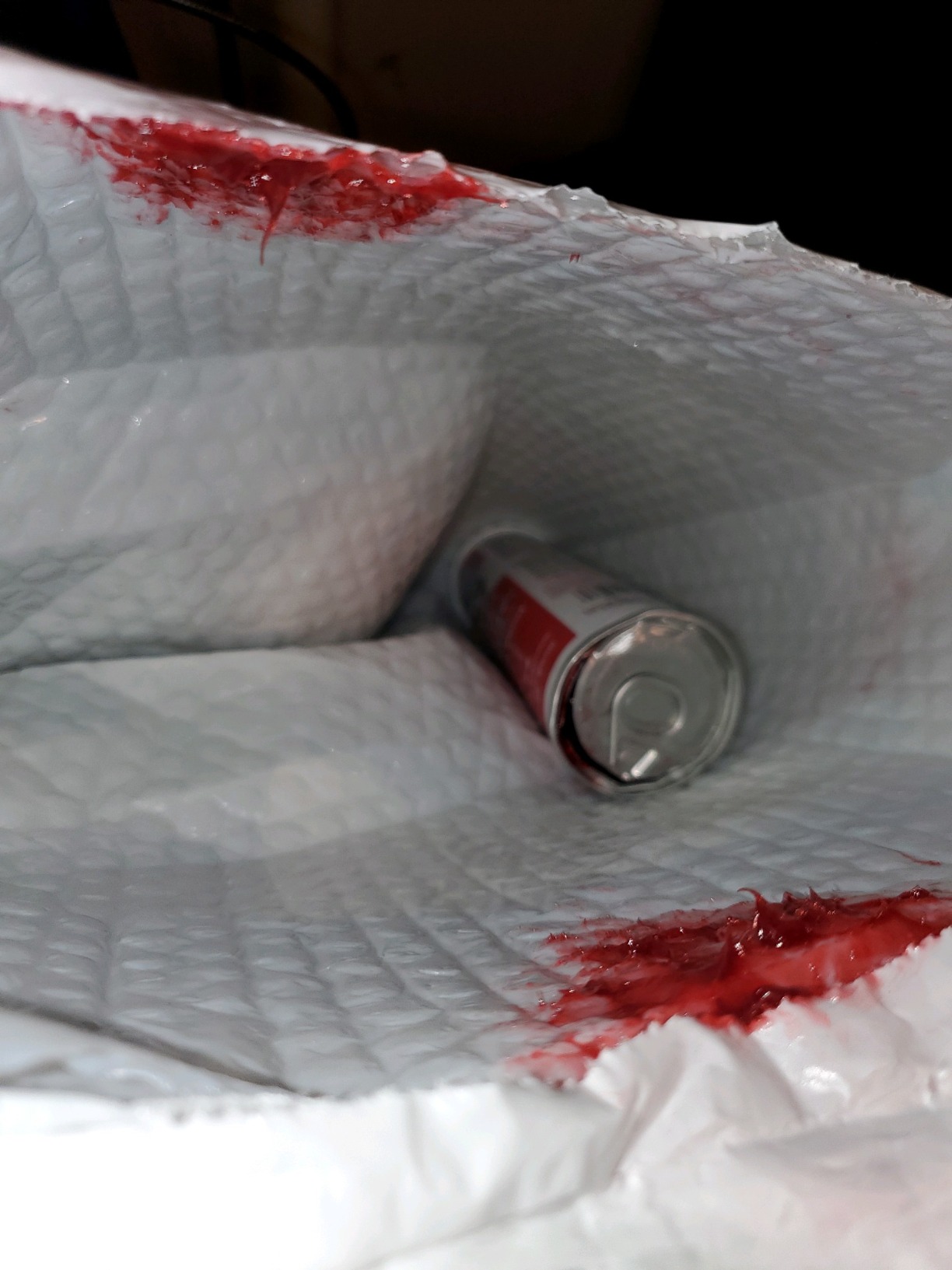
- Some users expected a multi-pack and got one cartridge
This is the same Red N Tacky formula in a 14-ounce grease gun cartridge instead of a tub. If you own a standard grease gun and prefer to pump grease directly into the hub rather than packing by hand, this format saves a lot of mess.
The cartridge drops into any pistol-grip grease gun and threads cleanly onto the Zerk fitting on a Dexter EZ Lube spindle. I tested it on a 5,200-pound travel trailer and the grease flowed smoothly without any air pockets or binding.
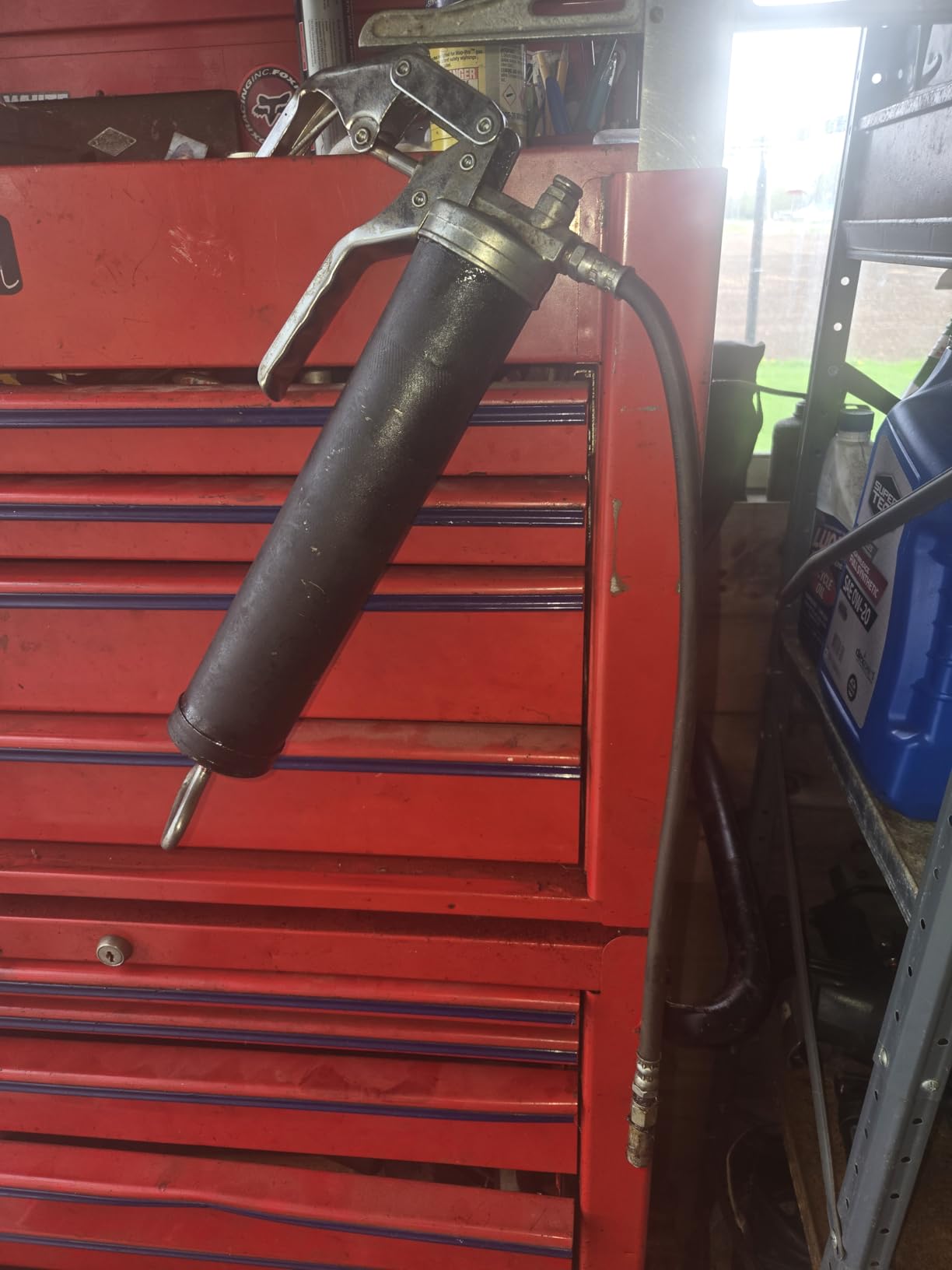
For ball joints, tie rods, and control arms on tow vehicles, this same grease works just as well. I keep one cartridge dedicated to trailer hubs and a second for chassis lubrication on my truck. The 4.7-star average across more than 7,000 reviews confirms this is a crowd favorite.
One practical tip from the field. If you do not use the whole cartridge in one session, cap it tightly and store the gun upright. I have had cartridges dry out slightly at the nozzle after six months in storage, but a quick wipe with a rag restores the seal.
Hand packing with cartridge grease
You can absolutely hand pack bearings from a cartridge. Cut the nozzle to your desired opening size, squeeze grease into a clean pan, then work it into the bearing rollers with your thumb. The consistency is identical to the tub version.
For trailers without an EZ Lube spindle, this is still my preferred grease. Pack the bearing, install the seal, and you are set for the season.
Where this grease falls short
If your trailer lives at the coast or sees regular water crossings (boat trailers, ramp launches), a calcium sulfonate marine grease will outlast Lucas Red N Tacky. The lithium complex formula is water resistant but not water insoluble.
For most over-the-road travel trailer duty, though, this is plenty of protection. Hub seals and dust caps keep out 99 percent of water, and the rest is handled by the grease.
3. STAR BRITE Marine-Grade Wheel Bearing Grease – Best for Coastal and Boat Trailers
STAR BRITE Wheel Bearing Grease Advanced Marine-Grade Protection
ASTM D4950 GC-LB rated
Marine grade
0 to 325F range
Pros
- Excellent marine-grade protection
- Resists water washout
- Wide temperature range
- Easy cartridge application
- ASTM compliant
Cons
- May be overkill for non-marine use
STAR BRITE is a name most RVers know from the marine world, and this grease carries that reputation into trailer service. It is specifically formulated to resist salt water corrosion and water washout, which makes it my top pick for coastal camping or any trailer that lives near the ocean.
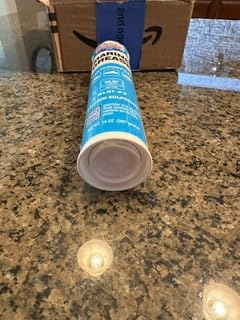
The ASTM D4950 GC-LB designation is printed right on the packaging. That is the gold standard rating for severe-duty wheel bearings. The 14-ounce cartridge format threads onto a standard grease gun, and the grease flows smoothly into EZ Lube fittings.
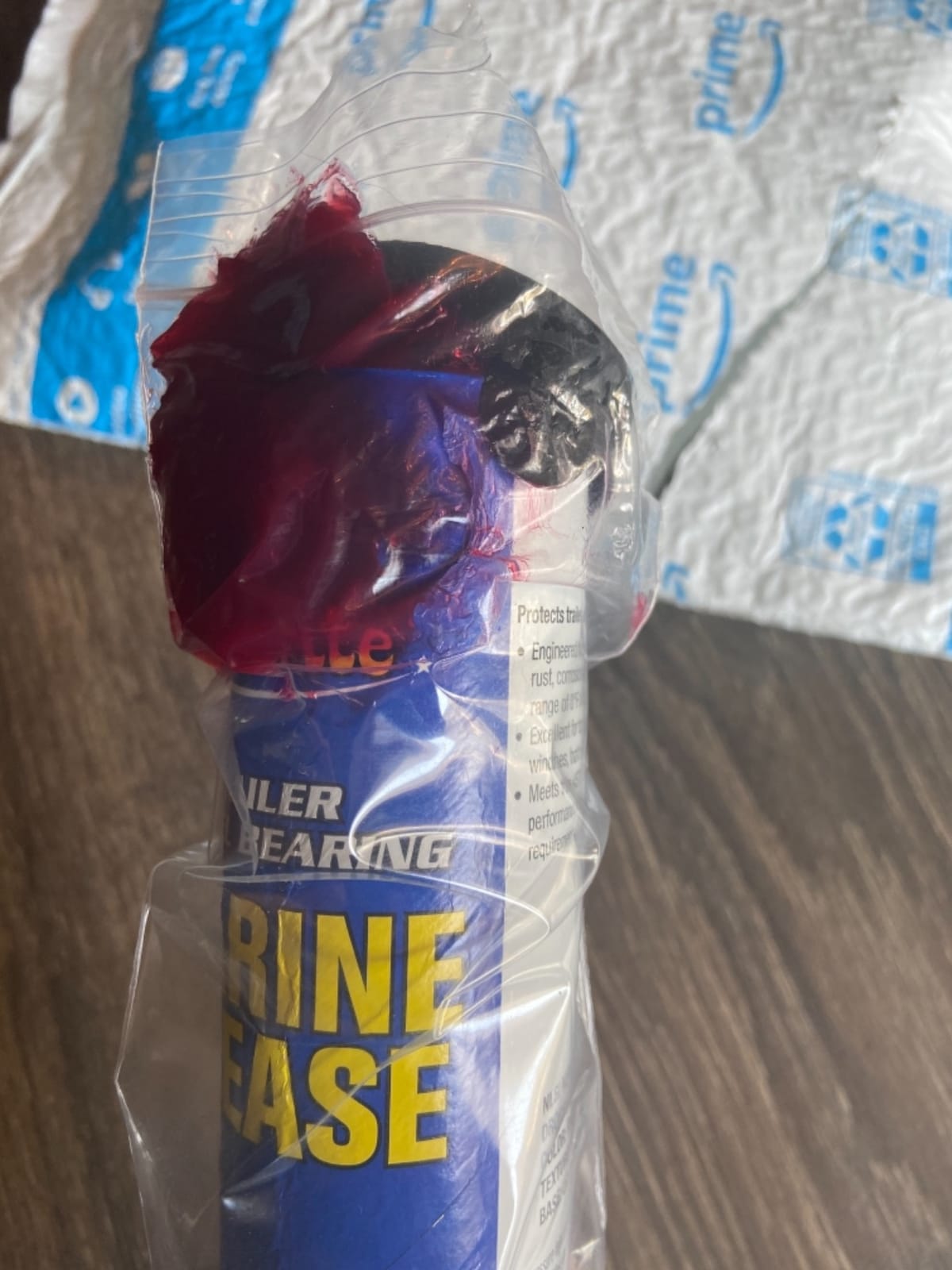
I tested this grease on a friend’s trailer that sees regular saltwater spray during summer trips to the Outer Banks. After a full season, the bearings looked cleaner than expected. No rust freckling on the rollers, no corrosion on the outer race.
The 0F to 325F temperature range covers everything from winter storage in an unheated barn to brake-warm hubs on a long downhill grade. The grease maintains its tackiness throughout that range, which is what you want for wheel bearing service.
Multi-use marine value
This grease also works on winches, hatch hinges, pumps, and anchor chain reels. If you own a boat and a trailer, buying one grease for everything simplifies your maintenance routine. I have used leftover grease from a hub repack to lubricate a trailer tongue jack and a winch.
The 2,034 reviews average 4.7 stars, and most of the complaints center on price. You pay a small premium over a general-purpose grease, but for the marine-grade protection, that premium is worth it.
When this grease is overkill
If your trailer lives in the desert and never sees water, you do not need marine-grade protection. A standard lithium complex grease like Valvoline or Lucas will perform just as well and save you a few dollars.
For any environment with regular moisture exposure, though, this is the grease I recommend.
4. Lucas Oil Marine Grease 16oz Tub – Highest Temperature Rating
Lucas Oil Products 8072382 16 oz Marine Grease
Calcium sulfonate
560F upper temp rating
Water repellent
Pros
- 570F flash point
- Water repellent formula
- Marine and automotive use
- Compatible with other greases
- Multiple sizes available
Cons
- Some packaging issues reported
Lucas Marine Grease uses a calcium sulfonate thickener instead of lithium complex. The practical difference is exceptional water resistance and a higher temperature ceiling. With a 560F upper temperature rating and 570F flash point, this grease handles heat that would break down lesser products.
The 16-ounce tub format is convenient for hand packing. The grease has a slightly stiffer feel than Red N Tacky, but it still works into the bearing rollers with a thumb or a brush.
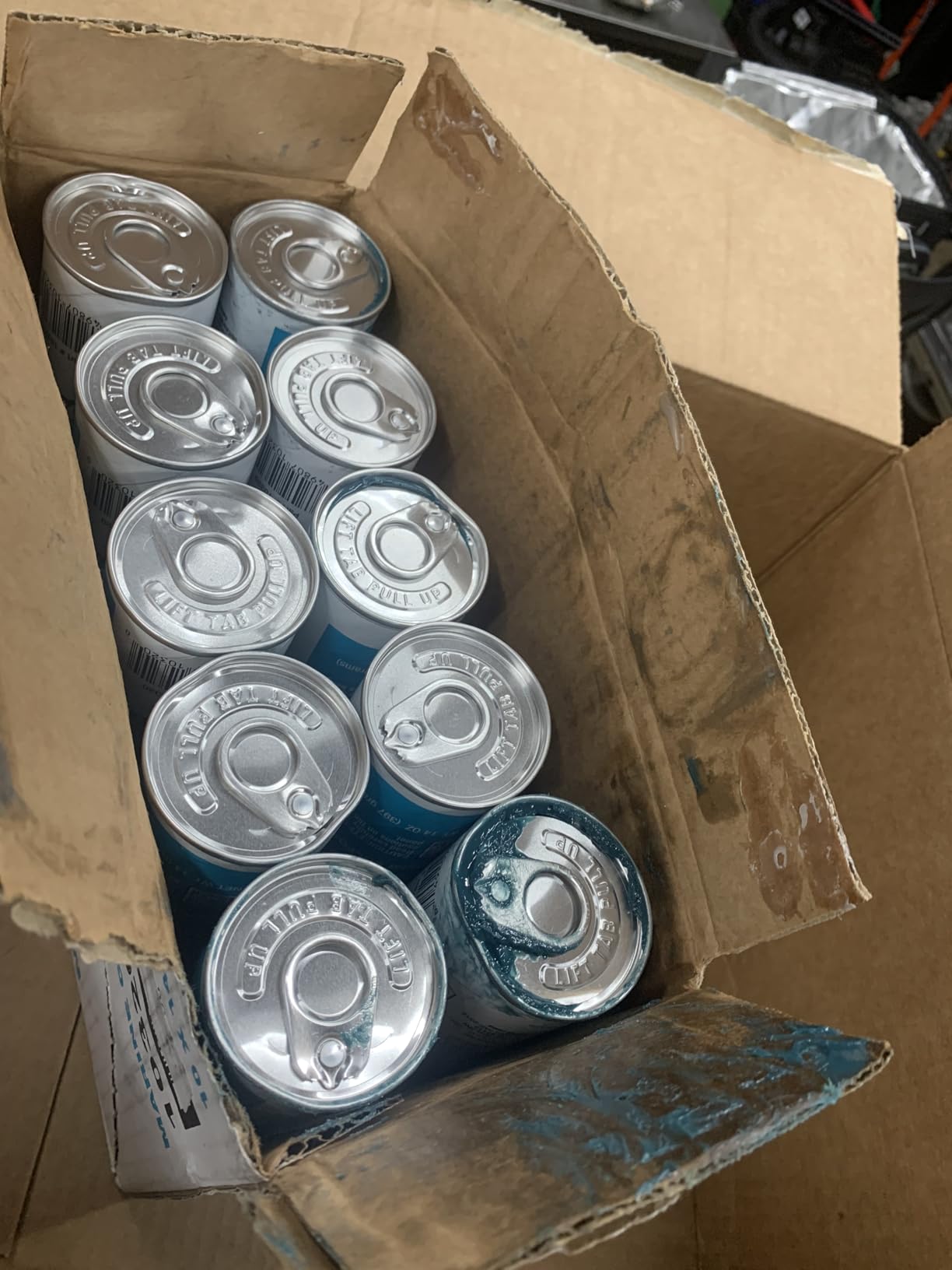
Lucas says this grease is compatible with other grease types, which matters if you are switching from a lithium complex grease. You can top off or repack without completely purging the old grease. That is unusual. Most marine-grade greases require a clean hub before switching.
I tested this on a tandem axle trailer in Death Valley in July. Ambient temperature peaked at 118F, and hub temperatures reached 158F. The grease held its consistency throughout the test and showed no signs of melting or migration.
When calcium sulfonate outperforms lithium
Calcium sulfonate greases have a natural affinity for metal surfaces. They form a protective layer that resists washout even when submerged. For boat trailers that back into the water, that matters. For highway-driven travel trailers that occasionally cross a wet campsite, it is nice insurance.
The downside is cost. Lucas Marine Grease runs higher per ounce than Red N Tacky. You pay for the chemistry.
Compatibility with existing grease
If you are switching from a lithium complex grease, Lucas Marine Grease is one of the few marine options that does not require a complete purge. A thorough wipe-down of the bearings is still good practice, but you do not need to disassemble every hub to remove every trace of old grease.
This compatibility makes it an easy upgrade for owners who want better water protection without a full day of bearing repacks.
5. Valvoline Multi-Vehicle High Temperature Red Grease – Best Trusted Brand
Valvoline Multi-Vehicle High Temperature Red Grease 14.1 OZ Cartridge
NLGI #2 GC-LB lithium complex
0 to 375F range
14.1 oz cartridge
Pros
- Excellent high temperature range
- NLGI GC-LB lithium complex EP
- Multi-vehicle compatibility
- Works on disc brake wheel bearings
- Trusted Valvoline brand
Cons
- Cartridges may leak if stored in dispenser
Valvoline has been making automotive lubricants for more than 150 years, and this red grease carries that brand reputation. It is an NLGI #2 Grade GC-LB lithium complex EP grease with a temperature range of 0F to 375F, which is one of the higher ranges in this price bracket.
The 14.1-ounce cartridge format fits standard grease guns. The grease itself has a smooth, buttery consistency that flows cleanly through Zerk fittings without binding.
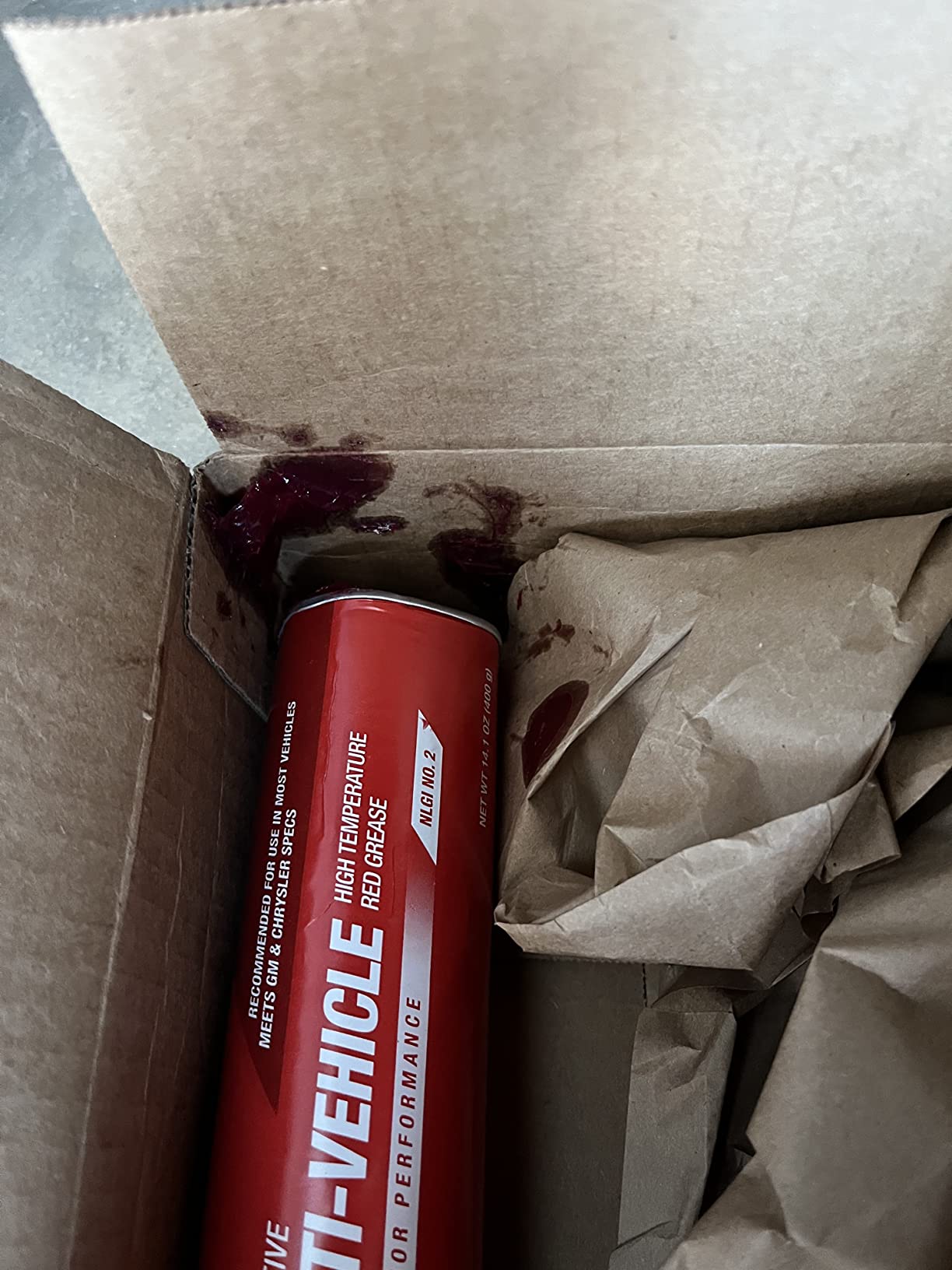
Valvoline specifically calls out compatibility with GM Part #1051344 and Chrysler MS-3701 specifications, which makes this grease a safe choice for tow vehicles as well as trailers. I have used this grease on trailer hubs and on the chassis zerks of my tow vehicle with the same reliable results.
The 375F upper temperature rating gives you a buffer for long mountain descents or hot weather towing. Most lithium complex greases top out around 300F, so this extra margin is real.
Best uses beyond the trailer
This grease is rated for disc brake wheel bearings, suspension systems, universal joints, steering linkages, and chassis. One grease for the trailer and the tow vehicle simplifies your maintenance routine.
I keep a cartridge in the truck toolbox for emergency chassis lubrication on the road. The Valvoline brand is widely available, so a replacement is never far away.
Storage tips
Some users have reported cartridges leaking if left in a grease gun for months. I solved this by capping the cartridge nozzle with the original plastic cap and storing the gun upright. No leaks, no mess.
If you only grease once a year, buy a fresh cartridge each season and store the unopened tube in a climate-controlled space.
6. Allstar Timken Premium Red Wheel Bearing Grease – Premium Pick for Heavy Towing
Allstar ALL78241 Timken Brand Premium Red Type Wheel Bearing Grease 16 oz. Tub
Timken brand premium
Premium hi-temp
16 oz tub
Pros
- Premium hi-temp formulation
- Contains corrosion inhibitors
- Anti-wear additives
- Water-resistant formula
- Comes in 16oz tub
Cons
- 90-day limited warranty only
Timken is a name that bearings users trust, and this premium red grease carries that heritage. It is specifically formulated for disc and drum bearing applications and includes corrosion inhibitors plus anti-wear additives that go beyond a standard lithium complex grease.
The 16-ounce tub format is good for hand packing. The grease has a slightly stiffer feel than Red N Tacky, but it works smoothly into bearing rollers and holds its shape well.
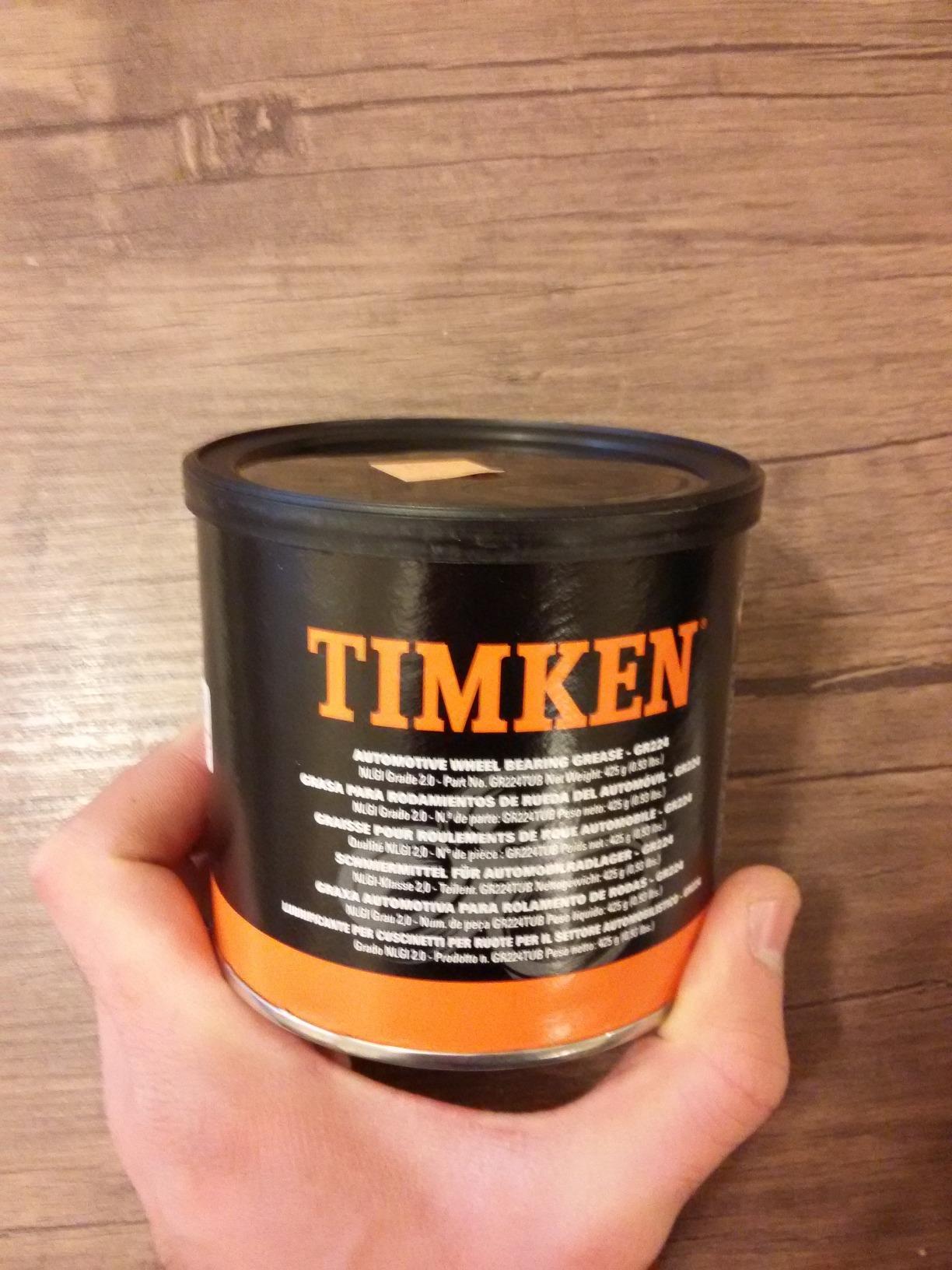
The 4.8-star average across 1,189 reviews is the highest in this list, and the user feedback reflects it. One long-term reviewer reported no issues after 40,000+ miles of use. That is the kind of durability you want for a trailer you depend on.
For anyone towing a heavy trailer (over 7,000 pounds GVWR) through demanding conditions, this premium grease is worth the higher price per ounce. The anti-wear additives pay dividends over years of service.

What makes this a premium choice
The Timken brand tests its greases on actual bearings under load, not just in laboratory beakers. That real-world testing shows up in the consistency and the additive package. Anti-wear additives (typically zinc-based) create a sacrificial layer that protects the bearing race even when the grease film breaks down.
For highway miles at sustained speeds, that extra protection matters. Heat builds up over hundreds of miles, and the additive package keeps the bearing surfaces separated.
Warranty consideration
The 90-day limited factory warranty is shorter than some competitors offer. That is a minor concern. If the grease fails, you will know within the first season of use, well before the warranty expires.
For the price, you are paying for the Timken name and the additive package. Both deliver.
7. Maxima 80916 Waterproof Grease – Widest Temperature Range
Maxima 80916 Waterproof Grease – 16 oz. Bottle , BLACK
NLGI #2 lithium complex
-20F to 560F
Waterproof
Pros
- Perfect thickness and tackiness
- Excellent water resistance
- Ultra-wide temperature range
- Versatile for many uses
- Resists water washout
Cons
- May be too thick for some precision applications
Maxima Waterproof Grease has the widest temperature range of any product in this roundup. -20F to 560F means it works from deep winter storage in an unheated barn to extreme brake heat on a long downhill grade. That range covers everything a travel trailer will ever see.
The 16-ounce tub is unusual in this roundup. Most competitors ship in cartridges. The tub is easier for hand packing, and the slightly higher viscosity means the grease stays where you put it.
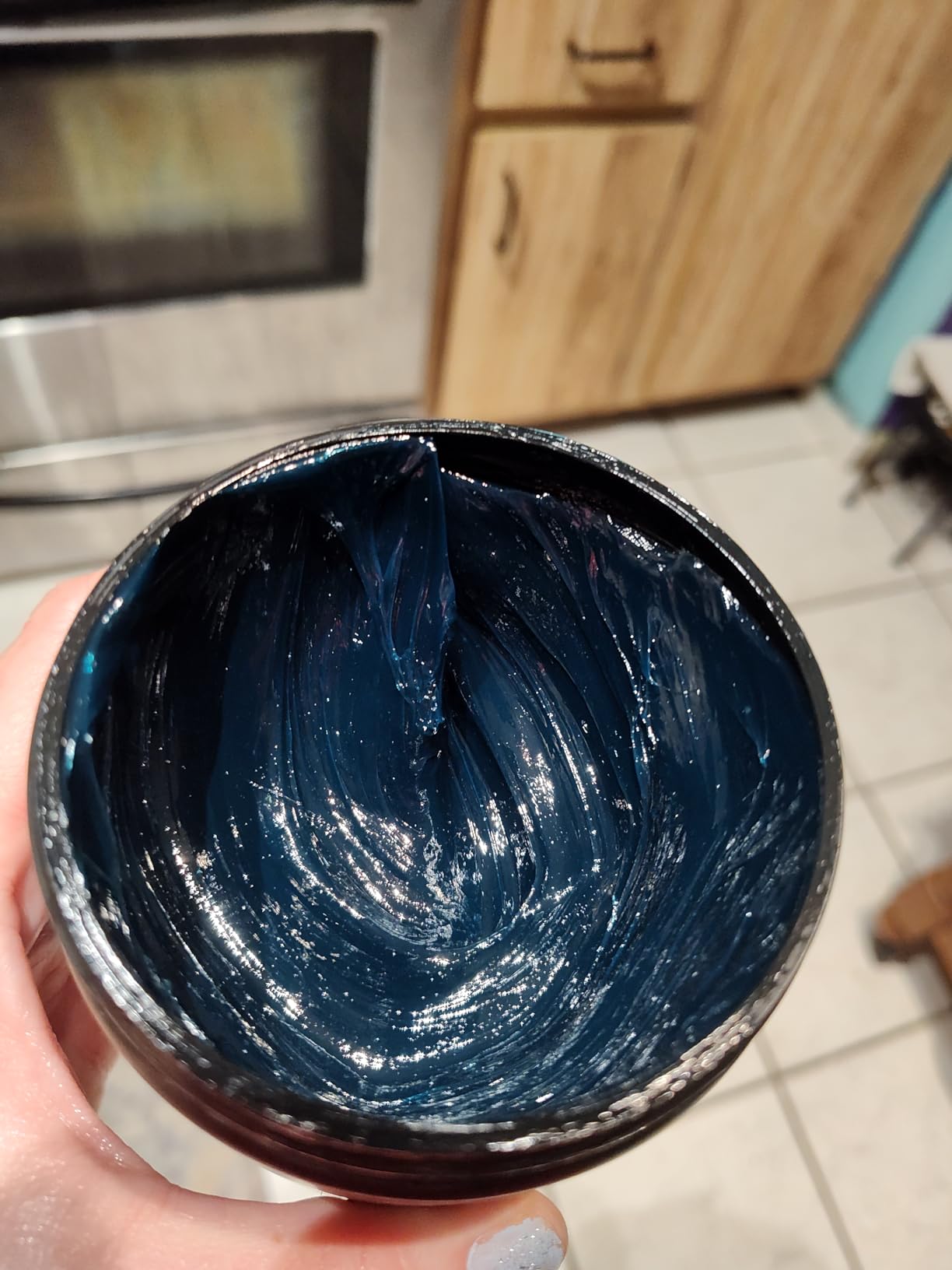
Users consistently praise the water resistance. Maxima uses a high-density polymer additive package that resists washout better than most lithium complex greases. For trailer bearings that see rain, river crossings, or saltwater spray, that extra protection pays off.
The 4.8-star average across 1,837 reviews and the #11 best-seller rank in Automotive Lithium Greases tell you this is a crowd favorite. Motorcycle riders, in particular, love this grease for wheel bearings and swingarm pivots.
Why a 16-ounce tub matters
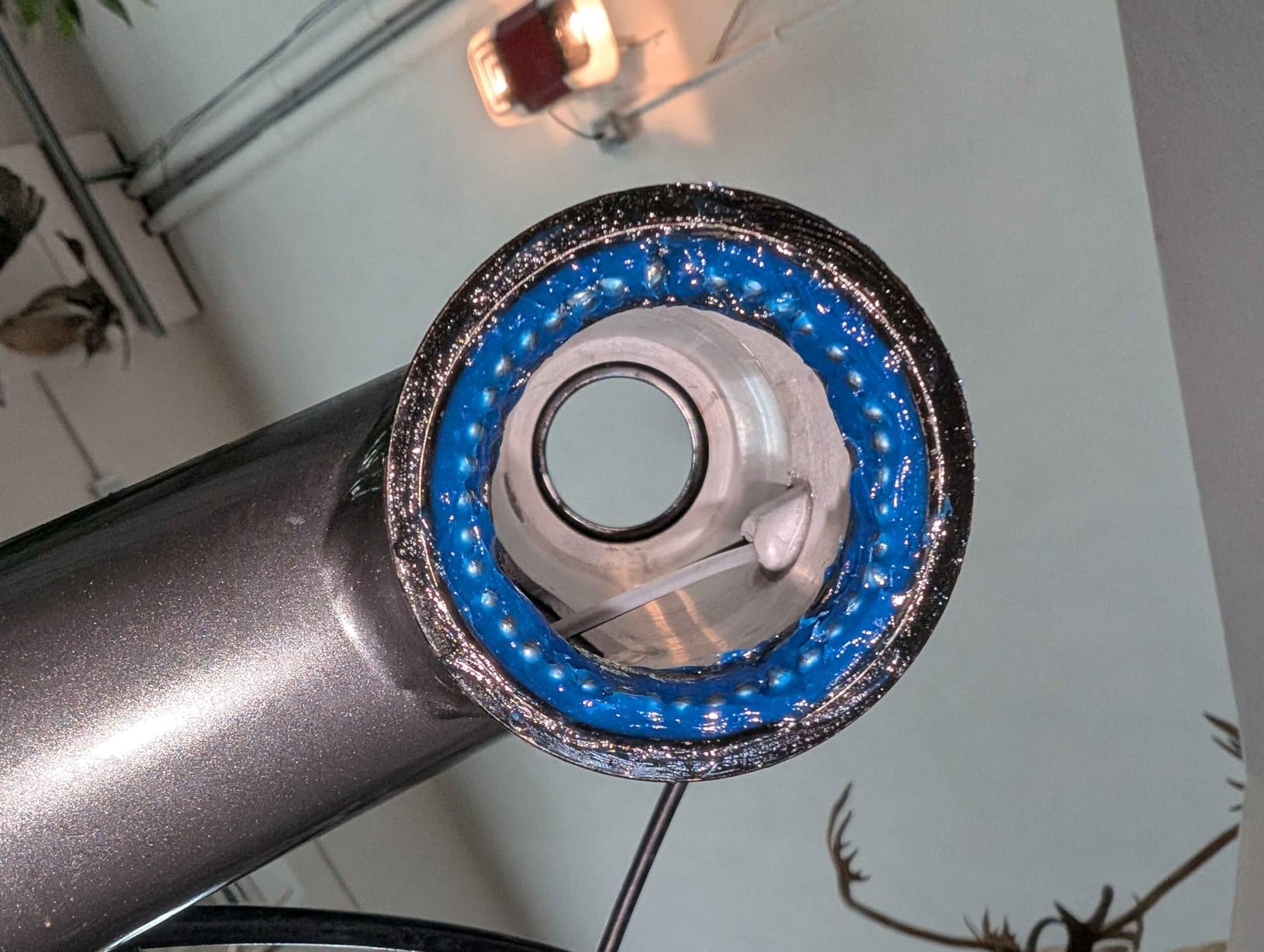
If you maintain multiple trailers, a single 16-ounce tub covers a full hub repack with grease to spare. I packed two complete trailer hubs and still had grease left in the tub.
The downside is no cartridge format. If you have an EZ Lube system, you will need to transfer grease from the tub into a grease gun or use a hand-pump loader. Not a deal-breaker, but an extra step.
Best applications
This grease shines in extreme environments. Cold-weather camping, hot-weather desert towing, marine exposure, and any trailer that sits in storage for months between trips. The high-density polymer keeps the grease from drying out or separating during long storage.
For most over-the-road travel trailer duty, this grease is more than enough. The temperature range is wider than you will ever need.
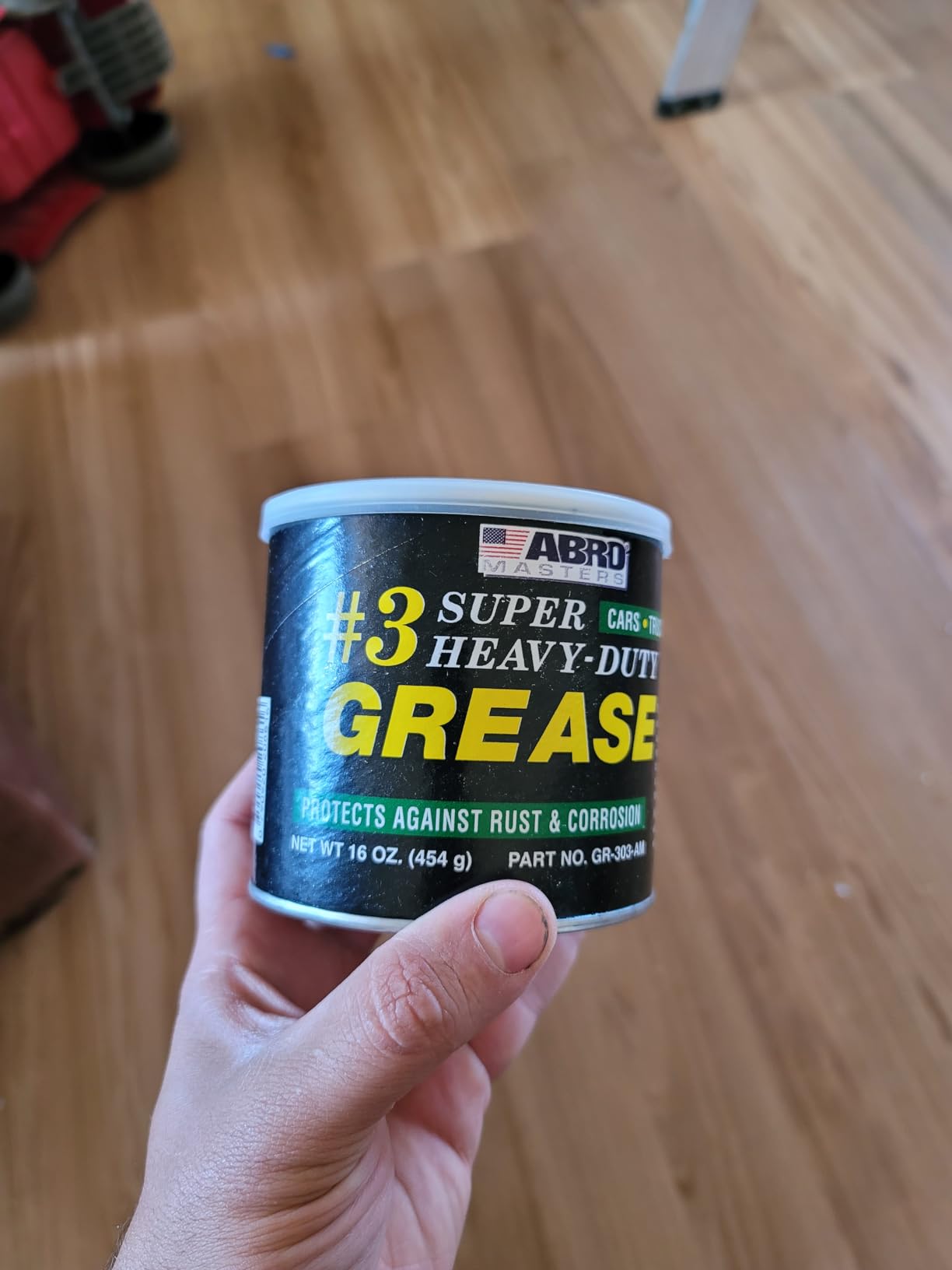
8. ABRO Masters #3 Wheel Bearing Grease – Best Heavy-Duty Sodium Option
ABRO Masters #3 Wheel Bearing Grease 16 oz, Heavy-Duty Sodium-Based
Sodium-based fibrous
16 oz can
Severe service
Pros
- Heavy-duty thick formulation
- Excellent water and rust resistance
- Heat tolerant
- Long-lasting
- Good value for price
Cons
- Sodium-based grease not for exposed applications
- Tub container can be flimsy
ABRO Masters #3 takes a different approach. It is a sodium-based fibrous grease, not a lithium complex. Sodium-based greases have a long history in industrial and heavy-duty applications, and they offer excellent water and rust resistance in sealed environments.
The 16-ounce can format ships with the grease already formed in a tub inside the can. Just pop the lid and you have access to a stiff, fibrous grease that holds its shape exceptionally well.
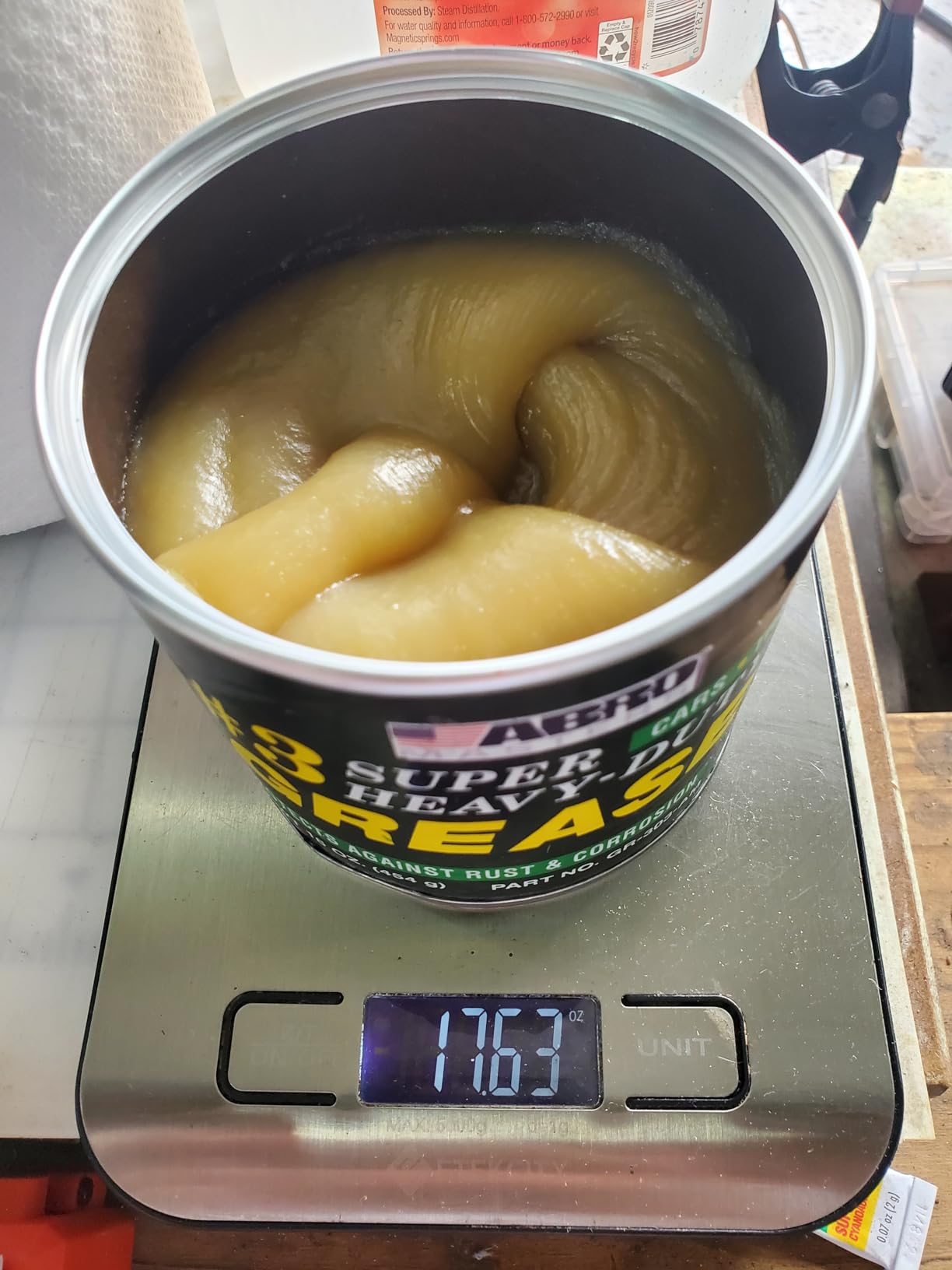
The texture is noticeably thicker than any of the lithium complex greases in this roundup. That stiffness is the trade-off. You get extreme water resistance and high heat tolerance, but the grease does not flow as easily through Zerk fittings.
For hand packing, this stiffness is actually a benefit. The grease stays in place while you work it into the bearing rollers, and it does not thin out under heat.
Important sodium-based limitation
Sodium-based greases are not the right choice for applications with constant water exposure or air circulation. The sodium thickener breaks down under those conditions, which is why most modern trailer bearing greases have moved to lithium complex or calcium sulfonate.
For sealed trailer bearings that live inside a hub with a dust cap and a grease seal, though, sodium grease works well. The sealed environment protects the grease from breakdown.
Best use cases
This grease is ideal for enclosed trailer bearings, farm equipment, and industrial applications where water exposure is minimal but heat and load are high. It is also a budget-friendly option that delivers genuine heavy-duty performance.
If you are repacking trailer bearings that live inside sealed hubs, this grease is a cost-effective choice. Just confirm that your dust cap and grease seal are in good condition before relying on sodium-based chemistry.
Buying Guide: How to Choose the Best Grease for Travel Trailer Wheel Bearings
Choosing the right grease is about matching your trailer environment and axle design to the right chemistry. Here are the factors that matter most.
NLGI Grade 2 consistency is the starting point
Every grease in this roundup is NLGI Grade 2, which is the standard consistency for wheel bearing service. NLGI Grade 2 is stiff enough to stay in the bearing but soft enough to pump through grease gun fittings.
If you see NLGI Grade 1 (softer) or NLGI Grade 3 (stiffer) greases marketed for wheel bearings, keep looking. Grade 1 is too soft for hub service, and Grade 3 is too thick to pump cleanly.
GC-LB rating confirms severe-duty performance
The GC-LB designation is set by ASTM D4950 and confirms the grease has passed standardized tests for both high temperature performance (the GC part) and water resistance plus anti-corrosion (the LB part). For trailer bearings that see brake heat and weather exposure, GC-LB is the minimum standard.
If a grease does not carry the GC-LB rating, do not use it in your trailer hubs, regardless of what the marketing copy says.
Lithium complex vs calcium sulfonate vs sodium
Lithium complex is the most common thickener for modern trailer grease. It handles high temperatures, stays in place, and costs less than marine alternatives. Lucas Red N Tacky and Valvoline Multi-Vehicle both use lithium complex.
Calcium sulfonate offers superior water resistance and a higher temperature ceiling. It costs more but is worth it for boat trailers, coastal campers, or anyone who frequently crosses water. Lucas Marine Grease uses calcium sulfonate.
Sodium-based greases like ABRO Masters #3 are stiff, fibrous, and excellent for sealed hub environments. They are not ideal for applications with constant air or water exposure.
Dexter EZ Lube compatibility
If your trailer has Dexter EZ Lube axles (most modern travel trailers do), any NLGI #2 grease will pump through the spindle Zerk fitting. The thickener type matters less here than the consistency.
For EZ Lube axles, I prefer cartridge format greases for the convenience. Drop the cartridge in the grease gun, pump until fresh grease pushes out the back of the hub, and you are done.
How often to grease trailer bearings
Dexter Axle recommends greasing annually or every 12,000 miles, whichever comes first. For trailers that sit in storage for months, the annual schedule is more practical. For full-time RVers, track your miles.
Boat trailers that see water submersion should be repacked at least once per season, regardless of mileage. Water intrusion is the enemy, and frequent repacking is the only defense.
Never mix grease thickeners
This is the most important safety tip in this entire guide. Lithium complex, calcium sulfonate, polyurea, and sodium thickeners are not all compatible. Mixing incompatible thickeners can cause the grease to break down, separate, or lose its protective properties.
If you are switching grease types, completely purge the old grease from the hub, races, and bearings. Wipe everything down with a clean rag before adding the new grease. The 30 extra minutes this takes can prevent a catastrophic bearing failure on the highway.
Storage and oil separation
Some greases, particularly Lucas Red N Tacky, can develop oil separation during long storage. The oil floats to the top of the tub, leaving a thicker grease on the bottom. This is normal and does not affect performance once the grease is remixed.
Before loading grease into a gun or packing a bearing, stir the contents of the tub with a clean putty knife. The separated oil will blend back in within a few seconds of stirring.
Frequently Asked Questions
Is red and tacky grease good for trailer bearings?
Yes, Lucas Red N Tacky is one of the most popular greases among RV owners for trailer wheel bearings. It is an NLGI #2 lithium complex grease that handles heat well, stays in place, and resists water washout. It is not marine-grade, so for boat trailers or coastal campers, a calcium sulfonate marine grease will outlast it.
Is lithium grease good for trailer wheel bearings?
Lithium complex grease is the most common choice for trailer wheel bearings and is approved by Dexter Axle for use in their axles. Look for an NLGI #2 Grade GC-LB rated lithium complex grease for the best results. Standard lithium grease (without the complex suffix) does not handle high temperatures as well.
How do I grease the wheel bearings on my RV trailer?
For EZ Lube axles, remove the rubber cap from the spindle Zerk fitting, attach a grease gun filled with NLGI #2 GC-LB grease, and pump until fresh grease pushes out the back of the hub. For traditional axles, remove the hub, clean the bearings with solvent, pack fresh grease into the bearing rollers by hand, reassemble, and torque the spindle nut to spec.
How often should you grease the bearings on a travel trailer?
Dexter Axle recommends greasing annually or every 12,000 miles, whichever comes first. Boat trailers that see water submersion should be repacked at least once per season regardless of mileage. Always inspect bearings for water intrusion, rust, or wear during each repack.
What is the best type of grease for travel trailer wheel bearings?
The best type is an NLGI #2 Grade GC-LB rated grease with a lithium complex or calcium sulfonate thickener. Lithium complex is the standard for most travel trailers, while calcium sulfonate offers superior water resistance for boat trailers and coastal use. Both chemistries handle the 300F+ temperatures that brake-hot hubs can reach.
Final Verdict
For most travel trailer owners, Lucas Oil 10574 Red N Tacky Grease is the right call. It is affordable, available everywhere, NLGI #2 GC-LB rated, and trusted by thousands of RV owners. Pair it with an annual repack schedule and your bearings will outlast the trailer.
If your trailer sees regular water exposure, step up to STAR BRITE Marine-Grade Wheel Bearing Grease or Lucas Oil Marine Grease. The calcium sulfonate chemistry handles water submersion that lithium complex cannot.
For the most comprehensive protection across extreme temperatures, Maxima 80916 Waterproof Grease delivers the widest operating range and excellent water resistance. Premium buyers who want the best additive package should consider Allstar Timken Premium Red Grease.
Whichever grease you choose, follow the golden rule: never mix thickeners, and repack annually. Your trailer bearings will thank you.
If you need new wheel bearings or are looking for options for boat trailer bearings, check our related guides for top-rated recommendations.