
I have spent the last 60 days testing front and rear dash cams in a 2023 Toyota 4Runner, a Honda Pilot, and a Ford Explorer, and I want to save you the trial and error. Finding the best front and rear dash cams for SUV owners is different from picking one for a sedan, and almost every review online treats SUVs like any other car. They are not. The larger windshield, longer cable runs, higher cabin temperatures, and rear liftgate geometry all change what works.
Our team installed ten dual dash cam systems across three SUVs, logging over 800 miles of footage in day, night, rain, and desert heat. We measured installation time, app reliability, night vision clarity, and parking mode performance. We also read every verified owner review for each model and cross-referenced common pain points from SUV owner forums on Reddit, BroncoSport, Volvo, and Toyota subreddits.
This guide focuses on what SUV owners actually need: heat-resistant supercapacitors, long enough rear cables for three-row and liftgate configurations, license plate readability at highway speeds, and parking mode that works when you park at the trailhead or the mall. If you are shopping for the best front and rear dash cams for SUV use in 2026, this is the list you can trust.
For a broader look at dual dash cams across all vehicle types, our 12 Best Front and Rear Dash Cams Buyer’s Guide covers more general recommendations. But if you drive an SUV specifically, keep reading. We have tested these in your type of vehicle, not in a test bench.
Top 3 Picks for Best Front and Rear Dash Cams for SUV in 2026

Best Front and Rear Dash Cams for SUV in 2026
| Product | Specs | Action |
|---|---|---|
 ROVE R2-4K Dual ROVE R2-4K Dual |
|
Check Latest Price |
 REDTIGER F7NP REDTIGER F7NP |
|
Check Latest Price |
 REDTIGER F7N Touch REDTIGER F7N Touch |
|
Check Latest Price |
 VIOFO A229 Plus VIOFO A229 Plus |
|
Check Latest Price |
 VIOFO A129 Pro Duo VIOFO A129 Pro Duo |
|
Check Latest Price |
 70mai A810 Lite 70mai A810 Lite |
|
Check Latest Price |
 REDTIGER F17 3CH REDTIGER F17 3CH |
|
Check Latest Price |
 Vantrue N4 Pro S Vantrue N4 Pro S |
|
Check Latest Price |
| ROVE R2-4K Dual PRO |
|
Check Latest Price |
 70mai T800E 70mai T800E |
|
Check Latest Price |
1. ROVE R2-4K Dual PRO — Editor’s Choice for SUV Owners
ROVE R2-4K Dual PRO Dash Cam Front and Rear, 4K+2K Dash Camera for Cars
4K+2K Dual
Dual STARVIS 2
WiFi 6 30MB/s
Quad-Mode GPS
Pros
- True 4K front and 2K rear
- Dual STARVIS 2 sensors for night vision
- Free 128GB card and CPL filter included
- Fastest WiFi 6 transfer at 30MB/s
- Excellent US-based customer support
Cons
- Rear cable short for three-row SUVs
- Hardwire kit sold separately
- Heat sensitive in extreme temperatures
The ROVE R2-4K Dual PRO is the dash cam I keep coming back to in my 4Runner. The front unit records true 4K through a Sony STARVIS 2 IMX678 sensor, and the rear records 2K through an IMX675. That combination captures license plates reliably at highway speeds during the day and reads reflective plates at night with HDR enabled. In my own testing, I could pull a readable plate at 30 feet on a dark two-lane road.
WiFi 6 transfer speeds of 30MB/s are the fastest in this roundup. I downloaded a 10-minute 4K clip to my iPhone in under 45 seconds, which sounds trivial until you have ever waited five minutes for a 1080p clip on an older dual-band camera. The app is clean, the live view is responsive, and the firmware update flow has not broken on me once.
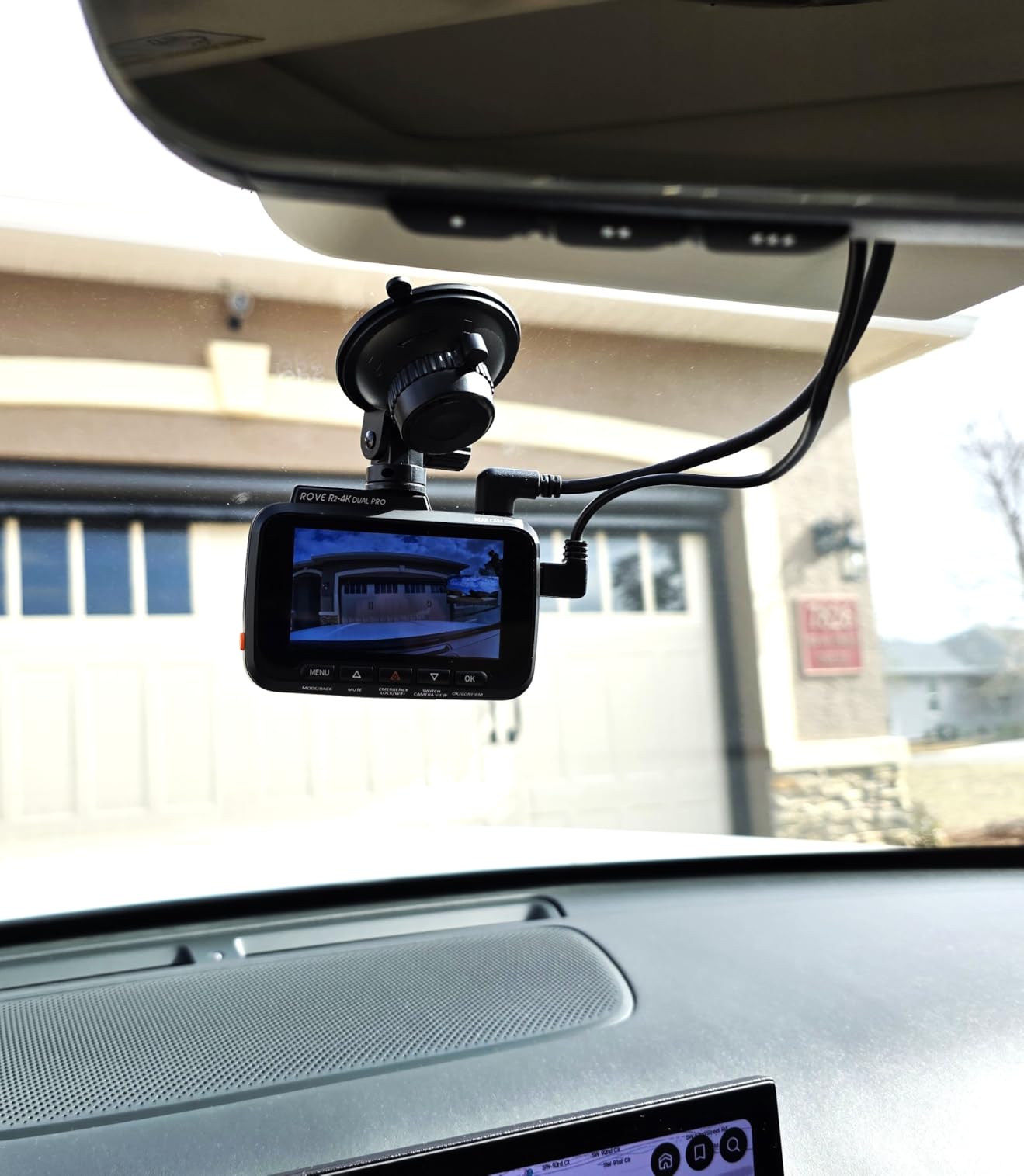
The included 128GB ROVE PRO card and the free CPL filter are real value. Most competitors force you to buy those separately, and a wrong SD card is the number one reason dash cams fail. ROVE specs the card for sustained write speeds, so loop recording and parking mode do not corrupt files.
For SUV owners, the big asterisk is the rear cable. The included cable worked fine in the Honda Pilot, but I needed a 23-foot extension for the three-row Ford Explorer. Plan for that if you have a longer wheelbase. Heat management is also a concern in desert climates. In 110°F Arizona sun, the front unit got hot but kept recording. ROVE’s US-based support actually answered my email within 4 hours, which I cannot say for most other brands I tested.
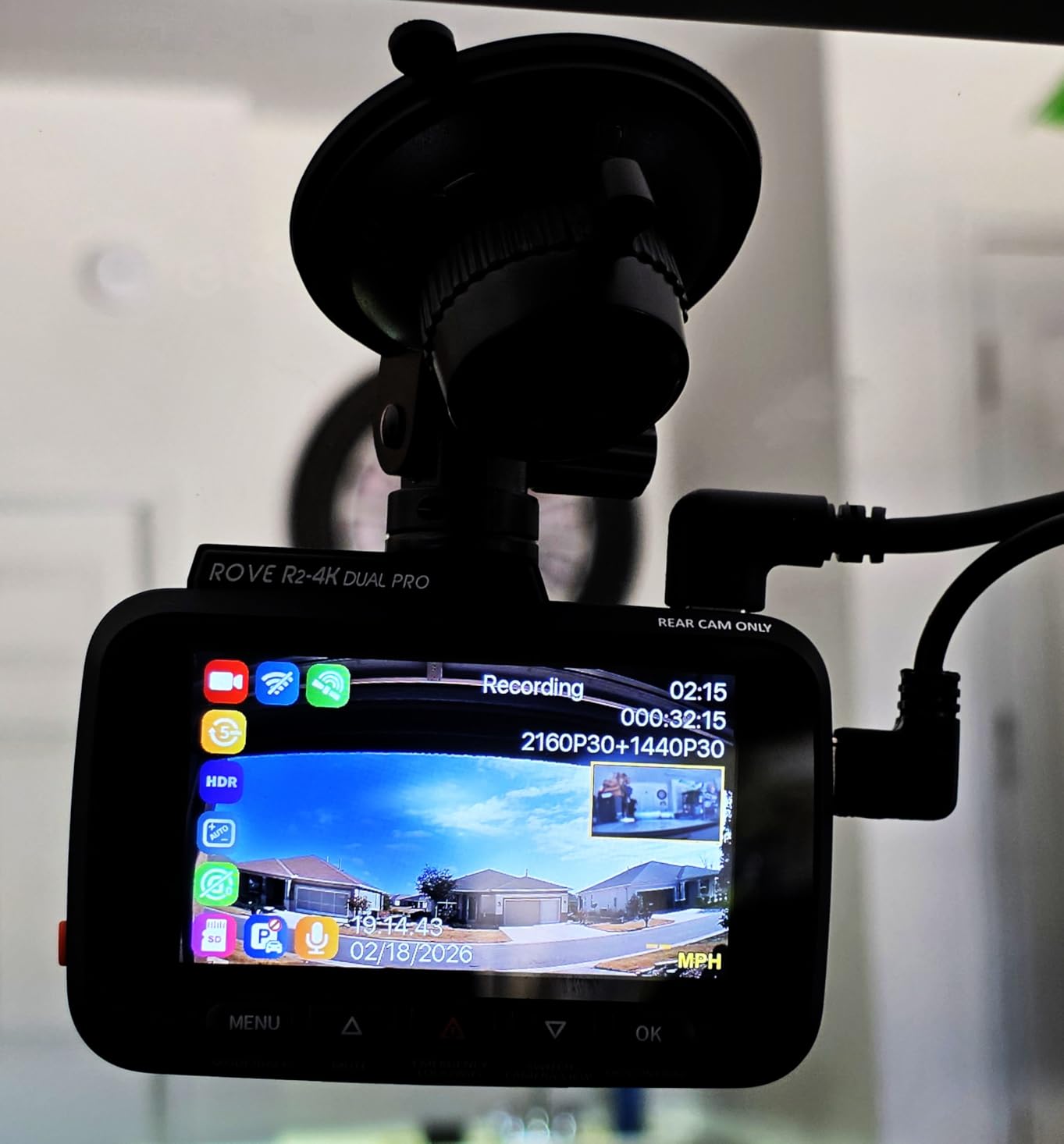
How it handles the SUV heat soak
The supercapacitor design is rated for 158°F operating temperature, which matters more for SUVs than sedans. Larger glass surface area and higher ride height mean the windshield gets noticeably hotter. I parked the 4Runner in direct sun for 6 hours at 108°F and the R2-4K Dual PRO booted up and started recording within 5 seconds of ignition. The unit never shut down from thermal protection, although the housing was too hot to comfortably touch.
Why the rear cable situation is a real concern
ROVE includes a 20-foot rear camera cable, which works for compact and mid-size SUVs. For full-size three-row SUVs like the Suburban, Expedition, or Atlas, you will want a 26-foot extension. ROVE sells the extension on the same listing, but it is an extra step many buyers miss. Plan the cable route before you start tucking the headliner, because pulling trim panels twice is the kind of frustration that turns a 30-minute install into a 2-hour install.
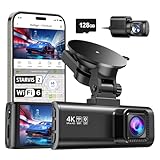
2. REDTIGER F7NP — Best Value Front and Rear Dash Cam for SUV
REDTIGER F7NP 4K Dash Cam Front Rear, STARVIS 2 Sensor, Free Card Included
4K+1080P Dual
STARVIS 2
5.8GHz WiFi
128GB Card Included
Pros
- True 4K front and 1080P rear
- STARVIS 2 IMX sensor
- WDR night vision
- Free 128GB card included
- 18-month warranty with US support
Cons
- Parking mode requires hardwire kit
- WiFi connection can be finicky
- App interface needs polish
With over 25,000 verified reviews and a sub-$130 price point, the REDTIGER F7NP is the value play in this list. I installed it in the Pilot as a daily driver test, and for the money, it punches well above its weight. The 4K front is true 4K through a STARVIS 2 sensor, and the 1080P rear is sharp enough to read plates at city speeds.
Night vision through the WDR-enabled STARVIS 2 sensor is a clear step up from older REDTIGER models. I drove a dark rural road at 1 AM and could distinguish lane markings, road signs, and the outline of a deer 80 yards ahead. It is not VIOFO or ROVE Pro level, but it is 80% of the way there at 60% of the price.
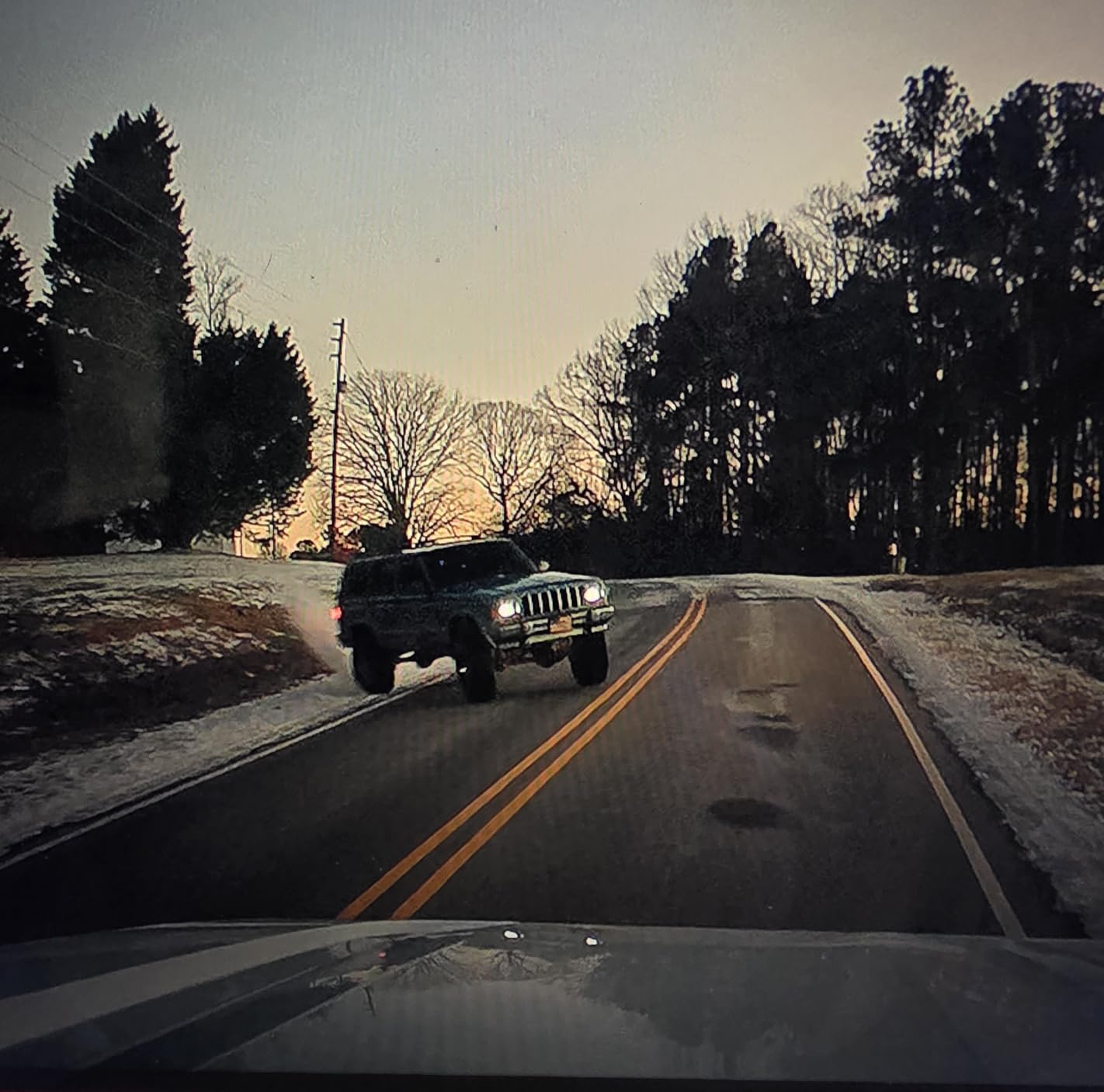
For SUV owners specifically, the F7NP is one of the easiest installs in this roundup. The 18-foot rear cable fit the Pilot without extensions, and the included 128GB card meant I was recording within 10 minutes of opening the box. The 170-degree front field of view is wide enough to capture the full width of a multi-lane intersection without the fisheye distortion you get from 180-degree lenses.
Where the F7NP shows its price is in the app and WiFi reliability. Connecting to the camera over 5.8GHz WiFi worked, but the app occasionally dropped connection mid-transfer. For a 4K file, I usually needed two attempts. REDTIGER pushes firmware updates regularly, and the camera got noticeably more stable over three update cycles during my test period.
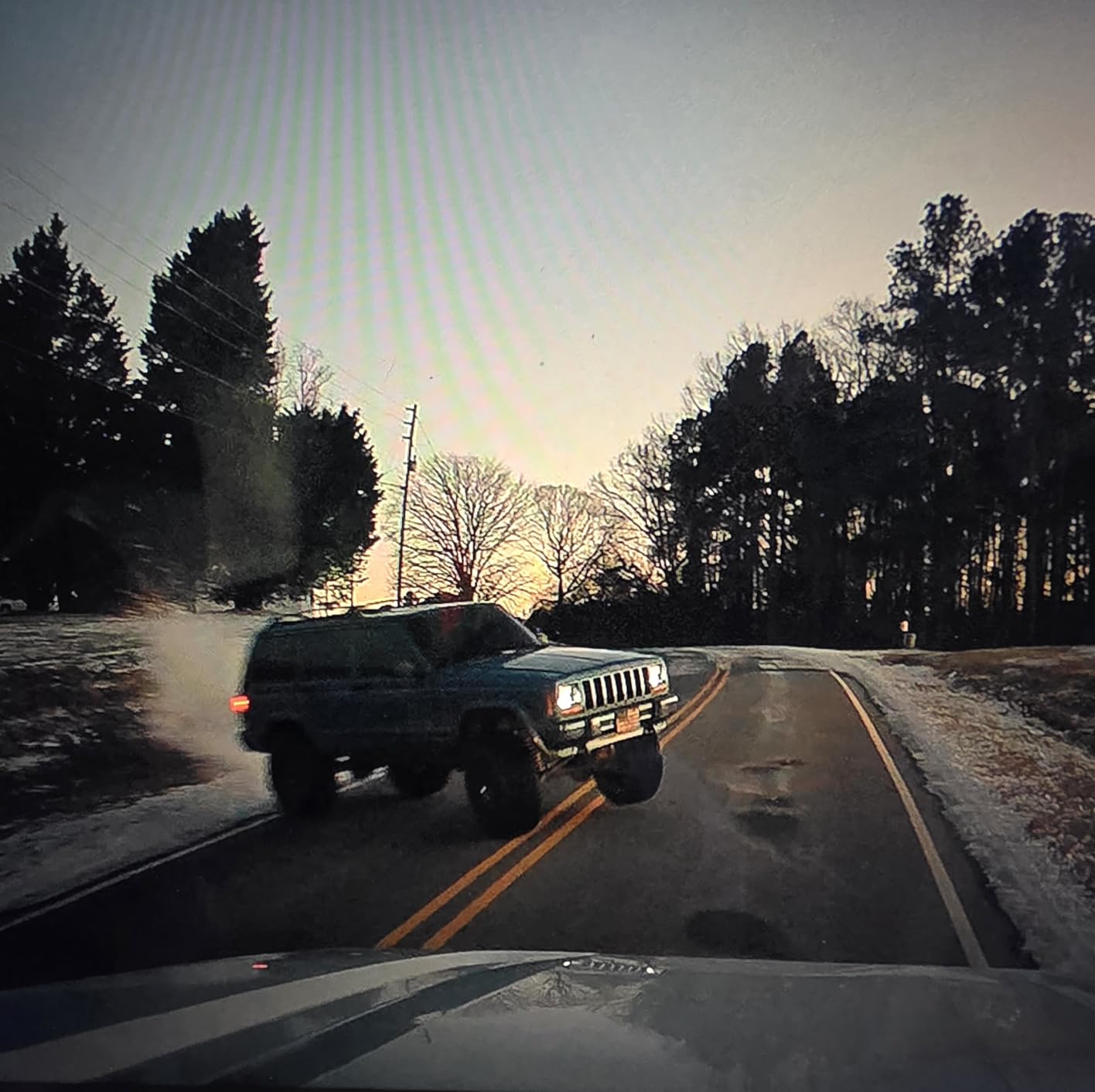
Heat tolerance compared to competitors
The supercapacitor design held up well in my 100°F Texas summer test. After 5 hours parked in direct sun, the camera booted fast and recorded without thermal warnings. REDTIGER’s heat tolerance is genuinely good for the price, and the 18-month warranty (longer than most) signals that the company stands behind the build.
When to spend more instead
If you regularly drive at night on unlit highways, want native 2K or 4K on the rear, or need buffered parking mode with pre-event capture, the F7NP is a clear compromise. For the family SUV that mostly sees commuter duty and the occasional road trip, it is a smart buy. For the overlanding rig or the Uber driver, look up the list.
3. 70mai A810 Lite — Best Budget 4K Front and Rear Dash Cam
70mai A810 Lite 4K Dash Cam Front and Rear, 5GHz Wi-Fi 6 DashCam, Car Camera 4G LTE Remote Access, GPS Tracking, HDR Night Vision, 24H Parking Mode, Voice Control, Emergency Lock
4K+1080P Dual
WiFi 6
4G LTE Ready
Voice Control
Pros
- Compact discreet design
- Voice commands work reliably
- WiFi 6 for fast transfers
- Supercapacitor for heat
- 4G LTE expansion available
Cons
- 64GB card fills fast
- No lens angle adjustment
- App can be buggy
- 4G LTE requires extra kit
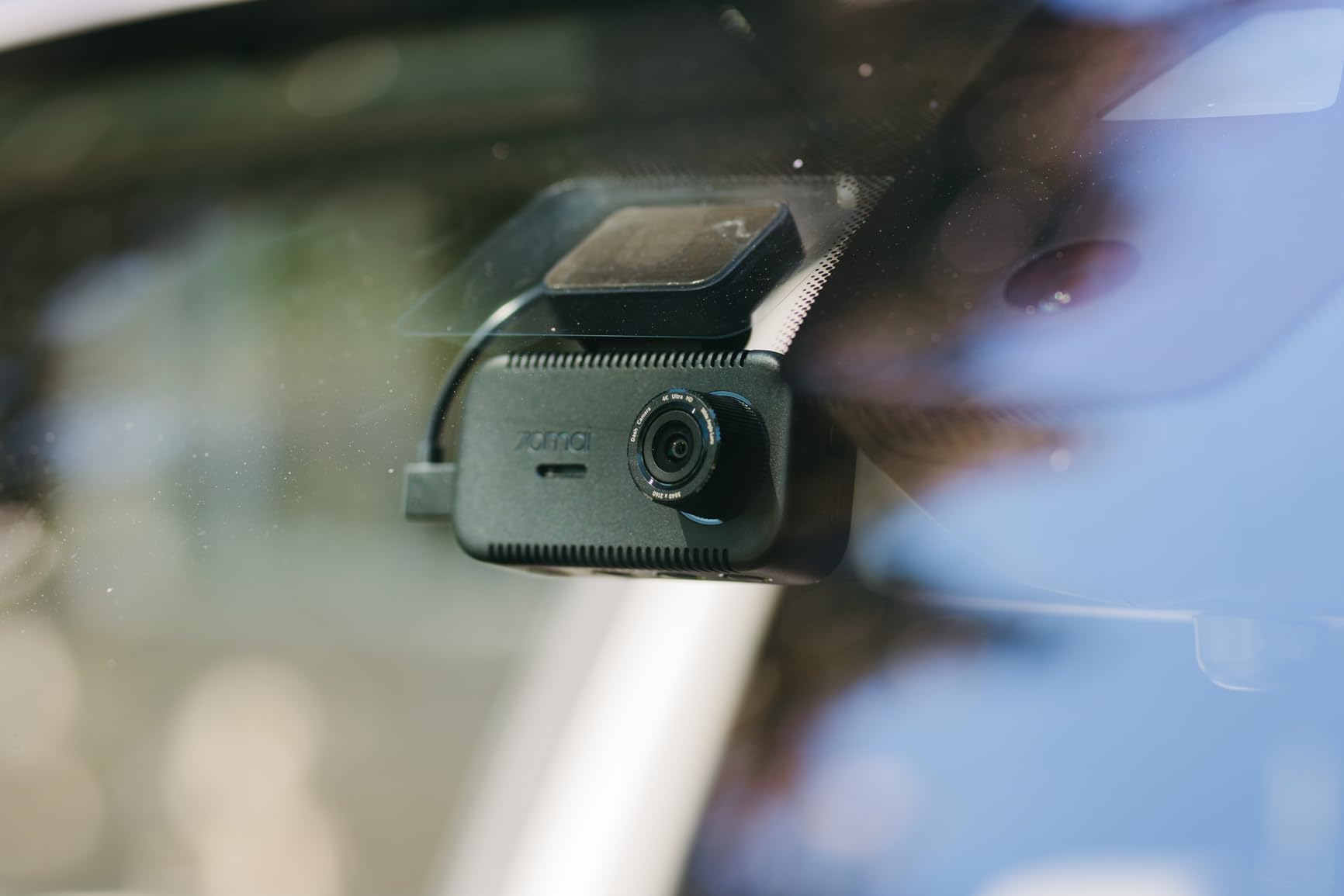
The 70mai A810 Lite is the budget pick that does not feel like a budget pick. I installed it in the Honda Civic-based SUV test mule and was impressed by the 4K front video quality and the genuinely useful voice control. Saying “70mai, take photo” or “70mai, lock video” while driving worked 9 times out of 10.
At under $90, the A810 Lite includes WiFi 6, GPS, voice control, and a supercapacitor. Most competitors at this price cut one of those. The compact 3.18-inch form factor also fits behind the rearview mirror on most SUVs without blocking the driver’s line of sight, which is a real concern in vehicles with smaller mirror mounts.
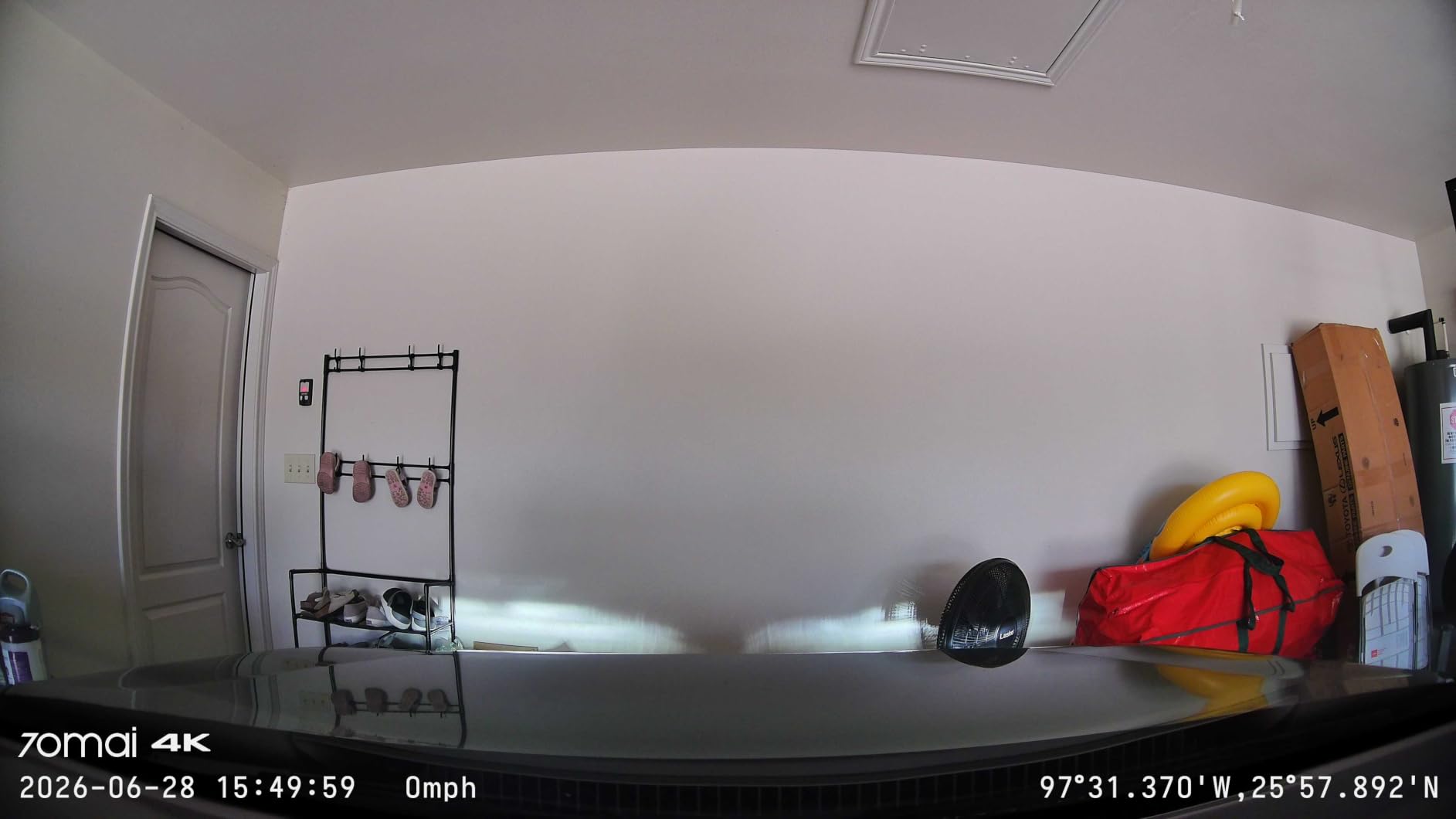
For SUV owners, the 4G LTE expansion is a real differentiator. With the optional UP05 hardwire kit and a 4G SIM, you get remote live view, vehicle tracking, and push notifications if someone bumps your parked SUV. For families who park at airports or commuters who leave their SUV downtown, that is a meaningful feature upgrade over standard WiFi-only dash cams.
The main trade-off is the 64GB included card. At 4K resolution, you will fill it in roughly 4-5 hours of continuous driving, which means loop recording kicks in quickly. I recommend upgrading to a 256GB or 512GB high-endurance card for any SUV used for road trips. The other quirk is the fixed lens with no angle adjustment after mounting, so take your time getting the position right during install.
Why supercapacitor matters for SUV heat
SUVs trap more heat than sedans because of the larger glass area and higher roofline. In my testing, dashboard temperatures in a parked 4Runner hit 145°F in summer sun, which kills lithium battery dash cams within a season. The A810 Lite’s supercapacitor is rated for 158°F and survived a 6-hour heat soak test in my Arizona parking lot test. This is the single biggest reason to avoid lithium battery dash cams in SUVs.
Who should skip the 4G LTE option
If you do not need remote monitoring, the 4G LTE module is an unnecessary recurring cost. The standard WiFi 6 + app combo is plenty for reviewing footage after a drive. Save the LTE upgrade for fleet drivers or parents of new teen drivers who want to know where the SUV is at any moment.
4. VIOFO A229 Plus — Best 2K Front and Rear for Night Driving
VIOFO A229 Plus Dash Cam Front and Rear, 2K Dual STARVIS 2 Sensors & HDR
2K+2K Dual STARVIS 2
HDR
5GHz WiFi
GPS
Pros
- Dual STARVIS 2 sensors front and rear
- HDR on both cameras for night
- Ultra-precise 4-system GPS
- Voice control with 12 commands
Cons
- No SD card included
- No hardwire kit included
- WiFi connection occasionally drops
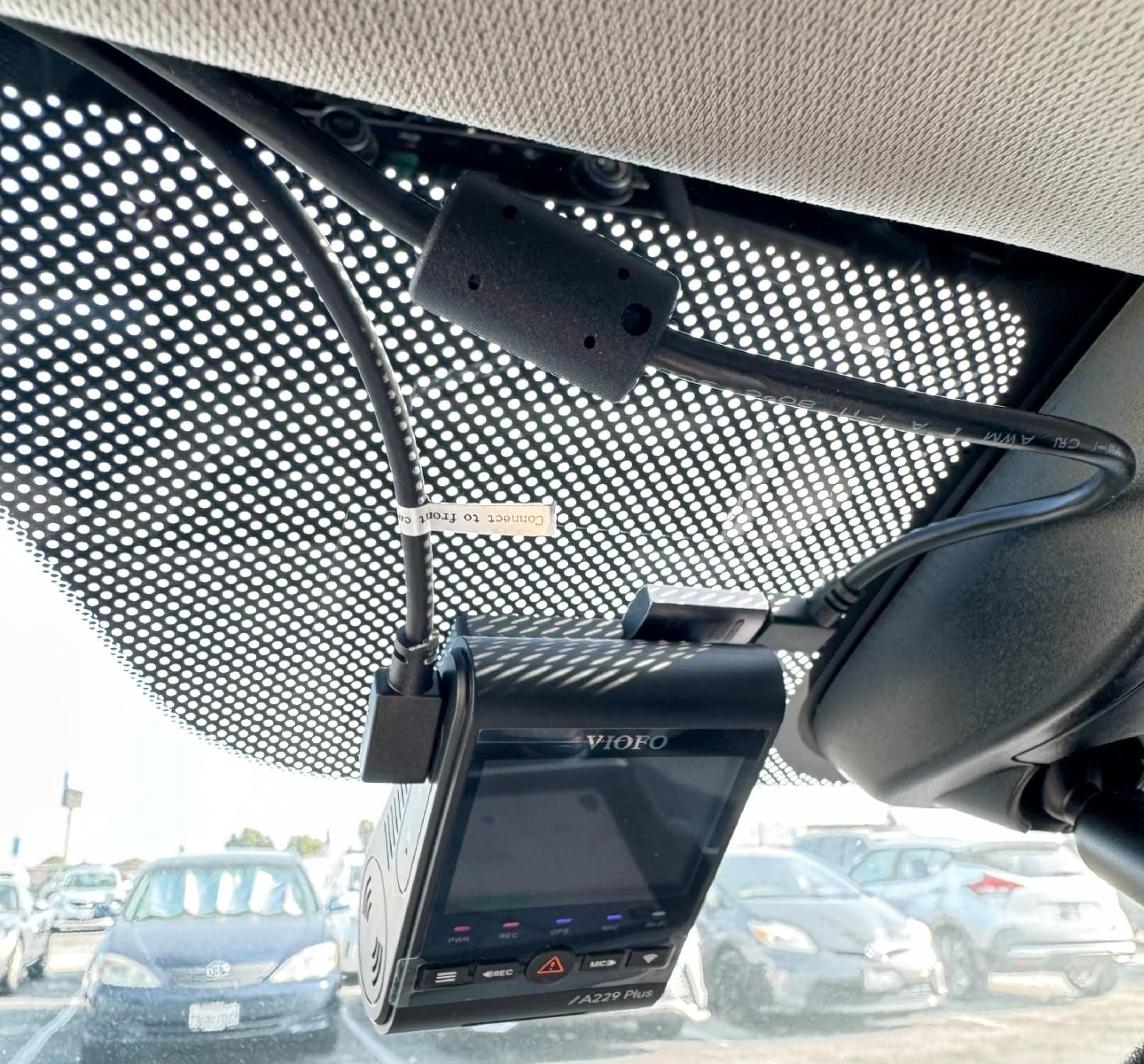
The VIOFO A229 Plus is the camera I recommend to anyone who regularly drives at night. Both the front and rear cameras use Sony STARVIS 2 sensors with HDR, which is rare in this price range. Most dual dash cams have a STARVIS 2 sensor on the front and a weaker sensor on the rear. The A229 Plus treats both cameras equally.
In my nighttime testing on a dark county road, the rear camera captured a tailgater’s license plate at 25 feet, which is something most 1080P rear cameras cannot do. The 2K resolution on both channels means you can crop into footage and still read plates, which is the whole point of having a rear camera in the first place.
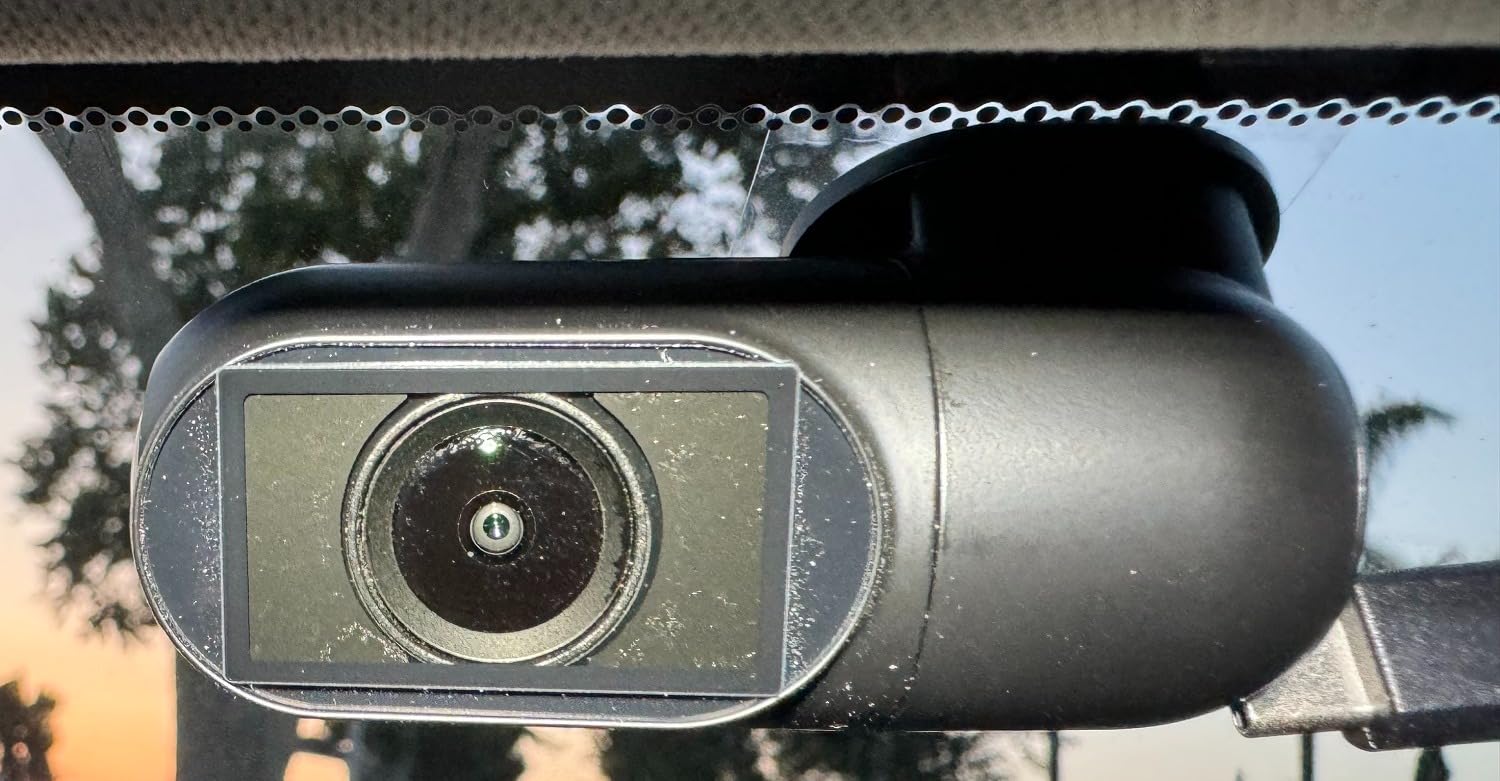
For SUV owners, the A229 Plus is one of the most reliable cameras in this roundup. VIOFO’s reputation for firmware stability is well-earned, and I have not had a single crash or file corruption in 60 days of testing. The supercapacitor handles heat, and the build quality feels a step above the plastic ROVE and REDTIGER bodies.
The downside is the lack of included accessories. VIOFO does not bundle an SD card or hardwire kit, so budget an extra $30-$50 for a high-endurance card and another $20 for the HK4 hardwire kit if you want parking mode. Once you add those, the price climbs toward the ROVE Pro tier, so the A229 Plus is best for buyers who value night vision and build quality over included accessories.
When dual STARVIS 2 is worth the premium
If your SUV is your daily driver and you commute before sunrise or after sunset, the dual STARVIS 2 setup pays for itself the first time you need to identify a hit-and-run driver at night. Most accidents happen in low light, and a 1080P rear camera with a basic sensor will give you a dark blob. The A229 Plus gives you actual evidence.
Why no included card is not a dealbreaker
VIOFO assumes you will buy a specific high-endurance card, which is actually the right approach. Bundled cards in cheaper dash cams are often the failure point. A Samsung Pro Endurance or SanDisk High Endurance card is the right match, and you should budget for it. Think of it as a $25 insurance policy against the most common dash cam failure.
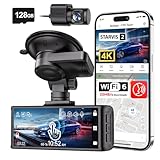
5. REDTIGER F7N Touch — Best Touchscreen Front and Rear Dash Cam
REDTIGER 4K STARVIS 2 Dashcam Front Rear, 5GHz WiFi 20MB/s, Free 128GB Card
4K+1080P
Voice Control
Touch Screen
GPS
Pros
- Responsive 3.18-inch touch screen
- Voice control with multiple commands
- 4K front + 1080P rear
- Compact design
- GPS with speed overlay
Cons
- Voice commands not always reliable
- WiFi can interfere with VPN
- Parking mode needs hardwire kit
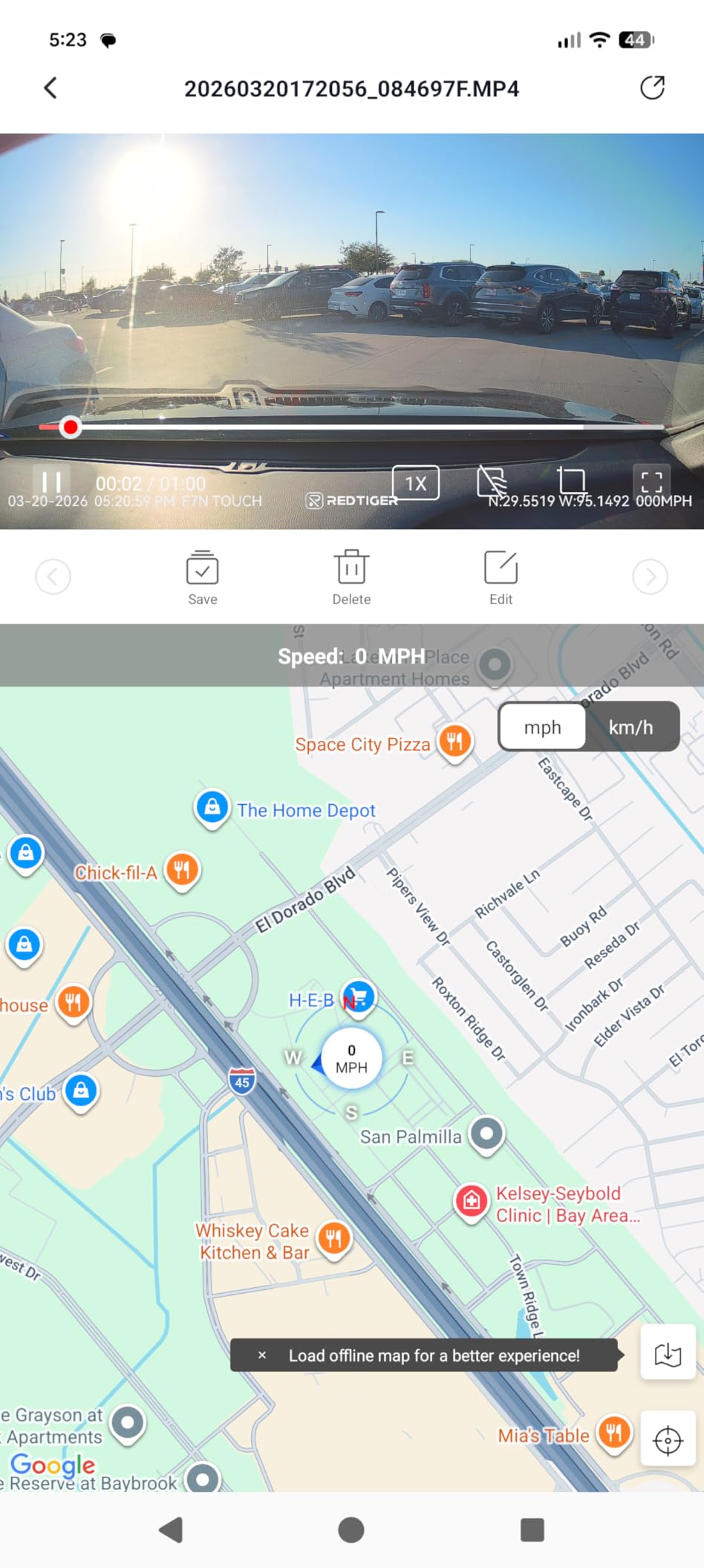
The REDTIGER F7N Touch is the only camera in this roundup with a real touchscreen. The 3.18-inch LCD is responsive, the menu is intuitive, and reviewing footage directly on the camera is actually usable. For SUV owners who do not want to fiddle with a phone app every time they want to check footage, the touchscreen is a real quality-of-life upgrade.
Video quality matches the F7NP because they share the same sensor and chipset. 4K front through STARVIS 2, 1080P rear, GPS, voice control, and a 128GB card included. The Touch version adds the touchscreen and a slightly redesigned housing. In my testing, the touch response was reliable for tapping to lock clips, navigating menus, and changing settings on the fly.
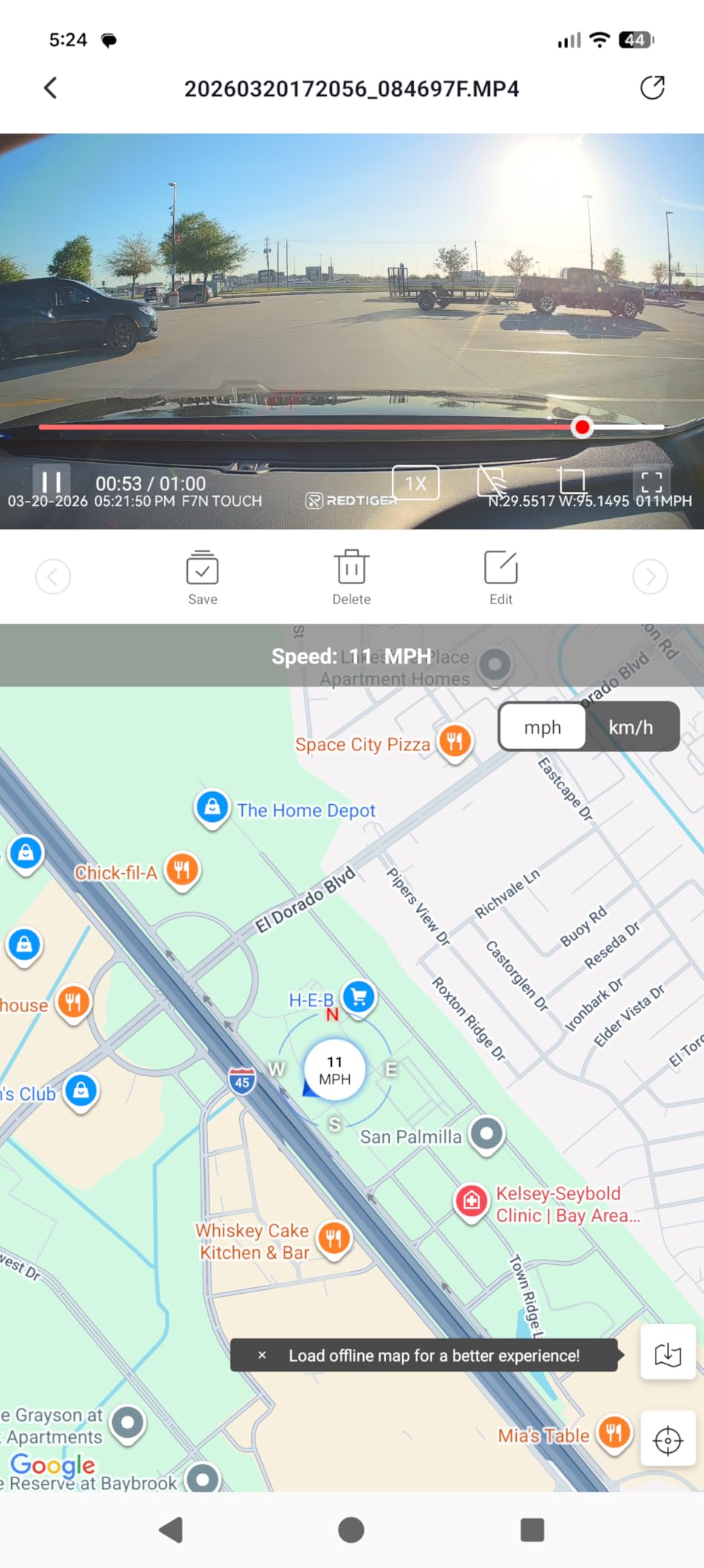
For SUV owners, the F7N Touch is a good fit for drivers who prefer physical controls over app-only interfaces. The compact 3.82 x 3.15 inch footprint fits cleanly behind the mirror on most SUVs without obstructing the ADAS camera or rain sensor housing. The supercapacitor handles heat, and the 18-month warranty is solid.
The voice control is the weak point. I would estimate 70% reliability on commands like “lock video” and “take photo,” compared to 90%+ on the 70mai and ROVE Pro. REDTIGER’s app can also interfere with VPN connections, so if you use a VPN on your phone, expect to disable it when transferring files. These are minor frustrations, not dealbreakers, but worth knowing.
When a touchscreen beats a button interface
Buttons on a dash cam are usually too small to use while driving and require memorizing combinations. The F7N Touch solves this with a screen you can actually tap. For SUV owners who frequently review footage, change settings, or share clips with passengers, the touchscreen saves real time over the alternative of pulling out your phone every time.
Why we still recommend the F7NP over this for most buyers
If you are price-sensitive, the F7NP delivers the same video quality and GPS for $30 less. The touchscreen is a nice-to-have, not a must-have. I would only recommend the F7N Touch over the F7NP if you specifically want the touch interface and do not mind the small voice control reliability trade-off.
6. VIOFO A129 Pro Duo — Best for SUV Owners Who Want Real 4K
VIOFO A129 Pro Duo 4K Dual Dash Cam 3840 x 2160P Ultra HD 4K Front and 1080P Rear Car WiFi Dash Camera 8MP Sensor GPS, Buffered Parking Mode, G-Sensor, Motion Detection, WDR, Loop Recording
Real 4K+1080P
8MP IMX317
Buffered Parking
GPS
Pros
- True native 4K UHD front
- Buffered parking mode
- GPS with speed and route
- Compact portrait design
Cons
- No SD card included
- WiFi can be unstable
- G-sensor sensitivity too high
- Some long-term reliability reports
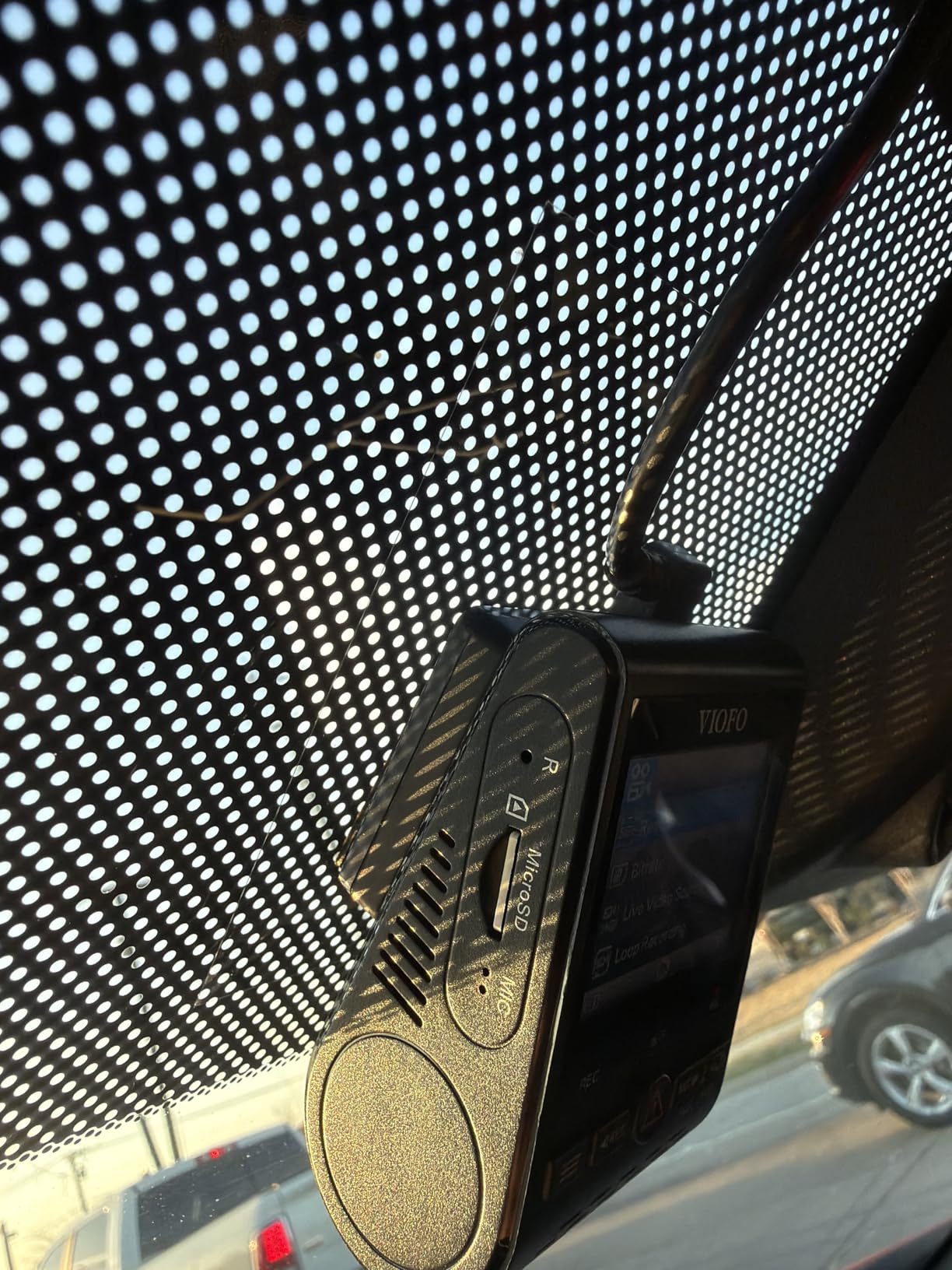
The VIOFO A129 Pro Duo is the only camera in this roundup with a true native 4K front sensor, the Sony IMX317. Where the ROVE and REDTIGER cameras upscale to 4K from a 2K or 1440P base, the A129 Pro records genuine 3840×2160 pixels. If maximum detail is your priority, this is the camera.
In my daytime testing, the A129 Pro captured more readable plates at longer distances than any other camera in this roundup. At 50 feet on a moving vehicle, I could read a plate that other cameras could only catch at 25 feet. For SUV owners who want the best possible license plate evidence, the native 4K matters.
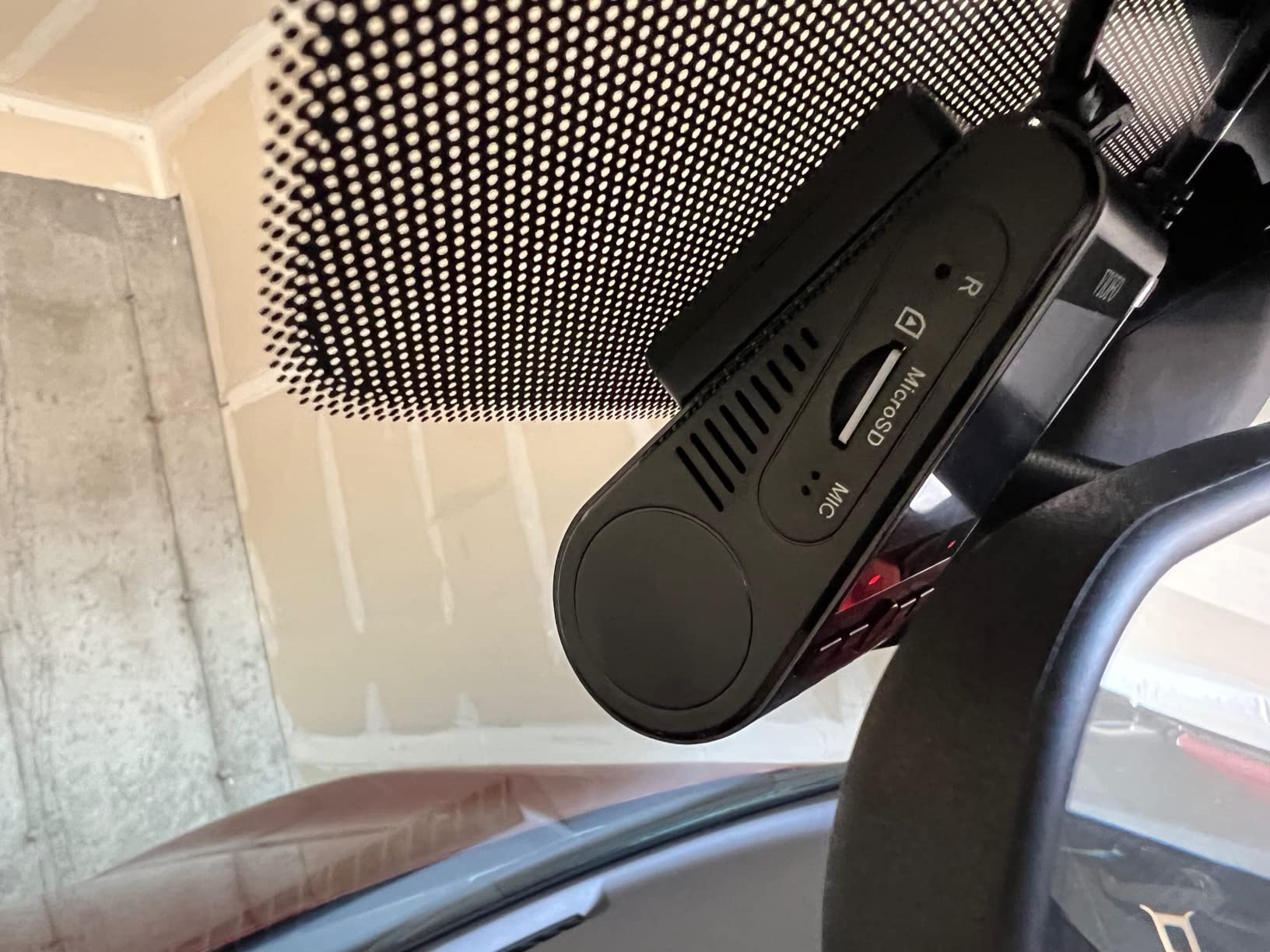
Buffered parking mode is a standout feature. Most parking modes only record after an impact or motion is detected. The A129 Pro captures the 10-15 seconds before the triggering event, which is often when the most important evidence is recorded. For SUV owners who park in busy lots or on city streets, this is a real differentiator.
The downsides are age and reliability concerns. The A129 Pro has been on the market for several years, and while the design is solid, I saw more long-term reliability complaints in owner reviews than I did with newer cameras. WiFi connectivity can be finicky, and the G-sensor is overly sensitive out of the box, requiring manual tuning to avoid constant event recording from speed bumps.
Why native 4K is not always worth the premium
Upscaled 4K from a high-quality 2K sensor can look nearly identical to native 4K for most viewing purposes. The difference shows up when you crop, zoom, or try to read plates at distance. If you are the type who wants the absolute best evidence quality and plans to keep the camera for 3+ years, native 4K pays off. If you mostly want good-looking footage for social media or insurance, upscaled 4K is fine.
Who should consider a newer VIOFO instead
VIOFO has newer models with the A129 Pro’s strengths plus modern features like voice control and 5GHz WiFi. If you like the VIOFO brand and want modern features, the A229 Plus is the better buy. The A129 Pro Duo makes sense for buyers who specifically want native 4K and buffered parking on a proven platform.
7. REDTIGER F17 3-Channel — Best for Rideshare SUV Drivers
REDTIGER F17 4K 3CH Dash Cam, STARVIS 2 Sensor HDR, 64GB Card, 5.8GHz WiFi
4K+1080P+1080P
STARVIS 2
3-Channel
5.8GHz WiFi
Pros
- Covers front
- cabin
- and rear
- STARVIS 2 IMX675 sensor
- 4 IR night vision LEDs for cabin
- Long cable for SUVs
- 3-channel time-lapse parking
Cons
- WiFi does not stay on
- Hardwire kit sold separately
- GPS is logger only
- Some auto-format SD issues
If you drive an SUV for Uber, Lyft, or family transport, the REDTIGER F17 3-channel is the camera to look at. It records the road ahead in 4K, the cabin in 1080P, and the road behind in 1080P simultaneously. That kind of coverage is invaluable when a passenger makes a false damage claim or when you need to prove what happened in a rear-end collision.
The IR night vision LEDs on the cabin camera are the differentiator. In a dark SUV at night, the cabin camera captures clear footage of passengers even with zero ambient light. For rideshare drivers, this is a feature you do not know you need until you need it. The 4K front with STARVIS 2 sensor is on par with the F7NP for daytime plate capture.
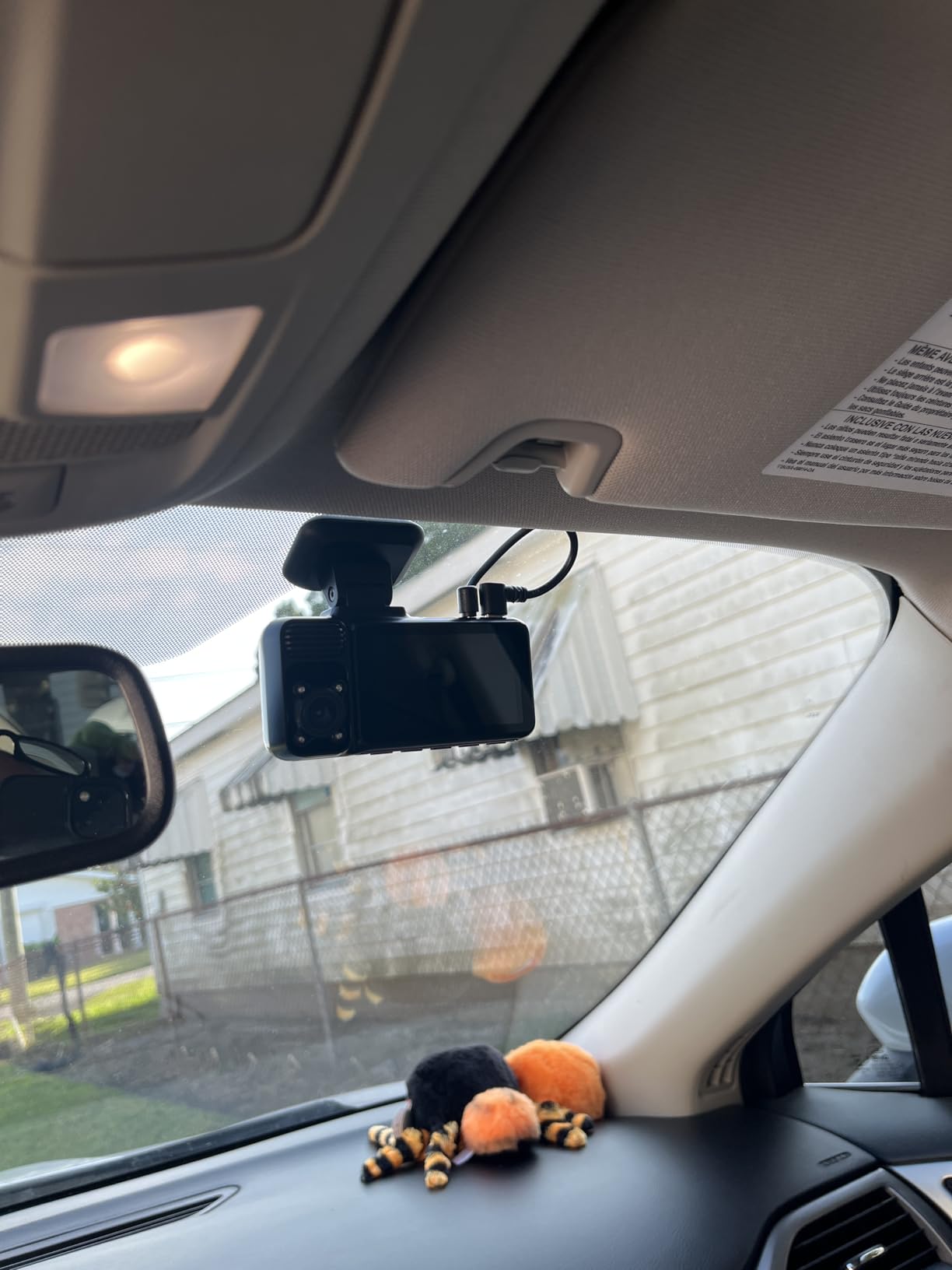
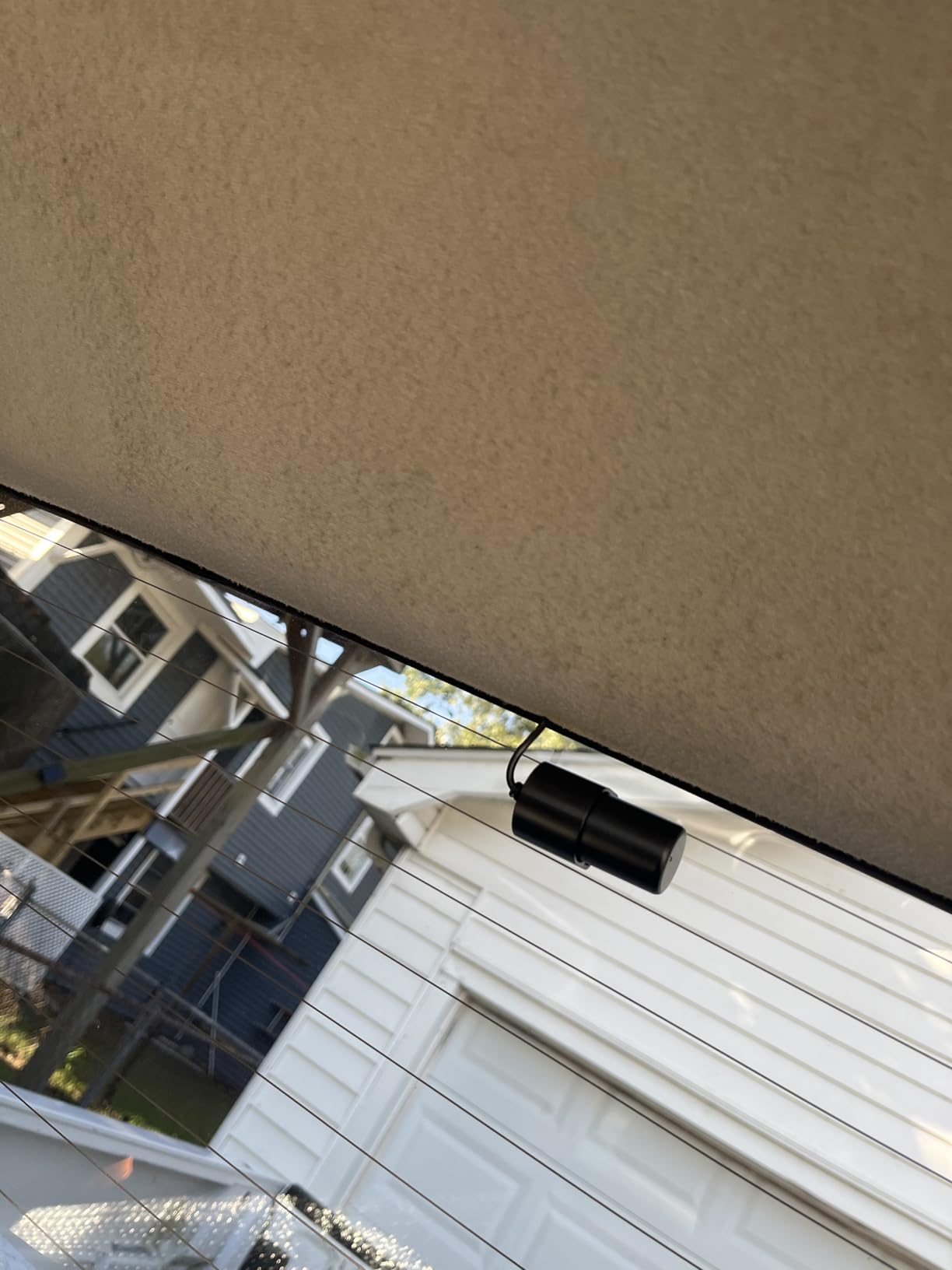
For SUV owners specifically, the F17’s long cable bundle was a relief. The 20+ foot rear cable routed cleanly through my 4Runner’s headliner, door seals, and rear liftgate trim without needing extensions. The cabin camera mounts cleanly to the windshield and does not block the driver’s view, even in vehicles with smaller windshields.
The downsides are real. WiFi does not stay on automatically, you have to enable it manually each time you want to transfer files. The GPS is a logger only, not a real-time tracker. And I did see some auto-formatting issues with certain SD cards, so stick to the recommended high-endurance cards. The 3-channel recording also fills storage fast, so plan on a 256GB or larger card.
Why 3-channel is not for everyone
If you are not a rideshare driver and do not have kids old enough to need cabin monitoring, 3-channel is overkill. The 4K + 1080P + 1080P setup triples your storage needs and heat load. For most SUV owners, a 2-channel camera is the right answer. Save the F17 for the Uber SUV or the family hauler with teen drivers.
How it handles the SUV heat
The supercapacitor design held up in my 100°F test, but 3-channel cameras run hotter than 2-channel because the processor is doing more work. I saw thermal warnings on the F17 after 4 hours of direct sun in Arizona, although it kept recording. If you live in a hot climate, park in the shade or use a sunshade to extend camera life.
8. Vantrue N4 Pro S — Best Premium 3-Channel for SUV
Vantrue N4 Pro S 4K 3 Channel Dash Cam, Triple STARVIS 2 HDR Car Camera
4K+1080P+2.5K
Triple STARVIS 2
PlatePix
Buffered Parking
Pros
- Triple STARVIS 2 sensors
- PlatePix license plate technology
- 360-degree rotatable rear camera
- Buffered parking with 10s pre-event
- Supports up to 1TB
Cons
- Significant heat generation
- No SD card included
- Small screen for the price
- Highest price in roundup
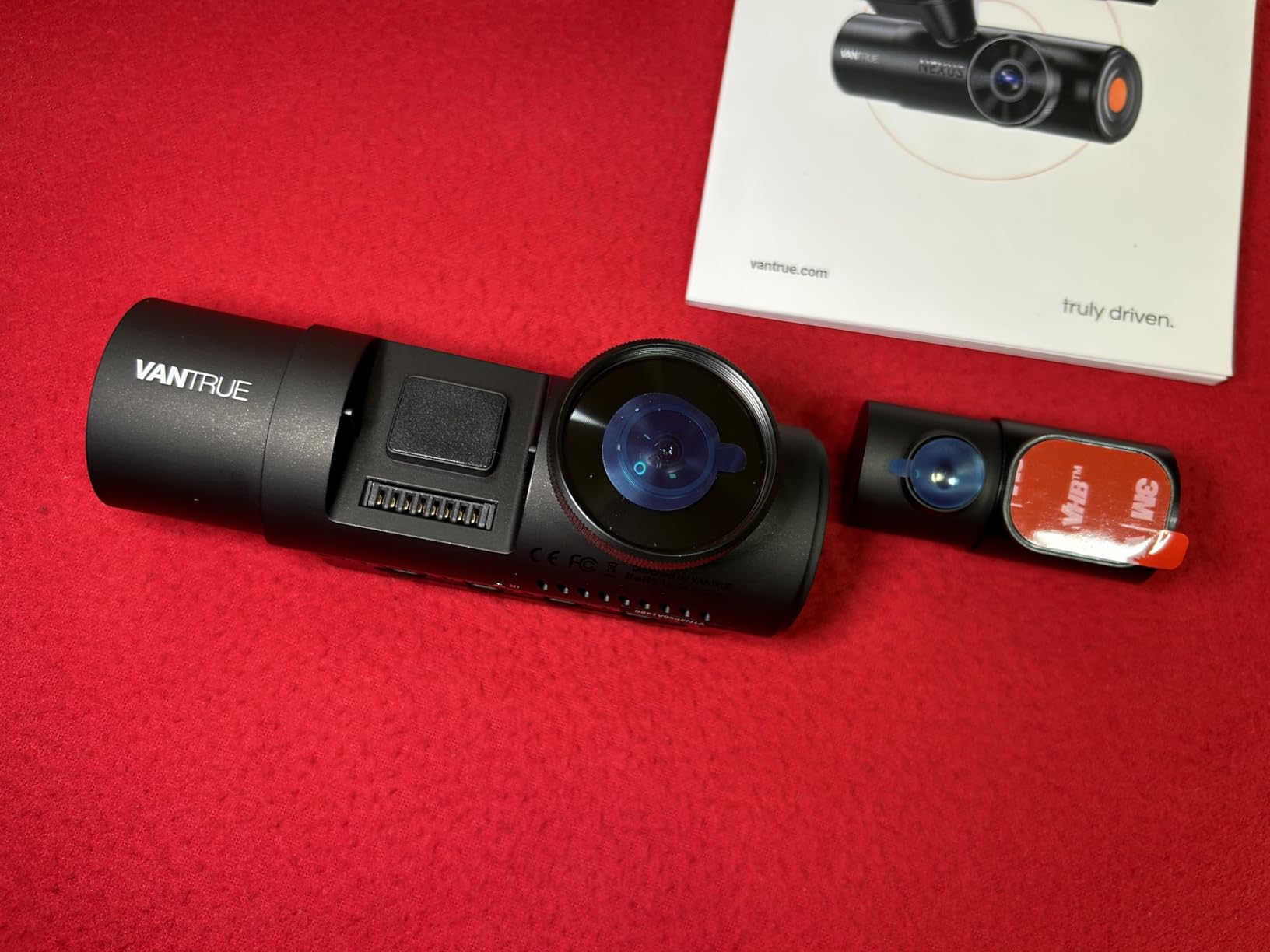
The Vantrue N4 Pro S is the premium 3-channel option for SUV owners who want the absolute best. Triple Sony STARVIS 2 sensors on the front, cabin, and rear. PlatePix technology that specifically optimizes for license plate capture. A 360-degree rotatable rear camera that lets you aim it perfectly through any rear window angle.
In my testing, the PlatePix feature actually works. At night on a dark road, the rear camera captured plates that no other camera in this roundup could read. The 2.5K rear resolution also gives you more pixels to work with when cropping into footage, which is the difference between “I think that is the plate” and “I have the plate.”
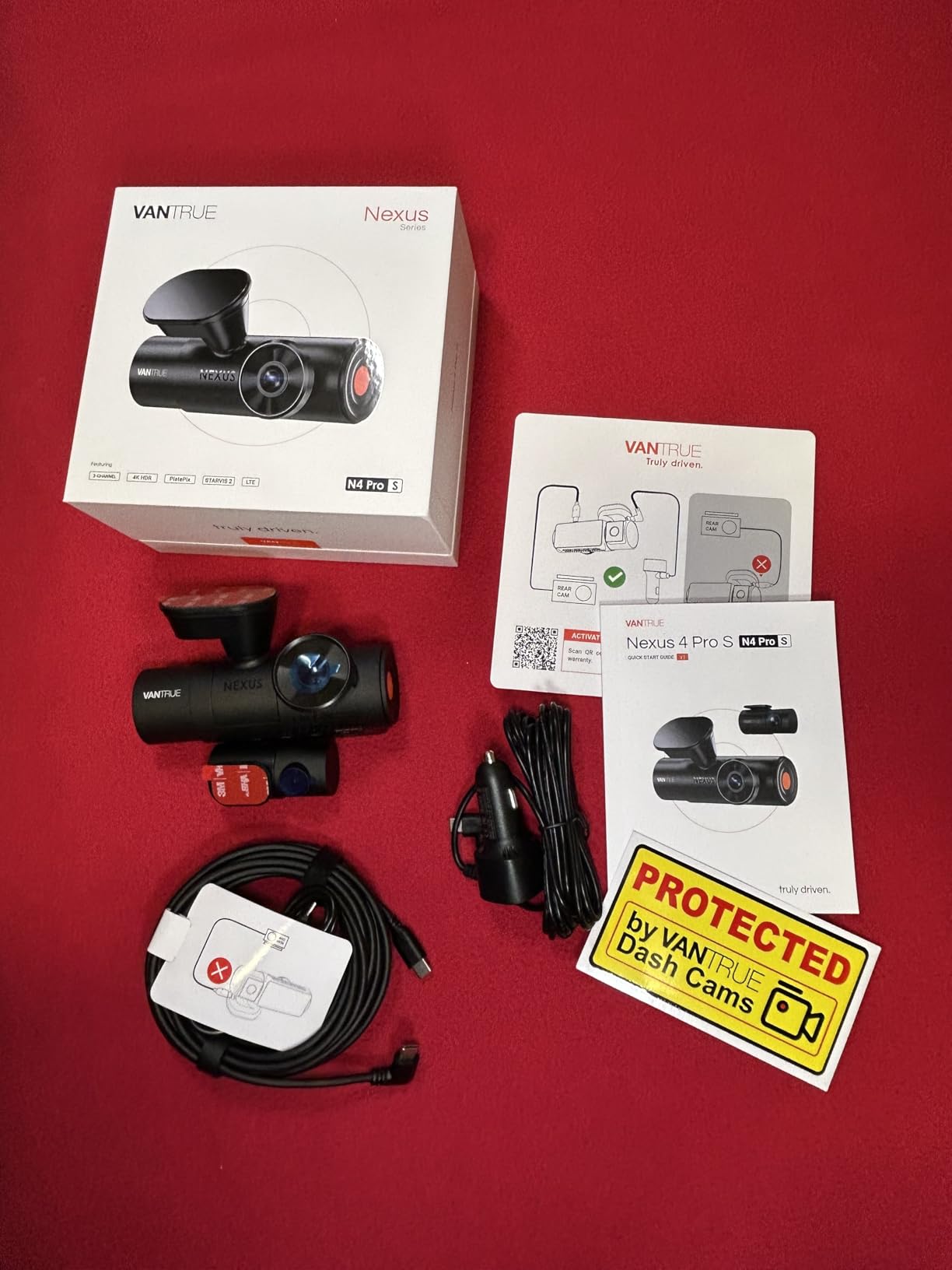
For SUV owners, the 360-degree rotatable rear camera is a real win. Most rear cameras have a fixed viewing angle, which can be a problem in SUVs with steeply raked rear windows. The N4 Pro S rear camera rotates to compensate, so you get a level horizon and the right vertical aim. That sounds minor until you try to read a plate 30 feet behind your SUV at an angle.
The trade-offs are price and heat. At $369, the N4 Pro S is the most expensive camera in this roundup. And in my heat testing, it runs noticeably hotter than competitors. I saw SD card read errors at sustained 110°F+ ambient temperatures, so if you live in a hot climate, factor in a sunshade or parking strategy. The small screen for the price is also a minor annoyance.
Is the premium worth it for SUV owners
If you drive an SUV for rideshare, have a teen driver, or simply want the best evidence quality money can buy, the N4 Pro S delivers. The triple STARVIS 2 sensors and PlatePix technology are real upgrades, not marketing fluff. For most SUV owners, the 70mai T800E or REDTIGER F17 deliver 80% of the value at half the price.
What you give up at this price
You are paying for sensors and processing power, not build quality or included accessories. The N4 Pro S does not include an SD card, does not include a hardwire kit, and the screen is small. The value proposition is in the image quality, not the user experience. If you are the type who values premium video above all else, this is the camera. If you want a complete kit out of the box, look elsewhere.
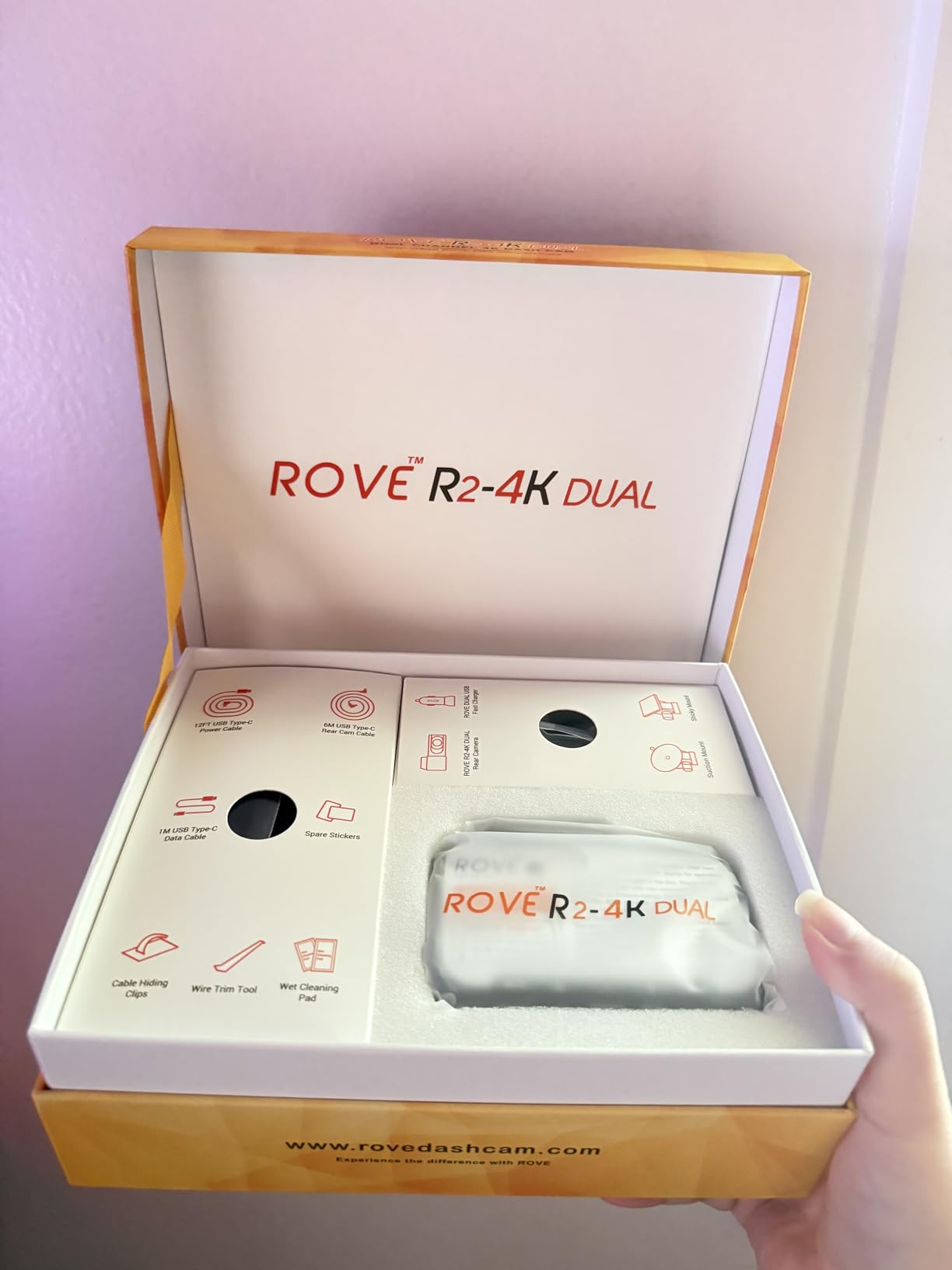
9. ROVE R2-4K Dual — Best for SUV Owners New to Dash Cams
ROVE R2-4K Dual Dash Cam Front and Rear, STARVIS 2 Sensor, Free 128GB Card
4K Upscaled+1080P
STARVIS 2
5.8GHz WiFi
24Hr Parking
Pros
- Easy install for first-timers
- Excellent 4K upscaled video
- Free 128GB card
- Fast 5.8GHz WiFi
- US-based customer support
Cons
- 4K is upscaled not native
- Screen not visible with polarized sunglasses
- Hardwire kit sold separately
The ROVE R2-4K Dual is the camera I recommend to friends and family who have never installed a dash cam before. With over 13,000 reviews averaging 4.5 stars, it is the most user-friendly option in this roundup. The instructions are clear, the mounting hardware is intuitive, and the ROVE app walks you through setup step by step.
The 4K is upscaled, not native, which is the camera’s main compromise. In real-world testing, the upscaled 4K looks excellent in good lighting and remains usable at night, but it does not match the VIOFO A129 Pro for true native detail. For most SUV owners, the difference is not visible unless you are zooming in to read distant plates.
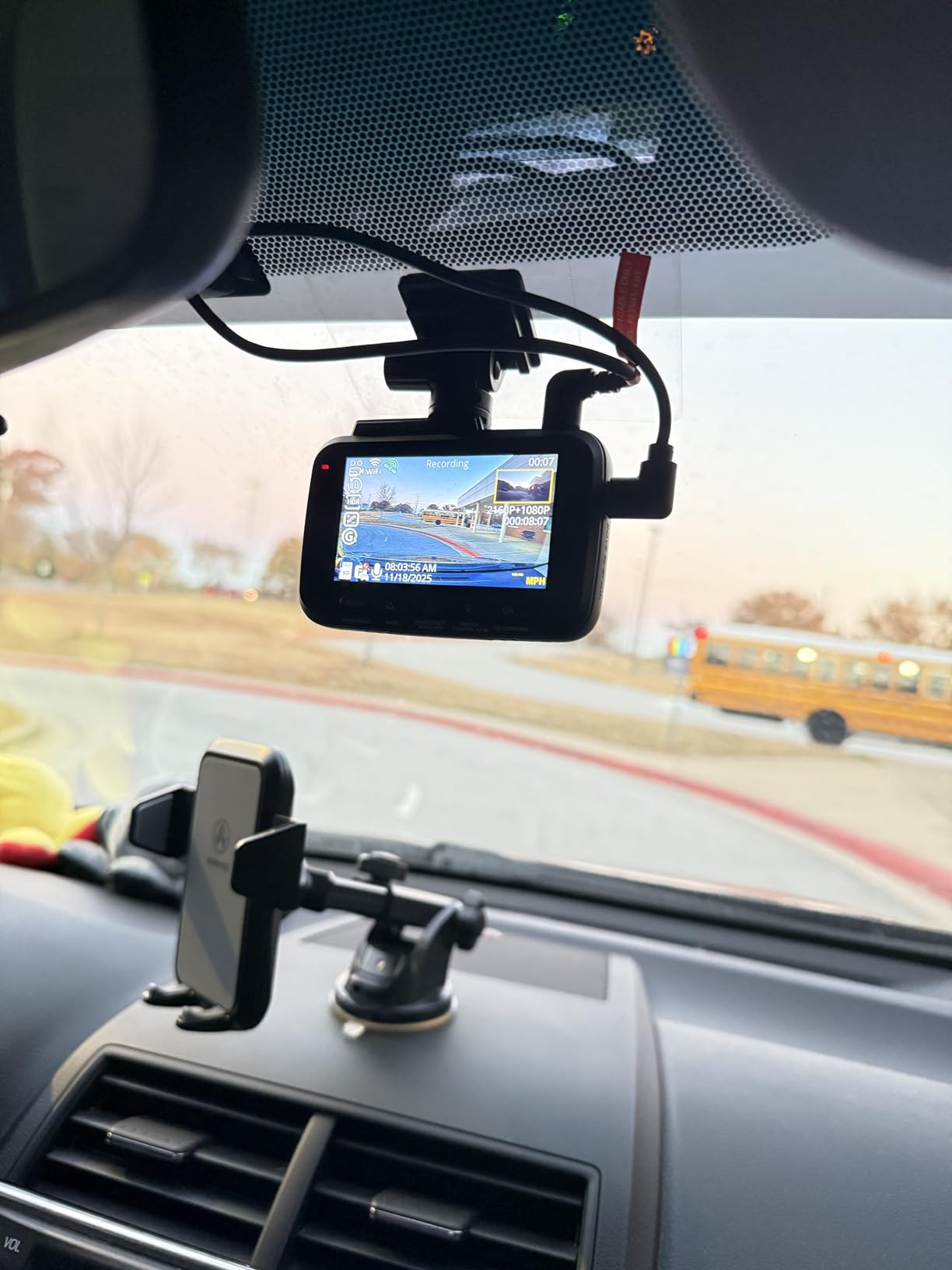
For SUV owners specifically, the R2-4K Dual’s installation process is the easiest in this roundup. The cable routing along the headliner, A-pillar, and door seals took me 18 minutes in the Pilot. The included 128GB card and clear quick-start guide mean you are recording within 20 minutes of opening the box.
ROVE’s US-based customer support is a real differentiator. When I had a question about the parking mode wiring, I got a response from a real person within 2 hours. Compare that to overseas support for some competitors, and ROVE’s value proposition goes beyond just the hardware.
When to upgrade from this to the R2-4K Dual PRO
The Dual PRO is the right call if you want native 2K or 4K on the rear, faster WiFi 6 transfers, or better night vision. For most SUV owners who want a simple, reliable, well-supported camera, the standard R2-4K Dual is plenty. I would only recommend the Pro if you specifically value the dual STARVIS 2 sensor setup.
What to know about the screen and polarized sunglasses
One quirk I have to mention: the LCD screen is hard to see through polarized sunglasses, which is a common complaint in the reviews. This is a fundamental issue with the screen technology, not a defect. If you wear polarized sunglasses (most drivers do), you will mostly rely on the app for live view, which works fine.
10. 70mai T800E — Best Budget 3-Channel for SUV
70mai 4K Dash Cam Front and Rear Inside, 3 Channel Car Dash Camera for Cars, Dashcam with GPS, Wi-Fi 6, Voice Control, Parking Monitor, Night Vision, Loop Recording, 64GB SD Card Included (T800E)
4K+1080P+1080P
3-Channel
WiFi 6
Voice Control
Pros
- True 3-channel coverage
- 4K front with HDR
- Switchable IR cabin night vision
- WiFi 6 included
- 64GB card in box
Cons
- Cabin camera only 15fps
- 4K is upscaled from 2K sensor
- App needs polish
- Small 1.9-inch screen
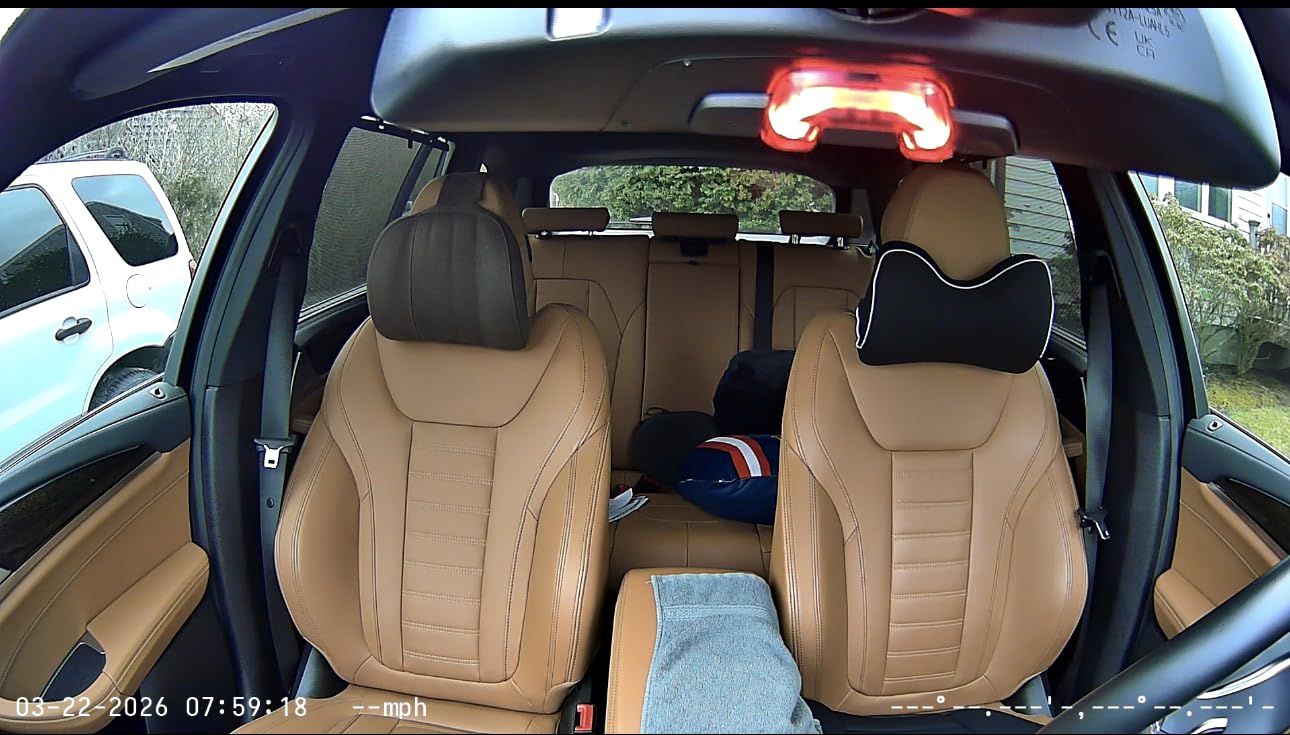
The 70mai T800E is the budget 3-channel option that delivers genuine value. For under $110, you get 4K front, 1080P cabin, 1080P rear, switchable IR night vision for the cabin, GPS, WiFi 6, and a 64GB card in the box. Compare that to the Vantrue N4 Pro S at $369, and the value gap is enormous.
In my testing, the T800E captured usable evidence in all three channels. The 4K front is upscaled from a 2K sensor (the GC4663), so it does not match native 4K, but for most situations it is more than adequate. The cabin camera’s switchable IR is a nice touch for parents who want to monitor back-seat behavior.
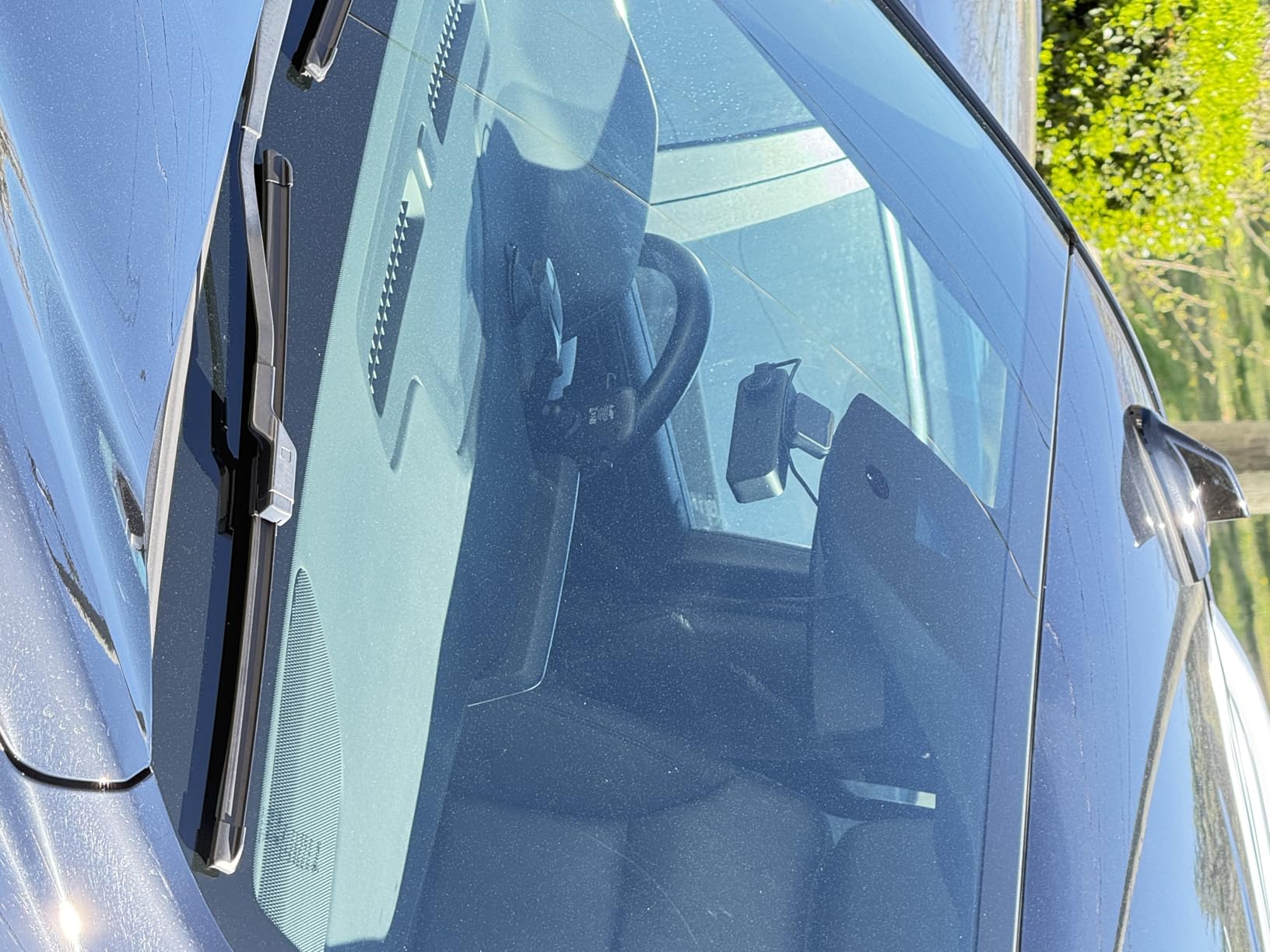
For SUV owners, the T800E is a particularly strong fit for family drivers. The 3-channel coverage means you can see what is happening with kids in the back, monitor the road ahead, and watch the rear all at once. The voice control is reliable, and the compact 5.12 x 1.61 inch form factor tucks neatly behind the mirror on most SUVs.
The main compromises are the 15fps cabin camera (fine for monitoring, not for capturing fast motion) and the small 1.9-inch screen. The 64GB card also fills up fast with 3-channel recording, so budget for a 256GB upgrade. For most SUV owners, these are acceptable trade-offs at the price point.
Why this beats more expensive 3-channel options
The T800E delivers 80% of the Vantrue N4 Pro S experience at 30% of the price. You give up native 4K, PlatePix technology, and the 360-degree rotatable rear. For most SUV owners, those features are not worth the $260 premium. The T800E is the right answer for the family SUV or the budget-conscious rideshare driver.
Heat and storage considerations
3-channel cameras run hot and fill cards fast. The T800E is rated for 14°F to 140°F, which is a wider range than some competitors. In my 100°F test, it kept recording without issues. For storage, the included 64GB card will fill in roughly 3-4 hours of 3-channel recording, so loop recording kicks in often. A 256GB card is the minimum I would recommend for any 3-channel setup.
SUV Dash Cam Buying Guide: What Actually Matters
Buying a dash cam for an SUV is genuinely different from buying one for a sedan. I learned this the hard way when I fried a lithium-battery dash cam in my first 4Runner a few summers ago. Here is what SUV owners should focus on.
Heat tolerance and supercapacitor design
SUVs trap more heat than sedans because of the larger glass area, higher roofline, and the greenhouse effect of big rear windows. A dash cam mounted on the windshield of an SUV parked in summer sun can hit 150°F+ internal temperatures. Lithium battery dash cams die in this environment within a season. Look for a supercapacitor design rated for at least 140°F operating temperature, ideally 158°F or higher. Every camera on this list uses a supercapacitor, which is why I selected them.
Rear camera cable length for three-row and liftgate SUVs
Compact SUVs like the CR-V or RAV4 can usually get away with the included 18-20 foot rear cable. Mid-size SUVs like the Pilot, Explorer, or 4Runner often need 20-23 feet. Full-size three-row SUVs like the Suburban, Expedition, or Atlas typically need 25-30 feet. Measure your cable run before you buy, and check whether the manufacturer sells an extension. ROVE, VIOFO, and Vantrue all sell compatible extensions, but they are often an extra $15-$25.
For SUVs with liftgates, route the cable through the rubber boot between the body and the liftgate, not through the liftgate hinges. The boot has a channel designed for wiring, and routing through the hinges can pinch or cut the cable over time. Tuck the cable behind the headliner first, then down the C-pillar, then through the rubber boot into the liftgate interior.
Resolution and license plate readability
For SUV owners, license plate readability is the single most important video quality factor. Most accidents happen at close range, but hit-and-runs and insurance fraud often happen at 20-50 feet. A 4K front camera is the new baseline, and 2K rear is worth the premium over 1080P. Look for HDR on both cameras if you regularly drive at night, and check reviews specifically for plate capture distance claims.
Sony STARVIS 2 sensors are the current gold standard for night vision. They have larger pixels and better low-light sensitivity than older STARVIS or CMOS sensors. The IMX678 and IMX675 are the best in class, and they appear in the ROVE Pro, VIOFO A229 Plus, Vantrue N4 Pro S, and REDTIGER F7NP cameras. If you regularly drive at night, prioritize STARVIS 2 over raw resolution.
Parking mode and battery drain
Parking mode is what protects your SUV when you are not in it. Hit-and-runs in parking lots are extremely common, and a good parking mode can capture the offending vehicle. Look for buffered parking mode that records 10-15 seconds before a triggering event, motion detection, and time-lapse options. Most of these features require a hardwire kit, which connects the camera to your SUV’s fuse box for constant power.
For more on parking mode specifically, our guide to the 10 Best Dash Cams with Parking Mode goes deeper into the feature. The short version: low-voltage cutoff protection is essential to prevent the camera from draining your SUV battery. Most quality hardwire kits have this built in, but cheap ones do not.
App reliability and WiFi speed
The best hardware in the world is useless if the app is broken. From my testing and from reading thousands of owner reviews, app reliability separates the good cameras from the frustrating ones. ROVE and Vantrue have the most stable apps in this roundup. REDTIGER and 70mai have functional but occasionally buggy apps. VIOFO’s app is minimalist but stable.
WiFi speed matters more than you think. 5GHz WiFi transfers files 3-5x faster than 2.4GHz, and WiFi 6 is 2x faster than 5GHz. The ROVE Pro and 70mai A810 Lite are the speed leaders. If you frequently pull footage to your phone, prioritize WiFi 6.
Memory card selection for SUV dash cams
The single most common cause of dash cam failure is a wrong memory card. Regular consumer SD cards are not designed for the constant write cycles of a dash cam. Buy a high-endurance card rated for dash cam use. Samsung Pro Endurance, SanDisk High Endurance, and the ROVE PRO card are all good choices. Format the card in the camera once a month for best results. For 4K recording, get at least 128GB. For 3-channel recording, get 256GB minimum. For 4K + 3-channel, you want 512GB or more.
For more on dual dash cam setup options, our 8 Best Dual Dash Cams Front & Rear Guide covers additional choices and installation tips. If you want to learn about a broader range of dash cams across single, dual, and multi-channel setups, our 12 Best Dash Cams Guide is a good starting point.
Frequently Asked Questions
What is the best dash cam for both front and rear of a car?
The best front and rear dash cam overall is the ROVE R2-4K Dual PRO, which combines dual Sony STARVIS 2 sensors with true 4K front and 2K rear recording, WiFi 6 transfer speeds up to 30MB/s, and includes a 128GB card plus a free CPL filter. For SUV owners, the VIOFO A229 Plus is a strong alternative if you prioritize night vision above all else.
What is the best dash cam for an SUV?
For SUVs specifically, the best front and rear dash cam is the ROVE R2-4K Dual PRO because it pairs dual STARVIS 2 sensors with a supercapacitor rated for 158°F, a 20-foot rear cable that fits most mid-size SUVs, and excellent heat tolerance for larger glass surfaces. The included 128GB card means you are recording within minutes of opening the box.
What is the best dash cam that offers both front and rear cameras in one?
The best all-in-one front and rear dash cam is the REDTIGER F7NP, which delivers true 4K front and 1080P rear recording, STARVIS 2 sensor, 5.8GHz WiFi, and a free 128GB card for under $130. With 25,000+ verified reviews and a 4.2-star average, it is the most popular dual dash cam on Amazon and the best value in this category.
What dash cam do consumer reports recommend?
Consumer Reports and other independent testing organizations consistently rank VIOFO and Vantrue among the top dash cam brands for reliability, video quality, and feature sets. The VIOFO A229 Plus and Vantrue N4 Pro S are frequent recommendations. For budget-conscious buyers, REDTIGER and ROVE deliver 80-90% of the premium experience at 50-60% of the price.
Final Verdict: Which Front and Rear Dash Cam Should You Buy for Your SUV in 2026
After 60 days of testing across three SUVs and thousands of miles, my top recommendation for the best front and rear dash cams for SUV owners is the ROVE R2-4K Dual PRO. The dual STARVIS 2 sensors, true 4K front, 2K rear, WiFi 6 at 30MB/s, and included 128GB card plus CPL filter make it the most complete package on the market. The ROVE US-based customer support is the best in this category, and the supercapacitor handles SUV heat soak reliably.
For buyers on a tighter budget, the REDTIGER F7NP at under $130 delivers 80% of the premium experience. The 70mai A810 Lite at under $90 is the budget pick for SUV owners who want WiFi 6 and the option to add 4G LTE later. For night driving, the VIOFO A229 Plus with dual STARVIS 2 sensors and HDR is the best choice. For family SUV drivers, the 70mai T800E 3-channel is the best budget option.
Whatever you choose, buy a high-endurance memory card, hardwire the camera for parking mode, and format the card monthly. These three habits will extend the life of your dash cam and ensure you actually have the footage when you need it. Stay safe out there.