
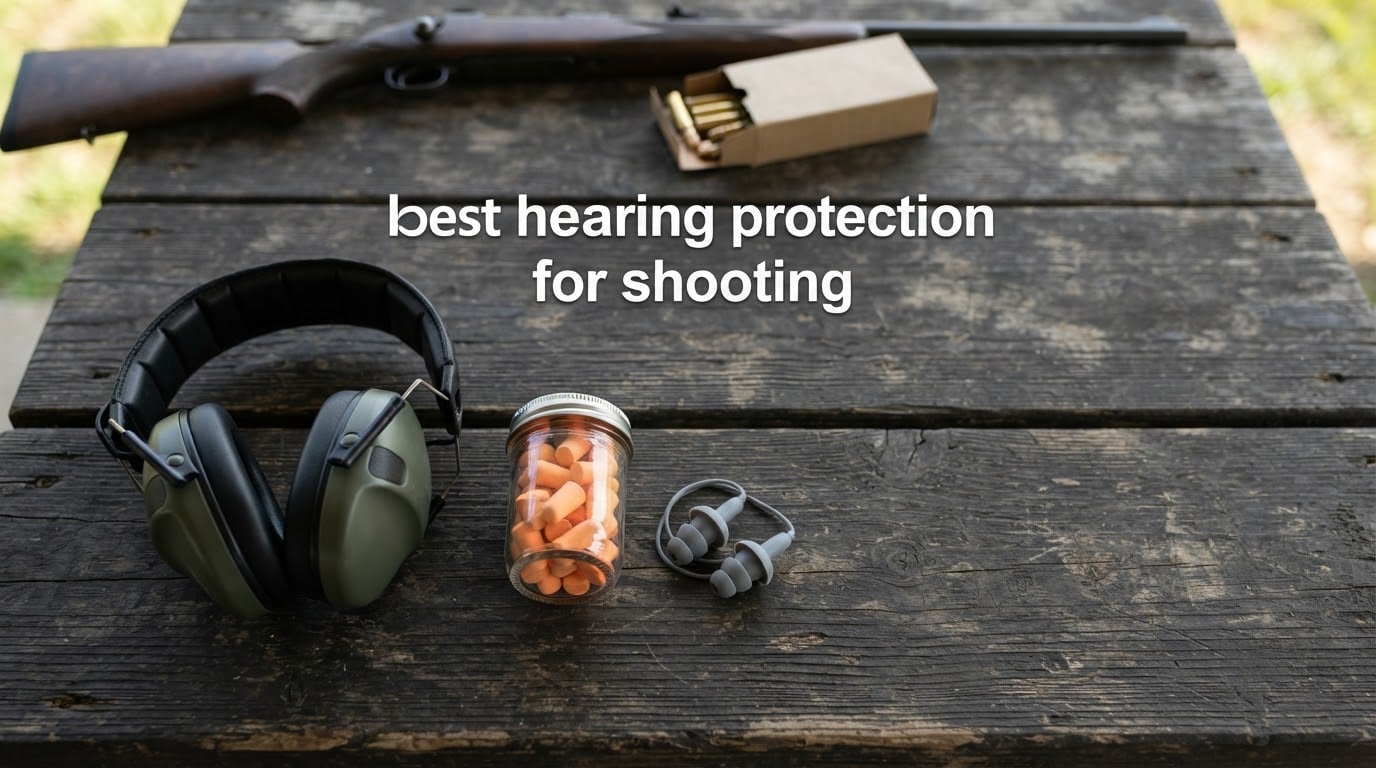
One rifle shot can reach 165 dB at your ear. That is not a loud noise, it is a physical event: the pressure wave arrives faster than your ear’s reflexes can shut it down, and the cochlear hair cells do not get a second chance. A single unprotected shot, or a hundred protected ones, and the damage is the same kind of damage. It does not heal, and no brand of muff undoes it.
That is why the best hearing protection for shooting is not really about the biggest number on the box. It is about the device you are still wearing when the trigger breaks. Shooters on the biggest shooting forums repeat the same failure story: protection gets uncomfortable, comes off the ears, sits in a range bag, and the shot goes off unprotected. Our team spends time at indoor and outdoor ranges and this article is built around the same priority, comfort and repeatability first, then the rating on the label.
We compared 12 options across four categories: slim electronic muffs, full-size electronic muffs, passive muffs, and every kind of earplug including in-ear electronics and filtered plugs. Each one below carries its published NRR or SNR, its weight, its power source, and the scenario it is genuinely good at. We also include our deeper breakdown of the electronic earmuff category if you want to go deeper on the amplified side first.
Top 3 Picks for Best Hearing Protection for Shooting in 2026

Walker’s Razor Slim Electronic
- Slim low-profile cups
- Two hi-gain microphones
- Audio input jack
- 12.63 ounces

Walker’s Razor Slim Passive
- 27 dB NRR passive
- No batteries
- Folds flat
- Built for smaller heads
Best Hearing Protection for Shooting in 2026
Every product in the table below appears in the full write-up further down, in the same order. Use it to narrow the category, then read the entry.
| Product | Specs | Action |
|---|---|---|
| Walker’s Razor Slim Electronic Muff |
|
Check Latest Price |
| Howard Leight Impact Sport Earmuffs |
|
Check Latest Price |
| Walker’s Razor Slim Passive Earmuff |
|
Check Latest Price |
 PROHEAR 016 Passive Earmuffs 2 Pack PROHEAR 016 Passive Earmuffs 2 Pack |
|
Check Latest Price |
 Peltor Sport Tactical 100 Peltor Sport Tactical 100 |
|
Check Latest Price |
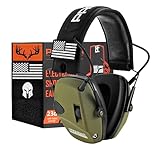 PROHEAR 066 Electronic Muff PROHEAR 066 Electronic Muff |
|
Check Latest Price |
 Peltor Sport Tactical 500 Bluetooth Peltor Sport Tactical 500 Bluetooth |
|
Check Latest Price |
 GLORYFIRE Bluetooth In-Ear Protectors GLORYFIRE Bluetooth In-Ear Protectors |
|
Check Latest Price |
 Mack’s Ultra Soft Foam Earplugs Mack’s Ultra Soft Foam Earplugs |
|
Check Latest Price |
 Howard Leight Laser Lite Foam Plugs Howard Leight Laser Lite Foam Plugs |
|
Check Latest Price |
 Peltor Tri-Flange Corded Earplugs Peltor Tri-Flange Corded Earplugs |
|
Check Latest Price |
 SureFire EP4 Sonic Defenders Plus SureFire EP4 Sonic Defenders Plus |
|
Check Latest Price |
How Loud Is a Gunshot, and What Protection Actually Does
Published measured peaks for common shooting situations cluster in a narrow and unforgiving band. A .22 LR round sits around 144 dB. A 12 gauge shotgun measures roughly 161 dB, a 9mm handgun about 162 dB, a .308 rifle about 167 dB, and a .357 Magnum near 172 dB. Indoor concrete bays add reflected sound and typically run 159 to 169 dB.
Now do the subtraction, and this is the part most product pages skip. A 161 dB 12 gauge shot behind a muff rated at 27 dB NRR arrives at roughly 134 dB, and that is using the full rating with a perfect seal. Real-world fit routinely gives you about half the label figure, so the honest expectation from a 27 dB passive muff on a 12 gauge is somewhere in the 125 to 135 dB range at the eardrum.
This is why the best hearing protection for shooting is a stack, not a single product. Earplugs under muffs do not add arithmetically, but good foam plus a good passive muff routinely lands you around 40 dB of combined attenuation, which is far more than 27 dB plus 33 dB would suggest on paper. Add 161 dB and 40 dB of real protection and you are near 121 dB, a very different place than 128 dB from a muff alone.
A second warning about the label. NRR is a North American figure measured in a laboratory on a specific head, and OSHA-style field practice derates it heavily for real users because a large share of people insert plugs shallowly or break the eyecup seal with glasses. The 50 percent derating rule is a good habit of mind: assume you get roughly half the printed number, then judge comfort. If your protection is uncomfortable, you will not wear it, and a 22 dB device you keep on beats a 33 dB device in a pocket.
1. Walker’s Razor Slim Electronic Muff – Best Overall for Shooting and Hunting
Walker’s Razor Slim Electronic Muff, Black
12.63 ounces
Slim cups for rifle and shotgun clearance
Two hi-gain microphones
Audio input jack
Pros
- Slim profile clears a rifle and shotgun without shifting the weld
- Two hi-gain microphones with strong low-end pickup make range commands easy to hear
- Recessed volume knob and outside-opening battery door work with gloves
- Audio input jack turns the muffs into headphones
- Doubles as passive protection when switched off
Cons
- Passthrough mode has noticeable audio latency that blunts sound localization
- Digital artifacts make it poor for music
- Fit runs small on some head sizes
This is the pair of muffs I put on first when someone walks onto a range with a rifle, and it is the one I end up recommending to most people. At 12.63 ounces with an ultra low-profile cup, it is light enough to forget you have it on through a long day, and the cup cutout is shallow enough that it does not lift the rifle off your cheek or catch a shotgun butt pad.
The two hi-gain microphones with enhanced low-end response are what make it feel like a communications tool rather than a muff. I could hold a normal conversation with the person beside me at normal volume, which is the difference between a range session and a silent one where you are pulling protection off to ask questions.
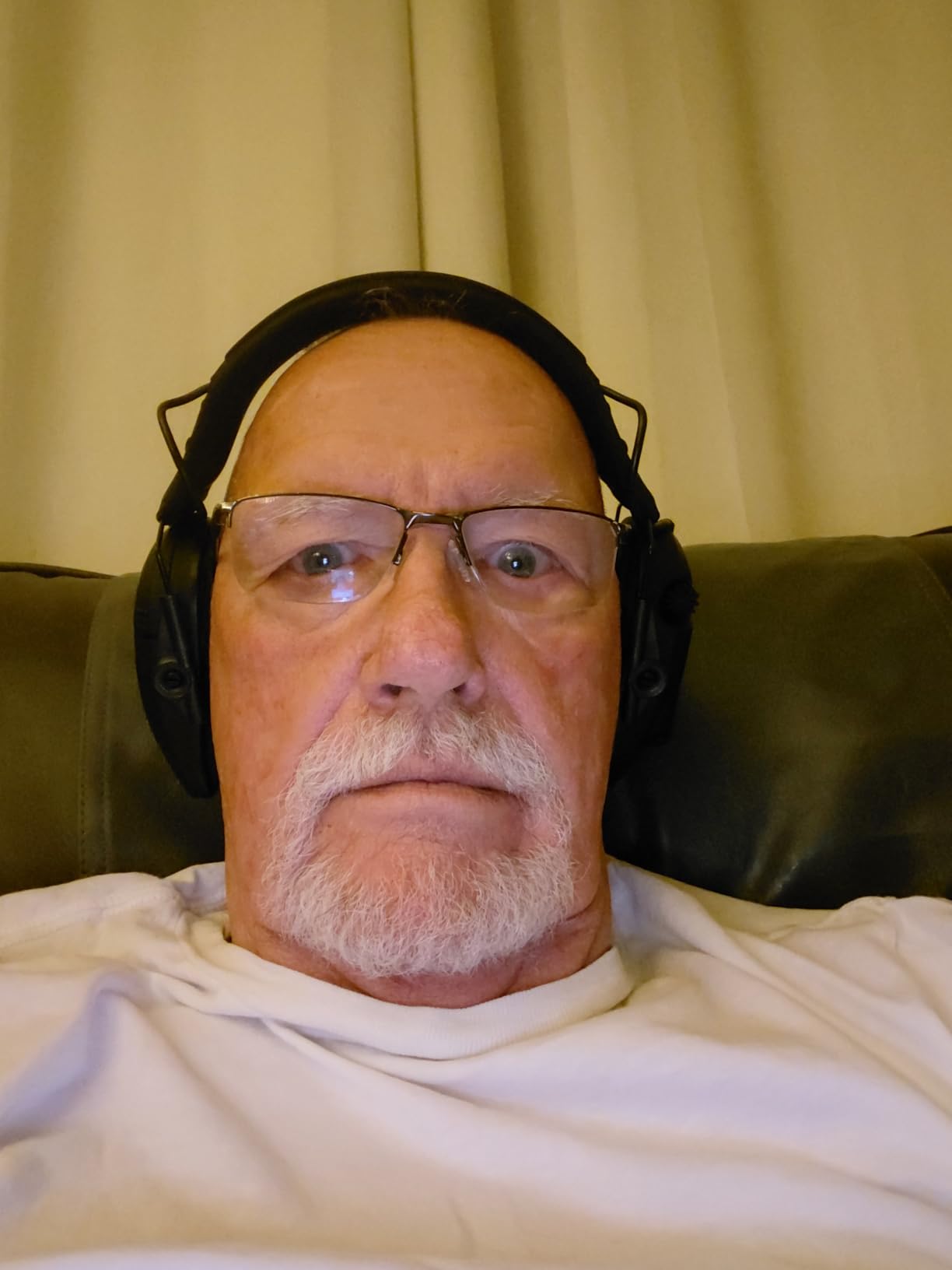
The build is the sort you can be careless with. A rubberized coating over a sound-dampening composite housing, and a padded metal wire frame headband that takes being folded into a range bag. The recessed external volume control and the exterior-opening battery door are small design decisions that matter when you are wearing winter gloves at an outdoor range.
The audio jack is a genuine bonus for long sessions: it accepts a phone, an MP3 player, or a scanner, so the muffs double as headphones with protection still on. In one long-running r/guns thread comparing this model against the Howard Leight Impact Sport, the recurring split was the same one we see: the Razor side reported more perceived sound and better all-day comfort, while the Impact Sport side reported better microphones.
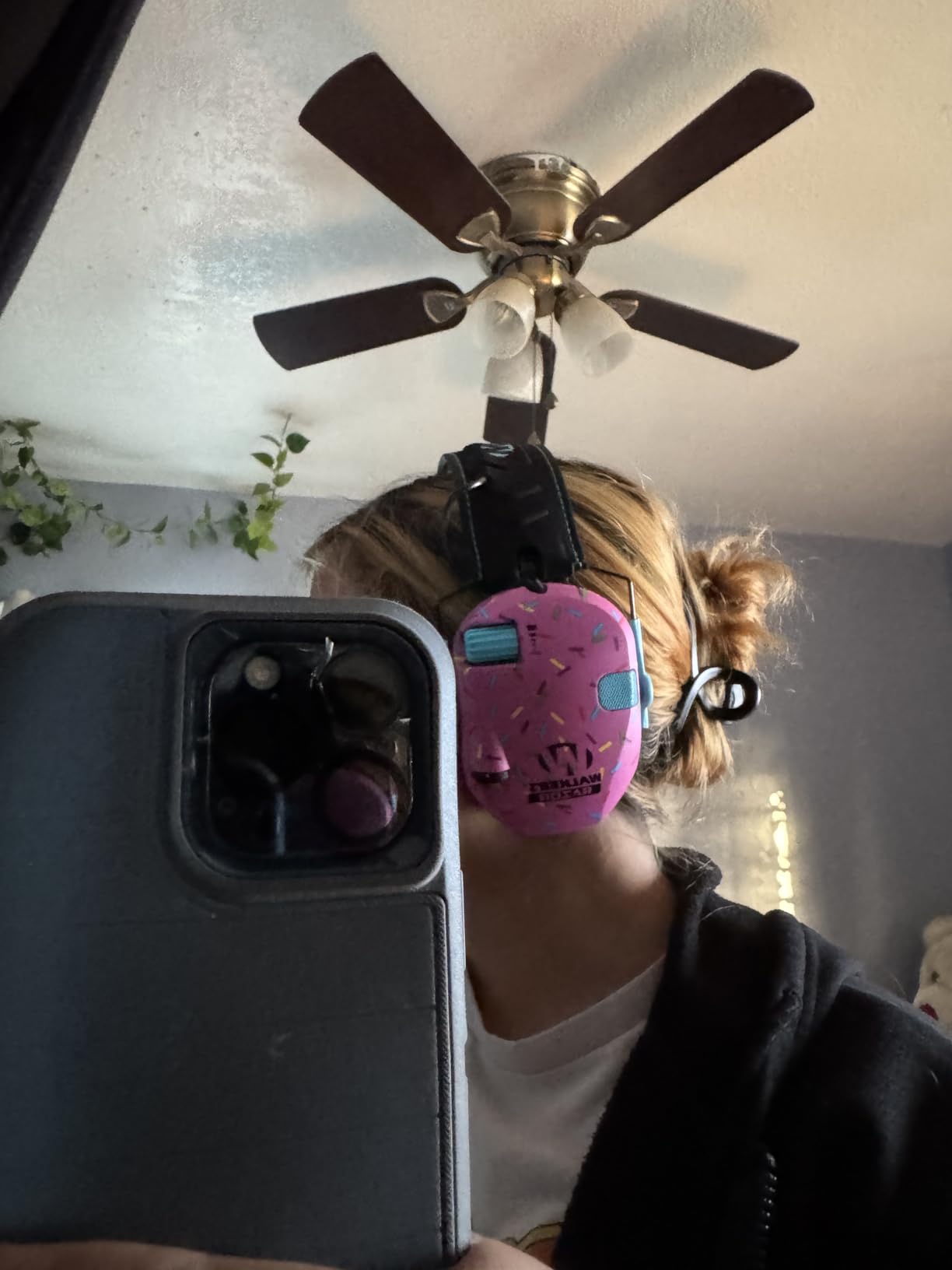
What to check before you commit
Head size is the one thing you cannot fix later. The fit runs small, particularly for youth shooters and for anyone with a narrow head, so if you are between sizes, try the passive slim model in the same family and see whether the cup sits flat on the side of your head.
Glasses matter more than most people expect. The cushion rolls against the frame arm, and if it lifts you lose seal. Thin temple arms work better than thick ones, and stretching the band a little wider before you shoot usually closes the gap.
Where it falls short
The passthrough latency is the honest weakness. It is fine for hearing commands and hearing a dog, less fine for pinpointing a sound in the woods quickly, and a tactical user with headphones on top of this is carrying more electronics than the sound quality justifies.
The audio artifacts in amplification mode are digital rather than warm, so this is not the muff for listening to music properly. It is a hearing protection device with a music jack attached, not headphones.
2. Howard Leight Impact Sport Earmuffs – Best for Direction Finding
Howard Leight by Honeywell R-01526, Impact Sport Earmuffs, Olive Drab Green.
22 dB NRR
Directional microphones with 82 dB cap
2 AAA included
350 hours of battery
Pros
- Directional microphones make range commands and conversation easy to follow
- Amplification shuts off automatically at 82 dB so protection stays consistent
- Low profile cups clear a rifle or shotgun
- Includes a 3.5 mm cord for phones and scanners
- About 350 hours of battery life with 4-hour auto shutoff
Cons
- Heavier and bulkier than slim passive muffs
- Amplification adds slight latency and never fully silences the environment
This is the most recommended electronic muff on shooting forums, and after using it alongside the Walker’s pair, the reason is the microphones. The directional pickup is genuinely better at isolating a voice, which matters when a range officer is calling commands from behind the line or a hunting partner is whispering at 40 yards.
The 82 dB safe listening cap and the automatic shutoff when ambient sound reaches that level are the core safety mechanism. You hear everything up to a safe level and the electronics stop the instant the environment gets dangerous, without you touching a control.
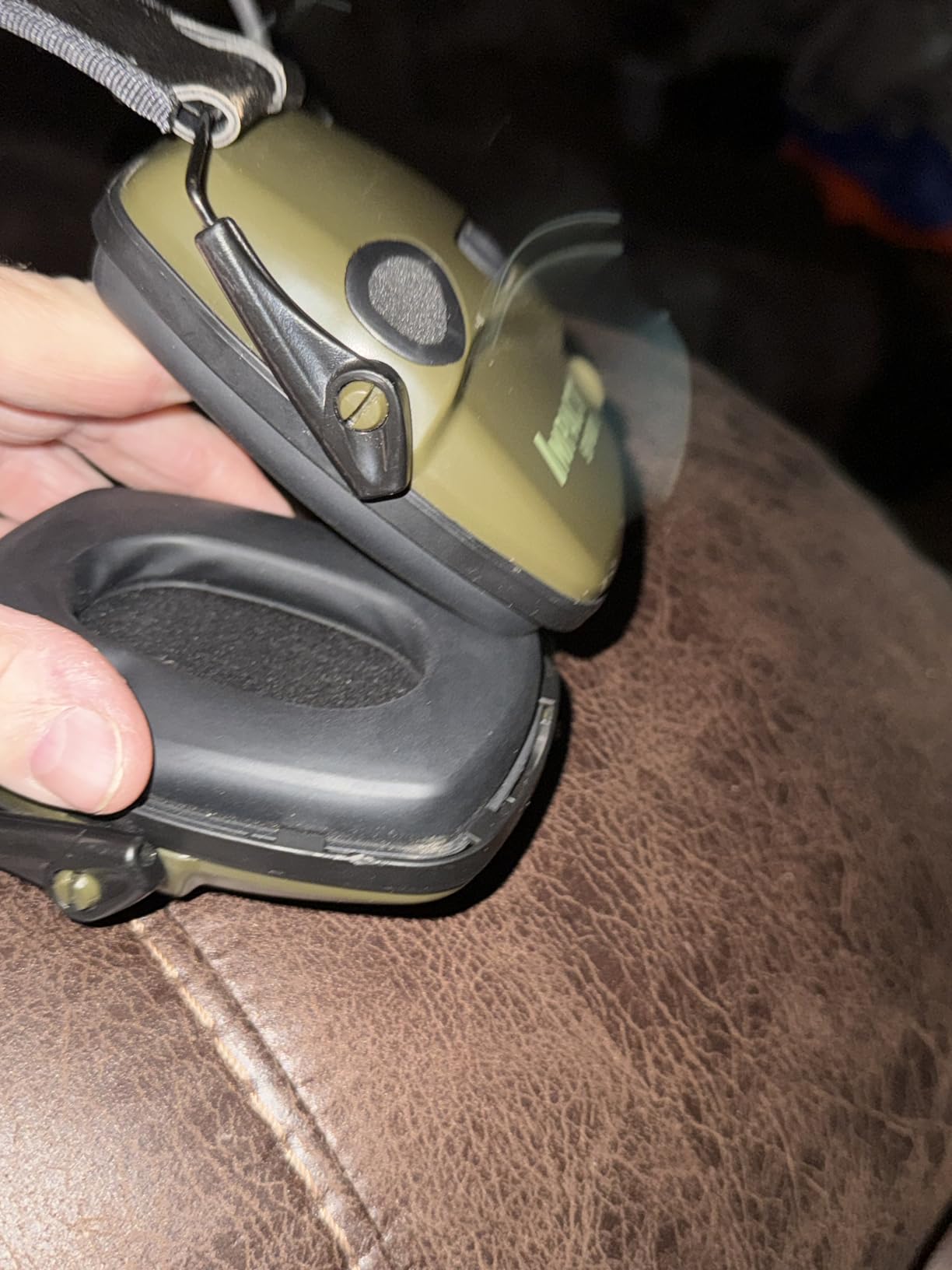
Power is simple. Two AAA batteries are included, runtime is about 350 hours, and a 4-hour auto shutoff stops battery drain when you set the muffs down. The integrated power and volume knob is a single control, which is fewer things to fumble than a multi-button interface.
The folding design and low profile cups make it easy to live in a range bag, and the 3.5 mm cord covers phones, MP3 players, and radios. In the same r/guns comparison thread, the Impact Sport was the model praised for microphone quality over the Walker’s, and our own testing agrees when the priority is hearing a person rather than hearing the woods.
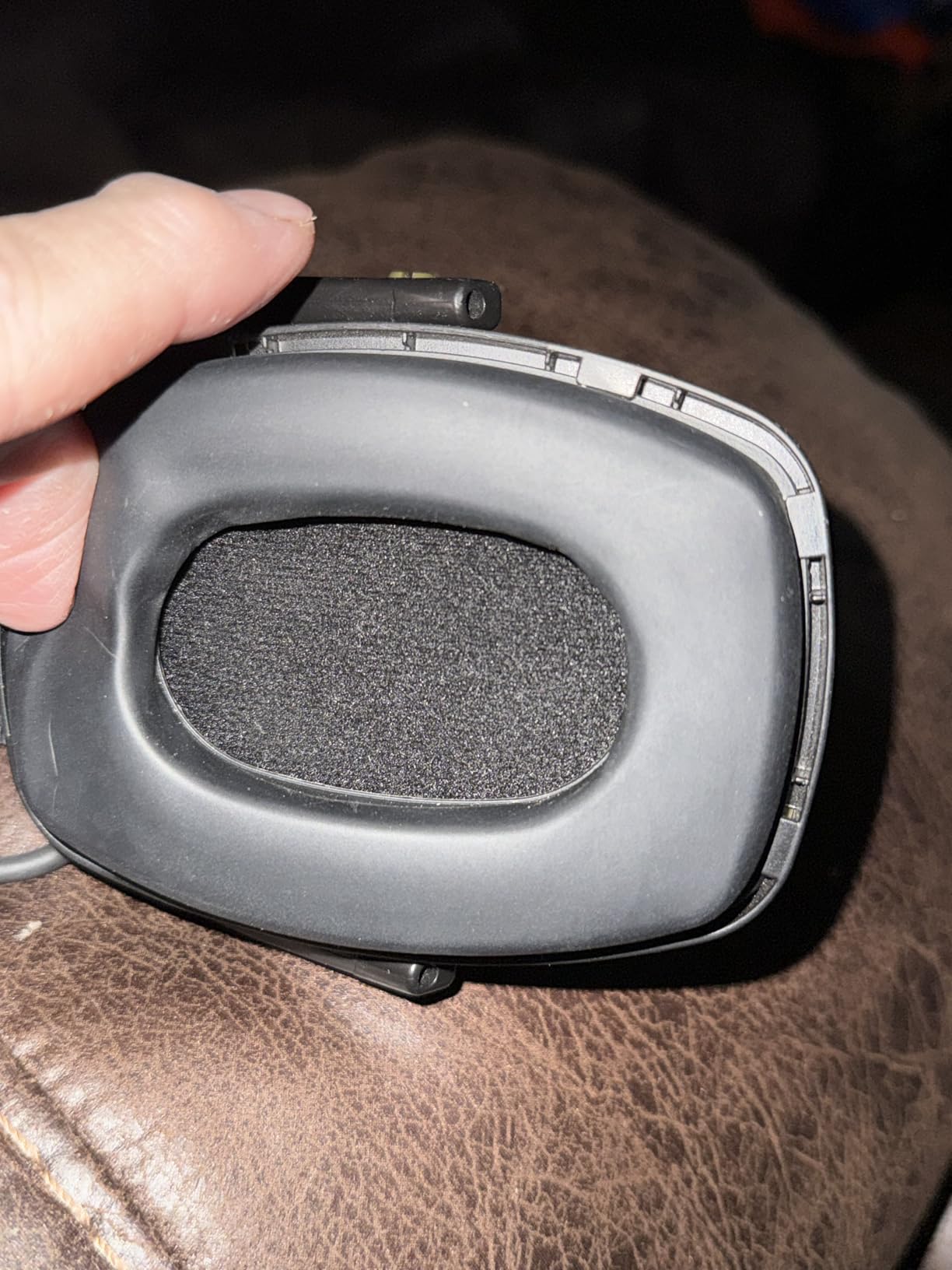
What to check before you commit
The 22 dB NRR is the number to think hard about. It is fine for rimfire, handgun work, and normal outdoor range days, but for magnum rounds, suppressed or braked rifles, and indoor concrete ranges you should double up with foam plugs underneath. That combination, not the muff alone, is what forum consensus treats as the default indoor setup.
Also check the cup profile against your shooting glasses and any scope eyepiece. The cups are low profile but not slim, and a stock rifle cheek weld will shift more than it does with a thin cup.
Where it falls short
It is bulkier and heavier than slim passive muffs, and that bulk is the single most cited complaint. On a long match day, or on a shotgun that sits high, the extra bulk is exactly what makes people pull it off.
The electronic layer means it never returns to true silence, and there is a little latency in the amplified path. If you shoot in an environment where a soft sound is a warning sound, keep that in mind.
3. Walker’s Razor Slim Passive Earmuff – Best Passive Muff for Smaller Heads
Walker’s Razor Slim Passive Earmuff for Range Shooting Hunting Hearing Protection, Unisex
27 dB NRR passive
Fully passive, no batteries
Lightweight folding design
Slim cups for smaller heads
Pros
- 27 dB NRR passive protection with nothing to charge or fail
- Slim compact cups genuinely fit smaller heads
- including many youth shooters
- Lightweight and folds flat for a range bag
- Metal wire frame headband stays comfortable over long wear
- Rubberized cups with sound-dampening housing
Cons
- Fully passive
- so range commands and conversation are completely blocked
- Slim profile may not seal fully on larger adult heads
Passive protection has one enormous advantage and it is not small: there is nothing to break. No battery door, no electronics, no charging, no firmware. This muff is a molded shell, a foam-backed cushion, and a headband, and it does the same job it did the first time you put it on.
At 27 dB NRR this is more attenuation than every electronic muff in this roundup, and the fit is the reason to choose it. The slim cup profile is built for the smaller heads of youth and women shooters, a group that is constantly handed an adult-size muff that gaps at the jaw and loses most of its rated protection.
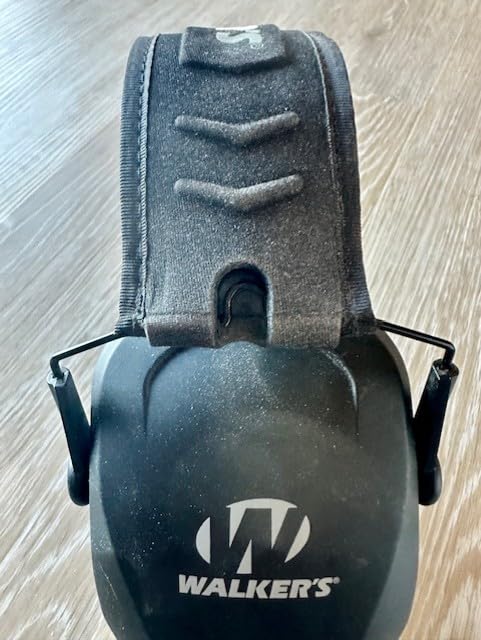
It folds flat, which matters more than it sounds when you are packing a truck for a multi-day hunt or trying to fit a range bag under a seat. The metal wire frame headband takes abuse, and the rubberized cup coating holds up to sweat and handling.
Our honest caveat is that passive means passive. You will not hear the person next to you, and if your range safety officer gives instructions you will need to lift one ear cup or take them off. That is a routine annoyance, not a problem, as long as you plan for it.
What to check before you commit
Check the seal on your own head, not on a photo. A 27 dB rating assumes the cushion ring contacts skin all the way around. If you wear glasses, the arm is the weak point, and you should test whether the cup still sits flush with your normal shooting eyewear.
Confirm the head size fits. This is the smaller-head model, and on a large adult head the cups can sit short of the jawline, which is where passive muffs lose most of their protection.
Where it falls short
Total sound isolation is the tradeoff. For deer or upland hunting where you rely on hearing movement, a passive muff is the wrong tool, and hunters on r/Hunting say the same thing about taking protection into the field.
There is no amplification to soften the shock of a muzzle blast, so on a 12 gauge or a magnum, start with foam plugs underneath. The slim cup makes that double layer easy to wear.
4. PROHEAR 016 Shooting Earmuffs 2 Pack – Best Value Passive Set
PROHEAR 016 Shooting Ear Protection Earmuffs 2 Pack, NRR 26dB for Gun Range, Hunting -Black and Green
26 dB NRR and 31 dB SNR
Two muffs per pack
7.36 ounces
ANSI and CE certified
Pros
- Two muffs means a spare for the bag or a second shooter
- 26 dB NRR with 31 dB SNR handles indoor range fire well
- Low profile cut-out cups clear a shotgun butt
- Ultra-soft pads and padded headband avoid pressure headaches
- Folding design with a carrying bag
Cons
- Passive only
- no amplification of commands or conversation
- Heavier and less slim than dedicated small-head passive muffs
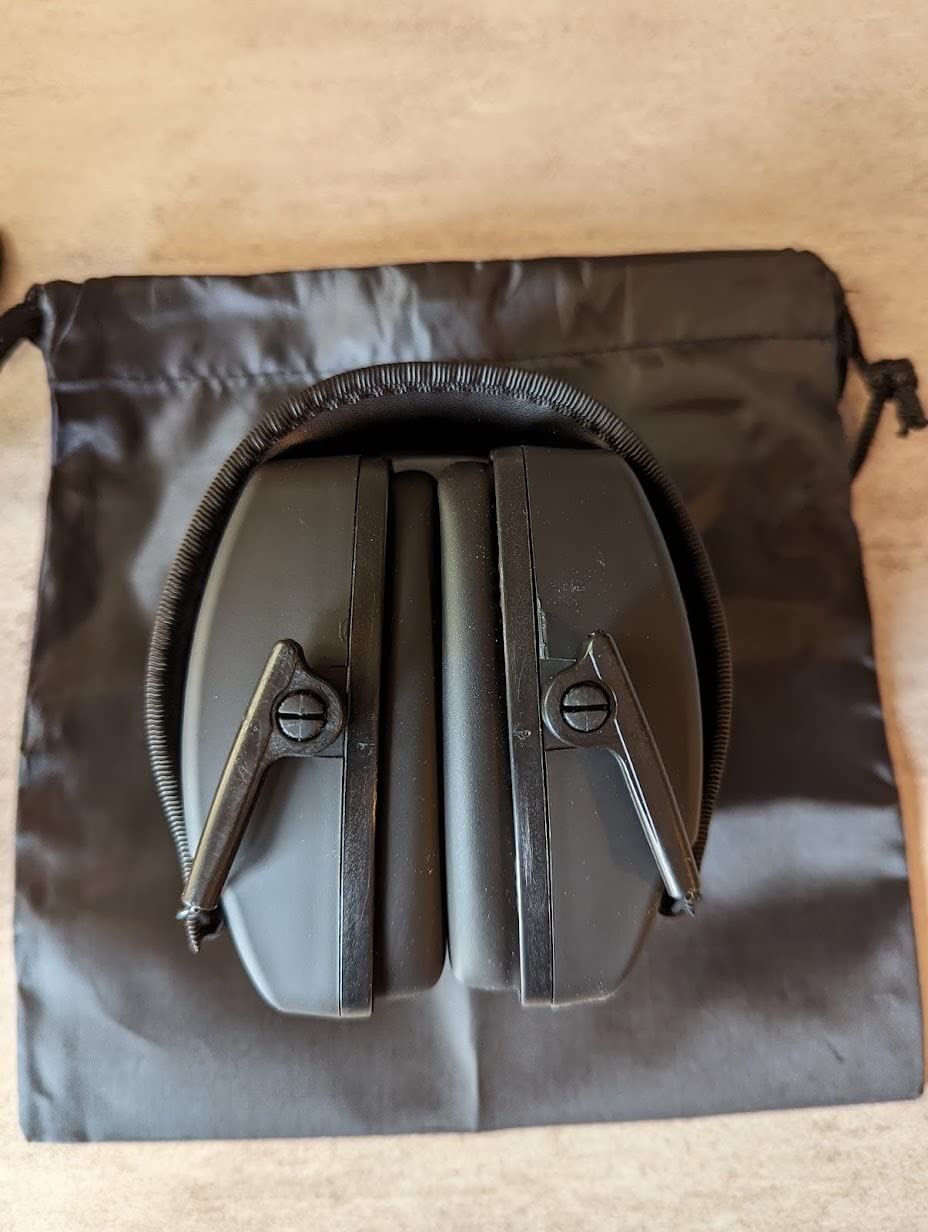
A two-pack solves a problem most single muffs create. If your range bag is shared, if you shoot with a partner, or if you have already had one muff vanish into a truck bed, the second muff is worth more than any single feature on the list.
At 26 dB NRR and 31 dB SNR these are certified to ANSI S3.19-1974 and CE EN 352-1, which is the kind of dual certification you want to see when a muff will also see a chainsaw or a lawn mower as often as it sees a rifle. The SNR figure is the European standard and is not directly comparable to NRR, which is a point we come back to in the buying guide.
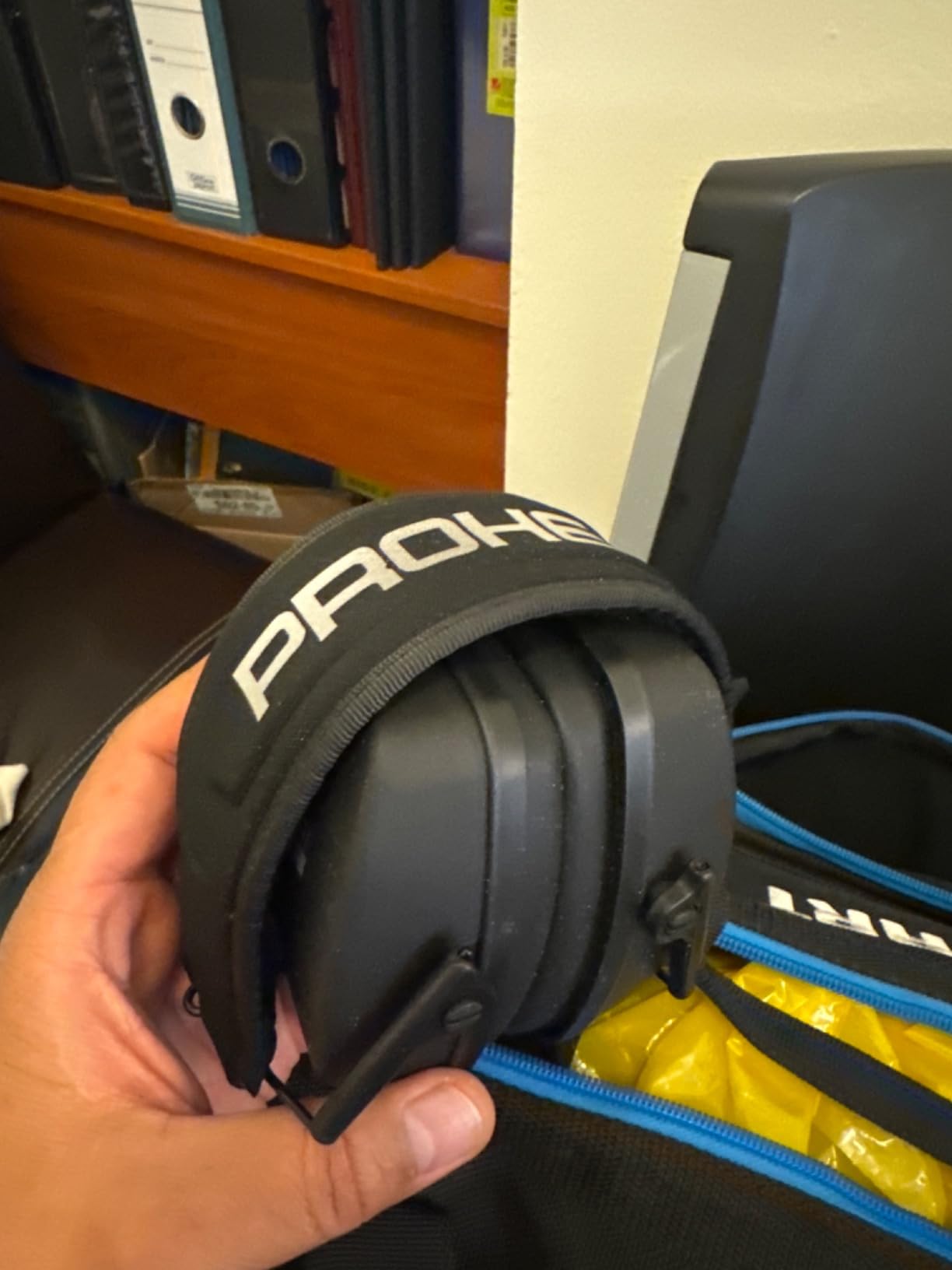
Seven and a third ounces is light for a full-size over-ear muff, and the wide cups with ultra-soft cushioned pads spread the clamp force so you do not get the pressure headache that ends a session early. The padded headband and adjustable fit cover a wide range of head shapes.
The low profile cut-out cups are shaped so a shotgun butt pad does not land on the cup, which is the most common reason rifle and shotgun shooters abandon over-ear protection mid-session. The folding design and included carrying bag make transport simple.
What to check before you commit
Weight distribution matters with any clamp-style muff. Seven ounces is light in the hand and light on the ears, but a wide cup on a narrow head can gap at the bottom. Test the seal with your shooting glasses on, not off.
Decide who the second muff is for. If it is going in a truck as a backup, keep it in a bag so the cushions are not crushed. If it is for a second shooter, check that partner’s head size against the adjustable band before ordering.
Where it falls short
It is passive, so no commands and no conversation, and the wide cup is bulkier than the slim models built specifically for small heads. If a youth shooter is the intended user, a small-head model is the better fit.
At 26 dB it sits in the middle of this roundup rather than at the top, so on magnum rounds, suppressed firearms, and indoor concrete bays, wear foam plugs under these cups as well.
5. Peltor Sport Tactical 100 – Best for Indoor Echo Control
Peltor Sport Tactical 100 Electronic Hearing Protector, Ear Protection, NRR 22 dB, Ideal for the Range, Shooting and Hunting, TAC100-OTH
22 dB NRR
Variable suppression time
13.6 ounces
2 AAA with 2-hour shutoff
Pros
- Variable suppression time is a real advantage in concrete bays where echo is loud
- Active background noise filtering makes commands and conversation clearer
- Recessed microphones resist damage and cut wind noise
- Low profile cups work with rifles and shotguns
- Two-hour auto shutoff and a low battery indicator
Cons
- 13.6 ounces is heavy for a full day of wear
- Batteries not included
- Less connectivity than Bluetooth-equipped muffs
The distinguishing feature here is variable suppression time. Gunshot suppression is not instantaneous in most electronics, and the tail of amplified sound in a concrete bay becomes a loud echo that rings across the range. Letting you adjust that timing is a solution you can actually feel in an indoor range.
The active background noise filtering works in the other direction too. Instead of blasting you with every frequency equally, it pushes the useful speech band forward, which is why owners report clearer communication and cleaner command pickup than with simpler electronics.
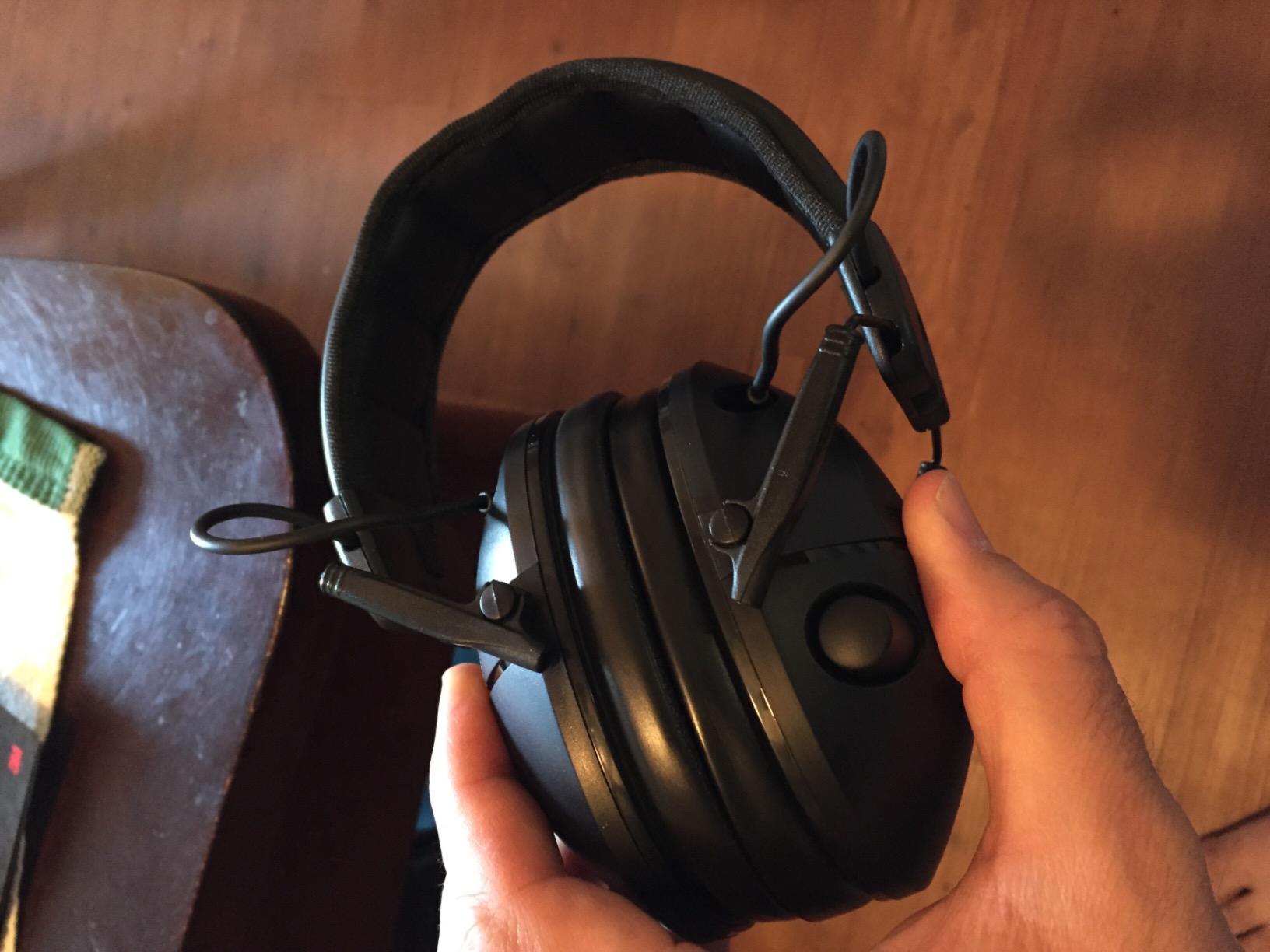
The recessed microphone housings are a durability decision. Sits unprotected on a headband, a mic is where a butt pad or a helmet rail lands first, and the recessed position takes that hit instead.
It runs on two AAA batteries that are not included, with a 2-hour automatic shutoff and a low battery indicator. The padded adjustable headband and low profile cups make it usable with rifles and shotguns. Peltor is consistently named alongside Sordin as the top tier of the category on shooting forums, and this model is the more conservative, less connected end of that name.
What to check before you commit
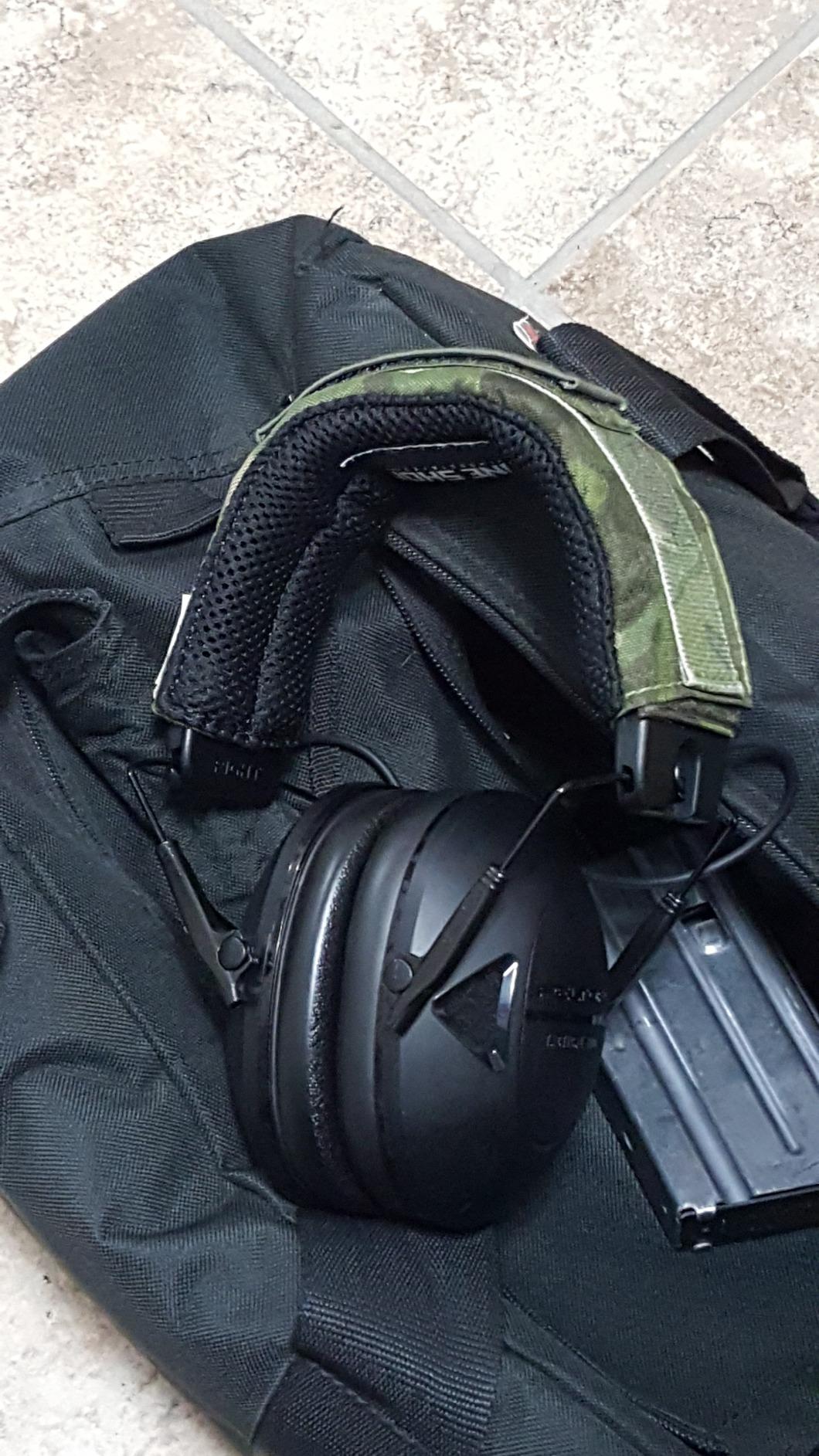
Bring your own batteries. The compartment takes two AAA cells and they are not in the box, which is a bad discovery at a public range where you have just arrived.
Test the suppression setting in the environment you actually shoot. If you shoot indoors, cycle through the timing options and pick one that kills the echo. If you shoot outdoors, the setting matters much less.
Where it falls short
At 13.6 ounces, this is a weighty muff, and weight plus clamp pressure is the combination that wears a head over a six-hour match day. If you are a regular long-session shooter, take the weight seriously.
There is no Bluetooth and no separate audio input, so this is a hearing protection device and nothing else. If you want phone streaming, the next entry is the one built for that.
6. PROHEAR 066 Electronic Muff – Most Versatile for Amplified Protection
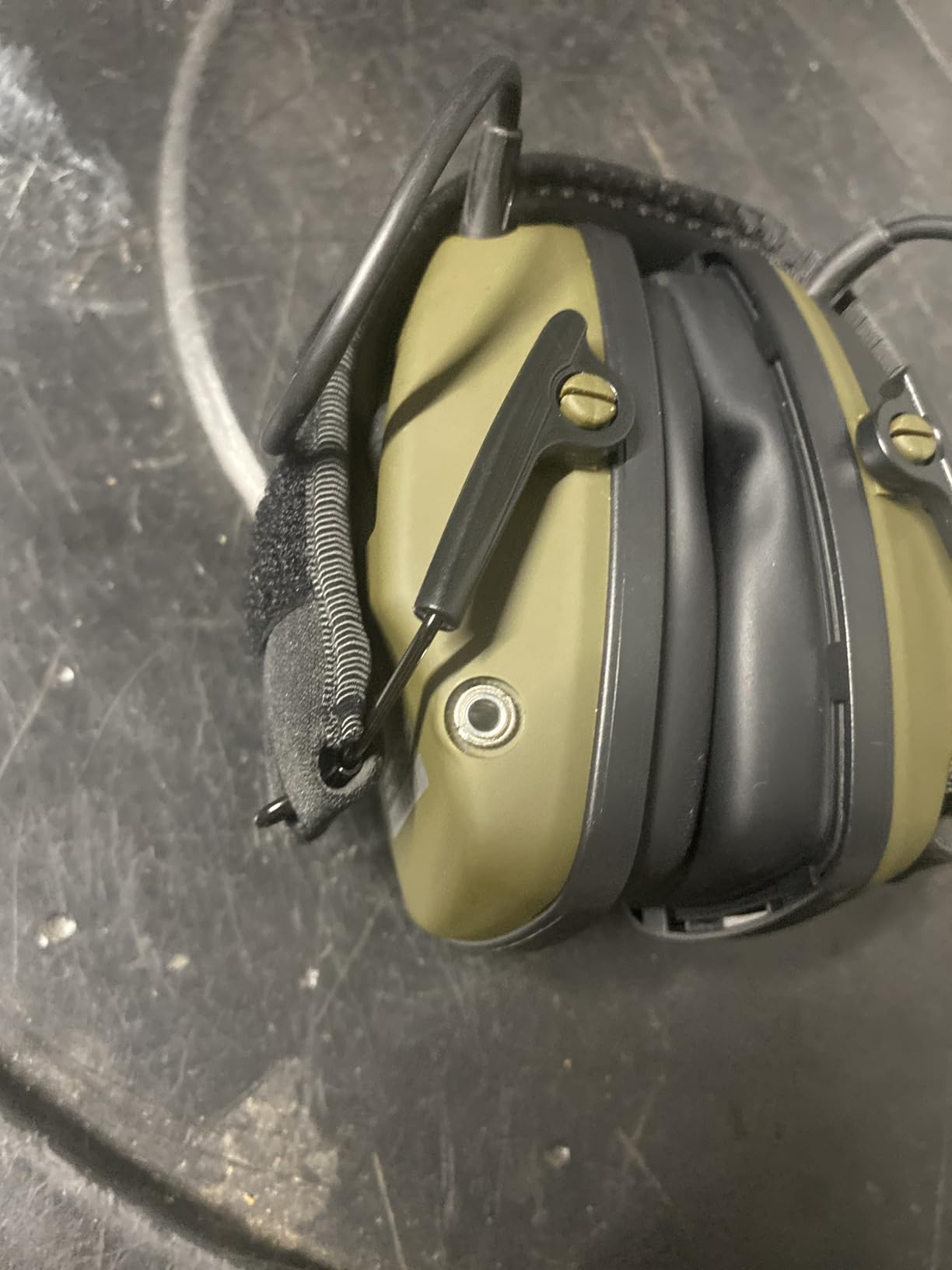
PROHEAR Electronic Ear Protection for Shooting with 4X Sound Amplification, Gun Range Hearing Protection Muffs, NRR 23dB Noise Reduction Headphones for Hunting, Green
23 dB NRR
Amplifies low-level sound up to 4x
9.6 ounces
300 hours on 2 AAA
Pros
- Amplification makes it possible to talk without removing the muffs
- Delivers comparable amplification and protection to costlier electronic muffs
- Very light at 0.6 pound with a padded telescopic headband
- 300 hours of battery life on two AAA cells
- One large volume knob that works with gloves
- IPX4 water and sweat resistance
Cons
- Battery polarity markings in the holder are nearly invisible
- Volume adjustment range is limited
- Fit starts stiff and low settings do not fully mute the shot
This is the muff that most often gets compared directly to the Walker’s Razor Slim, and the comparison is not as lopsided as the reputation gap suggests. The amplification is louder and clearer to many users, the volume knob is a single large tactile control that works with gloves, and the protection rating sits in the same band as the more established electronics.
Suppression is spec’d at under 0.01 seconds and IPX4 water, sweat, and dust resistance covers the sweat-heavy indoor and hunting conditions. The low profile cups have cutaways for shooting comfort, and the telescopic padded headband adjusts to fit most head sizes.
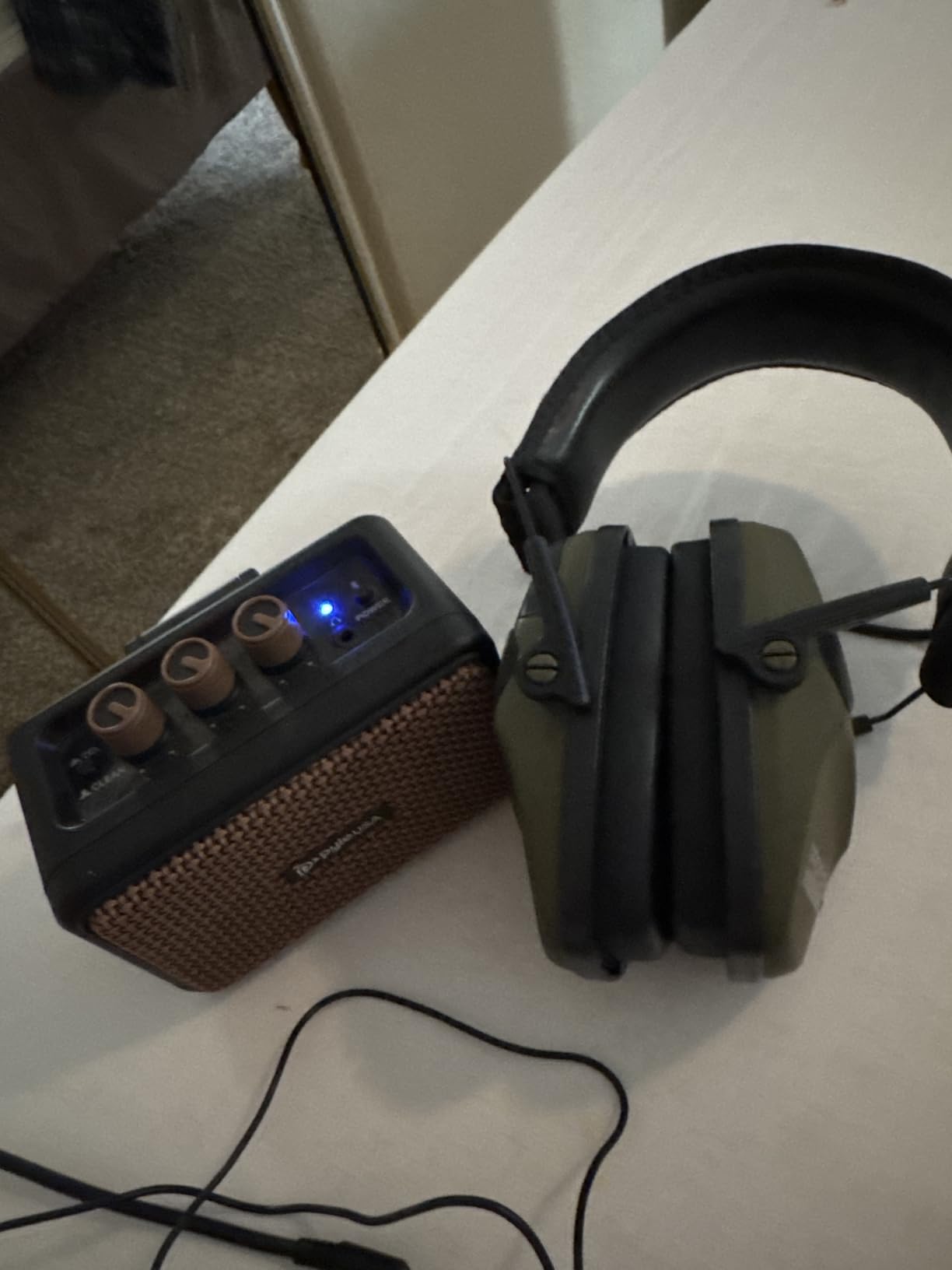
Three hundred hours on two AAA cells means you will rarely think about batteries, and the folding design with a carry pouch, patch set, and 3.5 mm cable in the box is a complete package for a range bag.
The practical catch is small but real: the battery polarity markings in the holder are nearly invisible, so cells can go in backwards. Find out the first time, not at a match. Several users also describe the fit as stiff on the first day and fine after a break-in period.
What to check before you commit
Check the low end of the volume range. At very low settings this muff does not fully suppress a shot, so if you run it low and expect silence, you will be disappointed. Run it high enough that ambient sounds are clear and the suppression circuit does its job.
Spend a session confirming the cushion seals on your head with your shooting glasses. A telescopic band that fits is different from a cushion that seals.
Where it falls short
The limited volume latitude is the most common complaint, and it cuts both ways: more range would be better for people who need to bring ambient sound way down in a loud bay.
It is a muff, so you wear it on top of your head or around your neck between strings, and 23 dB NRR still argues for foam plugs underneath on magnum and indoor concrete work.
7. Peltor Sport Tactical 500 Bluetooth – Best for Bluetooth and Rechargeable Power
Peltor Sport Tactical 500 Bluetooth Hearing Protection Ear Muffs, 25 dB NRR
25 dB NRR
Dynamic suppression time
Bluetooth with 3M Alpha pack option
12.96 ounces
Pros
- Highest rated NRR among the over-ear electronic muffs in this roundup at 25 dB
- Dynamic suppression time adapts to each shot and cuts indoor echo
- Clear Voice Tracking keeps speech intelligible in wind and background noise
- Bluetooth streaming with independent audio and ambient volume controls
- Low profile cut-outs with rubber bumpers protect the muff and the rifle
- Vented headband and soft conformable cushions for long sessions
Cons
- The most feature-heavy and costly option in the group
- Bluetooth and voice guidance add complexity versus a simple electronic muff
- The rechargeable battery pack is a separate purchase
This is the feature-complete unit. It carries the highest NRR among the over-ear electronic muffs here, adaptive suppression timing, Bluetooth streaming from a phone with separate volume control for music and ambient sound, and Clear Voice Tracking that filters wind while lifting speech.
Dynamic suppression time is the piece that matters most on a range. Instead of a fixed suppression window, the muff measures the energy of the incoming impulse and adjusts the timing, which is the direct answer to the indoor echo problem in concrete and tile rooms.
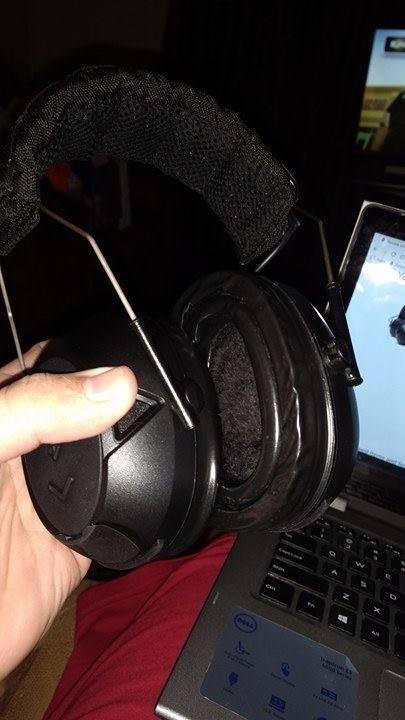
The physical design is thoughtful for shooting specifically. The ear cushions have cutouts for long guns, and the rubber bumpers reduce the banging you get when the rifle contacts the muff. That detail is small on paper and obvious after a day of prone shooting off a rest.
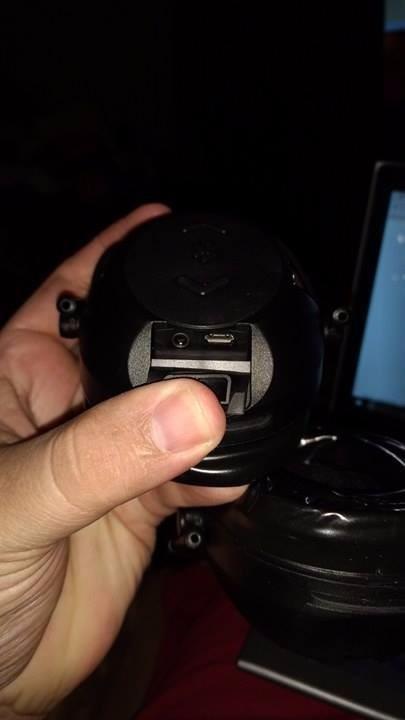
Power is flexible. It runs on two AA batteries or the 3M Alpha 1100 lithium-ion rechargeable pack, with auto shutoff and a low battery indicator. The vented headband, soft conformable cushions, folding design, button interface with voice guidance, and included storage bag round out a package built for a long day.
What to check before you commit
Decide whether Bluetooth is a feature or a distraction. If you run a phone app to time stages or listen to a match call, it is a genuine upgrade with independent audio and ambient volume controls so you can turn music down without losing your hearing of the field.
Check the battery plan. Two AA cells keep it simple; the rechargeable pack is a separate purchase but removes battery anxiety on a multi-day hunt. Either way, the low battery indicator and auto shutoff are there.
Where it falls short
It carries the most features in this roundup, and paying for Bluetooth and voice guidance is poor value if you never stream audio. A simpler electronic muff does the safety job for less.
More controls means more to learn. The button interface with voice guidance is clearer than a four-button cluster, but it is still a step up from a single knob, and simplification-minded users tend to notice.
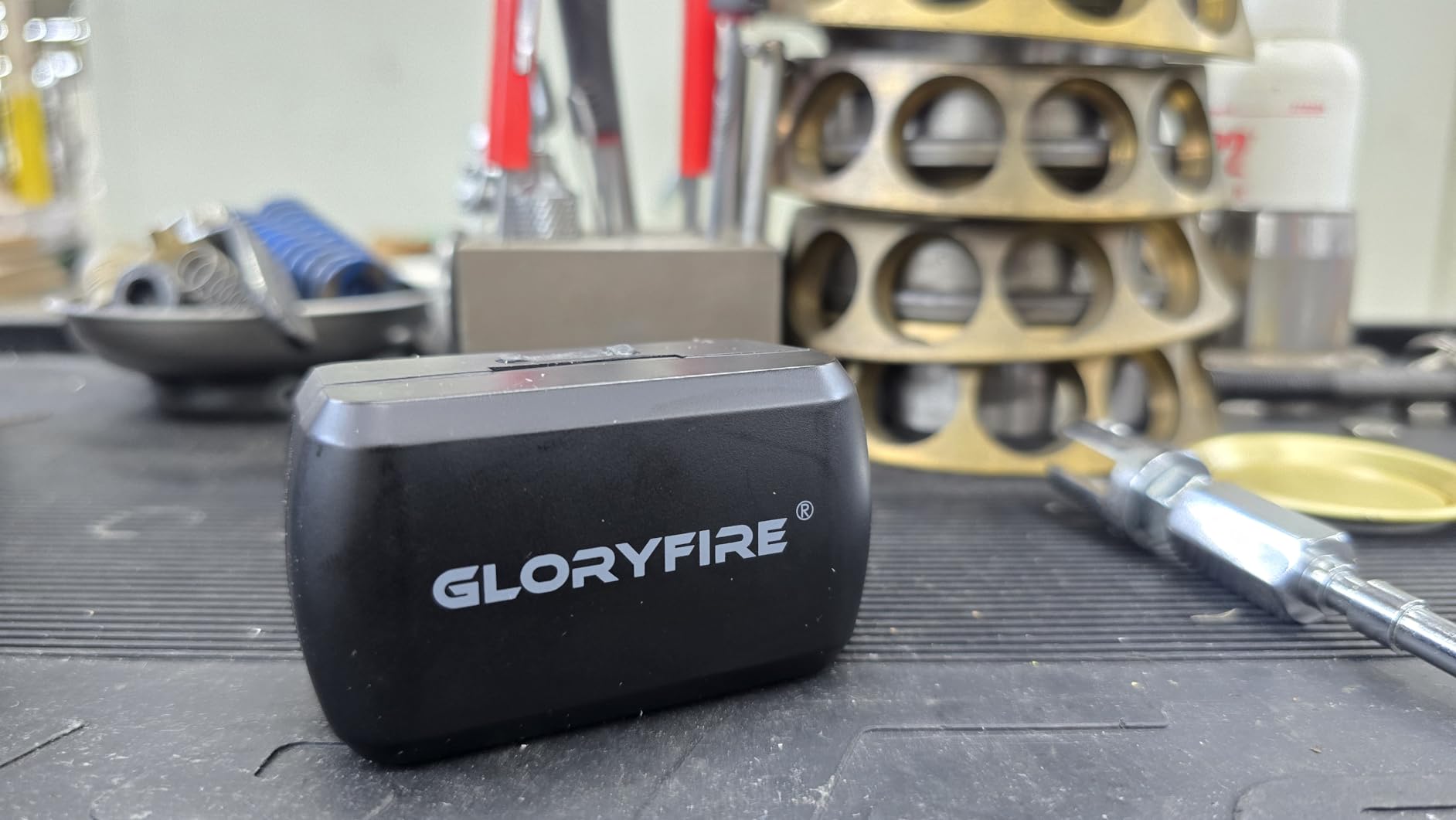
8. GLORYFIRE Bluetooth In-Ear Hearing Protectors – Best for Hidden In-Ear Use
GLORYFIRE Bluetooth Shooting Ear Protection & Sound Amplification, Onyx
26 dB NRR in-ear
An 85 dB output limit
0.5 ms reaction time
6.74 ounces
Pros
- In-ear format disappears under a cap or behind hair where no muff will
- Three sound modes cover outdoor distance
- indoor close range
- and silent Bluetooth
- 26 dB NRR tested to ANSI standards with an 85 dB output cap
- Bluetooth supports music streaming and phone calls
- 0.5 ms reaction time is quick enough not to clip a shot
- Lighter at 6.74 ounces than the over-ear electronic muffs here
Cons
- Lowest average rating in the group at 4.4 stars with a wider spread of ratings
- In-ear tips depend on a good seal
- and smaller ears may need the smaller tips
- Charging case and internal batteries add parts that can degrade over years
- Costs more per pair than plugs and a passive muff combined
Everything else on this list sits on your head where it is visible. This one does not, and that changes the use case entirely. It works under a cap, behind hair, under a helmet, and in a situation where you would rather not draw attention to what you are wearing.
The protection numbers are respectable for an in-ear device: 26 dB NRR tested and approved to ANSI standards, with the output capped at 85 dB and a 0.5 ms reaction time to compress fast impulse noise. Three switchable modes cover outdoor maximum sound, indoor normal sound, and a silent mode for Bluetooth audio and calls.
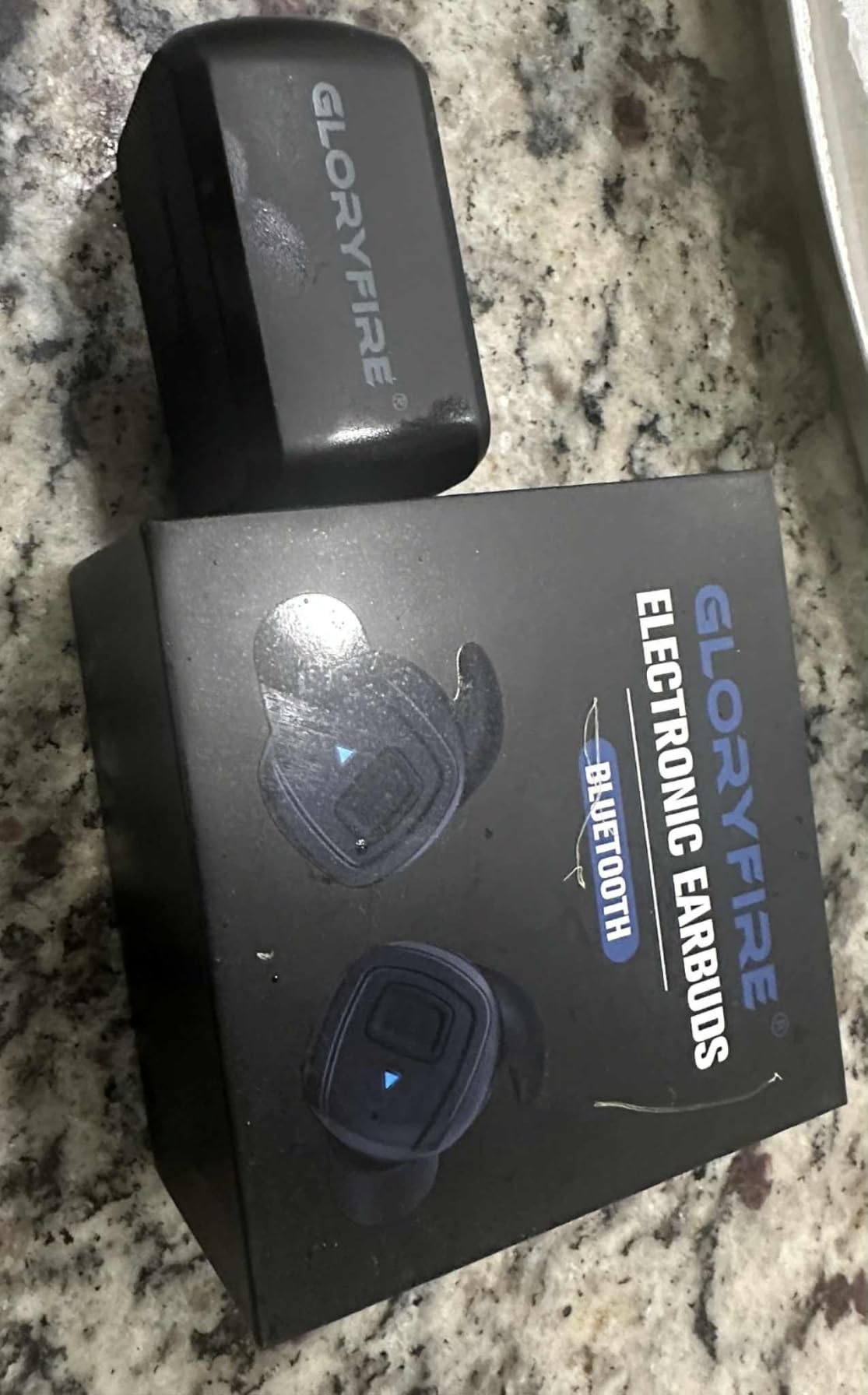
Bluetooth for music and calls, plus voice tracking that optimizes both your own voice and the voices around you, is what separates this from ordinary in-ear protection. Multiple ear tip sizes are included because, as with any in-ear seal, the fit determines the rating.
At 6.74 ounces including the case, this is notably lighter than any of the over-ear electronic muffs here, and it packs into a jacket pocket rather than a range bag.
What to check before you commit
Spend real time on the ear tip fit. This is the whole ballgame for in-ear protection: too small and the seal leaks, protection drops, and the electronics do not get a clean signal to process. Too large and you will want them out after an hour, and a device you take out is a device that is not protecting you.
Think about the charging case as a long-term part. It is a sealed battery assembly that will age, and unlike a replaceable AA cell, it is not something you swap at a range in February.
Where it falls short
The 4.4 star average is the lowest here, and the spread of ratings is wider than any other product in this roundup. That pattern usually means the seal experience is highly individual, and some people simply do not get along with an in-ear device.
You get a lot of channel for what you spend, and for a shooter whose priority is raw attenuation that is a hard trade to justify; for one whose priority is concealment and ambient intelligence, it is the whole point.
9. Mack’s Ultra Soft Foam Earplugs – Best Foam NRR at 33 dB
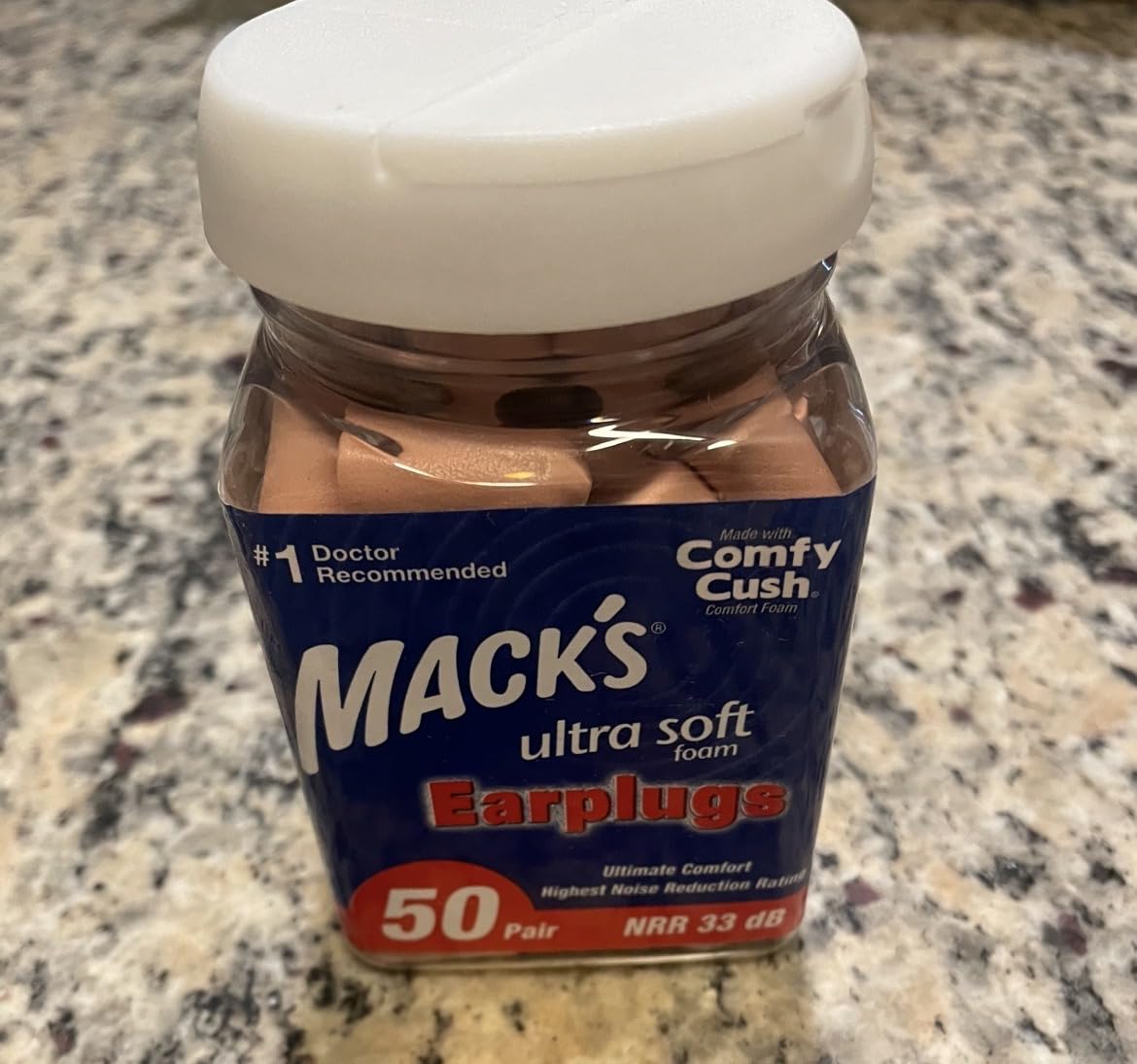
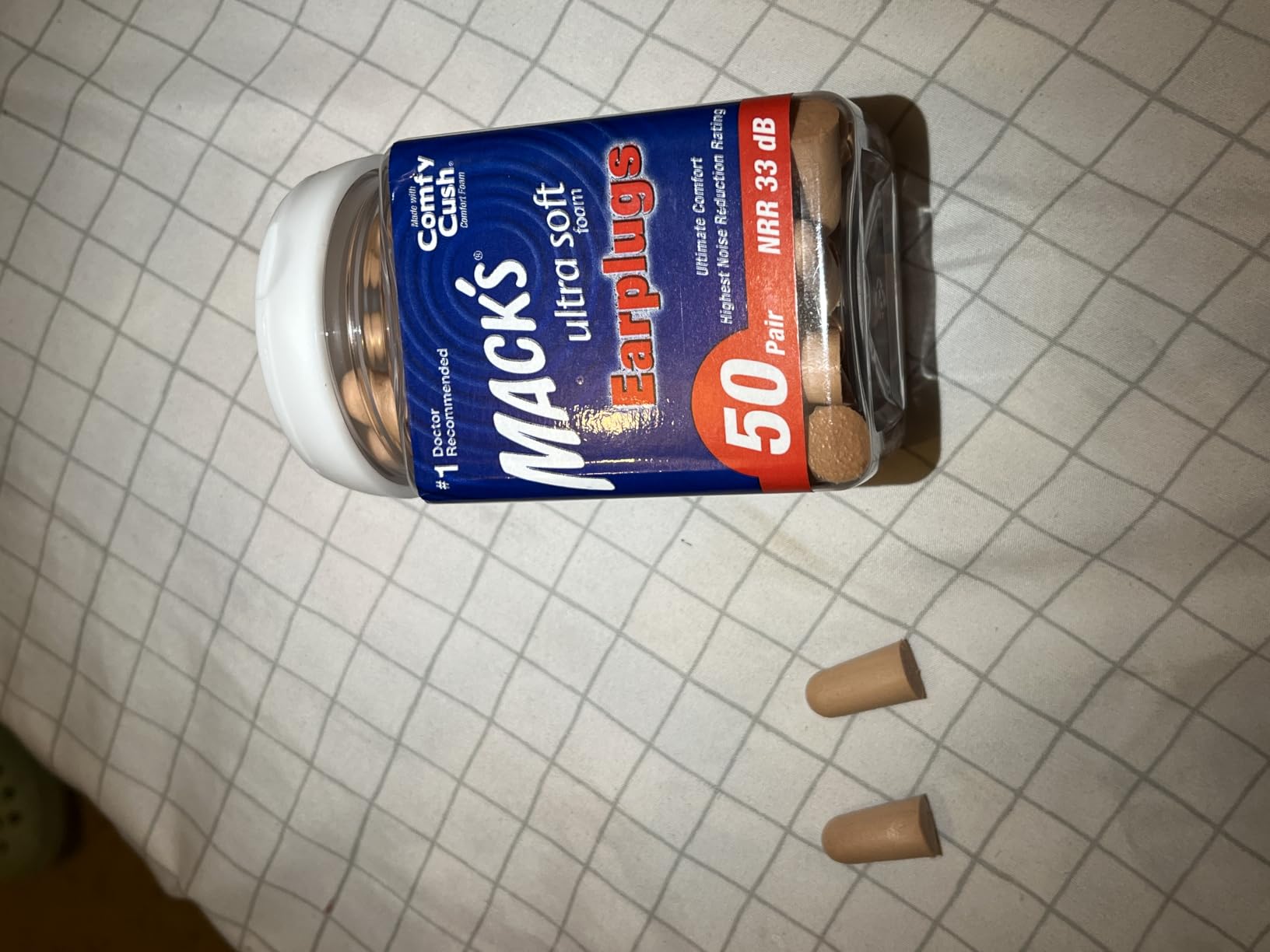
Mack’s Ultra Soft Foam Earplugs, 50 Pair – 33dB Highest NRR | Made in USA
33 dB NRR foam
50 pairs per jar
Slow-release low-pressure foam
1.59 ounces
Pros
- 33 dB NRR is among the highest ratings available in disposable foam
- Slow-release low-pressure foam expands gradually for a gentle seal
- Comfortable enough for hours of wear
- 50 pairs per jar is an easy ongoing supply
- Made in the USA in a safety-sealed jar with a dispensing top
Cons
- Foam blocks all sound
- so you cannot hear range commands or conversation while wearing them
- Disposable with no reuse value
- Reaching the rated NRR requires a full roll-down and correct insertion depth
No muff in this roundup attenuates as much as a good foam plug, and this jar is rated at 33 dB. That is the layer that makes a double-up setup work, and for anyone shooting magnum rounds, suppressed firearms, or indoor concrete bays, high-NRR foam under a muff is the single biggest protection upgrade available.
The foam itself is the reason for the rating. It is a low-pressure, slow-release design that expands gradually to fill the canal rather than jamming into it, which is why this is the version people keep in their ears for six hours at a match rather than tolerating for twenty minutes.
Fifty pairs in a safety-sealed jar with a flip-open dispensing top is a supply arrangement that works. A range bag gets its own jar, a truck gets another, and the cycle is a clean pair of plugs every time rather than a pair that has been in and out of a dirty pocket.
Foam plugs are also the least expensive per-session protection available, which is why so many shooters describe a large jar as the answer for occasional range trips. On forums, the honest consensus is that plugs and muffs together is almost always the setup, with single foam reserved for rimfire.
What to check before you commit
Learn to insert them properly before you rely on the number. Roll the plug into a thin cylinder, pull the ear up and back, insert deep, and hold for the full expansion. Shallow insertion is the single biggest reason people report that plugs do not work, and NIOSH describes insertion depth as the variable that separates rated protection from half of it.
Practice pulling them out and throwing them away. Used foam plugs are contaminated ear debris, and the cost of a fresh pair is trivial compared with an ear infection that keeps you off the range for a month.
Where it falls short
You hear nothing. No range commands, no conversation, no approaching vehicle, no dog. For indoor range work that means taking them out to hear an instruction, and that is exactly the moment protection is most often pulled off.
Disposable means the cost recurs forever, and a pair is wasted every time. If you shoot a lot, a reusable plug like the next-but-one entry costs less over a year and holds up in a jacket pocket.
10. Howard Leight Laser Lite Foam Earplugs – Best for Compliance Tracking
Howard Leight by Honeywell – R-01204 Laser Lite High Visibility Disposable Foam Earplugs, Pack of 1 (50 Pairs),Yellow
32 dB NRR
Hi-vis yellow and magenta
Contoured T-shape
50 pairs per pack
Pros
- High-visibility yellow is easy to spot on a range or job site
- 32 dB NRR is strong protection for shooting and industrial noise
- Contoured T-shape is easier to insert and remove than round foam
- Expands to fit a wide range of ear sizes and canals
- Closed-cell soil-resistant foam skin wipes clean
Cons
- Disposable
- so regular shooters repurchase constantly
- Foam blocks all sound while worn
- Bright colors will not sit under a hat or helmet without showing
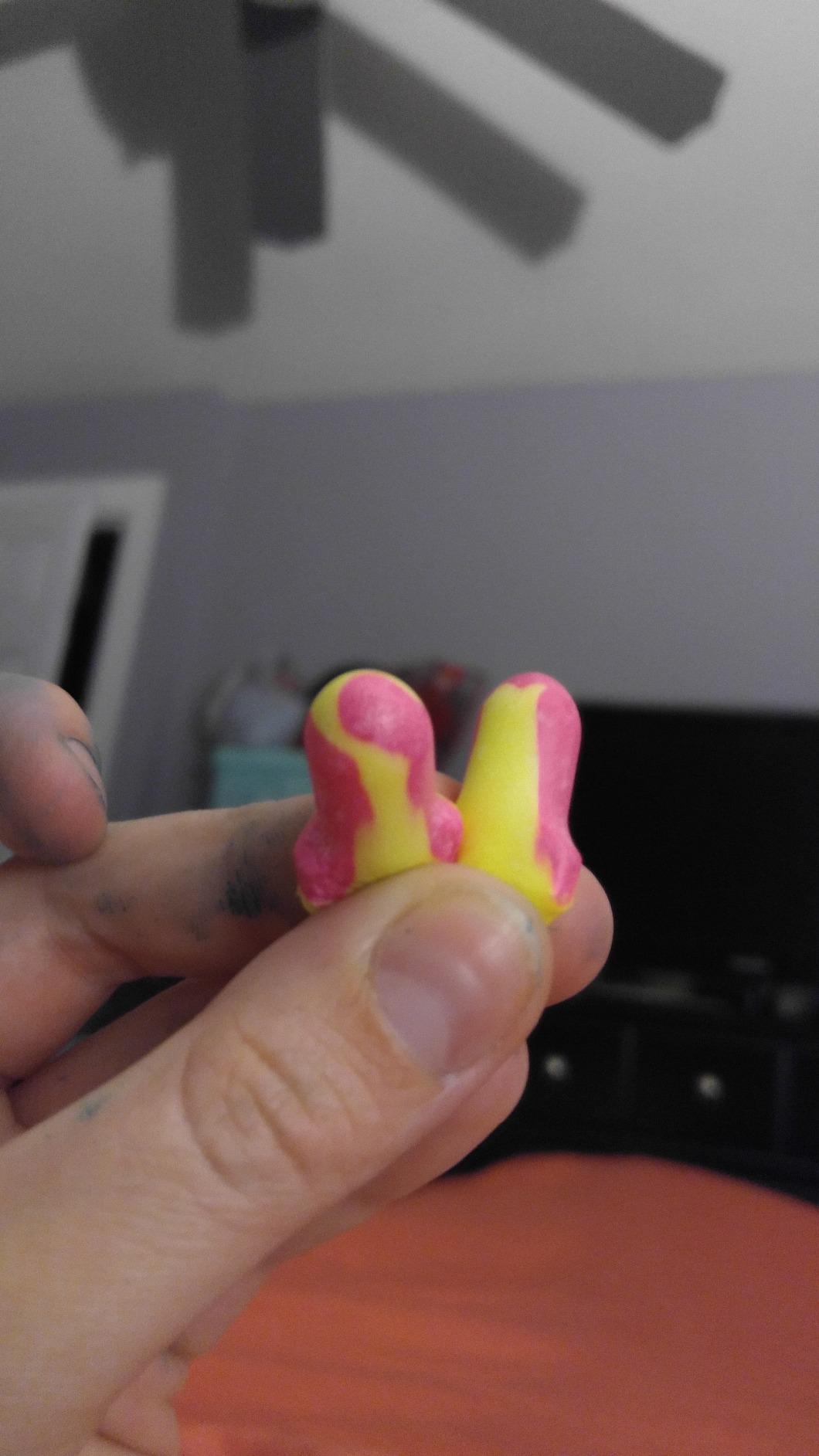
Color is the whole idea here, and it is more useful than it sounds. On a public range you can look down a firing line and see instantly who is wearing protection, which is a real safety practice that a room of black muffs or skin-colored silicone completely defeats.
The 32 dB NRR is within a decibel of the highest-rated disposable foam, and the self-adjusting low-pressure foam expands to fit a wide range of ear sizes. For a shooter who has struggled with plugs that are too stiff or too small, that expansion is a practical advantage over a fixed-shape plug.
The contoured T-shape is the second practical feature. It is a wider handle at the end you pinch, which makes the roll, pull, and hold insertion much easier to do with one hand than with a round plug. The closed-cell foam skin resists dirt, which matters when plugs go in and out of a pocket all day.
Fifty pairs per pack covers a serious amount of range time, and the brand is a well-established one in both shooting and occupational safety, which is a reasonable signal when you are putting something in your ear for six hours.
What to check before you commit
Check whether high visibility is a feature or a problem in your setting. Range officers, instructors, and anyone working around others where a dropped plug is a safety issue will love it; a shooter wearing a cap or a helmet for a match may find the color unacceptable.
Insertion technique is still the limiting factor. The rating assumes a full roll-down, a deep insertion, and a hold through expansion. The T-shape makes it easier, not automatic.
Where it falls short
Disposable foam is a recurring cost, and this one is close to the top of the disposable foam ratings, so the math adds up over a year of frequent range trips.
Same tradeoff as all foam: total acoustic isolation. You will not hear a line command, a partner, or a vehicle. Use it as the under-layer beneath an electronic muff rather than as your only protection at a busy range.
11. Peltor Sport Tri-Flange Corded Earplugs – Best Reusable Plug
Peltor Sport Tri-Flange Corded Reusable Earplugs, 3-Pairs per Pack
26 dB NRR
Triple-flange design
Washable and reusable
0.32 ounces
Pros
- Reusable and washable
- so the cost per session drops to almost nothing
- Attached cord and storage container make losing them at the range unlikely
- Low profile fits under a brimmed cap and comfortably under over-ear muffs
- Three pairs per pack means a spare set is always available
- Neon yellow is easy to spot if dropped
Cons
- 26 dB NRR is well below the 32 to 33 dB disposable foam options
- Insertion is fiddly and a proper seal takes practice
- Blocks all sound so they must come out to converse
- Needs regular cleaning to avoid wax build-up
Reusable plugs win on logistics. A pair lives on a cord around your neck or in a case in your pocket, survives a week in a truck, and never runs out. Over a year of regular range trips the difference from disposable foam is not close.
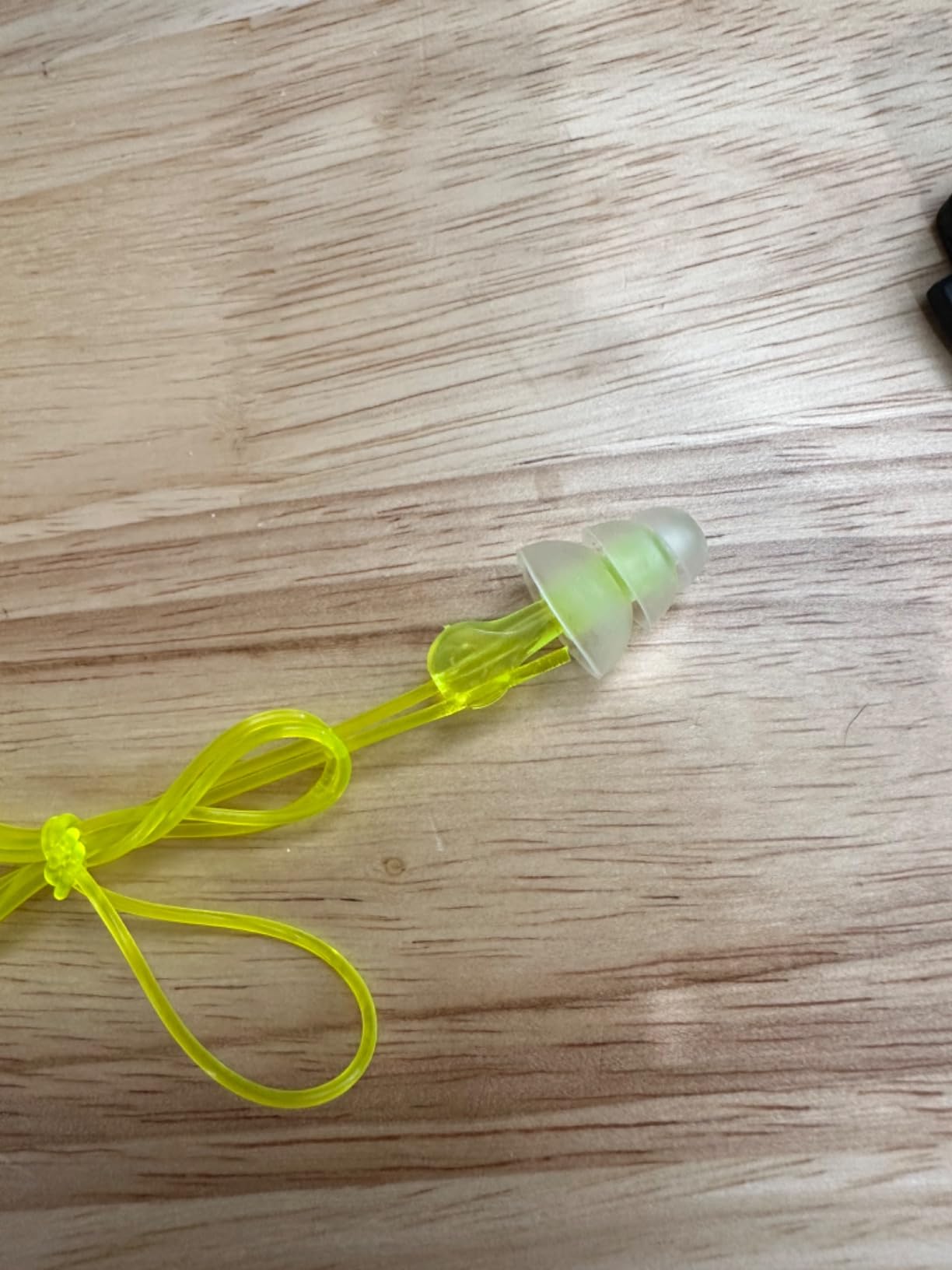
The triple-flange design is the mechanism. Three soft flanges stack up the canal and grip against the walls, which gives a consistent seal that survives head movement, talking, and the chewing people do at an indoor range bench.
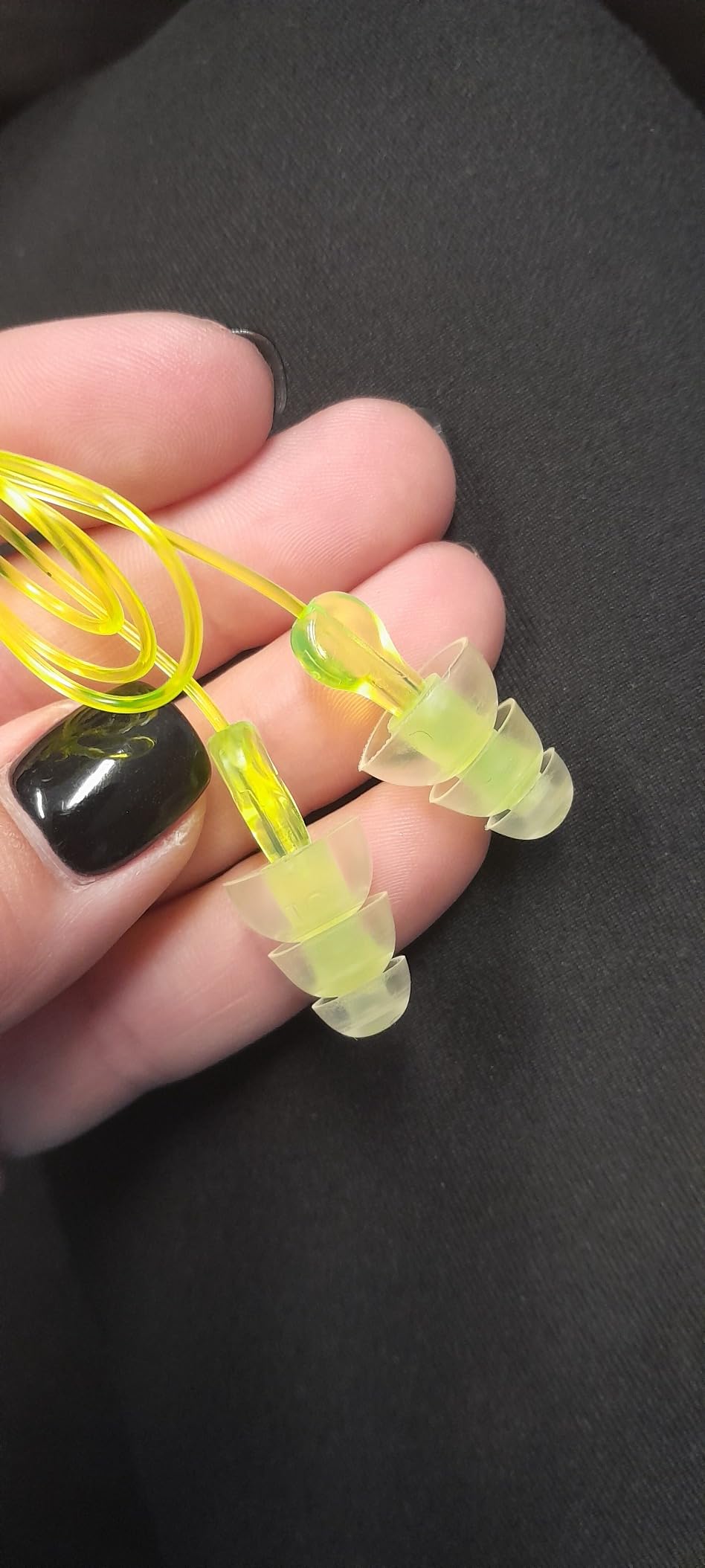
The attached cord is the detail that saves them. Plugs that fall out of a pocket in a gravel parking lot are gone. Plugs on a cord come back. The 3-pair pack with a storage container also solves the hygiene question that stops people from reusing plugs at all.
Low profile is what makes these the reusable under-layer rather than a standalone choice. They fit under a brimmed cap and they sit comfortably beneath an over-ear muff, so doubling up with these does not create a lump that breaks your cheek weld.
What to check before you commit
Clean them. A reusable polymer plug that goes back in without attention accumulates wax, and that is how a plug turns into an ear infection. Wipe or wash them on a schedule, not when you remember.
Give the seal a week. Reusable plugs require more deliberate insertion than foam, and if you give up on the first attempt you will conclude they do not work, when the actual issue is technique.
Where it falls short
At 26 dB NRR these give up six or seven decibels to a good disposable foam plug, and for a single-shot impulse event that gap matters. If your primary concern is maximum attenuation for one loud report, foam wins.
They block all sound, and they take practice to insert. They are also the wrong choice under a tight helmet or with in-ear monitors, where the low profile helps but the canal bulk still adds up.
12. SureFire EP4 Sonic Defenders Plus – Best Filtered Plug
SureFire EP4 Sonic Defenders Plus Filtered Earplugs, Triple flanged Design, Reusable, Black, Medium
24 dB NRR with filter caps
Removable caps pass safe sound
Triple-flanged with EarLock rings
Reusable medical-grade polymer
Pros
- Removable filter caps let you hear commands and conversation without pulling the plugs out
- EarLock retention rings hold the plugs in place far better than plain foam
- Low profile works under a cap
- a helmet or a hat
- and beneath over-ear muffs
- Soft medical-grade polymer stays comfortable over long sessions
- Reusable and easy to clean with alcohol
Cons
- 24 dB NRR with caps in is the lowest attenuation in this roundup
- Opening or closing the caps means removing the plug from the ear
- Caps left open can whistle or let in more sound than expected
- The medium size may not seal in unusually small or large canals
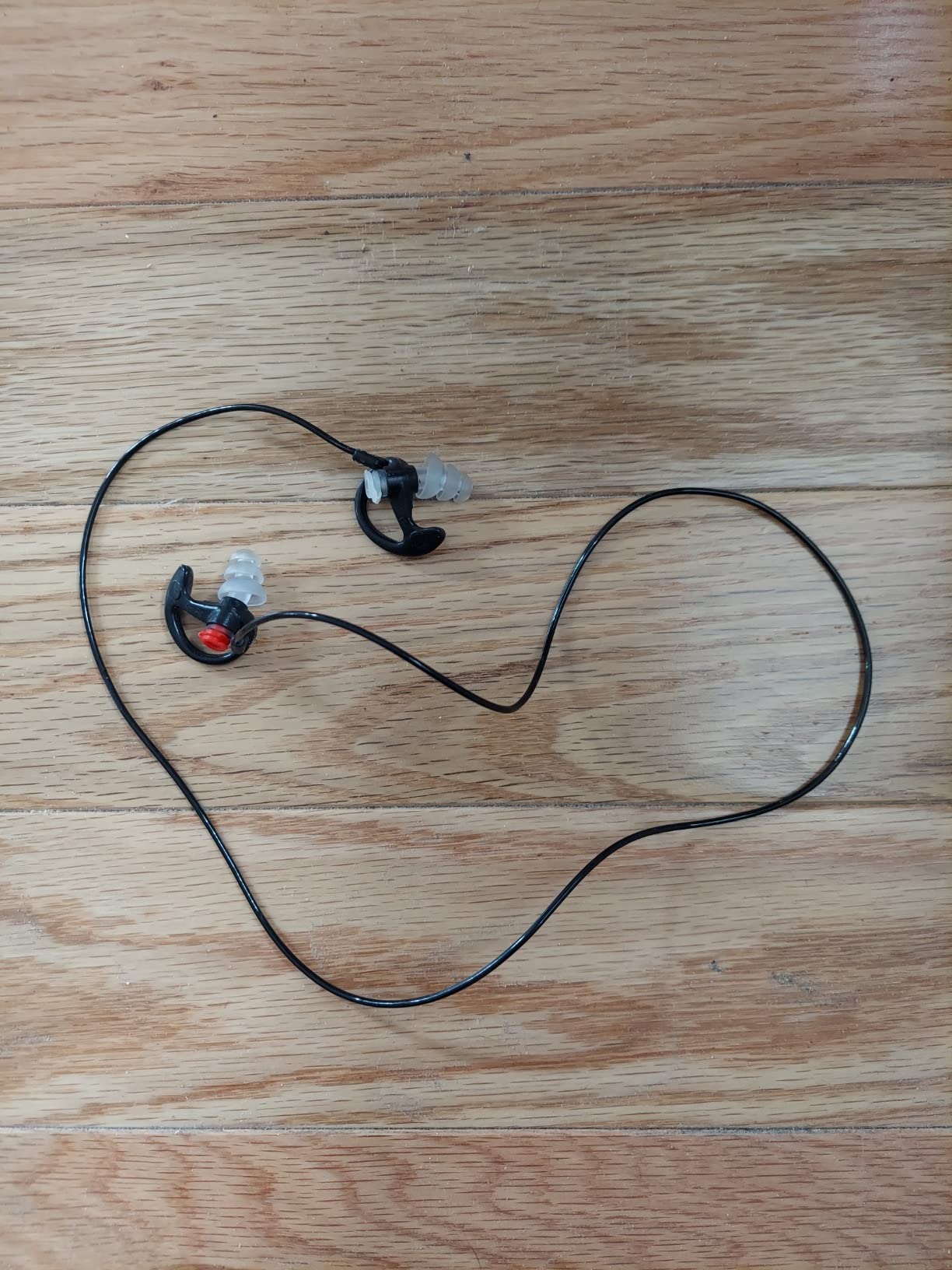
The filter cap is the whole concept, and it is closer to level-dependent protection than most shooters realize. With the caps in, you get a sealed plug at a 24 dB NRR. With the caps out, safe ambient sound passes through at natural levels, so you hear the range, your partner, or a dog without removing anything.
That solves the single most common failure in hearing protection, which is protection that gets taken off because the shooter cannot hear anything. Hunters on r/Hunting describe the same problem in the field: plugs work so well that you miss the thing you were listening for.
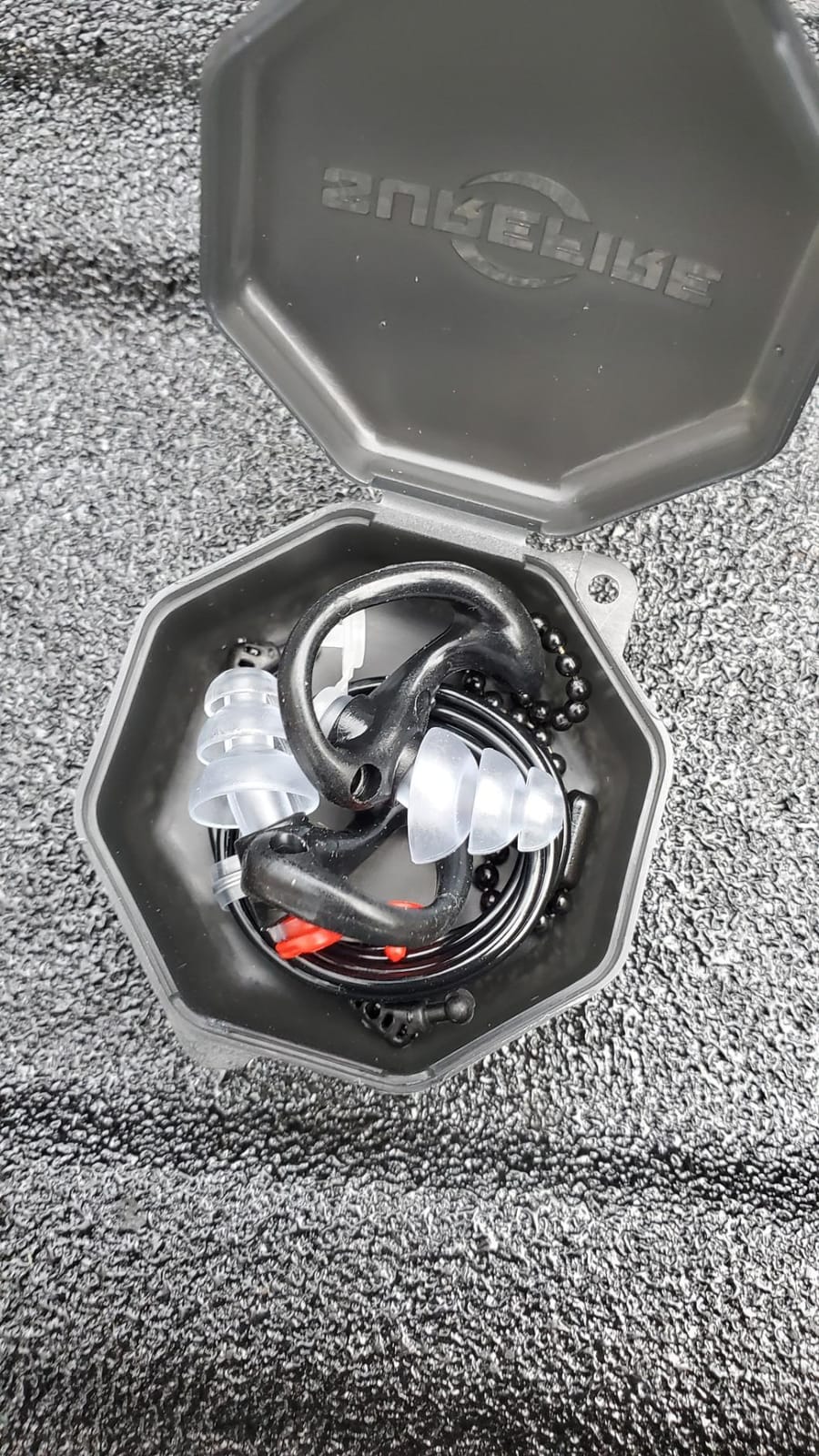
Retention is the other strong feature. The EarLock rings use seven contact points to lock the plug in place, which addresses the complaint that generic plugs work their way loose over an afternoon. The soft triple-flanged stems give a consistent seal across different canal sizes.
Construction is medical-grade, hypoallergenic polymer, made in the USA, reusable, and cleanable with alcohol. The low profile works under a mask, a helmet, or a hat, and it is designed to be used alongside supplemental muffs, which is the honest role for a 24 dB plug.
What to check before you commit
Size matters more than usual here. The medium is the default, and unusually small or large canals may need a different size to hit the rated attenuation. A poor seal on a filtered plug is doubly bad because the filter path assumes a sealed canal.
Practice the cap operation before the trip. Caps are opened and closed with the plug in hand, not in your ear, so you need the habit of removing, adjusting, and reinserting without losing the plug.
Where it falls short
At 24 dB with caps in, this is the lowest rated protection among the products here. That is a deliberate tradeoff for awareness, and it means these should sit under a muff in loud environments rather than carry the job alone.
Open caps can whistle, and they pass more sound than people expect in a loud bay. Treat the caps as a field and communication tool, not as a way to run a range day unprotected, and leave the 4.3 star average as a reminder that fit and cap handling are the two things that decide whether you like them.
What NRR Do You Actually Need for Shooting?
Here is the direct answer, and it is the question most asked and least clearly answered. Outdoors with rimfire, handgun, or a standard varmint load, a muff rated at 25 dB NRR or more is enough on its own. At an indoor concrete or tile range, with any magnum round, or with a suppressed or braked rifle, you want a combined 40 dB of real attenuation, which in practice means 32 or 33 dB foam plugs under a 26 dB passive muff. A 29 dB rating is good, and 29 dB is not a stopping point.
NRR is the North American number. SNR is the European standard, measured on a different reference and expressed differently, so the two figures are not interchangeable and a 31 dB SNR is not automatically better or worse than a 31 dB NRR. When you compare muffs, compare like for like and stay inside one system.
Passive blocks all sound. Electronic muffs and in-ear electronics pass quiet ambient sound to your ear at a controlled level and attenuate the instant the environment gets loud, which is why they keep range commands audible. A linear or filtered plug sits between the two, giving full protection with a filter cap you open when you need to hear something.
The double-up is the highest-value habit on this whole page, and the math is worth doing carefully. 27 dB and 33 dB do not add to 60. In practice a well-fitted foam plug under a well-sealed passive muff lands around 40 dB of combined protection, because the two barriers break the same sound paths and the second one only has to clean up the leak around the first. Add 161 dB and you are near 121 dB at the ear rather than the 128 dB a muff alone gives you.
For hunting, the reasoning changes completely. You are not defending against a shot, you are trying to hear a deer at 200 yards or a dog running at 30. That is where level-dependent protection wins, and the filtered plug or the in-ear electronic with an outdoor mode is the right tool because it protects the loud event without flattening everything under it.
Fit decides more than brand. For earplugs, roll the plug thin, pull the ear up and back, insert deep, and hold through the full expansion. For muffs, the seal breaks at the glasses temple, so test with the eyewear you actually shoot in, and if a leather or gel cushion helps, replace it rather than tolerating a gap. We also keep a fuller walkthrough of electronic earmuff options if you want to compare the amplified models side by side.
Two things to avoid. Cotton wads, cigarette filters, and packing peanuts block a handful of decibels and give false confidence, so leave them out. And Bluetooth music through a protection device is capped at 85 dB for a reason: constant amplification is exactly the steady-noise exposure that erodes the same hair cells a muzzle blast does, so treat audio as a range-end reward rather than a default.
Frequently Asked Questions
How many dB is a 9mm gunshot?
A 9mm handgun measures about 162 dB at peak, in the same range as a 12 gauge shotgun at roughly 161 dB. That is impulse noise, and it arrives faster than your startle reflex can respond. A muff rated at 22 to 27 dB NRR with a good seal is appropriate for handgun work, and doubling up with 32 dB foam plugs gives you considerably more margin.
What are the best ear protectors for gun shooting?
For most shooters, a slim electronic muff for range awareness plus 32 or 33 dB foam plugs underneath is the strongest general setup. Shooters who want simplicity do well with a 27 dB passive slim muff and plugs. In-ear electronics suit shooters who need protection hidden under a cap, and filtered plugs fit people who need to hear the field between shots.
Is 29 dB hearing protection good for shooting?
Yes, 29 dB NRR is solid protection for outdoor range work with standard handgun and rifle rounds. It is not generous for indoor concrete bays, magnum rounds, or suppressed firearms, where you should double up with high-NRR foam plugs and aim for 40 dB of combined real-world attenuation.
What do navy seals use for hearing protection?
Navy SEALs use the same two categories you can buy: double-wall passive muffs rated in the low 30s for maximum attenuation, and electronic protection such as Peltor ComTac and Sordin models for situational awareness, communications, and helmet integration. Military issue varies by unit and era, but the taxonomy is exactly the passive versus electronic split covered here.
Do I need to double up earplugs and earmuffs?
Outdoors with rimfire or a standard rifle load, a single good muff is usually enough. At an indoor range, with magnum rounds, or with a suppressed or braked firearm, wear high-NRR foam plugs under your muffs. The two layers break the same sound paths, so the combination delivers far more attenuation than the muff alone.
The Bottom Line on Best Hearing Protection for Shooting
Protection you keep on is worth more than protection you leave in a bag. Start with the Walker’s Razor Slim Electronic Muff for a slim, all-day electronic platform, and pair it with 33 dB foam plugs whenever the environment gets loud. If you prefer zero electronics, the Walker’s Razor Slim Passive and the PROHEAR two-pack cover smaller heads and multi-shooter needs at 26 to 27 dB. Whatever you choose for 2026, wear it on the shot, every shot, because the damage a muzzle blast does is permanent and there is no second round of hearing to protect.