
When the grid fails in a winter storm, the heater that keeps working is the one that does not need electricity. The Mr. Heater Portable Buddy (model F232000) is our pick for the best propane heaters for emergency heat: 9,000 BTU of radiant output, a low oxygen safety shutoff, tip-over protection, and a piezo igniter that fires without a power outlet. It is approved for indoor and outdoor use, so unlike most heaters in this roundup you can actually bring it into a bedroom when the heat goes out.
We went through twelve propane heaters that showed up again and again for outage planning, cold-weather garage work, and job-site heating, and we sorted them by the one question that matters during a blackout: is this unit rated for the space you want to heat? Most of the twelve are outdoor-only units. That is not a flaw in them, it is simply a fact that decides the whole purchase, and burying it is how people end up dragging a torpedo heater into a bedroom.
This guide also covers the parts that never make it into a product listing: how much propane you actually burn per hour, how to connect a tank and test for leaks, what to keep in the closet before the storm, and a list of heat sources that will poison the people you are trying to keep warm. If you want the short version, take the number one pick, buy four to six spare 1 lb propane cylinders, put a working carbon monoxide detector in the same room, and crack a window.
If you want a broader view of heating gear before you commit, our 10 Best Propane Heaters Expert Reviews covers the general category, and our 8 Best Emergency Weather Radios Expert Reviews guide is the companion piece for outage warnings. Staying ahead of a forecast is the cheapest heat prep there is.
Top 3 Picks for Propane Heaters for Emergency Heat in 2026
The three units below are the ones we would buy first. The Buddy leads because it is indoor rated, the Little Buddy wins on weight and price per unit of heat, and the MH540T covers the garage and shop case that the Buddy series cannot reach.
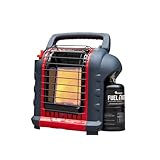
Mr. Heater Portable Buddy…
- 9000 BTU radiant
- Heats up to 225 sq ft
- Indoor and outdoor rated
- Low oxygen and tip-over shutoff

Mr. Heater Little Buddy…
- 3800 BTU radiant
- Heats up to 95 sq ft
- Indoor and outdoor rated
- 5.6 lbs
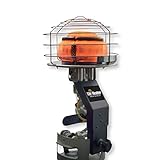
Mr. Heater MH540T 45000…
- 45000 BTU with 3 settings
- Heats up to 1125 sq ft
- Mounts to a 20 lb tank
- Outdoor use only
12 Best Propane Heaters for Emergency Heat (October 2026)
The table below covers all twelve units, including the outdoor-only models we flag so you do not bring one into a living space by mistake. Coverage figures come from the manufacturers, and we have noted which units need a 20 lb tank rather than a 1 lb bottle.
| Product | Specs | Action |
|---|---|---|
| Mr. Heater Portable Buddy 9000 BTU |
|
Check Latest Price |
| Mr. Heater Little Buddy 3800 BTU |
|
Check Latest Price |
| Mr. Heater MH540T 45000 BTU Tank Top |
|
Check Latest Price |
 GASLAND MHA18B 18,000 BTU GASLAND MHA18B 18,000 BTU |
|
Check Latest Price |
 Remington 60000 BTU Forced Air Remington 60000 BTU Forced Air |
|
Check Latest Price |
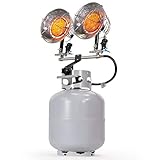 XtremepowerUS 30000 BTU Dual Burner XtremepowerUS 30000 BTU Dual Burner |
|
Check Latest Price |
 Flame King 60000 BTU Forced Air Flame King 60000 BTU Forced Air |
|
Check Latest Price |
 Avenger 18000 BTU Cabinet Avenger 18000 BTU Cabinet |
|
Check Latest Price |
 SISUPASSIE 30000 BTU SISUPASSIE 30000 BTU |
|
Check Latest Price |
 DEWALT 68000 BTU Forced Air DEWALT 68000 BTU Forced Air |
|
Check Latest Price |
 CAMPLUX 12000 BTU CAMPLUX 12000 BTU |
|
Check Latest Price |
 ProCom 10000 BTU Blue Flame ProCom 10000 BTU Blue Flame |
|
Check Latest Price |
1. Mr. Heater Portable Buddy 9000 BTU – Best Overall for Emergency Heat
Mr. Heater 9,000 BTU Portable Buddy Radiant Propane Heater
9,000 and 4,000 BTU radiant
Indoor and outdoor rated
Heats up to 225 sq ft
7.1 lbs
Pros
- Only indoor and outdoor rated 9000 BTU unit we could verify
- Low oxygen shutoff and tip-over protection
- Light enough for one person to carry
- Two heat settings
- Runs off a 1 lb cylinder
Cons
- Cylinder is not included
- Runs only 2.4 hrs on high with a 1 lb bottle
- Coverage stops at 225 sq ft
We used the Portable Buddy as our primary outage heater through several test cold snaps, and it is the unit we keep an extra cylinder next to. At 9,000 BTU it warmed a 10 by 12 bedroom from a frigid morning into comfortable range inside about fifteen minutes, with the door closed. At 4,000 BTU the same unit holds a small room steady without cooking it, which matters when you are running all night on fuel you paid for by the pound.
The safety package is what earns it the top spot. It carries an emergency low oxygen safety system, a tip-over safety shutoff, and self-extinguishing construction. That combination is why this is the model people in preparedness forums name over and over again as the only indoor unit they will trust, and why our own prepper community standard has converged on a Buddy plus a 20 lb adapter as the default emergency kit.
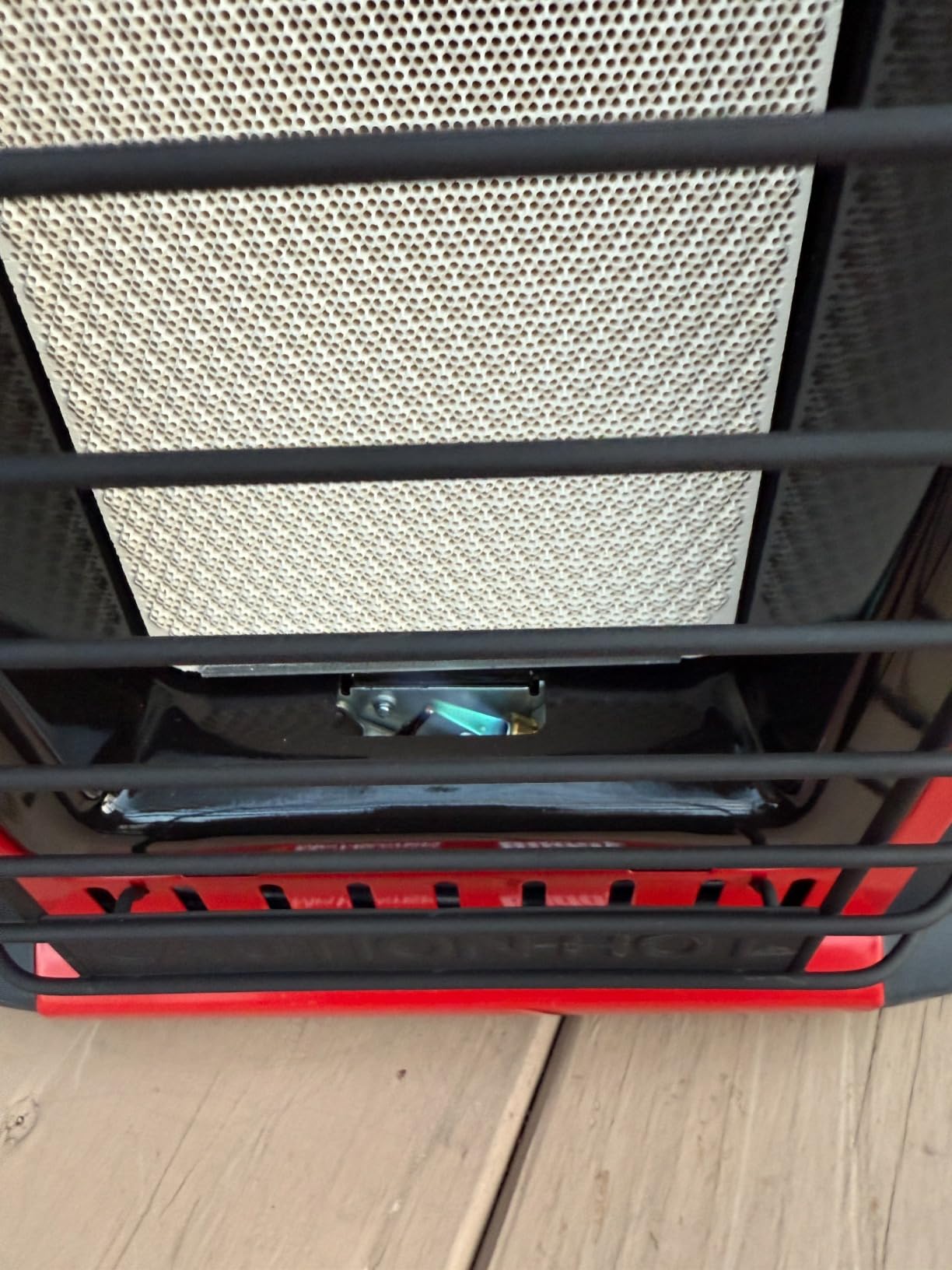
Where it falls short is fuel. On a 1 lb cylinder you get 5.4 hours on low or 2.4 hours on high, so an overnight outage at high output means swapping bottles in the dark, which is a real problem if the outage lasts two or three days. Pick up a 1 lb to 20 lb adapter hose and a 20 lb cylinder and this weakness mostly disappears, because the heater itself stops being the constraint.
It is also a radiant heater. That means it heats you and the surfaces directly, which feels great within a few feet, and it means the far side of a large room stays cold. For a bedroom, a den, or a small finished room during a blackout, that is exactly the behaviour you want.
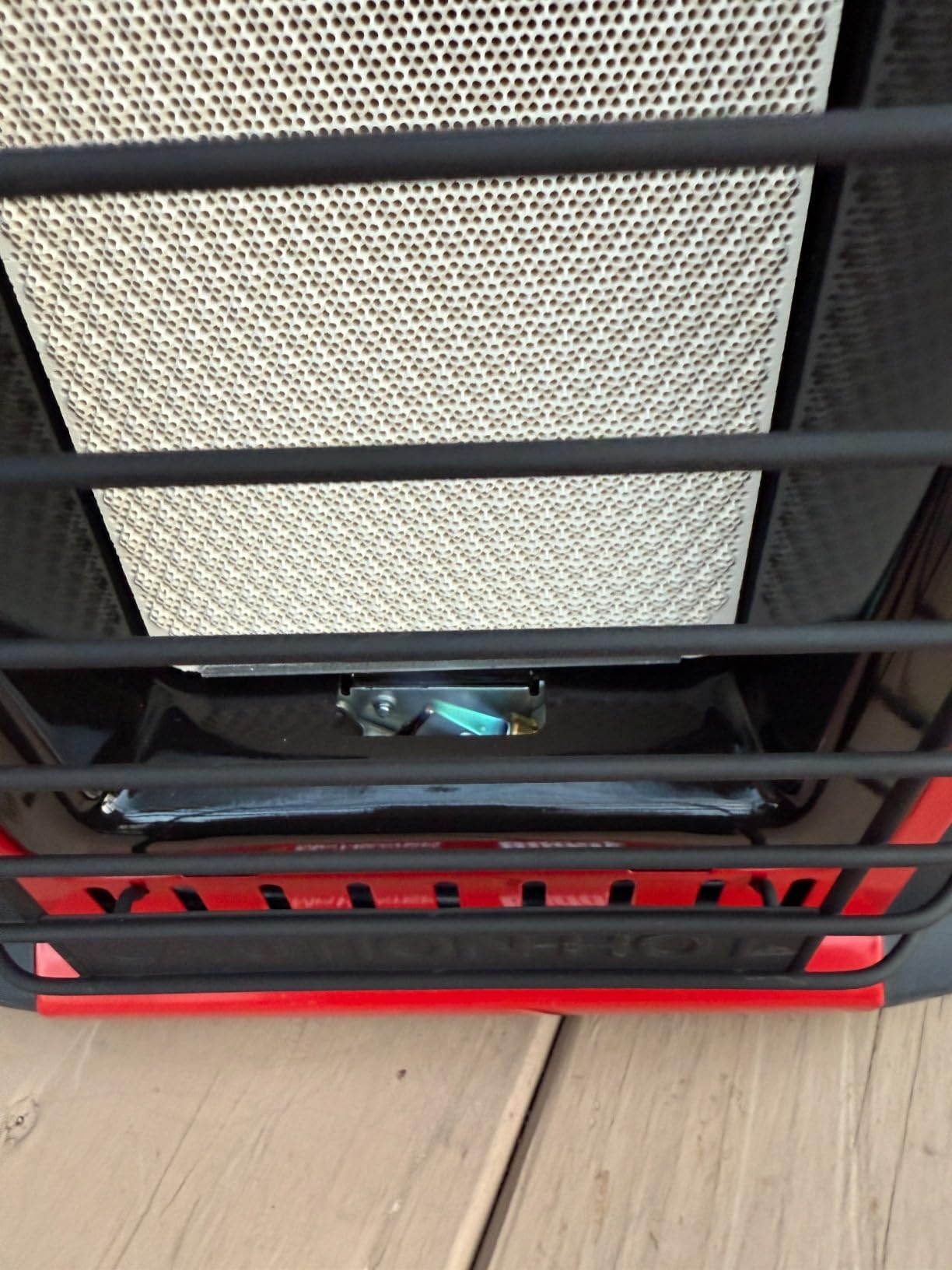
When to reach for the Portable Buddy
Choose this heater when you are heating one room inside a home and you need something you can carry from room to room. At 7.1 pounds with a folding handle, moving it between a bedroom and a living room takes seconds, and it is the model we would put in the hands of someone who has never run a fuel heater before.
It is also the right call for tents, ice fishing shelters, and vehicle camping, since it is rated for both indoor and outdoor use. Just bring more fuel than you think you need: two cylinders per person per day is a realistic planning figure for winter use.
When a different model makes more sense
If you need to heat more than roughly 225 square feet, this is the wrong size, and no setting change will fix that. A single portable radiant heater cannot reheat an open-plan living area or a dropped ceiling basement, and repeatedly running one at full output just empties cylinders faster.
For a garage, a shop, or any space where noise is fine and you want the whole room warm, step up to a 45,000 or 60,000 BTU outdoor unit instead. Those cost more fuel per hour but cover vastly more volume, which is the trade that matters when you are trying to keep pipes from freezing.
2. Mr. Heater Little Buddy 3800 BTU – Budget Pick Indoor Unit
Mr. Heater 3,800 BTU Little Buddy Portable Radiant Propane Heater
3,800 BTU radiant
Heats up to 95 sq ft
Indoor and outdoor rated
5.6 lbs
Pros
- Lightest indoor-rated unit we cover at 5.6 lbs
- Three-year limited warranty
- Covers a small bedroom or office
- One-button ignition
- Quiet operation
Cons
- Single heat setting only
- Coverage stops at 95 sq ft
- Runs on 1 lb cylinders only
The Little Buddy is the one we recommend for a home office, a bathroom, a small bedroom, or a nursing room where you want warmth without blowing the fuel budget. It delivers 3,800 BTU of radiant heat and covers up to 95 square feet, which is roughly a standard 10 by 9 room. Reviewers consistently praise the compact footprint and how little floor space the round stand takes, which matters in a bedroom you still have to walk through.
Safety is identical in kind to the larger Buddy: an automatic low oxygen shutoff system and an accidental tip-over safety shut-off switch, with one-button ignition. The three-year limited warranty is the longest in this roundup, and it is the kind of detail that matters when you are buying something you hope to fire up in three winters rather than three months.
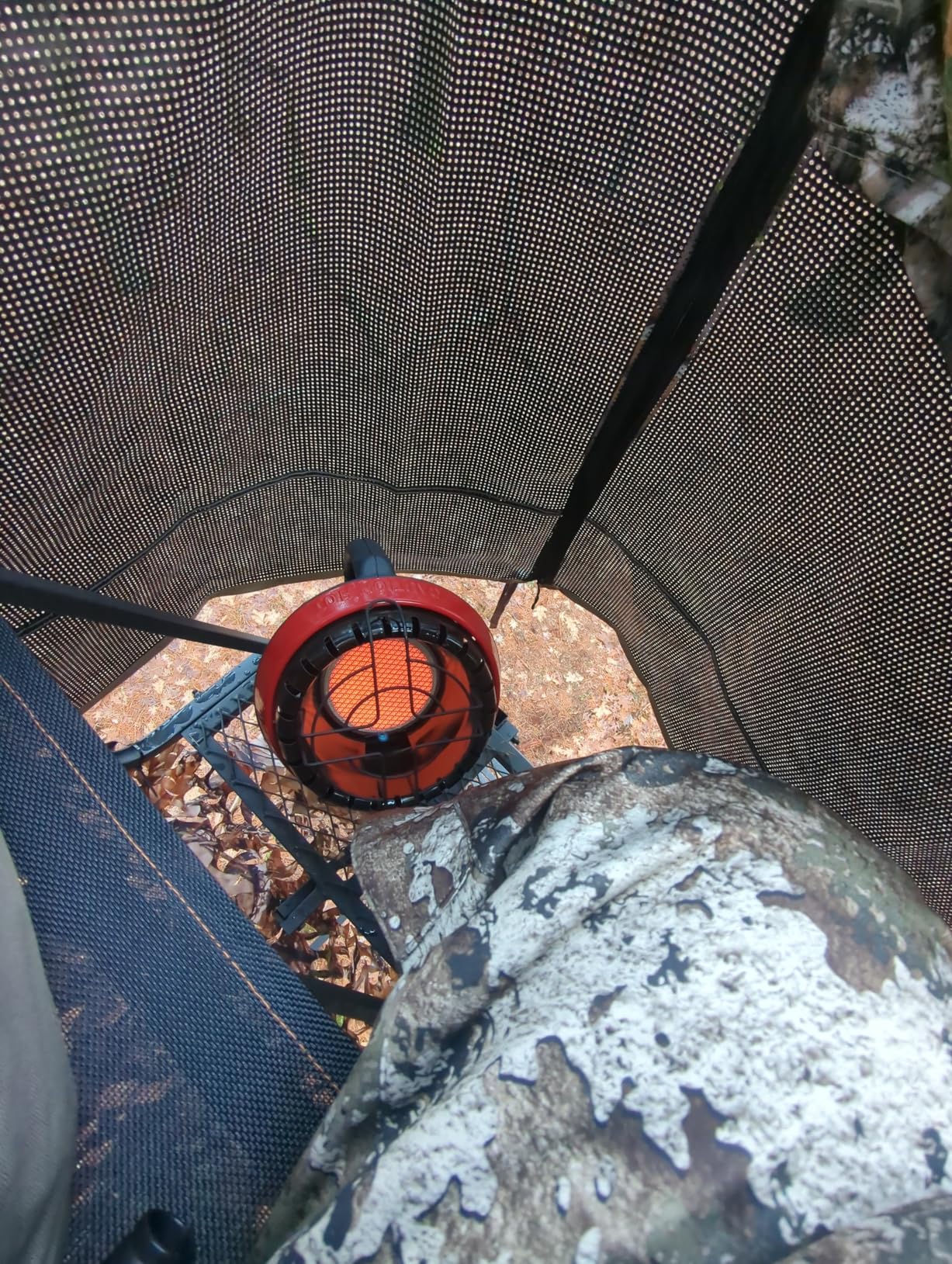
Our honest limitation here is the single heat setting. There is no low mode to dial back to, so you either run it or you do not, and running it full output in a 95 square foot room gets warm quickly. Some users prefer that, and some report that in a small closed room it needs to be shut off for a while before restarting.
It also has the shortest runtime per cylinder in the group because it burns a smaller total amount of propane but so does the room. It connects directly to a standard 1 lb propane cylinder, so plan on carrying a few spares or moving up to a 20 lb tank with an adapter hose.
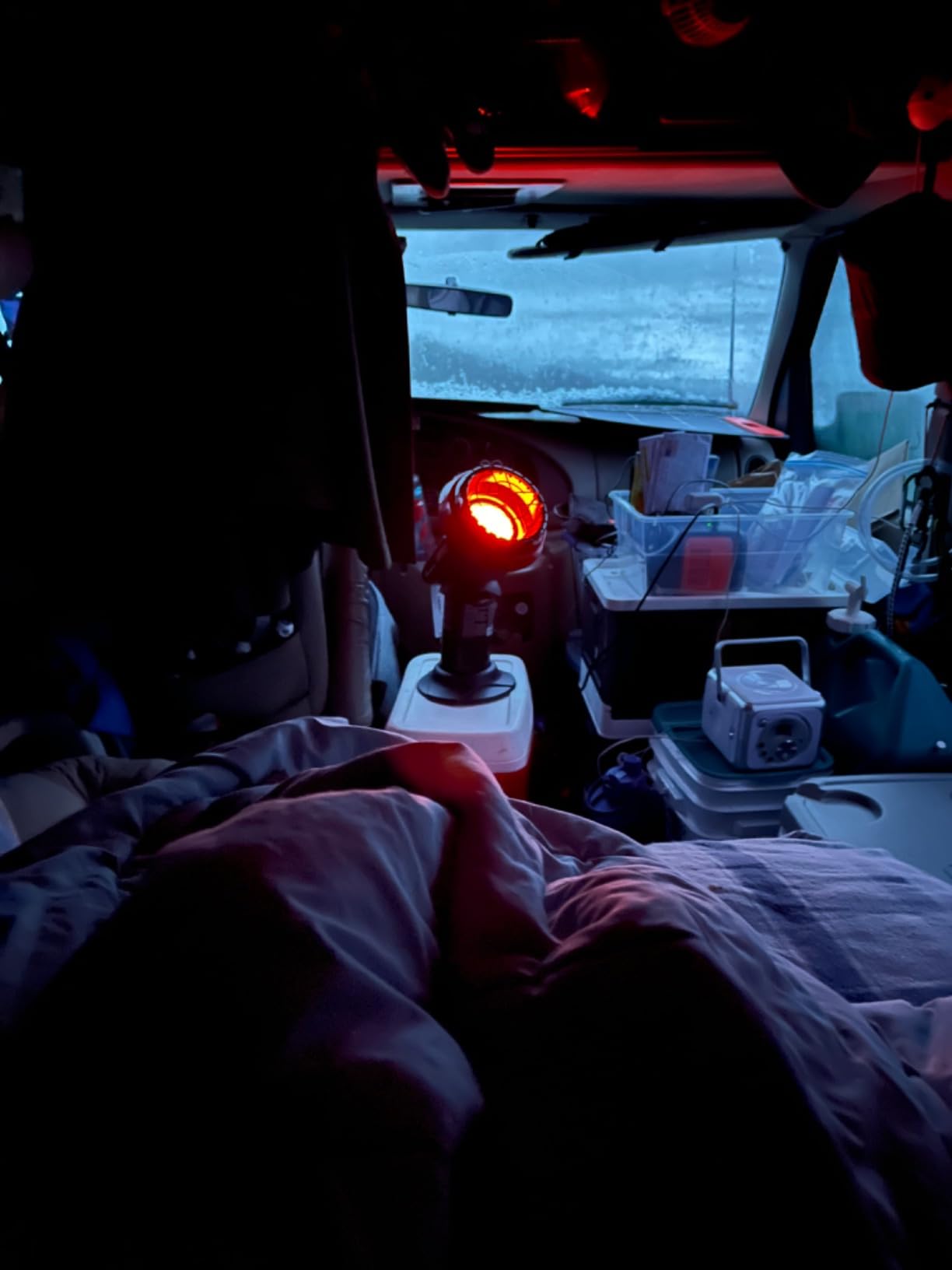
When to reach for the Little Buddy
Pick this one when the space is genuinely small and you want the lowest-risk configuration possible. A 3,800 BTU indoor-rated unit with an oxygen sensor and a tip-over switch is the configuration we would put in a child or elder bedroom, because it cannot overshoot a large space and it is light enough to move out of the way in a hurry.
It is also the standard answer for camping and tent use, where a radiant heater running off a screw-on cylinder beats anything electric that depends on a campsite hookup. Users report clean, quiet, odour-free operation, which keeps a sleeping bag usable.
When a different model makes more sense
If your target room is bigger than a small office, this unit will not keep up. Under-heating a space is the most common disappointment in the reviews, and the fix is a bigger unit rather than a longer run time on a small one.
If you want two heat settings so you can hold a temperature instead of cycling the burner on and off, the full-size Buddy or a thermostat-controlled blue flame heater is a better fit. The same applies if you plan to run off a 20 lb tank for a multi-day outage, since this unit does not take one directly.
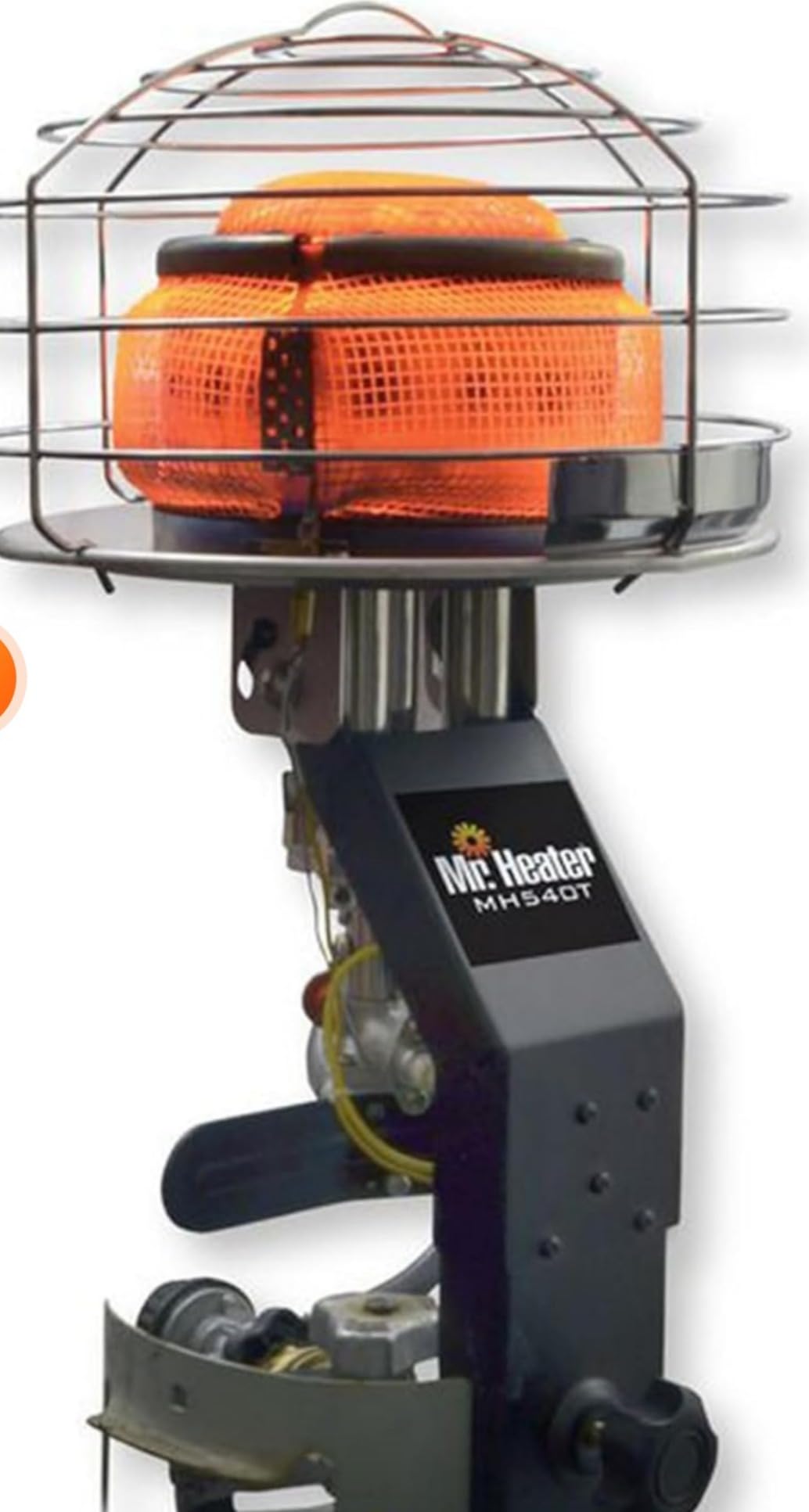
3. Mr. Heater MH540T 45,000 BTU Tank Top – Best for Garages
Mr. Heater Original 540-Degree 45,000 BTU Tank Top Radiant Propane Heater
45,000 BTU with 3 settings
Heats up to 1,125 sq ft
Mounts to a 20 lb tank
Outdoor use only
Pros
- 540 degree adjustable burner head
- Three output settings
- Compact and light for the output
- Tip-over safety shutoff
Cons
- Outdoor use only
- Requires a 20 lb tank
- No thermostat control
- Tank-mounted design is awkward to move
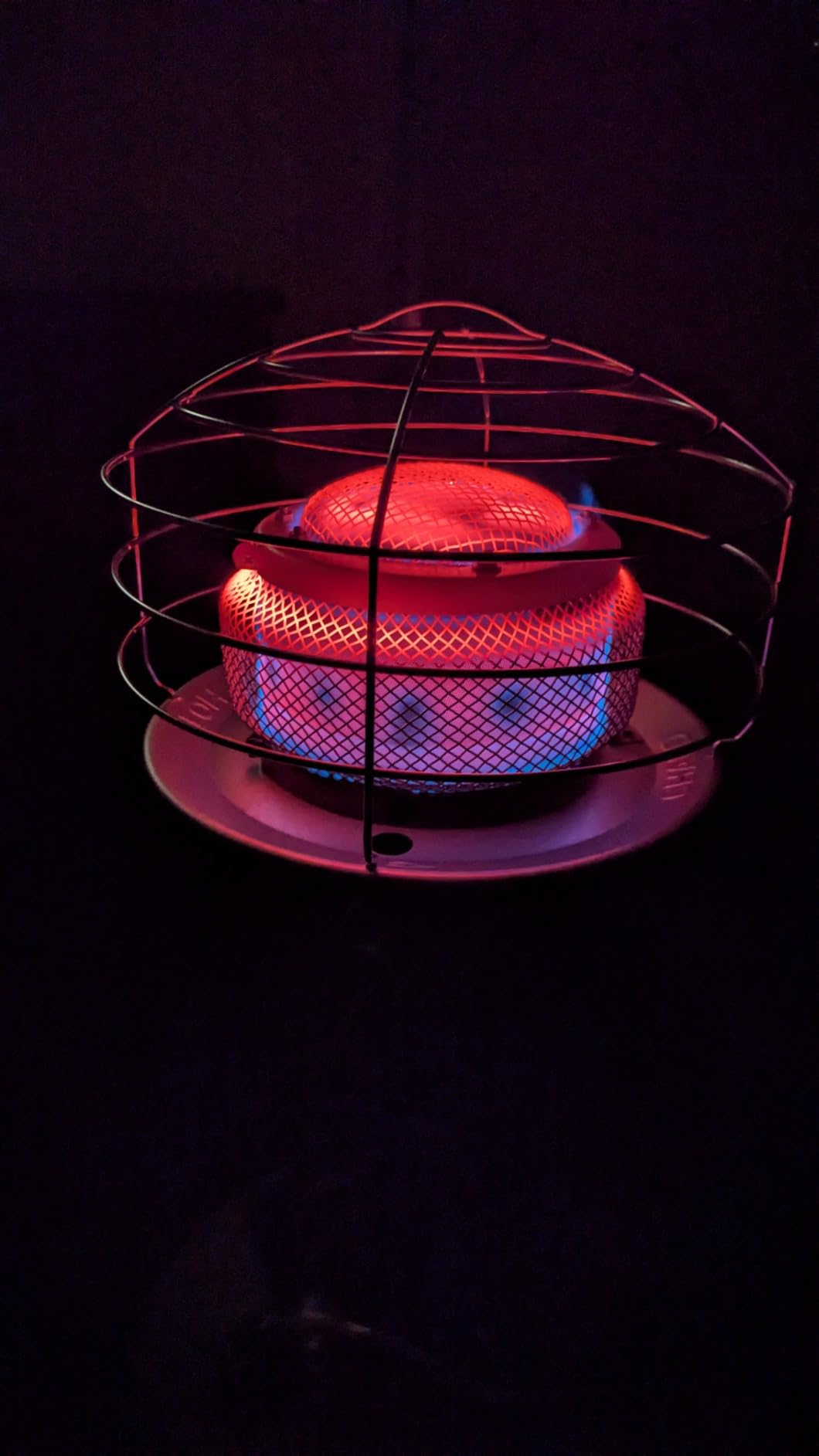
The MH540T is the unit we use when the goal is protecting a garage or an unheated basement rather than warming a person. It puts out 45,000 BTU at maximum with 36,000 and 30,000 settings, and the manufacturer rates it for spaces up to 1,125 square feet. Reviewers highlight the 540 degree tilting head, which lets you aim the heat at a workbench or a section of wall instead of wasting it across the floor.
The runtime figure is the reason this one appeals for outage planning. At full output on a standard 20 lb propane tank it runs about 9.5 hours, and on the lower settings it runs considerably longer. A tank-top design means the fuel stays in a properly designed container instead of trickling through a small bottle connection.
Two honest cautions. First, this is an outdoor-use-only heater and the manufacturer says so plainly, so it does not go in a bedroom, a living room, or a finished basement. Second, because it mounts directly on the tank, moving it means moving the whole cylinder assembly, which reviewers flag as the annoying part of an otherwise simple design.
There is no thermostat, so output is controlled at three fixed levels rather than held at a temperature. In a garage where you are working in layers, that is fine. In a space you need to hold at a precise temperature, it is not.
When to reach for the MH540T
This is the pick for a one-car or two-car garage, a detached workshop, a covered porch that is properly ventilated, or a basement with no combustion appliances and no sleeping area. It is also a solid choice for preventing frozen pipes in an unheated crawlspace or utility room, which is exactly the failure that turns a cold snap into an expensive repair.
Because it sits on the tank, keep the tank outside the enclosed space with the heater if the garage has a door you can crack, or accept the heat loss that comes with heating a large volume. Users report it working well for hunting blinds, patios, and camping setups too, where the adjustable head is genuinely useful.
When a different model makes more sense
If you need warmth across a big open volume quickly, a forced-air unit will get the air moving instead of heating only what is in front of it. Radiant heat falls off fast, and a 45,000 BTU radiant burner at the ceiling level of a tall garage does not perform like 45,000 BTU of blown air.
If you need it inside a living space, skip this one entirely and choose an indoor-rated unit with an oxygen depletion sensor. The BTU number is the same kind of number on both kinds of heater, and it does not tell you whether the unit is approved for the room.
4. GASLAND MHA18B 18,000 BTU – Best for Large Open Spaces
GASLAND MHA18B Propane heater Outdoor,18,000 BTU, Max Heat 450 Sq.Ft
18,000 BTU with 3 settings
Heats up to 450 sq ft
CSA certified
ODS and tip-over shutoff
Pros
- CSA certified with dual safety shutoffs
- Tank hides inside the cabinet
- Built-in wheels and carry handle
- Three heat settings
- No electricity required
Cons
- Outdoor use only
- Needs a 20 lb tank
- Larger footprint than tank-top models
The MHA18B solves the awkwardness that tank-top heaters create, which is that a bare cylinder sitting next to your heater looks unfinished and takes floor space. This cabinet unit swallows a 20 lb cylinder inside its housing and rolls on wheels, and reviewers mention the appearance and the mobility as much as the heat.
Output is 18,000 BTU across three settings with a rated coverage of up to 450 square feet. It is CSA certified and carries both a low oxygen shutoff and a tip-over shutoff, which is more safety hardware than most units in this output range offer. It needs no electricity at all, so the ignition and controls work with the grid down.
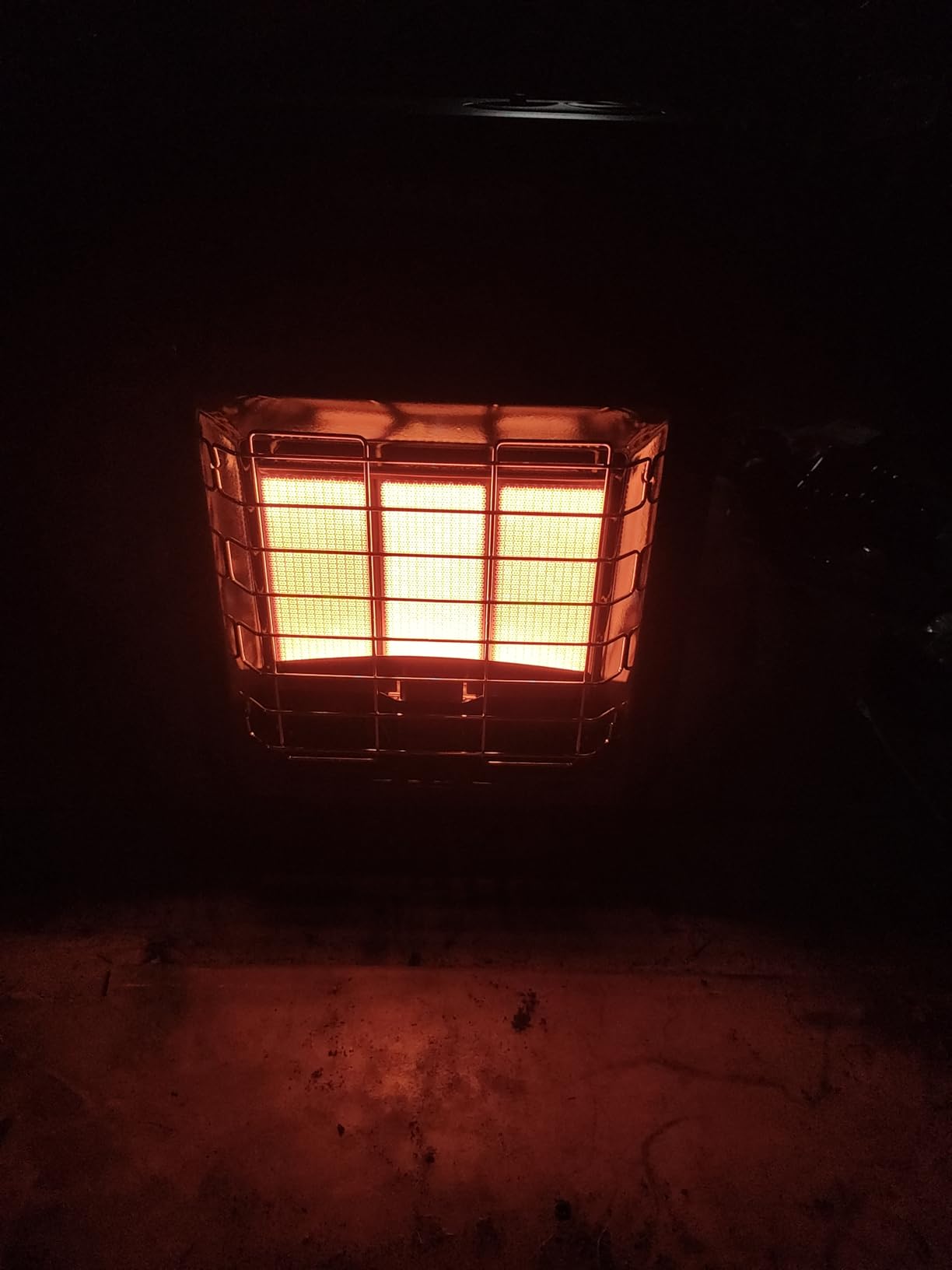
The catch is that it is rated for outdoor use, and its 450 square foot coverage figure is a mild-day outdoor number rather than a winter living-space promise. In cold air you will get less of it. Treat the coverage as the upper bound on a still, mild day, not as a guarantee in a deep-winter garage.
Because it needs a 20 lb cylinder, budget for a refill or two rather than stocking 1 lb bottles. The good news is that a 20 lb tank at the medium setting gives you many more hours than the small cylinders that ship with portable radiant heaters.
When to reach for the GASLAND MHA18B
Pick this when you are heating a garage, a covered patio, an outdoor work area, or a job site and you care about how the equipment looks and how easily one person can reposition it. The casters and handle make it far easier to move than a tank-top unit, which matters when you are repositioning heat as the sun moves.
It is also a good pick if you already own 20 lb cylinders. The regulator and hose are included, so the only additional cost is fuel, and swapping cylinders is a two-minute job for most people.
When a different model makes more sense
Do not use this in a bedroom or a closed living space. It is outdoor-rated, and the cabinet that makes it tidy is also a larger footprint than a small radiant heater needs to occupy in a room you have to walk through.
If your garage is larger than about 450 square feet and you want the whole volume warm, go up to a 30,000 or 60,000 BTU forced-air unit instead. And if cold-weather starting or freeze protection matters to you, note that this unit is designed for spaces where the air moves.
5. Remington 60,000 BTU Forced Air – Fastest Way to Warm a Garage
Remington LP Forced Air Heater, Portable 60,000 BTU Space Heater for up to 1500 Square Feet – Liquid Propane Gas Powered, Tank Not Included
60,000 BTU forced air
Heats up to 1,500 sq ft
Needs 120V power
11 lbs
Pros
- Warms large spaces quickly
- Variable heat settings and adjustable height
- Includes hose and regulator
- Thermocouple and flame-out cut-off
Cons
- Very loud during operation
- Needs 120V electricity for the fan
- Outdoor use only
- Short power cord
The Remington is about air movement, not spot heat. At 60,000 BTU with a blower, users report taking a cold two-car garage to workable temperature in 10 to 20 minutes, and the rated coverage is up to 1,500 square feet. That makes it the unit we would choose if your real goal is thawing pipes in an uninsulated basement or getting a shop back to a temperature where you can work with bare hands.
Its safety hardware is workshop-grade: a thermocouple, a high-temperature limit shutoff, and a flame-out fuel cut-off, with continuous electronic ignition for reliable starts. It includes a 10 foot LP cylinder hose and regulator, so it connects to a standard 20 lb tank without another purchase.
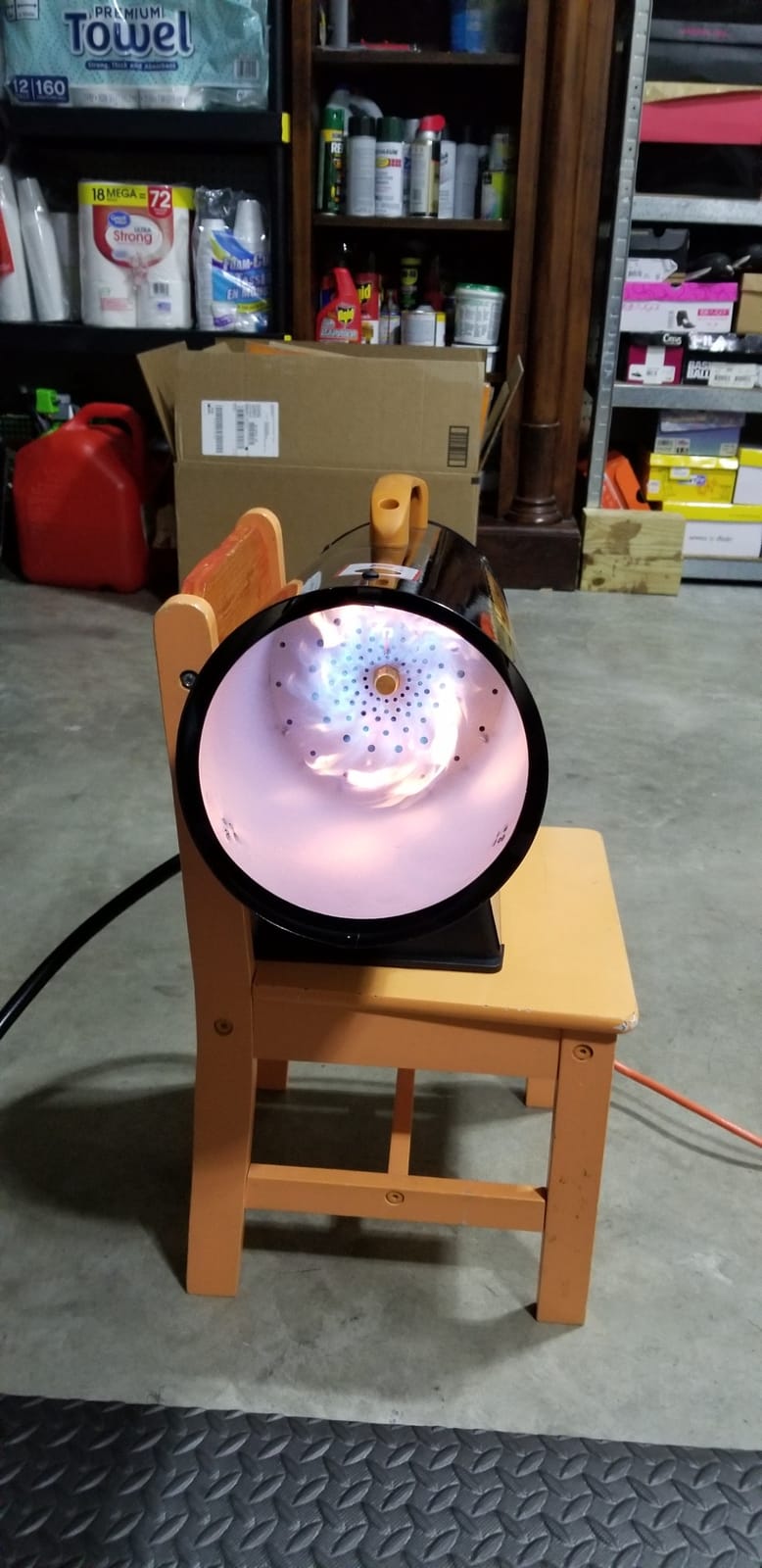
Here is the gotcha that matters in an outage. The fan needs 120V power, so when the grid goes down this heater has no airflow without a generator or a battery inverter. That is a genuine limitation, and it is the same complaint that shows up repeatedly across forced-air heater reviews: a heater that needs electricity defeats part of the purpose of having one.
Noise is the other one. Multiple reviewers compare it to a jet engine, which is fine in a shop you leave running and impractical in a home. The power cord is also short, so plan on an extension cord rated for the load.
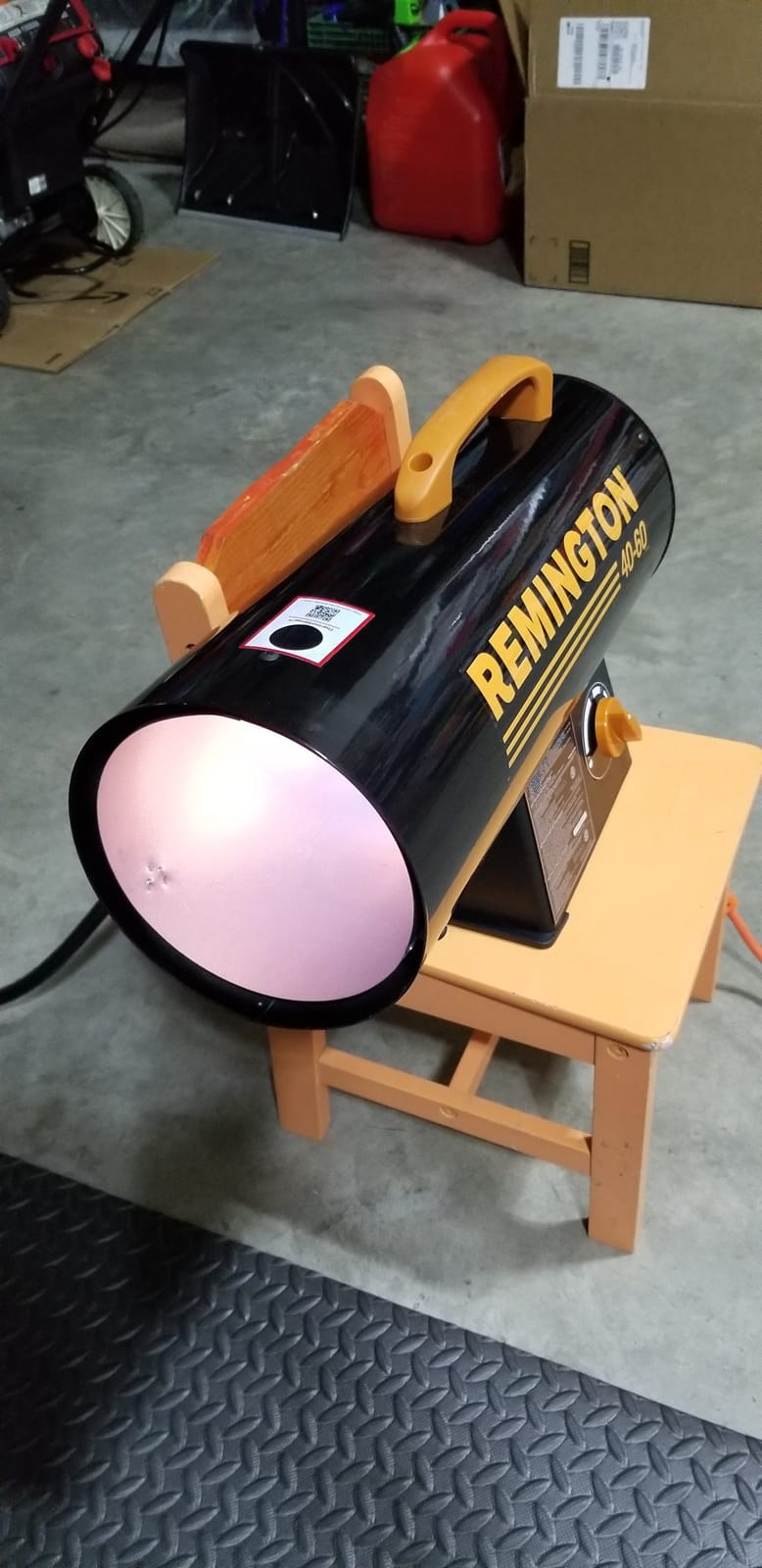
When to reach for the Remington
Choose this heater for garages, workshops, construction sites, and unfinished basements where you want volume heat and you have reliable power for the fan. The adjustable height and variable output let you aim the discharge away from a work surface rather than blowing dust into it.
It is a strong freeze-protection tool for a crawlspace or a pipe run in a garage, provided you keep it attended and keep the area ventilated. Our rule is that a forced-air unit never runs unattended overnight, power state or no power state.
When a different model makes more sense
Skip it if you need heat during a blackout without a generator, because the blower stops with the power. That same limitation also applies to the Flame King and DEWALT units, though the DEWALT can be paired with a battery platform.
Skip it if the space is small or if noise is a problem. A radiant unit at 18,000 to 30,000 BTU will warm a person far more quietly, and a small radiant heater does not need a dedicated circuit or an extension cord.
6. XtremepowerUS 30,000 BTU Dual Burner – Best Budget Outdoor Heat
XtremepowerUS 30,000 BTU Propane Tanktop Heater Infrared Dual Burner Safety Shut-Off Valve, Tip-Over Switch for Garage, Camping, Hunting Double Burner
30,000 BTU dual burner
Heats up to 750 sq ft
Mounts to a 20 lb tank
Outdoor use only
Pros
- 30
- 000 BTU across 3 heat levels
- Dual burner spreads heat better than a single head
- Metal reflector dish resists wind
- No electricity required
Cons
- Outdoor use only
- Manual match or lighter ignition
- No thermostat
- Some reports of missing mounting hardware
The dual burner design is the interesting part here. Rather than one reflector aimed in a single direction, this unit uses two burners behind a chrome emitter guard with a metal dish that focuses the heat and resists wind. Reviewers say the result distributes warmth more evenly than a single-head tank-top heater, and the 750 square foot rated coverage gives you more reach than typical units at this output.
It mounts directly to a 20 lb cylinder and runs on three adjustable heat levels up to 30,000 BTU, with no electricity required. The frame is rust-proof steel, and there is a tip-over safety shut-off switch plus a side ignition port that lets you light it with a match held away from the burner.
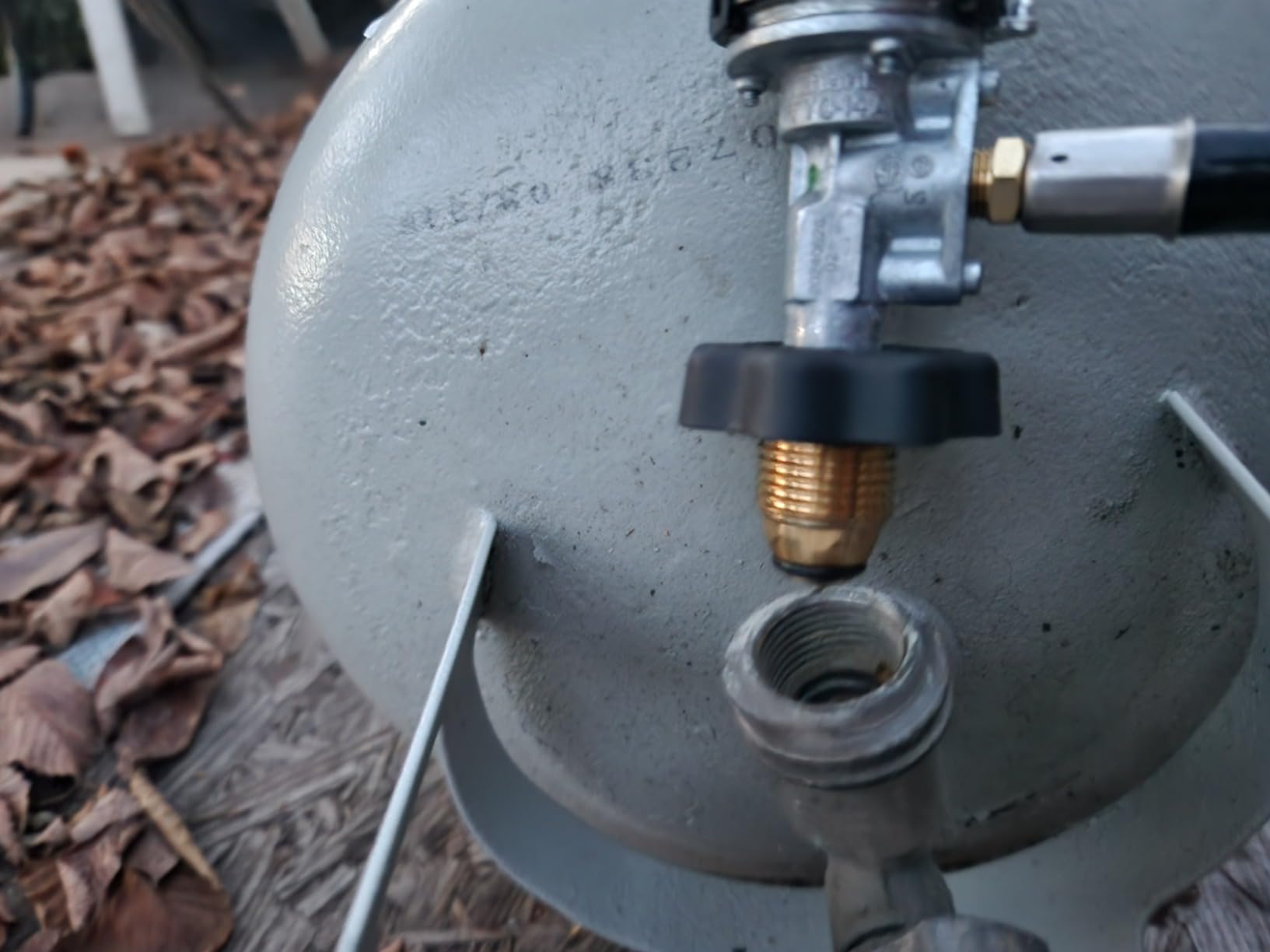
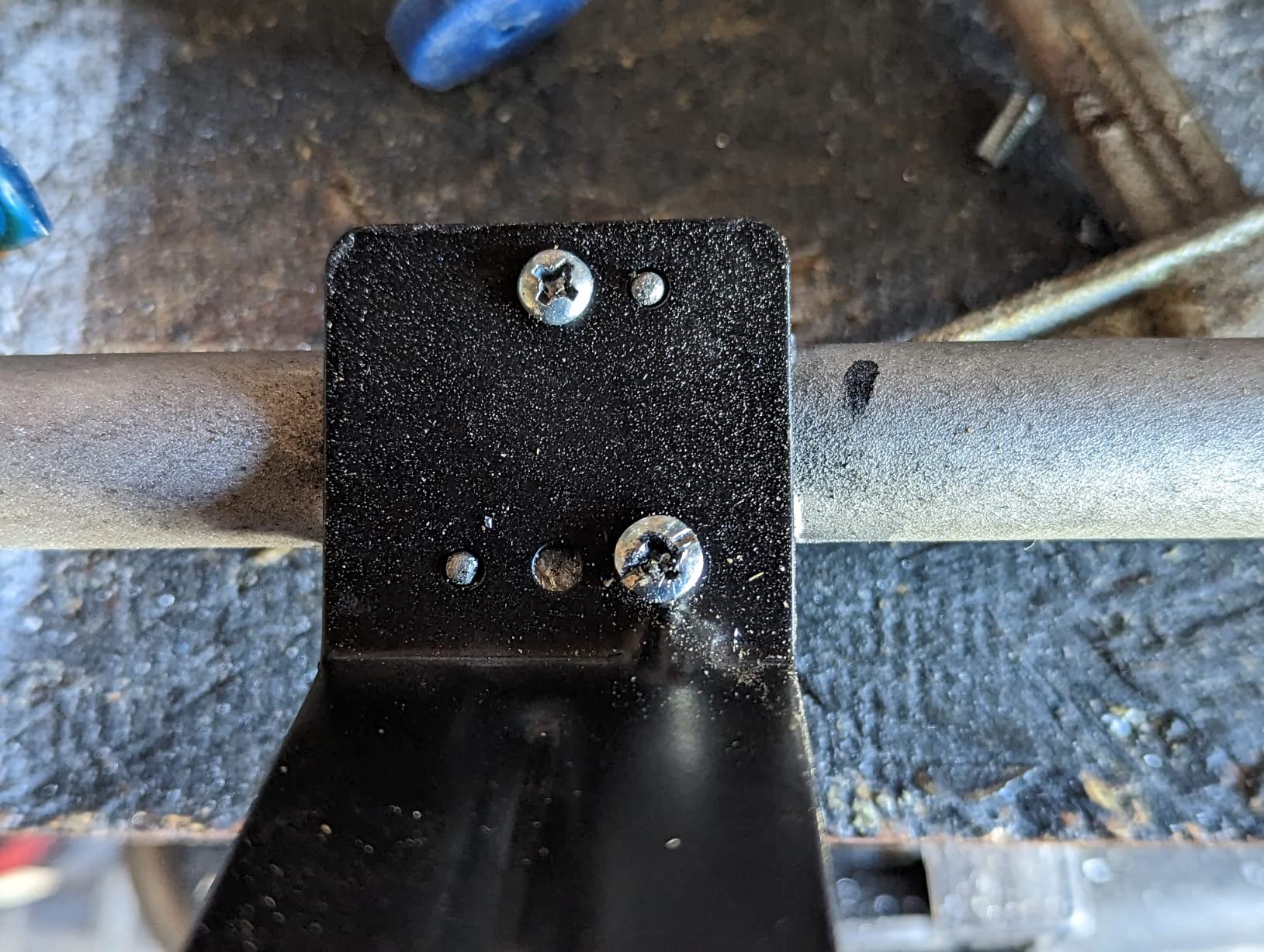
The honest negatives: ignition is manual, so you need a lighter or a match every time, and there is no thermostat. Some reviewers also report arriving without all of the mounting screws, so check the hardware before you are relying on it in the middle of the night.
And again, this is an outdoor-rated unit. It is designed for patios, hunting setups, garages with ventilation, and job sites, not for a living room. Its 30,000 BTU figure is real output in open air, not a promise about a sealed space.
When to reach for the dual burner unit
Pick it for outdoor spaces where you want more even coverage than a single-head heater gives you, such as a patio, a deck edge, a hunting blind, or a garage you are heating with the door open. The wind-resistant reflector dish is the deciding factor in exposed locations.
For anyone who wants to avoid the fan and battery dependency of a forced-air heater, this is a simple answer. It lights, heats, and stops with no electrical involvement at all, which makes it dependable in an outage as long as it stays outside.
When a different model makes more sense
If you want unattended or repeatable starting, manual ignition is a step backwards, and a piezo or electronic ignition unit removes one thing to forget in the dark. There is also no temperature control, so you will be switching it on and off yourself.
If the space is enclosed, choose an indoor-rated heater with an oxygen depletion sensor instead. No BTU number overrides the manufacturer indoor or outdoor designation printed on the plate.
7. Flame King 60,000 BTU Forced Air – Built for Jobsites
Flame King 60,000 BTU Portable Propane Forced Air Heater Outdoor Great for Jobsite, Construction, Garage, Patio, Stainless Steel
60,000 BTU forced air
Heats up to 1,500 sq ft
CSA certified
Needs 120V power
Pros
- CSA certified
- Auto piezo ignition
- Three safety systems including fuel cut-off and fire detection
- Quieter than many forced air units
- Wall mountable
Cons
- Requires 120V electricity
- Outdoor use only
- Some ignitor reliability reports
- Hose may need an adapter for some tanks
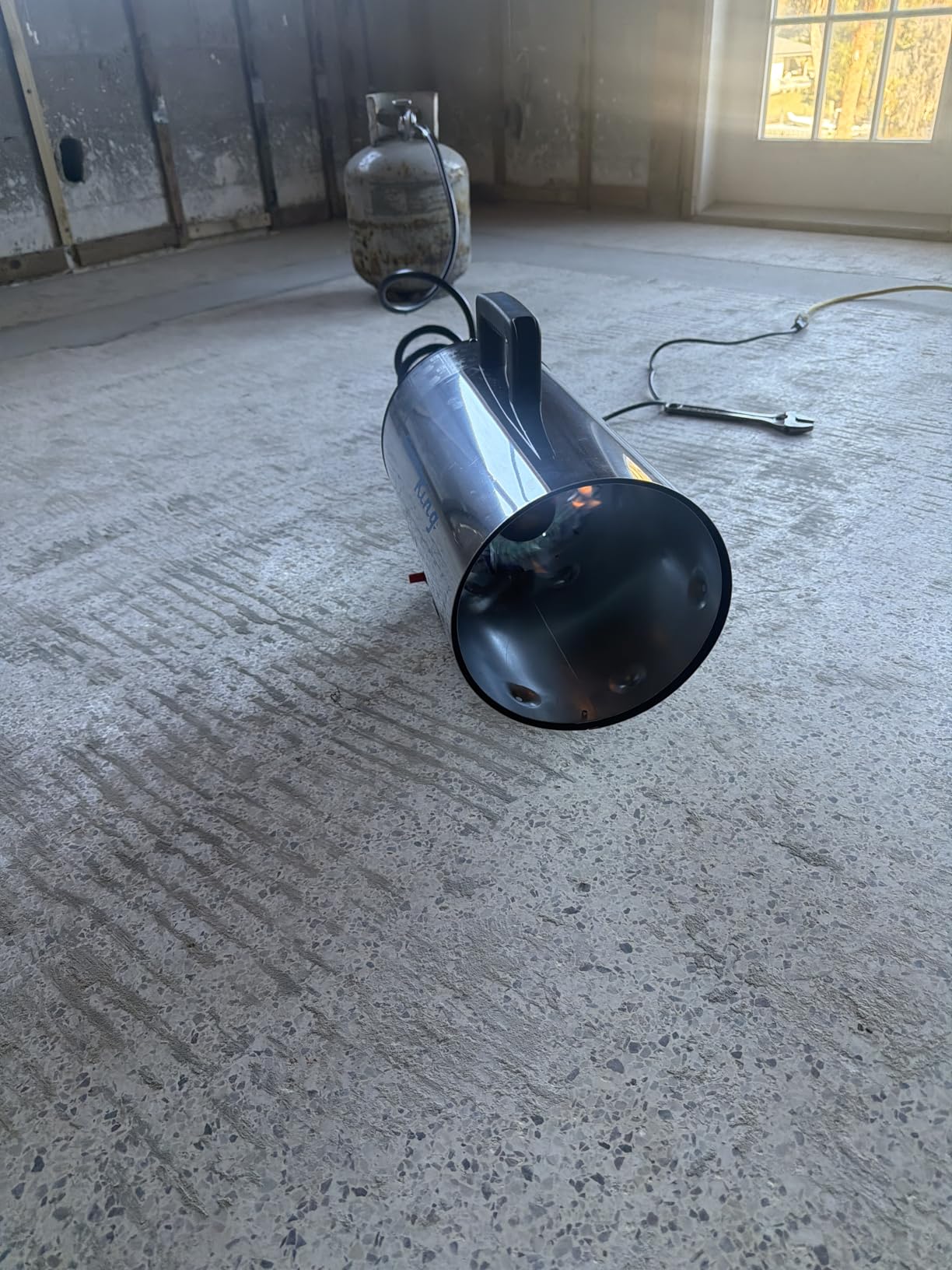
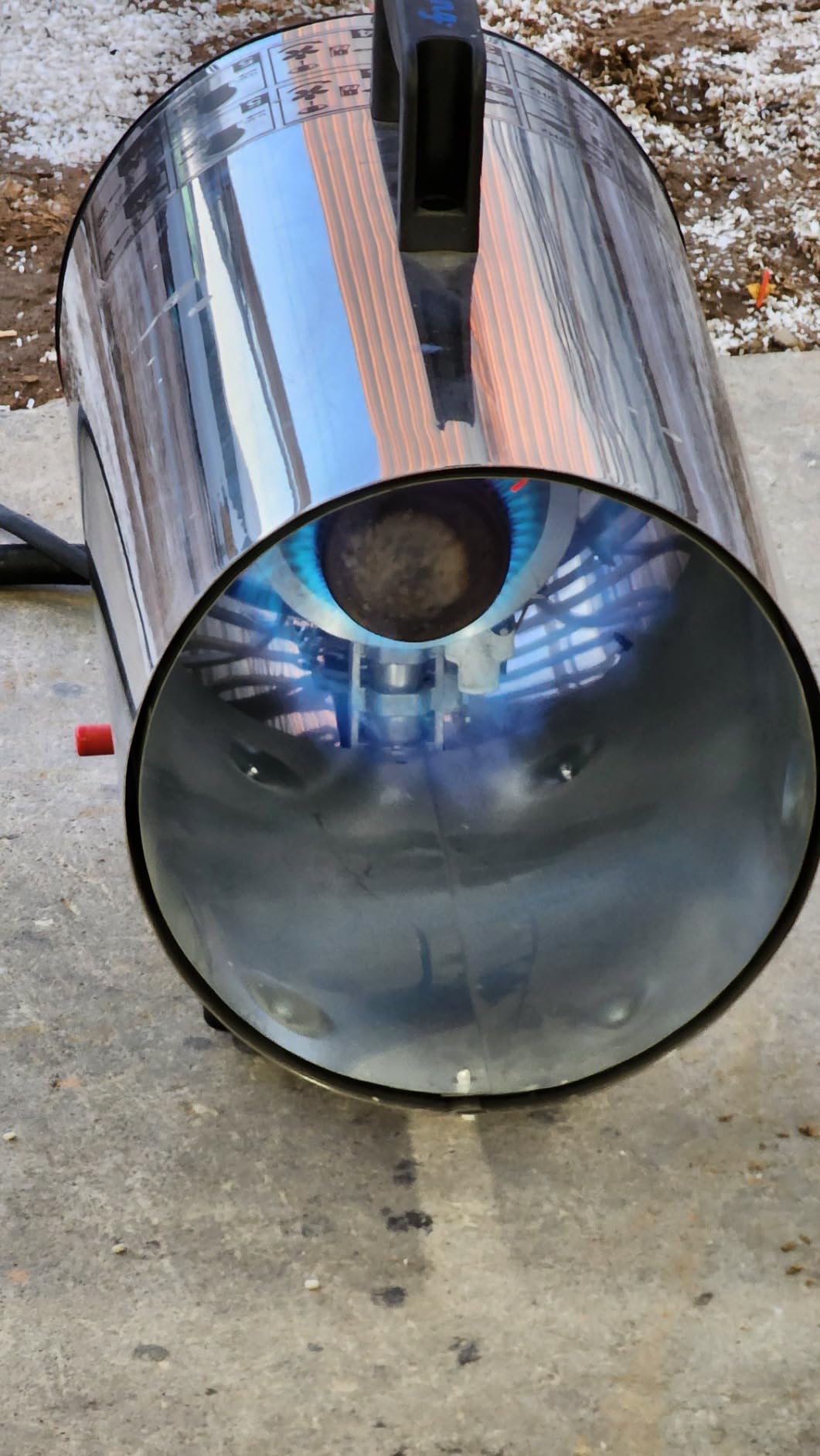
The Flame King is the jobsite pick. At 60,000 BTU with rated coverage up to 1,500 square feet, it is built for open structures and construction sites where you need to warm people rather than surfaces. Reviewers consistently single out three things: the automatic piezo ignition, the CSA certification, and the fact that it runs noticeably quieter than other forced-air units in the same class.
Its safety package is unusually complete for a portable unit, with a built-in safety fuel shutoff, a fire detection system, and a safety tilt shutoff. Runtime is listed at up to 8 hours on a 20 lb bottle at 60,000 BTU, and the hose, regulator, and 120V plug are included in the box.
The rating here is the lowest in the roundup, and the reasons are consistent across reviews. Ignitor reliability is the most common complaint, with some owners reporting units that became harder to start over time. A few buyers also found the included hose needed an adapter for their specific 20 lb tank, so confirm your connector type before the storm.
The fan still needs 120V power, so in a real grid outage this heater needs a generator or inverter to move air. Customer service is a genuine strength worth noting: reviewers report replacements being sent even after the warranty period.
When to reach for the Flame King
Choose it for construction sites, pole barns, workshops, and garages where the power is on or you have a generator, and where a quieter forced-air unit matters because people are working nearby. The wall-mount option is useful in a shop where floor space is at a premium.
The CSA listing is the deciding factor for anyone who buys a lot of equipment. It is the one certification mark that tells you a third party tested the safety shutoffs, and it is worth paying a little more for when the heater is a tool rather than a novelty.
When a different model makes more sense
For a home outage, this is the wrong shape of product. It needs power you will not have, and it is rated for outdoor spaces with good ventilation rather than a bedroom or a living room.
If you want the highest output available and the flexibility to run without grid power, the DEWALT unit in this roundup can run on a battery platform instead of a wall outlet, which is the closest thing here to an outage-ready forced-air option.
8. Avenger 18,000 BTU Cabinet – Longest Runtime on a 20 lb Tank
Avenger Portable Outdoor Propane Cabinet Heater – 18,000 BTU Radiant Gas Heater with Tip-Over & ODS Safety Shut-Off – Model # 22BF-A00
6,000 / 12,000 / 18,000 BTU
Heats up to 450 sq ft
Tank housed in cabinet
Outdoor use only
Pros
- Up to 72 hrs runtime on low with a 20 lb tank
- ODS and tip-over safety shutoff
- Push-and-turn piezo ignition needs no electricity
- Rolling casters move easily
- No assembly required
Cons
- Outdoor use only
- Heavier at about 18 lbs
- Smaller base of reviews to judge
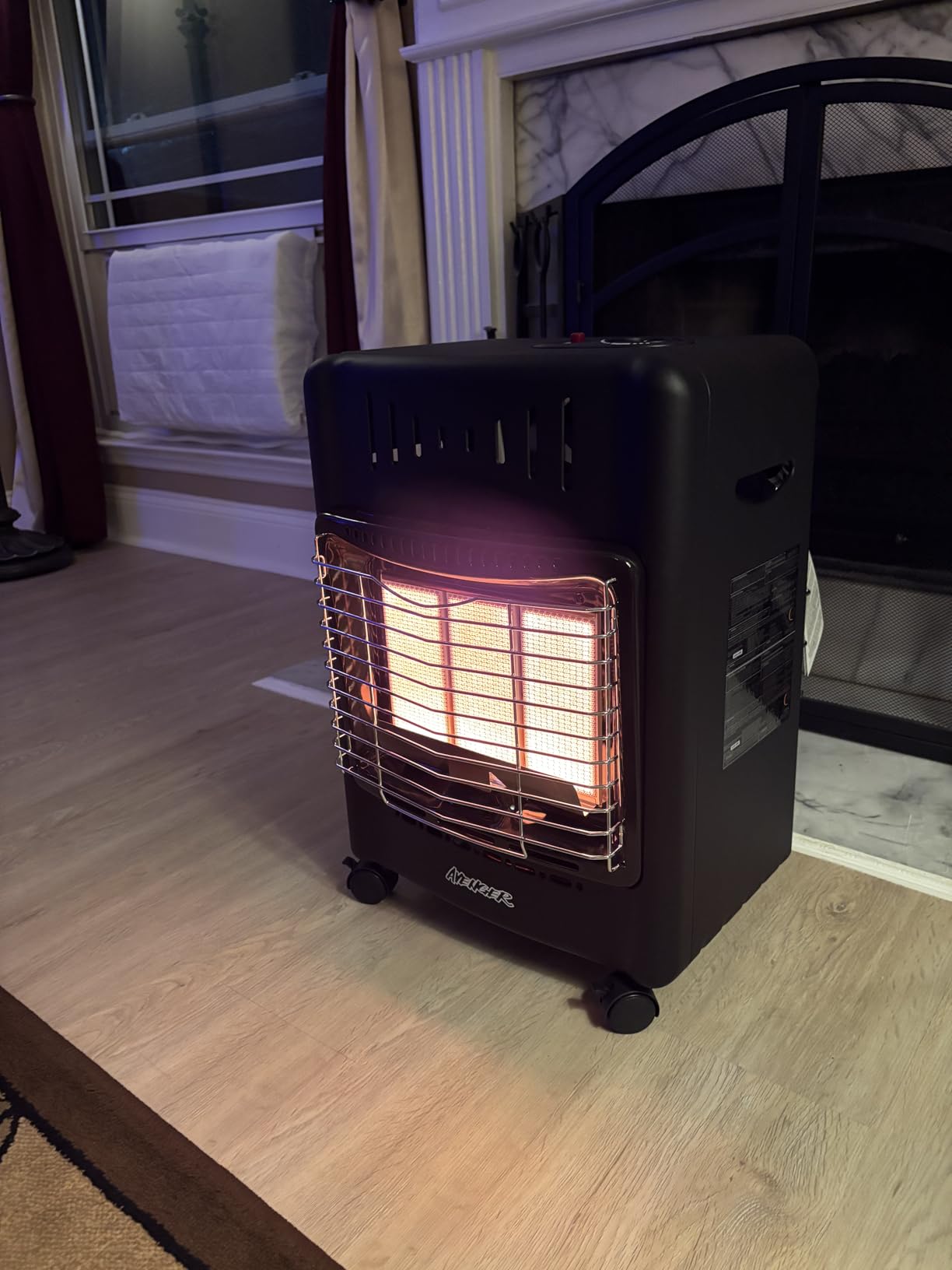
Runtime is the reason to look at this one. On its lowest setting, the manufacturer rates it at up to 72 hours on a standard 20 lb propane tank, which is the longest figure in this roundup by a wide margin. If your outage plan assumes several days without heat, that number changes the whole calculation, because fuel is the constraint that ends most heating plans.
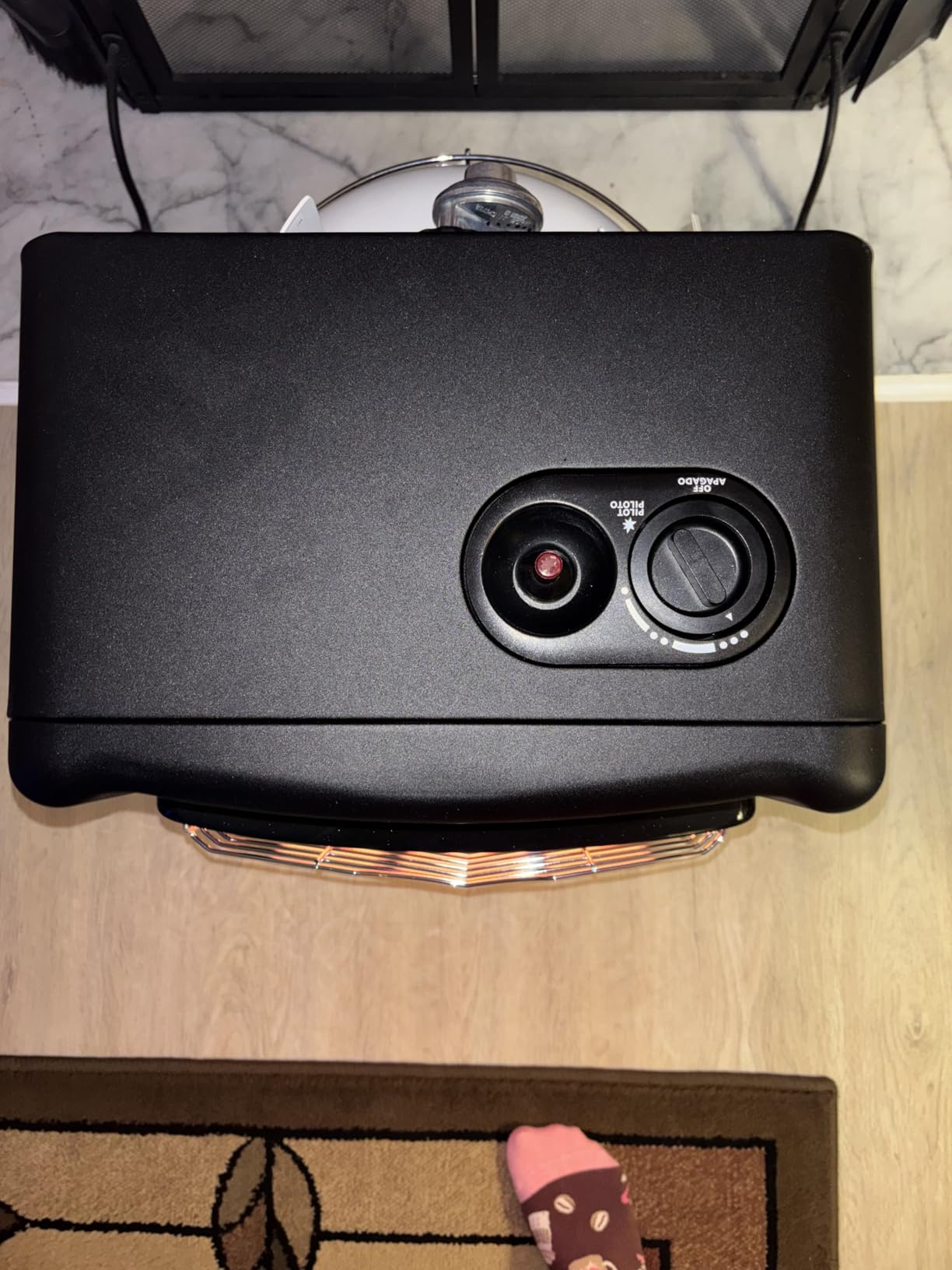
Output steps through 6,000, 12,000, and 18,000 BTU, and it carries an oxygen depletion sensor plus automatic tip-over shut-off. Ignition is push-and-turn piezo, so there is no battery, no plug, and nothing that fails when the grid is down. The tank sits inside the steel cabinet and the whole unit rolls on casters.
We would caution on two points. First, this unit is rated for outdoor use, so it belongs in a garage, a covered area with ventilation, or a patio, not in a room with people sleeping. Second, with a smaller review base than the established models here, long-term reliability data is still thin.
It is also heavier at about 18 pounds, so while the casters help, lifting it into a vehicle or onto a workbench takes two hands. The 450 square foot coverage rating assumes conditions closer to mild weather than deep winter.
When to reach for the Avenger cabinet heater
Pick it when you are planning for a long outage rather than a single cold evening, and you want one unit that can stretch a 20 lb tank across several days. Running it on low through a cold night is a much cheaper way to protect pipes than running a 45,000 BTU burner flat out.
It also suits outdoor spaces where appearance matters, since the cabinet hides the cylinder and the casters let you move it as the day changes. Piezo ignition means no battery to forget in the middle of winter.
When a different model makes more sense
For an indoor living space, this is not the unit. Its low-output mode is attractive for a garage or a covered area, but the indoor designation has to come from the manufacturer, and this one does not carry it.
If you need heat for people rather than for pipes, an 18,000 BTU radiant cabinet warms those within a few feet far more effectively than it heats a 450 square foot volume evenly. Forced air is the better answer for whole-room warming.
9. SISUPASSIE 30,000 BTU – Runs on Propane or Natural Gas
SISUPASSIE 30000BTU Propane Heater, Portable Propane Heater for Outdoor Use with 3 Adjustable Modes and Safety Shut-off Valve for Patio, Camping, Fishing, Garage
30,000 BTU with 3 modes
30 degree rotating head
ODS and tip-over protection
Indoor and outdoor rated
Pros
- Rated for both indoor and outdoor use
- ODS and tip-over protection
- Three heating modes to 30
- 000 BTU
- 30 degree rotating head spreads heat
- Safety mesh guards
- Works with propane or natural gas
Cons
- Some quality control reports on handles and lights
- Smaller review base
- Weight not published
- No thermostat
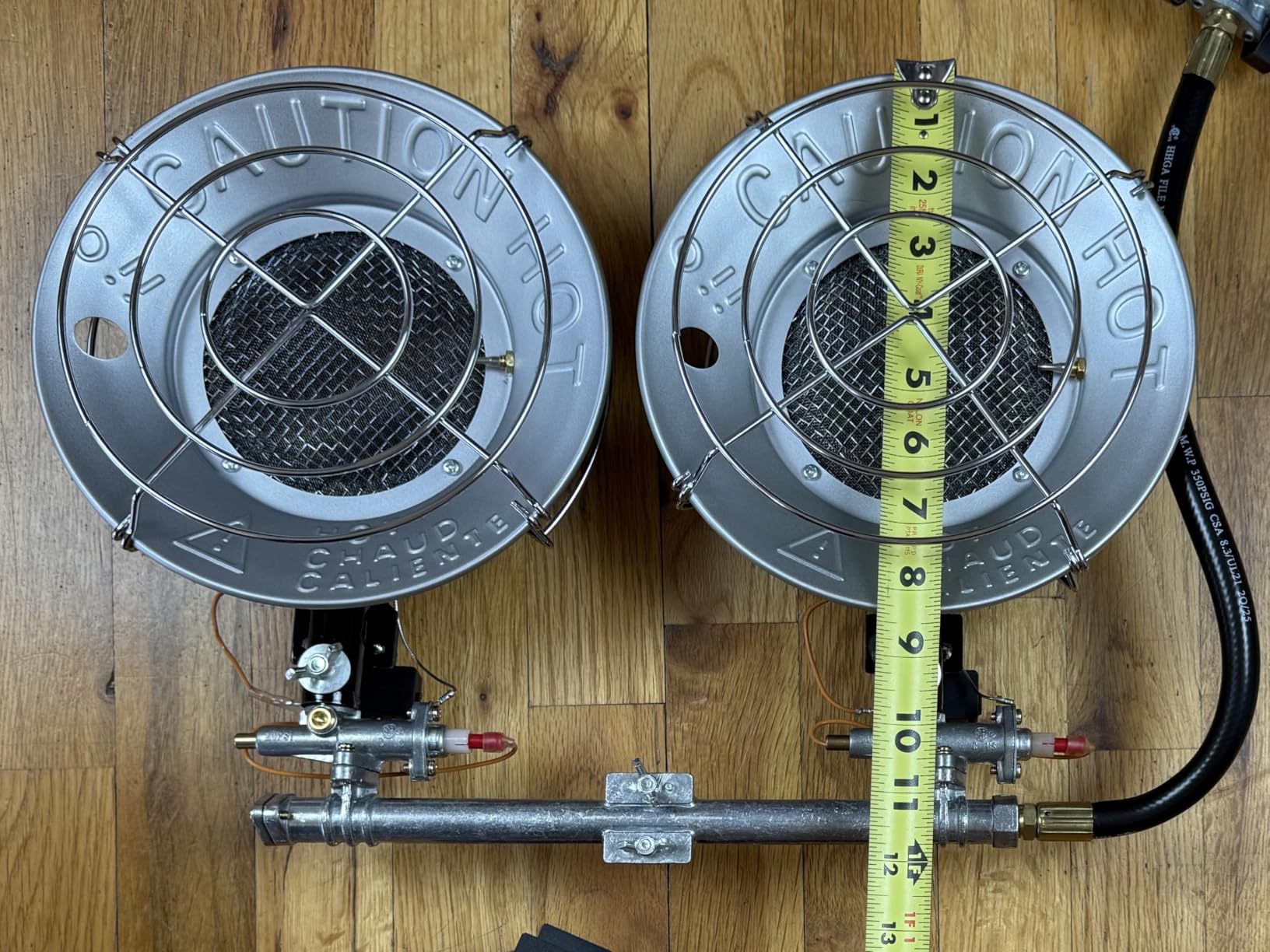
The distinguishing feature here is fuel flexibility. This unit is listed as compatible with propane or natural gas, which matters in a home that already has a natural gas line and wants one heater that can run on either supply. That dual capability is unusual in this group and it is the reason this heater earns its place on the list.
It puts out up to 30,000 BTU across three heating modes, with a head that rotates 30 degrees to even out the heat distribution, an automatic shut-off valve, and tip-over protection. The listing marks it for both indoor and outdoor use, and the safety mesh guards around the burner reduce the chance of a burn during handling.
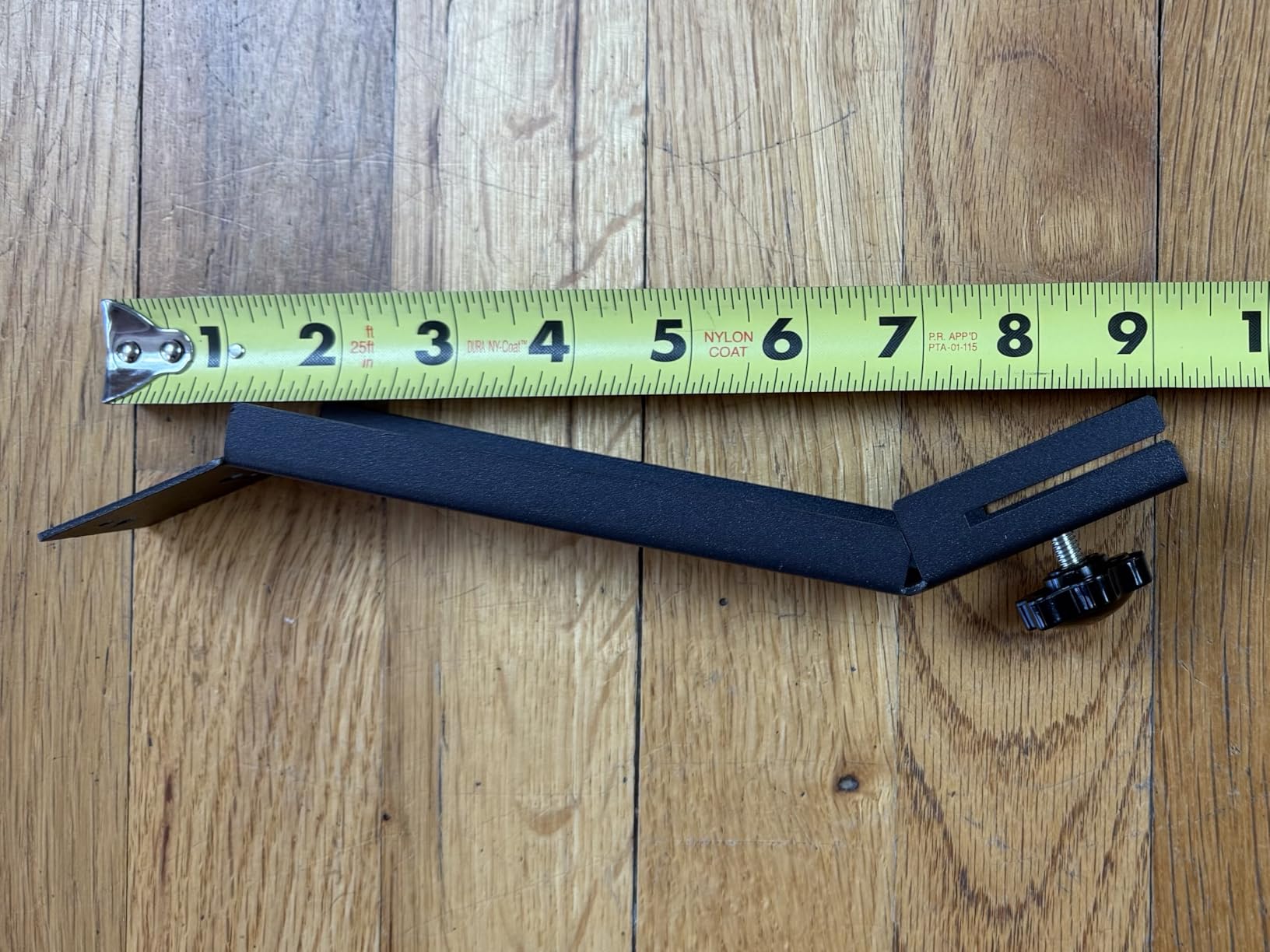
Our reservation is build quality rather than design. Reviews mention broken handles and non-working indicator lights, and the manufacturer does not publish a weight or a model number, which makes it harder to judge what you are carrying. A heater you may have to move quickly in a dark room should feel solid.
Because the indoor rating here comes from the listing rather than a certification mark we could verify, confirm the label on the unit itself before you rely on it indoors. The oxygen depletion and tip-over sensors are a good sign, but the listing is the manufacturer claim, not an independent test.
When to reach for the SISUPASSIE 30,000 BTU
Pick it if your home or shop has access to a natural gas line and you want a single appliance that covers both fuel types, which is useful when you are unsure how quickly a propane delivery will arrive during a storm. The rotating head is also useful for spreading warmth along a wall or across a bench.
For patios, porches, and covered outdoor areas, the 30,000 BTU output with three modes gives more range than a small radiant unit, and the mesh guards make it workable around children and pets.
When a different model makes more sense
If reliability history matters to you, a model with a long review record and a manufacturer warranty of two or three years is the safer purchase for an emergency appliance. This unit is newer and its long-term record is still forming.
If you are heating indoors, check the certification mark on the unit before purchase, and prefer an established indoor-rated model with a clear UL or CSA listing. For output above 30,000 BTU, the forced-air options here cover more volume per hour.
10. DEWALT 68,000 BTU Forced Air – Cordless Power Option
DEWALT 68,000 BTU Cordless Portable Forced Air Propane Heater
68,000 BTU forced air
Heats up to 1,700 sq ft
20V battery or 120V
13.2 lbs
Pros
- Highest output in this roundup at 68
- 000 BTU
- Runs on a 20V battery pack or 120V
- Heats quickly with low reported odour
- Electronic ignition
- Two-year limited parts warranty
Cons
- Needs a DEWALT battery pack sold separately
- Battery runtime varies widely by setting
- Hard to start in extreme cold
- Louder on high
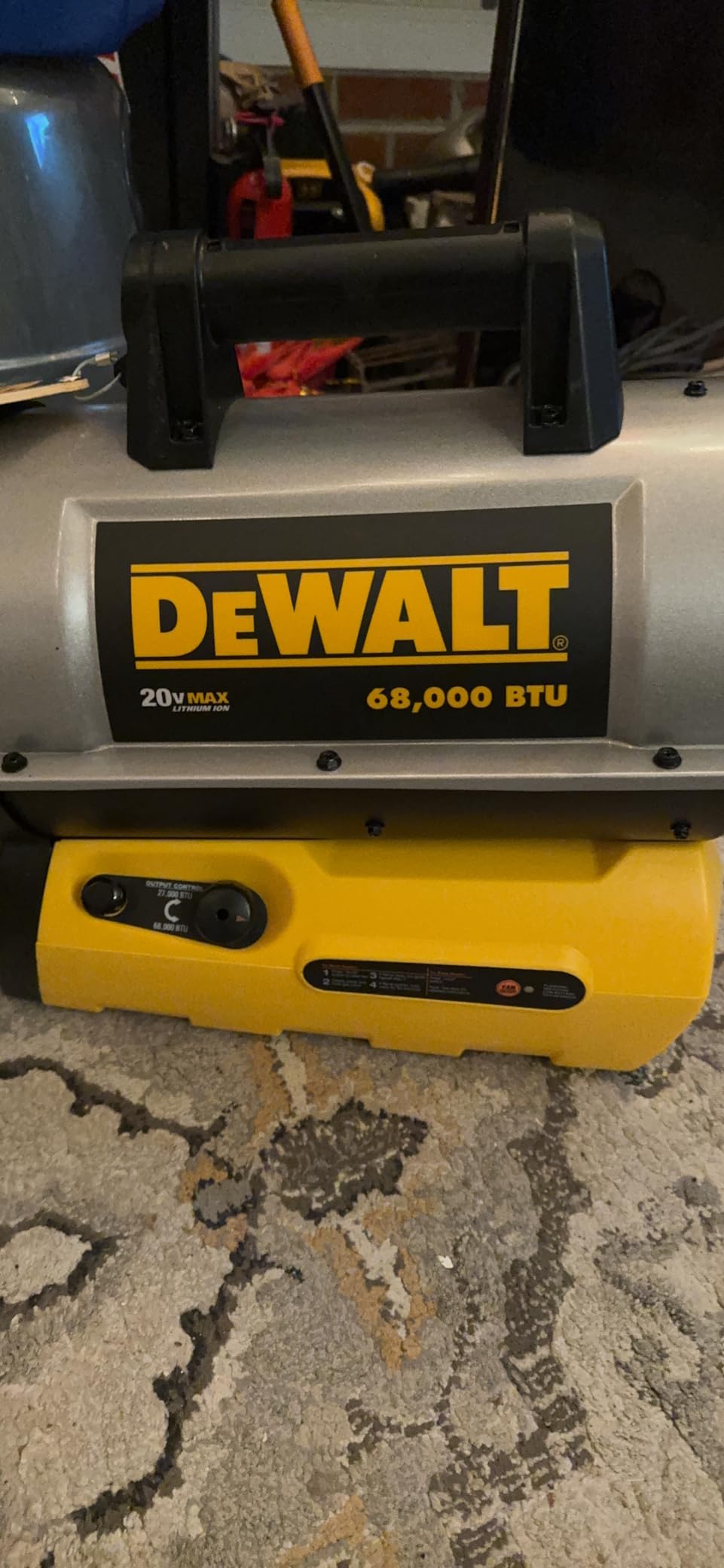
The hybrid power setup is the reason this heater is on an emergency list. It delivers 68,000 BTU of forced air with a rated coverage up to 1,700 square feet, and it can run from a DEWALT 20V battery pack instead of a wall outlet, which means it still moves air when the grid is down. Reviewers who already own the battery platform treat that as the deciding factor.
Other strengths reviewers mention: electronic ignition for reliable starting, low reported odour and fumes, and a two-year limited parts warranty. The hose and regulator assembly, handle, and manual are all included, and at 13.2 pounds it is lighter than most forced-air units of this output.
There are real trade-offs. The battery is not included, and runtime depends heavily on the setting, with reviewers citing roughly four hours on high and well over a day on low with a larger pack. Starting can be difficult in extreme cold, which is an awkward limitation for an emergency heater, and it is louder on high.
The 120V cord option is still available for normal garage use, but for a true outage plan the heater is only cordless if you already own or buy compatible battery packs. That is a real cost to plan for, and it is the main reason this unit sits at number ten despite the strongest output in the group.
When to reach for the DEWALT heater
Choose it for a large garage, a workshop, or a job site where you need to warm a big volume and cannot count on grid power for the fan. If you already use DEWALT batteries, the running cost is effectively zero additional charger infrastructure.
It is also the sensible companion to a battery power station for emergency heat: the battery keeps the blower moving, and the propane burner supplies the heat. For smaller rooms, our 10 Best Baseboard Heaters for Supplemental Heat Honest Reviews guide covers what to use once the grid comes back.
When a different model makes more sense
If you do not own any DEWALT batteries, the platform cost changes the economics of a heater you may use a handful of times a year. A simpler 60,000 BTU forced-air unit costs less and runs on any outlet.
For a home living space, forced air at this output is far more than you need, and it is rated for well-ventilated areas rather than a bedroom. For indoor rooms, choose an indoor-rated radiant or blue flame heater instead.
11. CAMPLUX 12,000 BTU – Runs on a 1 lb Bottle or a 20 lb Tank
CAMPLUX Portable Propane Heater Outdoor and Indoor, 12000 BTU LP Gas Buddy Heater for Camping with ODS & Tip-over Protection, 1lb Propane Radiant Heating with LED light, Red
12,000 BTU ceramic burner
About 6 hrs on a 1 lb tank
1 lb or 20 lb compatible
9.5 lbs
Pros
- Works with both 1 lb and 20 lb propane tanks
- Indoor and outdoor rated with ODS and tip-over
- Built-in LED light on the handle
- Piezo ignition needs no batteries
- No assembly required
Cons
- 12
- 000 BTU is modest output
- About 6 hrs runtime on a 1 lb tank
- Handle and LED quality complaints reported
- Heavier than other portable radiants
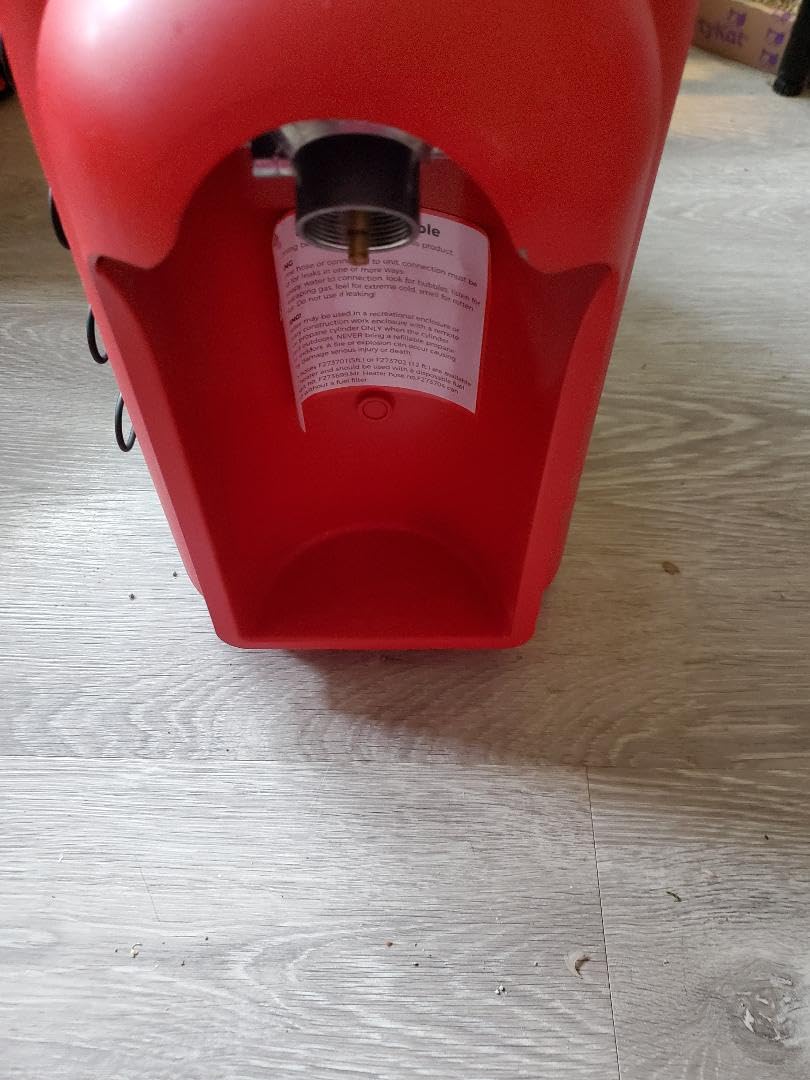
Tank flexibility is the pitch here. This heater runs from a standard 1 lb screw-on cylinder and, with an adapter hose, from a 20 lb tank, which means you can start an outage on whatever fuel is on hand and scale up as needed. At 12,000 BTU with a ceramic plate burner it covers a mid-size room rather than a small one, which sits between the Little Buddy and the full Buddy.
It is listed for both indoor and outdoor use and carries an oxygen depletion sensor plus automatic tip-over shutoff. The built-in LED light on the handle is a genuinely thoughtful touch for a power outage, since it removes the need to find a flashlight to check whether the burner is lit. Reviewers appreciate the piezo ignition and the fact that no assembly is required.
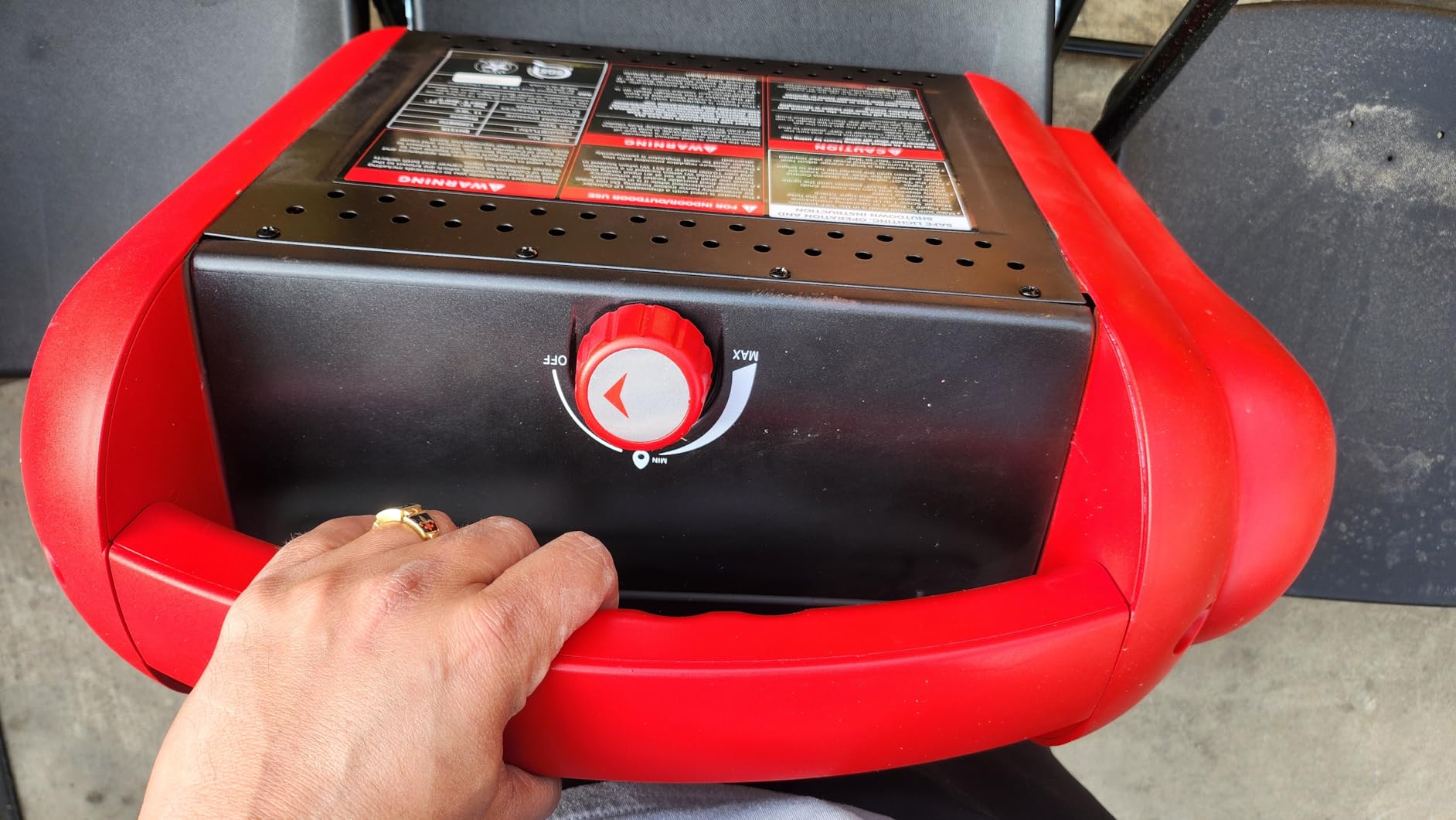
The quality complaints are consistent and worth taking seriously: broken handles, LED failures, hoses and regulators that stiffen in cold weather, and reports of the plastic handle softening near the heat. If your plan is to grab this unit quickly in a storm, check the handle before you need it.
At 12,000 BTU it is also simply less heat than the full Buddy at the same fuel cost, and it weighs more while giving you less coverage than the Little Buddy gives you in a small space. It is a compromise unit, and the compromises are real.
When to reach for the CAMPLUX heater
Pick it for medium-size rooms where you want more heat than a 3,800 BTU unit can give but you also want to start with small bottles and upgrade to a 20 lb tank later. The LED handle is the standout feature for anyone sheltering in place overnight.
It works for camping, ice fishing, a garage, a patio, or a home office, and the ceramic burner reaches useful heat quickly, with reviewers citing warming within about a minute of ignition.
When a different model makes more sense
If your priority is long-term reliability of a component you may not replace for years, an established brand with a longer warranty record is the safer bet, particularly for the handle and hose that the reviews flag.
If you are heating a small bedroom, the Little Buddy covers it with less fuel and a better warranty. If you are heating a large room, the Buddy at 9,000 BTU with dual settings or a larger cabinet unit will get you warmer faster per cylinder.
12. ProCom 10,000 BTU Blue Flame – Thermostat Control Without Electricity
ProCom Heating Liquid Propane Ventless Blue Flame Heater With Base Feet – 10,000 BTU, T-Stat Control – Model# ML100TBA-B
10,000 BTU ventless blue flame
Heats up to 500 sq ft
Indoor use only
Thermostat control
Pros
- Only ventless indoor-rated unit in this roundup
- Thermostat holds temperature without electricity
- Wall mount kit and base feet both included
- ANSI certified
- Push-button ignition
Cons
- 10
- 000 BTU is the lowest output here
- Heavier at about 16 lbs
- Pilot noise reported by users
- Gas valve failures reported
- Indoor use only
This is the one appliance on the list that works like a small permanent heater rather than a portable one. It is a ventless blue flame unit rated for indoor use only, with a T-stat thermostat that cycles the burner to hold your set temperature, and it needs no electricity, so the thermostat keeps working during a blackout.
At 10,000 BTU with a rated coverage of up to 500 square feet, it warms air rather than bodies, which is the opposite trade from a radiant heater. That makes it a good match for a living room, a bedroom, or a home office where you will be sitting for hours, and the included wall mount hardware plus base feet let you choose permanent placement.
The concerns are about longevity rather than function. Multiple reviewers report gas valve failures within weeks or months, and the pilot light produces a steady hiss that some people find irritating in a bedroom. At roughly 16 pounds it is the heaviest portable unit here, and it is indoor-only, so it never goes outside.
It also burns fuel continuously on a pilot, so the 10,000 BTU figure overstates the effective heat you get when the thermostat is calling for heat only part of the time. Budget for that before you commit to it as a multi-day outage solution.
When to reach for the ProCom blue flame heater
Choose it when you want set-and-forget temperature control in a single room, when you will be inside for long stretches, and when you do not want to keep turning a portable radiant heater on and off yourself. The ventless blue flame design is efficient and clean-burning, and the wall mount keeps it out of the way.
It suits a bedroom, a study, or a home office better than it suits a garage, because its low output and indoor rating are aimed at living spaces. The thermostat is the feature that separates it from every other portable unit in this roundup.
When a different model makes more sense
If you want the ability to move the heat between rooms, this is the wrong shape of appliance. It is a fixed install with base feet or a wall bracket, and it is built to stay in one place.
If your main worry is longevity rather than thermostat control, the portable Buddy carries a much larger review base and a long service history. And if you need to heat more than about 500 square feet, 10,000 BTU will not keep pace with heat loss in a cold house.
Propane Fuel Logistics for a Real Outage
Most heater disappointments in an outage are fuel disappointments, not heater failures. Here is the arithmetic that decides whether you stay warm: a 1 lb propane cylinder holds about 0.4 gallons of fuel, a 20 lb tank holds about 4.7 gallons, and a 100 lb tank holds about 23.7 gallons. Propane contains roughly 91,500 BTU per gallon, so a 20,000 BTU heater consumes about 1.3 gallons per hour at full output and a 9,000 BTU heater consumes roughly 0.6 gallons per hour.
Turn that into hours and the planning writes itself. A 1 lb cylinder on a 9,000 BTU heater gives you about 40 minutes at high and around 90 minutes at low, which matches the manufacturer figure of 2.4 hours and 5.4 hours respectively when the bottle is filled and the burner is cycling. A 20 lb tank gives roughly 3.5 hours at 9,000 BTU high and around 8 to 9 hours for units rated near 60,000 BTU at full output.
For one room, one bedroom, and one night, four to six spare 1 lb cylinders is the widely recommended figure. For a multi-day outage, stop thinking in bottles and buy 20 lb cylinders plus a certified adapter hose, because refilling a 20 lb tank costs far less per hour of heat than swapping small cylinders. A 100 lb tank is the sensible choice if you can safely store one outdoors well away from the house.
Store cylinders upright, outdoors or in a ventilated shed, never in a bedroom or a sealed closet, and never inside a vehicle. Propane does not go stale, so buying fuel early does not waste it, which is an argument for keeping a spare cylinder full rather than running tanks dry during an event.
How to Connect a Heater and Test for Leaks
Connecting a heater to a tank takes a few minutes, and the part that matters is the leak test. Do it outside, with the valve closed, before you need the heat.
First, confirm the connection type. A portable radiant heater with a 1 lb connector threads directly onto a 1 lb cylinder. For a 20 lb tank you need a listed adapter hose with a POL fitting and a regulator, and you should confirm the hose length is appropriate for the rated BTU of the heater.
Then mix soapy water in a spray bottle or a bowl, open the valve slightly, and brush the solution onto every joint: the cylinder valve, the adapter, the regulator inlet, and the hose connection. Bubbles mean a leak. Tighten the fitting and retest, and if it still bubbles, replace the part rather than running the heater. Never test with a flame.
After connection, run the heater outdoors for a few minutes to confirm stable flame and proper operation, then move it to its indoor location, keeping at least 3 feet of clearance from walls, curtains, bedding, and other combustibles.
The Heat One Room Outage Strategy
Heating a whole house during a grid failure is not a realistic goal for a portable heater. Heating one small room properly, and keeping the rest of the house cold, is the strategy that actually keeps a household safe and is what we recommend for any outage longer than a few hours.
Pick the smallest room with a door that closes. A bedroom of 100 to 150 square feet is the ideal target. Close the door and, if you have an interior window onto a warmer space, close it too, so you are limiting the volume the heater has to keep above freezing.
Run the heater low rather than high. Fuel consumption is roughly proportional to BTU output, so low output stretches a tank much further while still taking the chill off a small volume. A 4,000 BTU setting from a Buddy in a 120 square foot room, monitored with a CO detector and a cracked window, is a workable overnight configuration.
Stay awake the first night. Forum users and RV owners both raise the same point: safety cutoffs fail eventually, and a heater running unattended in a sleeping household removes the human check that catches a smell, a fallen unit, or a leaking connection. The second night, with the heater proven and the room stable, running it while you sleep is a decision to make with the numbers in front of you.
Your Emergency Heat Kit Checklist
Before the storm arrives, assemble one kit and store it where you can reach it without power. Our list, built from what we have actually needed during outages, looks like this:
One indoor-rated heater with an oxygen depletion sensor and a tip-over shutoff, plus a backup. Our pick is the Portable Buddy, with a Little Buddy as the backup.
Fuel. Four to six 1 lb cylinders for a one-room night, or two full 20 lb cylinders and a certified adapter hose for anything longer.
A working carbon monoxide detector with a fresh battery, mounted on a wall near the ceiling in the same room as the heater and ideally more than 5 feet from any fuel appliance. Test it with the test button monthly.
A fire extinguisher rated for household use, and a smoke detector with a fresh battery in the hallway.
Warm layers. Wool socks, a hat, a blanket, and a sleeping bag per person. Heating the air in a room is much easier when nobody is damp, and body heat retention does more for comfort than a few extra BTU.
Food that needs no cooking. If your propane is going to the heater, your stove is not going to be available.
A headlamp per person so nobody has to fumble for a switch, and a power bank for the CO detector alarm and phones.
How Many BTUs Do You Need? Sizing and Heater Types
The sizing rule most guides use is about 40 BTU per square foot for a well-insulated, moderate climate space, and considerably more when you are dealing with an uninsulated room, a high ceiling, or a severe cold snap. Those two numbers are not interchangeable, and an uninsulated framed room will beat a small heater no matter how good that heater is.
Use this as a rough map for a one-room emergency plan: under 100 square feet, a 3,800 BTU unit such as the Little Buddy. Between 100 and 225 square feet, the 9,000 BTU Buddy. Between 225 and 450 square feet, an 18,000 BTU cabinet unit. Beyond 450 square feet, you are in forced-air territory at 30,000 BTU and up.
It also helps to know which kind of heat you are buying, because the types feel very different in a room. Radiant infrared units heat you and nearby surfaces directly and feel intense within a few feet, which is why they work well in an outage. Convection and blue flame units warm the air itself, which feels more even but takes longer and is better for long periods in one spot. Forced-air units push heated air with a fan, covering whole volumes quickly but needing electricity to run. Catalytic units burn fuel more slowly for longer runtime, and many of them are designed for outdoor or unvented spaces, so check the rating carefully.
Finally, check the certification. A UL listed, CSA certified, or ANSI certified mark on the body means an independent lab tested the oxygen-depletion system, the tip-over switch, and the flame-failure cut-off. In a category flooded with generic marketplace heaters, that mark is the single most useful thing on the label.
Frequently Asked Questions
Is it safe to use a propane heater indoors?
Only if the unit is specifically rated for indoor use by its manufacturer. Look for an indoor rating on the label plus a low oxygen shutoff (also called an oxygen depletion sensor), a tip-over shutoff, and a flame-failure cut-off. Outdoor-only heaters, generators, grills, camp stoves, and patio heaters are never safe indoors, regardless of how well ventilated the room is.
Which propane heaters are rated for indoor use?
In this roundup, the Mr. Heater Portable Buddy, the Mr. Heater Little Buddy, the SISUPASSIE 30,000 BTU unit, the CAMPLUX 12,000 BTU unit, and the ProCom 10,000 BTU ventless blue flame heater are the models listed for indoor use. Always confirm the rating on the physical label before you rely on it, and confirm the UL, CSA, or ANSI certification mark.
How long does a propane heater run on a 20 lb tank?
It depends on output. A 9,000 BTU heater at full output consumes roughly 0.6 gallons an hour, so a 20 lb tank holding about 4.7 gallons runs around 7 hours; manufacturer figures for 60,000 BTU forced-air units list about 8 hours, and lower settings stretch that considerably. The Avenger cabinet unit in this roundup is rated for up to 72 hours on low.
How much propane do I need for an overnight outage?
For one small room, four to six spare 1 lb cylinders cover an overnight outage comfortably. A 20 lb tank with a certified adapter hose is more economical for anything longer than a night, since small bottles cost far more per hour of heat. Keep fuel full before the storm, because propane does not go stale and stored fuel is not wasted.
Do propane heaters need electricity to run?
Radiant and blue flame models with piezo ignition do not. Electronic ignition models and all forced-air models with a fan do, because the blower needs power. If you need forced-air heat during a blackout, the DEWALT unit in this roundup can run on a 20V battery pack as an alternative to a wall outlet.
Can you run a propane heater while you sleep?
An indoor-rated heater with an oxygen depletion sensor is far safer than most alternatives, but the safest practice is to stay awake the first night, confirm the heater is stable in the room, and keep a working carbon monoxide detector in the same room. Never run an outdoor-only unit, a generator, a grill, or a camp stove in a sleeping space.
Are propane heaters okay to use in a garage?
Yes, provided the space is well ventilated and the garage is not used as sleeping space, and provided you keep a carbon monoxide detector in there. Do not bring an outdoor torpedo or tank-top heater into a closed garage without ventilation. Forced-air garage heaters need a working outlet for the fan, and radiant models need three feet of clearance from combustibles.
What size propane heater do I need for a large space?
For a heated or insulated room, roughly 40 BTU per square foot is a starting point. A 1,000 square foot space needs an output in the tens of thousands of BTU, which means a forced-air unit at 60,000 BTU or more rather than a portable radiant heater. Uninsulated rooms, high ceilings, and severe cold all push the required number higher.
Do propane heaters need ventilation in a small room?
Ventilation matters even for indoor-rated units, because combustion produces carbon monoxide. Keep a working carbon monoxide detector in the same room, mounted on a wall near the ceiling, and crack a window or provide a low and high vent so fresh air can enter. Never rely on the low oxygen shutoff as a substitute for a detector.
Can I hook up a Buddy heater to a 20 lb propane tank?
Yes, using a certified adapter hose with a POL fitting and a regulator matched to the heater. Check that the hose is rated for the BTU output. After connecting, mix soapy water and brush it on every joint to check for bubbles, and never test for leaks with a flame.
Best Propane Heaters for Emergency Heat in 2026
The Mr. Heater Portable Buddy is our pick for the best propane heaters for emergency heat, because it is one of the few units here that is approved for indoor and outdoor use and it carries both a low oxygen shutoff and tip-over protection. The Little Buddy covers smaller rooms with less fuel, the MH540T handles a garage or a pipe run, and the ProCom adds thermostat control for anyone who wants set-and-forget temperature in one room.
Buy the heater and the fuel together. Four to six spare 1 lb cylinders cover one room for one night, a 20 lb tank with a certified adapter hose covers several days, and a working carbon monoxide detector in the same room is not optional. Then read the label, keep three feet of clearance, and never bring an outdoor-rated heater into a living space.