
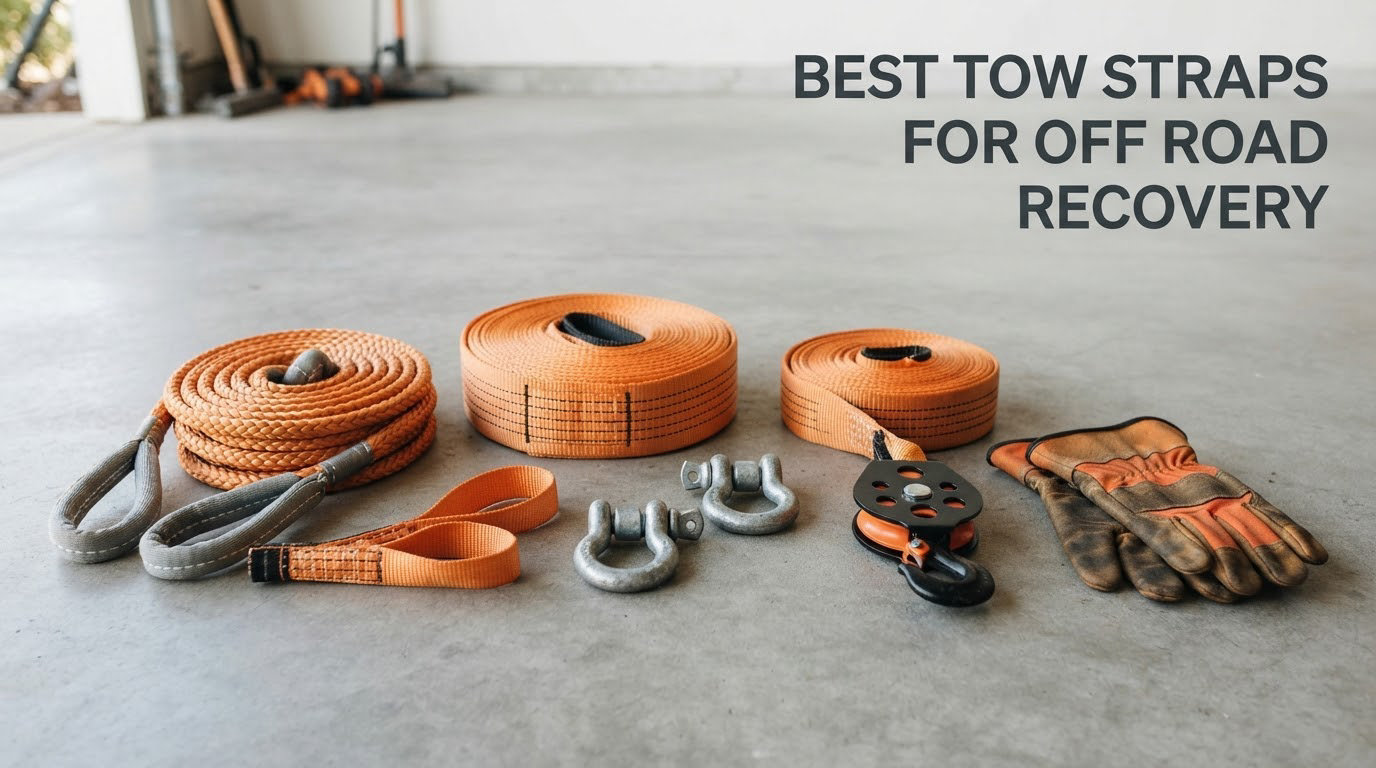
There is a running argument on every overlanding forum about recovery gear: is the cheap Amazon strap good enough, or does the expensive one genuinely pull you out of trouble when it matters? A 20-plus comment thread on r/overlanding opened with exactly that question, and it is the reason we spent weeks reading spec sheets, warranty terms and owner feedback instead of just reordering a bestseller list.
Because that debate is really a spec debate, we built this guide around published numbers. Every strap below is listed with its working load limit, its maximum breaking strength, its width and length, and the material it is made from, so you can match the numbers to the vehicle you actually drive. If your recovery has a brand listed on the list, you will find it here with a section of its own.
This is our 2026 roundup of the best tow straps for off road recovery: ten flat webbing straps and snatch straps spanning entry-level, mid-range and premium tiers, from brands like Rhino USA, GearAmerica, Smittybilt, JACO and ARB. We also cover the question that trips up almost every new overlander, which is the difference between a tow strap, a recovery strap, a snatch strap and a kinetic rope, plus how to size a strap to your truck’s gross vehicle weight. We have included the full tow strap picks for trucks alongside our other recovery gear guides, including off-road emergency and recovery kits and soft shackles, so you can build a complete kit instead of one lonely strap.
Top 3 Picks for Off-Road Recovery Towing in 2026
Three straps stand out from the field. The Rhino USA 3in x 20ft is the one we would put in our own truck, the GearAmerica 4in x 30ft is the strongest flat tow spec per dollar on the list, and the Sunferno 3in x 20ft is the budget answer to the most common question on the forums.

Rhino USA Recovery Tow…
- 31518 lb break strength
- 10000 lb working load
- Triple reinforced looped ends
- Polyester webbing

GearAmerica Heavy Duty Tow…
- 45000 lb tensile strength
- 12000 lb working load limit
- Polyester tube webbing
- Triple reinforced padded loops

Sunferno Tow Rope and Recov…
- 35000 lb rating
- 7 percent stretch
- Neon green high visibility
- Reinforced eye loops
Best Tow Straps for Off Road Recovery (October 2026)
Here is the full field in one place. The single most useful column is the fourth one, because a strap’s breaking strength and its working load limit are two very different numbers, and the gap between them is the whole safety conversation.
| Product | Specs | Action |
|---|---|---|
| Rhino USA Recovery Tow Strap 3in x 20ft |
|
Check Latest Price |
| GearAmerica Heavy Duty Tow Strap 4in x 30ft |
|
Check Latest Price |
| Sunferno Tow Rope and Recovery Strap 3×20 Ft |
|
Check Latest Price |
 ALL-TOP Heavy Duty Tow Strap Recovery Kit 3in x 30ft ALL-TOP Heavy Duty Tow Strap Recovery Kit 3in x 30ft |
|
Check Latest Price |
 sumpluct Recovery Tow Strap 2in x 20ft sumpluct Recovery Tow Strap 2in x 20ft |
|
Check Latest Price |
 Grip Heavy Duty Tow Strap 4in x 30ft Grip Heavy Duty Tow Strap 4in x 30ft |
|
Check Latest Price |
 Smittybilt Tow Strap SBCC330 3in x 30ft Smittybilt Tow Strap SBCC330 3in x 30ft |
|
Check Latest Price |
 JACO TowPro Recovery Tow Strap 3in x 30ft JACO TowPro Recovery Tow Strap 3in x 30ft |
|
Check Latest Price |
 ARB Recovery Snatch Strap 30ft x 2-3/8in ARB Recovery Snatch Strap 30ft x 2-3/8in |
|
Check Latest Price |
 Rhino USA Tree Saver Tow Strap 3in x 8ft Rhino USA Tree Saver Tow Strap 3in x 8ft |
|
Check Latest Price |
1. Rhino USA Recovery Tow Strap 3in x 20ft: The All-Rounder
Rhino USA Recovery Tow Strap (3in x 20ft) – 31,518lb Heavy Duty Towing
Polyester webbing, 3in x 20ft, 31518 lb break strength, 10000 lb working load, 4.6 lb
Pros
- More than 10
- 700 reviews averaging 4.8 stars
- No fraying reported after months of use
- Triple reinforced loop ends resist abrasion
- Lifetime replacement warranty honored without hassle
Cons
- Included storage bag feels flimsy
- Occasional factory snags on arrival
- Static polyester gives up no stretch in a snatch
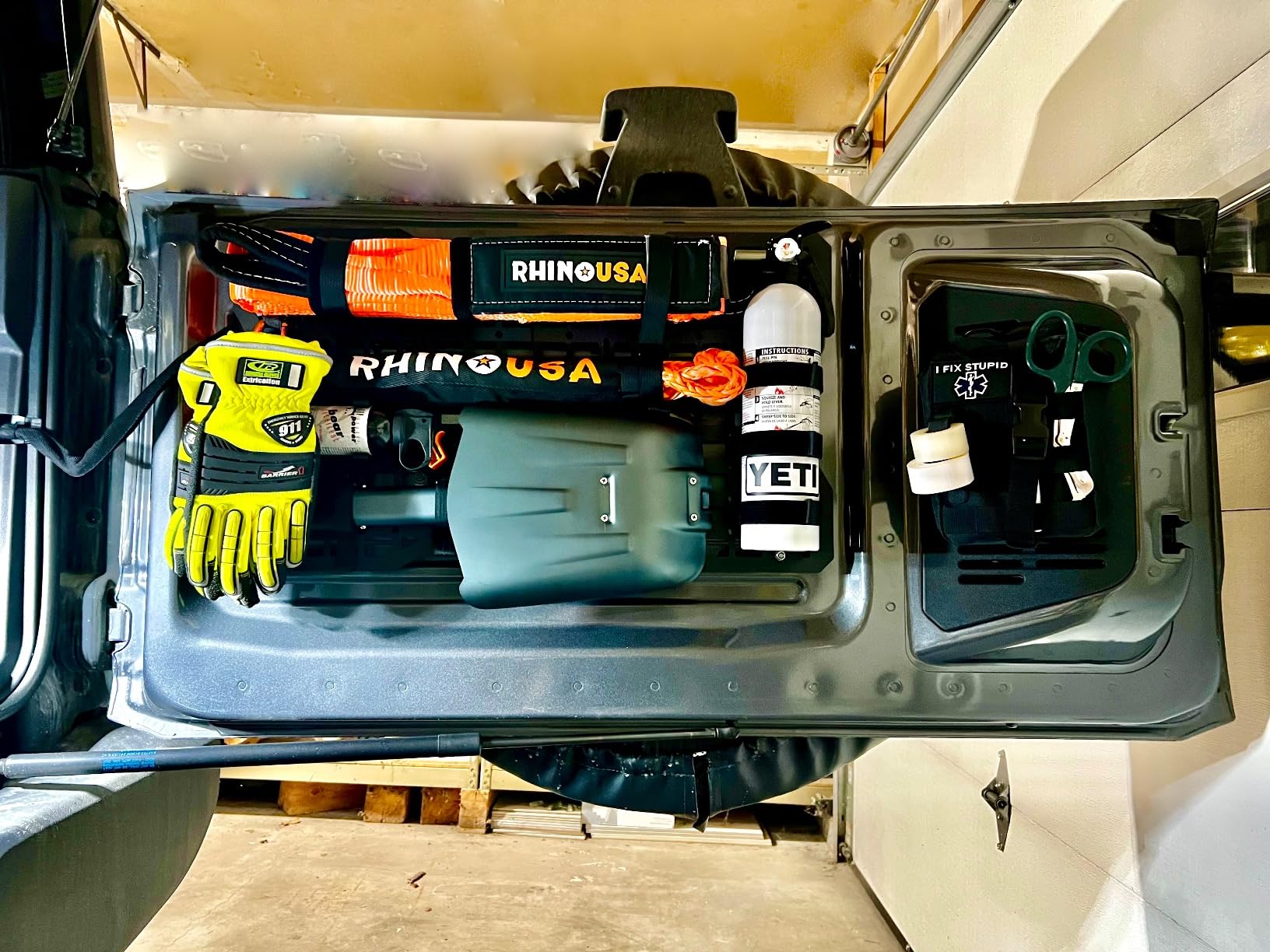
This is the strap we keep reaching for. Rhino USA builds it from polyester webbing, three inches wide and twenty feet long, and rates it at a 31518 lb break strength against a 10000 lb working load. That working load figure clears the three-times-gross-vehicle-weight rule for anything up to roughly 3,300 lb of truck, which covers most mid-size rigs and half-tons outright.
What stands out after reading thousands of owner comments is how little drama there is. People report eight or nine months of use with no fraying, praise the stitching density, and repeatedly mention sending the strap back for a lifetime replacement and getting it handled without friction. Rhino USA is a family-operated American business, and the warranty service shows up often enough in the reviews to be a genuine selling point rather than fine print.
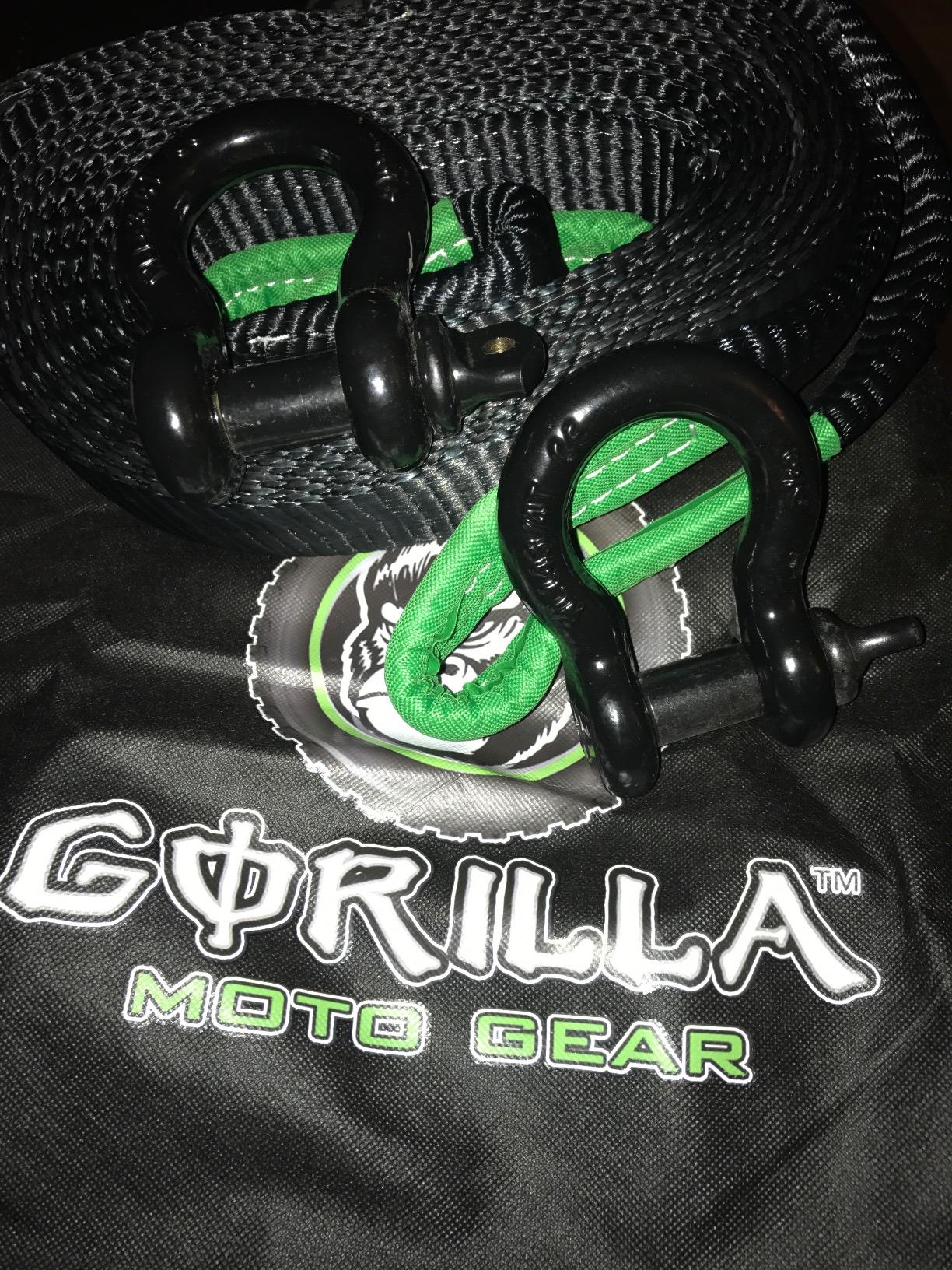
Two weaknesses get mentioned, and neither is structural. The included drawstring bag is thin compared to the strap itself, so owners typically re-pack it into something sturdier. And a small number of reports describe units arriving with a snag straight from the factory, which is a packing problem rather than a strength problem, but it means you should inspect the webbing before every pull.
The bigger thing to understand is that this is a static polyester strap. Polyester stretches roughly two percent under load, so it delivers force immediately and efficiently, which makes it excellent for pulling a truck a few feet out of mud or moving a stuck rig along a flat forest road. It also means the shock of a hard snatch goes straight into your recovery points, so the pulls should be smooth and controlled rather than aggressive.
It is also the natural first pick for buddy recovery, the scenario forum readers describe most often. You loop one end around a tree or a solid anchor, connect the other to the vehicle ahead, and pull. At twenty feet you have enough reach to position the two vehicles properly without the slack tangling, which is the mistake that shows up again and again in recovery threads.
Who the Rhino USA 3in x 20ft suits best
It suits almost anyone who drives off pavement and wants one strap that covers self-recovery and helping a buddy. Owners use it on quads, ATVs, side-by-sides, passenger cars and light trucks, and the stainless steel end hardware works with both metal shackles and soft loops.
If your vehicle is over 7,000 lb GVWR you can still use it, but you would be closer to the working load ceiling than you would be with a four-inch strap, and controlled pulls matter more at that weight class.
Where the 20 foot length and zero stretch bite
Twenty feet is a deliberate compromise. It is short enough to pack under a seat or behind a seatback without eating your cargo space, and long enough to set up a proper anchor point for most trail situations.
The static build is also the reason we pair it with a kinetic rope in the same kit. If your recoveries happen in deep sand or on steep grades where a strap will get jerked hard, the missing stretch is a real limitation, not a technicality.
2. GearAmerica Heavy Duty Tow Strap 4in x 30ft: Strongest Flat Spec
GearAmerica Heavy Duty Tow & Winch Extension 4″x30′ – 46,076-lb Recovery Rope for Offroad, Weather Resistant, Triple Reinforced Loops – Truck Accessories – Tow Strap
Polyester tube webbing, 4in x 30ft, 45000 lb tensile, 12000 lb working load, -40F to 215F
Pros
- Highest tensile rating in the group
- Padded reinforced end sleeves cut chafing
- Works from -40F to 215F
- Drawstring bag and velcro tie included
Cons
- Bulkiest strap here when rolled for storage
- One report of end fraying under heavy equipment work
- Not built to professional service duty standards
When you line up the published numbers, this is the most capable flat tow strap on the list. GearAmerica rates the 4in x 30ft at 45000 lb tensile strength, and its own product copy cites a 35053 lb minimum break strength with a 12000 lb working load limit. That is the highest working load of any flat strap we reviewed, and it is the number you size a truck against.
The construction detail that matters is the polyester tube webbing. Instead of a flat ribbon, the strap is a tube, which spreads load across the width and resists kinking. Owners consistently describe it as thick and seriously stitched, and several call out the padded reinforced end sleeves that keep the webbing from chafing where it meets a shackle or tree.
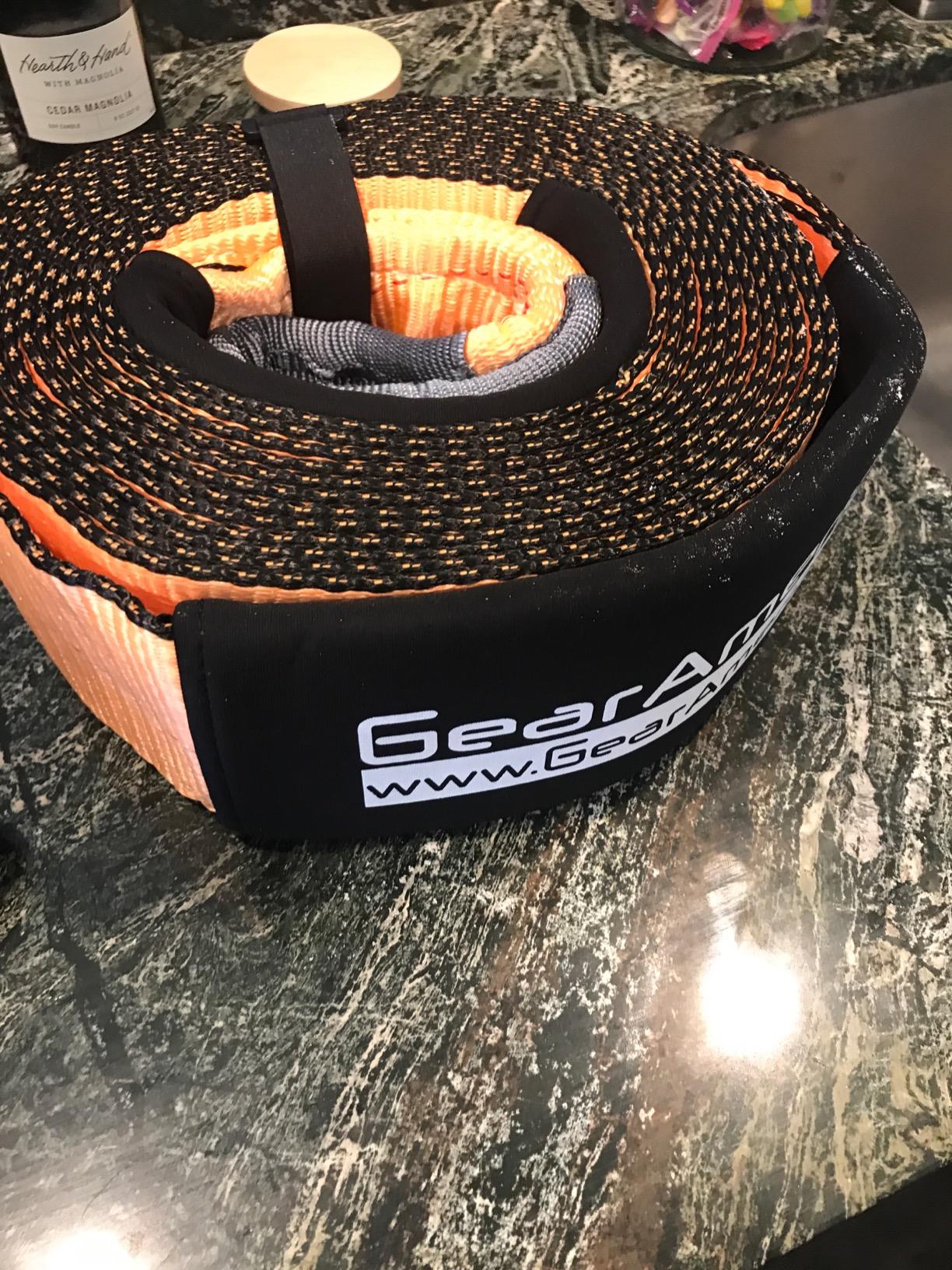
The temperature rating is unusual for this category. GearAmerica lists the webbing as usable from -40F to 215F, which matters more than it sounds if you are recovering in northern winters or working a vehicle out of hot desert clay. The strap also arrives with a drawstring bag and a velcro tie for stowing it rolled.
Two complaints come up often enough to plan around. The first is bulk: at four inches wide and thirty feet long, this is the least compact strap in the group, and owners who care about cargo space notice. The second is a single report of fraying at the strap end after repeated pulls on heavy equipment, which the brand resolved with a no-cost warranty replacement.
It is also worth being straight about where it stops. Reviewers describe it as close to, but not at, professional service duty standards. For a weekend truck, a farm recovery, or a buddy pull, that is more than enough, and it is one of the few straps here that clears the three-times-GVW rule for a half-ton at full working load.
Who the GearAmerica 4in x 30ft suits best
It suits owners of heavier trucks, or anyone whose recoveries involve pulling equipment rather than just vehicles. Farmers, contractors and people running a recovery business on weekends all show up in the reviews describing exactly this kind of use.
It also suits anyone who recovers in real temperature extremes. The published -40F to 215F range means you do not have to think about whether the webbing goes stiff or brittle in winter conditions.
What the four-inch width costs you
Width buys strength and costs packing volume. Thirty feet of four-inch webbing will not fold into a small recovery bag, and users mention rolling it is awkward compared with a three-inch strap.
If your recovery gear has to live in a small apartment, or you solo travel and count every pound, the bulk is a genuine cost. In exchange you get the highest working load limit in the roundup and a temperature range nothing else on this list publishes.
3. Sunferno Tow Rope and Recovery Strap 3×20 Ft: The Budget Answer
Tow Rope and Recovery Strap, 35000 Lb Heavy Duty Off Road Winch 3×20 Ft
Polyester, 3in x 20ft, 35000 lb rating, 7 percent stretch, neon green, reinforced eye loops
Pros
- Around 4000 reviews averaging 4.8 stars
- 7 percent stretch softens shock loads
- Neon green is easy to find in snow and low light
- Water resistant and wipes clean of mud
Cons
- Thick material is hard to fold tightly for storage
- Stiffer to coil by hand than lighter polyester straps
- Loop ends need shackles to connect
This is the answer to the r/overlanding question. You do not need the most expensive strap on the market, and the Sunferno 3×20 is the clearest evidence. It carries a 35000 lb rating in three-inch polyester webbing with reinforced eye loops, and it holds a 4.8 star average across roughly 4,000 reviews.
What we like most is the stretch number. Sunferno specifies 7 percent maximum stretch, which is more than a typical static polyester strap gives you and far less than a nylon snatch strap. In practice that middle ground softens the initial shock of a pull without the big energy swing of a true kinetic rope.
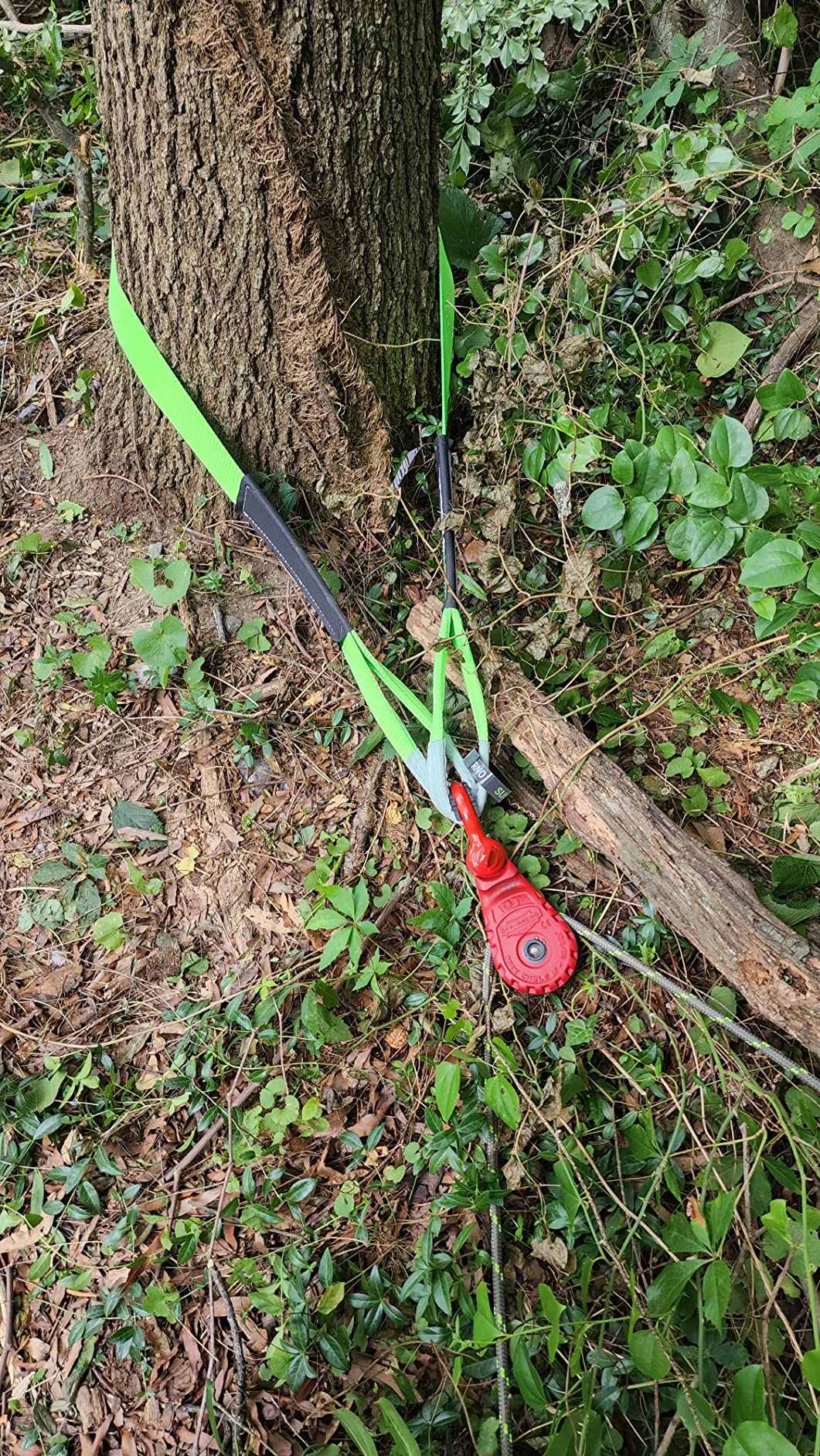
The neon green color is not cosmetic. Owners recovering in snow, dusk or low light mention it constantly, and a strap you can see on the ground is a strap you do not trip over while walking back to your truck. The material is water resistant and wipes clean, which matters more than it sounds after a mud recovery.
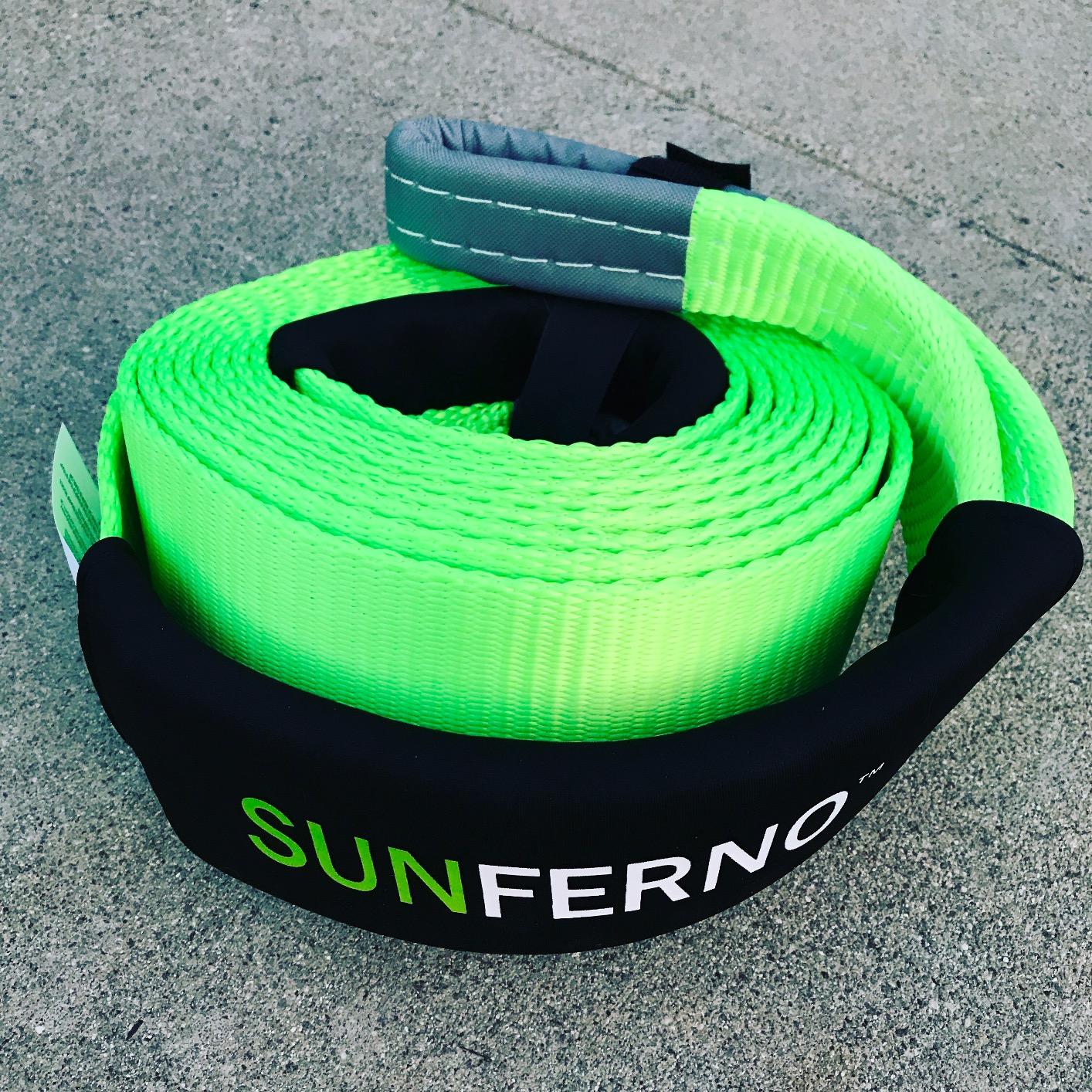
Reviewers with real field history back the durability. One Alaska-based owner reports using it on more than ten vehicles with little to no fraying, and the stitching and loop construction hold up in sub-zero conditions. The kit also includes a protective sleeve, a wrap tie, a carrying bag and a recovery guide, which is more than most straps at this level bother to supply.
The complaint is consistent enough to plan for: this strap is bulky for its size. The webbing is thick, so it resists folding tightly and is stiffer to coil by hand than a lighter polyester strap. If your kit has to be compact, that is a real trade. The company also markets it for tree, log and stump removal, which is a fair description of a 3in strap with 35000 lb of rated capacity.
Who the Sunferno 3×20 is right for
It is right for the majority of weekend off-roaders, and it is the pick we would tell someone building their first recovery kit to start with. The review volume is large enough that failure patterns, if they existed, would show up.
It also suits cold-weather and night recoveries better than most of the roundup because of the visibility. Anyone pulling a buddy out of a snowbank can point at the strap rather than search for it.
Where the bulk and the loop ends get in the way
Loop ends are not hooks, so you need matching hardware: a shackle or soft shackle at each end. That is an extra purchase and an extra thing to inspect, and it is why some buyers prefer a strap with factory hooks already attached.
Storage is the other limit. If you are building a small overlanding kit where every cubic inch counts, a thicker three-inch strap will fight you, and the lighter two-inch option we cover further down packs much more easily.
4. ALL-TOP Heavy Duty Tow Strap Kit 3in x 30ft: Real Kinetic Pull
ALL-TOP Heavy Duty Tow Strap Recovery Strap Kit : 3 inch x 30 ft (35,000 lbs) 100% Nylon and 22% Elongation Snatch Strap + 3/4 D Ring Shackles (2pcs) + Storage Bag
100 percent nylon N66, 3in x 30ft, 35000 lb break, 12000 lb WLL, 22 percent stretch
Pros
- True N66 nylon with 22 percent elasticity
- D-ring shackles and storage bag included
- Neoprene sleeves on reinforced eye loops
- Multiple full-length rows of stitching
Cons
- Heaviest kit here at 11.6 pounds
- 22 percent stretch makes some buyers size down
- Orange nylon scuffs and shows dirt quickly
This is the only kit on the list built around genuine nylon elasticity. ALL-TOP specifies N66 nylon with 22 percent stretch, a 35000 lb breaking strength, a 12000 lb working load limit, and a lab test report available on request. That combination makes it behave far more like a kinetic rope than like a flat tow strap.
The practical effect is the thing reviewers keep describing. Twenty-two percent stretch means the strap loads up, stores energy and then releases it, so a pull comes on progressively instead of slamming into your recovery points all at once. For a deep-sand or steep-grade recovery, that is a meaningful difference in how hard your bumper takes the load.
As a kit it is also the most complete. You get two 3/4-inch D-ring shackles and a fitted storage bag in the box, plus neoprene protector sleeves over the reinforced eye loops, which stop the webbing from cutting itself on the shackle during a pull.
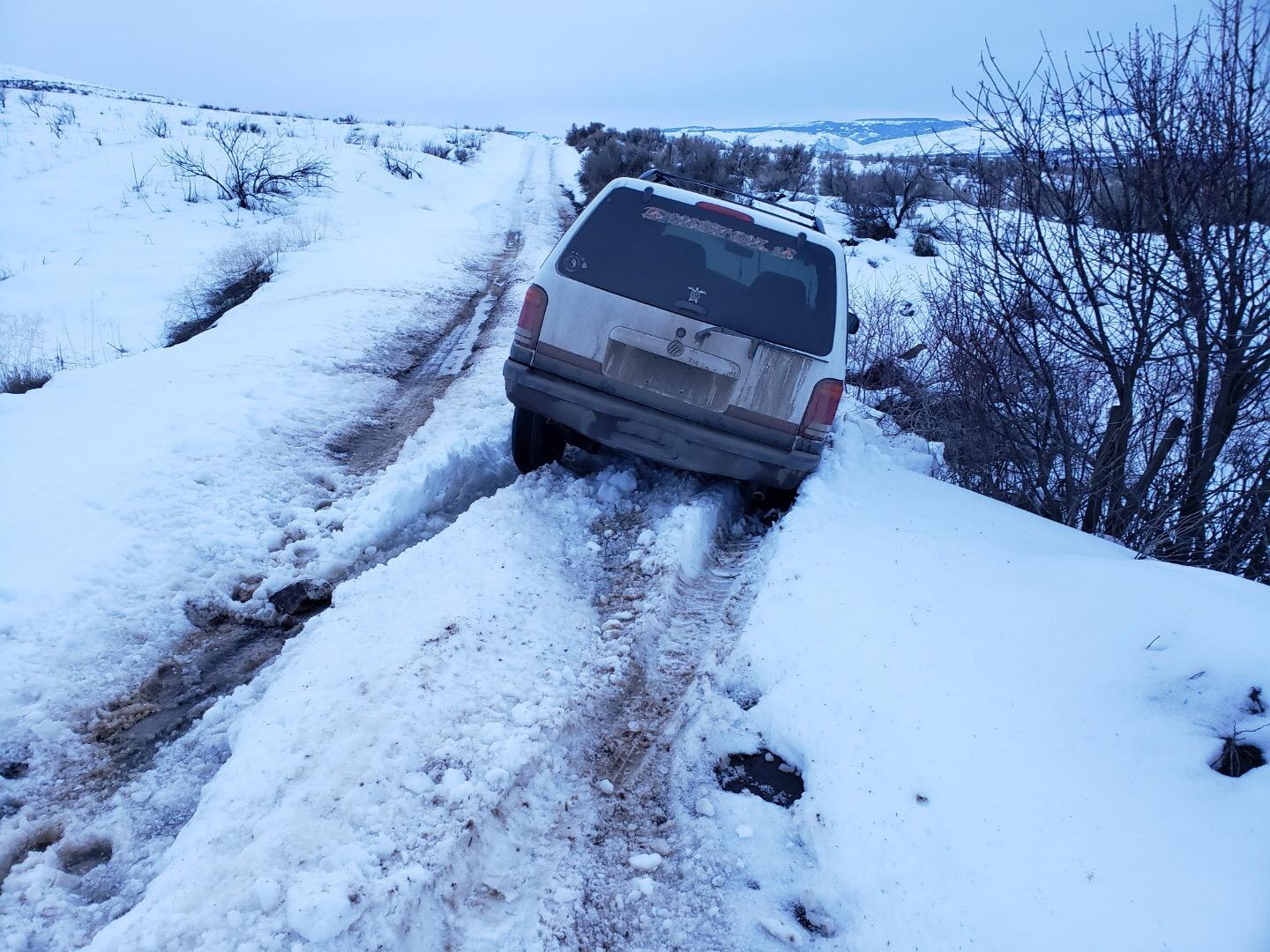
The honest drawback is weight. At 11.6 pounds this is by far the heaviest option in the roundup, and users who care about cargo space feel it immediately. Some buyers also treat the 22 percent stretch as a reason to size down, reasoning that high stretch means the strap is doing less static work on a lighter vehicle.
Stitching is a genuine strength here. Reviewers point out multiple straight rows of stitching running the full length of the strap rather than a single reinforced seam, and the high-visibility orange color stands out against terrain and snow. The company also backs it with a 99-year warranty, which is about as close to a lifetime commitment as a strap warranty gets.
Who the ALL-TOP kit works for
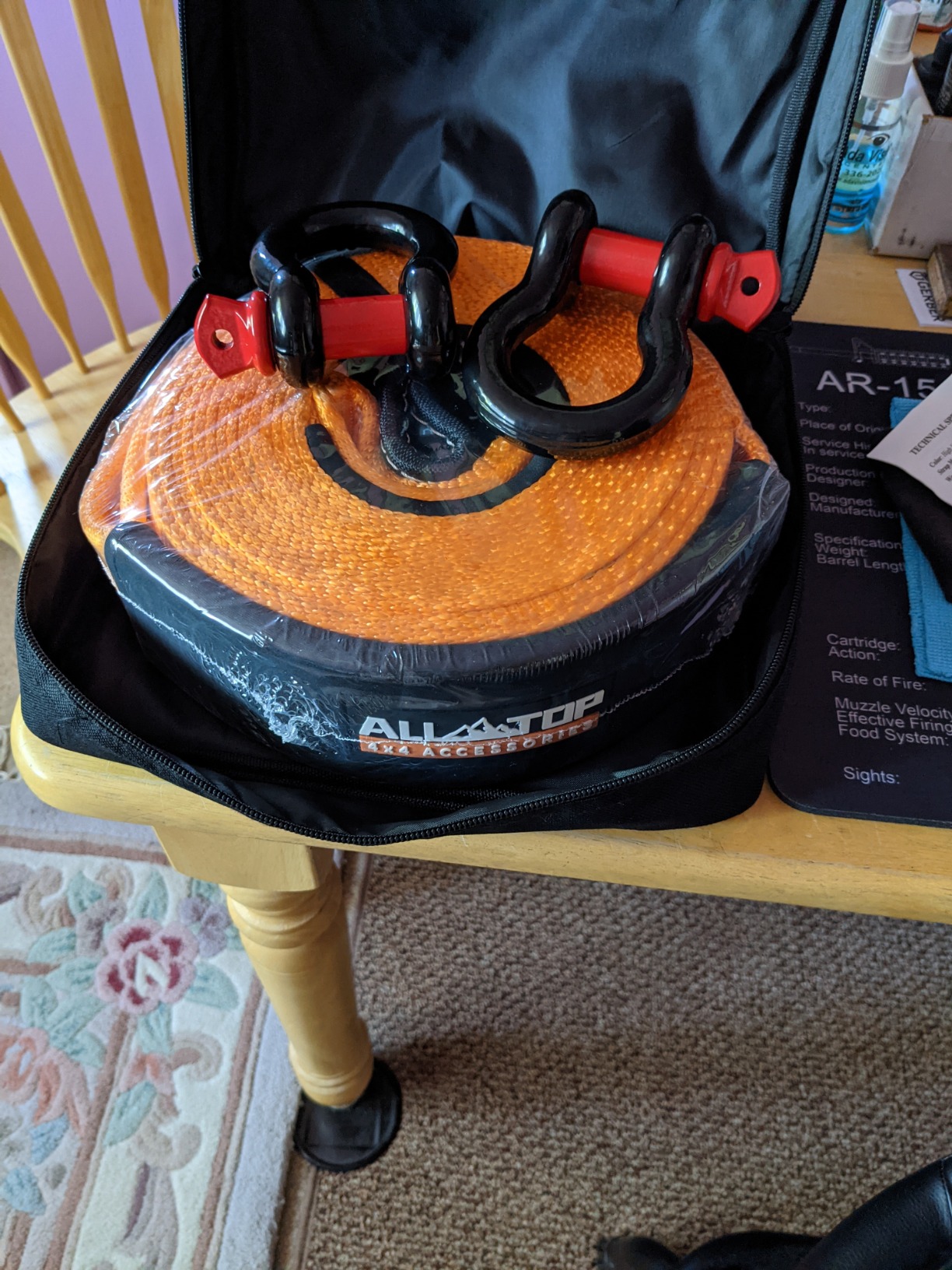
It works for anyone whose recoveries are shock-based rather than distance-based: deep sand, steep grades, snowbanks, or anywhere a strap gets jerked hard rather than pulled steadily. The nylon stretch is the entire point of this kit.
It also works for people who want one purchase instead of three. Strap, shackles and bag in a single box removes the most common beginner mistake, which is buying a strap and then discovering you have nothing to connect it to.
When 22 percent stretch is the wrong choice
If you are moving a stuck vehicle a controlled distance across a flat forest road, you want low stretch and high working load, not elasticity. A stretching strap is less efficient for steady pulling and will let a vehicle drift before it finally breaks loose.
And at 11.6 pounds, this kit changes your packing math. If you are solo overlanding with a limited recovery bag, the weight is a real cost for a benefit you only get in specific terrain.
5. sumpluct Recovery Tow Strap 2in x 20ft: Light-Duty Workhorse
Recovery Tow Strap 2in×20ft Heavy Duty 20,000 LBS Breaking Strength
Polyester, 2in x 20ft, 20000 lb break strength, reinforced eye loops, yellow, carrying sack
Pros
- Lightest and most compact strap in the group
- Reinforced double-web-loop ends resist abrasion
- Yellow with black loops is easy to spot
- Includes a carrying sack
Cons
- 2 inch webbing is narrow beside the 3 inch straps
- Owners caution against snatching full-size vehicles
- One buyer questioned the printed 20000 lb rating
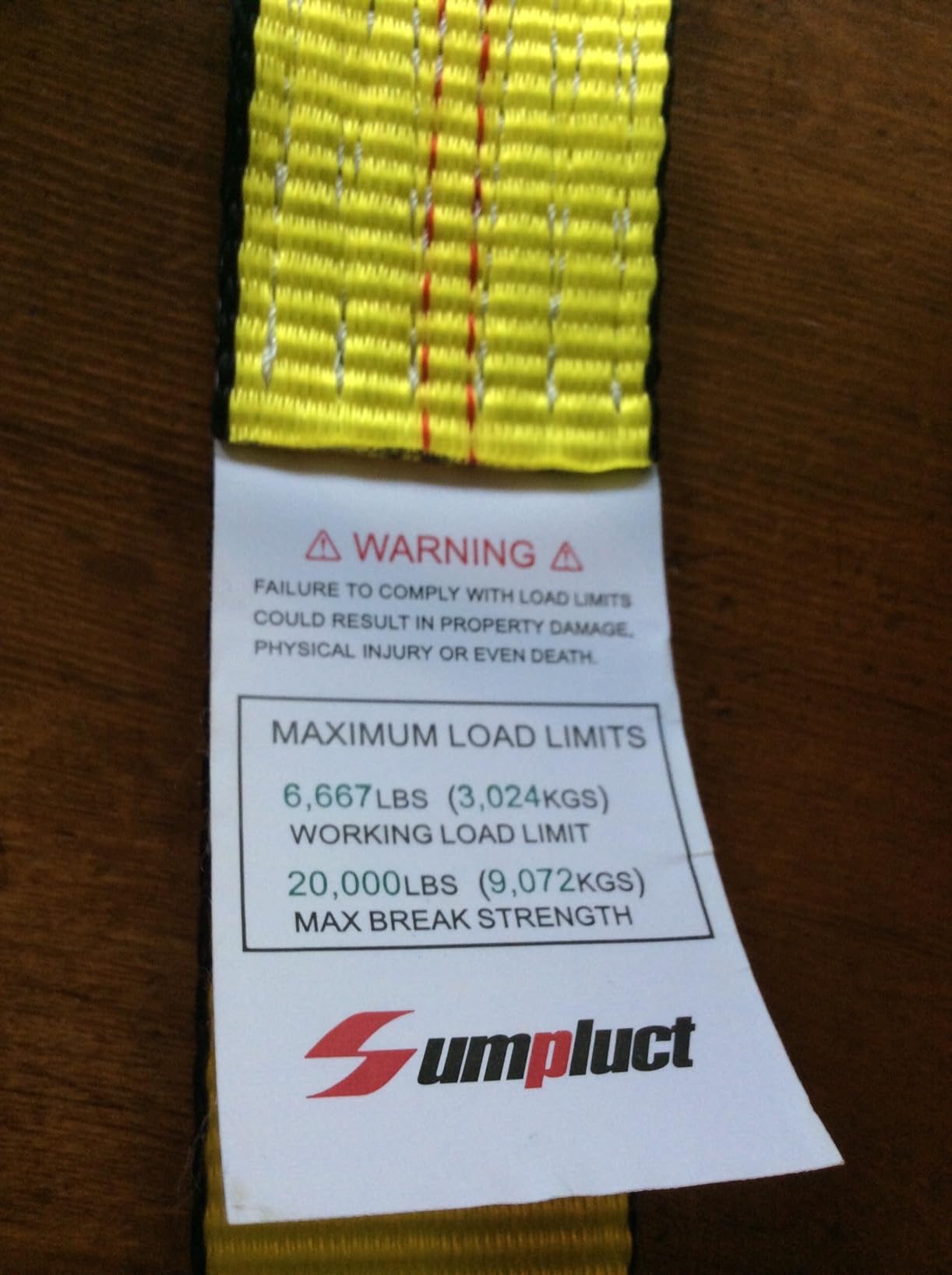
If your stuck vehicle weighs less than a full-size truck, this is where the value math starts to make sense. The sumpluct 2in x 20ft is rated at 20000 lb breaking strength in two-inch polyester webbing, and at roughly 2,100 reviews averaging 4.7 stars it has enough owner history to judge fairly.
Two inches of webbing is the narrowest in this roundup, and that single fact drives everything about it. Narrow webbing is lighter, folds smaller and costs less, which makes it genuinely packable in a door pocket or behind a seat. The yellow color with black reinforced eye loops is also easier to locate than a black strap on dark ground.
Owners report using it on quads, side-by-sides, ATVs and light trucks, and several mention passing the same strap between friends over the years without it failing. The reinforced double-web-loop ends are the part reviewers single out, since that is where a strap normally wears first.
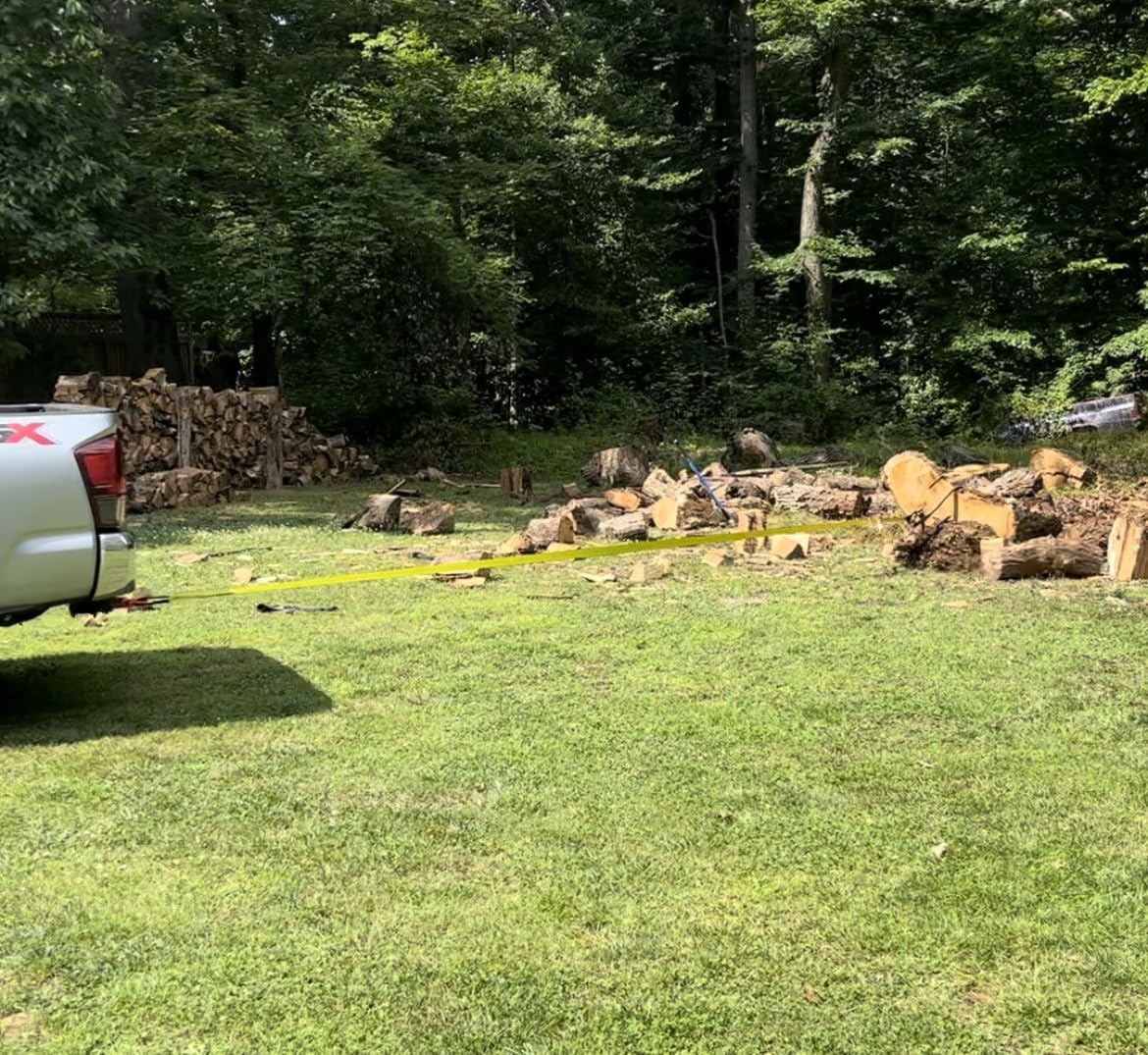
There is a caution we would repeat rather than bury. The recurring theme in the reviews is that two-inch webbing and a 20000 lb printed rating make this better suited to light recoveries than to snatching full-size vehicles. The number is a break strength, not a working load, and the gap between those two ideas is where injuries happen.
One buyer also raised a fair question about verifying rated break strength, comparing this strap’s printed 20000 lb figure against an older strap with half the rating that looked identical. That skepticism is healthy. Treat any printed rating as a manufacturer’s claim and size conservatively against your actual vehicle weight.
The polyester construction is also worth flagging as a limitation. With roughly two percent stretch, this is a static strap, so shock loads pass straight through to the recovery points and the strap stays stiffer to handle in cold weather than a nylon option would.
Who the sumpluct 2in x 20ft suits best
It suits owners of ATVs, UTVs, side-by-sides, motorcycles-support rigs and small SUVs, and it is the strap we would pack for travel where space is the constraint rather than capacity.
It also suits anyone who tows or recovers frequently but lightly. A two-inch strap is easy to coil, easy to find in a dark bed and easy to hand to a friend helping with a recovery.
Where the narrow webbing stops being enough
The honest ceiling is vehicle weight. At two inches wide with a 20000 lb break strength, this does not leave much headroom for a full-size truck, and the reviews themselves steer buyers away from that use.
The loop ends also mean you supply your own shackles. If you want factory hooks already fitted, this is not the strap, and adding hardware after the fact adds another connection point to inspect before every pull.
6. Grip Heavy Duty Tow Strap 4in x 30ft: Wide Webbing, Modest Working Load
Grip 30 ft x 4 in Heavy Duty Tow Strap – Breaking Capacity: 20,000 lbs – Truck, ATV, Jeep, UTV, Tractor – Emergency, Towing, Offroad – Reinforced Looped Ends
Polyester, 4in x 30ft, 20000 lb breaking capacity, 6666 lb working capacity, yellow
Pros
- Widest webbing here spreads load over a larger area
- 30 foot length gives good reach between vehicles
- Abrasion and weather resistant polyester
- Reinforced looped ends
Cons
- 6666 lb working capacity is well below its 20000 lb breaking capacity
- Only a 90 day manufacturer warranty
- Static strap with no stretch to soften snatch loads
This is the strap that most often gets misread, and that is worth addressing head on. Grip publishes a 20000 lb breaking capacity and a 6666 lb working capacity on the same 4in x 30ft strap. Both numbers are real; they simply mean different things, and only one of them is the number you are supposed to pull with.
Builders who read the specs carefully flag exactly this, and it is a good habit. Breaking capacity is what the strap survives before it parts. Working capacity is the load the manufacturer is willing to certify for normal use. The roughly three-to-one gap is intentional and is built into good recovery gear.
What Grip does well is geometry. At four inches wide, this is joint widest webbing in the group, which spreads load over a larger contact area and reduces the crushing and cutting you get on a softer recovery point. The 30-foot length also gives real reach, which matters when you need spacing between a pulling vehicle and a stuck one.
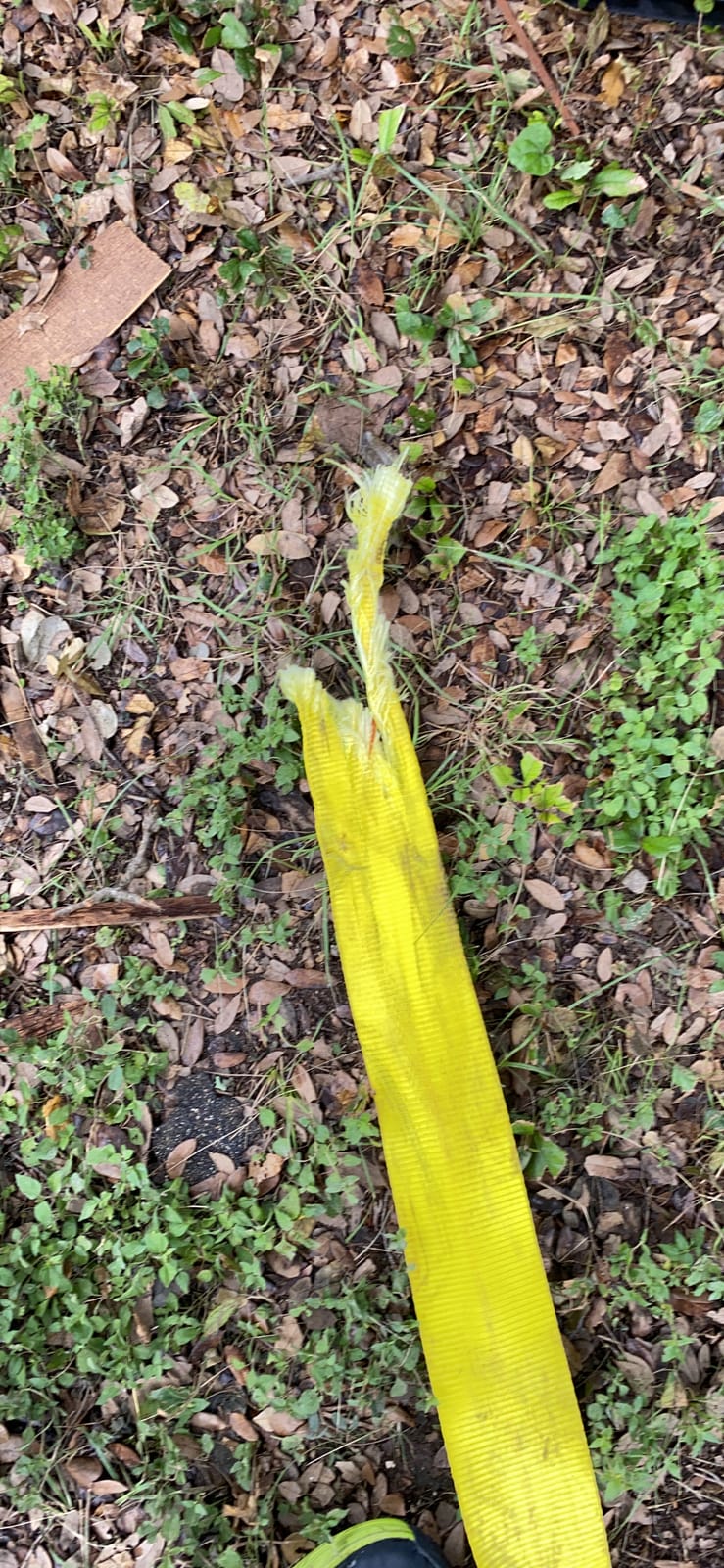
The polyester web is described as abrasion and weather resistant and will not rot or tear in extreme conditions, and buyers use it for cars, ATVs, SUVs, boats and light trucks. It is a sensible, unflashy strap that does the job without pretending to be a competition product.
Two things temper that. The 90-day manufacturer warranty is by far the shortest in this roundup, so the warranty is effectively a defect window rather than a service commitment. And with no stretch at all, hard snatches transmit straight into your vehicle, which is the other reason buyers pair it with a separate rope.
We would not choose this strap for a truck over 5,000 lb GVWR and call it done. At a 6666 lb working capacity, it is honestly labeled, and for a light truck, a boat or a farm quad it is more than adequate.
Who the Grip 4in x 30ft suits best
It suits light trucks, cars, boats, ATVs and UTVs, and it suits people who want wide webbing without the bulk of a heavier strap. Four inches of webbing is a lot of contact area for its weight class.
It also suits anyone who tows on pavement or pulls equipment a short distance rather than snatching vehicles out of deep mud, where low stretch is a feature rather than a drawback.
When 6666 lb working capacity is the deciding number
For a mid-size truck at full gross vehicle weight, this strap leaves no margin. The honest read is that Grip designed this for lighter recovery work, and the published working load limit is the spec to size against, not the breaking capacity.
The 90-day warranty is the other practical limit. If you recover often, you are effectively buying without a long service commitment, which is a real cost when gear lives in mud and salt year round.
7. Smittybilt Tow Strap SBCC330 3in x 30ft: Long-Haul Workhorse
SmittyBilt TOW STRAP 3IN X 30FT – SBCC330
Nylon, 3in x 30ft, 30000 lb pull rating, stainless steel hooks, double stitched webbing
Pros
- Survives hard snatches of a high-centered three-quarter-ton truck
- Light and quiet compared with chains
- Double-stitched webbing with double hoop ends
- Thirty foot length worked in a long soft-sand recovery
Cons
- Black fabric wrap on the end loops shreds under severe load
- End strands can separate if the pulling vehicle jerks
- Backed by only a one-year manufacturer warranty
Smittybilt built the SBCC330 for people who actually use their gear. It rates at 30000 lb with a 30000 lb pull rating across three inches of nylon webbing and thirty feet of length, and it is the one strap here where owners describe testing it against genuinely hard targets: high-centered three-quarter-ton trucks, tractors, motorhomes and shrubs.
The construction detail that matters is double-stitched webbing with a double hoop design at the ends, rather than a single reinforced seam. That is where straps normally fail first, so the extra work here is in the right place.
Owners also appreciate that a strap is quiet. No rattling, no clanking, no swinging chain links to hit your paint, which makes the SBCC330 far more pleasant to carry and use than the chain most people reach for first. A velcro strap for figure-eight storage is included, which helps it pack flat.
At roughly 3.1 pounds, this is one of the lighter options for a full thirty-foot strap, which is a real advantage if you are carrying recovery gear for a buddy as well as yourself.
What the one-year warranty tells you
A one-year manufacturer warranty is the weakest long-term commitment among the brands here. Rhino USA and JACO both offer lifetime replacement, so if long-term service matters to you, that is a genuine difference to weigh.
That said, the review history describes a strap that simply keeps working. Owners report it pulling cars, motorhomes, tractors and shrubs without breaking, which is a better track record than a warranty clause.
Where the end loop wrap fails first
The most repeated criticism is specific and useful. The black fabric protective wrap on the end loops shreds under severe load, and end strands can start separating if the pulling vehicle jerks rather than pulls smoothly.
That is a maintenance issue rather than a strength issue. Inspect the loops before every trip, and if the fabric wrap is gone, replace the strap or sleeve it before you rely on it in a hard recovery.
This is a hook-fitted strap with stainless steel hardware, so it connects directly to a rated recovery point without a separate shackle, which is a real convenience for a first kit.
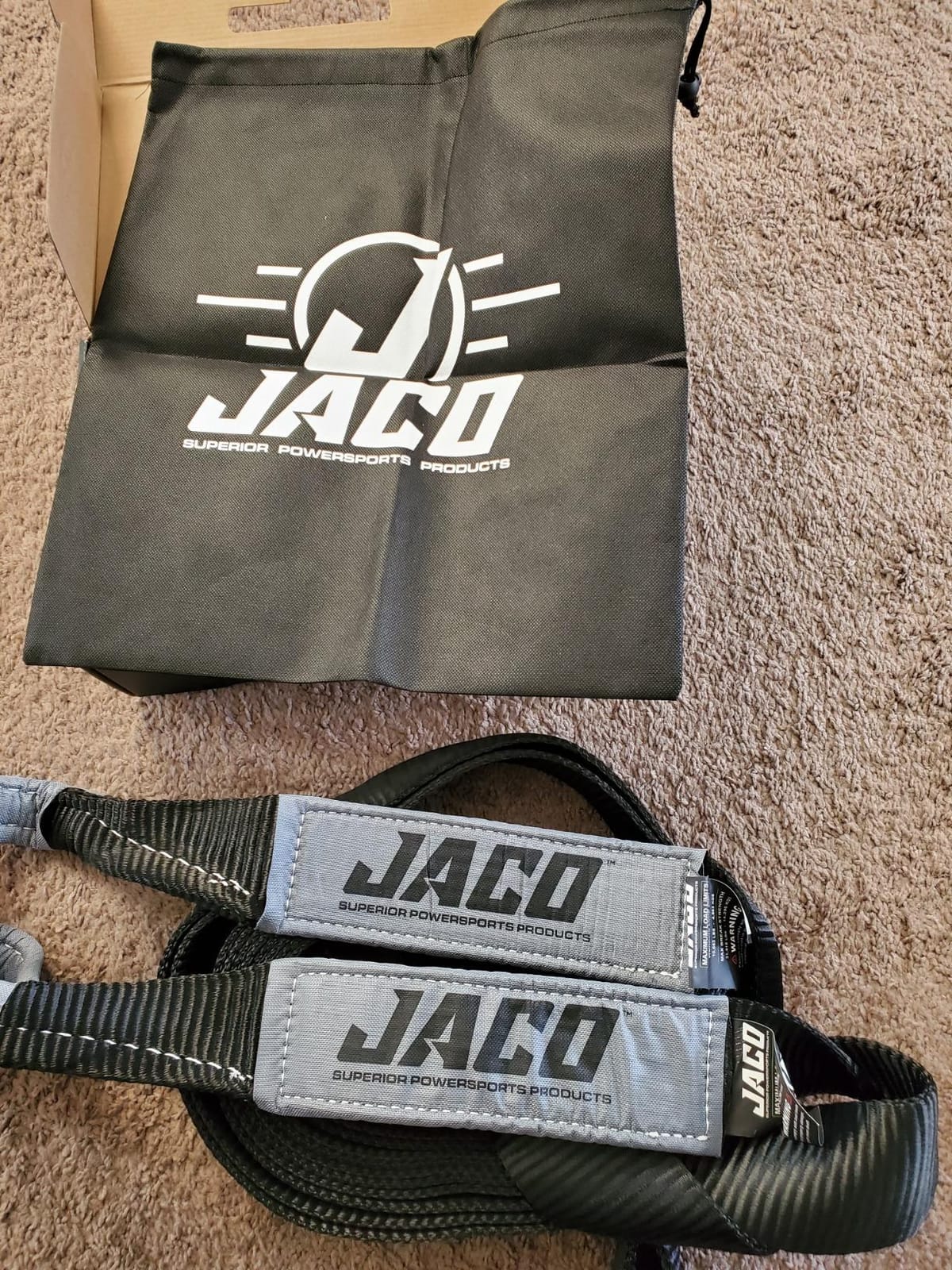
8. JACO TowPro Recovery Tow Strap 3in x 30ft: Best Documented Rating
JACO 4X4 TowPro Recovery Tow Strap for Off Road (3 inch x 30 ft)
Nylon and polyester, 3in x 30ft, 31542 lb break strength, 10663 lb working load limit
Pros
- Publishes both break strength and working load limit clearly
- Heavy-duty closed end loops with protective sleeves
- Double-diamond stitching through the body
- Backed by a 100 percent lifetime warranty
Cons
- Smallest review count of the heavily reviewed straps here
- Static build with limited stretch for snatch shock
- Black and gray color hides dirt well but shows wear poorly
The JACO TowPro is the strap to buy if you are the person who reads the label before you buy anything. It publishes a 31542 lb break strength and a 10663 lb working load limit side by side, and reviewers repeatedly say that transparency is the deciding factor over cheaper straps that print only one impressive number.
That 10663 lb working load is the second highest certified figure in this roundup, behind only the GearAmerica, and it is what you use to size the strap to your truck. At three inches by thirty feet it sits in the middle of the group on size and at the top on documentation.
Construction is where the rest of the effort goes. Heavy-duty closed end loops, double-diamond stitching through the length of the body, and protective sleeves over the connection points. Closed loops matter because they cannot open and slide off a recovery point the way an open hook can.
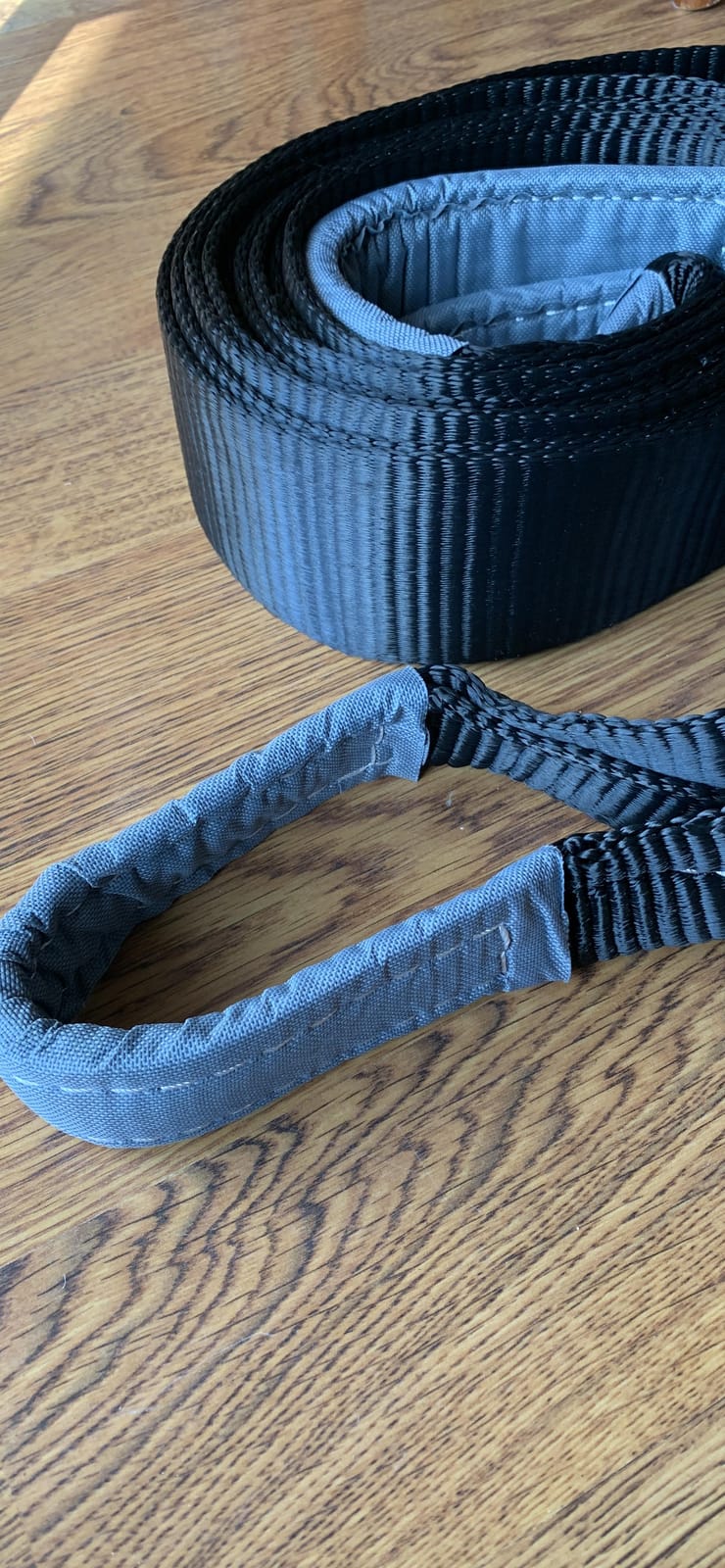
The company also states that its product is engineered and tested by a team with more than 35 years in the powersports industry, and it carries a 100 percent lifetime warranty. That is a stronger service commitment than almost anything else in the category.
Two honest limits. The review count of around 800 is the smallest of the heavily reviewed straps here, so there is less long-term owner history to learn from, even though sentiment is uniformly positive. And like the Rhino USA and GearAmerica straps, it is a static build with limited stretch, so shock loads go straight into your recovery points.
The color, black with storm gray, is designed to blend with factory trim rather than announce itself. That looks good on a show truck and means a muddy strap is less visible than an orange one, which is a tradeoff recovery gear buyers make all the time.
Who the JACO TowPro suits best
It suits anyone who wants one documented number to shop with. If you are not going to research ten products, publish both ratings and you can size the strap in about thirty seconds.
It also suits owners of half-ton trucks who need more headroom than a 20,000 lb class strap offers, and who want closed end loops instead of open hooks that can release under a shock load.
What thin review history means for you
Roughly 800 reviews is enough to show a product is not failing, but not enough to know how it looks after ten years of salt and mud. If you buy it, treat the first year as an inspection period.
The static build is the other tradeoff. For a controlled pull across flat ground it is exactly what you want, and for a hard snatch in deep sand you would be better served by a strap that stretches.
9. ARB Recovery Snatch Strap 30ft x 2-3/8in: Cleanest Rating Profile
ARB 4×4 Accessories ARB705LB Recovery Snatch Strap Orange 30′ x 2 3/8″, Load capacity 17,600 lb, NATA approved, 20% Stretch
100 percent nylon, 30ft x 2-3/8in, 17600 lb break strength, 20 percent stretch, NATA tested
Pros
- Highest rating in the group at 4.9 stars with 92 percent five-star reviews
- 20 percent genuine nylon elasticity
- Tested by a NATA approved laboratory
- Reinforced eyes and high-visibility orange
Cons
- Highest cost strap in this roundup
- Narrowest webbing here at 2-3/8 inches
- Needs a second vehicle rather than self-recovery
The ARB705LB is not really a tow strap, and that is the point. It is a 30-foot nylon snatch strap rated at 17600 lb breaking strength with a genuine 20 percent elasticity, built to extract a bogged four-wheel-drive when a second vehicle is present. ARB states the distinction plainly: for vehicle recovery a snatch strap is more suitable than a tow strap.
The rating profile is the cleanest in the roundup. It sits at 4.9 stars with 92 percent five-star reviews and, according to the review data, no one- or two-star ratings at all. The break strength is tested by a NATA approved laboratory, which is the kind of third-party verification most straps in this category never offer.
Owners credit the real 20 percent stretch for smoother recoveries and less vehicle damage, which is exactly the mechanism a snatch strap is supposed to use. The kinetic energy released on the load peak does part of the work for you instead of hammering your bumper.
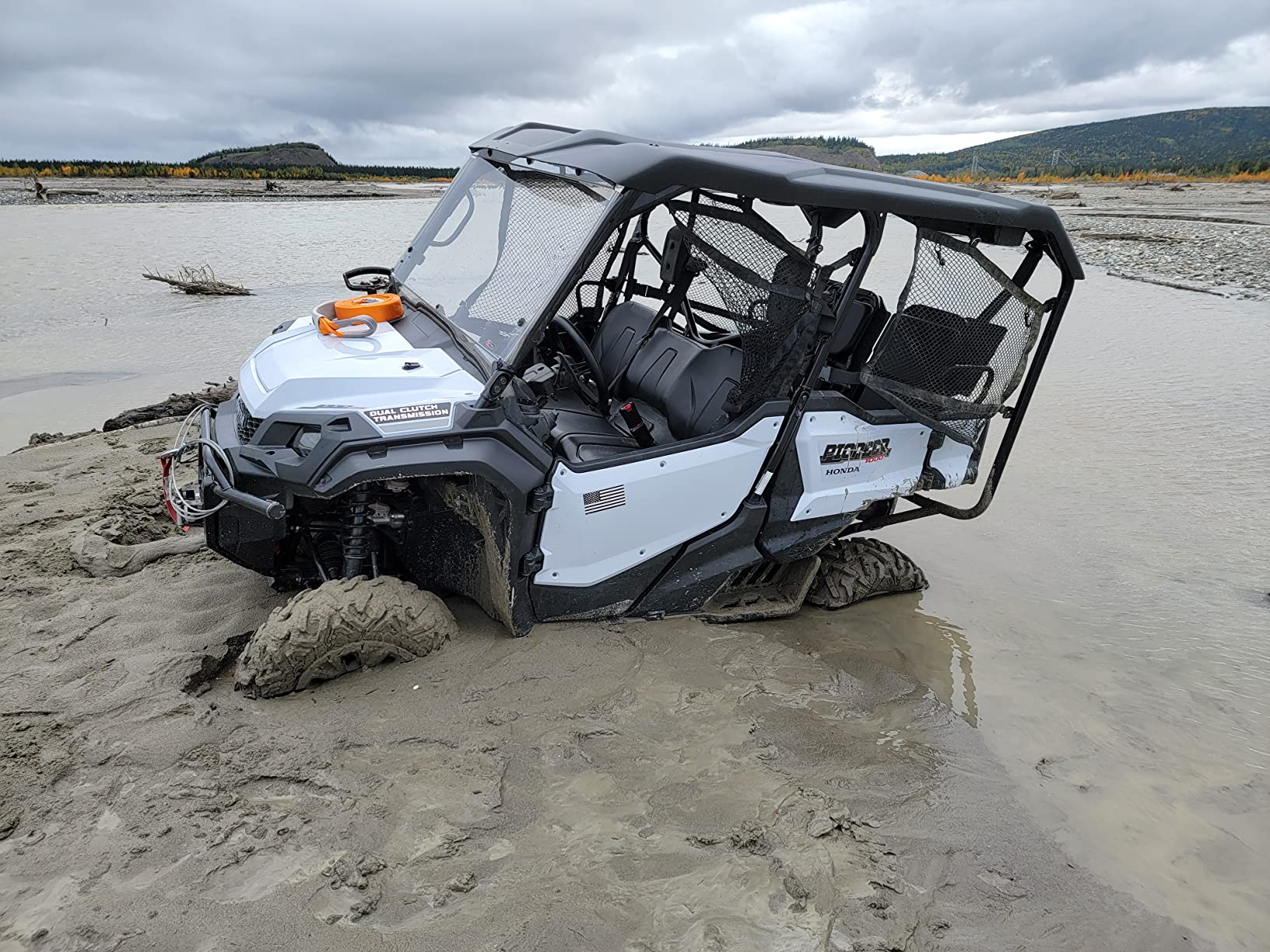
Reinforced eyes and a high-visibility orange body make it easy to find on the ground during a pull, and a two-year manufacturer warranty covers manufacturing defects. The narrow 2-3/8 inch width is deliberate, keeping the strap light enough to carry a full thirty feet.
The constraints are real, and they are why this is not our top pick. It is the highest cost option in the roundup. The 17600 lb breaking strength is lower than several flat straps here, which is fine for the controlled, short pulls a snatch strap is designed for but not what you want for heavy equipment work.
Most importantly, it requires a second vehicle. This is a buddy recovery tool, not a self-recovery tool, and if you travel alone it is the wrong primary strap no matter how good the rating profile looks.

Who the ARB snatch strap suits best
It suits people who recover others more than they recover themselves, and who drive in company. Overlanding groups and trail clubs are the classic case, where a second vehicle is usually nearby.
It also suits anyone who wants independent lab verification of the published break strength. A NATA approved laboratory test is a different category of claim from a manufacturer’s own number.
Where a snatch strap falls short
At 2-3/8 inches and 17600 lb, this strap is not built for moving equipment or a heavy truck a long distance. Short controlled pulls on muddy or sandy terrain are what it is engineered for.
If you are solo and want one tool that covers both self-recovery and buddy recovery, a static flat strap with a higher working load will serve you better, and you can add a snatch strap later.
10. Rhino USA Tree Saver Tow Strap 3in x 8ft: The Multi-Tool
Rhino USA Tree Saver Tow Strap (3in x 8ft) – 31,518lb Winch Extension
Polyester, 3in x 8ft, 31518 lb break strength, 2.4 lb, triple reinforced loop ends
Pros
- Full 31518 lb break strength in a compact 8 foot strap
- Works as tree saver
- winch extension or cross strap
- Accepts metal or soft shackles at the ends
- Lifetime replacement warranty included
Cons
- Eight feet is far too short for a vehicle-to-vehicle tow
- Static polyester with little stretch
- Fixed length leaves little room for large anchor points
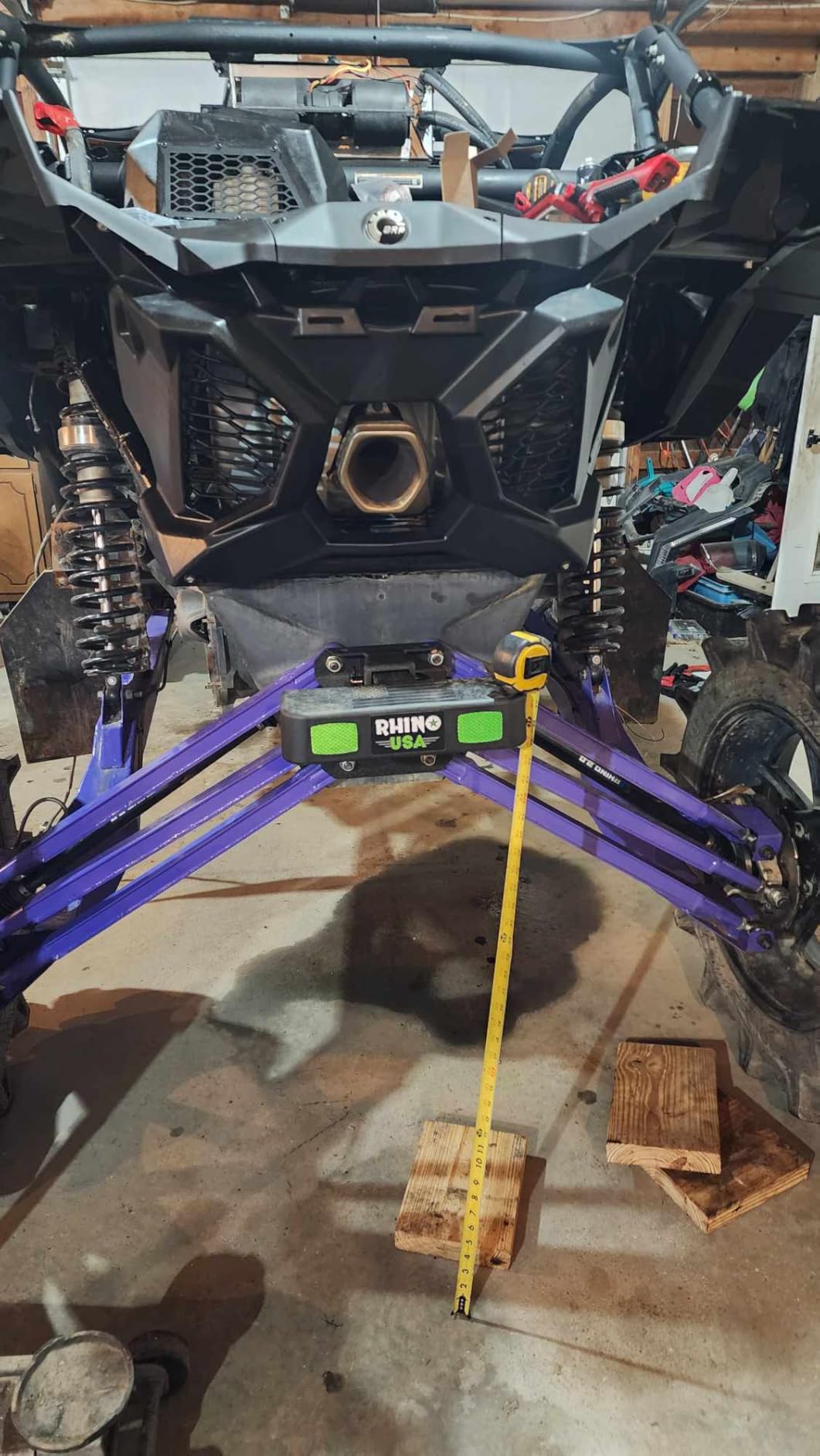
The shortest strap here is also the most versatile per pound. At 3in x 8ft and 2.4 pounds, the Rhino USA Tree Saver carries the same 31518 lb break strength as the flagship twenty-footer and does three separate jobs: a tree saver, a winch line extension, and a two-point cross strap for pulling something with a bit of spread.
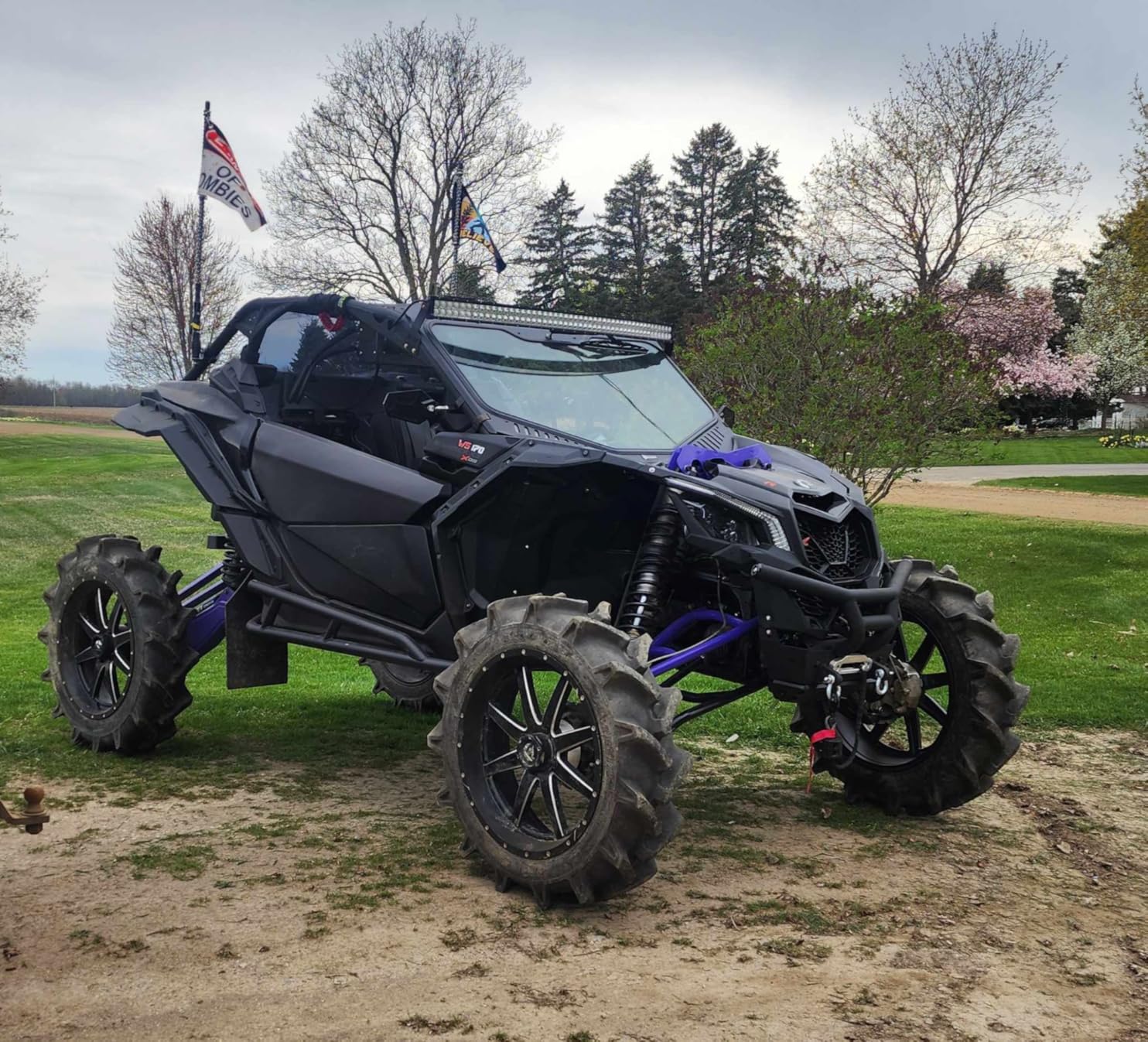
Owners describe using it for exactly that range of jobs, including recovering quads, a Tahoe and side-by-sides. The loop ends accept either metal or soft shackles, which makes pairing it with a soft shackle setup straightforward, and the same lifetime replacement warranty applies.
As a winch extension, it solves a real problem. A factory winch line on a long rig pulls a short distance, and a long extension wrapped around a tree or a second anchor can double your reach without dragging more steel cable through the mud.
There is one thing this strap is not, and buyers discover it the hard way. Eight feet is a winch extension length, not a tow strap length, so it cannot be used for a direct vehicle-to-vehicle pull. If you buy this as your only strap, you have bought a tree strap.
The fixed length is also the practical constraint on tree work. Wrapping a large-diameter trunk needs more circumference than eight feet of strap allows, so it suits smaller or medium anchor points rather than a big cottonwood.
Like the other Rhino USA straps, it is static polyester with very little stretch, so the shock of a hard pull transfers straight into whatever you have it anchored to. That is acceptable for a controlled winch pull and not what you want in a snatch.
Who the 8 foot tree saver suits best
It suits anyone with a winch who keeps running out of reach, and anyone who pulls brush, deadfall or small trees out of a trail without dragging a twenty-foot strap behind them.
At 2.4 pounds it is the easiest strap here to keep permanently in the truck, which is arguably the most important feature for gear you want available when the trail turns muddy.
When eight feet is the wrong length
Any time you need to connect two vehicles directly. Twenty feet is the shortest length most people find workable for a proper anchor-and-pull setup, and anything under ten feet leaves you improvising.
It is also the wrong tool for lifting or moving deadfall on its own. Give it a vehicle and a winch and it is excellent, but on its own it is an anchor aid, not a recovery strap.
Tow Strap vs Recovery Strap: What Is the Difference?
A tow strap is flat webbing rated to pull a vehicle over a distance, usually fitted with metal hooks or shackles at each end. A recovery strap, more specifically a snatch strap, is a narrower nylon or polyester strap built to yank a vehicle free of a stuck position in one short, controlled pull. Both connect two points. They differ in material, length and how they handle load.
The distinction matters because people buy the wrong one and then use it outside its design case. A tow strap is built for a steady, longitudinal pull across flat ground, so it favours low stretch, wide webbing and a high working load. A snatch strap is built for an impulsive pull, so it favours a narrow profile, real elasticity and reinforced eyes.
A third category confuses the mix further. A kinetic rope is a round braided line that can stretch up to roughly twice its static length, which turns a violent yank into a smooth progressive pull. It is the most forgiving tool in the field and the most expensive, which is why it lives next to the straps rather than replacing them.
Buyers on recovery forums think in exactly these terms. A thread on shackles, straps and ropes frames all three as one decision set and talks about working load limits and breaking strengths directly, which is the vocabulary we use throughout this guide.
Tow Strap vs Kinetic Rope vs Snatch Block: Which Tool Do You Need?
Most overlanders end up carrying one of each, because they fail in different ways. A flat strap gives you control and a usable working load. A kinetic rope gives you shock absorption in deep sand and on grades. A snatch block halves the pulling force required and keeps the strap or line off the ground. A fourth option, a tree saver, protects the anchor you are pulling against.
The often-asked question about which rope brand is better comes down to stretch behavior and splice quality rather than brand. The comparison usually drawn is between Yankum Ropes and Rhino USA, and it is a fair one, since both publish breaking strength per size and both are widely carried. The names that come up most often alongside them are Bubba Rope and MAXTRAX, and if you are watching recovery videos you will also see Matt’s Off Road Recovery discussed constantly as the reference point for rope technique rather than for a single product.
Our read after comparing all of it: for flat straps, the difference between a 45000 lb rated four-inch strap and a 20000 lb rated two-inch strap matters far more than the logo on either. Pick by published working load limit against your vehicle’s gross weight, then pick the length that fits your storage.
Where the brands diverge more clearly is documentation and service. Rhino USA, JACO and ALL-TOP back their straps with lifetime or long-term replacement policies, while some value-tier straps carry 90-day or one-year defect windows. If you recover often, that difference is worth more than any spec on the label.
For most people the answer is simple. Carry a three-inch polyester strap for controlled pulls, add a snatch strap if you recover buddies regularly, and add a rope if your terrain is deep sand or steep. Our winch roller fairlead guide covers the hardware that pairs with whichever line you choose.
How to Choose the Right Tow Strap for Your Truck
Size the strap to the vehicle you are recovering, not the one you are standing in. Start with your gross vehicle weight rating from the door jamb, not the curb weight, and use the published working load limit rather than the breaking strength. The working load limit is the load a manufacturer certifies for normal use, and it is typically about one third of the breaking capacity.
The sizing rule that works is three times gross vehicle weight. For a truck rated at 6400 lb GVWR, that means a strap with at least a 19200 lb working load limit, which puts the 31518 lb Rhino USA, the GearAmerica and the JACO TowPro in range, and leaves the two-inch 20000 lb class straps as light-recovery tools only. Applying this rule to flat webbing, rather than only to kinetic rope, is the single most useful thing you can take from this guide.
Width: 2 inch, 3 inch or 4 inch
Two-inch webbing is for quads, UTVs, side-by-sides and light trucks. Three inches is the default for most people and covers everything from a Tacoma to a Silverado. Four inches spreads load over a larger area, resists cutting into softer recovery points and is the choice when you pull equipment rather than vehicles, at the cost of bulk. Wider is not automatically better, but wider is stronger.
Length: 20ft vs 30ft
Twenty feet is enough for most anchor-and-pull setups and packs far more easily, which is why it is our top pick. Thirty feet gives you real spacing between a pulling vehicle and a stuck one, which matters in long soft sand and on open recoveries where you need a wide anchor geometry. The cost of thirty feet is bulk: it takes noticeably more stowage space and it is easier to snag on brush.
Under ten feet is a different product entirely. That is a tree saver or a winch extension, and buying one of those expecting it to tow a vehicle is the most common mistake we see in recovery threads.
Material and stretch
Polyester stretches about two percent, so it is stiff, efficient and quiet, and it delivers force immediately. Nylon stretches ten to thirty-five percent depending on the grade, so it absorbs shock and releases stored energy in a kinetic pull that is far gentler on both vehicles. The 20 percent figure on the ARB and the 22 percent on the ALL-TOP kit put those firmly in snatch territory, and the 7 percent on the Sunferno sits in a middle ground that many buyers prefer.
Weather matters too. The GearAmerica publishes a -40F to 215F operating range, which is unusually specific and useful if you recover in winter or work vehicles out of hot clay. Stiff low-stretch webbing also handles colder more predictably than an elastic strap does.
End hardware
Open S-hooks are fast and familiar. Closed end loops and shackles are safer because they cannot open and slide off a recovery point under a shock load, and the hook-release strike people fear in recovery threads is a real failure mode with open hardware. Match your shackle to the strap and keep the shackle rating at or above the strap’s working load limit. We cover the pairing in more detail in our soft shackle guide.
One more thing to check: your factory tow hooks. A 30,000 lb strap hooked into a 2,000 lb stamped steel tow point is a false sense of security, and forum users ask about this constantly. The strap is only as strong as the weakest recovery point it touches.
What to skip
Skip any strap with no published working load limit or breaking strength. A label that says only heavy duty is telling you nothing you can size against. Be cautious with unusually low-cost straps whose printed ratings have been questioned by owners, and be skeptical of any brand that does not publish a warranty period at all.
Recovery Strap Safety: Six Mistakes That End Recovery Badly
Most recovery injuries come from a short list of avoidable mistakes, and none of them are exotic. Six account for nearly all of them.
Standing in the line of the pull. A strap under tension can part, whip back or release a hook, and any of those can strike a person. Stand to the side, out of the line between the anchor and the vehicles, and keep everyone back during a pull.
Using an open hook that can release. This is the incident people fear most, and it has ended up going through windshields. Closed end loops, screw pin D-shackles and properly rated soft shackles do not open under a shock load the way an open hook can.
Treating breaking strength as working load. Pulling at the breaking strength number is how straps and vehicles get destroyed. Work at the published working load limit and leave the rest as margin.
Jerking the load instead of pulling smoothly. Shockload is the sudden force at the moment a stuck vehicle breaks loose, and it can be many times the steady pull. Ease into it, keep the strap in line with the pull, and never stand downhill of a tensioned strap.
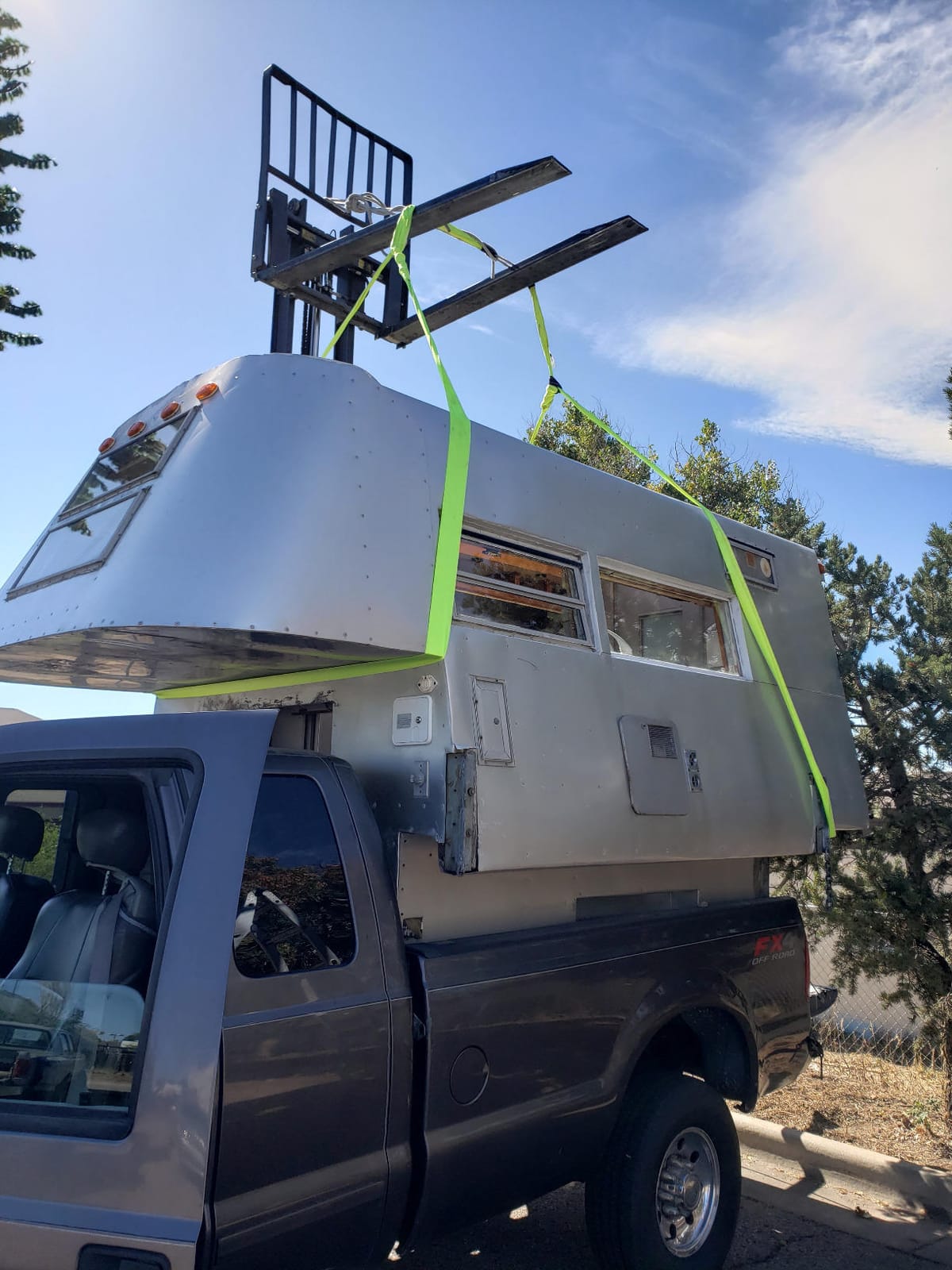
Winching or lifting with a tow strap. A tow strap is not a lifting device and not a winch line. Use rated winch rope or a lifting sling for those jobs, and never use a tow strap to raise or move a vehicle.
Skipping the pre-trip inspection and the wash. Look for frayed fibers, pulled stitching, cut webbing and damaged loop wraps before every trip. After a recovery, rinse the strap, dry it out of direct sun and store it rolled rather than folded, because UV and trapped grit are what eat webbing.
Two more practical points. High-visibility color, which the Sunferno and the ARB both prioritize, is a genuine safety feature when you are walking back to a truck at dusk. And a strap you cannot find on the ground is a strap you will trip over mid-pull, which is how a lot of recoveries turn into first aid cases.
Frequently Asked Questions
What are the best off-road tow straps?
The best off-road tow straps depend on your vehicle weight and terrain. For most weekend off-roaders the Rhino USA 3in x 20ft is the all-rounder, with a 31518 lb break strength and a 10000 lb working load. Heavier trucks should look at the GearAmerica 4in x 30ft for its 12000 lb working load limit. Size any strap to at least three times your gross vehicle weight.
What’s the difference between a recovery strap and a tow strap?
A tow strap is flat webbing rated to pull a vehicle over a distance, usually with metal hooks or shackles at each end. A recovery or snatch strap is narrower nylon or polyester built for one short, controlled pull out of a stuck position, and it stretches to absorb shock. Tow straps favor low stretch and high working load; snatch straps favor elasticity.
Is a 20ft or 30ft recovery strap better?
Twenty feet is enough for most anchor-and-pull setups and packs more easily in a recovery bag. Thirty feet gives you more spacing between the pulling vehicle and the stuck one, which helps in long soft sand and on open recoveries. Choose 30ft when you have the stowage room and expect long recoveries, and stay at 20ft when cargo space is tight.
What working load limit do I need for my truck recovery strap?
Use at least three times your gross vehicle weight rating, taken from the door jamb rather than the curb weight. A 6400 lb GVWR truck needs a strap rated at 19200 lb working load or higher. Always size against the published working load limit rather than the maximum breaking strength, which is roughly three times higher.
Can you use a tow strap to winch or lift a vehicle?
No. A tow strap is designed for pulling, not lifting or winching. Winch lines and rated lifting slings exist for those jobs because they handle shockload in a controlled way a flat strap does not. Using a tow strap to lift or winch a vehicle risks parting the strap and can cause serious injury or vehicle damage.
Do I really need expensive recovery straps?
No. The Sunferno 3×20 Ft holds a 4.8 star average across roughly 4000 reviews with a 35000 lb rating and 7 percent stretch, which is plenty for most weekend recoveries. Expensive straps buy you laboratory-verified ratings, higher working loads, better stitching and warranty service, but the jump from budget to premium is not a safety threshold for most people.
What are the most common recovery strap mistakes?
The most common mistakes are standing in the line of the pull, using open hooks that can release and strike a windshield, treating breaking strength as working load, jerking the load instead of pulling smoothly, winching or lifting with a tow strap, and skipping the pre-trip inspection. All six are avoidable with a ten-second check before you pull.
The Best Tow Straps for Off Road Recovery: Our Verdict
After reading the specs, the warranty terms and the owner feedback across all ten, the Rhino USA 3in x 20ft is our pick for the best tow straps for off road recovery. It pairs a 31518 lb break strength with a 10000 lb working load, weighs 4.6 pounds, and sits behind more than 10,700 reviews averaging 4.8 stars with a lifetime replacement warranty that owners say is actually honored.
Buy the GearAmerica 4in x 30ft if your truck is heavy or you pull equipment, the Smittybilt SBCC330 if you want factory hooks and a light 30-foot strap, and the ARB snatch strap if you mostly recover other people and want laboratory-verified 20 percent stretch. Skip the sub-5000 lb working load class entirely for anything above a light truck.
Whichever one you pick, match it to shackles rated at or above its working load limit, check your factory tow hook rating, and pair it with the rest of your kit. Our off-road shovel picks and recovery kit guide cover what else belongs in the bag, because a strap is only useful when the rest of the gear is there too.