
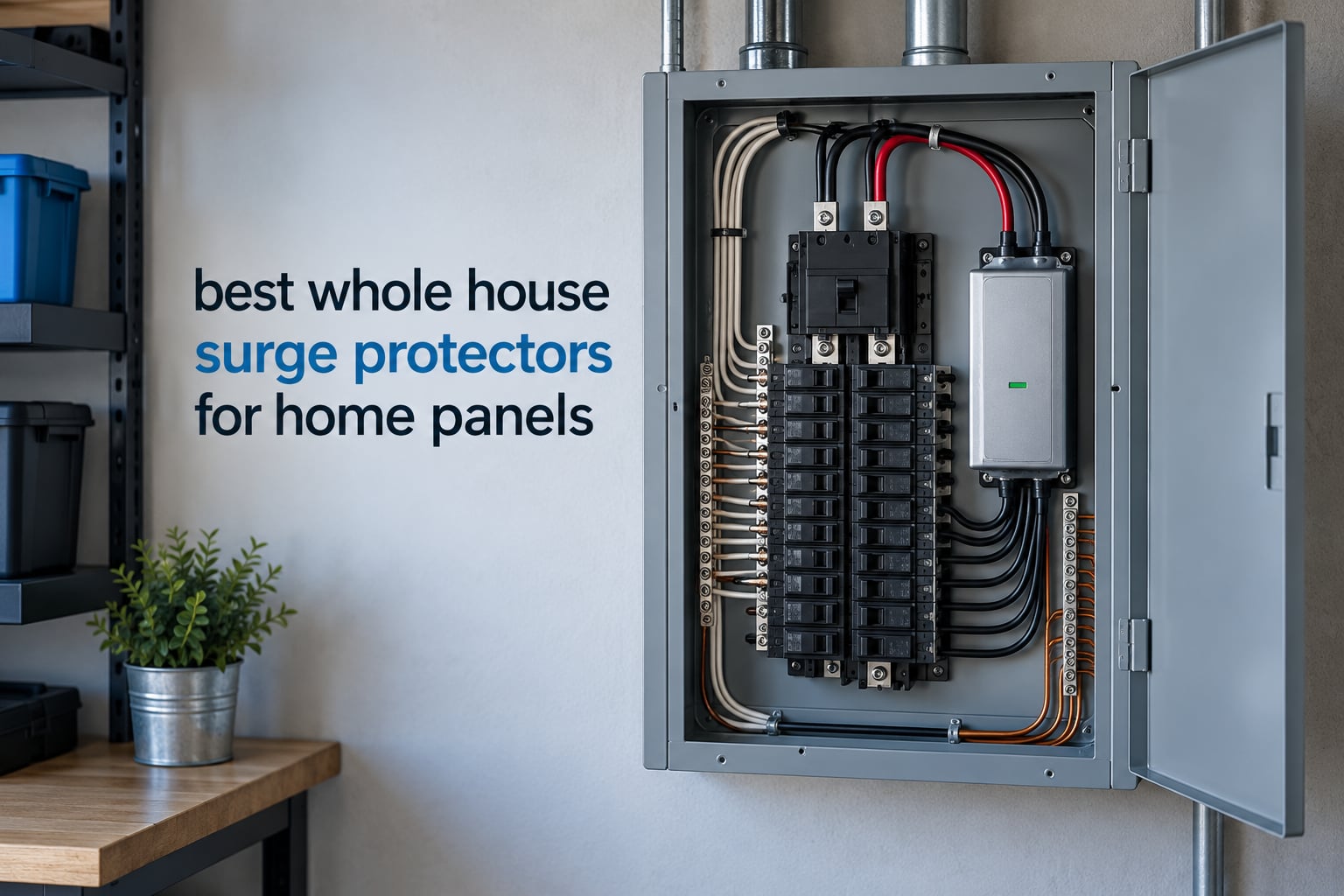
The best whole house surge protectors for home panels are the ones that actually seat in your load center, take up a realistic amount of breaker space, and still carry a surge capacity that matches how hard your utility hits the service. A surge protective device, or SPD, is a hardwired box installed at the main panel that clamps voltage spikes and shunts the excess current into your grounding system before it reaches appliances, HVAC gear, and electronics.
Most homeowners never see a surge coming. Roughly 80 percent of the surges in a home are generated inside the house itself, when the compressor in the HVAC unit kicks off, a well pump starts, or the utility switches large loads on and off. Those internal events run in the 1 to 5 kA range, which is small enough that a power strip handles some of them and large enough that unprotected electronics accumulate damage over years. External events, mainly lightning and utility faults, are a different animal entirely and reach tens of thousands of amps, which is what destroys a control board in a single event.
Because of that split, every roundup that ranks these devices purely by kA rating misses the part that decides whether you end up happy with the purchase. Panel fit is the real filter. A 260kA device is pointless if it will not mount inside a full panel, if it needs a two-pole breaker space your box does not have, or if its leads are too short to reach without a splice. We compared eight units across four panel brands and a spread of indoor and outdoor installs to work out which ones fit cleanly and which ones fight you.
We also looked at what happens a decade later, because serviceability matters. Several of these units are single-shot: once the metal oxide varistors inside are spent, you replace the entire device and pay for a second electrician visit. Others let you swap a small cartridge. That difference in long-run cost rarely appears in competitor comparisons, and for Florida, Gulf Coast, and Mountain West homeowners it is the deciding factor.
Top 3 Whole-House Surge Protectors for Home Panels in 2026

Siemens FS140 140kA Type 2
- 140kA per phase
- NEMA 4X die-cast housing
- 10-year product and connected equipment warranty

Square D HEPD80 80kA
- 80kA in a compact body
- Mounts inside standard load centers
- LED replacement indicator

Eaton CHSPT2SURGE 36kA
- 36kA with 2 MOVs per leg
- NEMA 4 gasketed housing
- Universal load center fit
The Siemens FS140 takes the top slot because it pairs the highest capacity in a widely available housing with universal panel compatibility and a ten-year coverage term, and it carries more reviews than anything else we evaluated. The Square D HEPD80 is the value pick, packing 80kA into a body small enough for a crowded load center. The Eaton CHSPT2SURGE is the cheapest way to add real panel-level suppression if your install stays indoors.
8 Best Whole House Surge Protectors for Home Panels (October 2026)
| Product | Specs | Action |
|---|---|---|
| Siemens FS140 140kA Type 2 SPD |
|
Check Latest Price |
| Square D HEPD80 80kA |
|
Check Latest Price |
| Eaton CHSPT2SURGE 36kA |
|
Check Latest Price |
 Siemens QSPD2A065P BoltShield 65kA Siemens QSPD2A065P BoltShield 65kA |
|
Check Latest Price |
 Siemens QSPD2A035B BoltShield 35kA Siemens QSPD2A035B BoltShield 35kA |
|
Check Latest Price |
 Intermatic IG2240-IMSK Smart Guard Intermatic IG2240-IMSK Smart Guard |
|
Check Latest Price |
 Bad Wolf HSD240V 260kA Type 1 Bad Wolf HSD240V 260kA Type 1 |
|
Check Latest Price |
 Furniqro FHSPD36S 36kA Furniqro FHSPD36S 36kA |
|
Check Latest Price |
1. Siemens FS140 Pro 140kA — Best Overall for Panels of Any Brand
Siemens FS140 Whole House Surge Protection Device Rated for 140,000 Amps
Type 2
UL 1449 listed
140kA per phase
NEMA 4X housing
10 x 6 x 4 inches
Pros
- 140kA of surge current per phase
- NEMA 4X die-cast enclosure for indoor or outdoor mounting
- Compatible with any load center and breaker brand
- Audible alarm plus protection and service LEDs
- 10-year product and connected equipment warranty
Cons
- 2-pole breaker not included
- 3/4 inch conduit port is awkward to seal
- Whole unit replacement after a severe surge
- Not rated for direct lightning strikes
The FS140 is the one we kept coming back to during this comparison. It is a Type 2 SPD rated for 140,000 amps of surge current per phase, and it works with any brand of load center and breaker, which removes the single biggest headache in this category. If your panel is a brand we did not test with, or an older model with an unusual bus, this is still the safe choice.
Buyers in high-surge regions describe it as quiet, uneventful protection. Nothing to look at after a storm except the indicator lights. The build quality matches that reputation, and the die-cast NEMA 4X housing means you can mount it inside the panel or outside on the wall without changing the device.
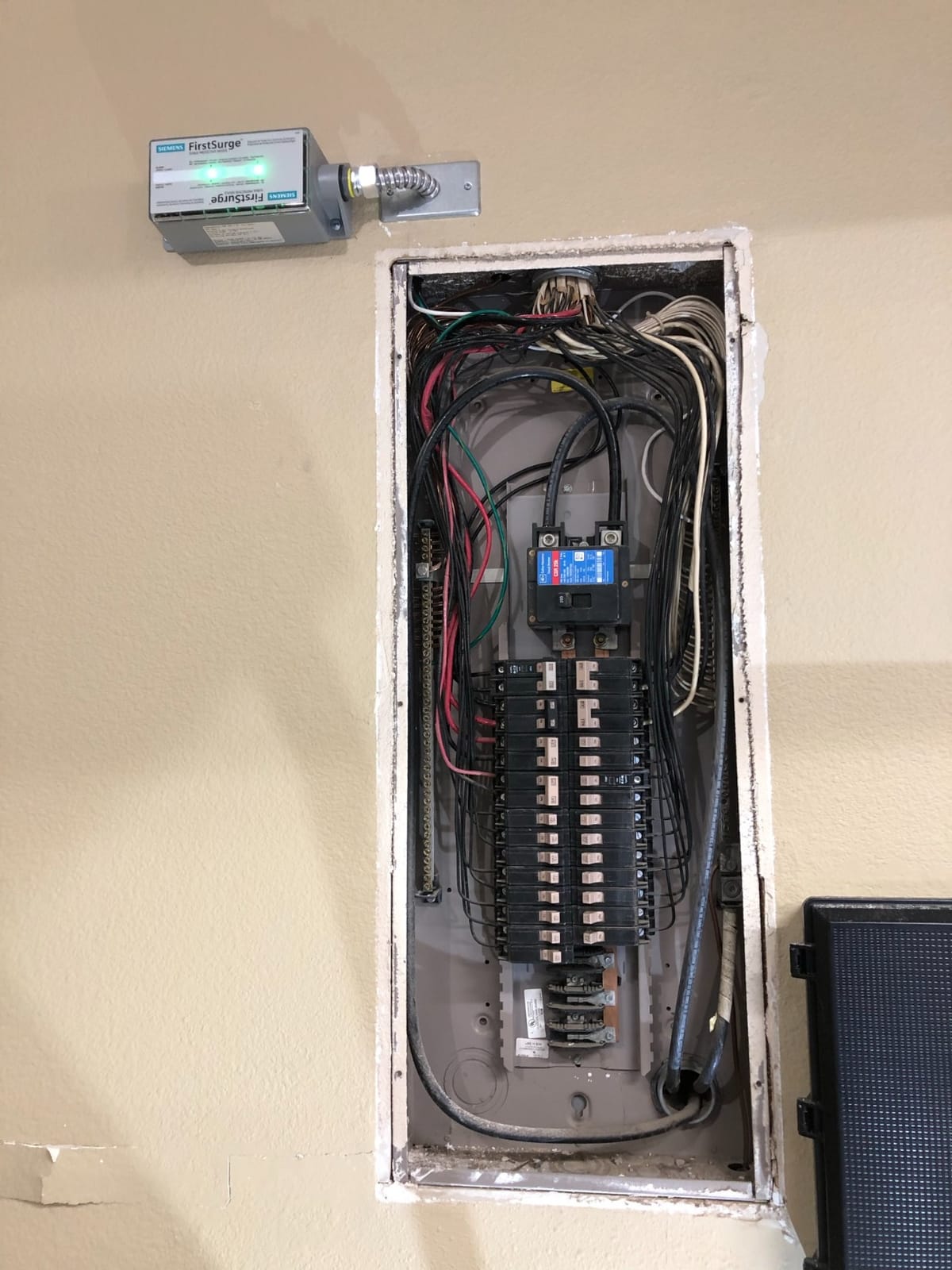
The status reporting is more thorough than most. You get an audible alarm, green protection LEDs, and a separate red service LED, so a failed unit is hard to miss even if nobody has opened the panel in months. Owners who called Siemens support report the technical help as knowledgeable and responsive, which matters when you are trying to size a breaker.
The leads run about 24 inches, which is the practical reason this unit is easier to route than most. Short leads are a deliberate design choice in this industry, and we explain why below, but when a panel has crowded wiring you will appreciate the extra length here rather than fighting a splice.
Owners sometimes mistake the plain box presentation of the Pro Pack for refurbished stock, so check the manufacturer date code when it arrives. The 10 x 6 x 4 inch iron enclosure weighs 2.7 pounds, which is substantial enough to feel permanent but not difficult to handle.
What fits your panel and what it costs you later
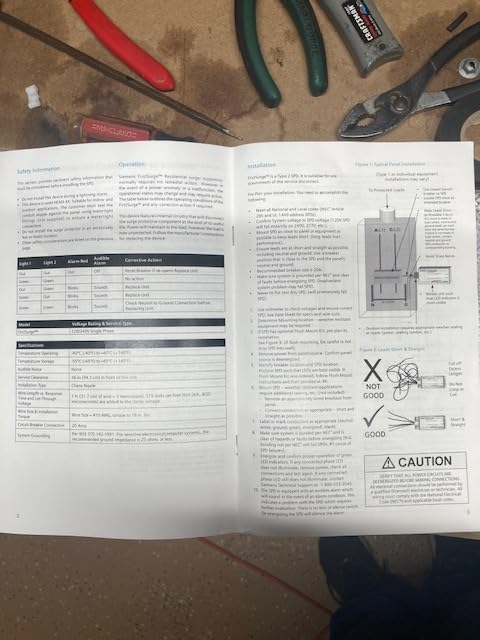
The FS140 mounts inside the load center or outdoors, so panel brand is a non-issue. The 3/4 inch tapered NEMA conduit connection is the fiddly part, and installers frequently report needing a separate bulkhead fitting to seal it properly.
Plan on adding your own 2-pole 20A breaker, since the device ships without one. That breaker has to physically fit in your panel. A load center with no spare two-pole space is the most common reason a good install gets delayed, so measure before you commit.
Where it falls short
This is a single-shot device. After a severe surge event the whole unit gets replaced rather than a module inside it, and doing that later means paying for a second service visit. It is also not designed to protect against a direct lightning strike, only the secondary surges that follow one.
2. Square D HEPD80 80kA — Best Value for Compact Panels
Square D HEPD80 Universal Whole House Surge Protection Device, 1-Phase, 3-Wire for 120/240V, 80kA
Type 2
80kA
UL 1449
15.52 ounces
5-year product warranty
Pros
- 80kA surge capacity in a small enclosure
- Mounts inside a standard residential load center
- LED status indicator shows replacement need
- Universal fit across residential load centers
- 5-year product warranty from Schneider Electric
Cons
- 80kA sits below the 100kA to 140kA tier
- Single non-replaceable unit after a fault
- 5-year warranty is shorter than some rivals
The HEPD80 is the mainstream pick, and for most houses it is the right size. Schneider Electric built 80kA of capacity into a polycarbonate and rubber housing that weighs just over 15 ounces and mounts inside a standard residential load centre. If your panel is full, this is one of the few units here that will find space without rearranging breakers.
The LED status indicator is the detail buyers mention most, because it removes the single biggest failure in this category: a dead device that quietly stops protecting. Look at the light, see it lit, and you know the MOVs are still live.
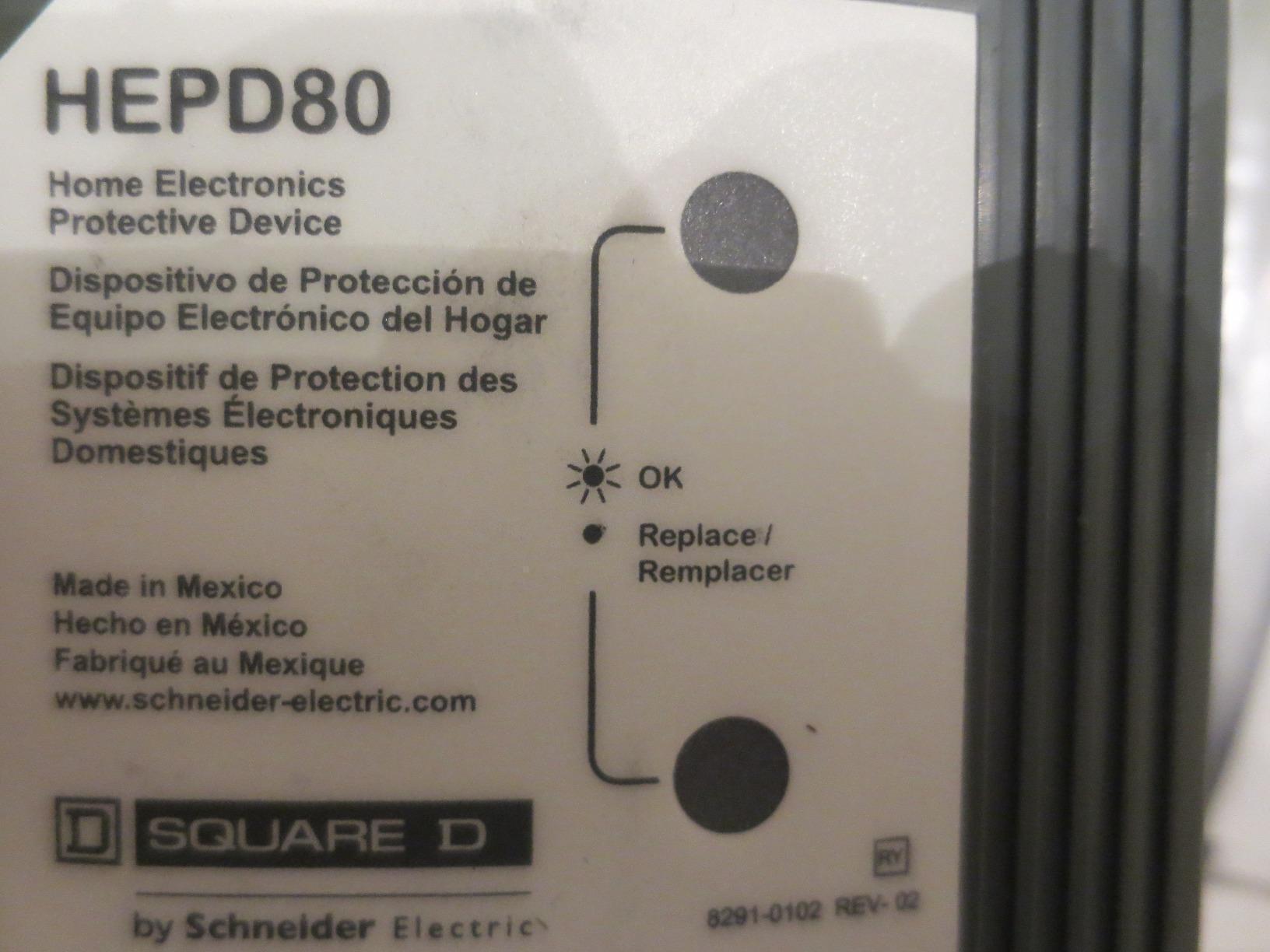
What you are giving up for that compactness is headroom. 80kA handles typical line-side switching surges and the small internal events that make up most of the problem, but repeated severe events consume it faster than a 140kA unit would. Square D also lists five years of spare part availability, which matters if you want to keep the same footprint.
The listing describes it as protecting appliances not connected to surge strips, and that is the accurate framing. This is downstream protection for everything on the home’s system, not a replacement for point-of-use strips on an AV rack or a gaming PC.
Panel compatibility and breaker requirements
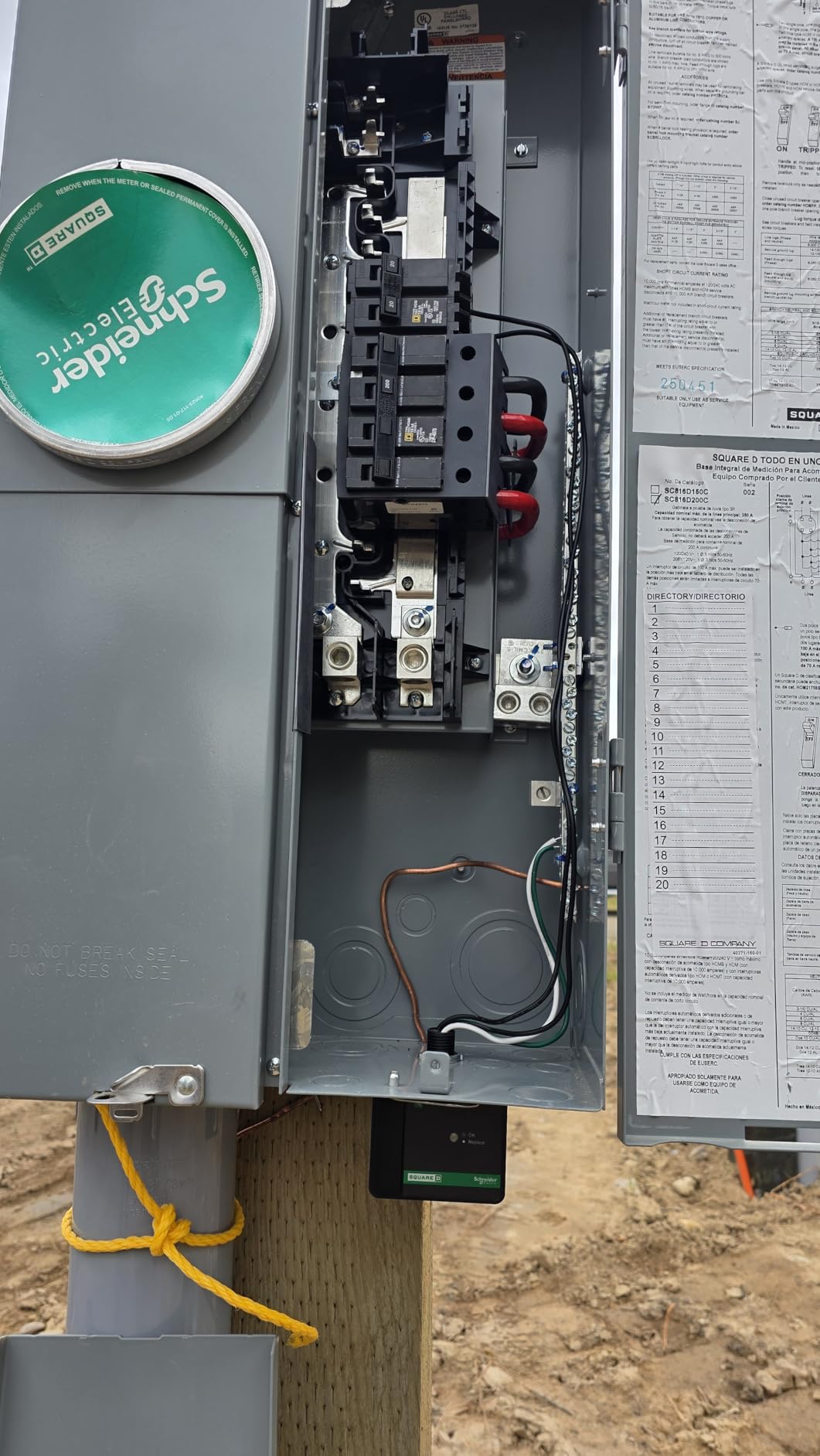
Universal fit is genuine here. It mounts in residential load centres from any manufacturer, which makes it a safe default when you do not know what is in your panel or cannot identify the brand from outside.
The polycarbonate body resists the moisture and impact problems that show up on devices mounted outside, though it is a Type 2 unit, so load-side placement on a dedicated two-pole breaker is the intended install. Confirm you have two adjacent breaker spaces available before ordering.
Where it falls short
The 80kA rating places it below the premium 100kA to 140kA devices, so in a lightning belt or a storm-heavy region it may need replacing more often. It is also not field-serviceable, meaning a faulted device is a full replacement and reinstallation rather than a cartridge swap.
3. Eaton CHSPT2SURGE 36kA — Most Versatile for Dry Interiors
Eaton CHSPT2SURGE SPD Type 2 Chsp Whole Home Surge Protector, Nema 4, Single Phase, 120/240 Volts, Ul 1449 3Rd Edition
Type 2
36kA
NEMA 4
UL 1449 3rd Edition
13.44 ounces
Pros
- 36kA with two MOVs per leg
- 150V MOVs with 400V maximum clamping voltage
- Silicone-dipped board in gasketed housing
- Works with any manufacturer's load center
- Two green status LEDs
Cons
- Leads are short at about 14 inches
- May not sit flush behind the panel cover
- 36kA is modest beside 100kA plus devices
This is a scaled-down version of Eaton’s larger Ultimate unit, and reviewers who open the housing rate the internals well for the money. You get T25D241K MOVs rated at 150V with a 400V maximum clamping voltage, sitting on a silicone-dipped circuit board inside a gasketed, outdoor-rated plastic housing with two MOVs per leg.
It weighs 13.44 ounces, which means it is light enough to mount outside the panel or recess into finished drywall. At under a pound, most people can handle it, though the wiring still needs to be right.
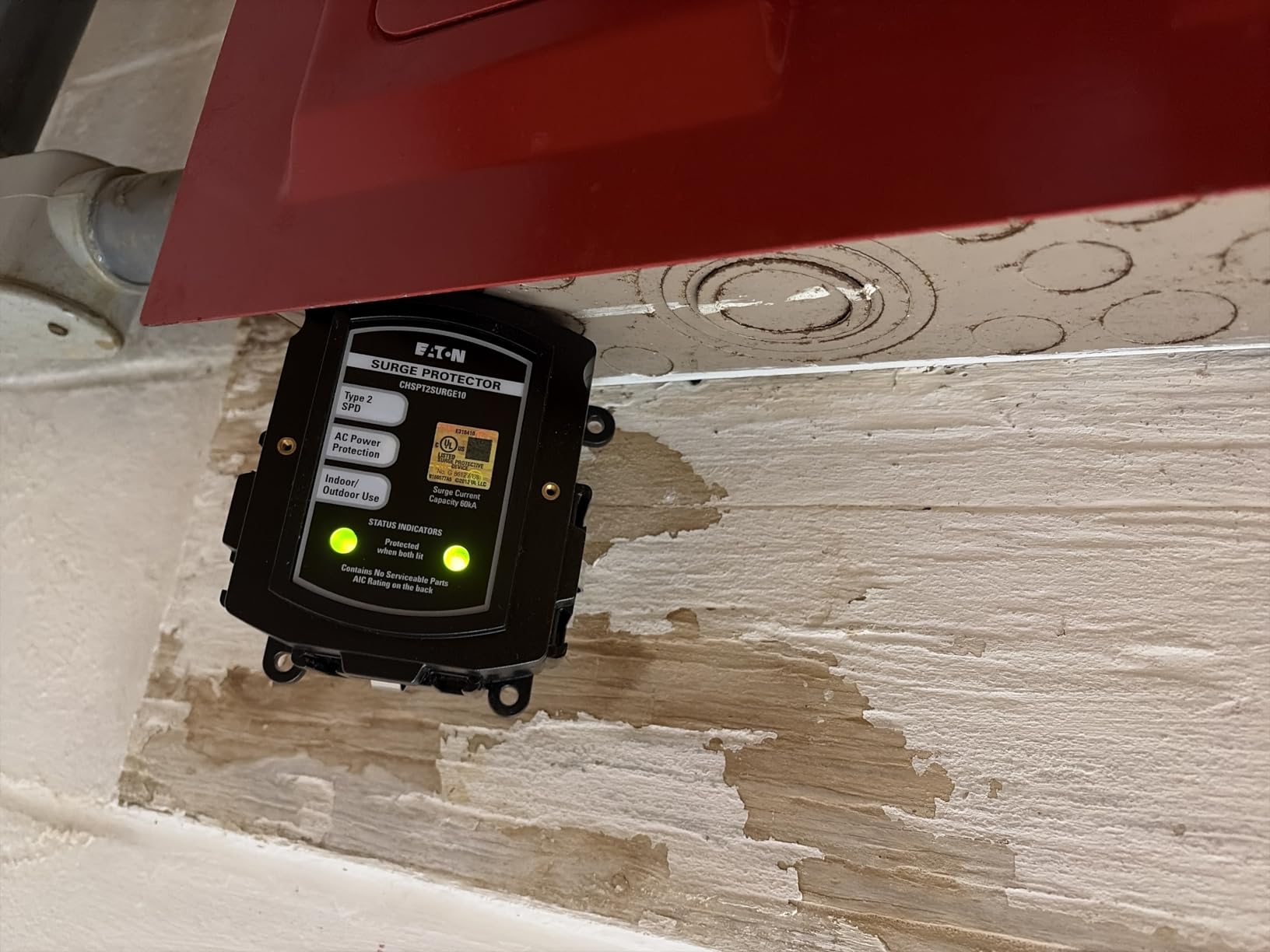
Installation is widely described as straightforward for anyone comfortable with a 2-pole 15A breaker, and the quick-connect design means the cable protection modules mount without fuss. Two green status LEDs let you confirm the device is still protecting without taking anything apart.
Where it earns its budget label is scale. 36kA is modest next to the 100kA-plus devices, and the lead wires run about 14 inches, so a crowded panel may force you to add wire and connectors. A few buyers also report that it does not seat flush against the panel cover once installed inside the box.
Occasional reports of units arriving crushed in a damaged box exist, so inspect the housing on arrival. Silicone-dipped board and gasketed screws mean moisture resistance is genuinely there, which is why this works in a garage or an exterior wall as well as indoors.
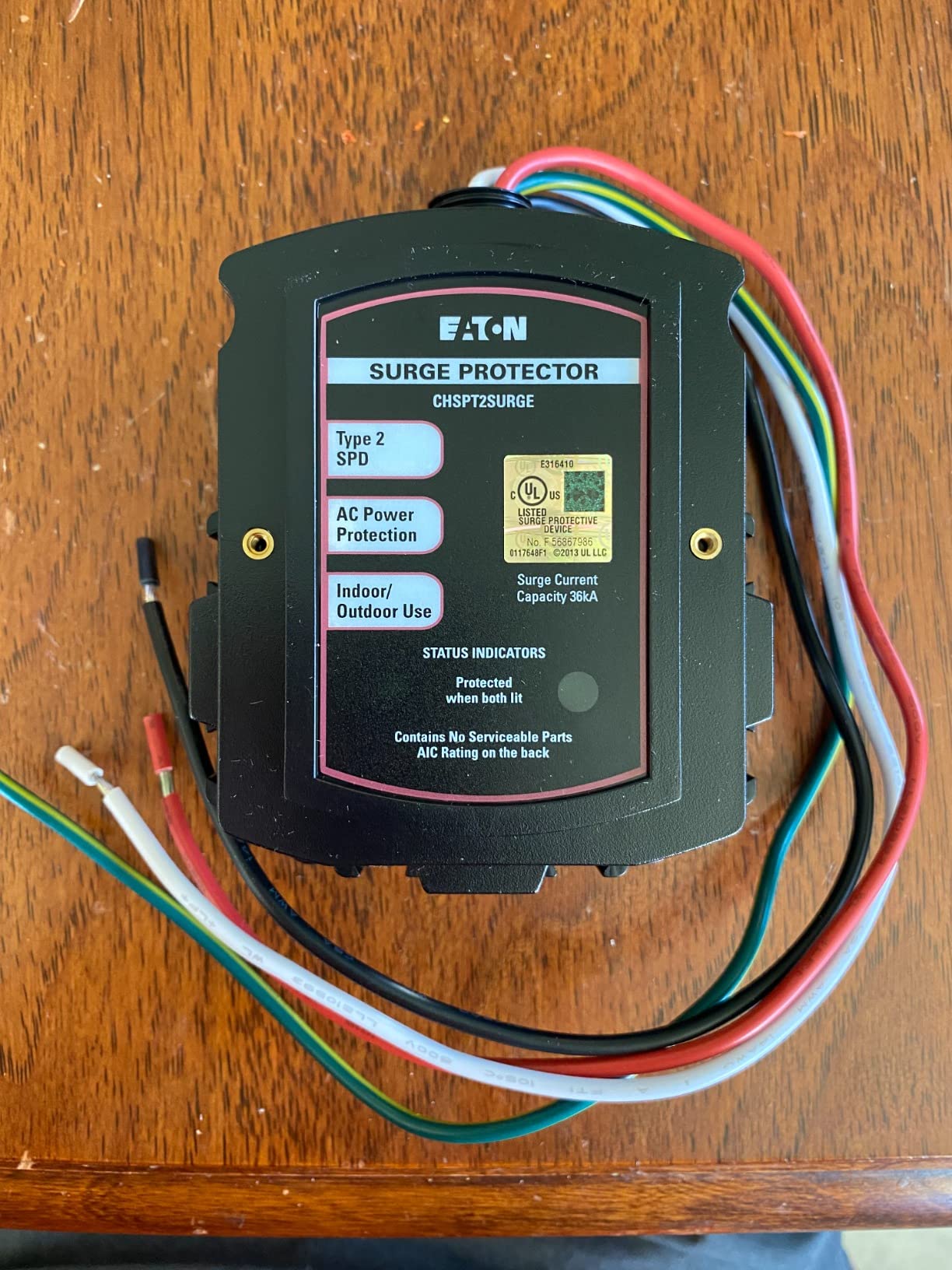
Best fit for dry interiors and tight breaker spaces
Two adjacent breaker spaces and a few inches of depth is the requirement. Beyond that, it connects universally to any manufacturer’s load centre, so brand compatibility never comes up. That makes it a good fit for a rental or a vacation home where you want protection without panel archaeology.
Because it is a Type 2 device, it belongs on the load side of a dedicated two-pole breaker. Electricians on the forums repeatedly stress that this is the correct placement for the majority of residential installs, and it keeps the device away from utility-owned service equipment.
Where it falls short
Short pigtails are the most common frustration and occasionally force a splice extension, which adds a connection point you would rather not have in a surge path. The 36kA capacity is also at the modest end, so repeated strong surges can consume the MOVs sooner than a higher-rated unit would.
4. Siemens BoltShield QSPD2A065P 65kA — Best Plug-In for Siemens Load Centers
SIEMENS BOLTSHIELD Plug-in Surge Protection Device 2-Pole 65kA 120/240V, 1Ø, 3W
Plug-in Type 2
65kA
200kA SCCR
20kA I-nominal
Siemens panels
Pros
- Plug-in design snaps onto the load center bus
- Audible alarm plus visual indicator
- 65kA surge with 200kA SCCR and 20kA I-nominal
- Pre-wired #14 AWG neutral and ground
- Connected equipment coverage for 10 years
Cons
- Only fits most Siemens load centers
- May need breakers moved to reach first position
- Not field-serviceable after a fault
If your panel is a Siemens, this is the fastest install in the group. The BoltShield QSPD2A065P snaps directly onto the load centre bus the same way a standard two-pole breaker does, and it carries a 65kA surge current rating with a 200kA short circuit current rating and a 20kA I-nominal rating.
Several buyers single out the audible failure alarm as the feature that convinced them the protection was real. A surge protector that dies silently is worth very little, and a noise you can hear from the basement is a genuinely useful design choice.
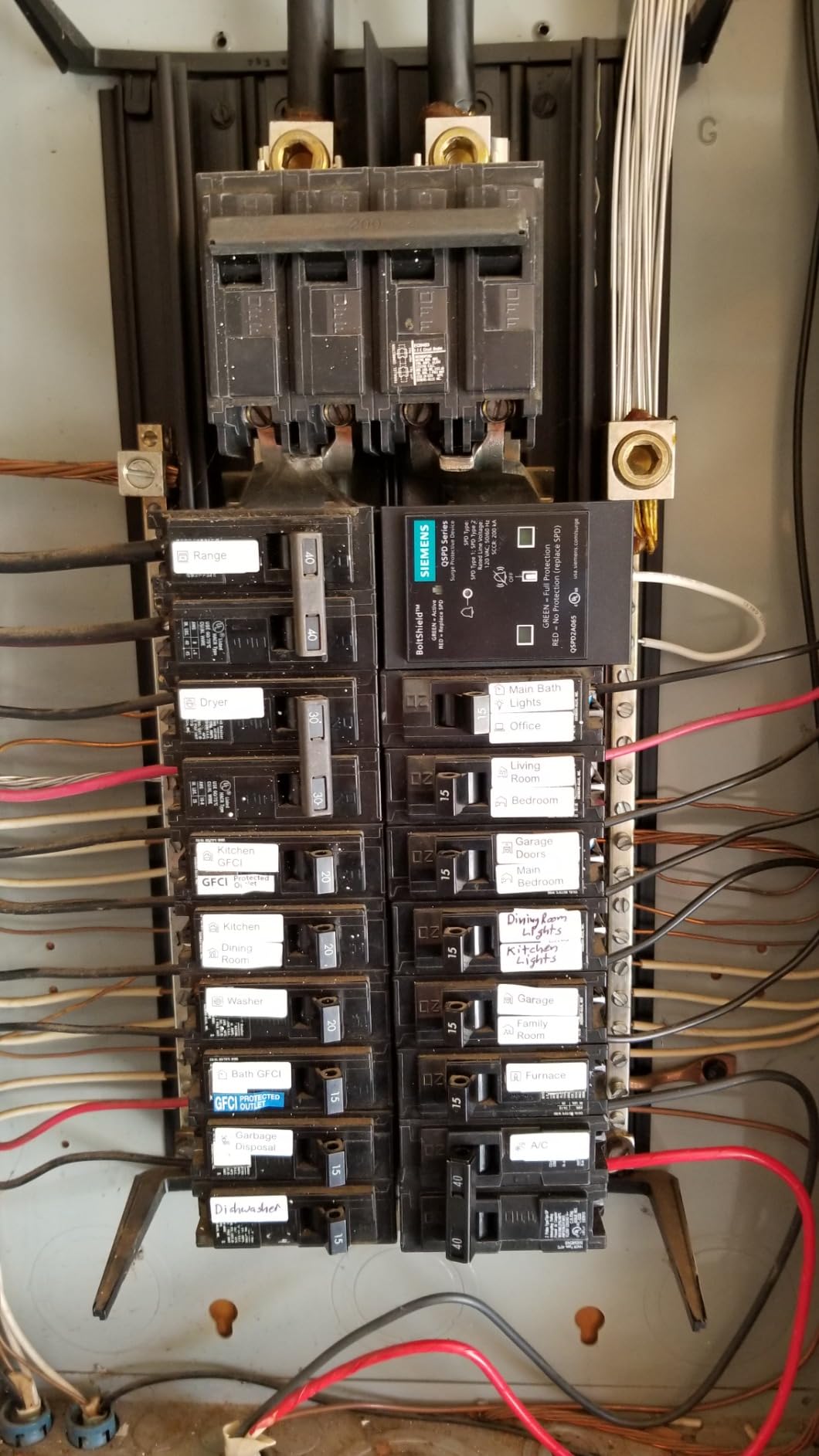
The neutral and ground connection arrives pre-wired in #14 AWG, which removes the most error-prone part of the install. The footprint is 2 by 2.5 inches and the unit weighs 10.24 ounces, so it will not fight you for depth in a crowded cabinet.
Connected equipment coverage runs for 10 years, which is in line with the Siemens FS140 and better than most of the field. That coverage only applies under the manufacturer’s conditions, so confirm what those are before you rely on it in a claim.
The obvious limitation is brand lock-in. It seats only in most Siemens load centres, and in a full panel you may need to shuffle existing breakers to get it into the first position on the bus. Both are real frictions that show up on install day, not later.
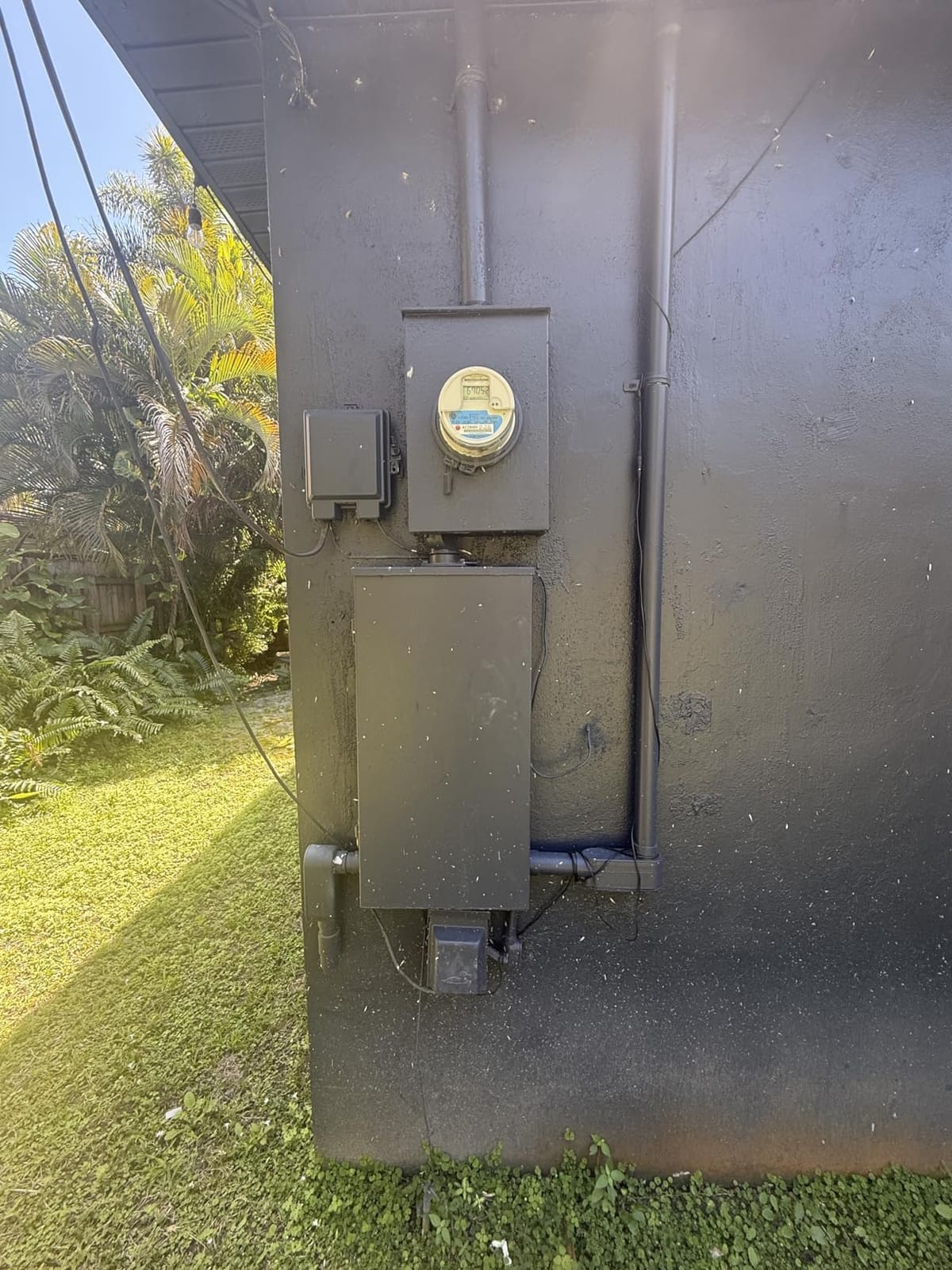
Bus space, panel age and install speed
Plug-in means no lead routing, no conduit fitting, and no separate neutral pigtail to land. On a Siemens panel with room in the first bus position this is a minutes-long job rather than an afternoon, which is the strongest argument for it.
Because it occupies bus positions like a breaker, count how many spaces you actually have free. A panel packed to the last position is a common blocker, and rearranging breakers is part of the work rather than an extra.
Where it falls short
Brand lock-in is the dealbreaker for anyone outside the Siemens ecosystem, and bus positioning can complicate an otherwise simple install. Once the device has sacrificed itself there is no module to change, so a fault means a full replacement.
5. Siemens QSPD2A035B 35kA — Lowest-Cost Path for Older Siemens Panels
Siemens QSPD2A035B 35 KAmp BoltShield Indoor Surge Protective Device
Plug-in Type 2
35kA
2 x 2.6 x 3 inches
Mechanical status windows
Pros
- Snaps onto the load center bus like a 2-pole breaker
- 35kA per phase in a compact body
- Fits older Siemens panels without modification
- Green and red mechanical status windows
- Lowest-cost path to panel-level suppression
Cons
- Mechanical flags rather than LEDs
- Only a 3-year warranty term
- 35kA is the lowest capacity here
- Siemens panels only
This budget BoltShield is for one specific situation: an older Siemens load centre with no spare breaker space and no interest in running new wiring. It plugs straight onto the bus and delivers 35kA of surge current protection per phase from a body measuring 2 by 2.6 by 3 inches.
Owners of panels roughly 35 years old describe the fit as excellent, and electricians working on vintage Siemens cabinets report that it drops in without modification. At 6.4 ounces it is the lightest device we evaluated.
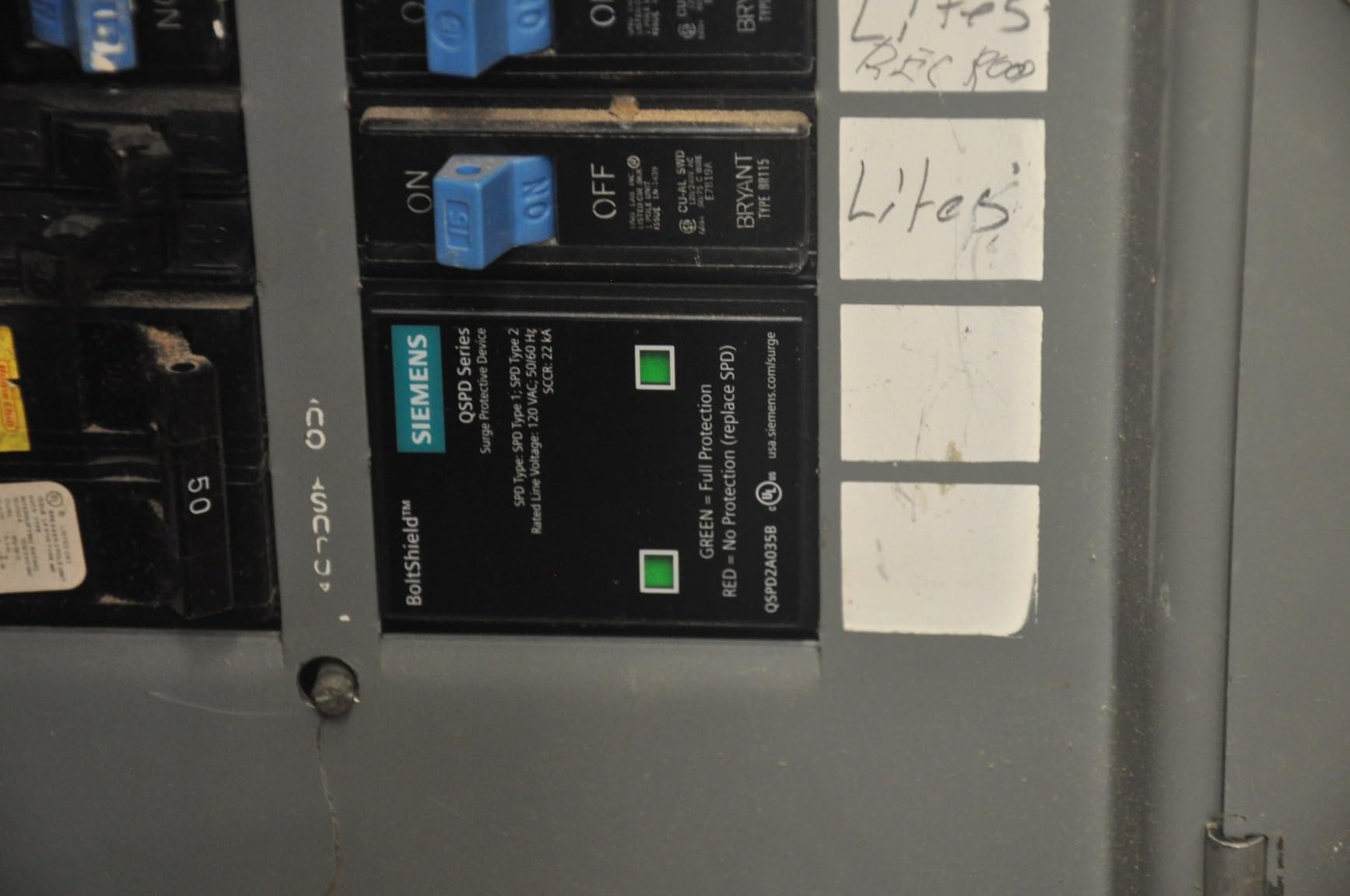
Understand the indicator situation before you buy. There are green and red mechanical status windows rather than LEDs, so there is no powered-up confirmation that the device is live. Several reviewers, including electricians, proactively explain that the flags are the only indicator by design. One unit also had its indicator cover pop off shortly after installation.
This model carries the highest share of one-star ratings in the group, with a small number of buyers reporting a unit that simply did not function. That is worth weighing against the fact that it is the cheapest way to add suppression to an existing Siemens panel.
The warranty is the thinnest of the Siemens models here at three years, with coverage an order of magnitude below the 10-year terms on the FS140 and BoltShield 65kA. Treat this as a stopgap layer, not as a long-lived primary defense.
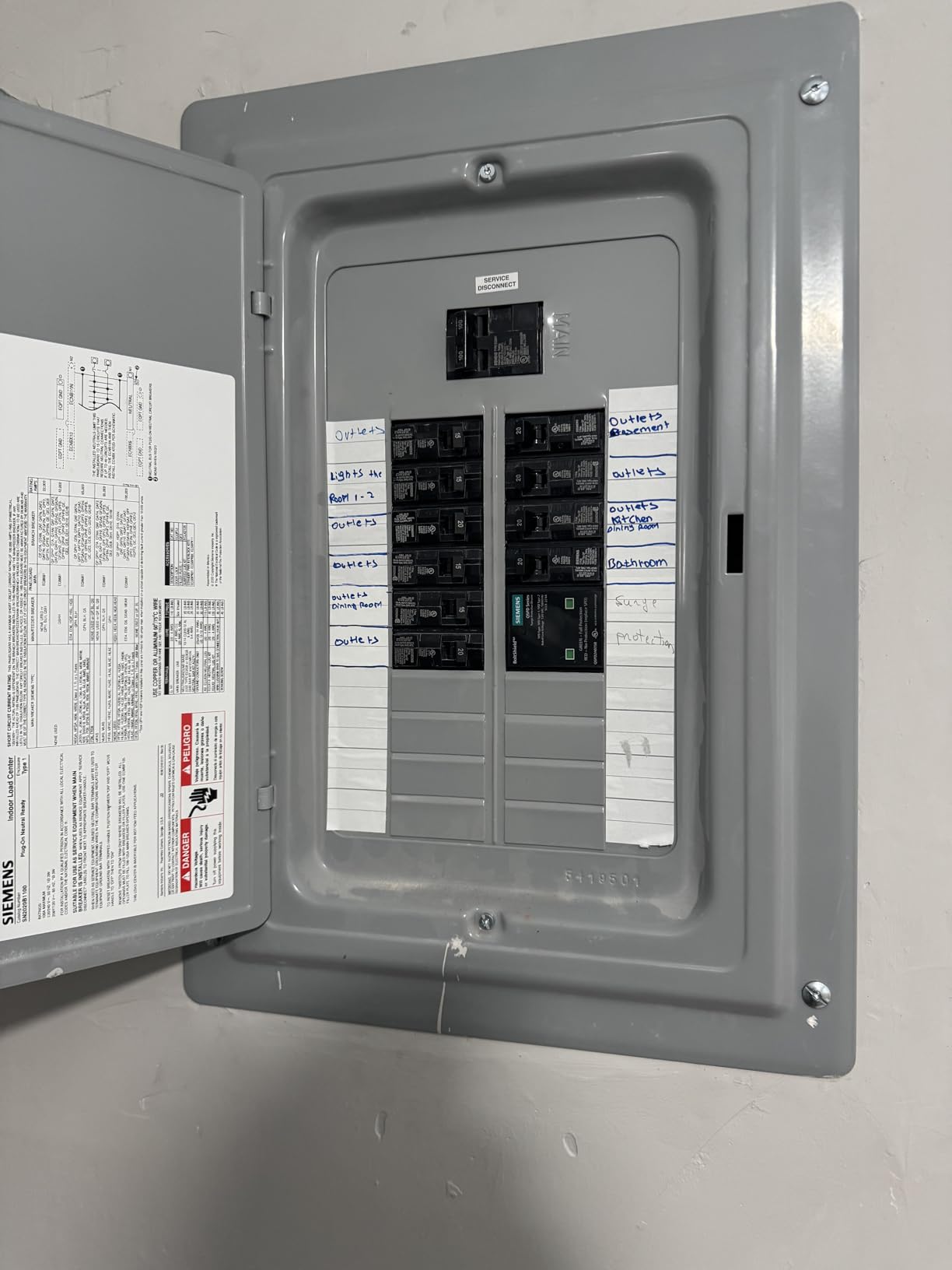
Why older panels suit this unit
Legacy Siemens load centres have inconsistent interior space and sometimes no free two-pole location. A plug-in device that occupies one bus position solves both problems without a panel rework, and the mechanical flags need no power to read.
Confirm your panel is a Siemens before ordering, and confirm the bus accepts the plug-in format. On an old cabinet a few breakers may need repositioning to make room at the first position.
Where it falls short
Thirty-five kA is the lowest capacity in this lineup and may be exhausted by repeated strong surges sooner than the higher-rated units. There is no LED confirmation of protection, the warranty term is the shortest we saw, and the unit is limited to Siemens load centres.
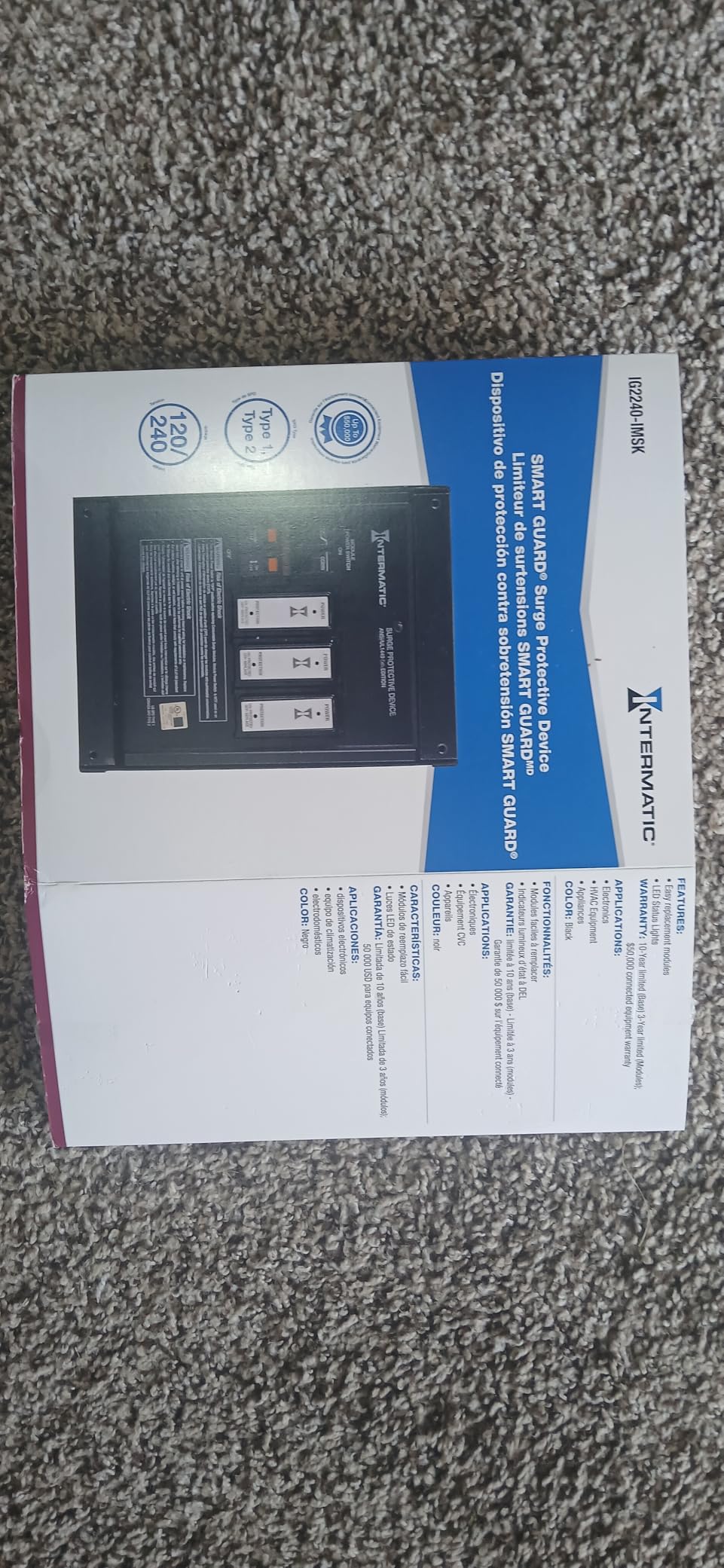
6. Intermatic IG2240-IMSK Smart Guard — Best Modular With Replaceable IModules
Intermatic IG2240-IMSK Smart Guard Whole-House Surge Protector, 120/240 VAC
Type 2
Three replaceable IModules
LED status
10-year coverage
Metal Type 1 housing
Pros
- Three replaceable IModules swap without rewiring
- LED indicators on each module
- Module Power Switch for safe maintenance
- Connected equipment warranty for 10 years
- Tamper-proof module doors
- Metal Type 1 enclosure
Cons
- Replacement module availability ages with the product line
- Pigtails can be too short for some panels
- Install needs conduit holes and wiring rerouted
- 7-pound body is the heaviest here
The serviceable design is the entire argument for the Smart Guard, and reviewers in Florida and the Virgin Islands make that clear. Three replaceable IModules mean only the sacrificial cartridges get swapped after a surge event. No rewiring, no electrician visit, no replacement of a several-hundred-dollar box, just a cartridge change.
Each module carries LED lights for power and protection status, which read clearly in a dark panel and in a bright garage. A Module Power Switch lets you disconnect power safely during maintenance, and tamper-proof doors protect the cartridges from accidental contact.
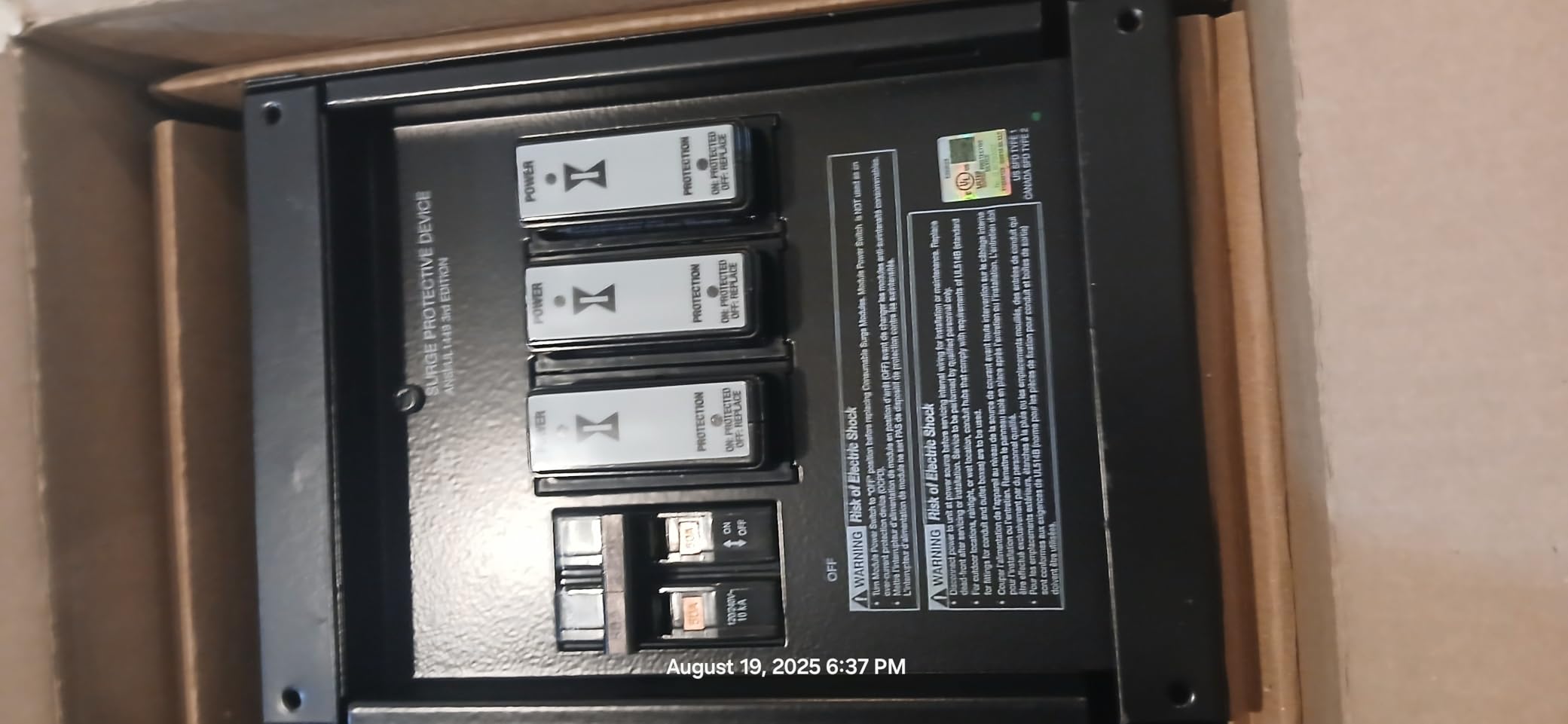
One owner reported zero HVAC service calls across two years after previously making six to ten storm-related calls a month. HVAC control boards are the most common casualty of surge damage, and that report is why electricians in lightning-heavy regions push this model specifically.
The connected equipment warranty runs for 10 years, matching the best coverage terms here. As always, check the manufacturer’s conditions, because they commonly require licensed electrician installation and sometimes product registration.
It is also the least convenient install in this group. Electricians note that cutting conduit access holes and rerouting wiring is often required, so this is real panel work rather than a casual job. At 7 pounds, the metal Type 1 enclosure is the heaviest device we evaluated.
Long-run cost for storm-exposed homes
Across a decade you will likely replace modules at least once, and each swap is a cartridge rather than a new device. For a home in a lightning belt with expensive HVAC and electronics, that difference compounds and it is the single strongest reason to pay more up front for this unit.
Plan the install around the 7-pound metal body, which suits an exterior wall mount or a garage better than a tight interior cabinet. Confirm that pigtail length works for your panel, or be prepared to flush mount and add wire.
Where it falls short
Replacement IModule availability is a genuine long-term concern once the product line ages, and the short pigtails are the most common practical complaint. Installation is the hardest of any unit here, and the weight makes it unforgiving in a confined panel.
7. Bad Wolf HSD240V 260kA — Highest Capacity Type 1 Device
Bad Wolf HSD240V Whole House Lightning & EMP Surge Protector 260kA, ETL Listed and FCC Certified Type 1 SPD, 120/240V Split Phase
Type 1
260kA
ETL UL 1449 5th Edition
CSA listed
5 x 4 inches
Pros
- Highest surge capacity in this group at 260kA
- ETL listed Type 1 with integrated EM protection
- Compact 5 x 4 in polycarbonate housing
- Four-wire install reported at about 10 to 20 minutes
- Veteran-owned manufacturer with responsive support
Cons
- 5-year limited warranty
- Surface-mount only so no flush panel fit
- Wiring exit orientation may not match the panel
- Not field-serviceable after a fault
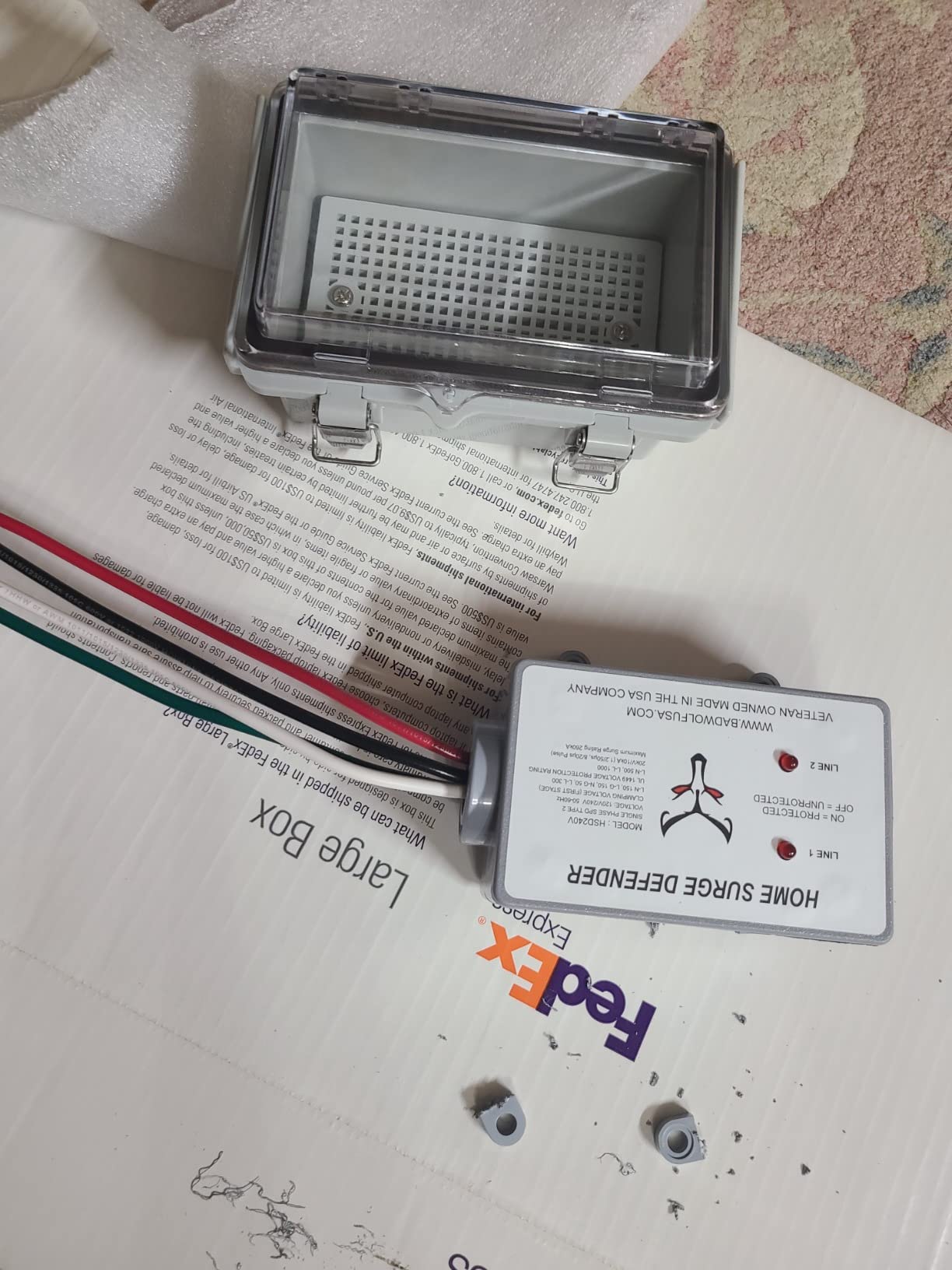
The HSD240V is the highest-capacity device we evaluated at 260kA, and it is also one of the few listed as a Type 1 SPD. ETL listed to UL 1449 5th Edition and CSA C22.2 No. 269.1 and 269.2, with integrated EM protection built into the protective design rather than added on.
Buyers typically arrive here after losing an expensive HVAC control board or a run of electronics to surges. The spec sheet answers that experience directly: 260kA of surge capacity in a 5 by 4 inch polycarbonate housing that weighs 16 ounces.
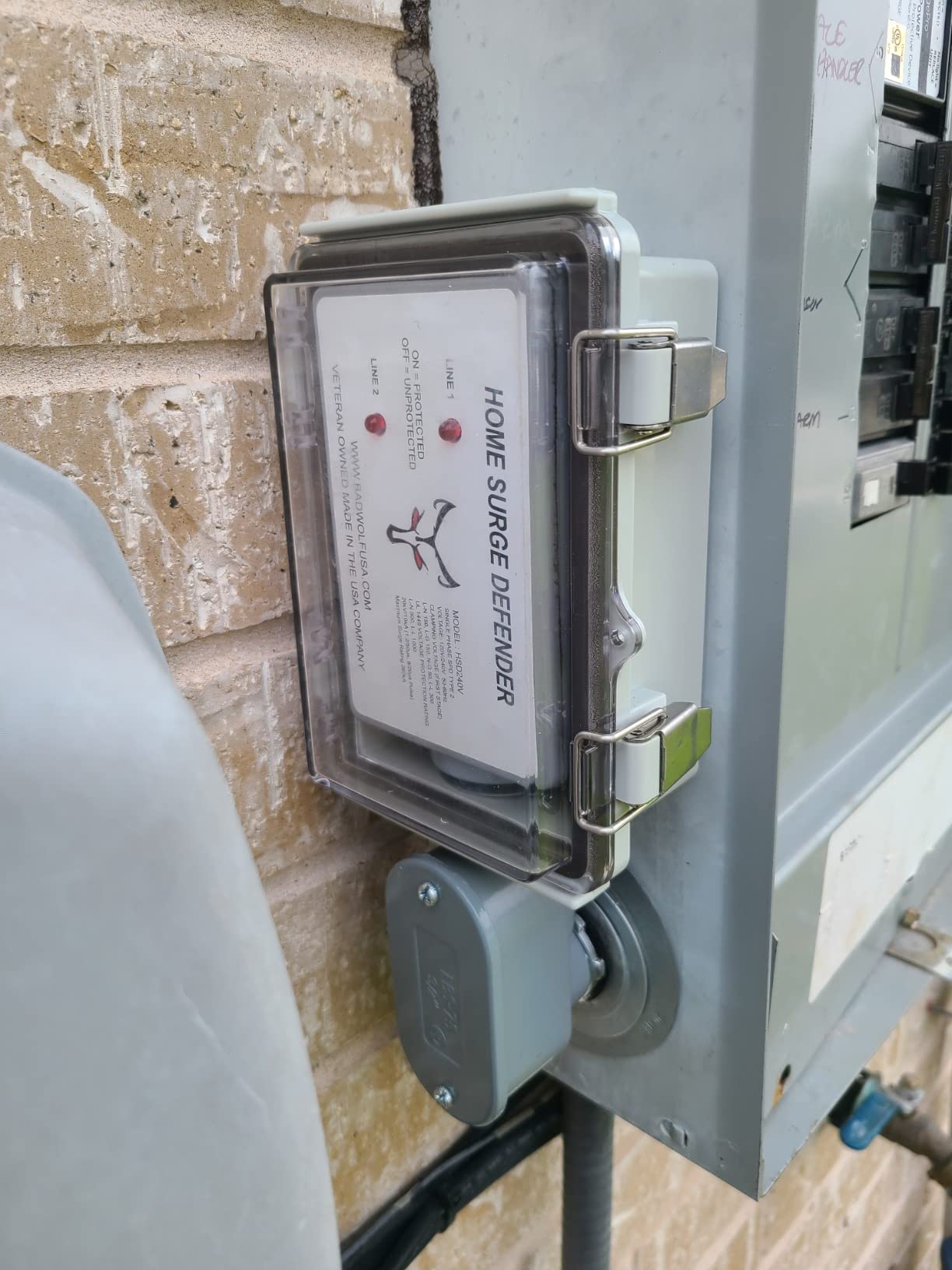
Installation is a simple four-wire connection, with two leads to a 20A double pole breaker, white to neutral, and green to ground. Buyers report completing it in about 10 to 20 minutes, and customer service answers installation questions promptly and recommends the correct breaker size.
The manufacturer is veteran-owned, and that support responsiveness shows up repeatedly in reviews. For a homeowner who has already been through a loss event, having someone answer the phone is worth something.
Check your panel mounting style before ordering. This unit is surface-mount only, and one homeowner had to return it after finding it would not fit a flush-mounted panel. The wiring exit orientation may also not match your panel, and a correctly printed decal has to be requested separately.
When Type 1 capability actually matters
A Type 1 device can be installed on the line side, outside the main breaker, where it intercepts a surge before it ever reaches the panel bus. That matters where the service entrance is exposed, in lightning belt regions, and where insurance or utility notification applies to work on service equipment.
Line-side work touches utility-owned equipment in many jurisdictions, so it is not a casual DIY task and may need the utility’s involvement. A licensed electrician can tell you whether your setup allows it.
Where it falls short
The 5-year limited warranty is shorter than the 10-year terms on the Siemens and Intermatic units, and the surface-mount-only form factor failed a flush-panel install for one buyer. It is also not field-serviceable, so a fault event means a full replacement.
8. Furniqro FHSPD36S 36kA — Lowest-Cost Universal Indoor or Outdoor Unit
Furniqro FHSPD36S Whole House Surge Protector for 36,000 Amps, Ultimate Surge Protection, Whole Home Surge Protector, Indoor/Outdoor Use, 120/240V
Type 2
36kA
Indoor or outdoor
Universal panel fit
LED status
Pros
- 36000 A of surge protection in a compact body
- Compatible with all load center and breaker brands
- Commercial-grade enclosure for indoor or outdoor
- Clear LED status indicators
- Covers HVAC
- kitchen and smart home devices
Cons
- No warranty coverage is listed
- 36kA sits at the low end of capacity
- Startup issues often trace to grounding or install errors
The FHSPD36S is the simplest device here: 36,000 amps of surge current, a commercial-grade enclosure rated for indoor or outdoor mounting, and compatibility with all brands of load centres and circuit breakers on 120/240V 60Hz systems. There is no panel brand to research, which is the entire appeal.
One device is advertised to cover computers, security systems, TVs, kitchen appliances, HVAC, and smart home devices. For a house with a lot of connected equipment, that broad coverage claim is the reason people look at units like this.
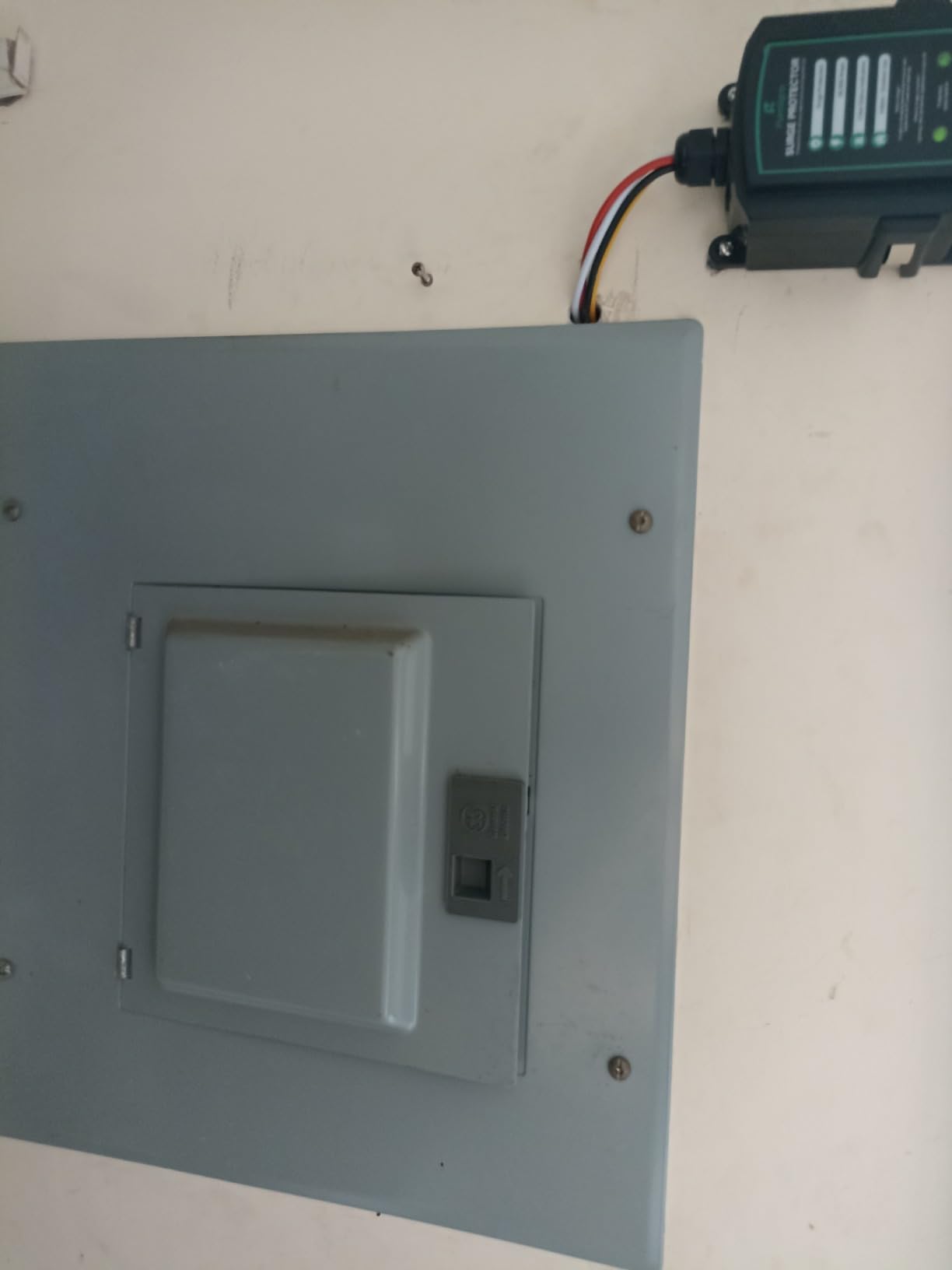
The LED status indicators are the deciding feature at this level. They let you confirm the unit is live and still protecting, which addresses the most common silent failure in this category without any diagnostic equipment.
What you give up is warranty protection and capacity headroom. No warranty coverage is listed on the product, so a claim after a major event has nothing behind it. Thirty-six kA also sits at the low end compared with the 100kA to 260kA premium units.
The brand is far less established than Siemens, Square D, Eaton, or Intermatic. That matters less than it sounds because the manufacturer states plainly that many startup issues trace back to improper grounding or installation errors rather than device failure.
Grounding is where budget installs fail
That last point deserves emphasis. Electricians on the forums consistently identify grounding and ground rod adequacy as the real limiting variable in surge events, not the device you picked. A weak ground gives the surge current a poor path and can defeat an otherwise capable SPD.
Before any install, have the panel checked for a properly bonded ground and adequate electrode conductor. This applies to every unit in this roundup, not just the budget one.
Where it falls short
No stated warranty is the clearest weakness here, and 36kA leaves little margin in a high-surge area. Choose this for a dry interior and a tight budget, and step up to a higher-rated unit if you live where lightning or utility switching is frequent.
Type 1 vs Type 2 vs Type 3: Which One Your Panel Needs
A Type 2 SPD is wired to a dedicated two-pole breaker inside the panel, on the load side, and that is the correct default for most residential installs. It covers internal switching surges and the induced surges that follow a nearby lightning strike, which is the large majority of real-world events.
A Type 1 SPD can be mounted outside the main breaker on the line side, where it intercepts surge current before it enters the panel. That is the right choice where the service entrance is exposed, in lightning belt regions, and for anyone whose utility requires notification before work on service equipment.
A Type 3 device is the point-of-use strip on an outlet. It handles the small internal surges that arrive down a specific circuit, and it protects sensitive electronics that no panel-level device reaches directly. Layered protection is the correct strategy, not either-or.
Most homeowners who ask whether they need Type 1 or whether Type 2 is enough land on the same answer from electricians: Type 2 handles the vast majority of events, and Type 1 earns its place only when the service entrance is genuinely exposed. NEC 2023 Article 230.67 requires a surge protective device at the service, and in practice most of the units in this roundup satisfy it.
How Much kA Surge Current You Actually Need
Bigger is better only up to a point. The kA rating describes how much surge current the device can absorb before its MOVs degrade, and a higher rating means more headroom before replacement. It does not mean the device stops surges on its own.
Low-risk areas with no lightning and a short service run can be served by 30 to 36kA. That covers internal switching surges without overpaying for capacity you will never use.
Moderate storm exposure calls for 40 to 50kA. Think of this as the band for most of the Midwest and mid-Atlantic, where thunderstorms are seasonal rather than constant.
Storm-prone regions including much of the Gulf Coast and the Mountain West justify 65 to 80kA. This is where the Square D HEPD80 and Siemens BoltShield 65kA sit, and where a replaceable module design starts to make financial sense.
Lightning belt and high-exposure properties justify 108kA and above. The Siemens FS140 at 140kA and the Bad Wolf HSD240V at 260kA are built for this band. Repeated events in these regions are exactly what consumes a lower-rated device.
Internal surges sit in the 1 to 5kA range and external events reach tens of thousands of amps. That gap is why panel protection and point-of-use protection both matter, and why a high kA rating does not replace a good surge strip on an AV receiver.
UL 1449, NEMA Enclosures and the Specs That Matter
UL 1449 is the listing standard for surge protective devices, and the edition matters. Devices listed to UL 1449 3rd Edition are standard for panel protection. The Bad Wolf HSD240V is listed to the newer 5th Edition as a Type 1 SPD. Verify the listing rather than trusting a marketing claim.
NEMA enclosure ratings tell you where a device can physically live. NEMA 1 is indoor only. NEMA 3R suits outdoor installations with normal rain exposure. NEMA 4X, as on the Siemens FS140, is the outdoor rating with added dust and hose-down protection, which is why it mounts inside or outside.
MCOV, the maximum continuous operating voltage, is the threshold above which the device begins clamping. Too low and it interferes with normal operation on a grid that runs slightly hot. Too high and clamping voltage rises, meaning a larger spike reaches your equipment before the MOVs act.
SCCR, the short circuit current rating, is what the panel cares about. The Siemens BoltShield 65kA carries a 200kA SCCR, and a device whose SCCR is lower than the panel’s available fault current can itself become a hazard during a fault.
Finally, look for UL or cUL listing plus CSA certification where applicable, and check whether the manufacturer requires licensed electrician installation for warranty coverage. Most do, and that condition decides whether a claim succeeds.
Panel Brand, Breaker Space and Installation Reality
Identify your panel brand before you buy anything, because it decides the shortlist. Square D Homeline owners can use a plug-on neutral unit for a clean install, while Square D QO panels accept a different mounting arrangement entirely. Eaton BR panels are handled by the universal-fit units here. Siemens PL and ES panels open up both BoltShield models. GE PowerMark and older or unknown brands point back to the universal units.
If your panel brand is unknown, you have three reliable options: the Siemens FS140, the Square D HEPD80, or the Eaton CHSPT2SURGE. All three work with any brand of load centre and breaker, and all three are what electricians recommend when the panel cannot be identified.
Next, count breaker spaces. A Type 2 device needs two adjacent spaces for a two-pole breaker. Plug-in units need one position in the first location on the bus. A load center with no room kills the install, and it is usually discovered after the device has been bought.
If there is genuinely no space, a sub-panel or a surface-mounted device like the Bad Wolf HSD240V may be the only path. Installing a sub-panel is a larger job that needs its own permit in most areas.
On short pigtail leads, which buyers criticize constantly: this is deliberate engineering, not a defect. Lead length adds resistance and inductance in the surge path, and every extra inch of wire weakens the connection to the panel bus and the ground.
Short leads place the MOVs as close as possible to the point where the surge enters. The Siemens FS140 leads run about 24 inches, which is generous by design for awkward routings, but the rule still applies.
On grounding, this is the variable electricians on ElectricianTalk and AskElectricians raise most often and no competitor roundup covers properly. A surge needs somewhere to go, and if the panel ground is weak or the ground rod is corroded, surge current takes a path through your equipment instead of into the earth.
Get the grounding checked as part of the install rather than after a failure.
On whether you can do it yourself: a load-side Type 2 install means working inside a live panel with 240V service conductors present, and code in most areas requires a permit and a licensed electrician. Line-side Type 1 work touches utility-owned equipment and may require utility notification, can affect insurance terms if done improperly, and is firmly a professional job. Budget for the electrician rather than the device as the larger part of the cost.
On lifespan, plan on checking status indicators annually and replacing a spent device when it fails rather than on a fixed schedule. Modular units like the Smart Guard let you swap cartridges and extend the useful life of the enclosure, while single-shot devices like the HEPD80 or the FS140 need full replacement. Homeowners on unreliable grids also report brownout-heavy environments where voltage monitoring matters as much as surge suppression.
Finally, layer your protection. The panel device handles everything wired into the home’s system. Your AV receiver, gaming PC, network gear, and video doorbells are still best served by a Type 3 strip on the outlet.
Those strips are cheap compared with what they protect. Well pump owners cite pump protection as a major practical benefit of panel-level suppression, since a failed pump motor is an expensive and immediate loss.
If you are still narrowing the field, our general surge protector roundup covers point-of-use options, and our RV surge protector guide goes deeper on protection for off-grid and generator-fed setups.
Frequently Asked Questions
How much should a whole house surge protector cost?
A Type 2 panel unit typically runs from about 50 dollars for a 36kA model to roughly 120 to 130 dollars for an 80kA or 65kA model. High-capacity Type 1 devices and modular units with replaceable modules cost considerably more, often several hundred dollars. The device is usually the smaller half of the total.
What is the average cost to install a whole home surge protector?
Installation cost is driven by panel access, breaker space, and whether line-side work is involved. A straightforward load-side install on an accessible panel with two free breaker spaces is the cheapest case. Rerouting wiring, cutting conduit access, or working on utility-owned service equipment pushes the job toward the higher end of the typical range.
What are the common problems with whole house surge protectors?
The most common problems are a panel with no free two-pole breaker space, leads too short to reach the bus or ground, silent failure after a surge event, improper grounding that gives surge current no safe path, and non-modular designs that require replacing the entire unit. Warranty claims are also frequently denied when installation was not done by a licensed electrician.
What is the best surge protection device for a home?
For most homes the Siemens FS140 at 140kA per phase is the strongest all-round choice, because it fits any load center or breaker brand, mounts indoors or outdoors in its NEMA 4X housing, and carries a 10-year product and connected equipment warranty. Square D owners with a crowded panel may prefer the more compact HEPD80.
Can I install a whole home surge protector myself?
A load-side Type 2 install means working inside a live panel with 240V conductors present, and most jurisdictions require a permit and a licensed electrician. Line-side Type 1 work touches utility-owned equipment and may require utility notification. Manufacturers also commonly require licensed installation for warranty coverage to remain valid.
Is a whole home surge protector a good idea?
In most homes yes. Around 80 percent of surges are generated internally by HVAC cycling, well pumps, and appliance switching, and those repeated small events shorten the life of electronics. Panel-level suppression also covers expensive items like HVAC control boards, well pumps, EV chargers, and smart home devices that point-of-use strips never reach.
Do whole house surge protectors protect against lightning?
They protect against the secondary surges that follow a lightning strike, which is the event that actually reaches most homes. None of the units here is rated to take a direct strike. In lightning belt regions, that is still the difference between a working compressor and a destroyed HVAC control board.
The Right Whole-House Surge Protector for Your Panel
For most homes, the Siemens FS140 is the right call. It fits any panel brand, mounts inside or outside, carries 140kA per phase, and comes with a 10-year product and connected equipment warranty behind more reviews than any other unit we evaluated.
Buy the Square D HEPD80 if your panel is full and depth is the problem. Buy a Siemens BoltShield if you want a five-minute install and your panel is already Siemens. Buy the Intermatic Smart Guard if you live where surges are frequent and a cartridge swap beats a new device every decade. Buy the Bad Wolf HSD240V if your service entrance is exposed and you want Type 1 capability with the highest capacity available.
Whatever you choose, confirm your breaker space, verify your grounding, and add Type 3 strips on the electronics that matter most. That combination does more for your equipment than any single box on the market.
We keep comparing panel-level devices as new ones appear, and our general surge protector picks cover the point-of-use side of the same problem.