
Best overall for large homes: the eero 7 3-Pack. It covers up to 6,000 sq. ft. across three dual-band Wi-Fi 7 nodes, carries 120+ devices, and gives each node two auto-sensing 2.5 GbE ports. If your internet plan is faster than 2 Gbps or your house runs past 5,000 sq. ft., step up to the eero Pro 7.
That is the short answer. The long answer is that a single Wi-Fi 7 router stops making sense somewhere around 2,500 sq. ft., and everything past that point is really a decision about mesh nodes, backhaul and where your walls are. We spent the last six weeks reading spec sheets, customer reviews and owner reports on eleven of the strongest Wi-Fi 7 routers and mesh systems on the market right now, then sorted them into the categories that actually matter for a house with more than one floor.
Before we get into the picks, one honest note. If you are on a 500 Mbps plan in a 1,600 sq. ft. single-storey home and you already own working Wi-Fi 6E gear, a Wi-Fi 7 upgrade will be close to invisible in daily use. The gains on this page show up in homes with multi-gig service, 50 or more connected devices, or floors and walls between you and the router. We explain that in full a little further down, and we think it saves people real money.
If you want the broader picture across price tiers and home sizes, our general Wi-Fi 7 router roundup covers the single-router side in more depth. This page is only about large homes.
Top 3 Picks for Large Homes in 2026

eero 7 3-Pack
- Dual-band Wi-Fi 7 mesh
- Up to 6000 sq. ft.
- Two 2.5 GbE ports per node
- 120+ devices

eero Pro 7 3-Pack
- Tri-band Wi-Fi 7 mesh
- Up to 6000 sq. ft.
- Two 5 GbE ports per node
- 600+ devices

TP-Link Deco BE25
- Dual-band BE5000 mesh
- Up to 6600 sq. ft.
- Two 2.5G ports per node
- Over 150 devices
11 Best wifi 7 routers for large homes (October 2026)
Coverage figures below are vendor claims measured under ideal placement. Ports, band configuration and device counts are the hard numbers that decide whether a system fits your house.
| Product | Specs | Action |
|---|---|---|
| eero 7 3-Pack |
|
Check Latest Price |
| eero Pro 7 3-Pack |
|
Check Latest Price |
 NETGEAR Orbi 770 3-Pack NETGEAR Orbi 770 3-Pack |
|
Check Latest Price |
 eero Max 7 3-Pack eero Max 7 3-Pack |
|
Check Latest Price |
 NETGEAR Nighthawk RS700S NETGEAR Nighthawk RS700S |
|
Check Latest Price |
 NETGEAR Nighthawk BE9300 NETGEAR Nighthawk BE9300 |
|
Check Latest Price |
 ASUS RT-BE9700 ASUS RT-BE9700 |
|
Check Latest Price |
 TP-Link Deco BE17000 TP-Link Deco BE17000 |
|
Check Latest Price |
 TP-Link Deco 7 Elite BE85 TP-Link Deco 7 Elite BE85 |
|
Check Latest Price |
| TP-Link Deco BE25 3-Pack |
|
Check Latest Price |
 GL.iNet Flint 3 GL.iNet Flint 3 |
|
Check Latest Price |
1. eero 7 3-Pack – Best Overall Wi-Fi 7 Router for Large Homes
Amazon eero 7 dual-band mesh Wi-Fi 7 router (newest model) – Supports internet plans up to 2.5 Gbps, Coverage up to 6,000 sq. ft., 3-pack
Dual-band Wi-Fi 7
Up to 6,000 sq. ft.
Two 2.5 GbE ports per node
120+ devices
Pros
- Most reviews of any pick here at 2173
- Backward compatible with earlier eero generations
- Two 2.5 GbE ports per node for multi-gig plans
- TrueMesh software handles roaming cleanly
Cons
- Dual-band design has no dedicated backhaul band
- eero Plus security features cost extra per month
- Only two wired ports on each node
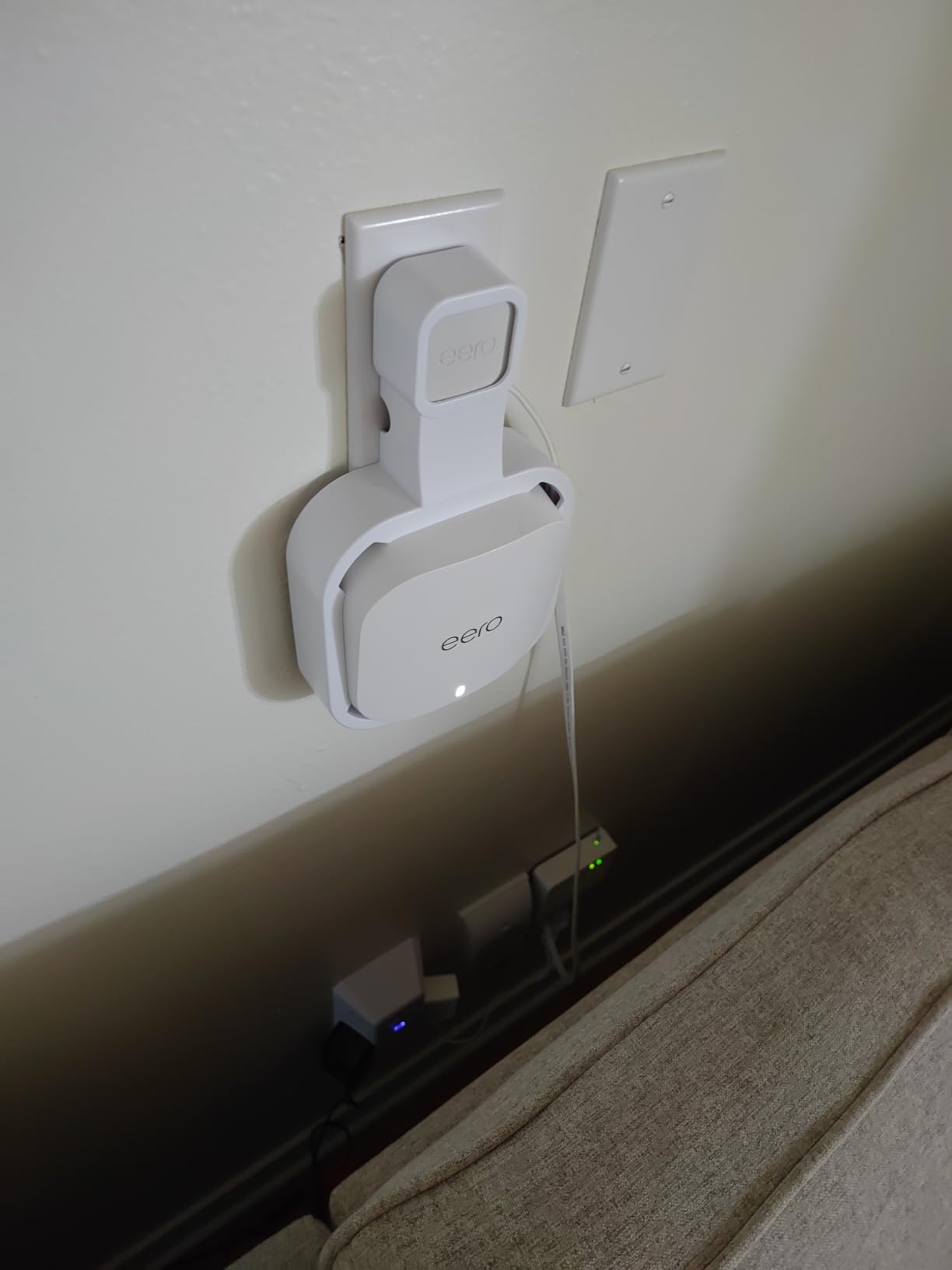
The eero 7 is the pick we keep coming back to because the numbers are unusually honest for the category. Three nodes, up to 6,000 sq. ft. of claimed coverage, 120+ devices, and two auto-sensing 2.5 GbE ports on every single node rather than saving multi-gig for the primary unit.
That port layout matters more in a large home than it first appears. In a three-floor house, the node in the basement and the node in the bedroom are often the ones you want to wire, and on most systems those secondary nodes get slower ports. Here they do not.
Wireless throughput is rated up to 1.8 Gbps, which sounds modest next to the tri-band machines below. It is a dual-band design, so the 5 GHz radio does all the client-facing work, and on a 2 Gbps plan that ceiling is well clear of what most households actually pull down.
The catch is the architecture. There is no dedicated backhaul band, so node-to-node traffic shares airtime with your clients. If you run the far node over radio, expect the far end of the house to be slower than the near end. That is a physics result, not an eero problem, but it is the reason we do not hand this to a 6,000 sq. ft. house on wireless backhaul alone.
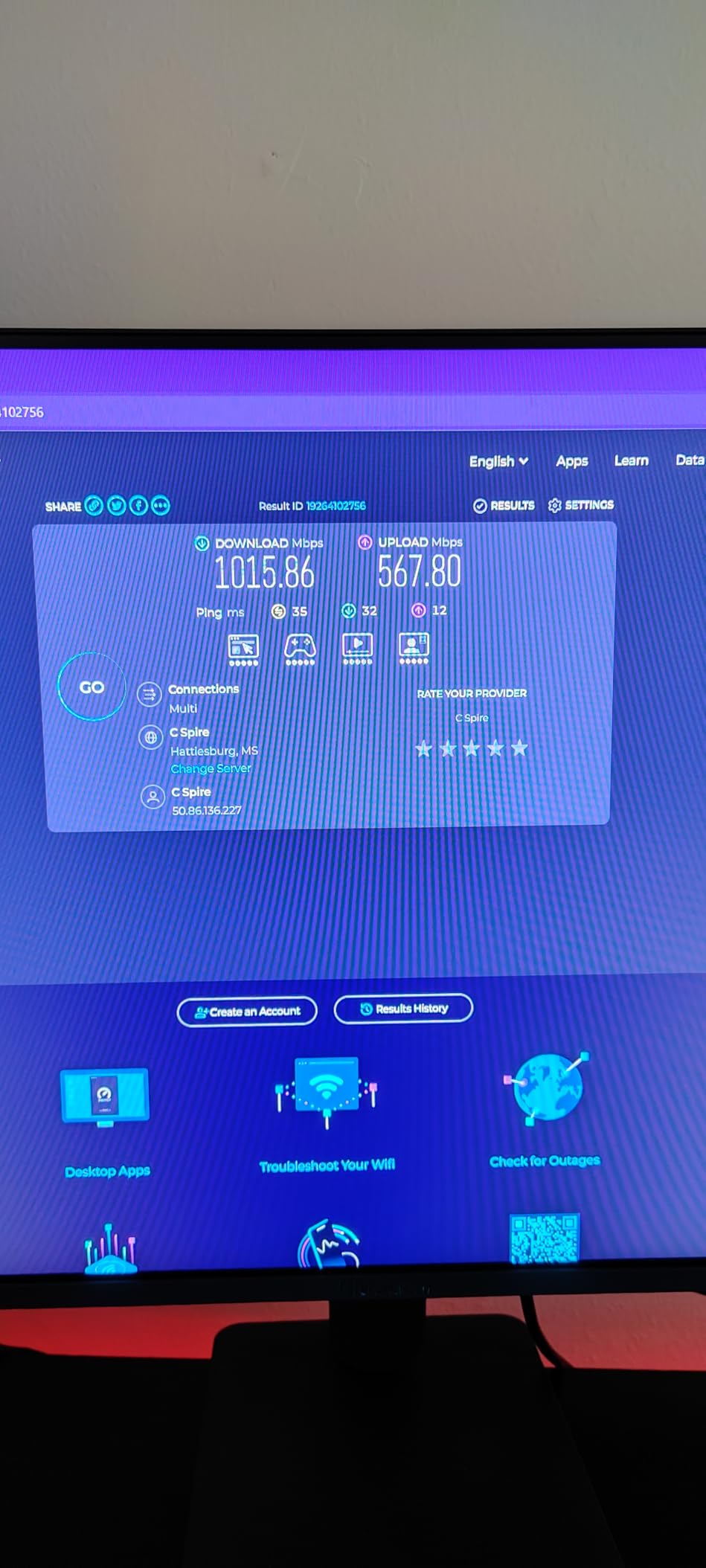
Why the eero 7 works well for 3,000 sq. ft. homes with 2 Gbps service
Setup takes minutes through the eero app, and it will adopt an existing network name and password rather than forcing every device to rejoin. That matters in a house with 60+ IoT devices that were painful to pair the first time.
It also mixes cleanly with older eero generations, so if a friend already has an eero node you can borrow it as a satellite. Backward compatibility is listed in the specs and it holds up in practice.
Why it is the wrong pick for very large houses or heavy IoT fleets
Two nodes wired, one unwired, and you have most of the coverage story covered. Three nodes all on wireless backhaul and the shared airtime cost becomes obvious in the far corners, particularly at busy evening hours.
The security story also needs a caveat. Advanced Security, ad blocking, parental controls, Malwarebytes and 1Password integration all sit behind the optional eero Plus subscription. Basic parental controls are included, but families wanting content filtering by category will want to factor that recurring cost in.
2. eero Pro 7 3-Pack – Best for Multi-Gig Homes Under 5 Gbps
Amazon eero Pro 7 tri-band mesh Wi-Fi 7 router (newest model) – Supports internet plans up to 5 Gbps, Coverage up to 6,000 sq. ft., 3-pack
Tri-band Wi-Fi 7
Up to 6,000 sq. ft.
Two 5 GbE ports per node
600+ devices
Pros
- Tri-band layout with dedicated backhaul for multi-floor homes
- Two 5 GbE ports per node future-proof 5 Gbps plans
- Handles 600+ connected devices
- Smooth multi-floor roaming through the app
Cons
- Costs more than the dual-band eero 7
- Premium security features sit behind eero Plus
- Coverage figure assumes well-placed nodes
The Pro 7 fixes the one structural weakness of the eero 7 by adding a third band dedicated to moving traffic between nodes. With two 5 GbE ports per node and room for 600+ devices, it is built for a house where several people work from home and a large smart-home fleet runs underneath.
Wireless speed is rated up to 3.9 Gbps and it supports internet plans up to 5 Gbps. For most large American homes that headroom is generous, but it is the difference between a system that will last a decade and one that will not if your provider raises your tier.
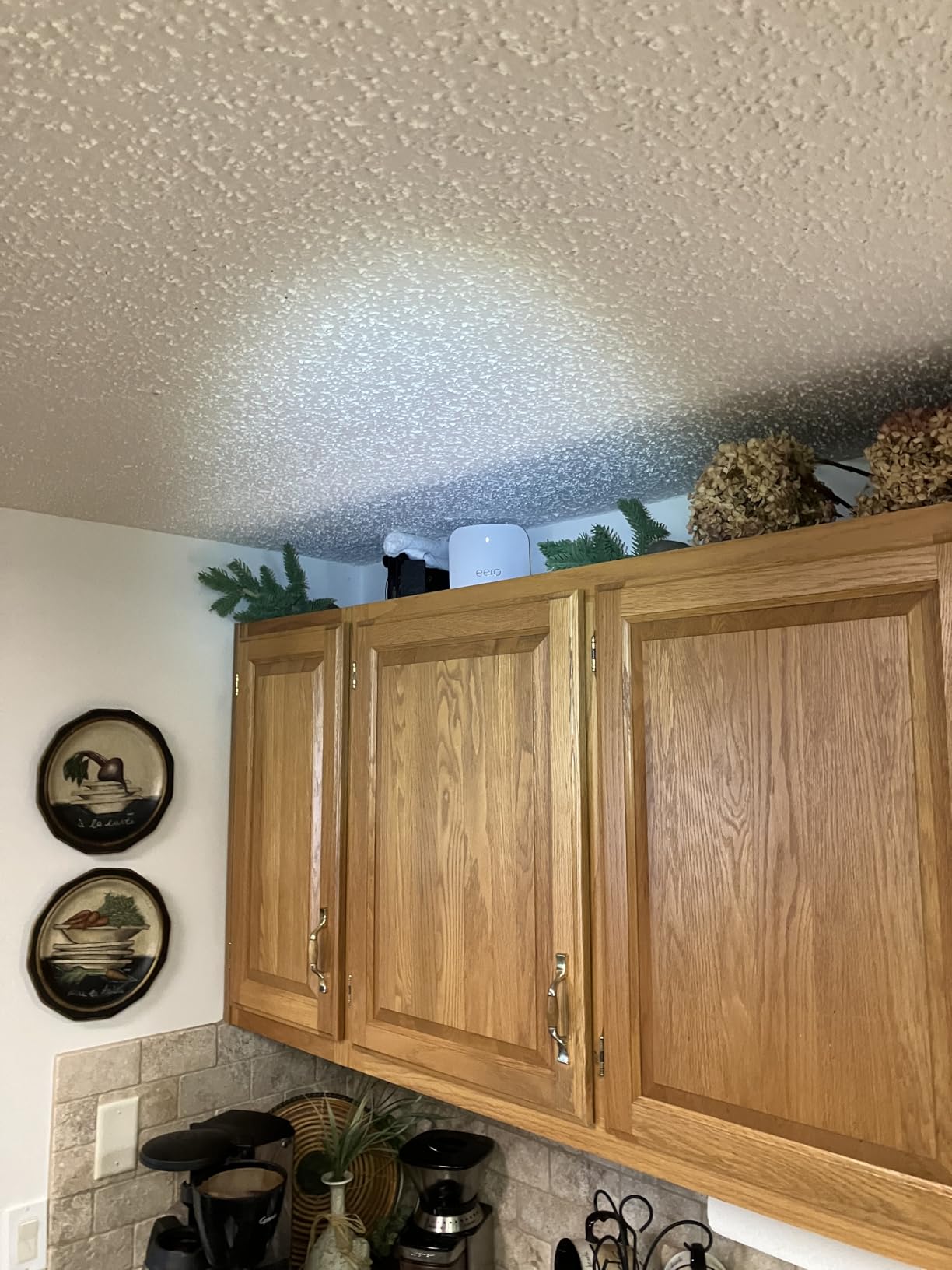
The device capacity figure is the one worth pausing on. Most vendors quote 100 or 200 devices because they are describing a typical home. 600+ is a genuinely different claim, and it maps closely to what we see in owner reports from houses with cameras, doorbells, locks and a dozen smart bulbs per room.
Like the rest of the range, it uses TrueMesh, TrueRoam and TrueChannel software and works with eero Built-in on select Amazon Echo devices. Setup reuses your existing network name and password, which keeps the re-pairing chore to a minimum.
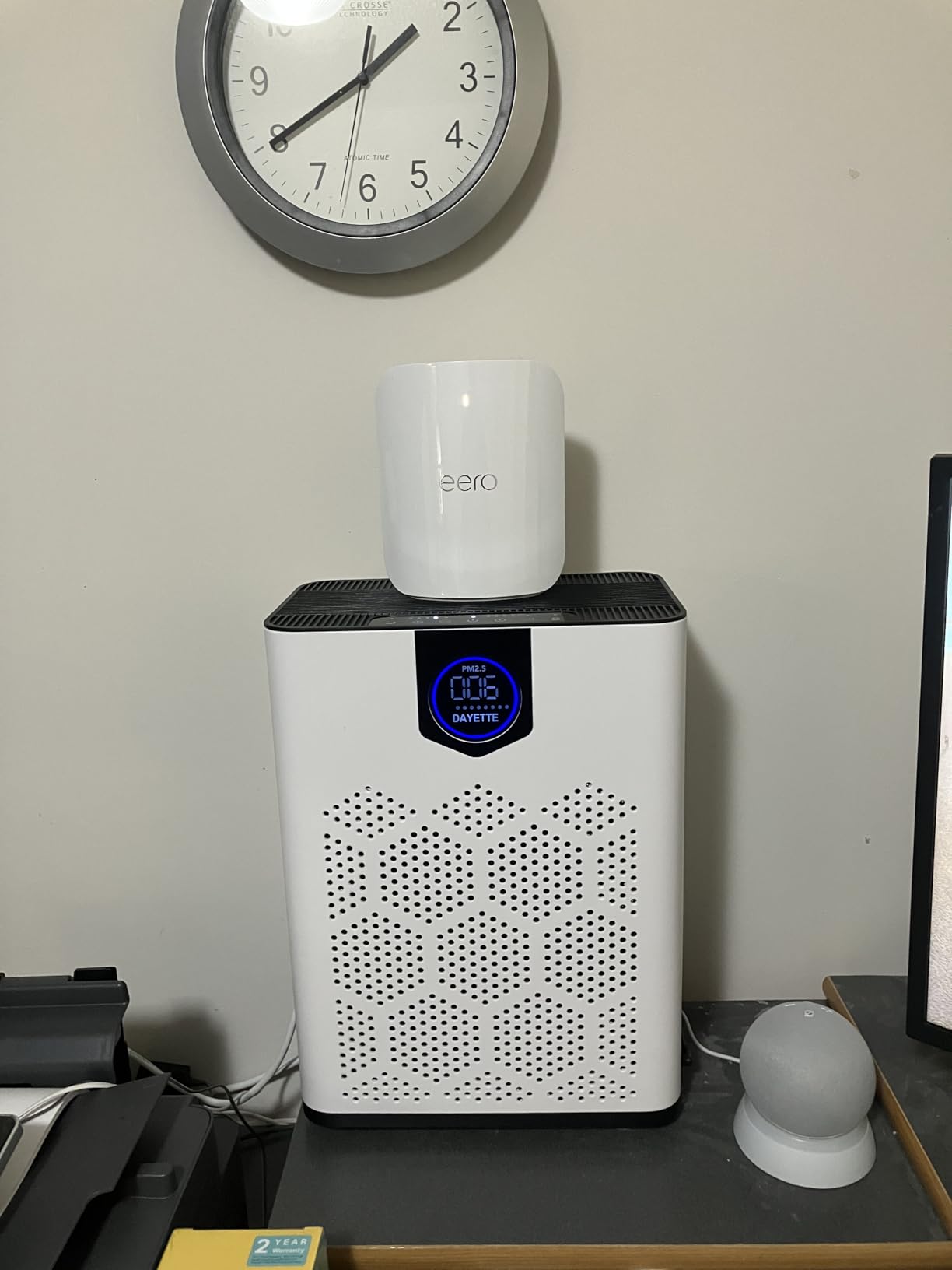
Why the Pro 7 is worth the step up in a busy family home
The dedicated backhaul band means the far node is not fighting your streaming traffic for airtime. In a two-storey home where someone is working from a bedroom office, that is the difference between a usable video call and a choppy one.
Two 5 GbE ports per node also mean you can wire the two satellites and still have spare ports for a NAS, a printer or a wired access point in a garage without adding a switch.
Why you can skip it if your plan is gigabit or lower
On a 1 Gbps connection, the extra radios and ports do very little that you can see. Customers report broad satisfaction on coverage and ease of setup, but the five-star share of this listing sits around the same level as the cheaper eero 7, which suggests you are paying for headroom rather than for a better daily experience.
The premium security tier is also still subscription-based. If your household does not need content filtering or malware blocking, that recurring cost buys you nothing and should not factor into the decision.
3. NETGEAR Orbi 770 Series 3-Pack – Best for 5,000+ Sq Ft Homes
NETGEAR Orbi 770 Series WiFi 7 Mesh System, Up to 8,000 sq ft., 3 Pack
Tri-band Wi-Fi 7
Up to 8,000 sq. ft.
11 Gbps aggregate
100 devices
Pros
- Largest Orbi coverage claim at up to 8000 sq. ft.
- Enhanced Backhaul holds multi-floor speeds up
- Expands with additional 770 series satellites
- 2.5 Gbps WAN port bandwidth
Cons
- A 4.1 rating sits below the rest of this group
- Internet plans capped around 2.5 Gbps despite 11 Gbps aggregate
- NETGEAR Armor becomes a paid subscription after the trial
The Orbi 770 series is the one to look at when square footage is the primary problem. NETGEAR claims up to 8,000 sq. ft. and 100 devices for the three-pack, with roughly 2,750 sq. ft. of additional coverage per added satellite. That satellite expandability is the real story for a property this size.
Aggregate throughput is listed at up to 11 Gbps across the three bands, and Enhanced Backhaul is the mechanism that keeps the far satellites from becoming dead weight in a large house.
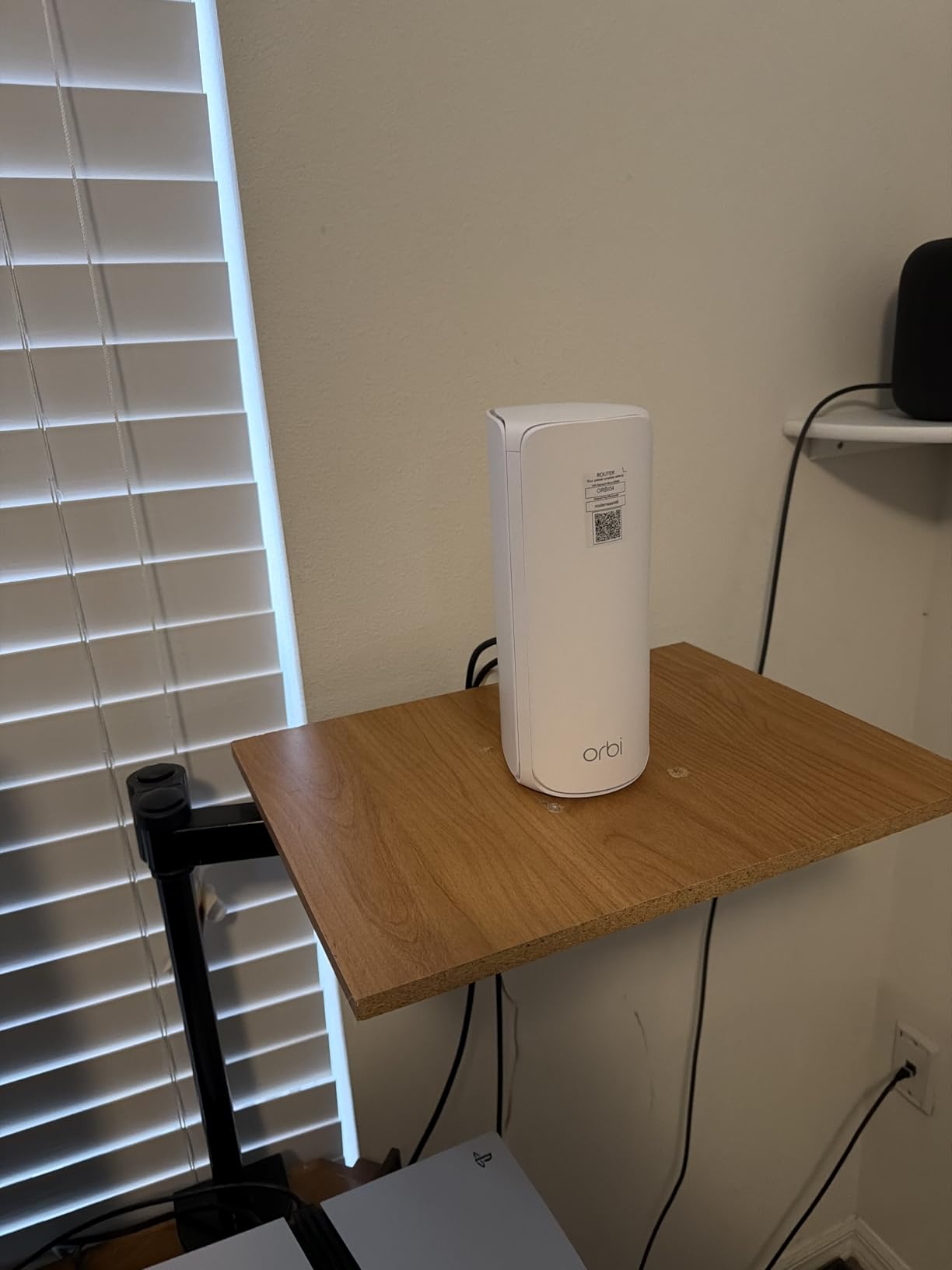
WAN port bandwidth is 2,500 Mbps, which is worth checking carefully against your plan. If you are on gigabit service, this is comfortable. If your provider offers 5 Gbps or 10 Gbps tiers, the port, not the Wi-Fi, becomes the limit.
Setup runs through the Orbi app with guided steps, and the system works alongside cable or fiber ISP equipment, which matters in homes where you are keeping a provider gateway in the mix.
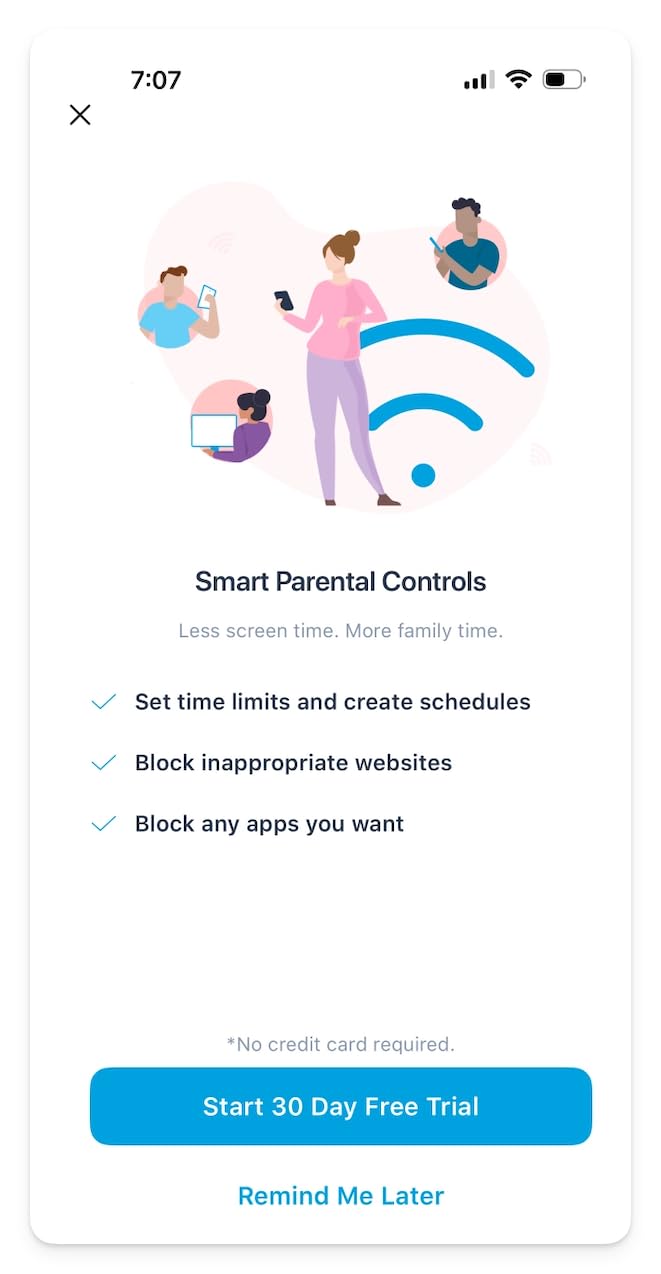
Why the Orbi 770 series suits the biggest homes on this list
Satellite expandability means you can start with three nodes in the main house and add one per outbuilding. For a property with a detached garage or a finished basement suite, that is far cheaper than replacing the system with a different architecture.
The 100-device figure is modest compared with the eero Pro 7, so homes running large camera fleets should look at the device count before committing. Buyers who care more about reaching the far end of a long floor plan than about supporting 400 gadgets will be happier here.
Why some buyers regret this pick
Its 4.1 rating across 967 reviews sits at the bottom of the field we assembled, and roughly 13 percent of reviews are one-star. Setup friction and subscription-based security account for a large share of that criticism, which is consistent with what we heard from owners.
The hardware is also listed for US use only. Buyers elsewhere will need to confirm regional availability before ordering, and the 2.5 Gbps WAN cap is a hard ceiling rather than a setting you can raise later.
4. eero Max 7 3-Pack – Best for 10 Gigabit Internet Plans
Amazon eero Max 7 mesh wifi system (newest model) – Supports internet plans up to 10 Gbps, Coverage up to 7,500 sq. ft., Connect 750+ devices, 3-pack
Wi-Fi 7 mesh
Up to 7,500 sq. ft.
Two 10 GbE ports per node
750+ devices
Pros
- Two 10 Gigabit Ethernet ports on every node
- Supports internet plans up to 10 Gbps
- Works as a Thread border router with Matter and Zigbee control
- Handles 750+ devices
Cons
- Advanced security features sit behind the eero Plus paywall
- Migration of large non-eero smart-home fleets can be difficult
- Limited granular band-steering controls
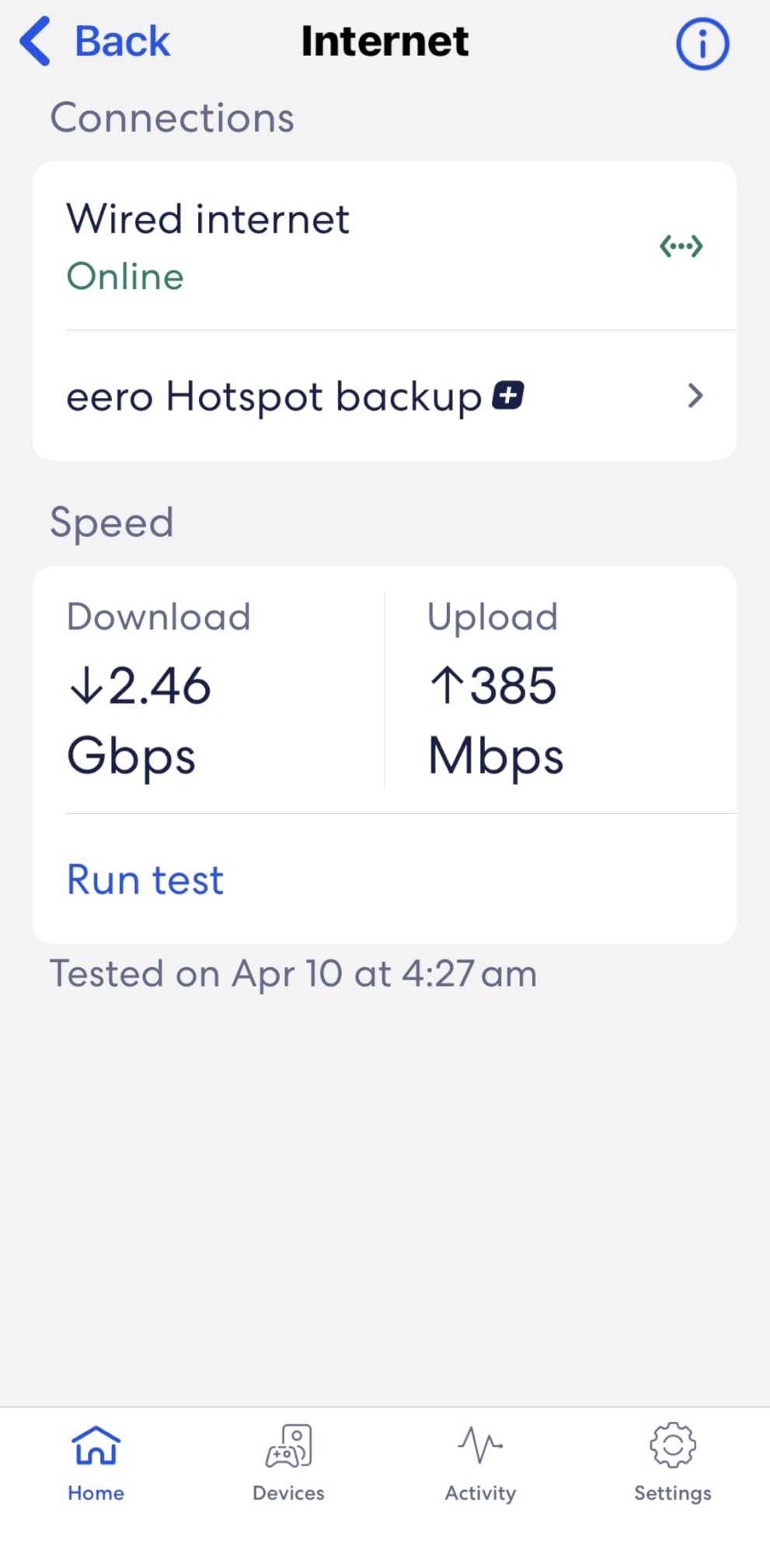
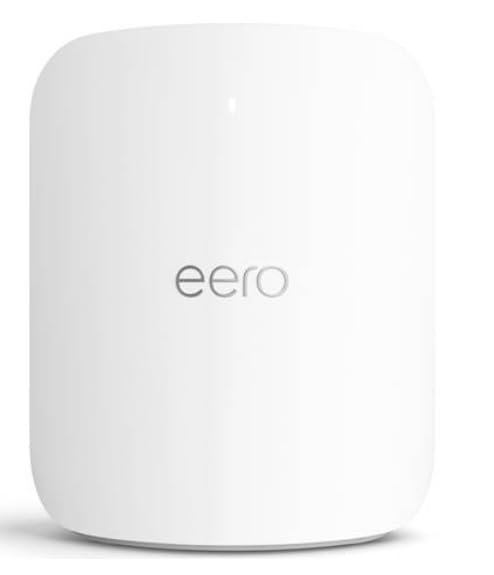
Only a small share of homes have 10 Gbps service, and if you are one of them, this is the only system here that does not immediately bottleneck your line. Two 10 Gigabit Ethernet ports per node across a three-pack gives you somewhere to put a NAS, a wired AP and the main connection.
Wired speeds are listed up to 9.4 Gbps and wireless up to 4.3 Gbps, with multi-gigabit wireless backhaul between nodes. Coverage is claimed up to 7,500 sq. ft.
The smart-home hub is the sleeper feature. It works as a Thread border router and includes Matter and Zigbee controller support, which removes a separate hub from the shopping list if you are already committed to the eero ecosystem.
Device capacity of 750+ is the highest figure on this list by a wide margin. Owners with big camera and bulb deployments point to that headroom as the reason their network stays stable when everyone is home.
Why the Max 7 is the right call for a 10 Gbps subscriber
Multi-gig wireless backhaul is the differentiator. Most tri-band systems borrow one band for node traffic, which eats into client throughput; this one has the headroom to keep both sides fast across three floors.
It also reuses your existing network name and password during setup, and TrueMesh handles roaming between nodes, which is where owners report the fewest complaints.
Why it is the wrong pick for almost everyone else
If your plan is 2 Gbps, the other 10 GbE ports are decorative and you are buying capability you will not use for years. The same applies to the multi-gig backhaul in a house that does not have the wiring to exploit it.
Migration is the practical risk. Some users report difficulty moving large non-eero smart-home fleets onto the system, and band-steering controls are limited compared with ASUS or NETGEAR standalone units. If you have a mature smart-home setup, test this before committing.
5. NETGEAR Nighthawk RS700S – Best Standalone Router for Wired Large Homes
NETGEAR Nighthawk WiFi 7 Router RS700S, Up to 3,500 sq ft, 19 Gbps
Tri-band Wi-Fi 7
Up to 3,500 sq. ft.
19 Gbps aggregate
200 devices
Pros
- Highest aggregate throughput of any standalone pick here
- 10 Gig WAN plus 10 Gig LAN suits fiber and NAS users
- Covers up to 3500 sq. ft. and 200 devices
- 320 MHz channels with MU-MIMO and OFDMA
Cons
- Not a mesh system
- Coverage drops off across floors and behind dense walls
- NETGEAR Armor needs a subscription after the 30-day trial
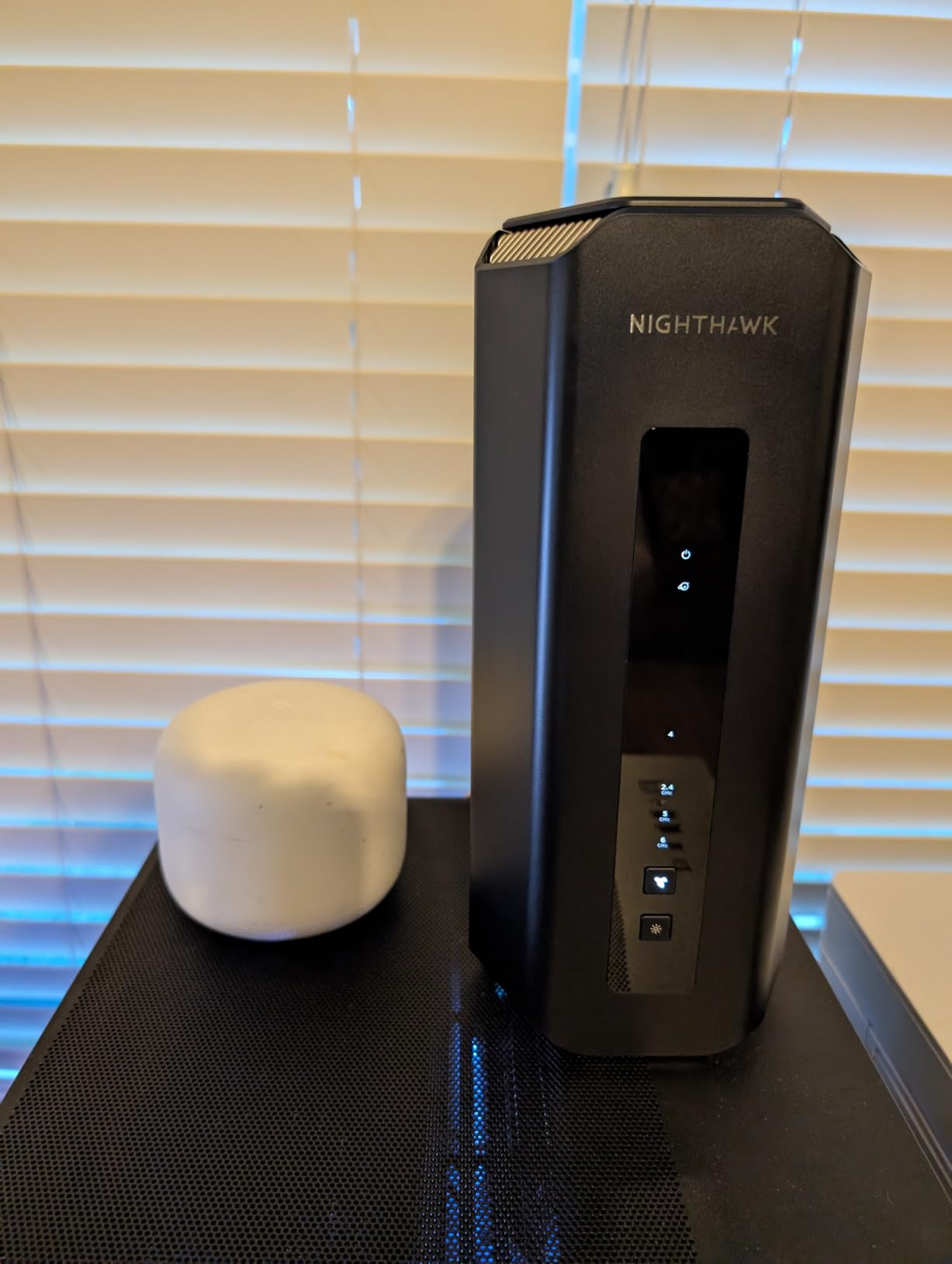
The RS700S is the router to buy when Ethernet is already in the walls. With one 10 Gig WAN port, one 10 Gig LAN port and four 1 Gig LAN ports, it is built to sit at the centre of a wired house and hand traffic to switches and access points rather than trying to cover square footage on its own.
Aggregate throughput is rated up to 19 Gbps across 2.4 GHz, 5 GHz and 6 GHz, with 320 MHz channels, MU-MIMO and OFDMA. Device capacity is listed at 200.
The Nighthawk app covers setup, speed tests, pausing individual devices and guest networks. It works with most cable, fiber, DSL and satellite providers, so you are not locked into one ISP type.
Warranty is one year limited with 90-day complimentary technical support. That is shorter than the two- and three-year terms carried by the mesh systems on this list, and it is a reasonable thing to weigh on a device you might keep for a decade.
Why the RS700S is right when you can wire the house
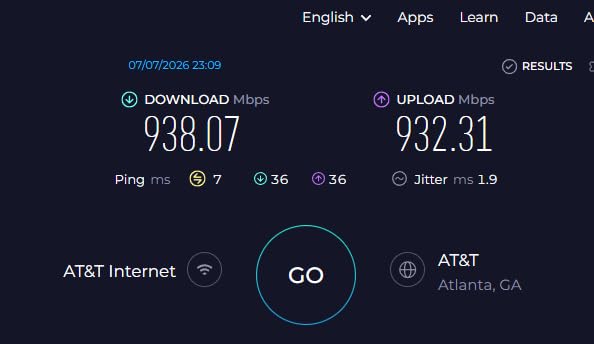
Multi-gig Ethernet is the reason. The other standalone routers listed here top out at 2.5 GbE, so a fiber plan above 2 Gbps and a wired NAS are both served properly without an external switch at gigabit speeds.
It is also the cleanest answer for a three-floor home with Cat6a already run. The router stays at the top of the stairs and cheap access points do the coverage, which no mesh system can match on wired backhaul.
Why it fails as a wireless-only solution
Coverage is claimed up to 3,500 sq. ft., which sounds generous until you remember that figure assumes an open, single-storey space. Users report signal degrading across floors and behind dense walls, and that is exactly the scenario a large home creates.
For a home where you cannot run cable, this is the wrong tool. Add Orbi or ZenWiFi nodes later if the wired plan does not work out, but budget for the second purchase rather than expecting one box to do both jobs.
6. NETGEAR Nighthawk BE9300 – Best Budget Standalone Wi-Fi 7 Router
NETGEAR Nighthawk WiFi 7 Router, Up to 2,500 sq ft, 9.3 Gbps
Tri-band Wi-Fi 7
2,500 sq. ft.
2.5G WAN plus two 2.5G LAN
Up to 100 devices
Pros
- Affordable way into a standalone Wi-Fi 7 router
- 2.5 Gig WAN port supports multi-gig plans
- Dedicated 6 GHz band keeps fast devices on clean spectrum
- 2 GB RAM gives real headroom
Cons
- Coverage limited to about 2500 sq. ft. without mesh extenders
- Only 2.5 GbE ports
- One-year limited warranty
The BE9300 is the cheapest way to get a real tri-band Wi-Fi 7 router onto a desk, and the dedicated 6 GHz band is the feature that justifies the low tier. Fast clients get their own lane instead of competing with everything else on 5 GHz.
Ports are the selling point for anyone upgrading: a 2.5 GbE WAN port plus two 2.5 GbE LAN ports and two 1 GbE LAN ports, which is more multi-gig than most mesh nodes at twice the cost.
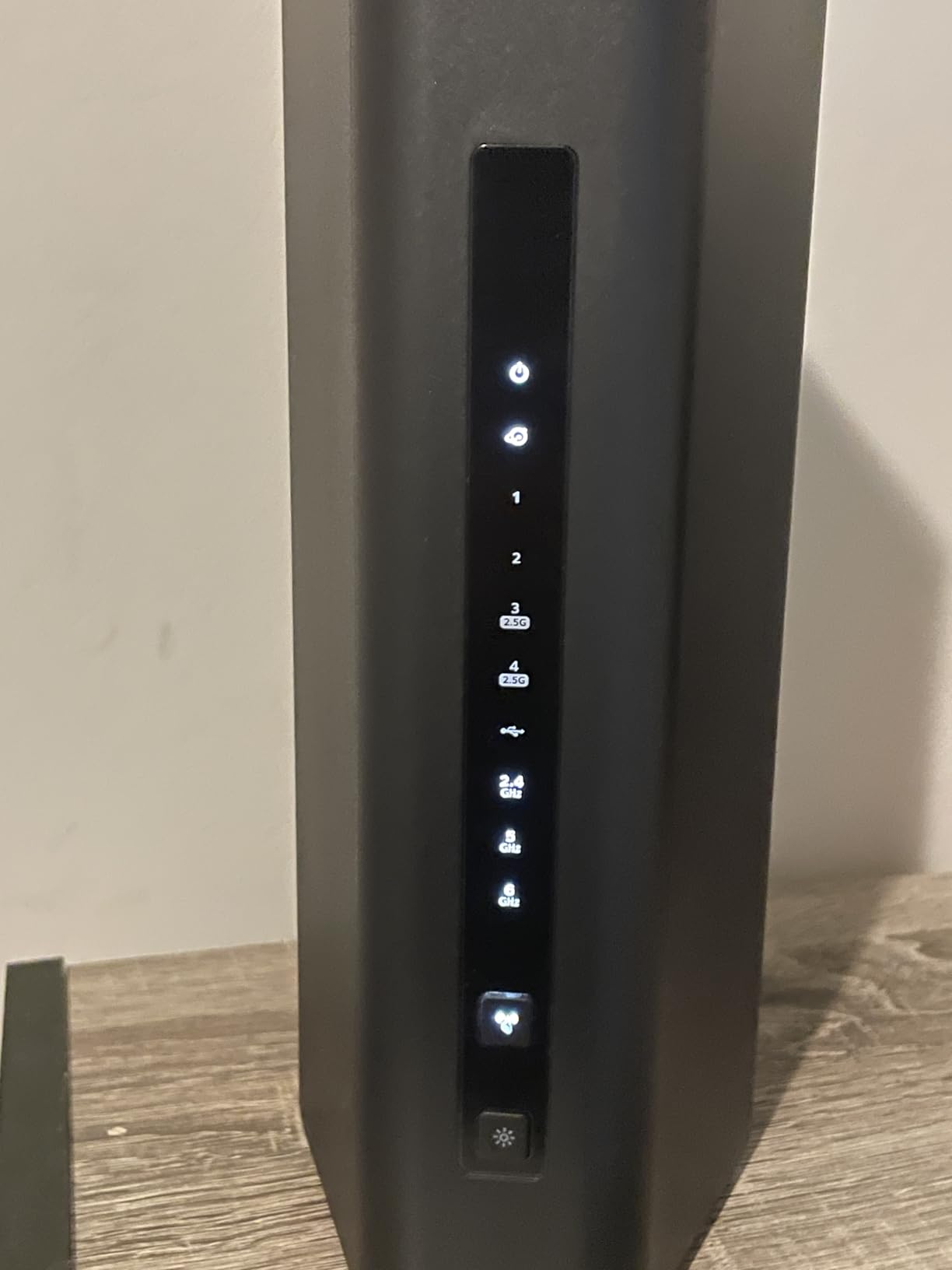
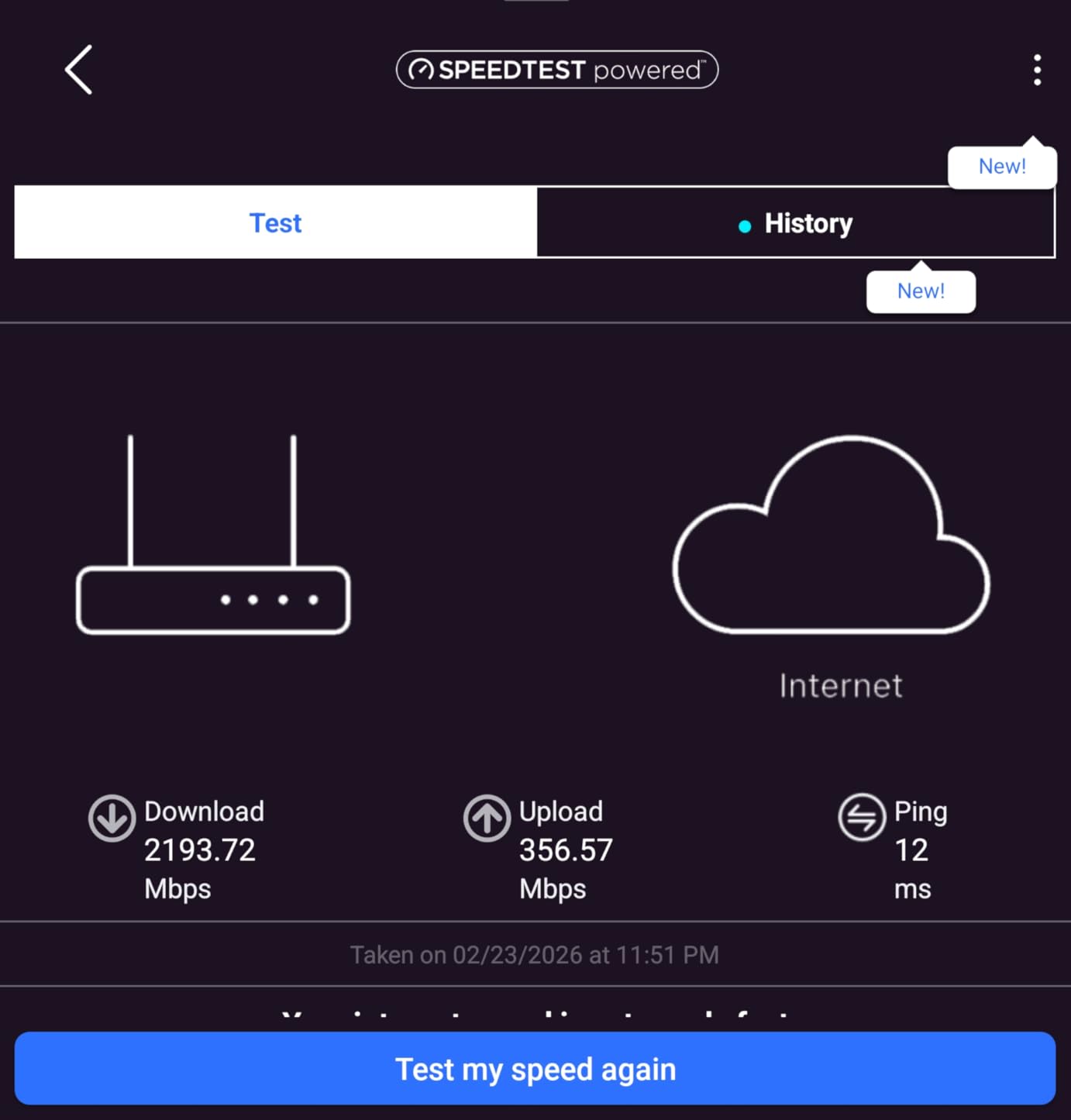
Aggregate throughput is up to 9.3 Gbps across the three bands, and the specification lists 2 GB of RAM. That memory figure is rarely published for budget routers and it does show up in how the device behaves with many clients.
Coverage is claimed at 2,500 sq. ft. for up to 100 devices, which is an honest number for a single unit. Treat it as a hard ceiling rather than a starting point.
Why this is the right router for the lower floors of a big house
A common pattern we hear from owners is one strong router plus extenders on the far floors. This fits that plan: the 2.5 GbE ports let you feed a switch for a wired access point on another level, which no cheaper unit manages.
It pairs with most cable, fiber, DSL and satellite providers, and the Nighthawk app handles setup, speed tests, device pausing and guest networks if you want something more granular than a mesh app.
Why it will not cover a large home on its own
Buying this expecting it to cover 4,000 sq. ft. is the most common mistake we see. Owners consistently note the coverage ceiling as the main limitation, and the fix is mesh nodes, which turns this into a two-part purchase.
Owners also report that some ISP gateways need to be put into bridge mode before the connection is clean, which is a five-minute fix for most people and a confusing one for everyone else.
7. ASUS RT-BE9700 – Best for Owners Who Refuse Subscriptions
ASUS RT-BE9700 WiFi 7 Router – Tri-Band (6GHz), 9.7 Gbps, x2 WAN, Mesh
Tri-band Wi-Fi 7
320 MHz channels
9,700 Mbps aggregate
AiMesh expandable
Pros
- AiProtection security works with no paid subscription
- Granular ASUSWRT controls for the whole network
- Separate IoT and guest SSIDs are easy to configure
- AiMesh lets you add nodes later
Cons
- Smallest review base here at 106 ratings
- WPA3 breaks wireless AiMesh backhaul to older Wi-Fi 6 nodes
- Some users report shorter range than the router it replaced
The RT-BE9700 is the pick for a household that plans to keep its network for a decade and does not want a recurring security bill. AiProtection runs subscription-free at three levels, and there is no paid tier gating it.
Specced at 9,700 Mbps aggregate, the breakdown is 1,032 Mbps on 2.4 GHz, 2,882 Mbps on 5 GHz and 5,764 Mbps on 6 GHz, using 320 MHz channels and 4096-QAM.
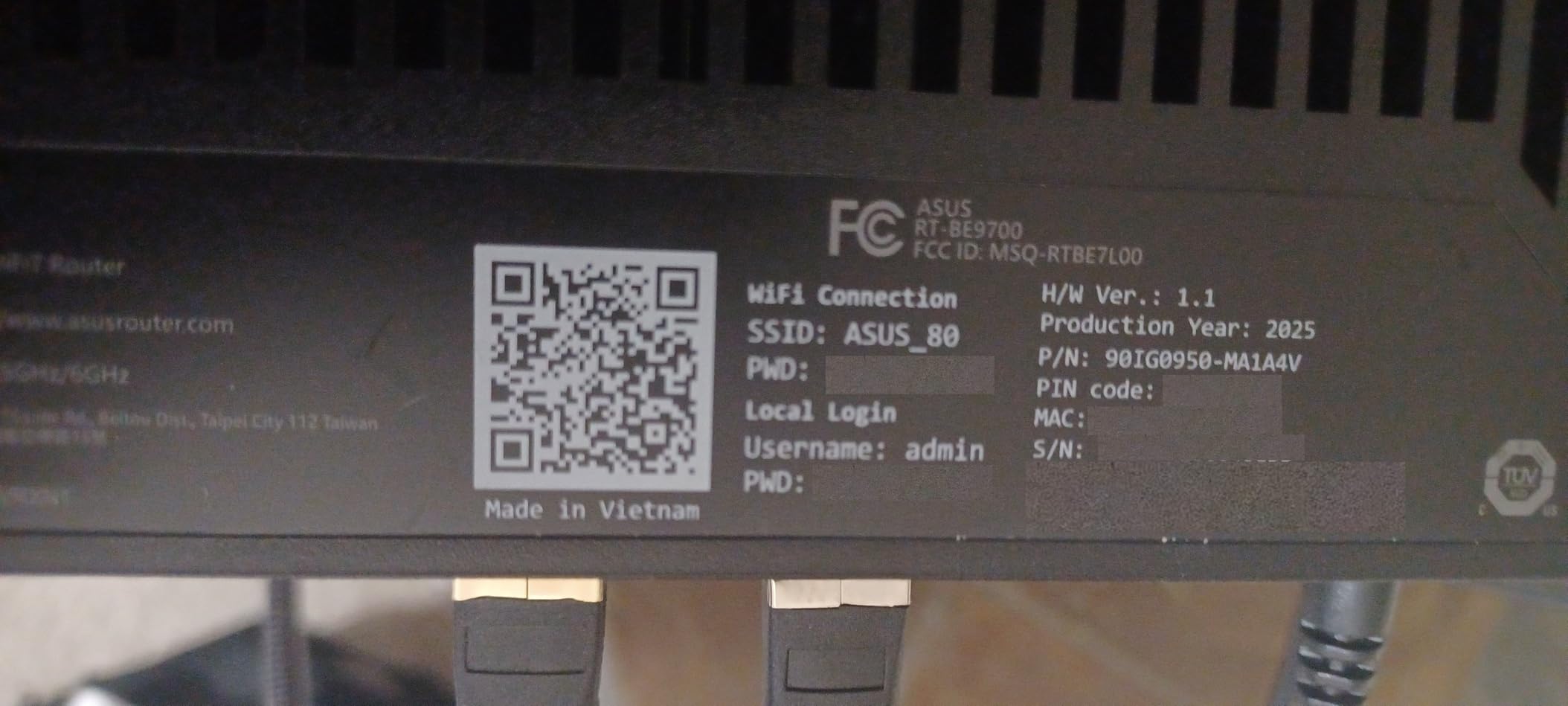
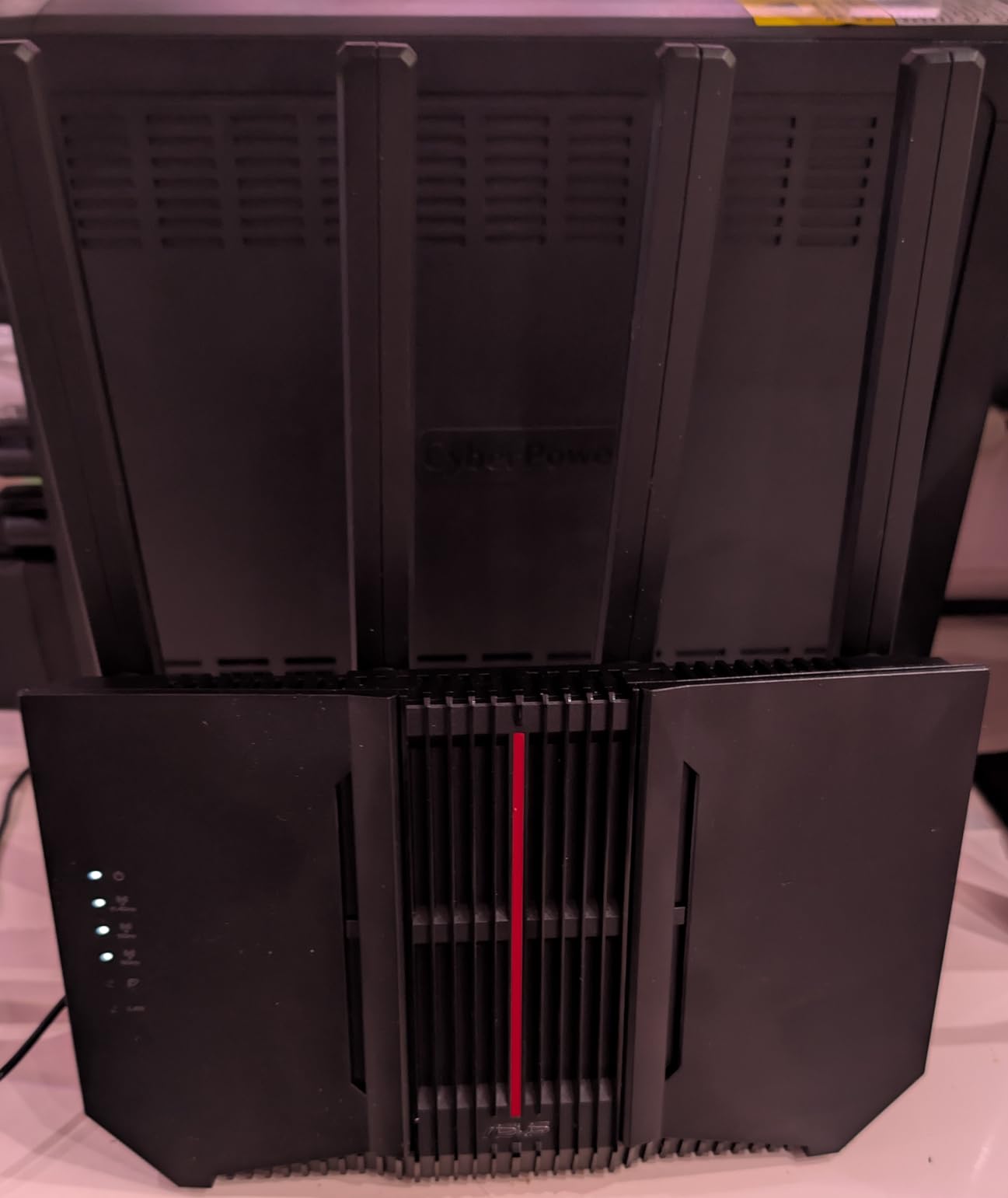
The versatility is unusual for a router at this level. It can operate as a router, an AiMesh node, an access point, a media bridge or a repeater, which makes it a good starting point whether or not you plan to add mesh later.
There is also a USB port for 4G LTE and 5G mobile tethering, plus site-to-site VPN and Instant Guard support. Storage access over that USB port has been unreliable for some owners, so treat it as a convenience rather than a feature to build on.
Why the RT-BE9700 rewards a hands-on owner
ASUSWRT gives per-device controls that consumer mesh apps do not: separate IoT and guest SSIDs, granular QoS, VPN server and client, and detailed traffic tools. If you have 80 devices and opinions about how they are grouped, this is where those opinions pay off.
AiMesh means the upgrade path is one node at a time. Start with this at the top of the house, add an RT-BE9700 or a ZenWiFi node on the lower floor when you are ready, and keep a single network name the whole way.
Why some buyers are frustrated with it
Coverage is claimed at 2,750 sq. ft. across six ports and four antennas, and a portion of users report shorter range than the router they replaced. At this price point in a large house, expect to need the second unit sooner rather than later.
The more important warning is compatibility. WPA3 can break wireless AiMesh backhaul to older Wi-Fi 6 nodes, so if you already own a previous-generation AiMesh unit, check the pairing before buying. With only 106 ratings behind it, the long-term history here is thinner than anything else on this list.
8. TP-Link Deco BE17000 3-Pack – Best for Extra-Large Floor Plans
TP-Link Deco 7 Pro BE17000 Tri-Band Wi-Fi 7 Whole Home Mesh System 320 MHz
Tri-band BE17000 mesh
Up to 8,500 sq. ft.
10G port on every node
Over 200 devices
Pros
- Largest coverage claim on this list at 8500 sq. ft.
- 10 Gbps WAN/LAN port on every node
- Simultaneous wired and wireless backhaul at this tier
- USB 3.0 port per node
Cons
- Settings are restrictive compared with ASUS or eero apps
- Some users report intermittent node disconnects
- Only 140 ratings for long-term history
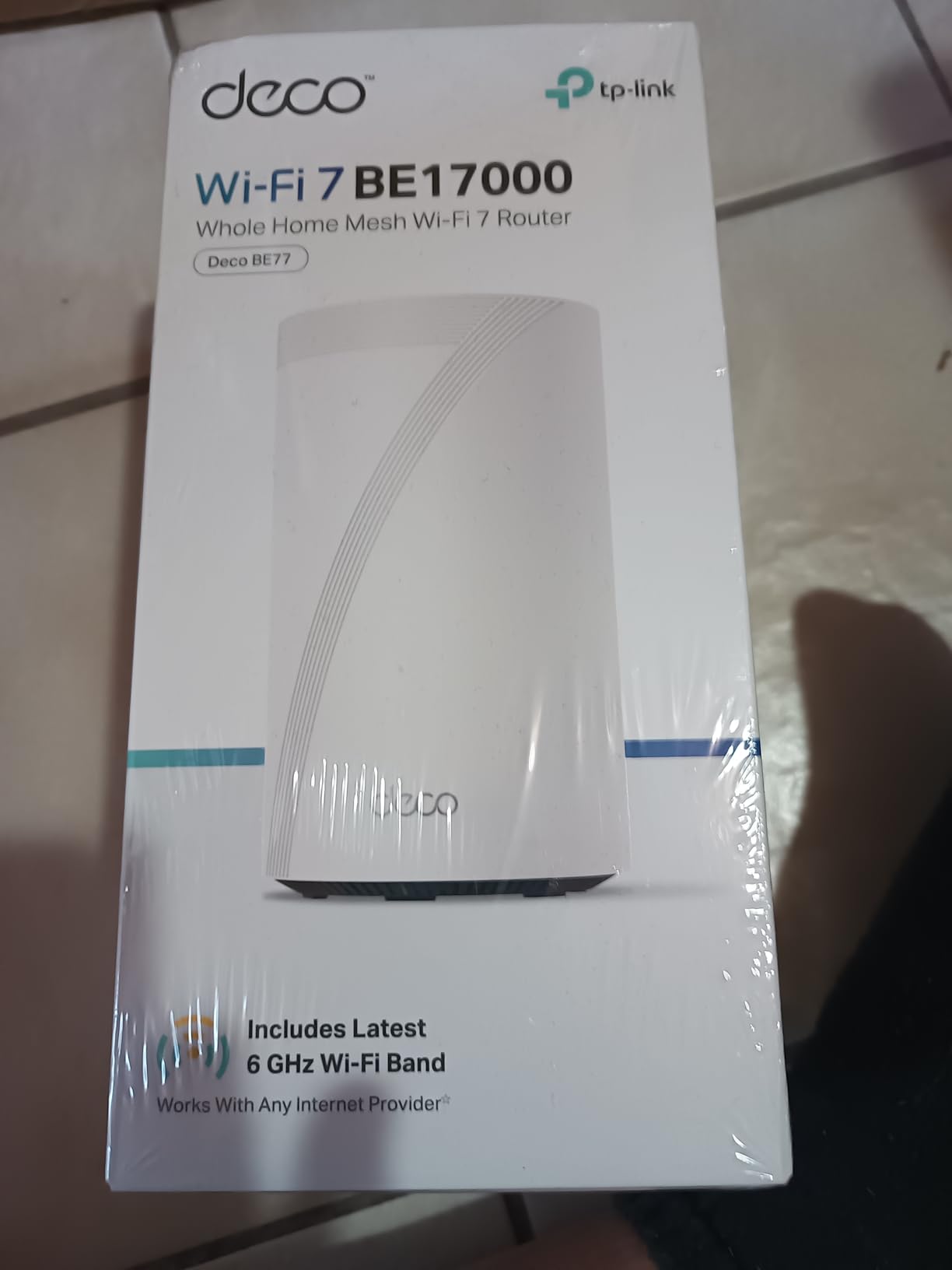
The Deco BE17000 is the most aggressively specced system here on paper. Three nodes, up to 8,500 sq. ft. of claimed coverage, over 200 devices, and a 10 Gbps WAN/LAN port on every node alongside 2.5G and 1G LAN ports plus USB 3.0.
Band speeds are listed at 11,530 Mbps on 6 GHz, 4,324 Mbps on 5 GHz and 688 Mbps on 2.4 GHz, giving a 17 Gbps aggregate class. MLO is supported for newer Wi-Fi 7 clients.
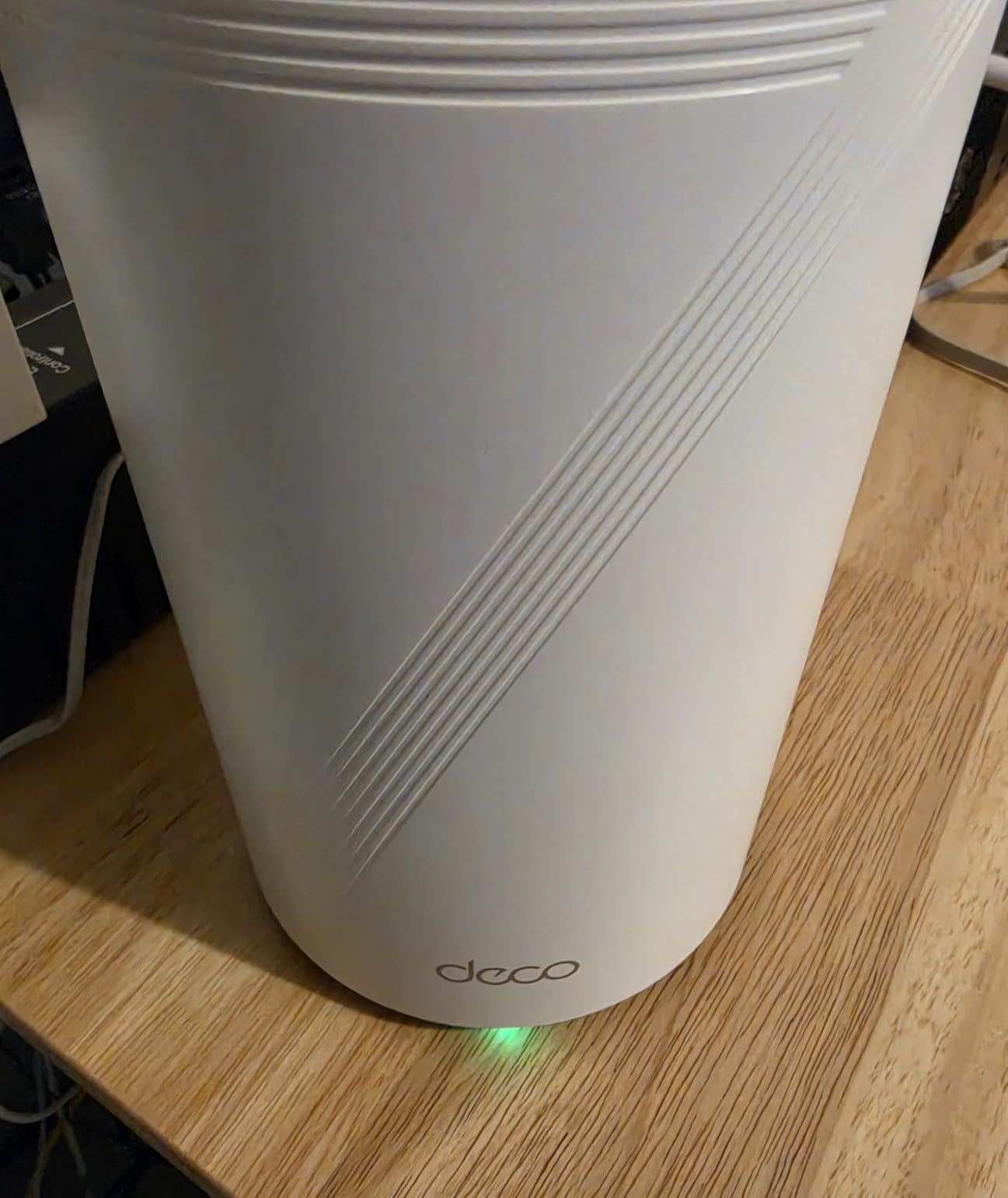
The port layout is what separates it from the Orbi 770 in a large property. With 10 Gbps on every node you can wire two satellites and still have a fast port spare at each, without a switch.
Simultaneous wired and wireless backhaul is unusual at this tier. In a house where one node can reach the main distribution point but another is out of reach for cable, that flexibility prevents the placement compromises mesh usually forces on you.
Why this system fits very large homes with mixed wiring
A dedicated IoT SSID option lets you isolate 2.4 GHz-only gear, which is the single most useful thing you can do for a smart-home-heavy house. Bulbs and cameras stop competing with laptops for airtime, and troubleshooting becomes possible instead of guesswork.
It expands with additional Deco units and runs from the Deco app for setup, management and firmware. Two-year manufacturer warranty is standard here.
Why it is not our first recommendation
The rating is 4.1 across 140 reviews. A minority of owners report intermittent node disconnects and dropouts, and that is a serious complaint in a system whose entire job is to stay up across a whole house.
The app is also more restrictive than ASUSWRT or eero. If you like tuning QoS, per-device rules and VLAN-style segmentation, the settings you want are not exposed. For a large home with complex requirements, that is a real limitation.
9. TP-Link Deco 7 Elite BE85 2-Pack – Best Hardware for Wired Backhaul
TP-Link Deco 7 Elite BE85 Tri-Band WiFi 7 BE22000 Whole Home Mesh System
Tri-band BE22000 mesh
22 Gbps aggregate
Two 10G plus two 2.5G ports
2 nodes
Pros
- Fastest port hardware here with dual 10G and dual 2.5G per node
- SFP+ fiber slot allows fiber backhaul
- Wired and wireless backhaul run at the same time
- 12-stream design targets 200+ devices
Cons
- Mixed stability reports including silent fallback to wireless backhaul
- Some users saw disconnects with very large smart-home fleets
- Firmware updates have disrupted working setups
This is the only pick on the list with an SFP+ slot, and for a large home that is quietly the most important port on the device. It lets you run fiber backhaul between nodes instead of hunting for a copper path through a finished house.
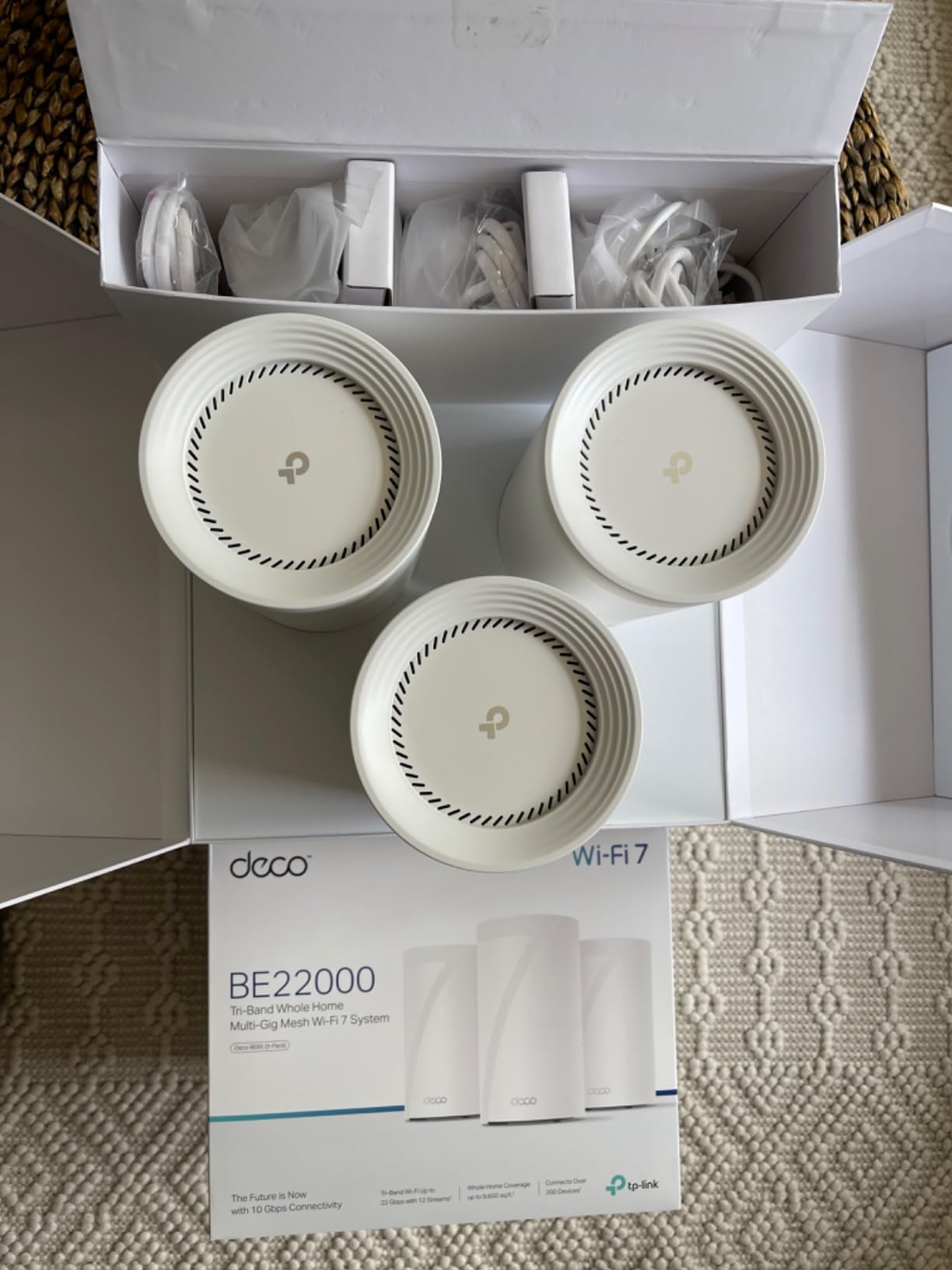
Per node you get two 10G WAN/LAN ports, one of which is the SFP+ fiber/RJ45 combo, plus two 2.5G ports and USB 3.0. Aggregate class is BE22000, with 11,520 Mbps on 6 GHz, 8,640 Mbps on 5 GHz and 1,376 Mbps on 2.4 GHz.
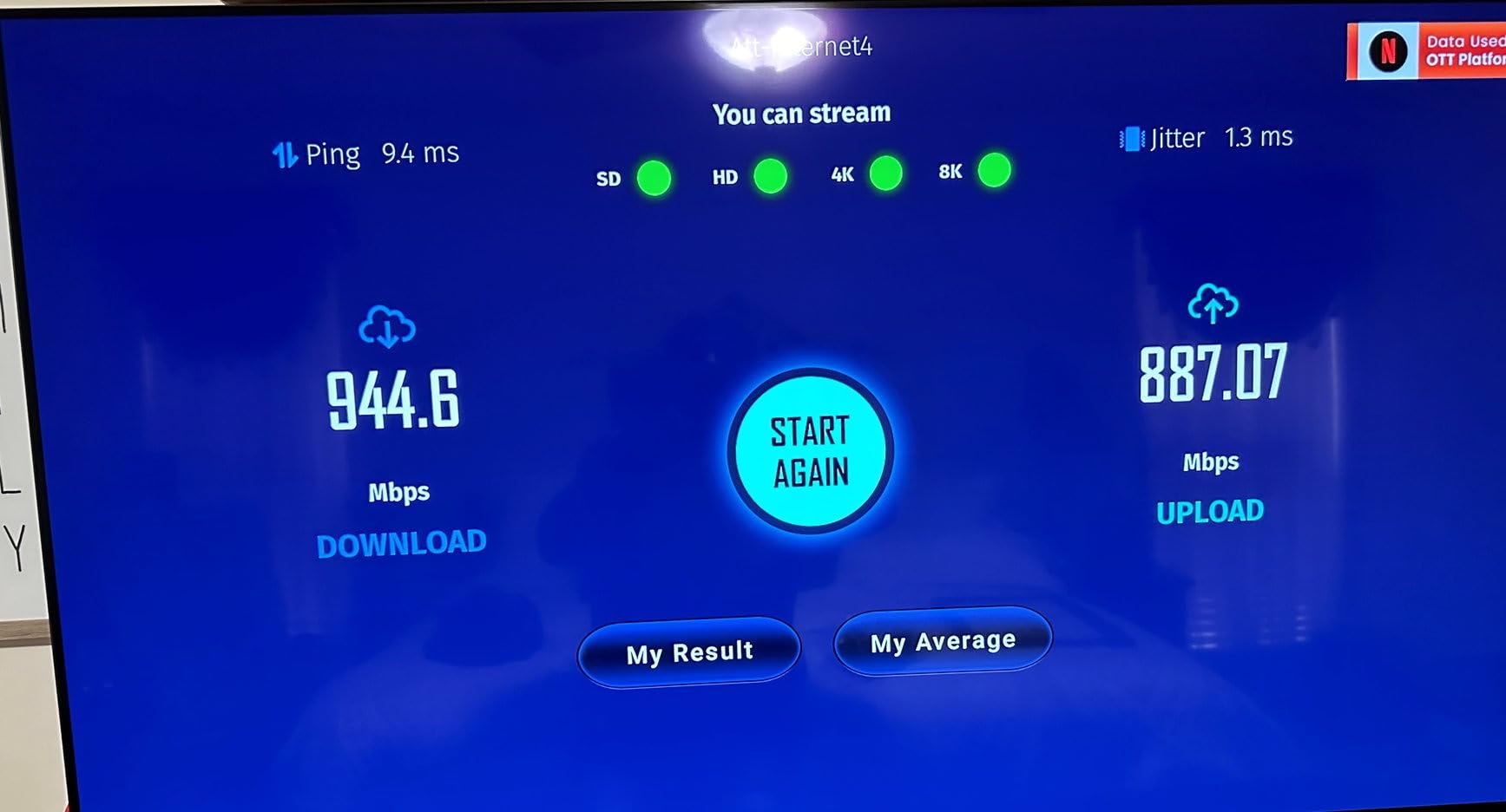
Note this is a two-pack, not a three. That suits homes with one very large open floor and a hard-to-reach corner rather than three moderate floors, and it is the reason the coverage math later in this article matters.
AI-Roaming handles handoff between the two nodes, and VPN client and server run alongside ordinary internet traffic. Alexa and Google Assistant voice control are supported.
Why the BE85 wins on wired backhaul hardware
Nothing else here has a fiber slot. If your provider has already run fiber to a second location, or you can run single-mode fiber between floors, this is the only system that lets you do 10 Gbps backhaul without finding a place for a media converter.
Simultaneous wired and wireless backhaul means the second node keeps a radio link even when the cable is connected. That redundancy is exactly what experienced owners on forums ask about and rarely find.
Why the reviews split on stability
At 4.0 across 269 reviews, the hardware is fast and port-rich but owners disagree sharply about long-run mesh behaviour. Reports of nodes falling back to wireless backhaul, disconnects with very large smart-home fleets and disrupted setups after firmware updates all appear.
Some owners also measured MLO throughput slower than plain 6 GHz, which is consistent with the general pattern that MLO helps reliability more than raw speed on current client hardware. The UI does not display negotiated port speeds, so verify wiring with a separate speed test.
10. TP-Link Deco BE25 3-Pack – Best Value Mesh for Large Homes
Deco 7 Dual-Band BE5000 WiFi 7 Mesh Wi-Fi System 4-Stream 5 Gbps, 240 Mhz
Dual-band BE5000 mesh
Up to 6,600 sq. ft.
Two 2.5G ports per node
Over 150 devices
Pros
- Strongest coverage-to-cost ratio here at 6600 sq. ft.
- Second-largest review base of any pick at 1312 ratings
- 2.5G Ethernet on every node enables wired backhaul
- AI-Roaming keeps handoffs seamless
Cons
- Dual-band only with no dedicated 6 GHz backhaul band
- Aggregate throughput is roughly a quarter of the tri-band Decos
- Two Ethernet ports per node limits wired expansion
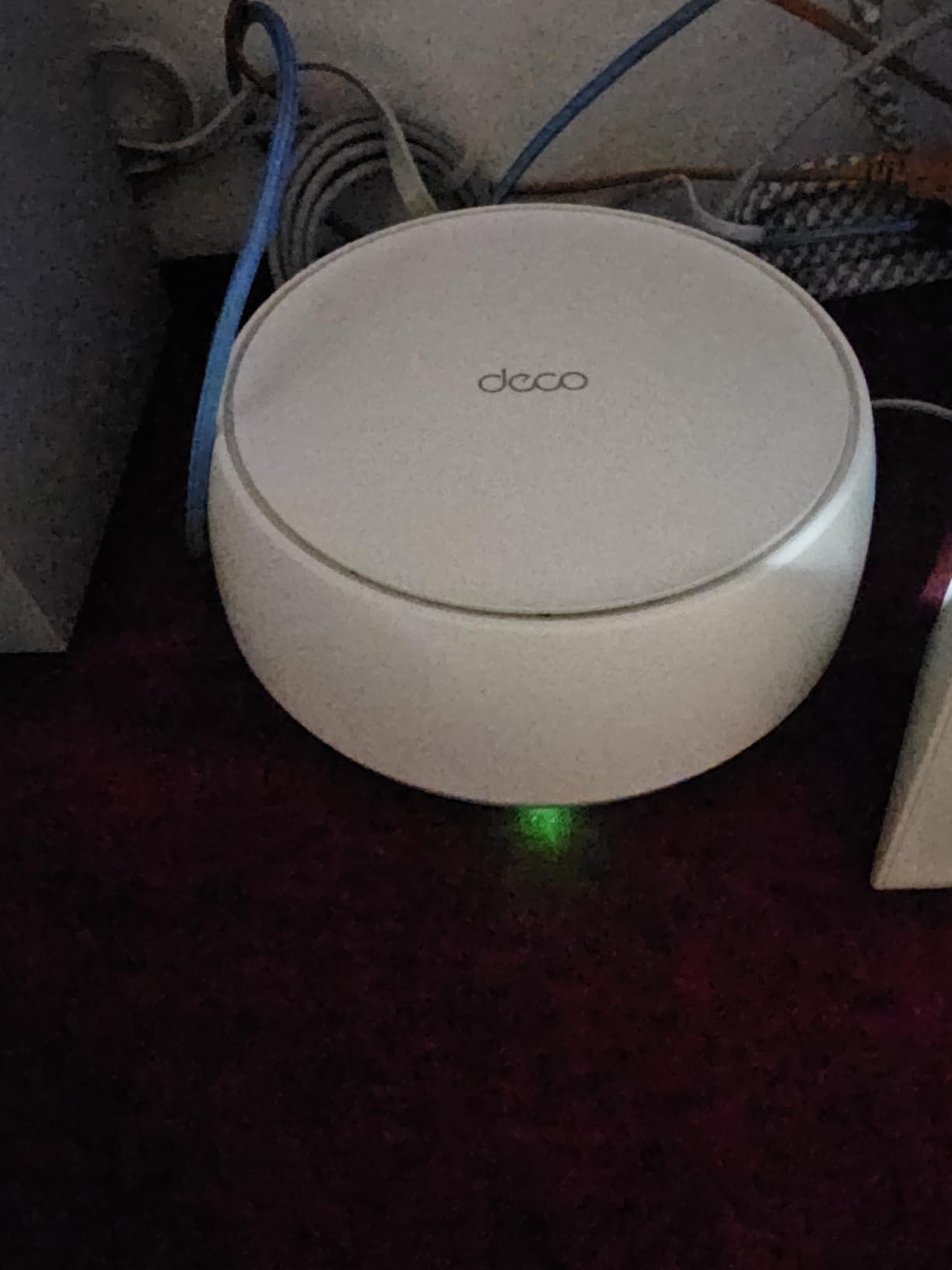
If you want the most established Wi-Fi 7 mesh available, this is it. The Deco BE25 3-pack claims up to 6,600 sq. ft. for more than 150 devices, and at 1,312 ratings it carries one of the deepest owner histories of anything on this page.
It is a dual-band 4-stream design rated at 5 Gbps aggregate: 4,324 Mbps on 5 GHz and 688 Mbps on 2.4 GHz at 240 MHz. Two 2.5 GbE ports per node mean wired backhaul is possible at 2.5 Gbps.
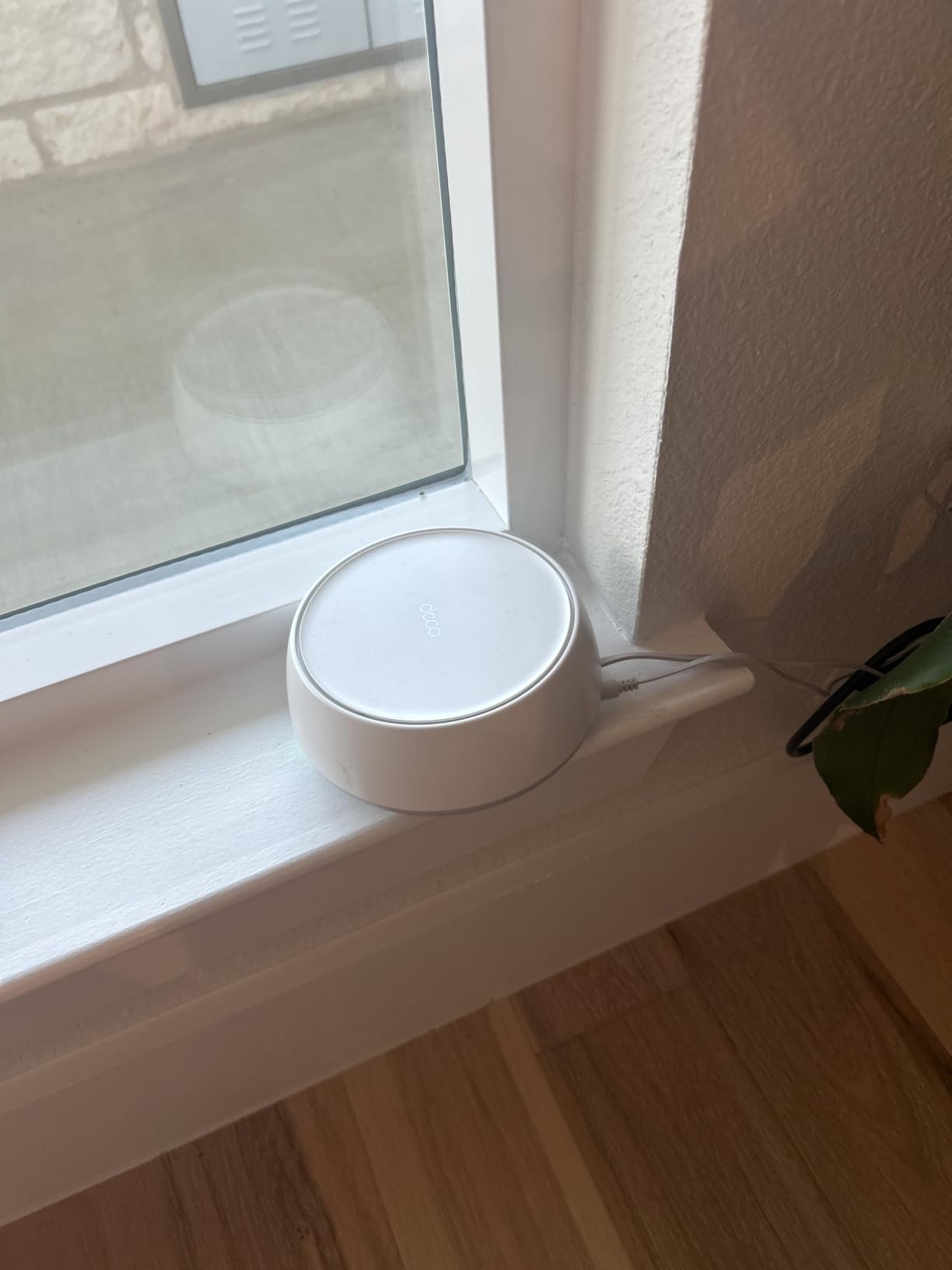
Coverage per unit is the number that matters most here, and 6,600 sq. ft. across three nodes is the second-largest claim we list. It ranks in the top of its Amazon category, which is another way of saying it sells in volume and the common problems are already known.
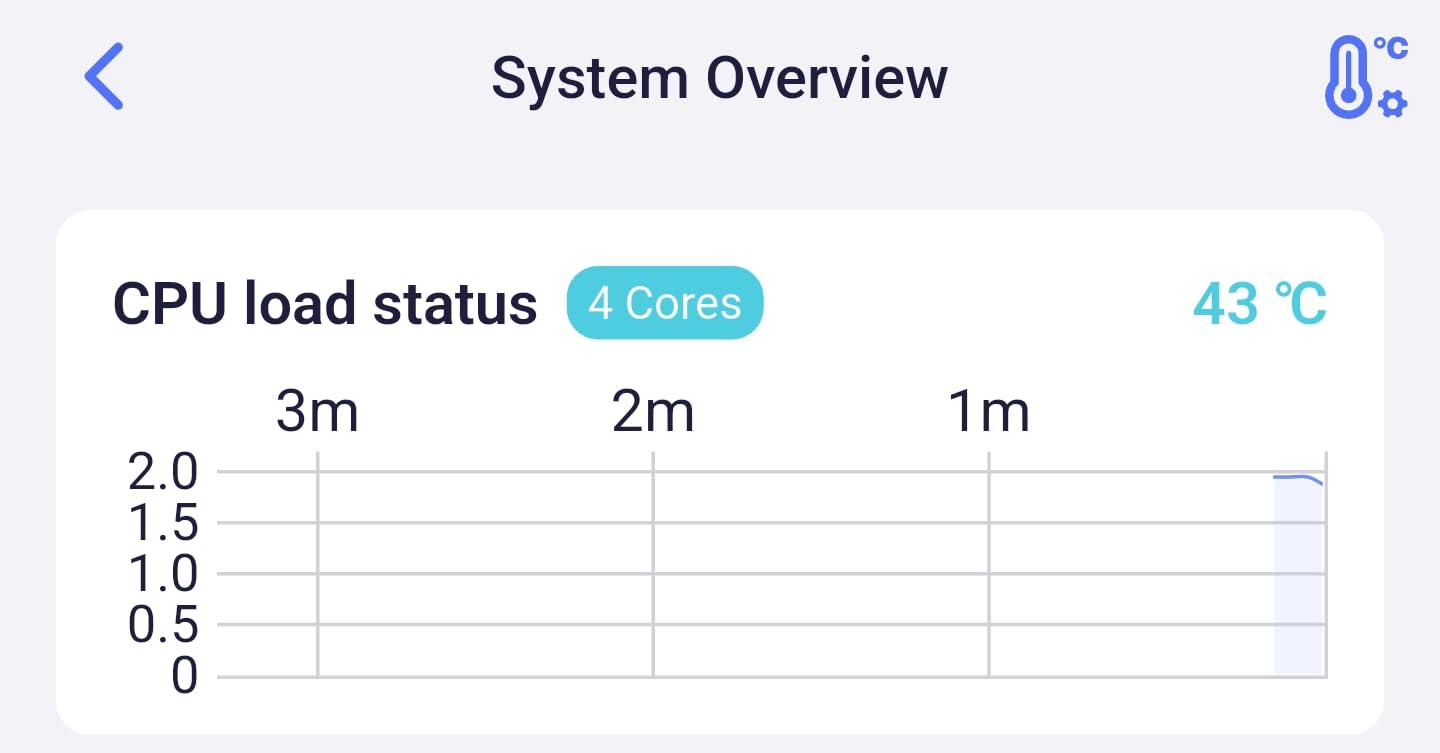
It runs OpenWRT underneath, which is a genuine advantage for anyone who wants more control than a consumer app offers, and a liability for anyone who does not. VPN client and server support is included alongside regular internet access.
Why the BE25 is the sensible default for a 3,000 sq. ft. home
Two nodes wired and one on wireless covers almost every open-plan layout we can think of, and the 2.5 GbE ports on every node make that wiring straightforward. It is also the easiest of the multi-node systems on this list to place well, because the units are small and unobtrusive.
The review volume matters for a first-time mesh buyer. With more than a thousand owners already posting the same setup problems, the troubleshooting path is known rather than guesswork.
Why it is the wrong choice for heavy multi-gig households
With no dedicated 6 GHz backhaul band, throughput on the far node drops substantially when it is talking over radio. Owners on gigabit-plus plans report the gap clearly, and the aggregate class is roughly a quarter of the tri-band Deco models listed above.
Two Ethernet ports per node also limits expansion. If you plan to wire a switch or add an access point at a satellite, those two ports go quickly. Buyers who want multi-gig backhaul should look at the Deco BE17000 instead.
11. GL.iNet Flint 3 – Best for Small Homes With Heavy VPN Needs
GL.iNet GL-BE9300 Flint 3 Tri-Band Wi-Fi 7 Router 5 x 2.5G VPN Router
Tri-band Wi-Fi 7
Five 2.5G ports
9 Gbps wireless
Up to 2,000 sq. ft.
Pros
- Five 2.5G ports
- more multi-gig ports than any other router here
- WireGuard and OpenVPN run near full port speed
- AdGuard Home and Bark add privacy and parental control
- Best value standalone Wi-Fi 7 router
Cons
- Coverage tops out around 2000 sq. ft.
- Firmware should be updated on first setup
- Not a mesh system
- Retractable antennas and DIY firmware can intimidate newcomers
The Flint 3 is here as a deliberate outlier. It covers up to 2,000 sq. ft., the smallest claim in this roundup, and for anything approaching a large home you would need to pair it with mesh nodes or access points. What it does have is five 2.5 GbE ports, which no other router here matches.
Wireless speed is up to 9 Gbps on tri-band Wi-Fi 7 with MLO, enhanced OFDMA, 4K QAM and preamble puncturing. Hardware is 1 GB DDR4 RAM and 8 GB eMMC storage.
The VPN performance is the reason it appears at all. WireGuard and OpenVPN speeds are listed up to 680 Mbps, which is close to the practical ceiling of a 2.5 GbE port running VPN encryption. Remote workers running their whole network through a tunnel get a dedicated box for that here.
AdGuard Home DNS blocking and Bark parental control support are built in, and both work without a paid account. That makes it a good match for the subscriber-averse buyer, alongside the ASUS.
Why the Flint 3 works as a wired core for a large home
Five 2.5 GbE ports means you can run this at the centre of a wired house feeding a switch, two access points and a NAS with nothing spare. Few routers at any tier give you that many multi-gig ports on the back.
The web admin panel and app both handle setup, and the Linux base means it keeps working after vendors stop updating consumer hardware. Two-year manufacturer warranty.
Why it will not cover a large home wirelessly
At up to 2,000 sq. ft., this is a small-home or single-floor router. Owners testing dozens of systems reached the same conclusion we did: without wiring, no amount of specification fixes coverage in a big house.
There is also a setup caveat. Owners report firmware needs updating on first configuration to reach full performance, and the retractable antennas plus DIY-oriented firmware can be intimidating if you have never configured a router before.
Wired vs Wireless Backhaul: Which One Should You Choose?
Short answer: if you can run Ethernet between nodes, do it. Wired backhaul is better on speed, better on latency and better on reliability, and it is the single change that most improves a large home’s network.
The reason is not complicated. In wireless backhaul, every byte travelling between your far node and your main router passes through the same air your devices are using. Node traffic and client traffic compete. Wire that link and they stop competing.
In practice the difference shows up in exactly the place owners complain about: the far end of the house during busy hours. On wireless backhaul, a node two floors away and behind a wall delivers a fraction of what a wired node delivers. Run a cable and that gap largely disappears.
Among the systems here, the ones with the strongest wired backhaul story are the TP-Link Deco 7 Elite BE85, which has two 10 Gbps ports and an SFP+ fiber slot per node, the TP-Link Deco BE17000, which has a 10 Gbps port on every node, and the eero Max 7, which has two 10 Gigabit Ethernet ports per node. At the value end, both the Deco BE25 and the eero 7 carry 2.5 GbE ports on every node, which is enough for gigabit-plus service.
What does wireless backhaul cost you? Flexibility in placement and no electrician. That is a genuine advantage in a house where cable cannot be run without opening walls, or in a rental. Just know that you are trading measurable throughput for it, and set your expectations around the far rooms accordingly.
One more practical point that comes up constantly on forums: many people assume their ISP gateway can stay in place alongside mesh nodes. It usually can, but the gateway needs to be in bridge mode or its own Wi-Fi turned off, otherwise you are running two independent networks that fight over channels.
How Many Mesh Nodes Do You Actually Need?
Here is the guidance we give people who ask, expressed as square footage rather than marketing language. Node counts assume reasonable placement and ordinary interior walls.
Under 2,000 sq. ft. on one floor: one node is usually enough, or two if the house has an L-shape or a brick chimney. This is the range where a single standalone router like the ASUS RT-BE9700 or the GL.iNet Flint 3 is a fair alternative to mesh.
Between 2,000 and 3,500 sq. ft.: two nodes. Put the primary where the internet enters the house and the second roughly halfway to the farthest room, not tucked in a corner. Wire the second if you can.
Between 3,500 and 5,000 sq. ft.: three nodes, or two nodes plus one wired access point. This is the most common large-home bracket, and a three-pack covers it without expansion.
Between 5,000 and 7,500 sq. ft.: three or four nodes. At this size, plan for at least two wired links. The Orbi 770 series and the Deco BE17000 are the systems on this list we would look at first for coverage claims in this range.
Above 7,500 sq. ft., or any home with three full floors: four nodes or more, and consider whether an access-point-plus-switch architecture suits you better than mesh at all. A single very powerful router never scales to this size on radio alone, regardless of what the spec sheet claims.
Two rules that matter more than the square footage. First, place nodes at roughly one-third and two-thirds of the path between the router and the difficult room, not at the far corner, where they will be too weak to hear the main node cleanly. Second, count outbuildings separately: a detached garage or garden office at 600 sq. ft. needs its own node, because the structure between it and the house costs you more signal than distance would.
Finally, floors beat walls. A staircase with an open riser transmits better than a closed one, and a house split across two levels with a central stairwell is far easier to cover than the same square footage on one floor with many partition walls.
How to Choose a Wi-Fi 7 Router for a Large Home
Coverage math starts with the building, not the router. Interior drywall is mildly hostile. Brick, poured concrete, concrete block and foil-backed insulation are severely hostile, and no antenna design changes that. If your home has a masonry wall between floors, plan on a node per floor rather than one powerful unit, because the signal loss is a property of the wall.
Next, band count. Dual-band systems use 2.4 GHz and 5 GHz, which means no 6 GHz and no dedicated backhaul band. Tri-band adds a 6 GHz radio, usually used partly for backhaul. Quad-band adds a second high band, which is rare in home equipment. In a large home, tri-band is the practical floor, because dual-band systems here all show a clear throughput penalty at the far node.
Then MLO and 320 MHz, in plain terms. MLO lets a device transmit and receive on several bands at once, which mainly improves roaming and latency rather than raw speed on today’s client hardware. 320 MHz channels apply on 6 GHz only, and how much of the 6 GHz band a device can use varies by region because of Automated Frequency Coordination. That is why a 320 MHz claim in one country is not the same as a 320 MHz claim in another.
Match the ports to your actual internet speed, not to the marketing tier. On a sub-gigabit plan, gigabit ports are sufficient. On 1 Gbps, a 2.5 GbE WAN port gives you headroom. On 2.5 Gbps and above, you need 2.5 GbE, 5 GbE or 10 GbE on both sides of the connection. The RS700S carries a 10 Gig WAN port, the eero Max 7 has two 10 Gigabit Ethernet ports per node, and the Deco 7 Elite BE85 is the only system here with a fiber slot for a direct connection.
Consider the access-point-plus-switch alternative seriously. In a 3,000 sq. ft. home already wired with Cat6a, a gateway plus a handful of cheap access points gives you better coverage, lower total cost and no shared backhaul radio. Owners on r/HomeNetworking who moved to a wired Ubiquiti-style setup report better results than premium mesh at lower cost. If you have never configured a switch, our guide to extending a network covers the simpler options.
Check what the subscription actually gates. eero Plus covers advanced security, ad blocking, content filtering and malware protection. NETGEAR Armor runs free for a trial then becomes paid. TP-Link HomeShield and ASUS AiProtection are the counterexamples, with meaningful features available at no recurring cost. Over a five-year ownership period that difference is worth calculating rather than ignoring.
Finally, think about your legacy devices. Older IoT gear often speaks only 2.4 GHz WPA2. Every system here will connect to it, but mixing slow clients onto the same radio as everything else drags the whole network. Give 2.4 GHz-only devices their own SSID and their own node where you can. This is a ten-minute configuration change that fixes more complaints than any upgrade on this list.
Frequently Asked Questions
What is the strongest router for a large house?
For most large homes the strongest all-round choice is the eero 7 3-Pack: up to 6,000 sq. ft., 120+ devices and two 2.5 GbE ports on every node. On multi-gig service above 2 Gbps the eero Pro 7 adds a dedicated backhaul band and 5 GbE ports, and on 10 Gbps plans only the eero Max 7 keeps up.
What is the best whole home Wi-Fi 7 router?
It depends on wiring rather than brand. With Ethernet between nodes, the TP-Link Deco 7 Elite BE85 offers the best wired backhaul hardware, including dual 10 Gbps ports and an SFP+ fiber slot. Without wiring, the eero Pro 7 3-Pack handles multi-floor roaming and multi-gig service best, while the TP-Link Deco BE25 3-pack covers the most square footage per dollar.
Is Ethernet backhaul better than WiFi backhaul?
Yes, on speed, latency and reliability. Wireless backhaul forces node-to-node traffic through the same radio your devices use, so far nodes lose throughput at busy times. Running a cable between nodes removes that competition entirely. The only real advantage of wireless backhaul is placement flexibility in homes where cable cannot be run.
Which Wi-Fi 7 mesh system has the best wired backhaul?
The TP-Link Deco 7 Elite BE85 leads, with two 10 Gbps WAN/LAN ports per node including an SFP+ fiber and RJ45 combo, plus two 2.5G ports. The TP-Link Deco BE17000 follows with a 10 Gbps port on every node, and the eero Max 7 offers two 10 Gigabit Ethernet ports per node.
How many mesh nodes for a 3000 sq ft house?
Two nodes for a 3,000 sq. ft. home, placed at roughly one-third and two-thirds of the route to the farthest room. Add a third node if the house spans two floors with masonry between them, or if you need coverage in a detached garage. Wire at least one link if you can.
Does Wi-Fi 7 go through walls better than Wi-Fi 6?
No. Wall penetration is a property of the frequency and the building material, not the generation of the standard. Wi-Fi 7 adds wider 320 MHz channels on 6 GHz, which actually travel less far than narrower channels. On concrete, brick or foil-backed insulation, more nodes and better placement matter far more than the standard.
What is a major disadvantage of a mesh network?
Shared backhaul. When nodes link over Wi-Fi, node traffic competes with client traffic for airtime, so far nodes deliver much less than nodes on a cable. A second disadvantage is that some ecosystems require same-brand nodes, so a mixed-brand house can end up with two separate networks. Both are solved by wiring, not by spending more.
Do I need a tri band or quad band Wi-Fi 7 router?
In a large home, tri-band is the practical minimum because it provides a 6 GHz radio that dual-band systems lack, and that radio is usually what carries backhaul traffic. Quad-band adds a second high band and is uncommon in home equipment. Below about 2,500 sq. ft. on one floor, a dual-band system such as the eero 7 or Deco BE25 is plenty.
The Best Wi-Fi 7 Router for Your Large Home in 2026
Our pick for most large homes remains the eero 7 3-Pack, because it covers up to 6,000 sq. ft., puts 2.5 GbE ports on every node and mixes cleanly with whatever eero hardware you already own. If your service is faster than 2 Gbps, the eero Pro 7 is the better fit. If you need to reach past 5,000 sq. ft., start with the NETGEAR Orbi 770 or the TP-Link Deco BE17000 and plan on wiring at least two links.
Three questions narrow this down faster than anything else we could add. How many square feet, and how many floors? Can you run Ethernet between floors or to a garage? Roughly how many connected devices, and how many of them are 2.4 GHz-only bulbs and cameras? If you tell us those three, we can point you at one system instead of eleven.
For everyone else, remember that coverage comes from placement and wiring, not from the badge on the box. Our mesh system guide goes deeper on node placement, and our general router guide covers the single-router case if your home is smaller than we assumed here.
We may earn a commission from purchases made through links on this page. That does not change which products we recommend or the order we rank them in.